

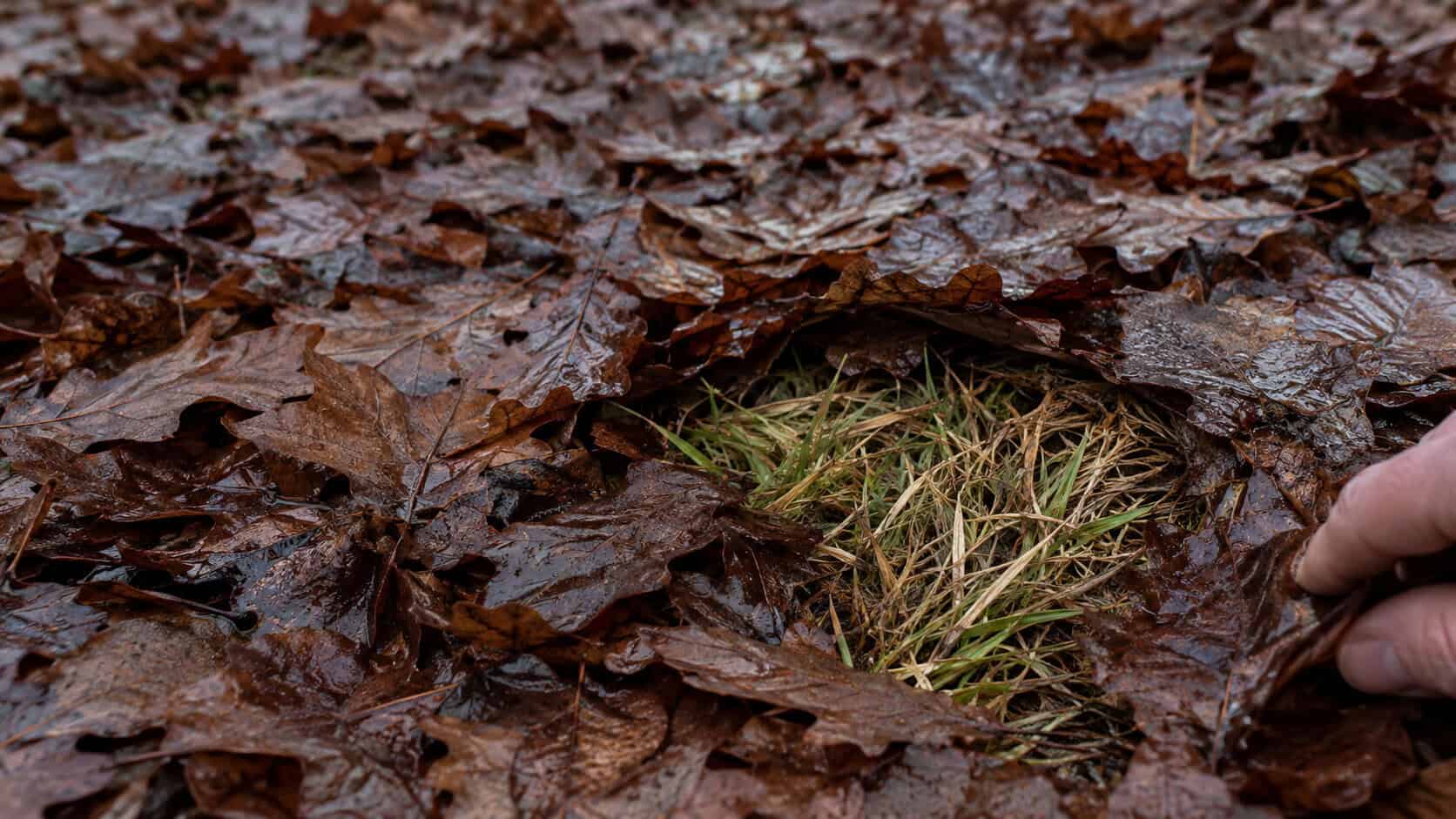
Every October the same argument plays out across the neighborhood. One guy is out there with a rake and forty paper bags. Two doors down, somebody runs the mower over the whole yard and calls it done in twenty minutes.
Both lawns survive. But they don’t end up the same.
The choice matters more than most homeowners think, because leaves left wrong will smother grass through winter and leaves handled right will feed it. Here’s how the two methods actually compare, and which one fits your yard.
What Raking (and Bagging) Is
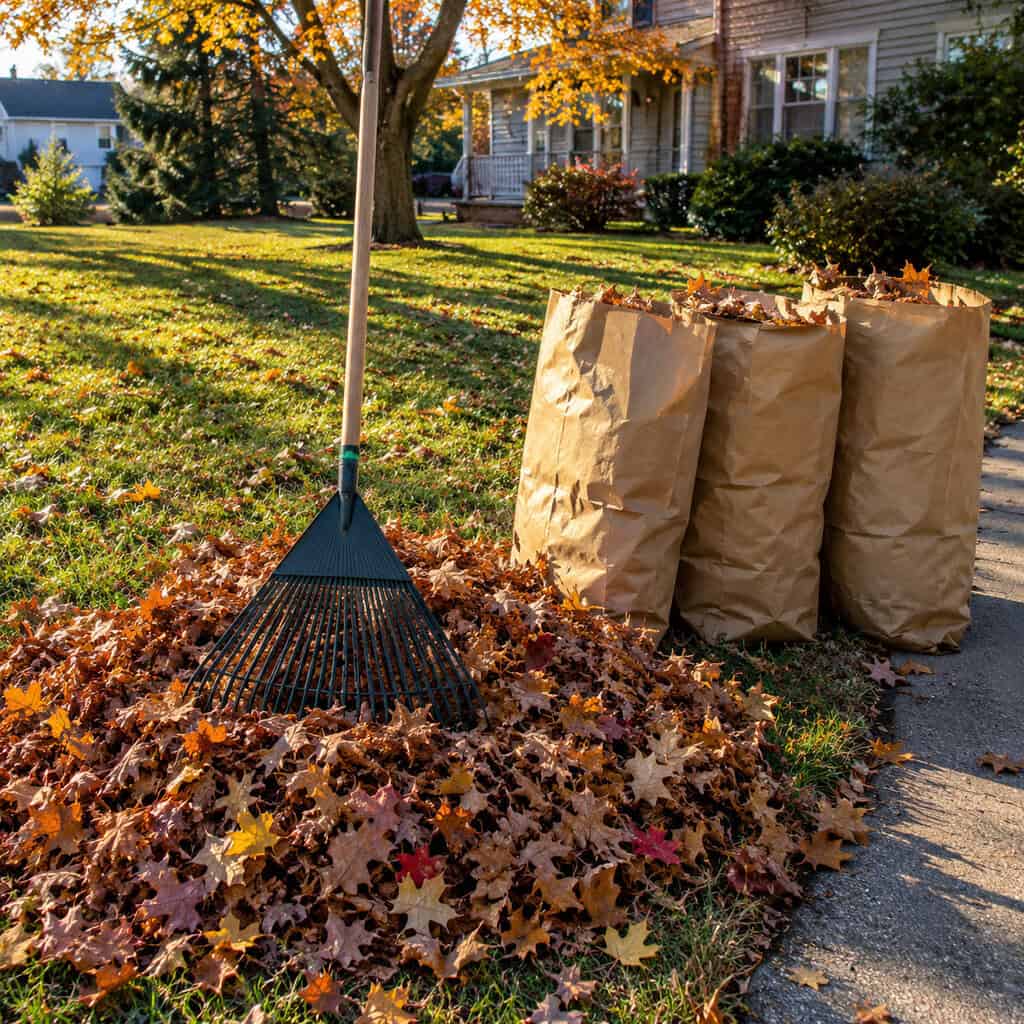
Raking means physically removing leaves from the turf and hauling them off — into bags, onto a tarp, into a compost pile, or out to the curb for municipal pickup.
The appeal is control. You see bare green grass when you’re finished, and nothing is left to rot against the crowns of your plants.
It’s also the only realistic answer for certain yards. Heavy oak drop on a small lot can bury turf four inches deep. A mower can’t chew through that, and neither can your grass.
The cost is your Saturday. A 5,000-square-foot yard under mature trees can run two to three hours with a rake and leave you with a dozen bags to deal with. Wet leaves make it worse — they mat, they weigh triple, and raking wet leaves turns a chore into a slog.
You’re also throwing away free organic matter. Leaves hold calcium, magnesium, and potassium pulled up from deep root zones. Bagging it sends all of that to a landfill or a municipal yard-waste site.
What Mulch-Mowing Is
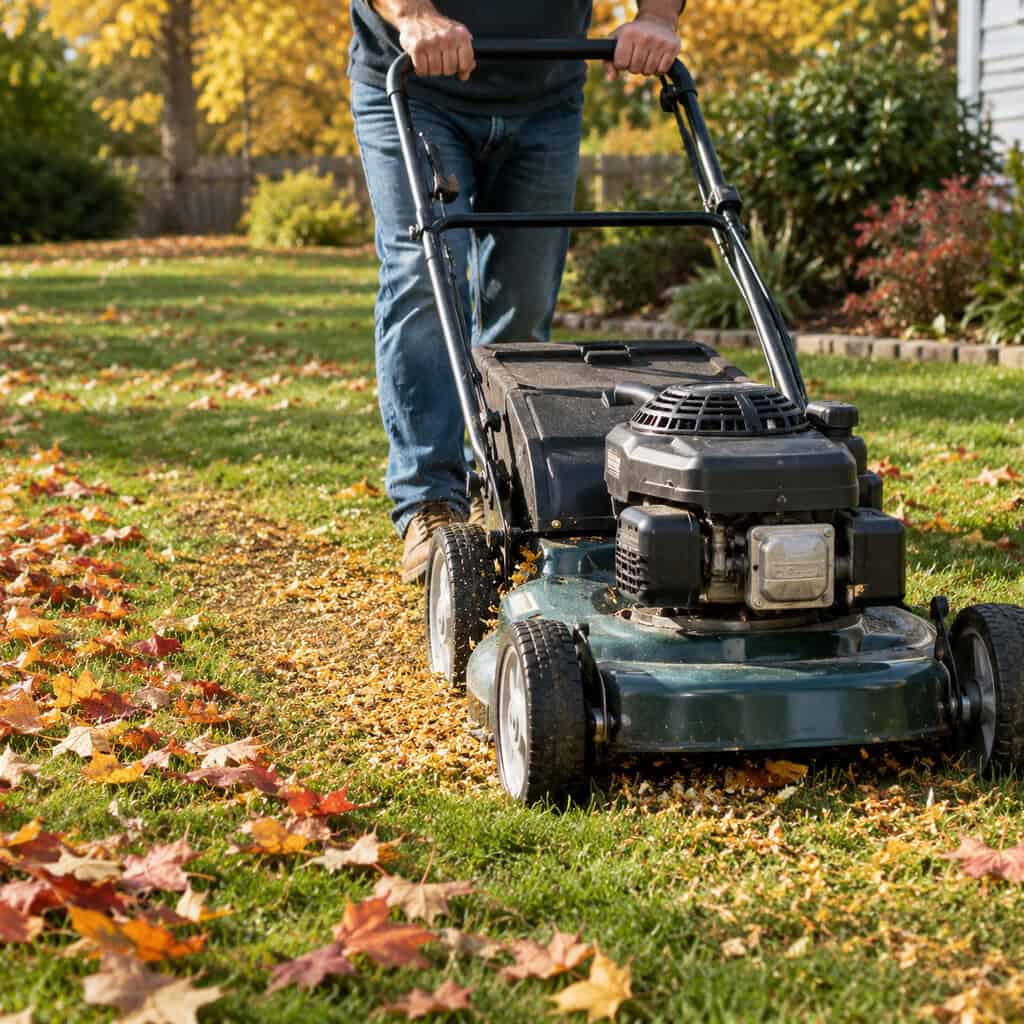
Mulch-mowing means running your mower over the leaves repeatedly until they’re shredded into dime-sized pieces that fall between the grass blades and disappear into the soil.
No bagging. No hauling. You’re already mowing in October anyway.
The shredded pieces get worked down by earthworms and soil microbes over winter. By May, they’re gone. Research from Michigan State University Extension found that mulched maple leaves actually suppressed spring dandelion and crabgrass germination — a side benefit nobody asks for and everybody wants.
It has limits. You need to catch the leaves while they’re dry and before the layer gets too deep. Once leaves are soaked and matted, a mulching blade just smears them.
And it takes more than one pass. A single pass over a thick layer leaves chunks sitting on top of the canopy, which is exactly the smothering problem you were trying to avoid. Two or three slow passes, deck set high, is the actual method.
Head-to-Head
Time and Labor
Mulching wins on this one without a close vote. You’re already pushing the mower, so the leaf job folds into the mow.
Raking a quarter-acre under three mature maples is a half-day commitment, repeated three or four times over the season. Mulching that same yard adds maybe ten minutes per mow.
Winner: Mulching for most homeowners.
What It Does for the Soil
Shredded leaves add organic matter, feed earthworm populations, and return nutrients the tree pulled out of the ground. Over several seasons you’ll notice softer soil and better water infiltration.
Raking gives the soil nothing. Unless you compost the leaves and bring them back as finished compost later, which most people don’t.
Winner: Mulching, by a wide margin.
Handling Heavy Leaf Drop
There’s a ceiling. Most extension guidance puts it around six inches of loose leaves before mulching stops working — beyond that you’re just grinding debris into a mat.
If your lot is ringed with oaks and you get a knee-deep carpet in a single week, raking or a lawn sweeper is the honest answer. Virginia Cooperative Extension makes the same call: mulch what you can, remove the excess.
Winner: Raking for heavy-drop yards.
Lawn Appearance
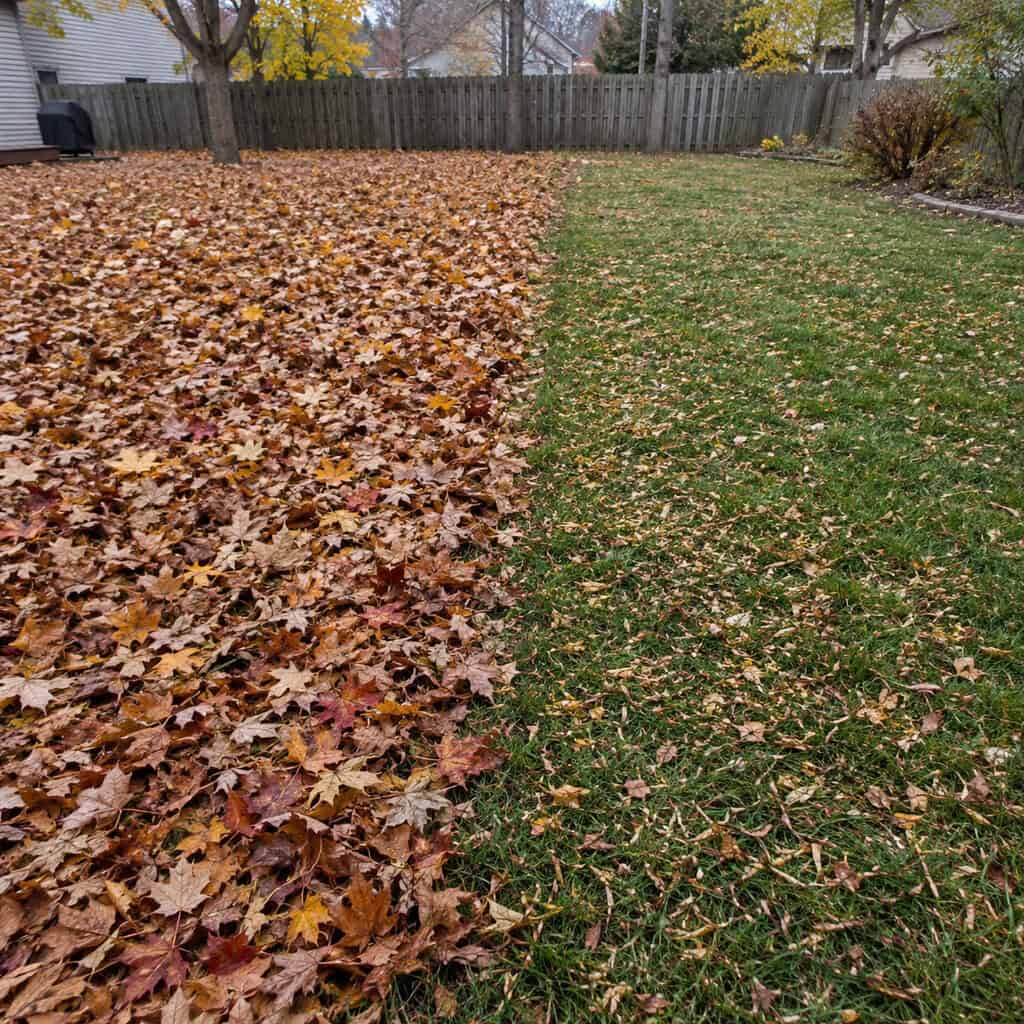
A raked lawn looks finished the same afternoon. A mulched lawn looks a little speckled for a week or two while the pieces break down.
If you’re selling the house in November, rake. If you’re not, nobody is studying your turf that closely.
Winner: Raking, short-term only.
Cost
Paper yard-waste bags run about $4 for five, and a heavy fall can burn through thirty of them. Some municipalities charge per-bag pickup stickers on top of that.
Mulching costs you gas and a sharp blade. That’s it.
Winner: Mulching.
Risk to the Grass
Done wrong, both can hurt you. Chunky, half-mulched leaves sitting on top of the canopy block light and trap moisture, which is how snow mold gets started. Leaves left unraked do the same thing, only worse.
Done right, mulching is harmless — University of Minnesota research tracked mulched turf plots for years without turf decline. Their Extension horticulturists recommend it outright.
Winner: Tie — technique decides it, not the method.
Bottom Line
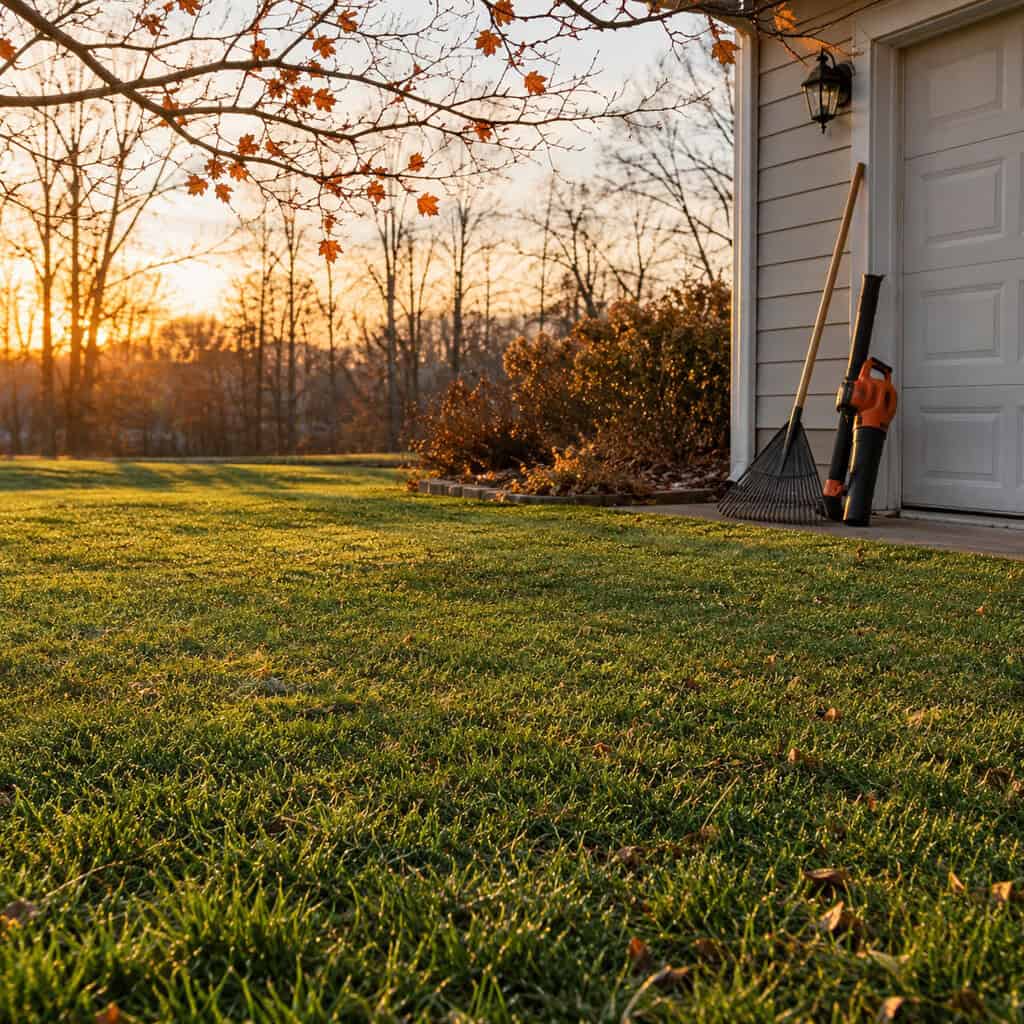
If you’ve got scattered to moderate leaf fall and a mower that’ll hold a blade edge, mulch. Mow every seven to ten days through October and November, keep the deck at three inches or higher, and stop when you can see grass through the shredded layer.
If you’re under heavy oak or sycamore, do both. Mulch the first two or three drops, then rake or sweep the final burial before the ground freezes. The hybrid approach is what most landscapers actually run.
One thing that isn’t optional either way: don’t go into winter with a solid mat on the turf. That’s the mistake that shows up in April as thin, gray patches — and it costs more to fix than a Saturday with a rake ever did.