


Every yard has that one plant. The showstopper that sold you at the nursery and now quietly runs your weekends.
Nobody sets out to buy a headache. You buy a vision — a lavender-draped pergola, a privacy hedge that fills in overnight, a hydrangea straight out of a catalog spread. Fast forward three years and you’re out there with a saw, a spray bottle, and a shovel, or worse, on the phone with a contractor.
Some of these choices don’t reveal their true cost until a plumber snakes a camera down your sewer line, or a home inspector scribbles a term your buyer’s agent has to look up.
The University of Missouri Extension makes the point plainly in its low-maintenance landscaping guide: it’s what you plant, not how hard you work, that determines a yard’s upkeep. Pick poorly, and no amount of weekend sweat equity saves you.
Below are 29 plants that look stunning in photos and send you the bill afterward.
1. Leyland Cypress Looks Like a Screen Until the Gaps Show

Developers across the Southeast lined these up six feet apart since they can reach 15 feet within five years. That tight spacing is exactly what turns into trouble.
Once crowded, the trees shade out each other’s lower limbs, which die back. Airflow through the row stalls, humidity builds, and that combination invites Seiridium canker along with bagworms capable of defoliating a tree in a matter of weeks.
Here’s the kicker: Leyland cypress won’t sprout new growth from old wood. A brown patch stays brown for good. Lose one tree in the middle of your screen and you’ve got a permanent hole — the only fix is tearing out and redoing the whole row.
Plan on a 15- to 20-year lifespan, not a permanent fixture. For a real screen, check out privacy shrubs that grow fast without causing problems later and give them proper room.
2. Eastern Cottonwood Buries Your AC in Summer Fluff
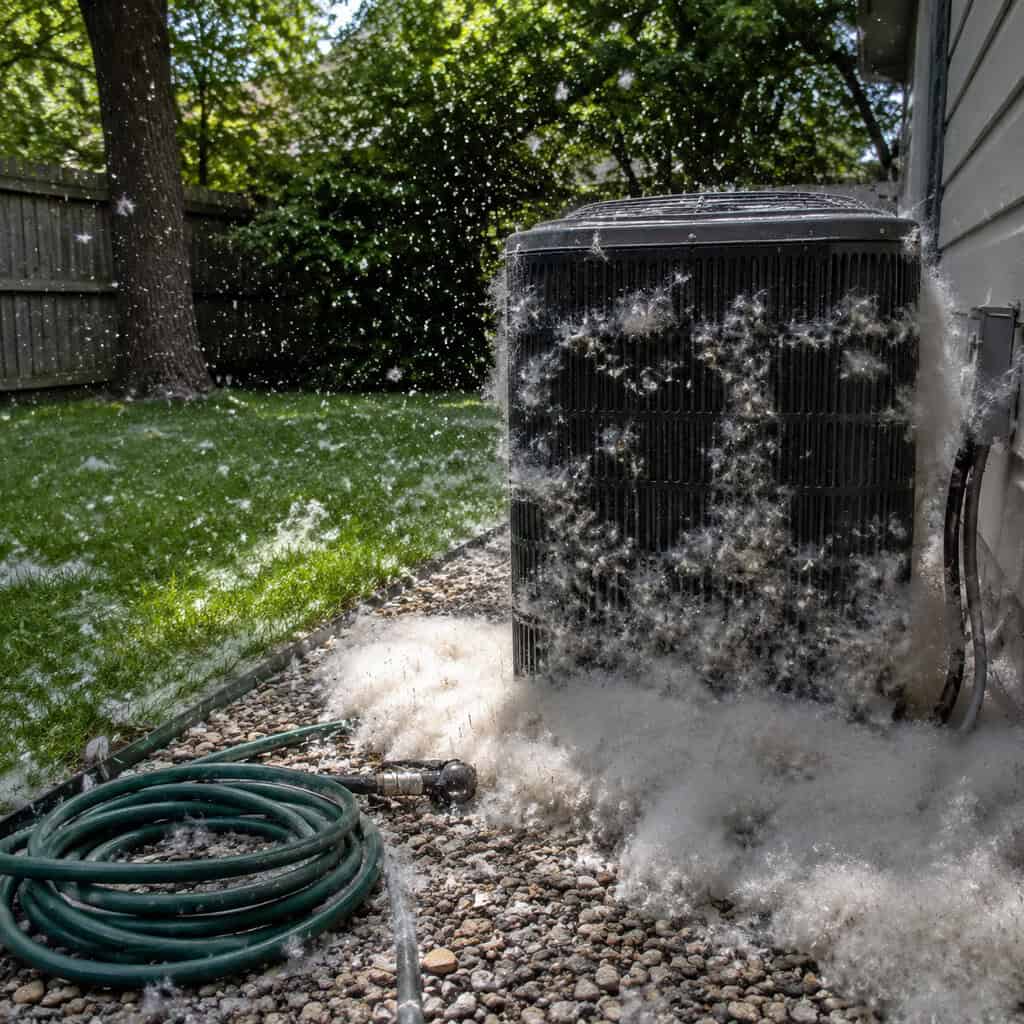
Fast, generous shade and that soft rustling sound in the canopy are why people plant this tree in the first place — but come June, the deal changes.
Female trees send out clouds of cottony seed fluff that drift visibly through the yard, settle in fence corners, and pack tightly into an outdoor AC condenser’s fins, choking airflow and forcing the unit to run hot — which means coil-cleaning becomes an annual ritual. Add in notoriously weak wood on a tree that grows this fast, and dropped limbs become a near-certainty.
For quick native shade without the drama, a tulip poplar or sycamore set well away from the house is a smarter call — or go with a male cottonwood cultivar if you’re set on the species.
3. Sweetgum’s Fall Color Comes With a Floor Full of Spikes
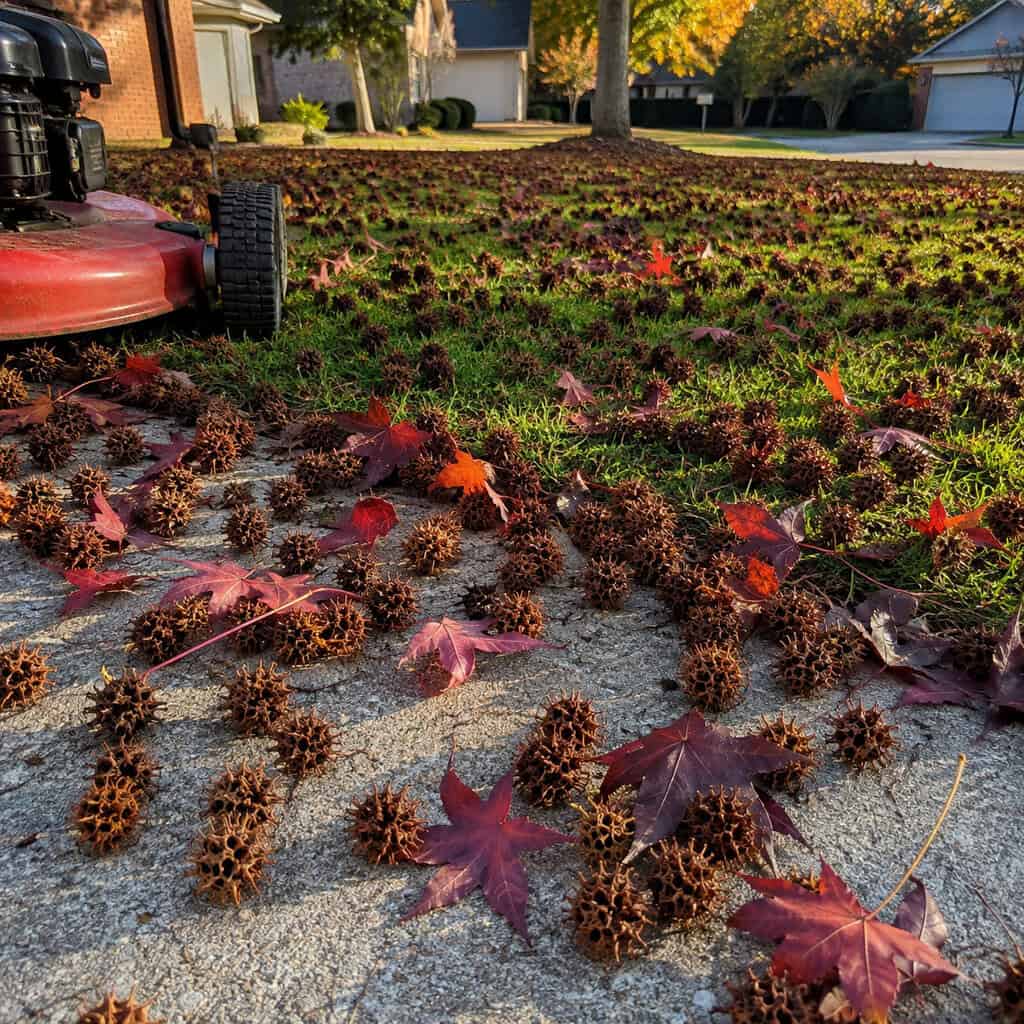
Give it credit — the autumn display is genuinely stunning, with burgundy, orange, and purple sometimes appearing on a single leaf.
Then the gumballs arrive. These hard, spiky seed pods, about an inch wide, drop by the thousands once the tree matures.
They wreck mower decks and shred string trimmer line. They roll underfoot on paths — one of the rare landscaping hazards that actually lands people in urgent care. They clog gutters and pack downspouts tight.
Raking barely dents the problem since they burrow into the grass. Lawn sweepers and nut-gathering tools help some. House Digest ranks it among the messiest yard trees around, and that mess sticks around for decades.
4. Japanese Barberry Looks Tidy but Breeds Ticks
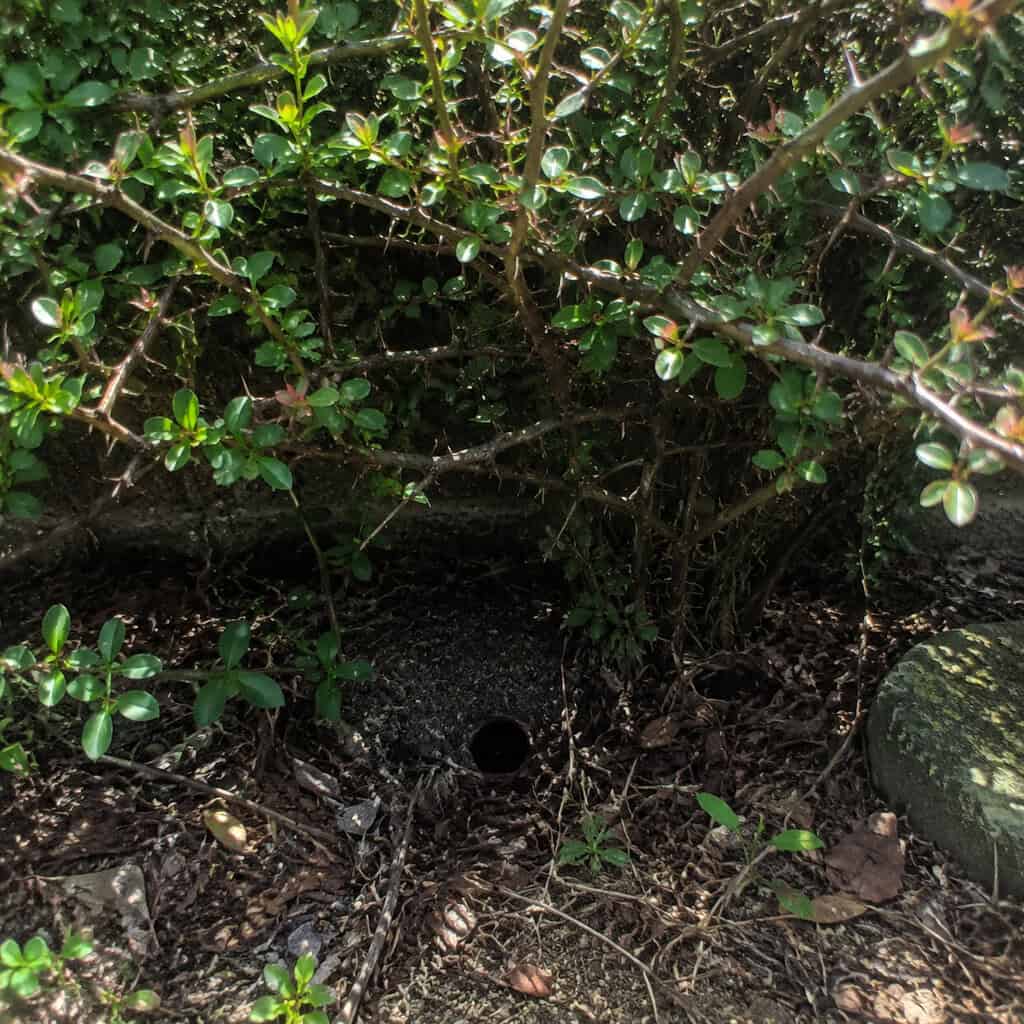
On the surface it’s flawless. Deer ignore it, it holds its shape without shearing, fall color is striking, and its thorns keep people off the path.
Underneath, it’s manufacturing ticks.
A thick barberry stand builds its own microclimate — dense shade, dead-still air, high humidity down at soil level. Blacklegged ticks dehydrate and die out in open sunlight, but inside a barberry thicket they stay moist and active much longer. White-footed mice, the primary carrier of the Lyme bacterium, den in the thorny tangle since predators can’t get to them there.
Combine those factors and you get amplification. A Trinity College study comparing habitat types recorded far more Lyme-infected blacklegged ticks in areas overrun by barberry than in plots where it had been cleared or was never present.
In other words, that shrub by your front walk isn’t harmless landscaping — it’s a tick nursery, sitting a dozen feet from your door, right where your kids and dog pass every single day.
Getting rid of it is a genuinely rough job. The thorns are small, dense, and cut straight through gardening gloves. The root crown is tough and sits shallow, so expect to pry it out with a mattock or a chain hooked to a vehicle. Cutting the stump alone just triggers resprouting — you need to dig out the crown or treat it chemically.
Tackle it in early spring while branches are bare and you can actually see what you’re grabbing. Then still check yourself for ticks afterward.
5. Bradford Pear’s Good Looks Expire With the First Big Storm
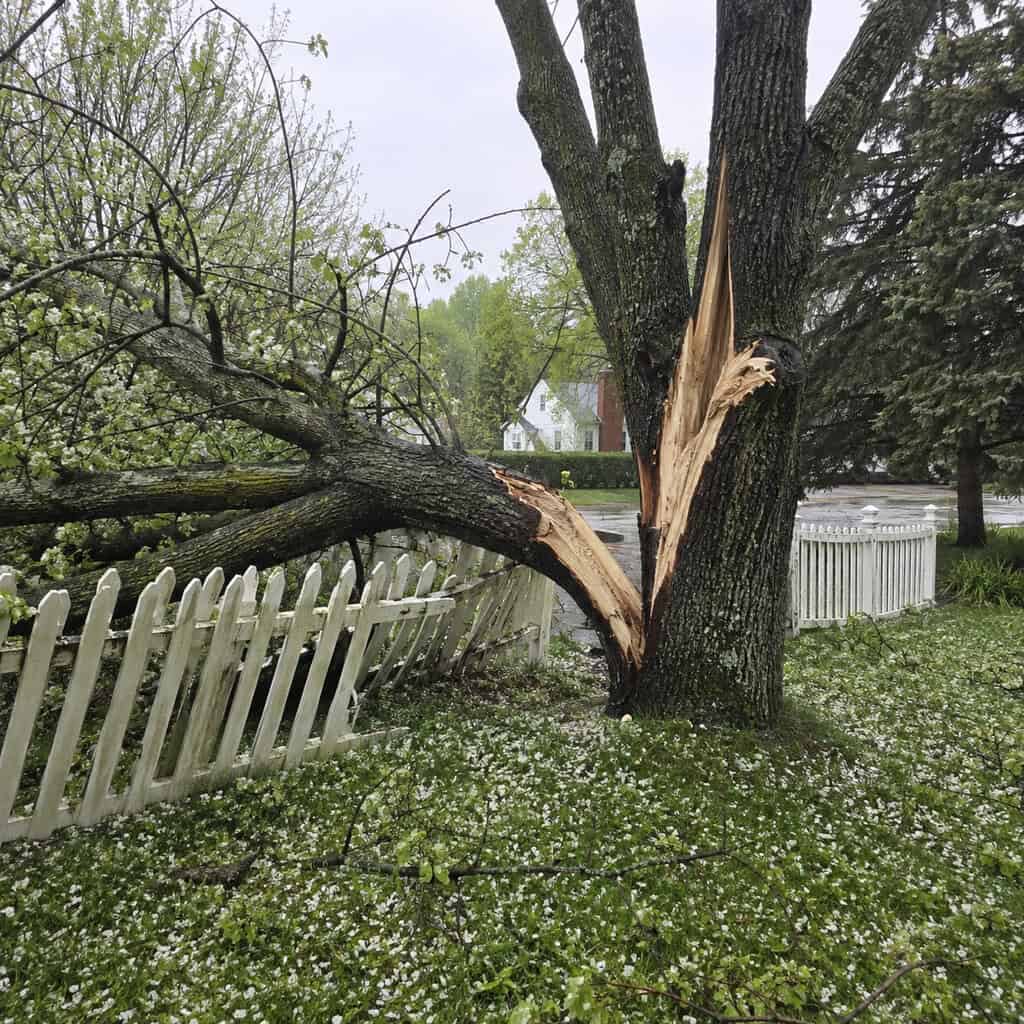
For roughly fifteen years this is the neighborhood showpiece — white spring blossoms, glossy foliage, a perfect lollipop shape, and dirt cheap at any big box store.
Then physics catches up. Bradford pears grow several limbs sprouting from nearly the same point on the trunk, and those attachment points are structurally weak from the start. The first hard ice storm or summer microburst splits the tree straight down the center, often taking out a fence, a car, or part of a roofline in the process.
Up close, the blossoms smell like rotting fish. And the fruit birds scatter grows into thorny wild seedlings that flatten mower tires and take over fence lines.
Maryland has banned it outright, and Ohio made it illegal to sell, grow, or plant. The University of Maryland Extension suggests serviceberry or fringetree as substitutes — same white spring show, without the structural time bomb.
6. Bigleaf Hydrangea Rarely Delivers the Blooms You Paid For
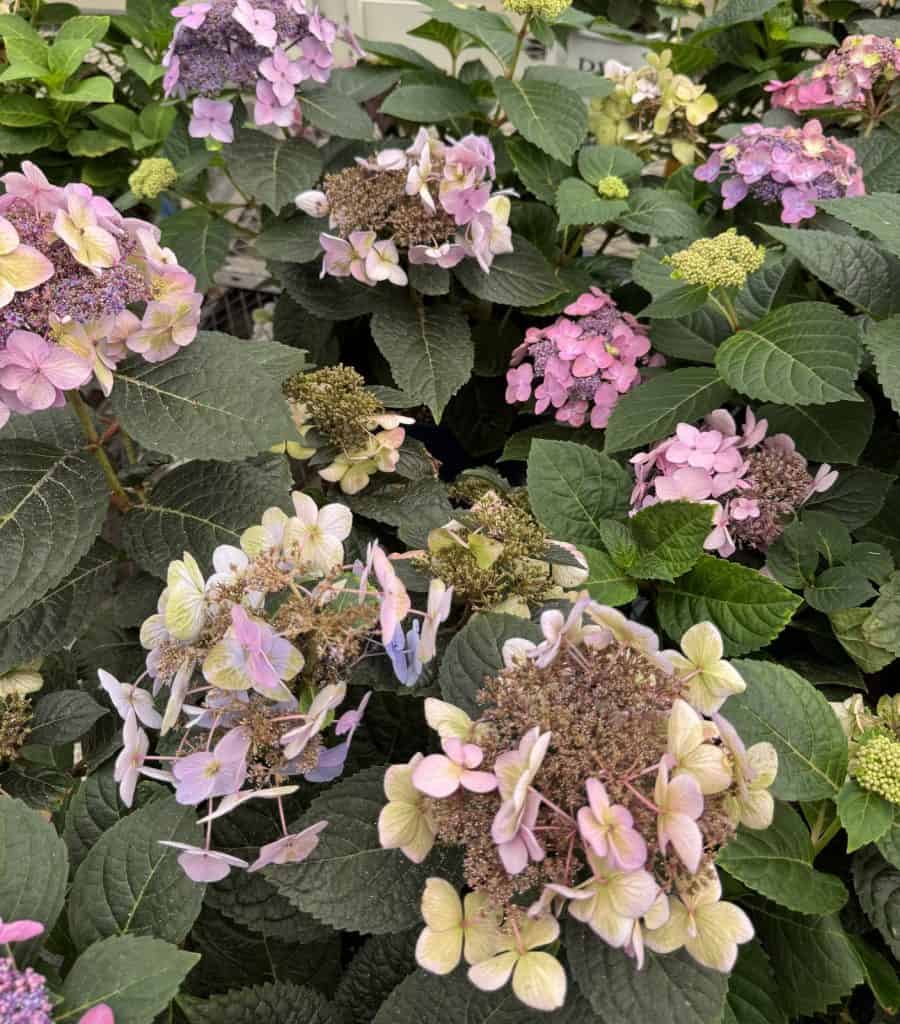
You wanted blue mopheads. What you got was a green shrub.
Bigleaf hydrangea forms next year’s flower buds late in the current summer, on this year’s growth. Those buds sit exposed all winter long. A hard freeze in March following a mild February wipes them out, and so does pruning at nearly any time other than immediately after the plant finishes blooming.
After two failed bloom seasons, most people assume it needs fertilizer. What it actually needs is a different variety — or a reblooming cultivar bred to flower on new wood as well.
It also wilts dramatically in afternoon heat. Broad thin leaves and shallow roots mean it can look completely dead by 2 p.m. on any 90-degree day. Budget for daily watering through July.
7. Burning Bush’s Fall Color Doesn’t Justify the Ban
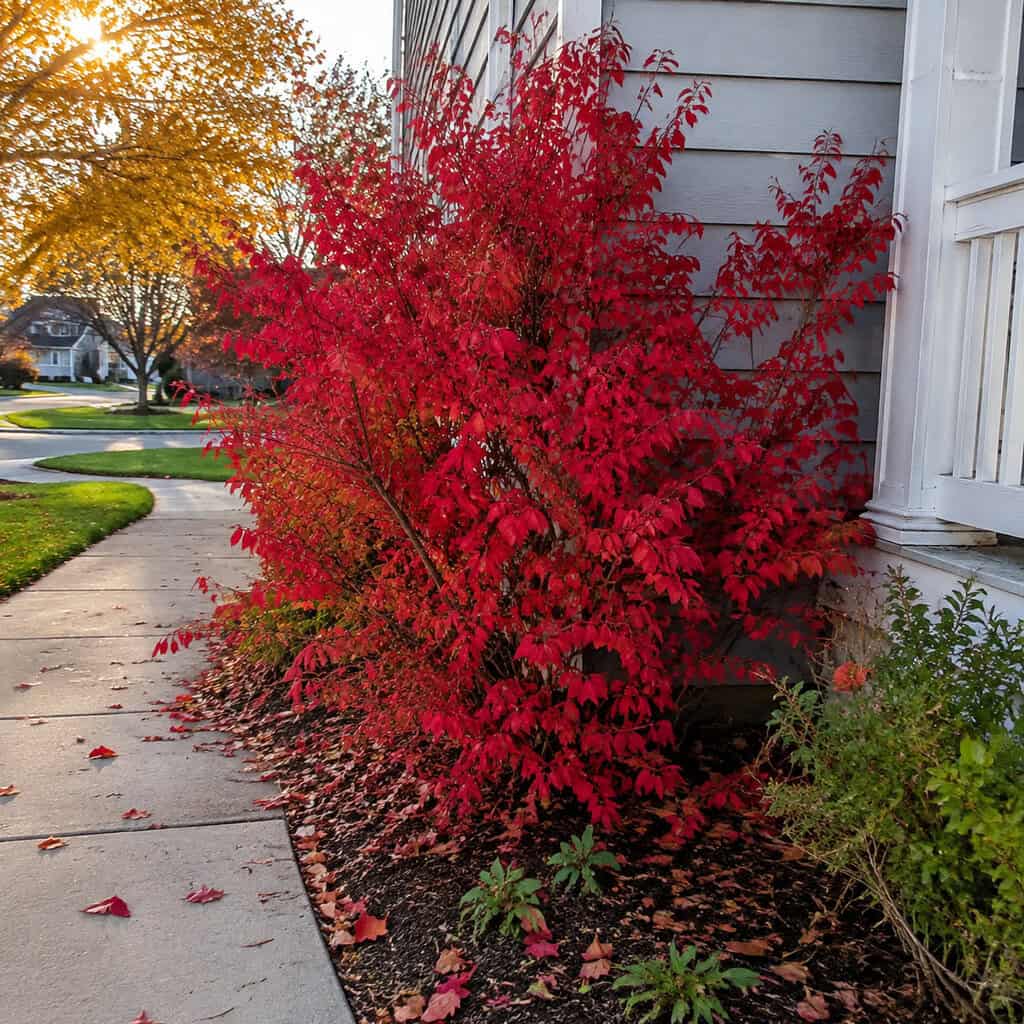
What you’re really buying is two weeks of brilliant red every October — the remaining fifty weeks it’s just an ordinary green shrub that needs regular shearing and can sprawl eight feet across, wider than most foundation beds can handle.
Birds spread its seed into nearby woods, where it builds dense thickets beneath the tree canopy, which is exactly why Massachusetts, New Hampshire, and other states have outlawed its sale entirely.
Want the same red without the legal baggage? Try Virginia sweetspire, fothergilla, or native aronia instead.
8. Norway Maple’s Shade Kills Everything Underneath It

On the surface, it’s the perfect street tree — a dense, symmetrical crown, tolerance for pollution and compacted soil, and deep, cooling shade.
That very shade is the trouble. The canopy of a Norway maple blocks so much sunlight, and its shallow feeder roots drain so much moisture from the topsoil, that virtually nothing can grow beneath it. Not grass, not hostas, not vinca.
Homeowners waste years reseeding a bare ring that will never take. If a mature Norway maple is behind spots where grass won’t grow in certain spots, seed won’t solve it — mulch the area instead and stop the losing fight.
It also produces heavy seed crops, and those seedlings colonize forest understories with that same shade-blocking edge. It’s classified invasive across much of the Northeast and Midwest.
9. Mimosa Tree Litters All Year, Then Dies Young
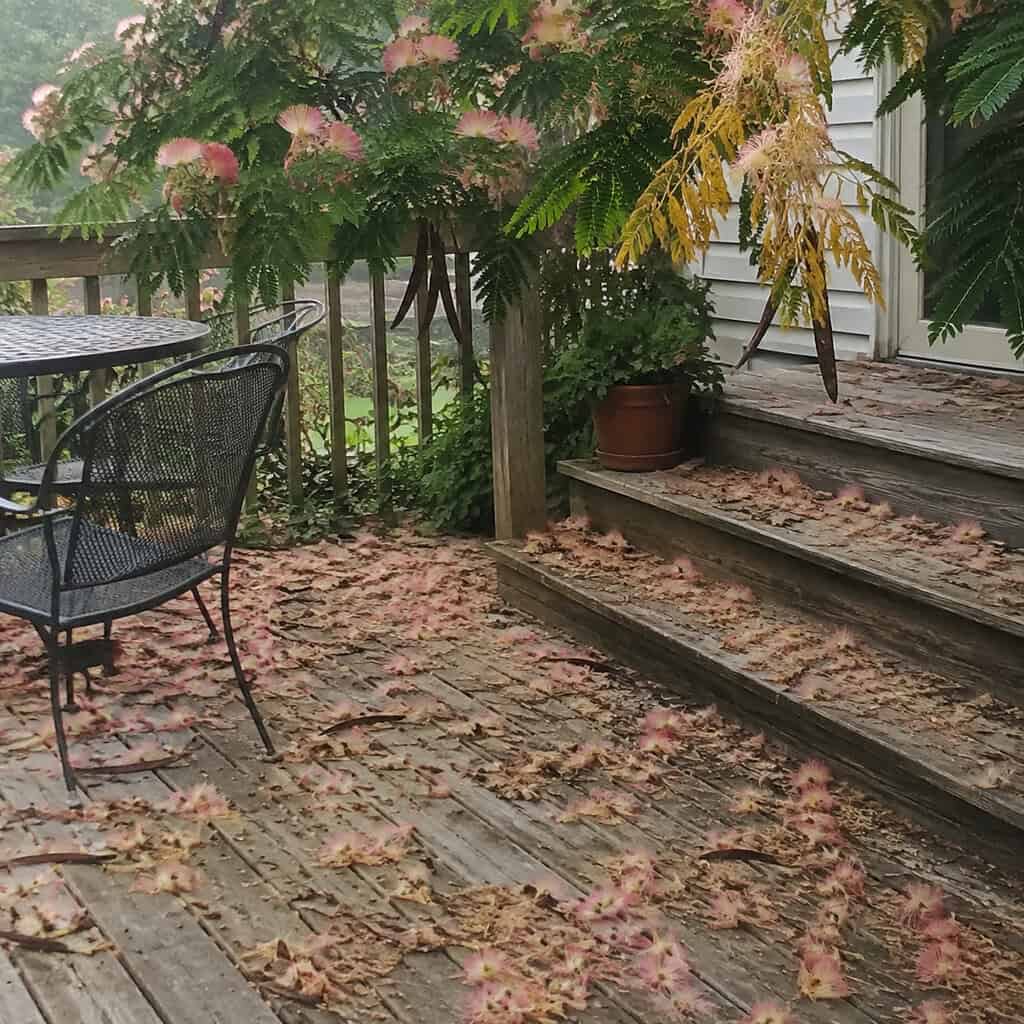
Feathery leaves, pink silk-thread blooms, a tropical vibe, and growth that seems to be racing a deadline. It’s cheap, too.
The debris never really stops. Spent flowers fall sticky and pink onto cars and decking. Then thousands of long, flat seed pods follow, rattling in the wind before dropping and sprouting everywhere — flower beds, fence lines, gutters, and the neighbor’s yard too.
Most mimosas don’t even make it to old age — mimosa wilt, an incurable vascular fungus, kills the majority young. The tree yellows, sheds limbs, and dies within a couple of seasons.
Net result: about 15 years of mess, then a removal bill, followed by seedlings popping up in your soil for years afterward.
10. English Ivy Turns Your Siding Into a Water Trap
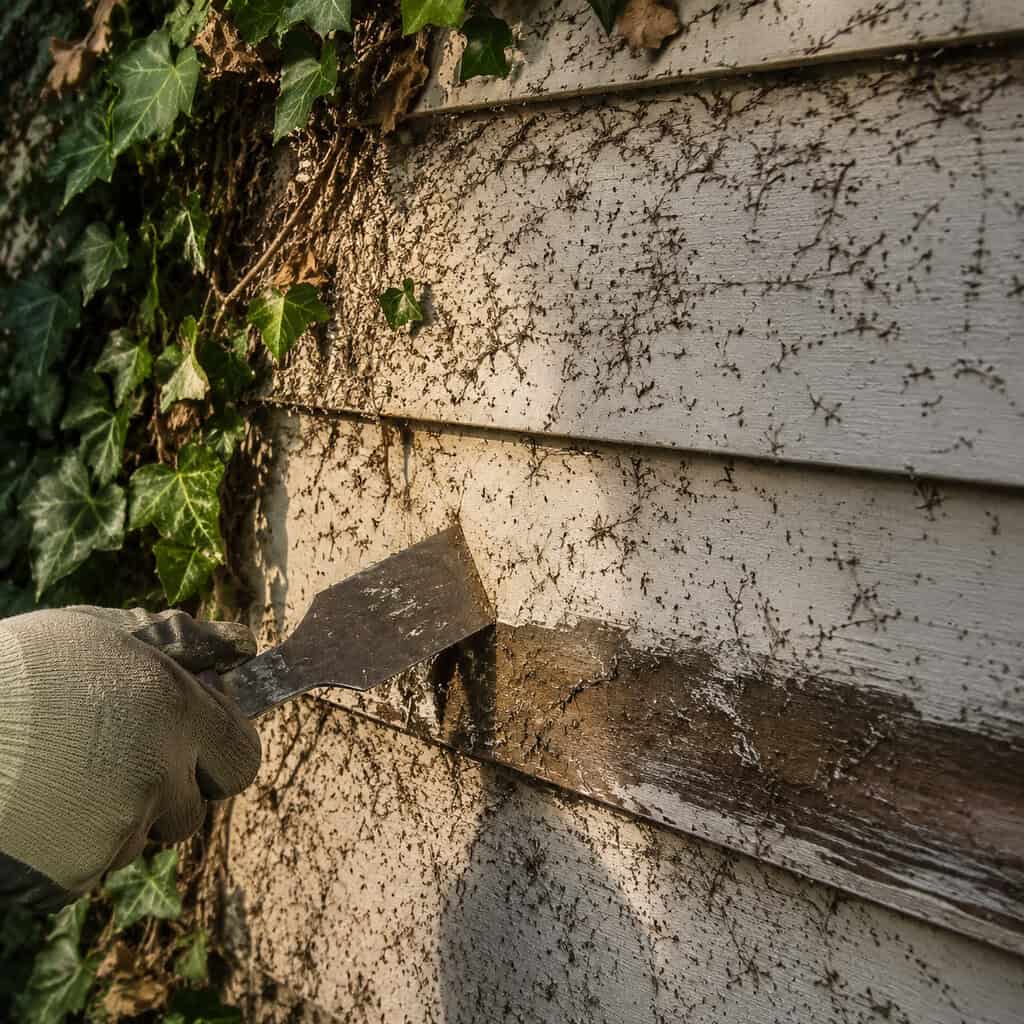
By year two it makes the house look a century old. By year six it’s turned into an insurance claim.
Ivy doesn’t merely rest against a wall — its aerial rootlets release an adhesive and wedge themselves into any available seam, whether that’s a lap siding joint, a mortar gap, or flashing tucked behind a window. Once inside, the vine only widens that gap as it thickens over time.
The real damage comes from trapped water. A thick ivy mat holds moisture against the wall constantly, so the siding never fully dries after rain. On wood, that means rot creeping in from the hidden backside. On brick, mortar joints soften one by one. Behind vinyl, sheathing and framing stay wet through the entire rainy season.
Most homeowners only discover this during a siding replacement — the ivy peels away, and the rotted sheathing comes with it.
Removing it is harder than planting it ever was. You can’t just pull it off a wall — the rootlets stay stuck and the stems rip siding away with them. This Old House suggests cutting the vines at the base, letting them dry out for a few weeks, then scraping and brushing the remains off.
The root system in the ground is its own multi-year battle. Any leftover stem fragment re-roots. Herbicide barely soaks through the waxy leaves. Repeated hand-pulling over two or three years is really the only thing that finishes it for good.
11. Bishop’s Weed Spreads Faster Than You Can Dig
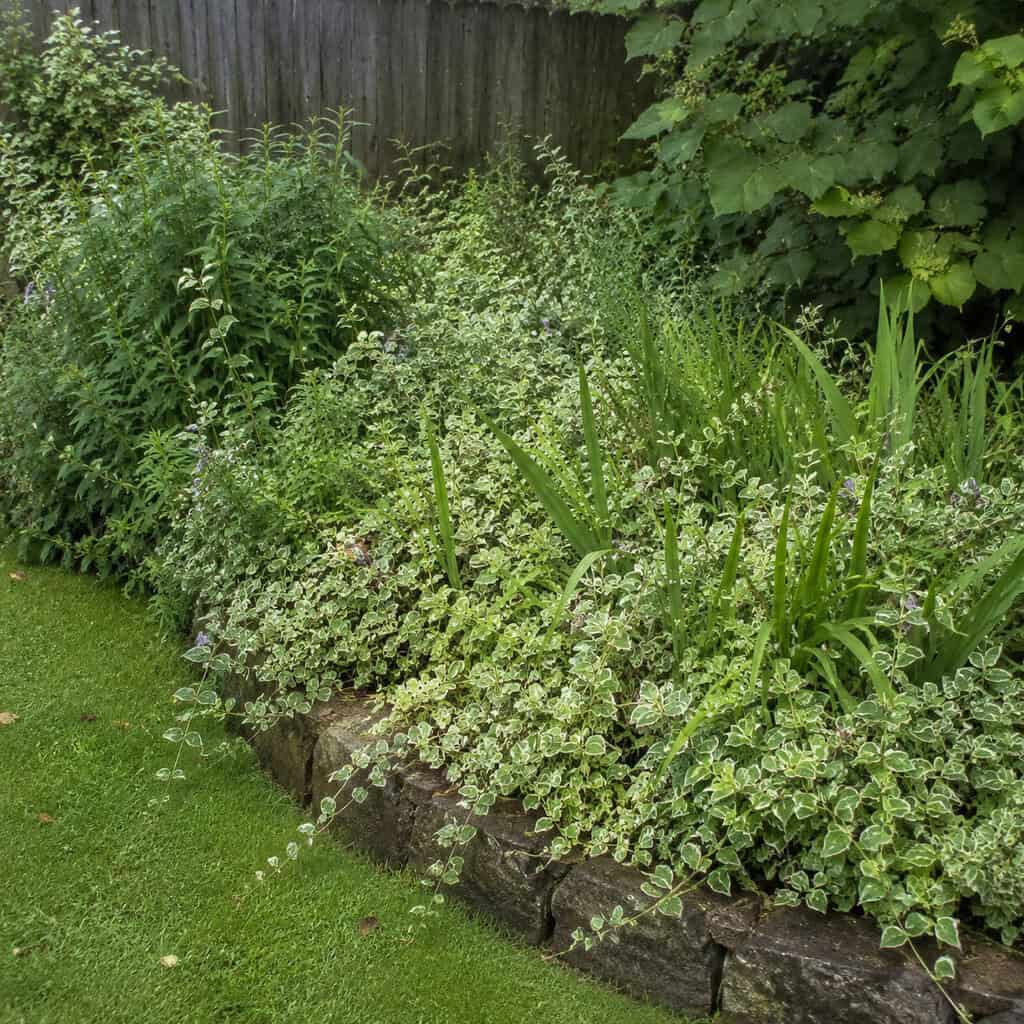
Marketed under the softer name “snow on the mountain,” with cream-edged foliage and a tag promising an easy-care groundcover.
It’s actually one of the most regretted purchases in American gardens, and Gardening Know How ranks it near the very top.
Two traits make it especially nasty. Any rhizome fragment left behind sprouts again, so tilling only multiplies the problem. And the pretty variegated version tends to revert to an aggressive solid-green form that spreads even faster.
It won’t respect a bed’s border either — it creeps into lawns, slips under fences, pushes through hedges, and can overrun an entire perennial border within three seasons. Smothering it with cardboard and mulch for a whole growing season is about the only method that works, and even that usually takes more than one try. Think twice before adding any low-maintenance ground cover at all.
12. Yucca’s Spikes Make It a Landscape Hazard
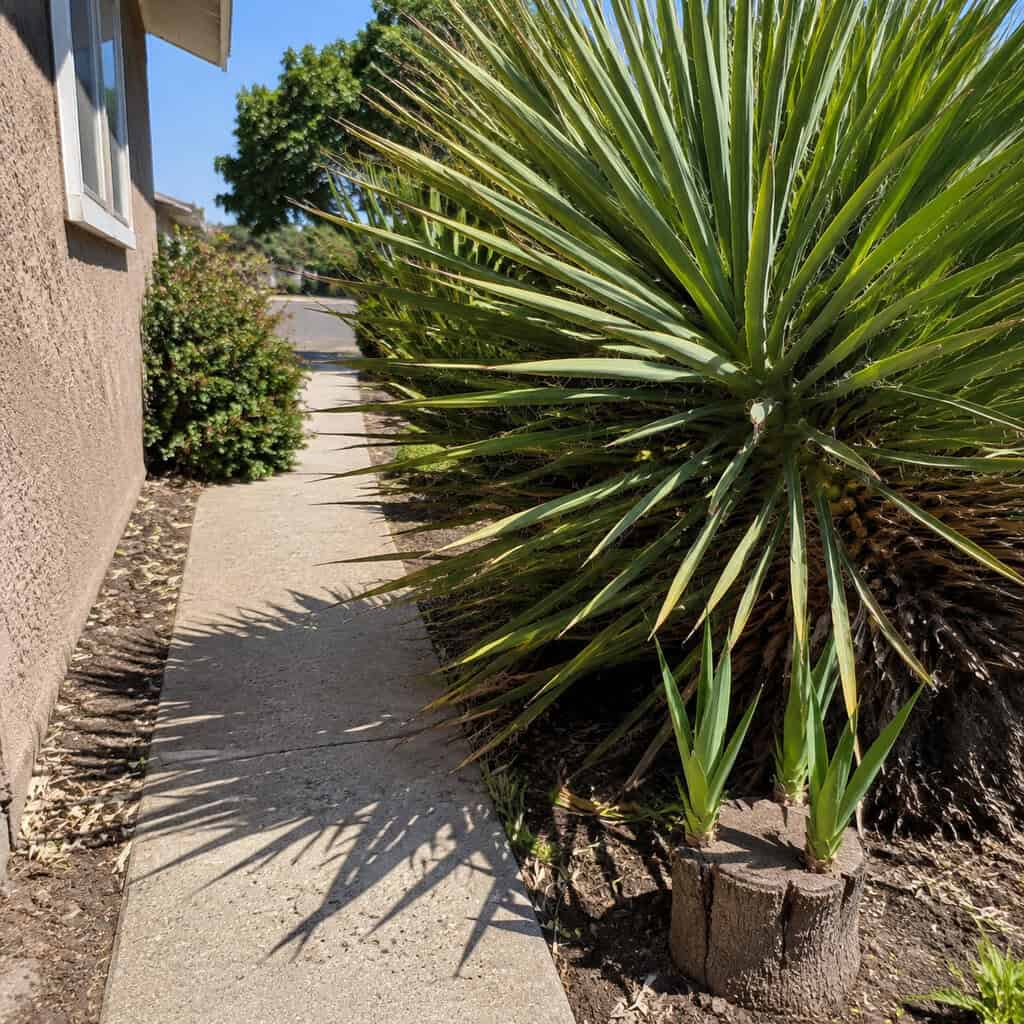
Bold, drought-tolerant, and essentially impossible to get rid of.
Its leaf tips are stiff as needles. They puncture skin, they’ve caused eye injuries at face height, and they’ll go straight through a dog’s paw pad. Keep it well away from walkways and gates.
The real headache begins at removal time. Yucca sends down a deep taproot lined with dormant buds, and it regrows from virtually any fragment left in the soil. Slice off the top and you’ll end up with three plants instead of one.
People end up battling the same yucca for five years after they thought they’d removed it. Dig out the entire root system, or cut it low and treat the crown chemically — and be ready to repeat the process.
13. Rose of Sharon’s Late Bloom Comes With Hundreds of Seedlings
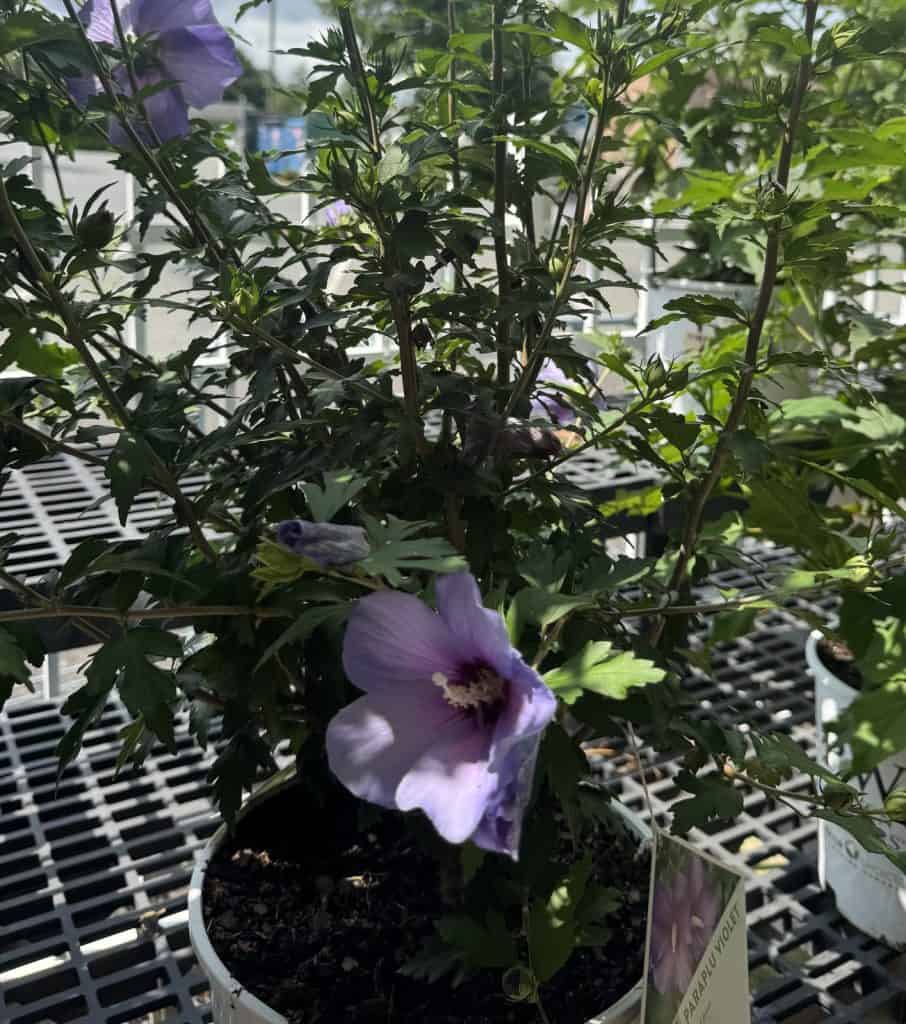
It flowers in August, a month when almost nothing else in the yard does. That alone moves thousands of these shrubs every year.
The bill arrives in spring. Seed capsules from the previous fall split open and scatter, and by mid-spring you’re facing hundreds of volunteer seedlings — in the mulch, the lawn, the gravel, the gutters, and packed along the foundation.
They’re easy to pull the first year. Let a season slip by, and you’re cutting woody stems out of a hedgerow with loppers instead.
Deadhead flowers before pods can form, or plant a sterile cultivar such as ‘Diana’ or one from the Chiffon series. Skip that step, and this shrub will happily reseed your entire property.
To be clear, none of these plants are actually bad plants. Most are genuinely beautiful — that’s precisely the trap, since the mental picture rarely comes with the maintenance schedule attached.
The eXtension service has a fitting term for the assumption behind most regretted plant purchases: the myth of the no-maintenance landscape. Every yard demands payment of some kind. The only choice is what currency you pay in.
Spend a weekend researching now, or hand a plumber an invoice eleven years from now.
14. Silver Maple Grows Fast, Then Attacks Your Pipes and Pavement
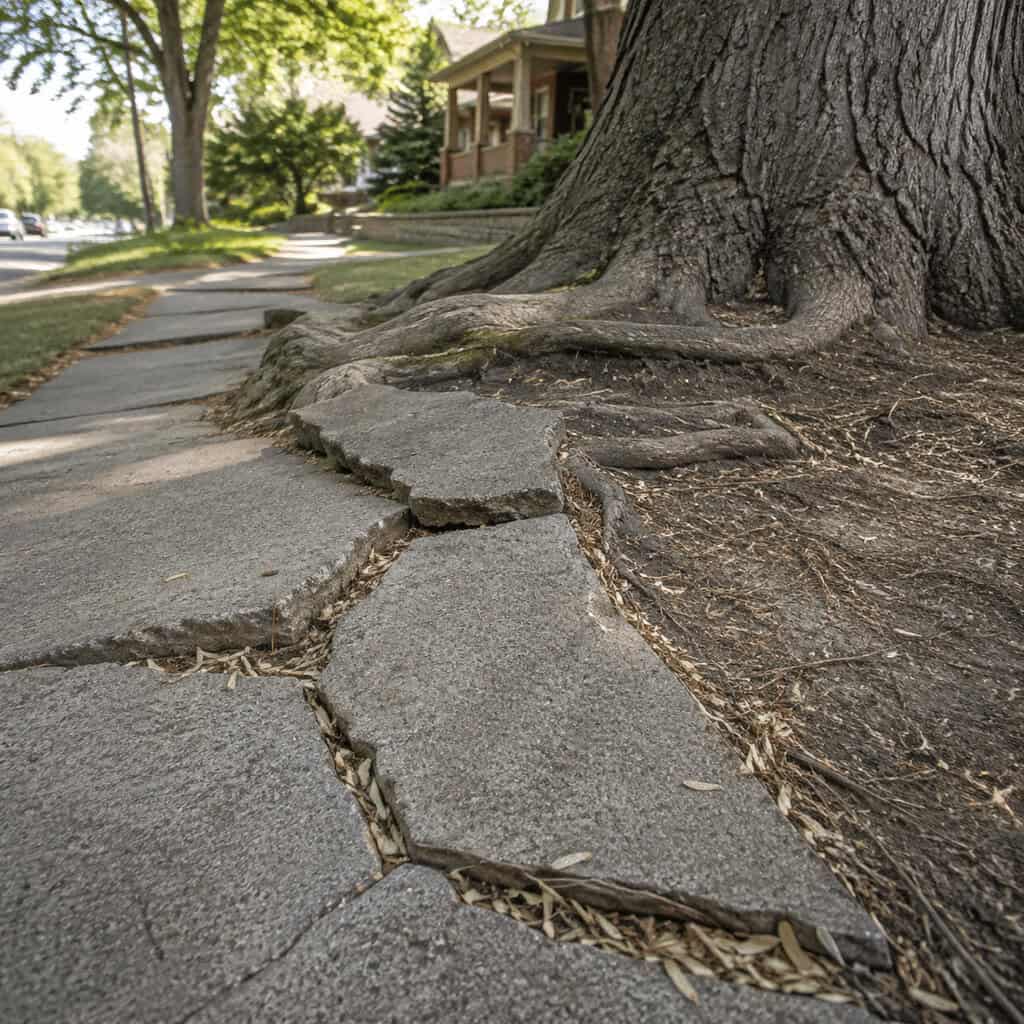
This is the classic impulse buy sold on speed — three feet of growth a year, real shade by year eight, and a bargain price tag.
Everything that follows is where you pay for it.
Silver maple roots spread wide and shallow, and they don’t stay buried. They crack sidewalk slabs, buckle driveways, heave patio pavers, and ridge up through turf until the mower scalps them flat. Grass simply gives up wherever the roots run.
Those same roots have a well-earned reputation for seeking out sewer laterals. Like willow, they don’t crack sound pipe outright — they exploit joints in aging clay or cast-iron lines and pack the interior with fibrous mass. Annual rooter service becomes routine. Homeowners with a silver maple over the lateral often end up trenching a new line or lining the old one, a decision that can run several thousand dollars.
Near a foundation, there’s a different risk: a mature silver maple draws enormous amounts of water from the surrounding soil, and in clay-heavy ground that shrinkage against a footing contributes to uneven settling. It’s seldom the only culprit behind a foundation crack, but it’s often part of the equation.
Above ground, the wood is weak and branch structure is poor, so every serious windstorm knocks down limbs — mature silver maples are a standard entry on arborists’ hazard lists.
Each spring also brings a blizzard of winged seeds that sprout in gutters, mulch beds, and every crack in the pavement. Expect to pull hundreds of seedlings annually without much effort.
15. Mint in the Ground Is a Decade-Long Commitment
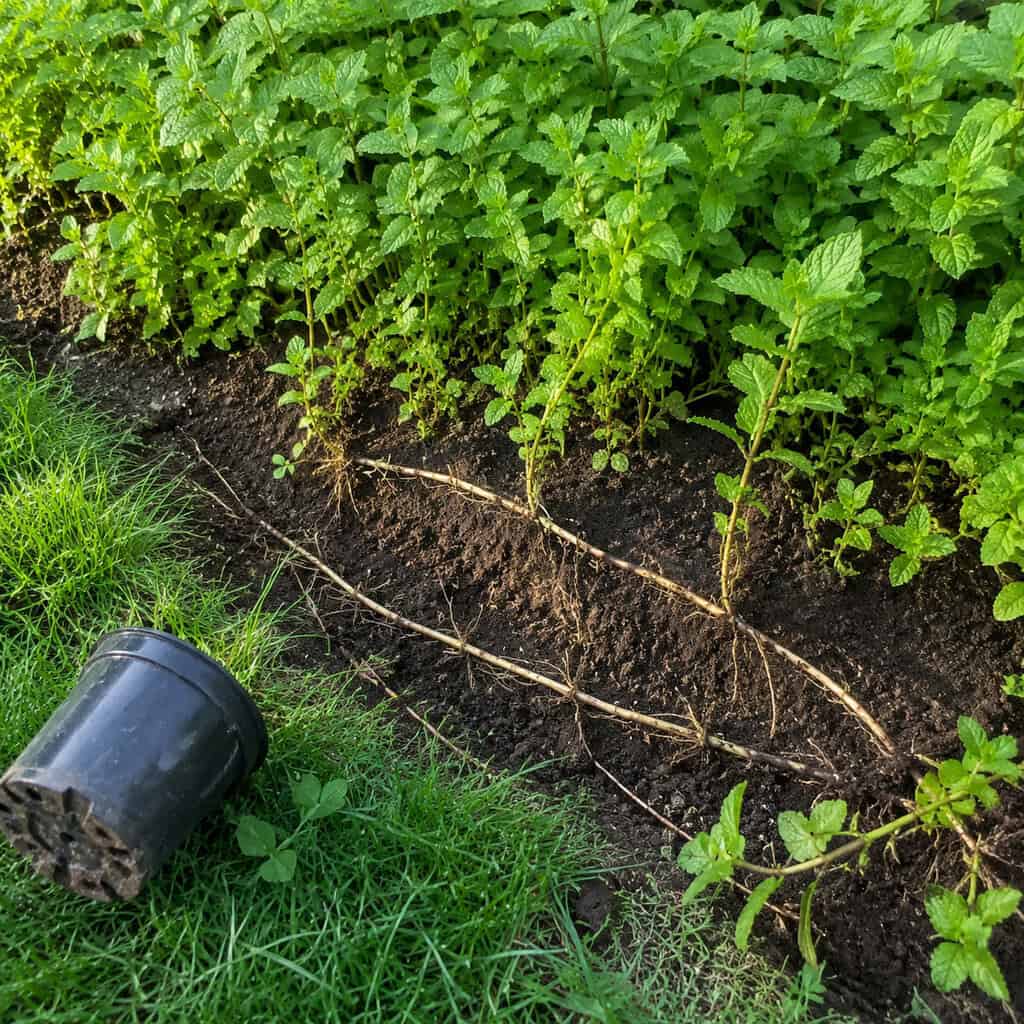
A four-dollar plant buys you a ten-year problem.
Mint spreads through stolons — horizontal stems that creep just beneath the soil surface, rooting as they travel. A single plant can turn into a four-foot patch in one season and reach the edge of the lawn by the next.
Digging it up doesn’t help, since every stray white root fragment left behind sprouts into a new plant. People end up fighting the same mint patch for ten years straight.
The actual fix takes two minutes, and almost nobody bothers. Sink a bottomless container into the bed with its rim sitting an inch above soil level, then plant the mint inside. Stolons can’t climb over that lip.
16. Trumpet Vine Suckers Everywhere and Wrecks Gutters
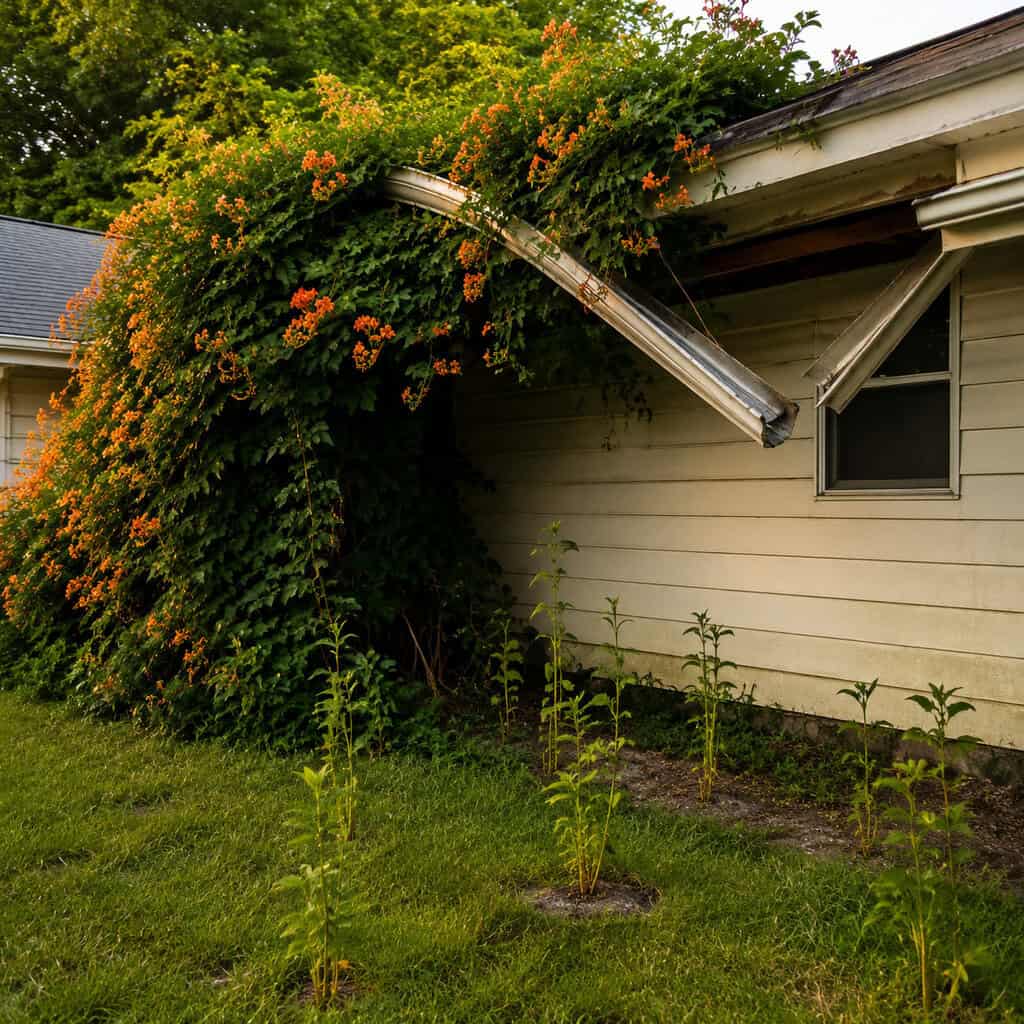
Hummingbirds are obsessed with it. Your gutters, not so much.
Trumpet vine sends up suckers from its root system 20 feet or farther from the parent plant — through lawn, mulch, under fences, even out of driveway cracks. Cutting back the top only makes it sucker more, not less.
A mature vine also gets seriously heavy. Wet foliage on a 15-year-old vine has torn gutters right off the fascia board and collapsed cedar trellises outright.
Grow it on a standalone steel arbor set somewhere you can mow around it. Never let it touch the house.
17. Nandina’s Berries Poison Birds and Pets
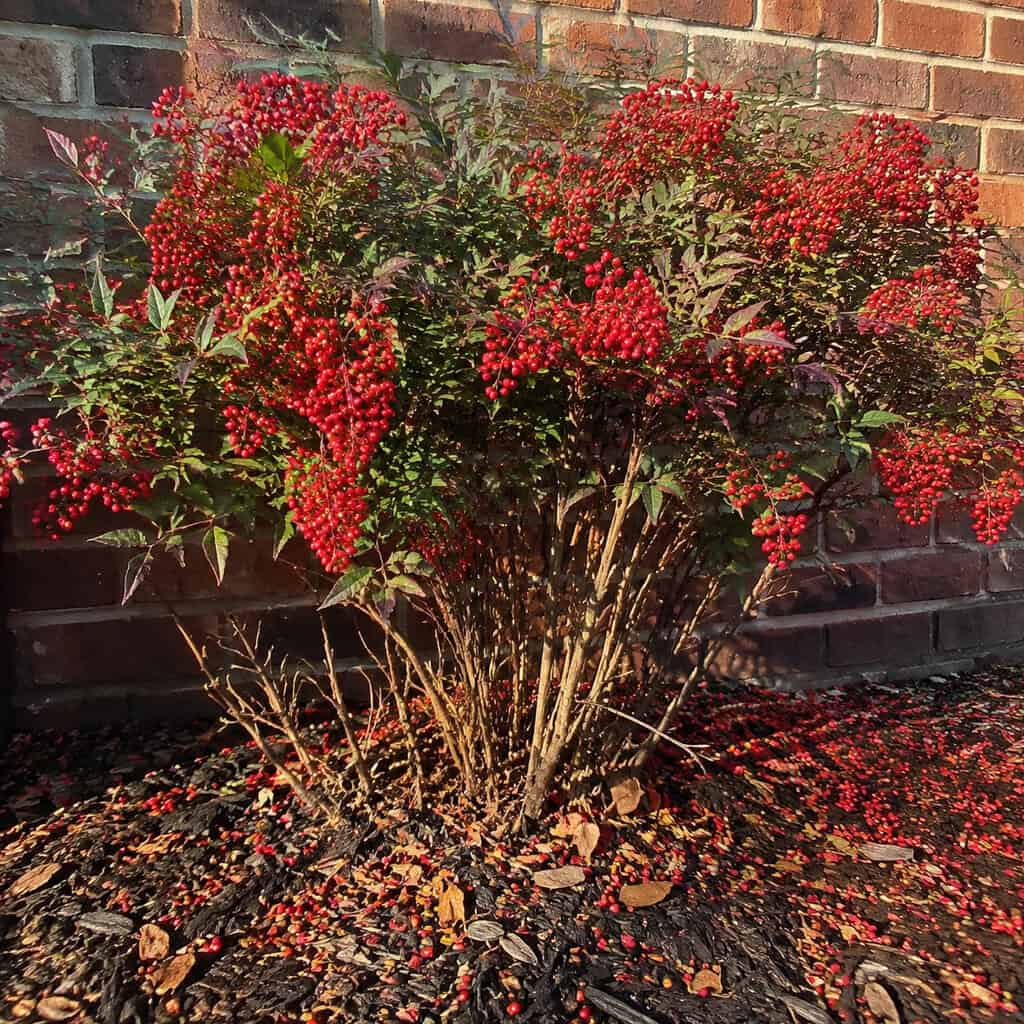
Evergreen foliage, drought tolerance, bright red winter berries — on paper, this looks like the ultimate low-effort shrub.
Those berries are exactly the problem. Nandina fruit contains cyanogenic compounds, and wildlife officials have linked mass cedar waxwing die-offs to birds gorging on the berries when other food is scarce. A dog that eats a mouthful means an emergency vet visit.
Birds also spread the seed into surrounding woods, which is why nandina has become invasive across much of the Southeast.
It’s not truly low-maintenance either — left alone, it goes bare and leggy near the base. Keeping it full requires renewal pruning: cutting individual canes to staggered heights at the base every year. Berryless cultivars exist if you want the look minus the risk.
18. Boxwood Hedges Now Face Disease and Quarantine Threats
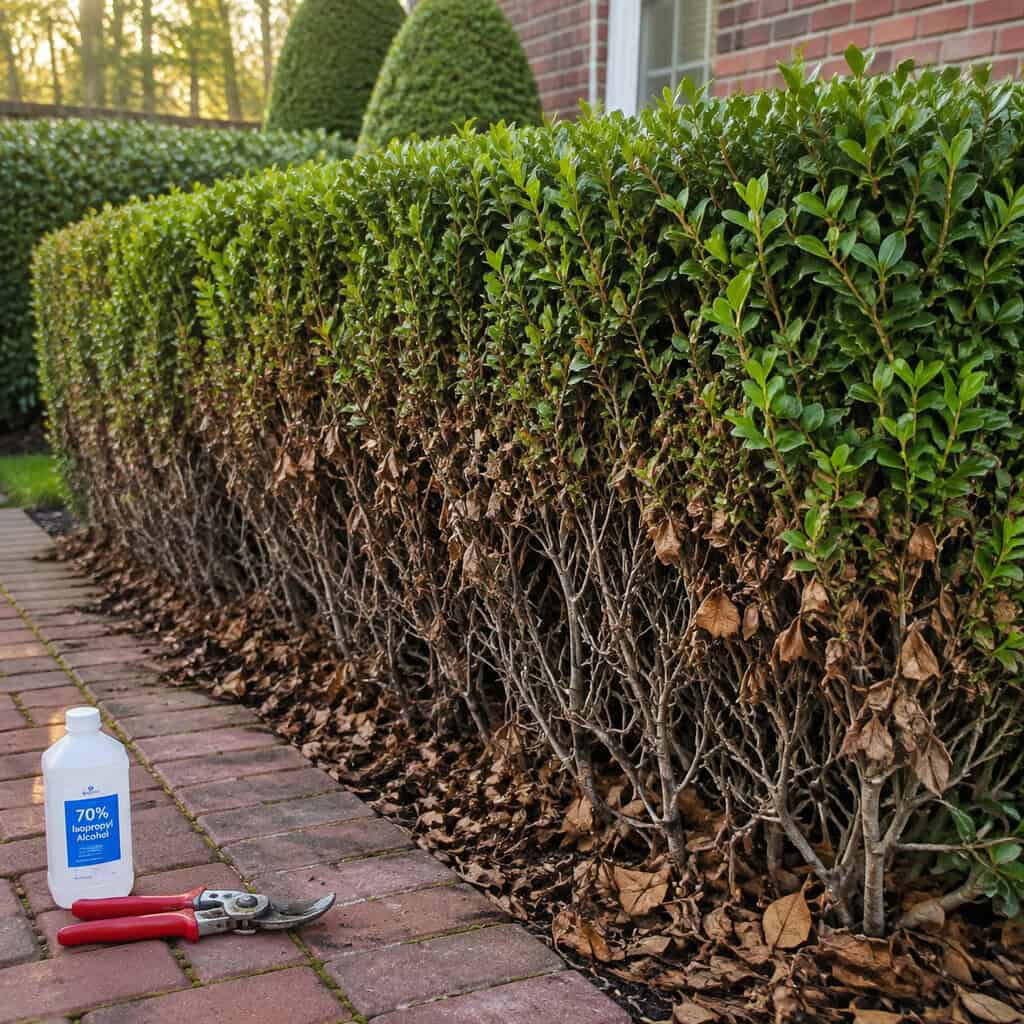
A formal boxwood hedge has always demanded two shearings a season. That was always the known cost.
Two newer threats have raised the stakes considerably.
Boxwood blight is a fungal disease that causes dark leaf spots and black streaks on stems, then strips the plant of foliage from the bottom up. It travels in on infected nursery stock, on tools, gloves, and shoes, and it can persist in fallen leaf litter for years. Once it takes hold in a hedge, standard guidance calls for total removal, not treatment.
That means the solution isn’t a fungicide spray — it’s ripping out 40 feet of hedge that took 20 years to grow, bagging (not composting) the debris, and replacing the mulch and leaf litter underneath.
Box tree moth is the second threat. Its caterpillars devour foliage first, then bark, and a serious infestation can kill an established boxwood outright. It’s under active quarantine as it spreads through the Great Lakes region and the Northeast, and homeowners in affected counties are being asked to report sightings.
Protecting a valuable hedge today essentially means running a program: rotating preventive fungicides, disinfecting pruners with alcohol between plants, shearing only in dry conditions, and thinning the interior annually so air circulates properly.
If you’d rather skip the disease risk altogether, consider inkberry holly, Japanese holly, or dwarf yaupon. Same green wall, no quarantine paperwork attached.
19. Chinese Wisteria Will Crush Whatever It Climbs
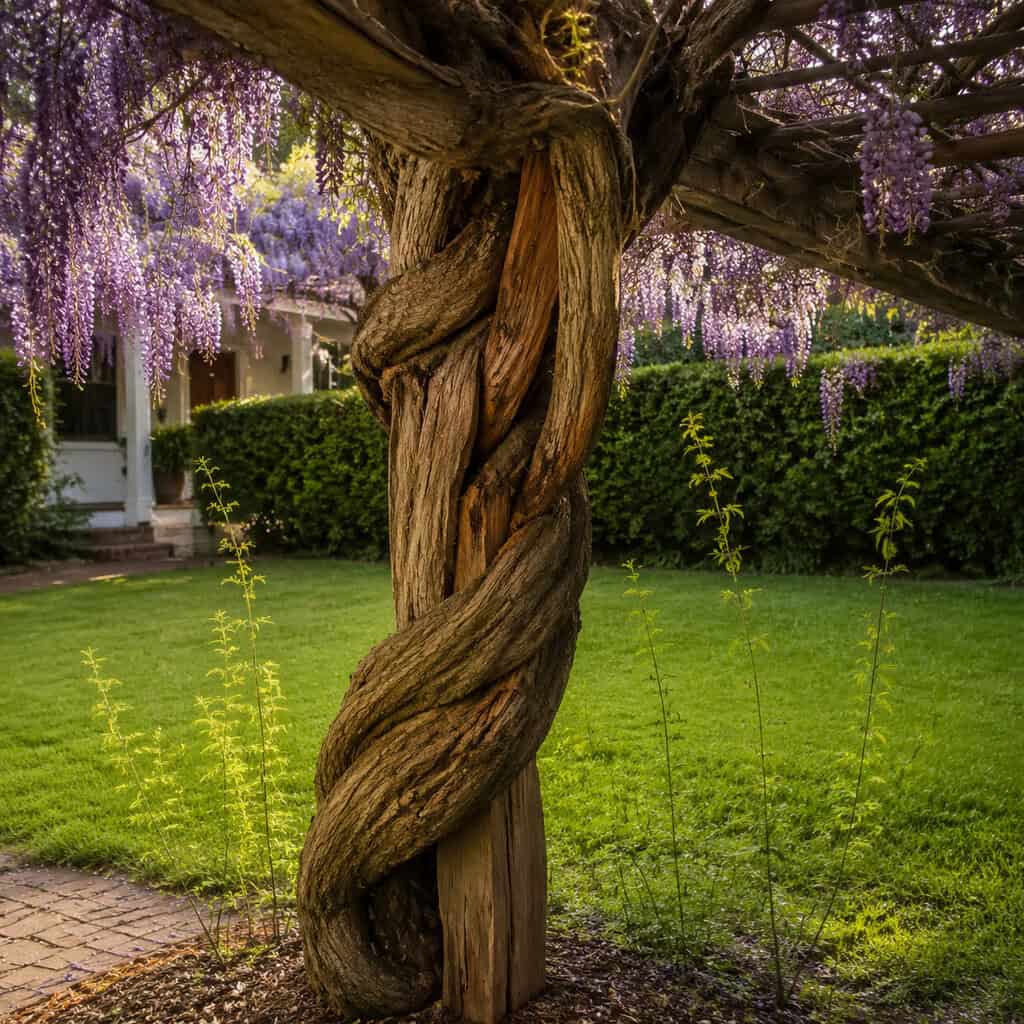
Those dreamy lavender curtains hang off a woody vine that can grow as thick as your forearm, twisting tighter as it matures.
Wisteria doesn’t so much climb a pergola as swallow it whole. Mature stems crush 4×4 posts, tear gutters from fascia, and spiral-strangle any tree they can reach. It suckers as well, sending up new shoots in the lawn ten or twenty feet from the original plant.
Keeping it under control means pruning twice a year, every year, indefinitely — a hard cutback right after flowering and another in winter. Skip one season and you’ll need a reciprocating saw to catch up.
Here’s the twist: seedling-grown Chinese wisteria can sulk for seven to ten years before it produces a single bloom. Buy a grafted, named cultivar instead, or skip it entirely.
20. Weeping Willow’s Roots Chase Every Pipe You Own

A fairy-tale tree that makes a terrible neighbor.
Willow roots chase water aggressively, spreading far beyond the canopy — typically two to three times the tree’s own height. They gravitate toward the wettest thing nearby, which in most yards means a leaky joint in an old clay sewer line or a septic drain field’s distribution pipes.
Roots don’t crack a sound pipe on their own — they exploit one that’s already weeping at a joint, then choke the line with a fibrous mass that snags everything that passes through. First sign is a sluggish drain. Next is a backup in the basement. A camera inspection plus hydro-jetting runs a few hundred dollars, and the roots simply grow back toward that same moisture within a year or two.
If it escalates to full lateral replacement, that’s a trenching project typically priced between $3,000 and $10,000 depending on length, depth, and whether the line runs beneath a driveway.
A septic system is worse news — roots invading a drain field can mean rebuilding it entirely, a five-figure expense in most areas.
Meanwhile, the tree drops small twigs and branches nonstop, meaning raking under it nearly nine months out of the year. It’s also short-lived — many decline or become hazardous by age 30 — which means eventually paying to remove something with a 60-foot spread.
If you’re set on planting one, keep it at least 50 feet from any structure, pipe, or septic component. Or better yet, put it beside a pond whose plumbing isn’t your problem.
21. Lily of the Valley Is Gorgeous and Genuinely Dangerous

Grandma’s favorite — dainty white bells, that signature scent, and it thrives in shade where little else survives.
Every part of the plant — leaves, blossoms, berries, even the water left in a vase — contains cardiac glycosides. If a dog or cat eats it, expect vomiting, a dangerously irregular or slowed heart rate, and possible seizures. It belongs on the same warning list as other common landscaping plants that are toxic to dogs.
It also spreads via pips into a thick mat that crowds out hostas, ferns, and anything else nearby. The rhizomes tangle together, and whatever fragments you miss simply grow back.
Lovely in a bed with firm boundaries. A poor choice in any yard with a dog that likes to chew.
22. Tree of Heaven Spreads Itself Whether You Want It or Not
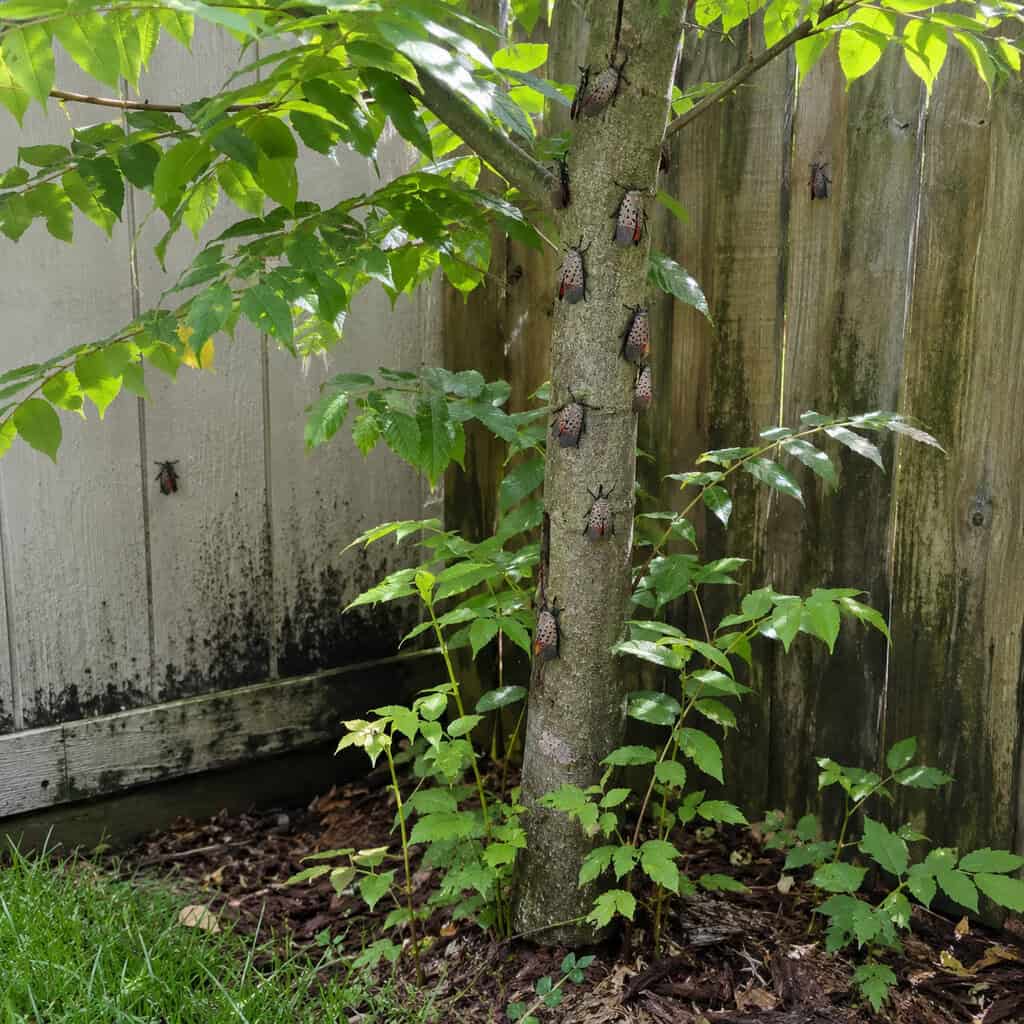
Almost nobody actually plants this one — that’s exactly why it’s everywhere.
A volunteer sapling shows up near a fence corner or by the shed, shoots up six feet in a season, and fills an empty spot fast. Tropical-looking compound leaves, and it’s free. So people let it stay.
Then it starts calling the shots. Tree of heaven suckers heavily from its roots, sending new stems up through lawns, mulch beds, hedges, and cracks where the driveway meets the garage. It also releases chemicals into the soil that suppress the plants around it.
Cutting it down makes matters worse. Sever the trunk without a herbicide treatment and it triggers a mass suckering response, turning one tree into a dozen. The cut wood even smells like rancid peanut butter.
Then there’s the spotted lanternfly problem. Tree of heaven is its preferred host, and heavy populations build there before spreading to grapes, maples, and fruit trees. Infested trees ooze sap and drip honeydew, which grows black sooty mold on anything underneath — deck boards, patio furniture, cars — and draws wasps looking for sugar.
Removal has to be done in the right order. The standard method is a late-summer basal bark or cut-stump herbicide treatment while the tree is pulling resources downward, followed by felling it the next season once the roots are dead. State agriculture departments publish exact timing, and it’s worth following to the letter.
Spot a sapling now? Deal with it immediately. That’s the cheapest version of this problem you’ll ever face.
23. Pampas Grass Cuts You Before It Ever Burns
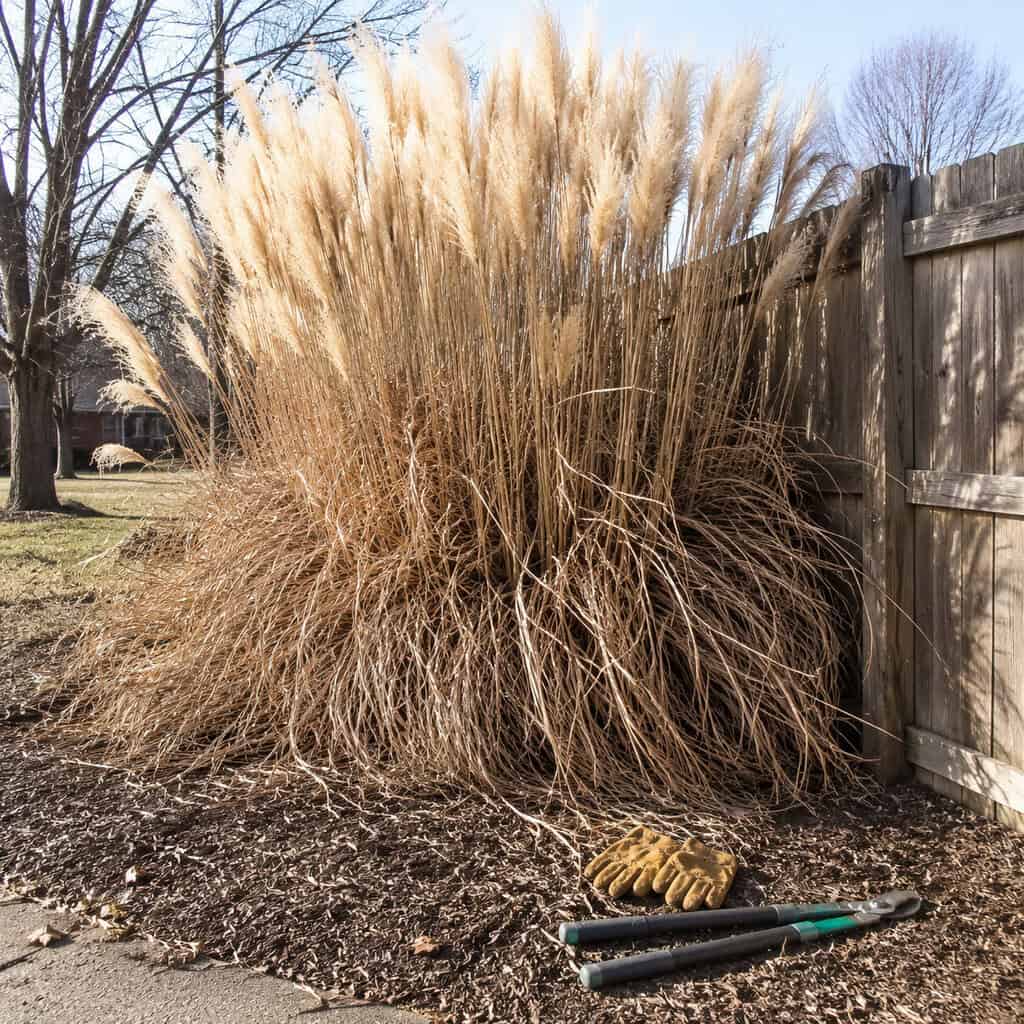
The plumes are trendy again. The workload never went out of style.
Cutting back a mature clump every late winter is a full-body task requiring long sleeves and leather gloves. The leaf edges are lined with silica and slice skin like a paper cut that just keeps going.
The dried-out crown is also a serious fire hazard. A four-foot mound of dead thatch sitting against a fence or house wall is precisely what Western fire officials tell homeowners to clear from defensible space.
It also seeds prolifically. Pampas grass has invaded coastal and roadside areas in California and along the Gulf Coast, prompting several jurisdictions to restrict or discourage it. Native muhly grass or switchgrass gives you similar movement without the bloodshed.
24. Running Bamboo Solves Privacy and Creates a Property Dispute
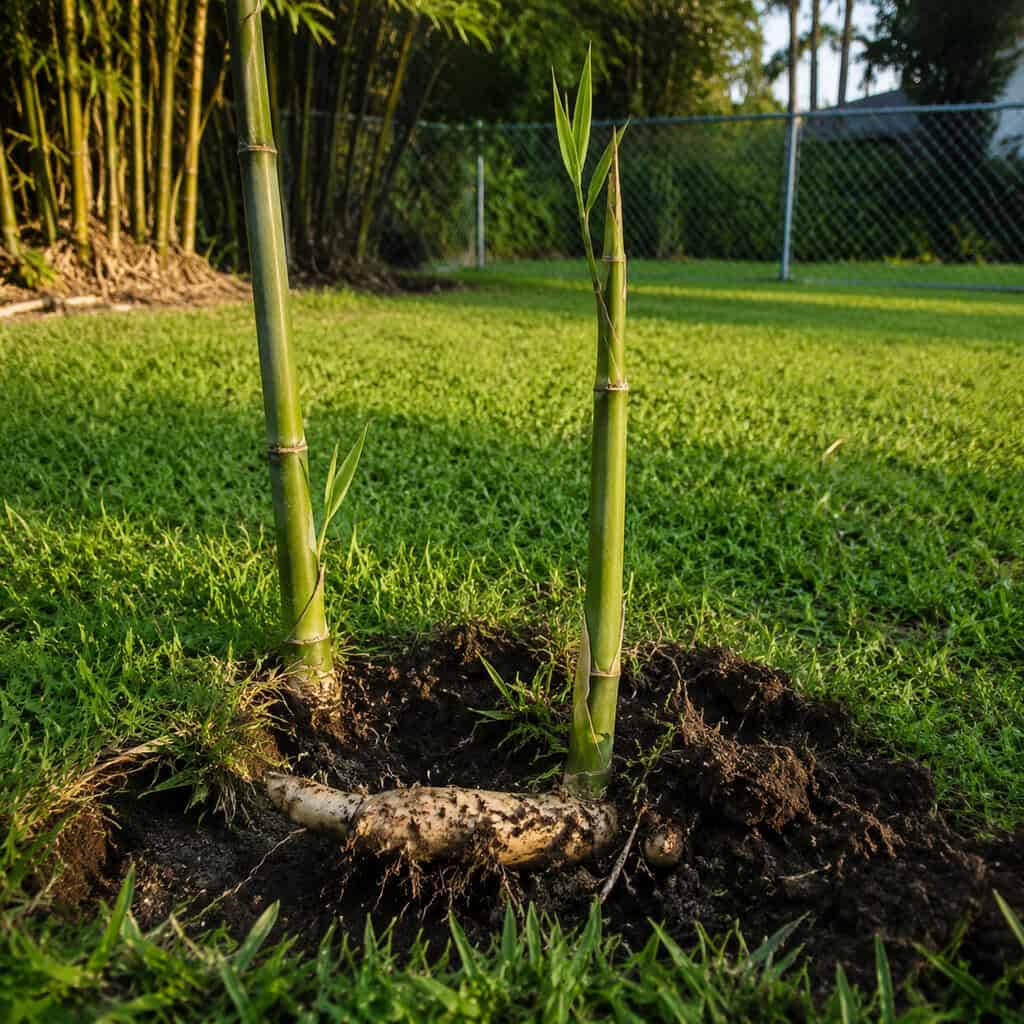
It fixes your privacy problem in a single season. That’s exactly the trap.
Running bamboo travels underground via rhizomes, and 15 feet of lateral spread in a year is nothing unusual. By year four, culms are popping up in the neighbor’s lawn, through their patio joints, and along the sidewalk strip.
Containing it requires an 18-inch-deep barrier of concrete, metal, or HDPE around the entire planting area, checked yearly for rhizomes that have jumped over the top edge. Clemson’s Home & Garden Information Center notes that any leftover fragment in the soil restarts the whole spread.
Fairfax County, Virginia actually wrote an ordinance specifically about it — a sign of how these disputes usually end.
25. Hybrid Tea Roses Demand a Weekly Chore List
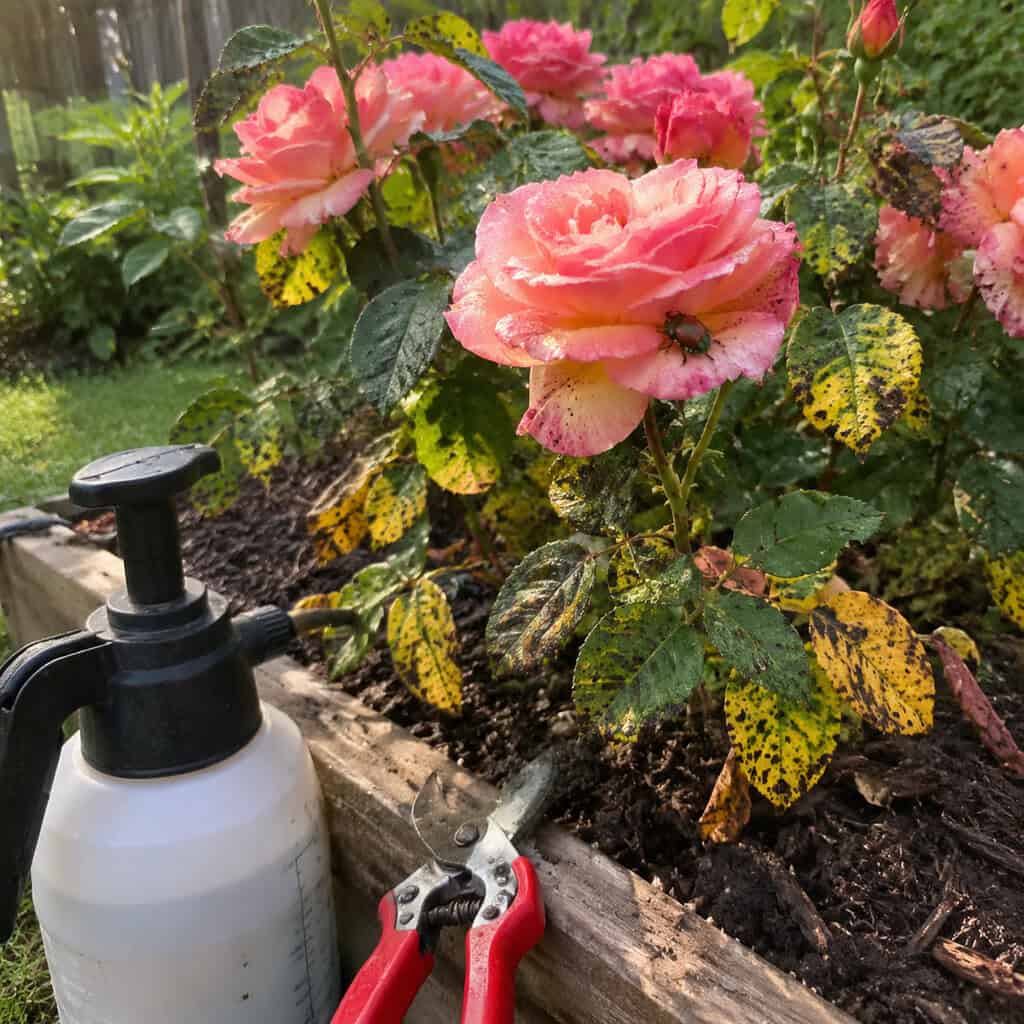
The florist-shop rose planted in your yard — gorgeous, and a weekly obligation from May straight through frost.
Black spot strips its foliage. Powdery mildew coats new growth in gray. Japanese beetles skeletonize the blooms by July. Keeping it presentable takes a set fungicide schedule, not a reactive spray now and then.
Add in deadheading every few days, a hard prune each spring, and mounding soil or mulch over the graft union before winter in colder climates.
Choose a landscape shrub rose instead — you’ll get roughly 80% of the beauty with virtually none of the calendar commitment.
26. Butterfly Bush Feeds Adults but Supports No Caterpillars
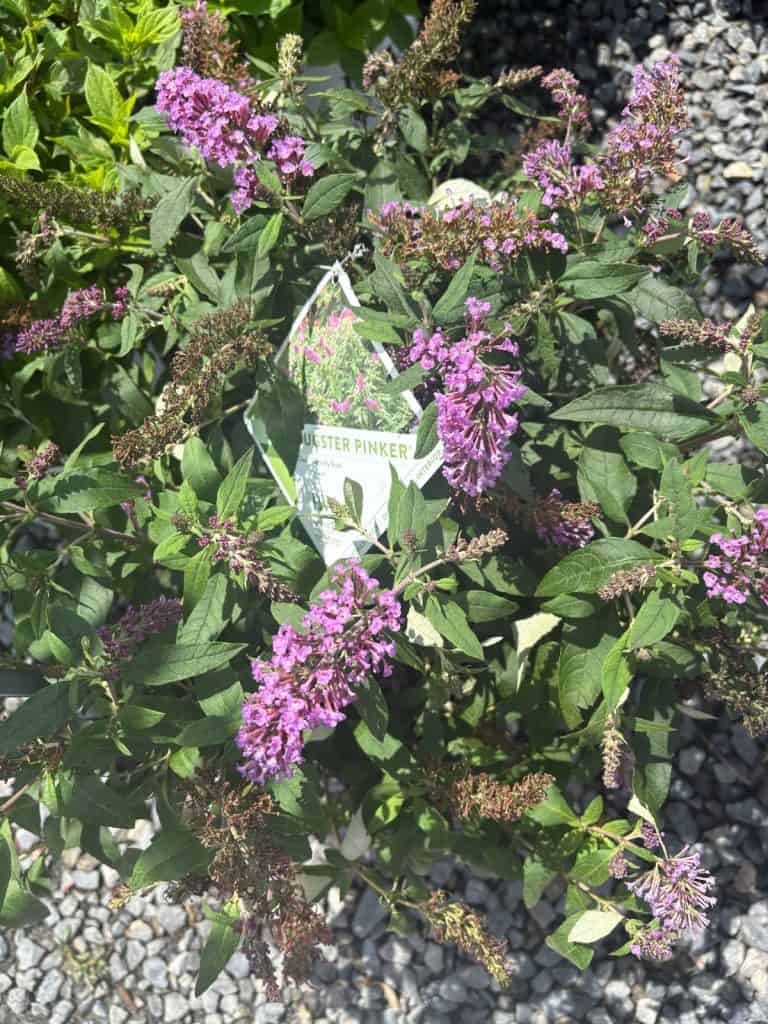
It’s marketed as a pollinator magnet, and grown butterflies genuinely do flock to it.
What they can’t do is lay eggs on it. Butterfly bush offers nectar with no nursery attached — no North American caterpillar species uses it as a host plant. Pair it with milkweed, asters, and true natives from a real pollinator plant list if you actually want butterflies reproducing in your yard.
The upkeep also catches people off guard. Skip the hard late-winter cutback and it turns woody, sparse, and top-heavy within three years. Skip deadheading and it drops thousands of seeds.
That’s why Oregon regulates it and Washington classifies it as a noxious weed. Sterile cultivars remain legal in Oregon and are worth seeking out.
27. Vinca Minor Escapes the Bed Within Two Years

A glossy evergreen carpet with blue spring flowers that thrives in dry shade — it looks like a maintenance win, and honestly, it is for the first two years.
Then you realize it isn’t staying put. Vinca roots wherever a stem touches soil, so it spreads as a solid sheet — into shrub beds, over stone edging, and straight into the lawn.
Removing it from turf is the toughest part. Broadleaf herbicides that easily kill dandelion and clover barely make a dent in vinca’s waxy, evergreen leaves. You’re left pulling it by hand, node by node, only to watch it regrow from whatever you missed.
Best to confine it to a bed with a hard physical border. Or skip it altogether and choose from shade plants that thrive where grass refuses to grow without taking over everything nearby.
28. Japanese Knotweed Can Crack Foundations and Derail Home Sales

It arrived in America as a Victorian-era ornamental — hollow bamboo-like canes, heart-shaped leaves, sprays of white flowers in late summer, sold as an elegant screening plant.
Today it’s the closest thing landscaping has to a legal liability.
The real plant lives underground — a rhizome network that runs deep, wide, and stores enough energy to push new shoots through gaps other plants simply can’t exploit. It doesn’t bore through solid concrete; it finds what’s already weak — a hairline crack in a foundation wall, an expansion joint in a slab, a seam in asphalt, a gap around a utility line — and widens it season after season as the shoot thickens.
The scale of this problem shows up in public budgets. New York City has spent over $1 million battling a single 30-acre infestation, according to Groundworks, which ranks knotweed the number one plant for home damage nationwide.
DIY removal essentially never works. Cutting it stimulates growth. Digging fragments the rhizome, and a piece the size of a fingernail can start an entirely new colony. Hauling contaminated soil off-site just spreads it further — in the UK, knotweed-laced soil is legally classified as controlled waste.
What actually works is a multi-year plan: late-summer stem injection or foliar herbicide timed to when the plant is pulling resources down into its rhizomes, repeated across three to five seasons, followed by ongoing monitoring.
Then there’s resale value. Knotweed within striking distance of a foundation is exactly the kind of red flag an inspector notes and a lender questions — it has killed deals before. If you spot canes near your house, don’t cut them. Call a licensed applicator and document every treatment.
29. Mulberry’s Free Fruit Comes With Stains and Allergies Attached
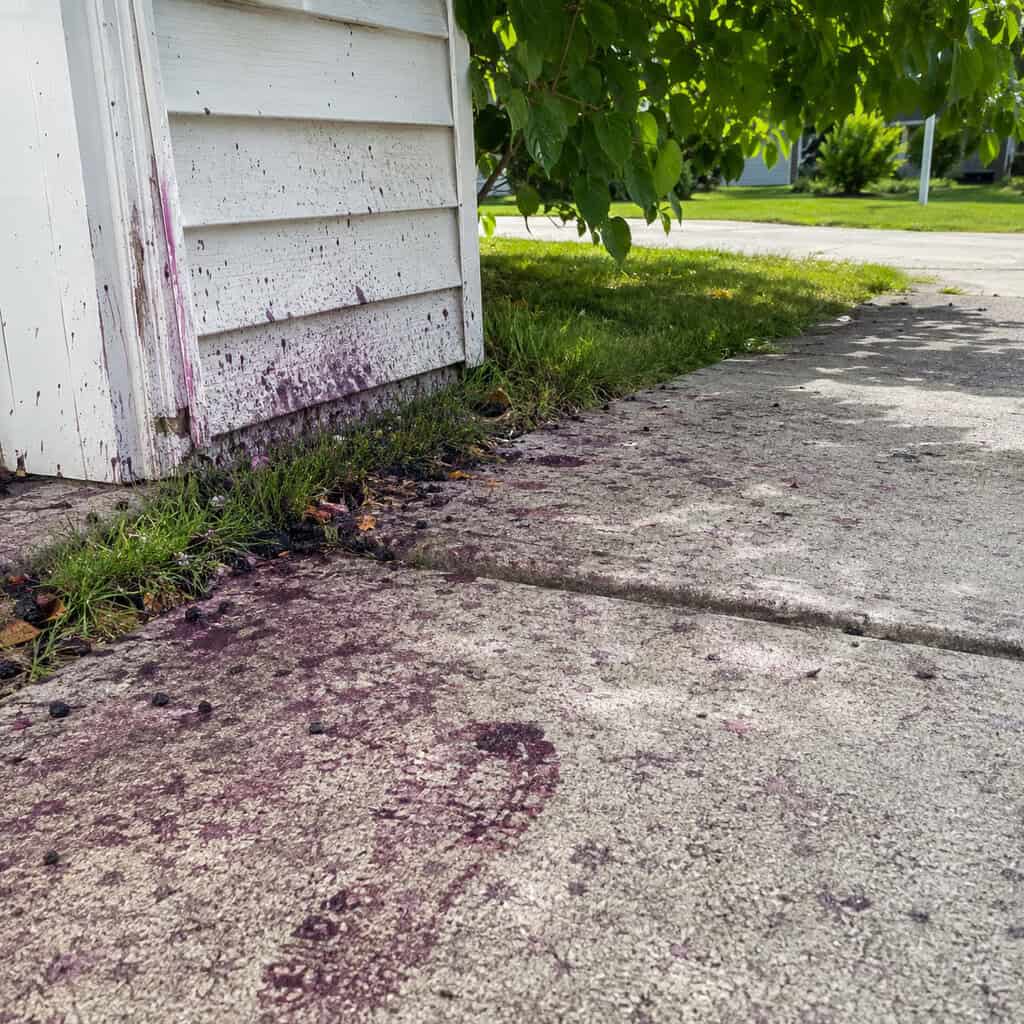
Free fruit sounds fantastic — until you park a car underneath the tree.
Ripe mulberries stain concrete, composite decking, painted siding, car paint, and dog paws, and the pigment sets almost instantly on porous surfaces. Birds then eat the fruit and spread the stains across the whole neighborhood, along with seedlings sprouting in every flower bed within a few hundred feet.
The fruitless male cultivars marketed as the fix just swap one problem for another. Male mulberry ranks among the heaviest producers of allergenic pollen in the nursery trade — bad enough that Tucson and Las Vegas have banned planting it outright.
Family Handyman puts it squarely on its never-plant list. Hard to disagree.