

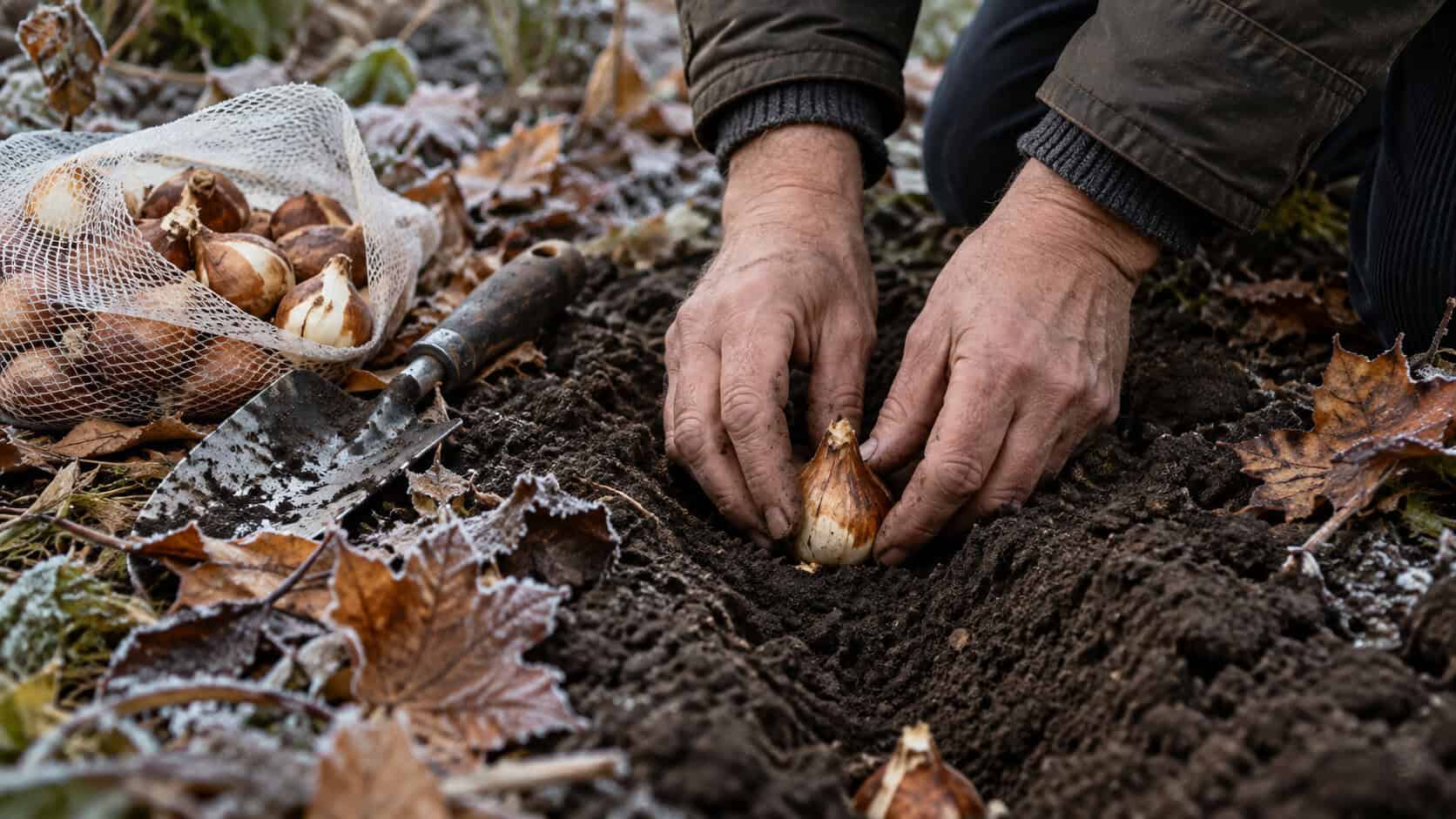
Drive by a yard in the middle of April that already looks like it belongs on a postcard — daffodils drifting by the hundreds, a peony heavy with buds, a lawn so thick and green it seems painted on — and what you’re seeing didn’t happen this spring.
It happened last October.
That’s the trick nobody tells you about: fall gives roots warm soil and cool air at the same time, and that’s the one combination they actually crave. There’s no competition from weeds, no scorching sun, nothing fighting the plant for water or space.
Planting in spring is a scramble to catch up. Planting in fall is simply getting ahead of the calendar.
Below are 30 things worth tucking into the ground this fall — each one quietly setting up a payoff that arrives long before your neighbors even remember they meant to garden.
1. Set Bearded Iris Rhizomes Now for a May Show
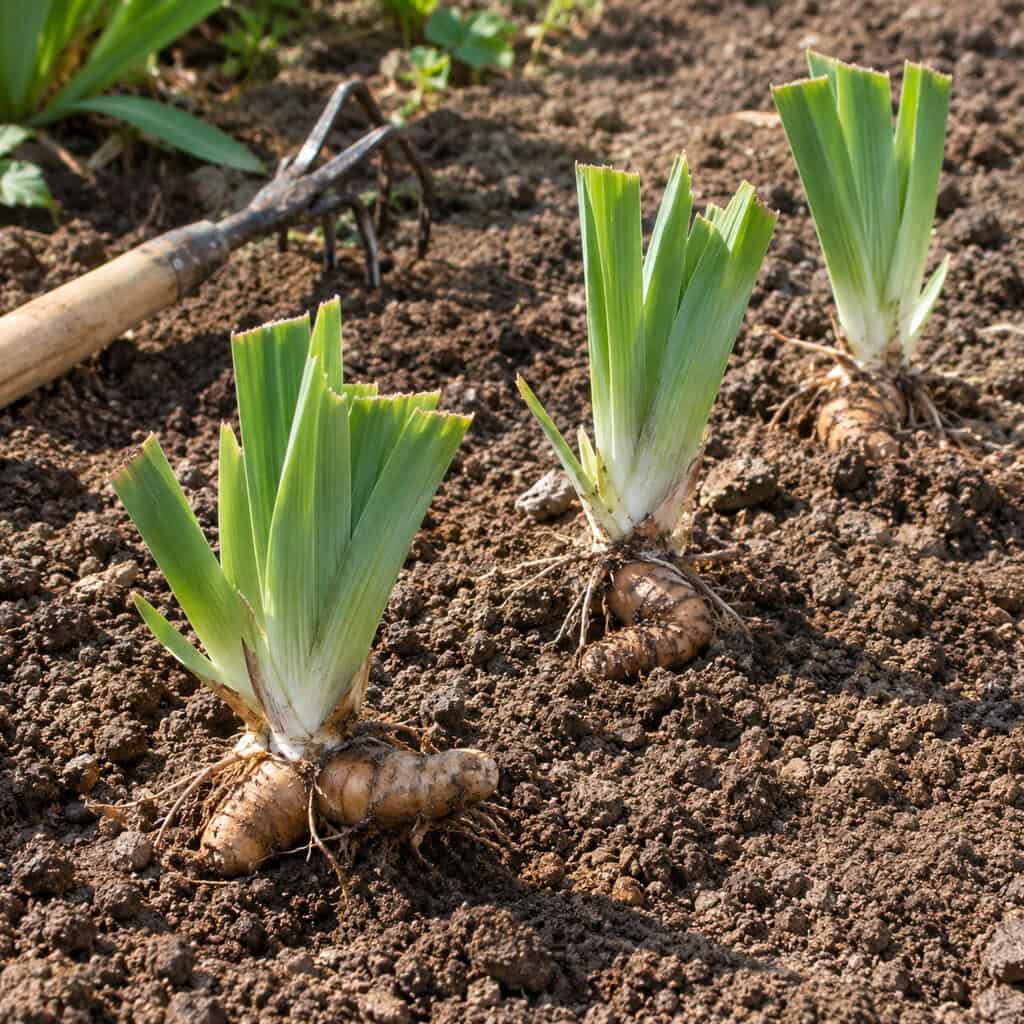
The window for planting or dividing rhizomes runs from late summer into early fall, giving them enough time to root before going dormant so they’re ready to bloom right on cue next May.
Everything hinges on depth here, and it runs opposite to nearly everything else you’ll plant. Bearded iris rhizomes need to stay at the surface, tops exposed to full sun — think of a potato half-buried in sand at the beach. Bury them and they rot. Cover them with mulch and they rot just the same.
It’s the classic mistake: an overly tidy gardener blankets the bed in three inches of bark come November, then wonders months later where the iris went.
Every three or four years, lift and divide an overgrown clump. Toss the worn-out center, save the healthy outer fans, and cut the leaves back to about six inches.
2. Multiply Your Own Shallots and Multiplier Onions
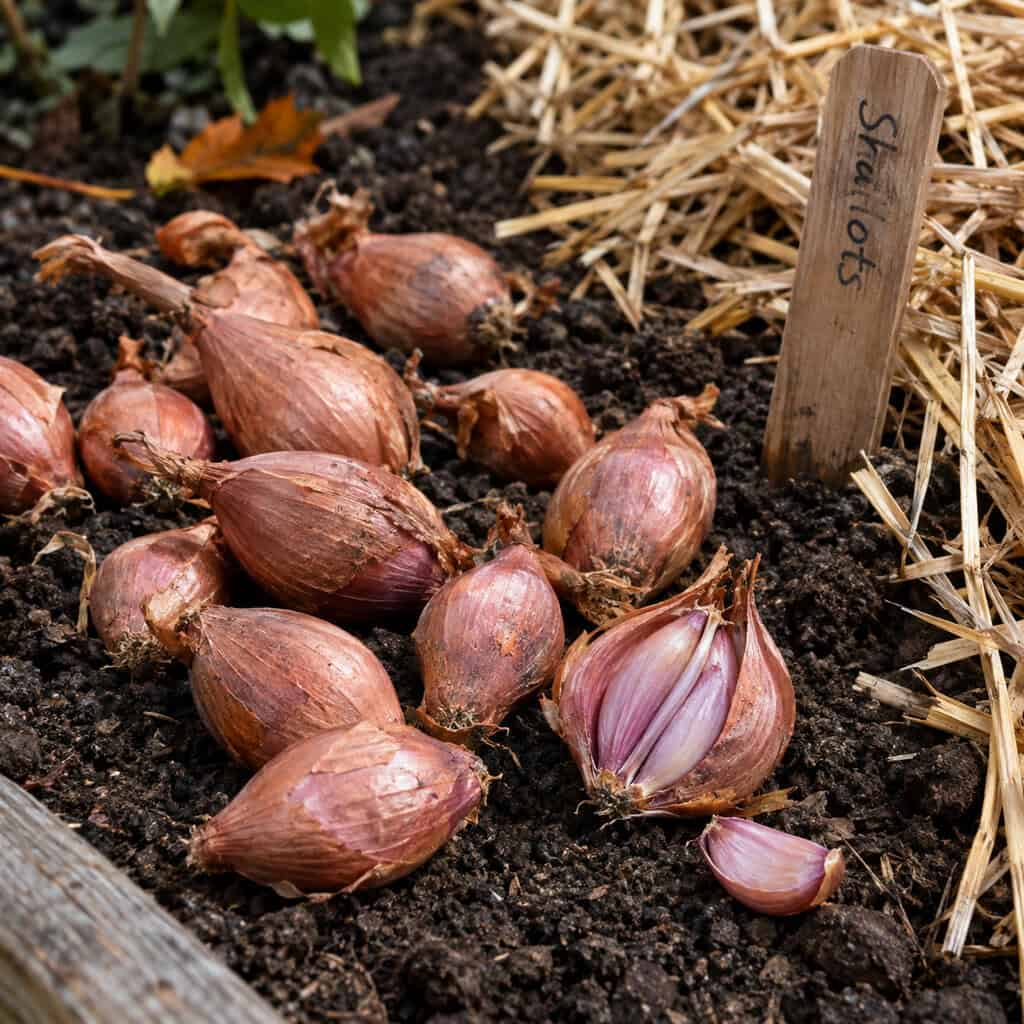
It runs on the same fall-planting logic as garlic, yet hardly anyone bothers.
Tuck a single shallot bulb into the soil in October, and by early summer it’s multiplied into a cluster of six to ten. Multiplier onions — potato onions, Egyptian walking onions — perform the same trick.
Set aside your largest bulbs at harvest time, replant them come fall, and you’ll never have to buy shallots again. At the store, they run about $6 a pound.
Set them two inches deep with the tips just barely under the surface, then mulch the same way you would garlic.
3. Give Blueberry Bushes a Head Start
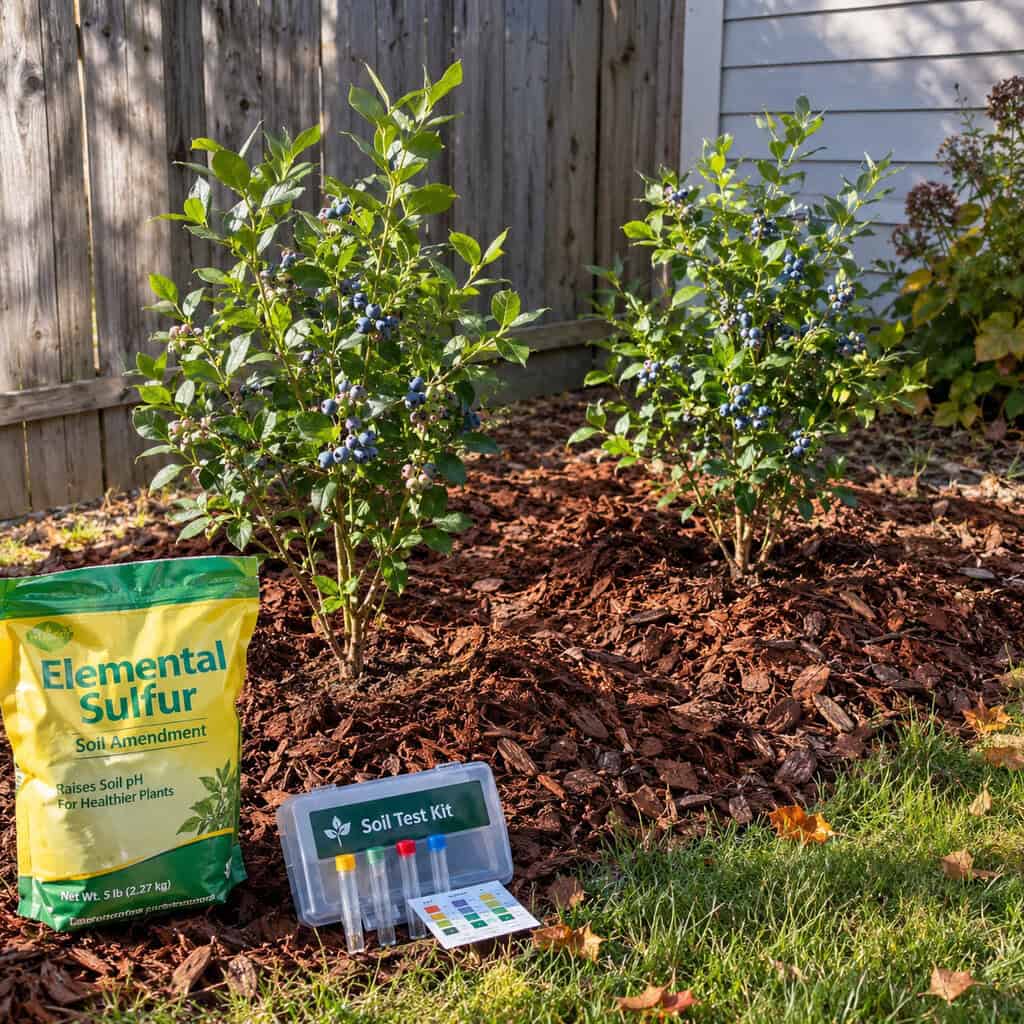
Planting in fall gives a blueberry bush a full season to grow roots before it ever has to worry about producing flowers.
It’s also your best chance to correct the soil chemistry. Blueberries need a pH of 4.5 to 5.5, while most yards sit around 6.5 — soil that looks perfectly healthy but quietly starves the plant. Run a soil test, then mix in elemental sulfur and peat moss now, giving it months to take effect before spring growth begins.
Choose two different varieties rather than one. Blueberries are only partly self-fertile; cross-pollinating two cultivars that bloom together roughly doubles fruit set and produces noticeably bigger berries. A single isolated bush is usually the reason someone ends up with a small handful of fruit instead of quarts.
Keep a four-inch layer of pine bark or sawdust mulch in place, and replenish it as needed.
4. Plant Forsythia for That First Blast of Yellow
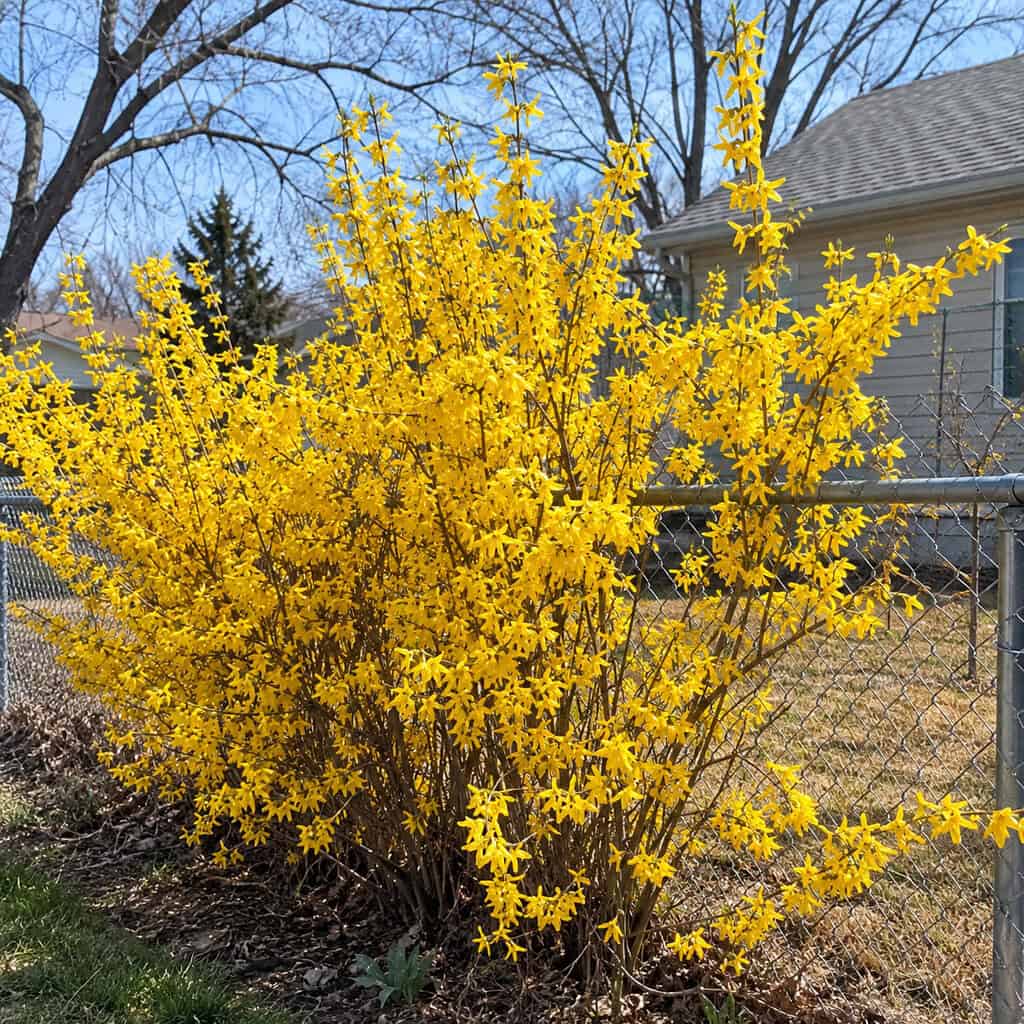
That familiar wave of yellow that signals spring’s arrival across so many neighborhoods? It’s almost always this shrub.
Put a container-grown forsythia in the ground in early fall and it settles in quickly no matter the soil. It’s inexpensive, hardy, and deer generally leave it alone entirely.
Here’s what wrecks them: hedge shears. Forsythia flowers form on the previous summer’s wood, so shaping it into a tight green ball in fall or early spring removes every bud you were counting on.
Prune right after the blooms fade, and do it by cutting whole old canes down at the base rather than trimming the outer surface.
5. Sow Cool-Season Grass Seed While Soil Is Still Warm
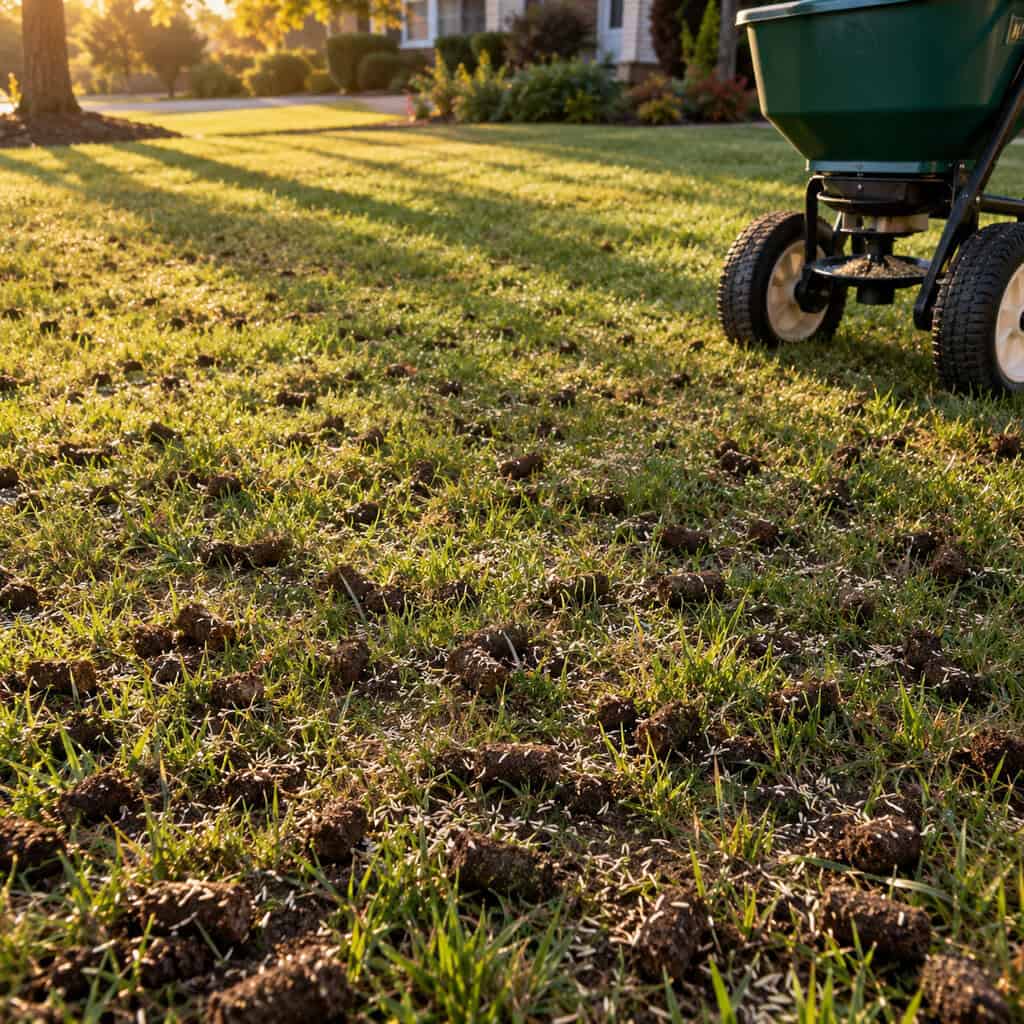
Of everything on this list, grass seed offers the single biggest spring reward — and it’s the one homeowners overlook most often. The secret is timing it for September.
Fescue, Kentucky bluegrass, and perennial rye all germinate beautifully when soil still holds onto summer’s warmth while the air begins to cool. Crabgrass has already run its course by then, so there’s essentially no competition, and rainfall tends to cooperate on its own.
Spring seeding fights against all of that at once: cold soil, an emerging crabgrass problem, rising temperatures, and the pre-emergent trap. You can’t apply crabgrass preventer and seed grass in the same pass — one cancels the other out — leaving spring planters to choose between weed control and new grass.
Application rates matter a lot. For overseeding a thin lawn, use roughly 3 to 4 pounds of tall fescue per 1,000 square feet; a full bare-dirt renovation calls for 8 to 10. Kentucky bluegrass needs far less, about 2 to 3 pounds. Putting down double the recommended rate doesn’t thicken your lawn — it just makes seedlings compete each other into stunted growth.
Regional timing looks like this: Upper Midwest and New England should aim for mid-August through mid-September. Mid-Atlantic and Ohio Valley fall between September and very early October. In the transition zone, target Labor Day. As a general rule, count on needing 45 days of good growing weather ahead of your average first hard frost.
Water frequently but lightly at first — about 10 minutes, twice daily, for the initial two weeks — then shift to deeper, less frequent watering as roots develop. Watering new fall grass seed correctly is the single biggest factor in success, since the top quarter inch of soil can’t be allowed to dry out during germination.
If the soil is compacted, core-aerate beforehand, and mow the existing turf short so seed makes solid contact with dirt. A lawn seeded in September turns green weeks ahead of one seeded in April — and it gets there with far less effort on your part.
6. Get Bare-Root Peonies in the Ground Early
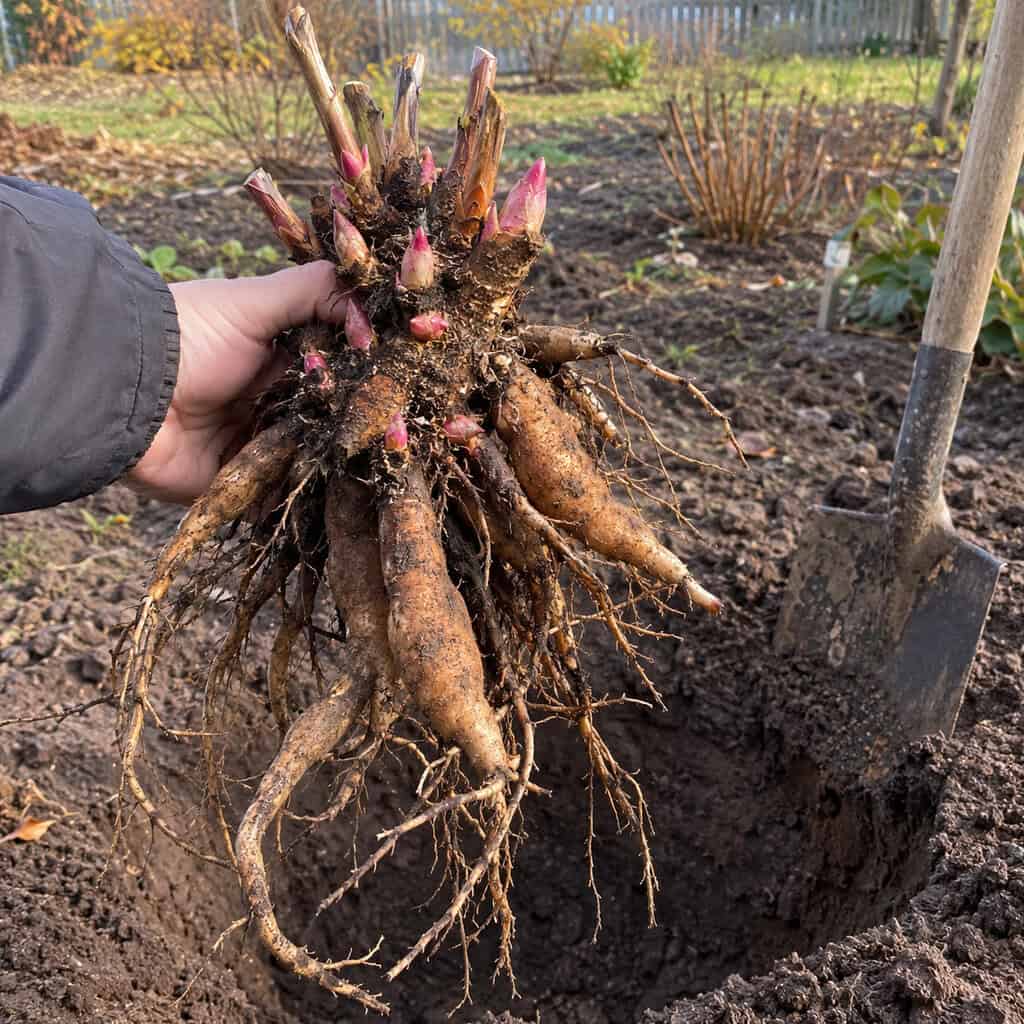
A peony root planted in October will bloom nicely by its second year. Wait until April to plant that same root, and you’ve essentially lost a whole year of progress.
Few items on this list demand more urgency than this one.
Depth is everything. The pink growth buds, called eyes, need to sit just an inch and a half to two inches beneath the soil. Plant them any deeper and you’ll get lush leaves but no flowers, ever. That’s exactly why so many old, inherited peonies at established homes refuse to bloom — someone mulched over them once, then did it again the following year.
Dig wide rather than deep. Position the root so the eyes are only just covered, and go easy on the mulch afterward.
7. Choose a Redbud or Serviceberry for Instant Spring Drama
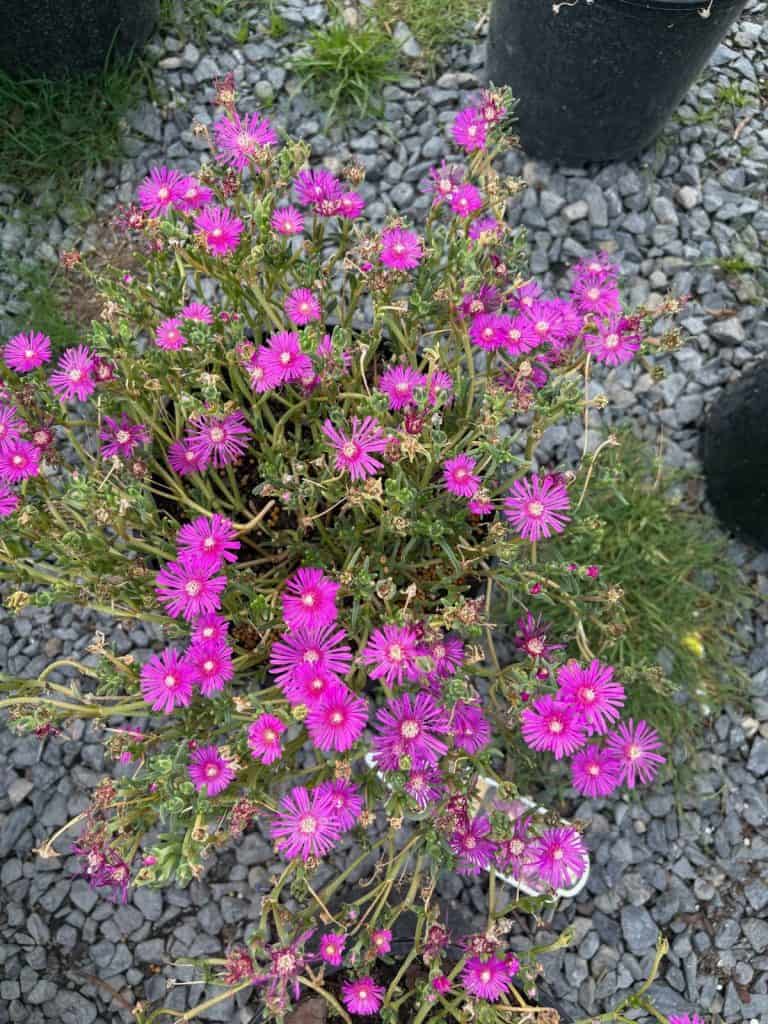
A single tree, planted on one crisp October afternoon, can end up being the biggest spring spectacle your yard produces.
Eastern redbud bursts into magenta flowers directly on its bare branches and trunk before a single leaf appears — a display nothing else in a typical yard can match. Serviceberry offers a cloud of white blossoms in April, followed by edible berries in June that draw in cedar waxwings and robins, then finishes the year with orange fall foliage.
Both are native species, both top out under 25 feet, and both work comfortably on a standard residential lot.
Get it in the ground at least six weeks before the soil freezes, and pay close attention to planting depth: locate the root flare, where the trunk begins to widen into roots, and keep that point level with or slightly above the surrounding grade. More young trees die from being planted too deep than from drought. Mulch in a wide ring but never let it touch the trunk, and picture how large that tree will be in five years before deciding where it goes.
8. Plant Grape Hyacinth Where You’ll Actually See It
This is the rare bulb that marks its own location. Muscari pushes up grassy foliage in fall almost immediately after planting, so you won’t be accidentally slicing through bulbs with a trowel come November.
Come spring, it produces short spikes of that distinctive dusty cobalt blue, and planted in groups of a few hundred along a path, they read like a flowing river of color.
Here’s the caveat: they spread aggressively, seeding and multiplying their way into the lawn, the vegetable garden, and even patio cracks.
Some gardeners consider that a bonus rather than a drawback. Figure out which side you’re on before you plant a big batch.
9. Establish Lilac for Fragrance That Sticks With You
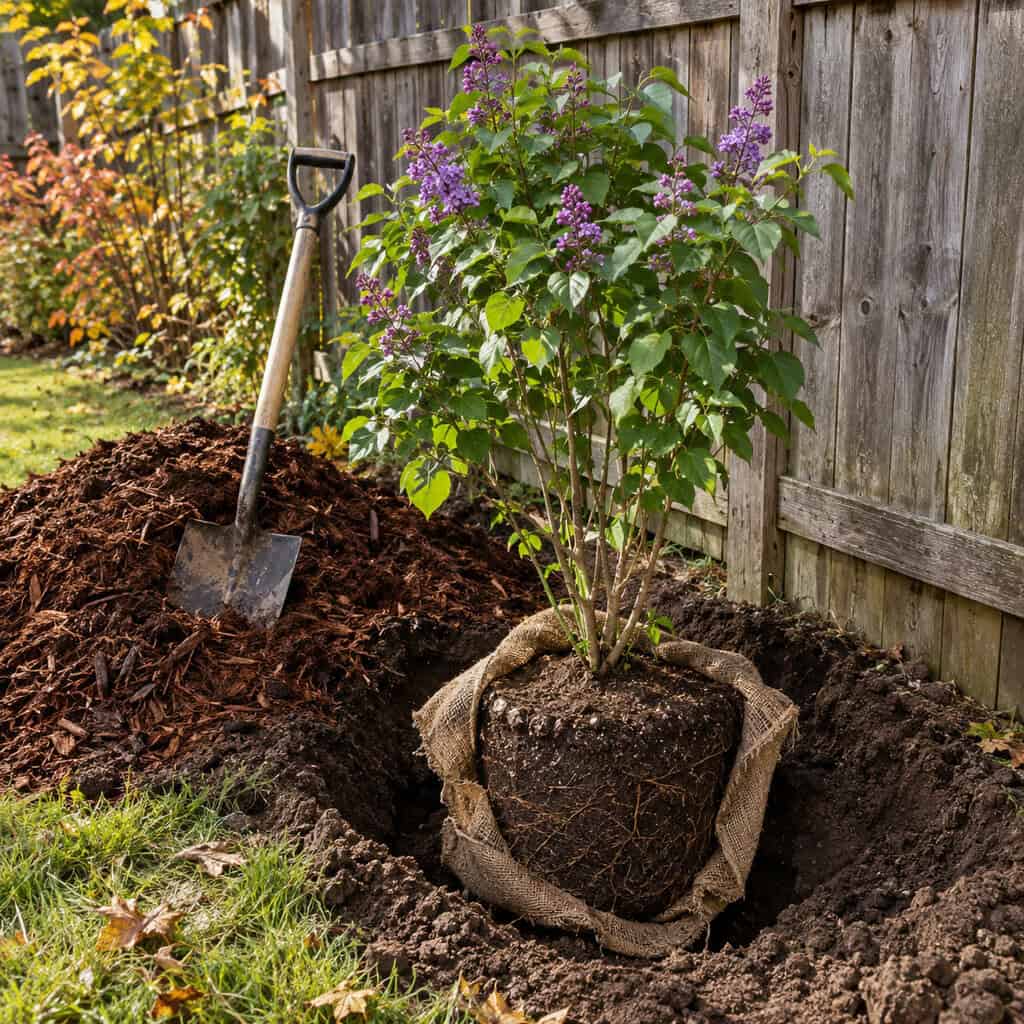
Cool, moist soil with no heat stress gives a shrub its very best shot at establishing roots, and lilac takes full advantage of it. Plant a container or balled specimen about six weeks before your first hard freeze, and it will wake up already anchored come April.
It wants full sun, soil that’s neutral to slightly alkaline, and drainage that never lets water sit.
Common lilac eventually needs room — eight to twelve feet of width. Dwarf cultivars such as Miss Kim stay under five feet while smelling every bit as good.
And that fragrance is really the whole point. Few things trigger nostalgia in an American yard faster than a lilac blooming by the front door.
10. Cluster Dwarf Iris for an Early Color Punch
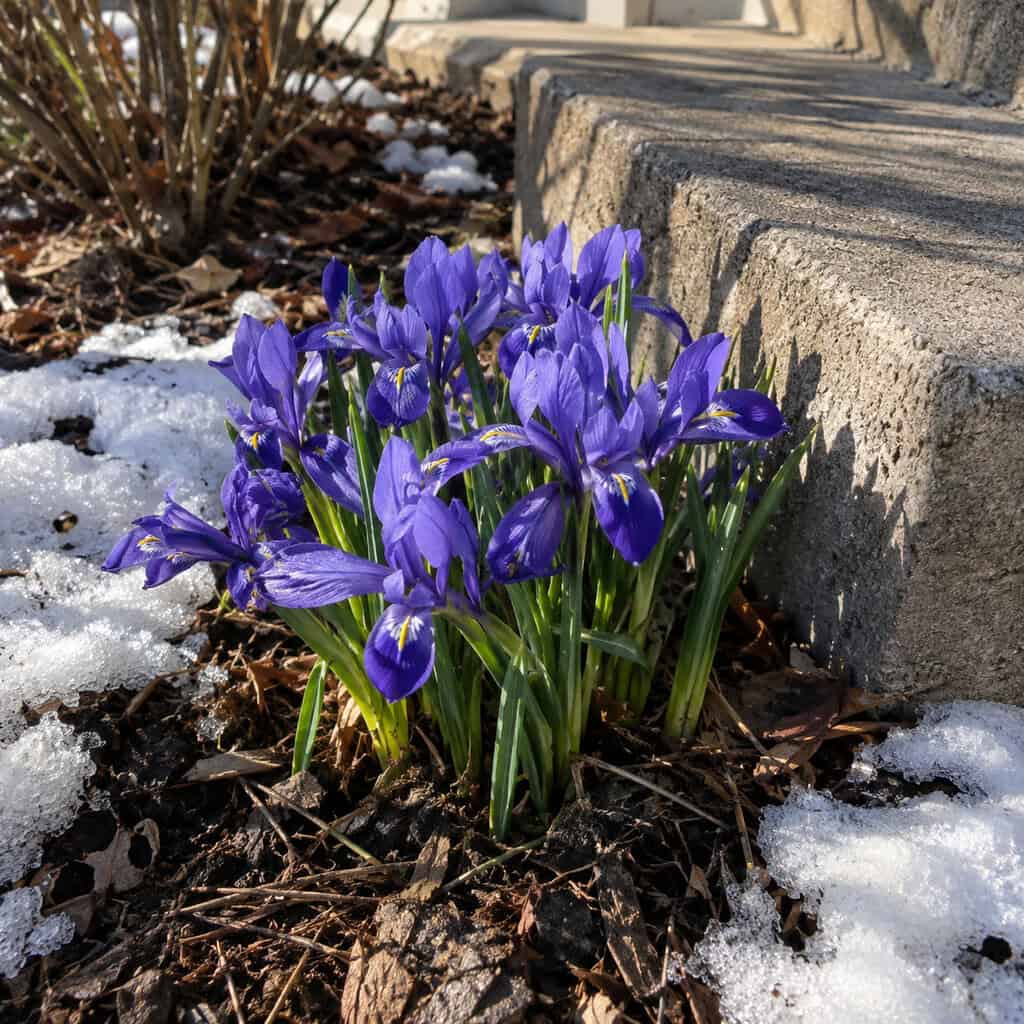
These are tiny — just four inches tall — yet they bloom in late winter alongside the snowdrops, showing off a violet-blue with a gold streak unmatched by any other early flower.
The bulbs are inexpensive, rodents mostly ignore them, and they multiply readily over time.
Where people go wrong is spreading them too thin. At this size, five bulbs scattered through a large bed vanish completely. Instead, plant fifty together in a tight cluster, three or four inches deep, right along the front walk or near the door where you’ll actually pass by in February.
Skip that step and you may never notice them bloom at all.
11. Plan Ahead for Tulips — Timing Is Everything
There’s no faking a tulip bloom. They require a long stretch of sustained cold to set flowers, and no garden center shortcut can substitute for it.
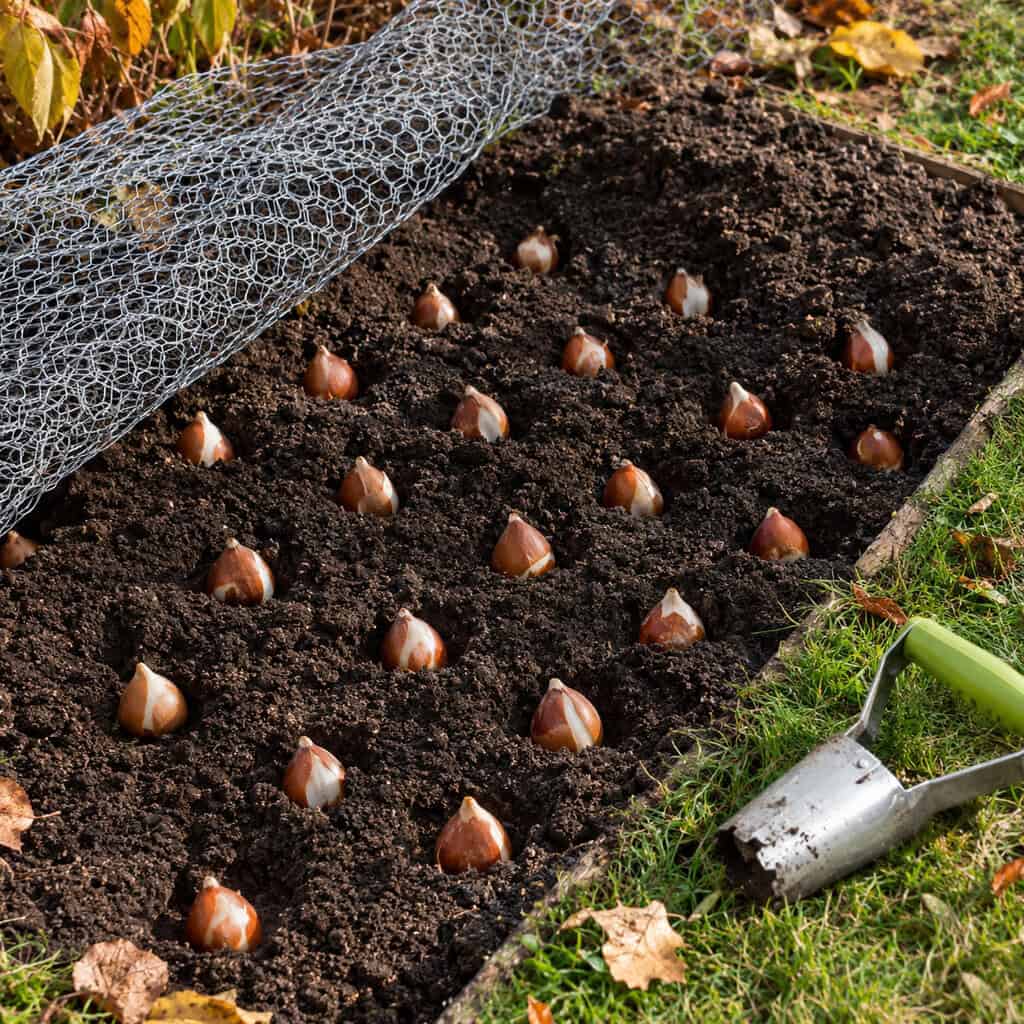
Deliberately plant them late — October into November, once soil temperatures fall below 60°F. Planting too early, during a mild September, risks bulb rot and premature leaf tips that get shredded by the season’s first hard freeze.
Squirrels see a freshly planted tulip bed as an open invitation. Lay flat chicken wire over the area, cover it with soil, then remove it in spring. Voles are an even bigger threat since they attack from underground; tossing sharp gravel into each planting hole helps deter them.
Set realistic expectations. Most modern hybrid tulips only put on two or three strong years of bloom before fading. Species tulips and Darwin hybrids tend to last considerably longer.
12. Grow Ornamental Alliums (With a Pet Safety Caveat)
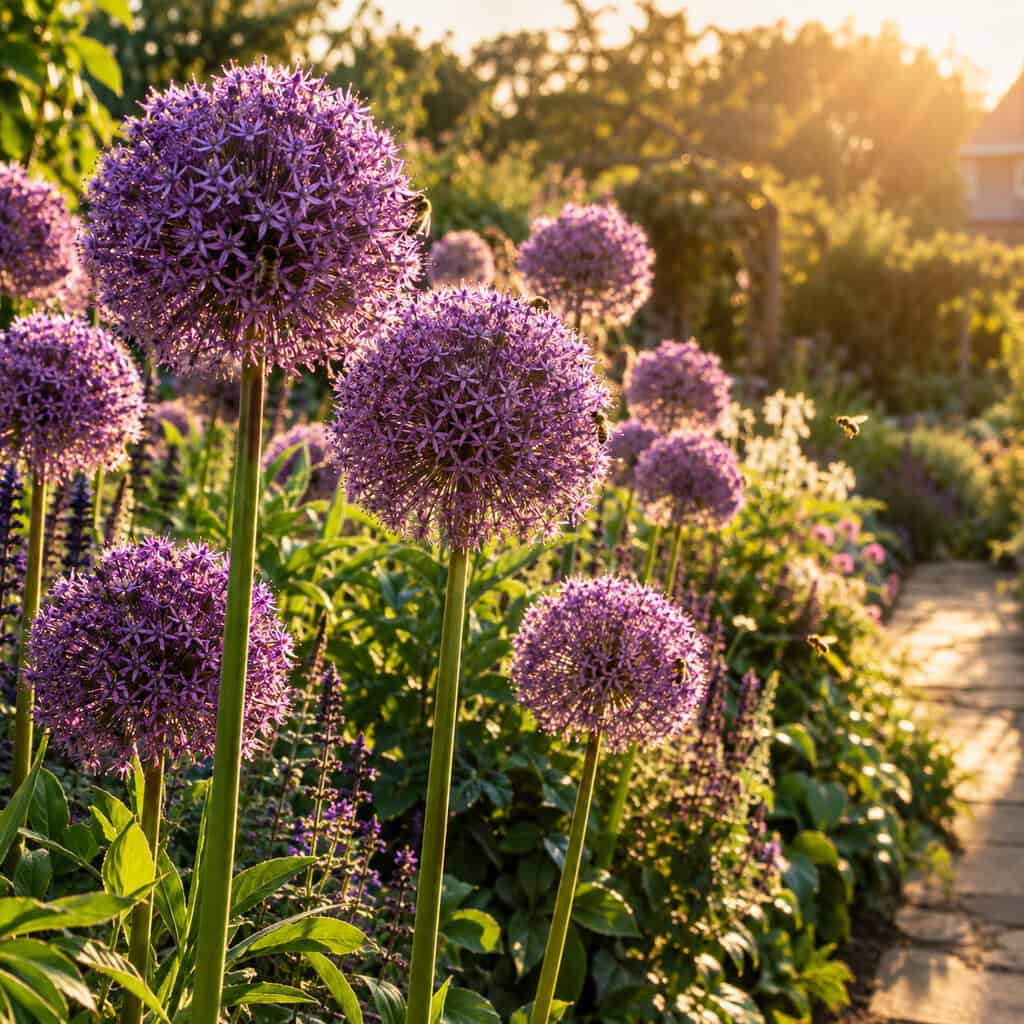
Picture softball-sized purple globes rising on three-foot stems in late spring, hovering above the peonies, followed by seedheads that hold their architectural shape well into August.
Wildlife leaves them completely alone. The same onion chemistry that gives alliums their smell makes the whole plant unpalatable to deer, voles, squirrels, and rabbits — which is exactly why they’re the low-drama bulb choice for anyone who’s watched a tulip bed get wiped out.
That same chemistry becomes a real concern indoors. Alliums are toxic to dogs and cats. Every member of the group — ornamental types, garlic, onion, chives, leeks — contains N-propyl disulfide, a compound that damages red blood cells and can trigger hemolytic anemia. Signs develop gradually: lethargy, pale gums, dark urine, and weakness appearing a day or two after exposure. Cats are considerably more sensitive than dogs, and it takes surprisingly little relative to body weight to cause harm.
The bulbs themselves carry the highest concentration and smell appetizing to curious noses. Keep bags sealed and stored up high while planting, clean up any loose papery skins, and don’t let a dog wander nearby while you’re digging holes. If you’ve got a dedicated digger at home, plant alliums inside a fenced bed or an area they don’t frequent.
Once they’re established and growing, the danger drops considerably — dogs rarely bother chewing the tough mature stems. The real risk comes from the unplanted bag sitting on the garage floor. It’s the same concern covered in our rundown of landscaping plants that are toxic to dogs.
Plant from September through November, at a depth roughly three times the bulb’s height, in full sun with soil that drains well.
13. Locate Hyacinths Close to Where You’ll Smell Them

No other plant packs as much fragrance into something the size of a small onion.
Which makes it a shame how often hyacinths get squandered. Planted in the middle of a border, that scent simply drifts off unnoticed. Instead, place them within three feet of a doorway, along a walking path, or beneath a window you open in April.
Plant the bulbs six inches deep during October or November, grouped in clusters of five or seven. The first two or three years bring dense, full flower spikes; after that, expect looser, more relaxed blooms.
Wear gloves while handling them. The papery outer skins contain calcium oxalate crystals that leave many people itching for a good while.
14. Sow Crimson Clover as a Free Fertilizer Program
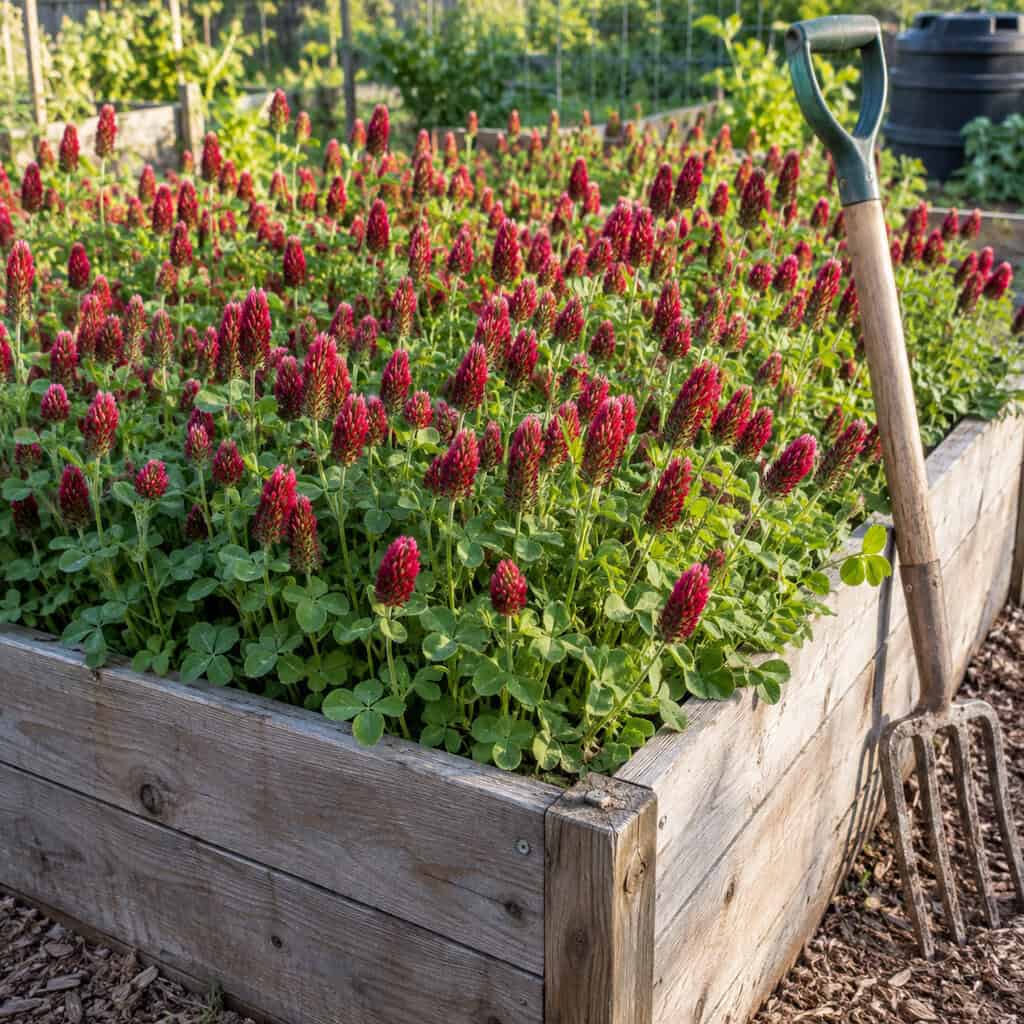
This isn’t a flower — think of it more as a deposit into your soil’s future.
Green manure sounds fancy, but it’s a simple idea: grow a crop with the intention of killing it and letting it decompose into the soil. Crimson clover is a legume, meaning bacteria living in nodules on its roots convert atmospheric nitrogen into a form plants can use. Sow it over an empty vegetable bed in late summer, six to eight weeks ahead of frost, and it spends winter quietly building fertilizer at no cost.
It handles three other jobs simultaneously. Its roots loosen compacted soil. The living cover crowds out winter annual weeds — chickweed, henbit, bittercress — that would otherwise take over your beds by March. And the top growth keeps rain from pounding bare dirt into a crust that washes topsoil away.
Come spring, mow or crimp it down right at flowering, when nitrogen levels peak, then either till it under or leave it as mulch and plant directly through it. Give it two to three weeks before seeding, since the decomposing plant material temporarily locks up nitrogen.
A bed treated this way beats one that simply got a scoop of synthetic fertilizer, because you’re adding organic matter and improved soil structure along with the nutrients — something no bag of fertilizer can replicate. If you already compost, this is essentially the same principle applied right where the plants will grow.
Missed the window for clover? Cereal rye germinates in soil as cold as 34°F and can still get established as late as October. It won’t fix nitrogen the way clover does, but it will build biomass and hold your soil in place.
15. Sow Spinach Now, Harvest It in March
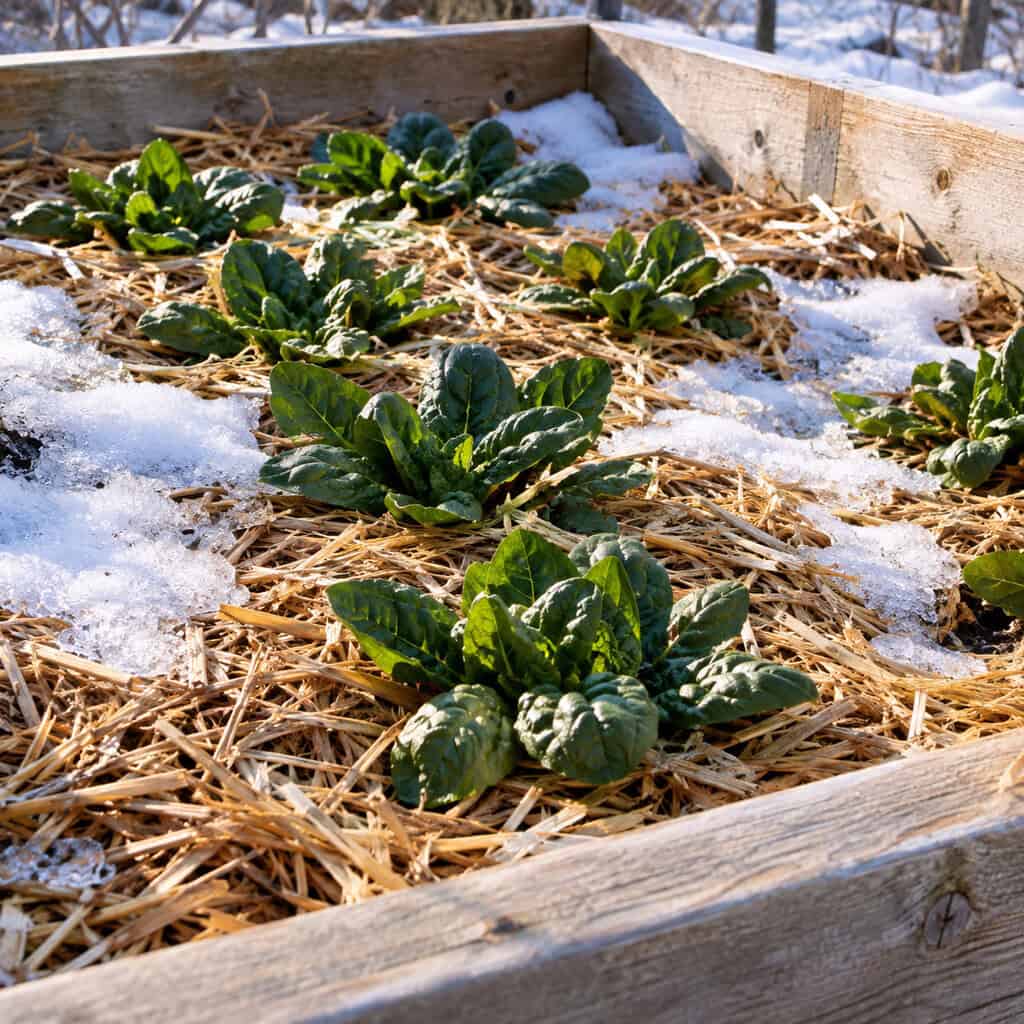
Sow the seed in late August or September and let it grow to roughly three inches tall before hard cold sets in.
From there, growth halts completely. All through winter, the plants sit beneath snow or a thick layer of straw and appear to be doing nothing at all.
Then March arrives and they take off fast, delivering the season’s first harvest weeks ahead of anything sown in spring. Cultivars bred specifically for overwintering, like Winter Bloomsdale and Giant Winter, handle the cold most reliably. University of Maryland Extension lays out the fall sowing timelines crop by crop.
Get it in the ground now, ignore it through winter, and enjoy it in March.
16. Rely on Daffodils for Worry-Free April Color
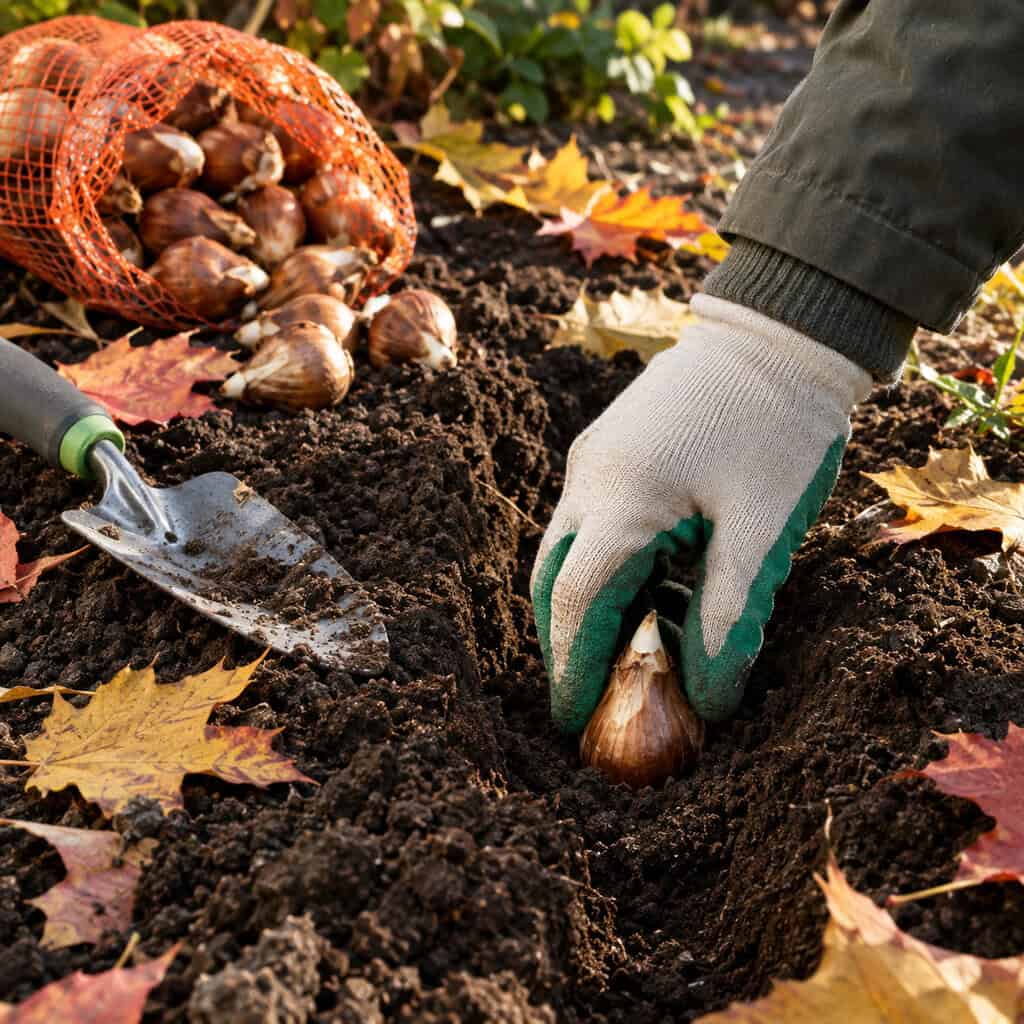
For roughly a dollar a bulb, you get six weeks of April color from the one bulb that wildlife won’t touch.
That immunity isn’t accidental. Every part of the daffodil — bulb, leaf, flower — contains lycorine along with calcium oxalate crystals, giving it a bitter taste and making animals ill. Deer walk right past them. Voles avoid tunneling nearby. Squirrels will dig up an entire tulip bed overnight yet leave daffodils untouched just a few inches away.
Put that to work for you. Surround a tulip planting with daffodils to create a natural chemical barrier. Line the edge of a hosta bed with them and deer will head for the driveway instead of your border.
That same toxicity that protects the bulb outdoors becomes a genuine hazard indoors. Daffodil bulbs resemble onions closely enough that dogs may chew on them, leading to vomiting, drooling, abdominal pain, and, in larger doses, cardiac arrhythmia. Cats face risk too, typically from nibbling the foliage or drinking water from a vase of cut flowers. Never leave a mesh bag of bulbs sitting out on the garage floor mid-project — that’s the most common way accidents happen. Keep bulbs on a shelf or in a sealed container, away from curious noses. For a broader check of your garden, see the full list of common garden plants that are toxic to pets.
Plant bulbs six inches deep, pointed end facing up, once soil temperatures drop below 60°F — generally late September through November across most of the country. Penn State Extension advises planting early enough that roots can establish before the ground freezes solid. With a cordless drill and auger bit, a hundred bulbs can go in over a single afternoon.
After that, they’ll return reliably for the next thirty years.
17. Tuck Virginia Bluebells Under Bare Spring Trees
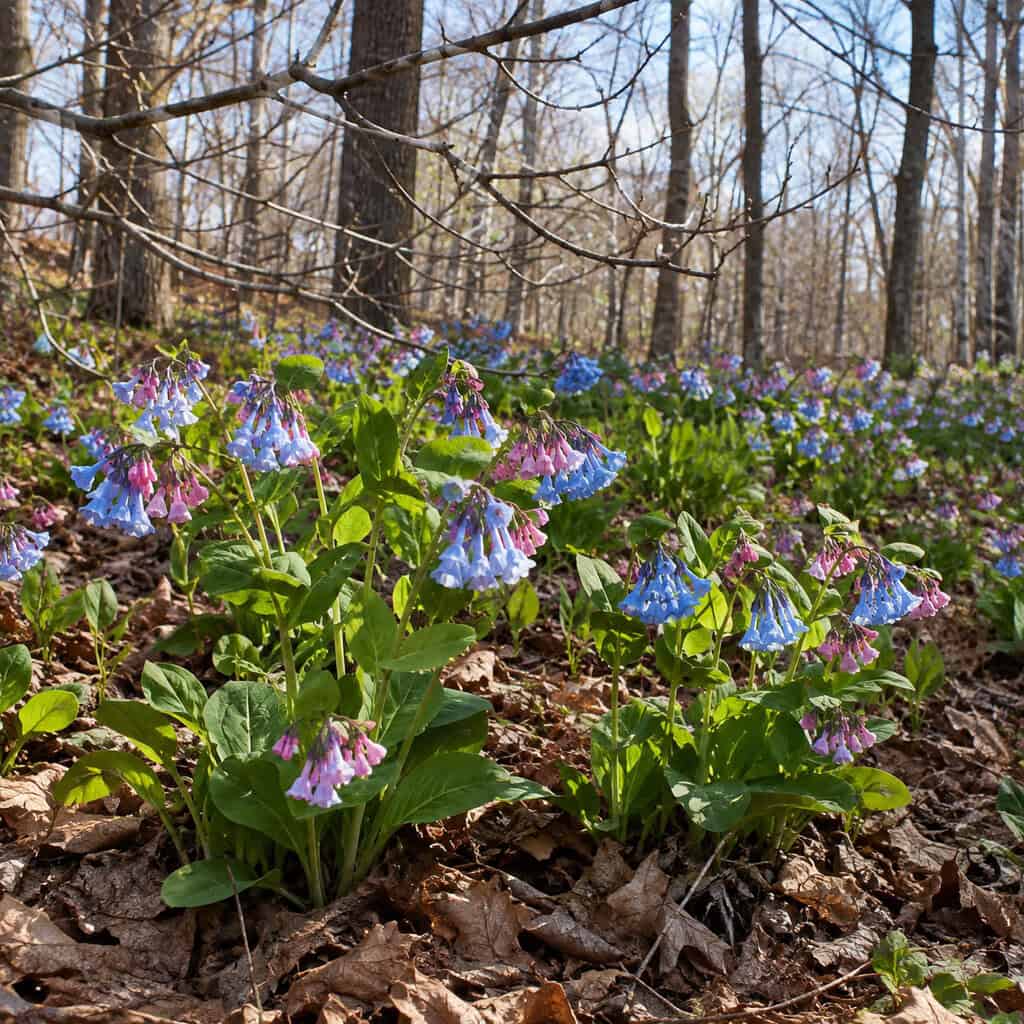
What arrives as a knobby brown dormant root in October or November looks like something you’d toss straight in the compost.
By April, though, it’s transformed into a colony of nodding bells opening pink and shifting to sky blue, blooming beneath still-bare maple branches before the canopy fills in.
This native woodland ephemeral fades fast — by late June the foliage yellows and disappears entirely, so plant it alongside ferns or hostas that can fill the space it leaves behind.
It’s exactly the plant for that dry, shaded patch under the big tree where grass has refused to grow for years.
18. Toss Poppy Seed Onto Winter Snow
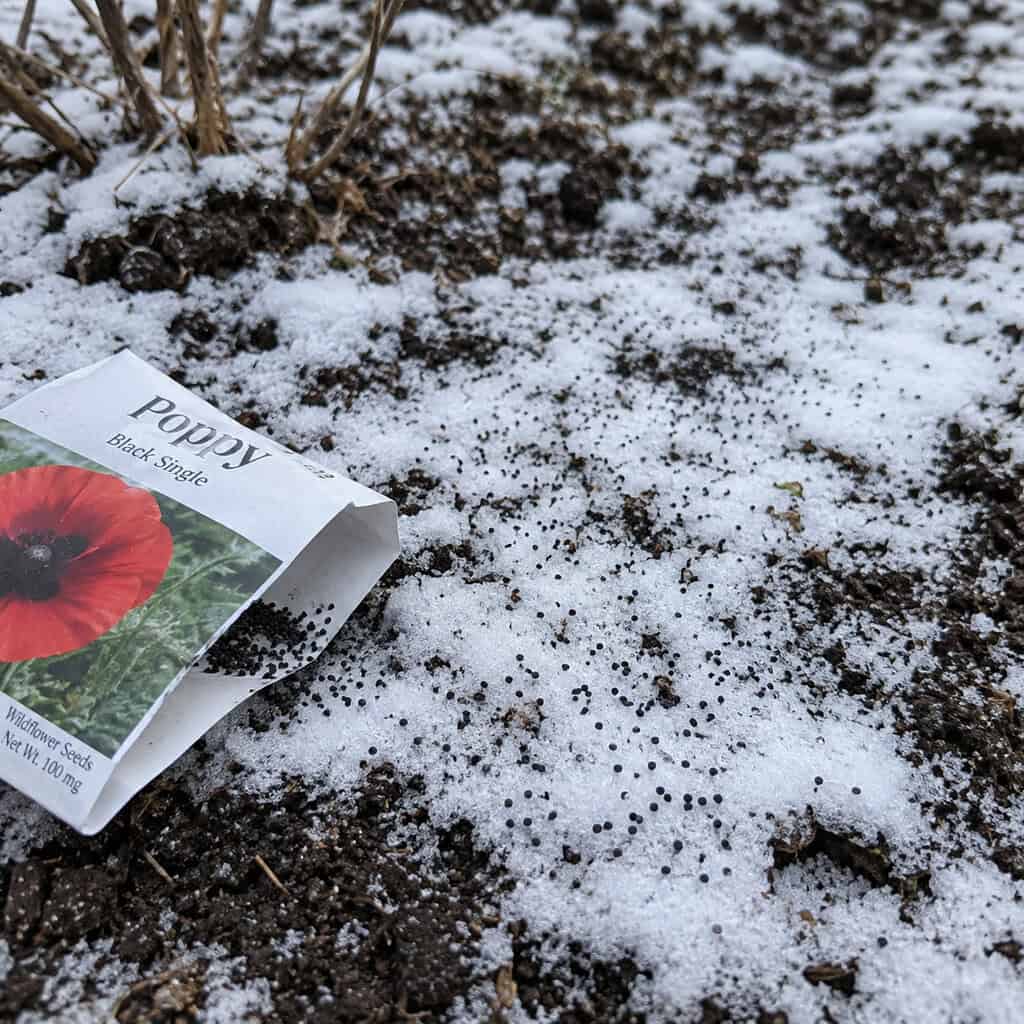
Poppies resent root disturbance, so transplanting is out, and their seed actually needs a period of winter chill to germinate. That leaves exactly one method worth using.
Scatter the seed over the ground in late fall, then leave it completely alone.
Bare, frozen ground works fine, and a light dusting of snow works even better — you can see exactly where you’ve sown against the white background, and the meltwater helps draw the seed into contact with soil below. Don’t bury it, since poppy seed germinates only with light exposure.
A ten-minute task in November rewards you with tissue-paper blooms come June.
19. Plant Foxglove Now to Skip a Year of Waiting

Biennials operate on a two-year cycle — foliage the first year, flowers the second, then the plant dies back and reseeds. Planting foxglove, sweet William, or Canterbury bells this fall means you skip an entire year of waiting around.
Fall is the ideal moment to establish them. To be honest, though, bloom time lands in early summer rather than April, so this entry pushes the definition of “spring payoff” a bit further out.
Still, the payoff is worth it: four-foot spires packed with speckled bells that hummingbirds visit all day long.
Every part of foxglove contains cardiac glycosides and is toxic to both people and pets, so keep it away from anything inclined to graze.
20. Broadcast Milkweed and Wildflower Seed Before Winter
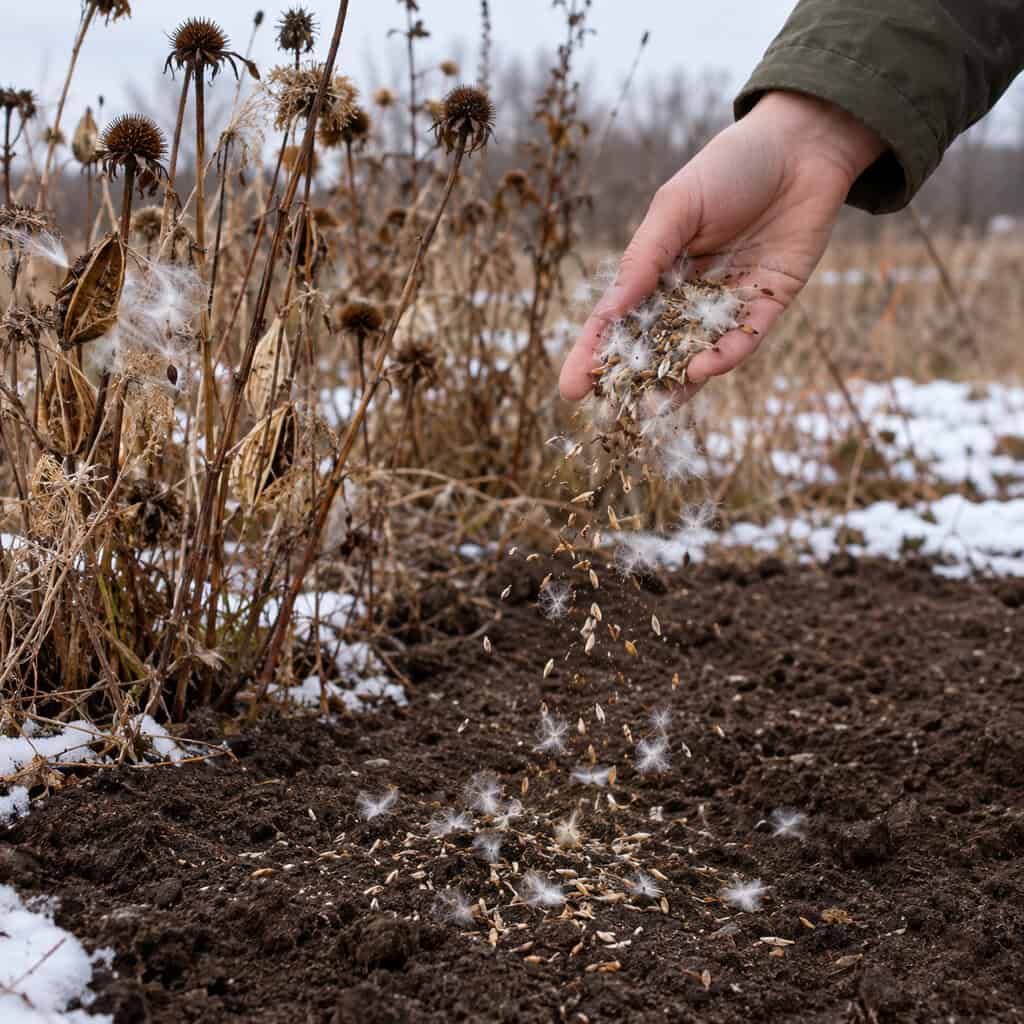
Most native perennial seed refuses to germinate until it’s endured a cold, moist winter — a built-in safeguard that keeps it from sprouting in September only to die off in December.
Gardeners often replicate this artificially with damp sand stored in the fridge for 30 to 90 days. Or you can simply let winter handle it for free.
Scatter milkweed, coneflower, black-eyed Susan, and bee balm seed onto prepared bare soil sometime in November or December. Press it into the soil for good contact, and skip mulching altogether. The repeated cycle of snow, thaw, and freeze is exactly what breaks seed dormancy.
Both common milkweed and swamp milkweed work well, and monarchs will find them without fail. Seed sown in December can be feeding caterpillars by the following July.
21. Push Hardneck Garlic Cloves Into Fall Soil
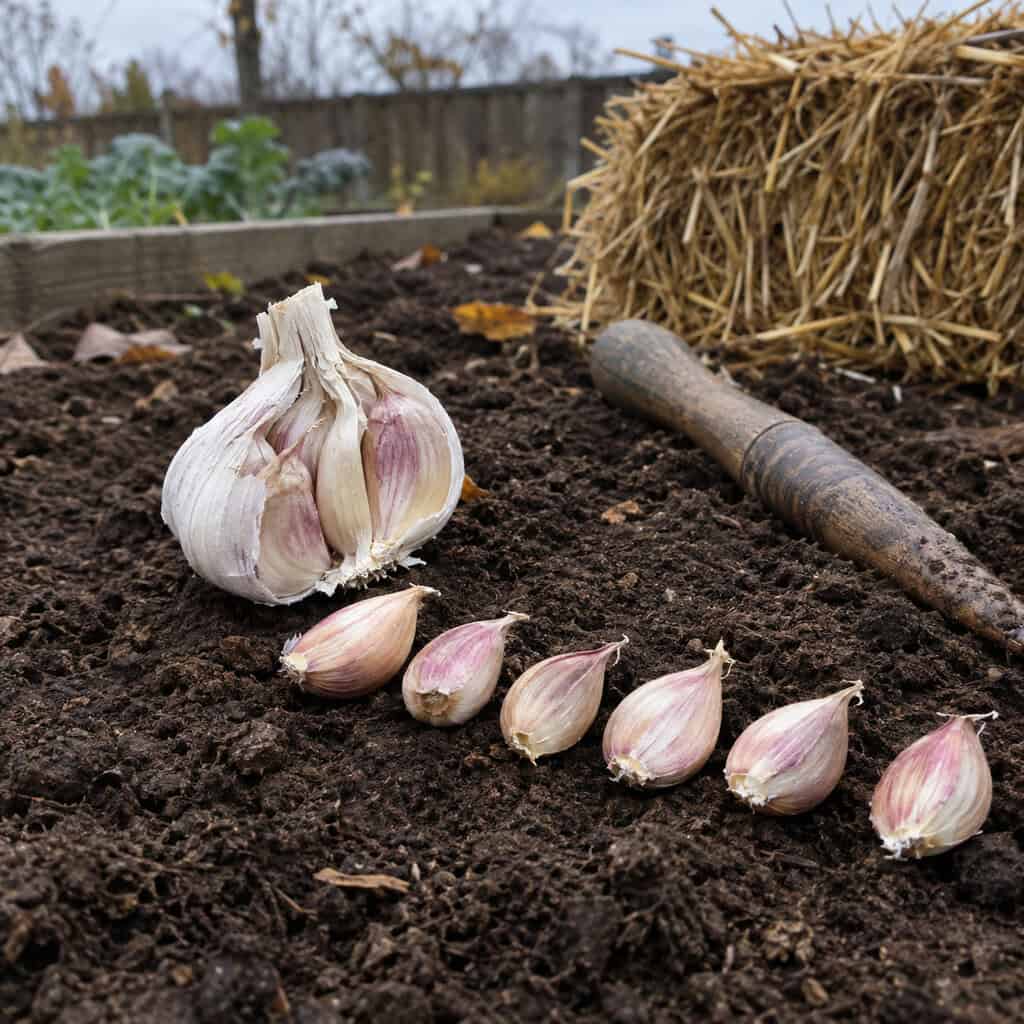
Per square foot, nothing offers a bigger return than garlic planted in October.
Cloves spend fall and winter developing roots, so by the time daylight lengthens in March, the plant already has the infrastructure in place to grow a substantial bulb. Garlic planted in spring instead misses that head start entirely and produces heads roughly half the size.
Skip the grocery store variety. It’s typically softneck, often chemically treated to prevent sprouting, and frequently carries plant viruses. Order named hardneck cultivars instead — Music, German Red, Chesnok Red are solid choices. Break the bulb apart into individual cloves the same day you plant, not days in advance.
Set cloves two inches deep and six inches apart, leaving the papery skin intact, then cover with four inches of straw mulch. University of Illinois Extension has even demonstrated pairing fall garlic with an oats cover crop that winter-kills into ready-made mulch.
22. Cover Bare Slopes With Creeping Phlox
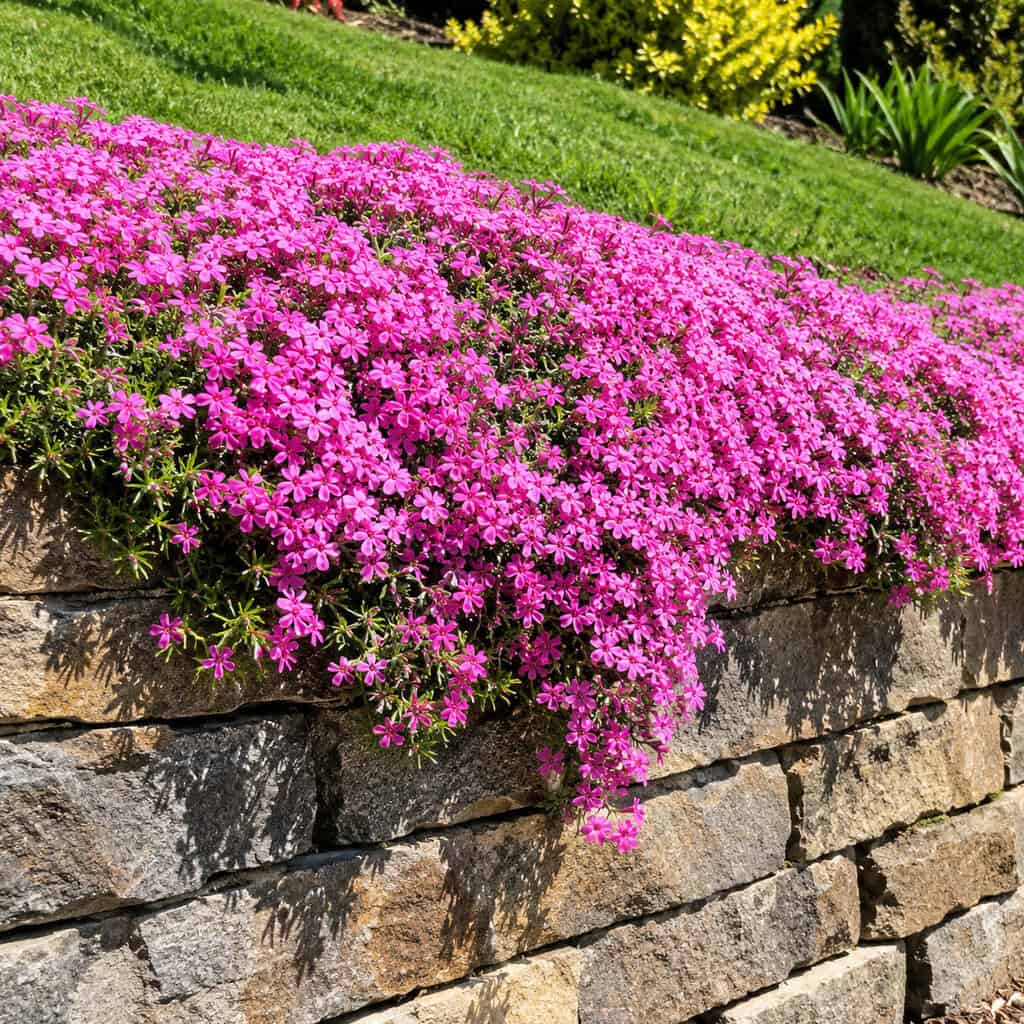
A single flat of plugs, planted in early fall, can turn into a solid carpet of pink or lavender spilling over a retaining wall by the middle of April.
Roots settle in during the fall months, which explains why fall-planted phlox looks fully established the following spring while spring-planted specimens look like scattered, sad little dots.
It’s an ideal choice for that slope nobody wants to mow. It anchors the soil, chokes out weeds, and transforms an unsightly bank into the best-looking spot on the block for a few weeks each spring. It pairs well with other ground covers that replace a lawn.
Space the plugs about a foot apart — they’ll fill in the gaps on their own.
23. Naturalize Crocus Right Into the Lawn
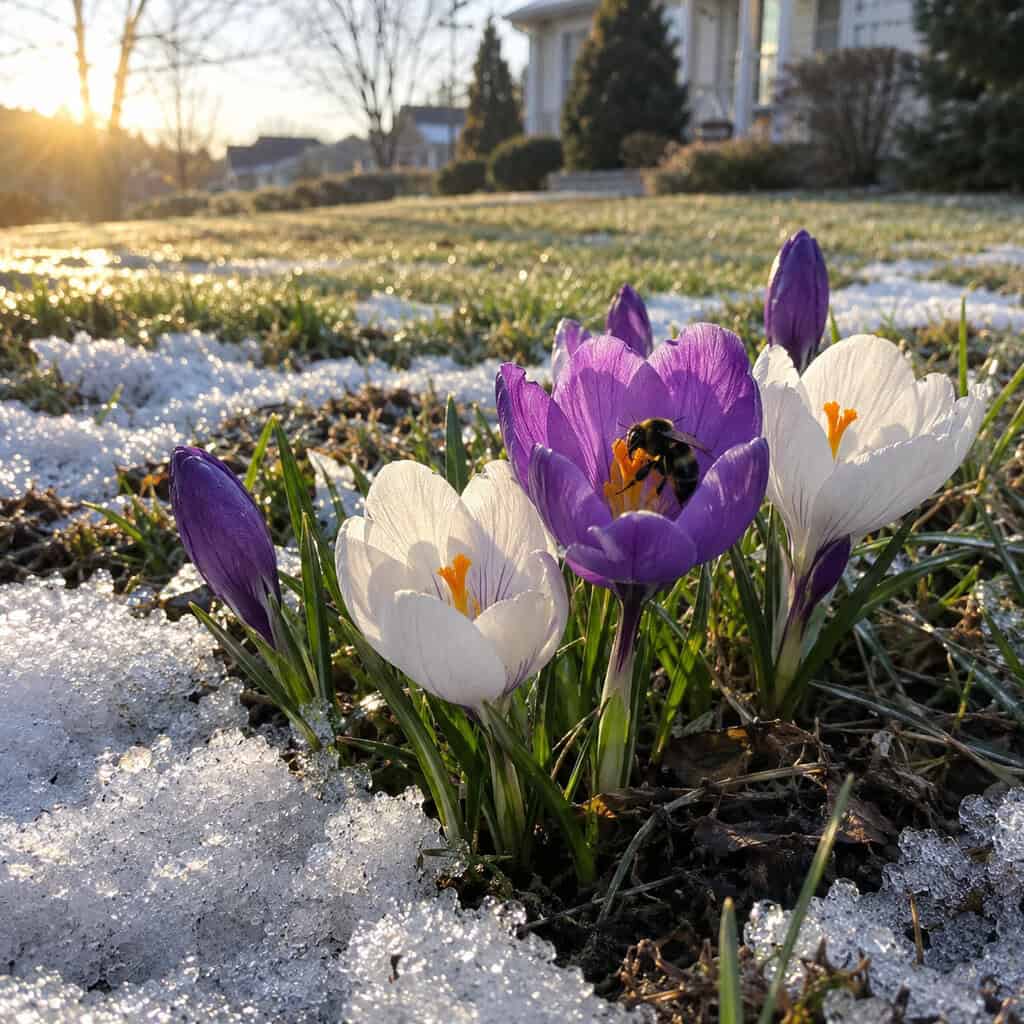
Crocus is the very first thing to bloom, hands down — often in late February, sometimes pushing straight up through snow.
They also happen to be the first source of pollen for a groundbound bumblebee queen emerging after winter, which is a bigger deal than it might sound.
They’re inexpensive enough to buy in bulk and small enough to plant directly into turf — three to four inches deep, scattered in loose drifts rather than rows. Just slice a section of sod with a spade, slip the bulbs underneath, and press the sod back into place.
Just hold off on mowing until the crocus foliage yellows, roughly three weeks after the blooms fade.
24. Establish Rhubarb Crowns for Decades of Harvests
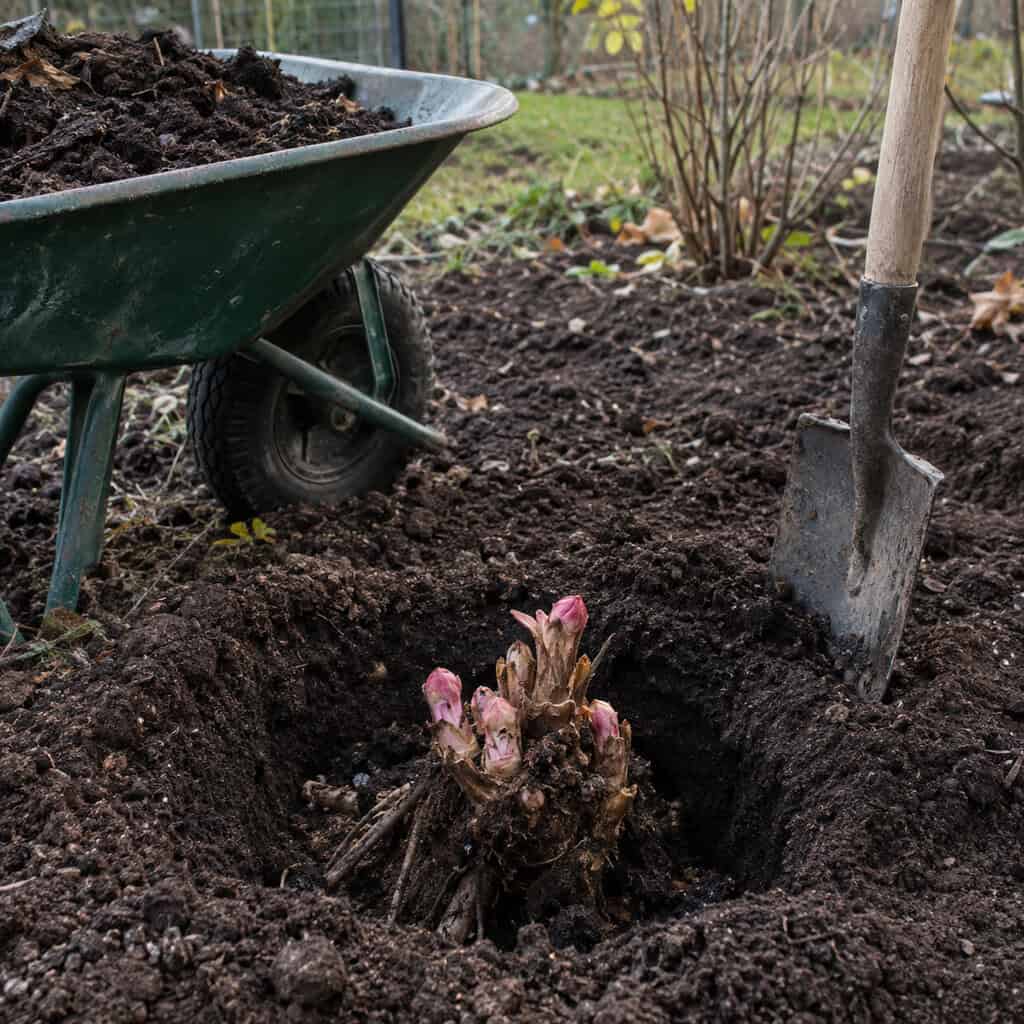
Plant a dormant crown in October, and it will push up those crinkled red-green leaves the moment frost breaks — often before you’ve even started thinking about the garden.
A single rhubarb plant can produce for 15 to 20 years. Give it a permanent spot with rich soil and full sun, plant the crown with buds sitting two inches below the surface, and resist harvesting anything during the first year.
Only the stalks are edible — the leaves are not. Rhubarb leaves contain high concentrations of oxalic acid and are toxic to people, dogs, cats, and livestock alike. Cut them away at harvest time and toss them in the compost — don’t leave wilted leaves lying around where a dog might graze on them.
25. Count On Pansies and Violas for Two Rounds of Bloom
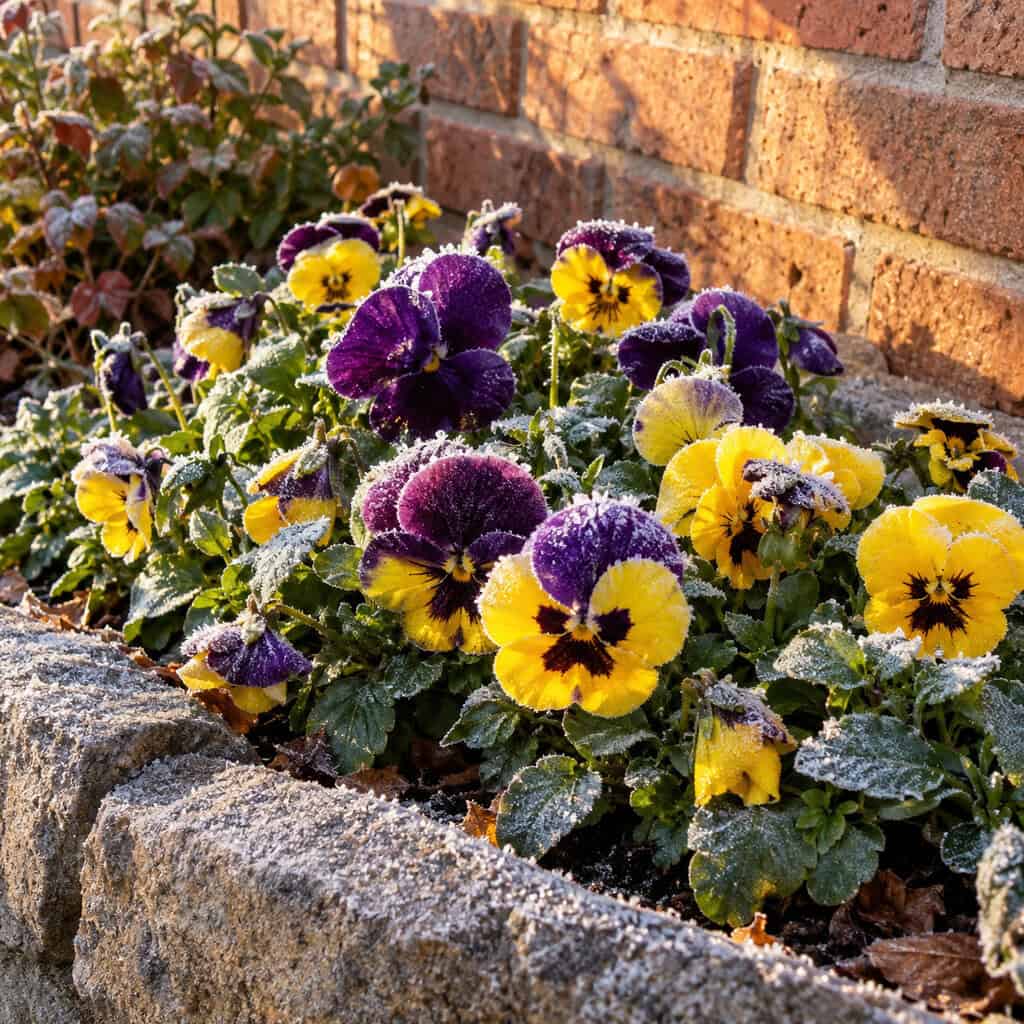
One flat of plants can deliver two separate bloom seasons. Plant them in October in Zone 6 or warmer, and they’ll flower right through Thanksgiving, appear lifeless and flattened beneath snow come January, then bounce back in March and keep going until summer heat finishes them off in June.
There’s no replanting required, and no spring trip to the garden center necessary.
Violas hold up better in cold than pansies, though their blooms run smaller. Add a light mulch over the crowns once the ground freezes.
Live somewhere colder than Zone 6? The same approach still works in a cold frame or a sheltered bed against a south-facing foundation.
26. Plant Snowdrops as Early as You Can
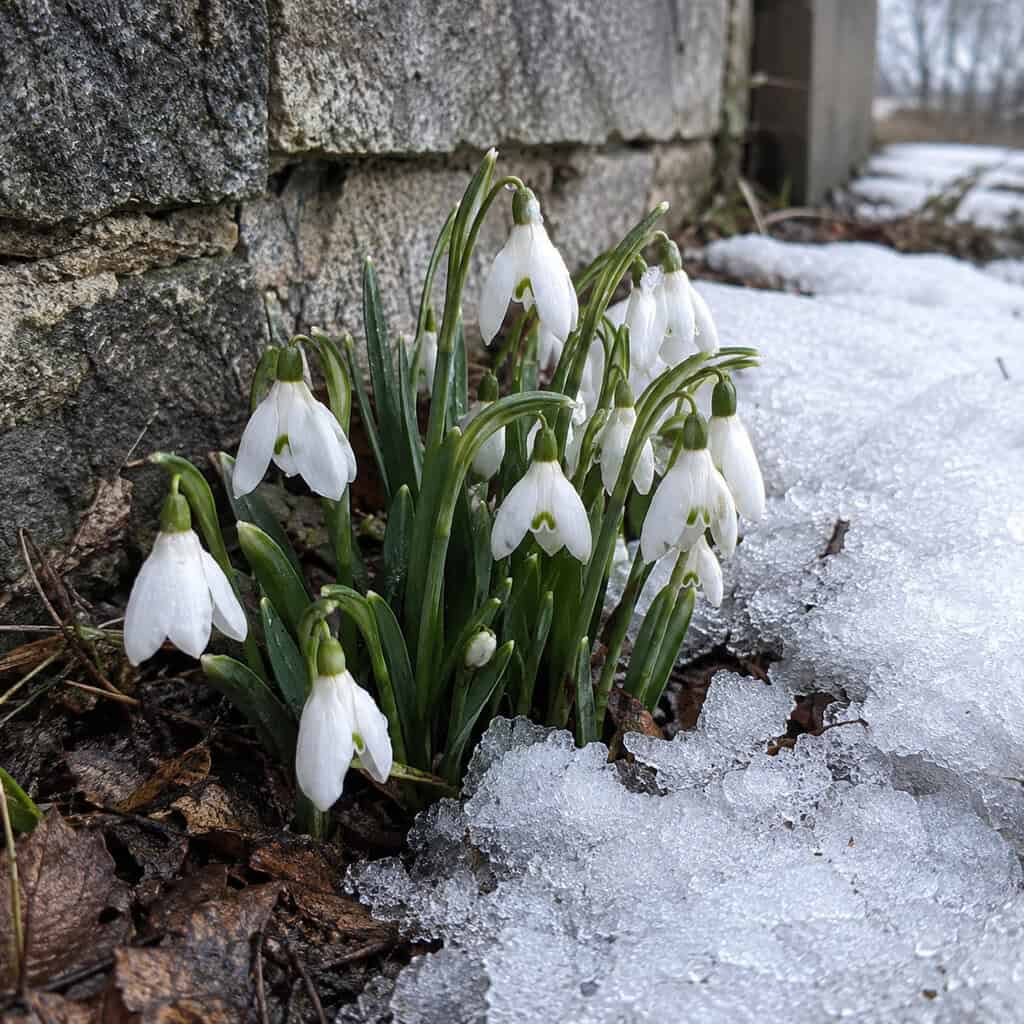
Sometime in January, occasionally February, when the ground is frozen solid and the sky is gray and nothing else seems alive, a cluster of white bells on four-inch stems suddenly punches straight through crusted snow.
Plant these as early in the fall season as you possibly can — September is ideal. Snowdrop bulbs are small and dry out quickly once bagged, and planting late is the most common reason a first-year clump struggles.
Set them three inches deep, somewhere visible from a window you look through often.
From there, they multiply slowly but steadily over the years, spreading a bit wider each season, always arriving right when you need reassurance that winter is finally ending.
27. Solve Wet Spots With Camassia Bulbs

Here’s a bulb almost nobody has heard of, and yet it solves a problem many gardeners face.
Camassia is native to North American wet meadows, meaning it flourishes in the heavy, slow-draining, damp spots where tulips and daffodils typically rot away. Think low corners of the yard, the end of a downspout run, or the edge of a rain garden.
In late spring, it sends up two- to three-foot spikes of star-shaped blue flowers right as tulips are finishing, filling the gap before summer perennials take over.
It’s deer-resistant, a favorite of bees, and naturalizes gently without becoming invasive. Plant bulbs four inches deep during September or October.
28. Add Hellebores for Late-Winter Color in Shade

From February through April, while everything else remains dormant, hellebores produce nodding cream, plum, and green flowers atop leathery evergreen foliage that persists through winter.
Deer skip right past them, and rabbits do too.
Plant them in early to mid-fall in the dappled shade beneath deciduous trees — those weeks of settling in are essential for producing actual flowers the following spring rather than just leaves. They’re a great fit among shade plants that thrive where grass refuses to grow.
A note for pet owners: the foliage and sap are toxic if chewed, leading to mouth irritation and vomiting. Most adult dogs won’t touch it, but a puppy going through a chewing phase might not know better.
29. Divide Daylilies This Fall for Free New Plants
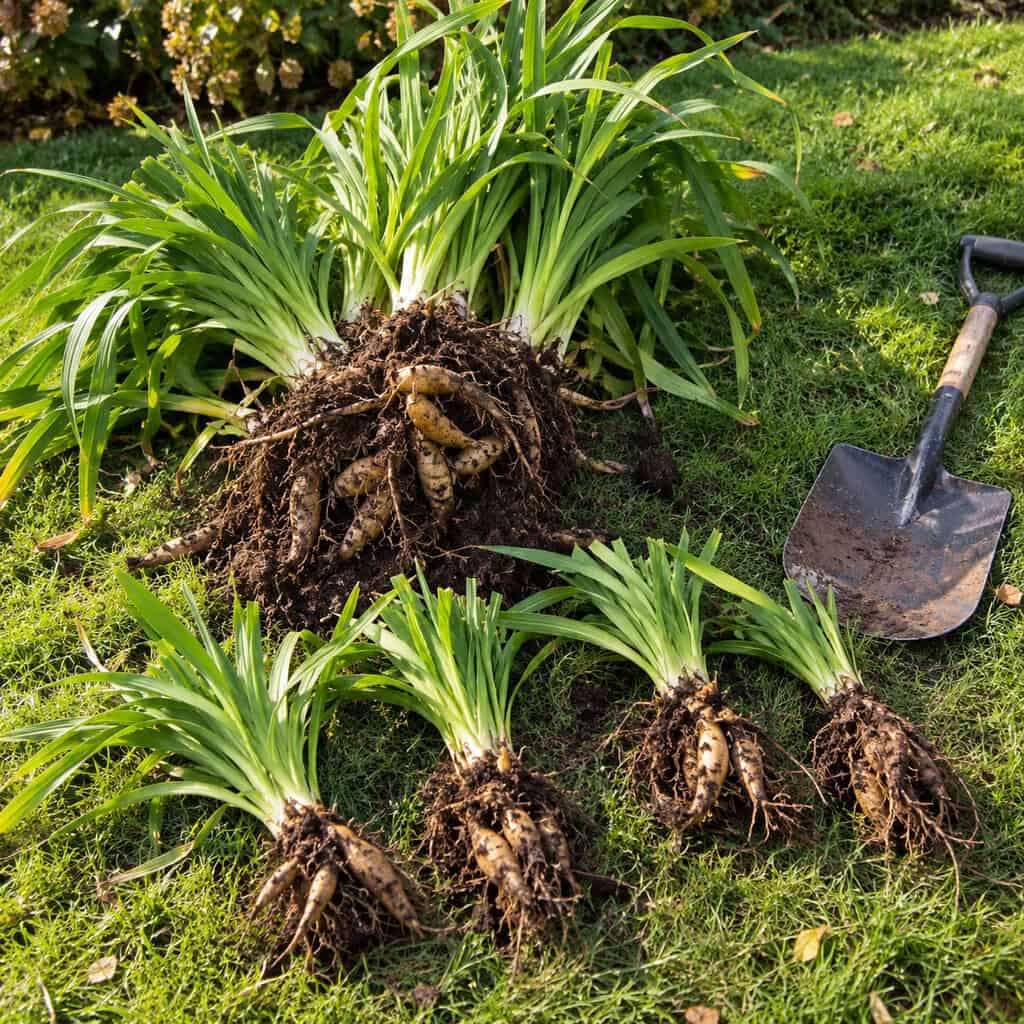
Fall is prime time for free plants. Dig up an overgrown clump about six weeks before the first hard freeze, split it into fans with two or three shoots apiece, and replant the divisions wherever you’d like more color.
Divisions planted now will root through the fall and bloom right on their usual schedule next year — you don’t lose a thing in the process.
A simple garden spade driven through the middle of the clump does the job fine. Daylilies are about as close to indestructible as a perennial gets.
Cat owners should be cautious: both daylilies and true lilies are highly toxic to cats, and lily poisoning can cause acute kidney failure. Even a small nibble of leaf or a bit of pollen warrants an emergency vet visit. Site them somewhere an outdoor cat doesn’t spend time.
30. Scatter Larkspur and Bachelor’s Buttons After the First Frost
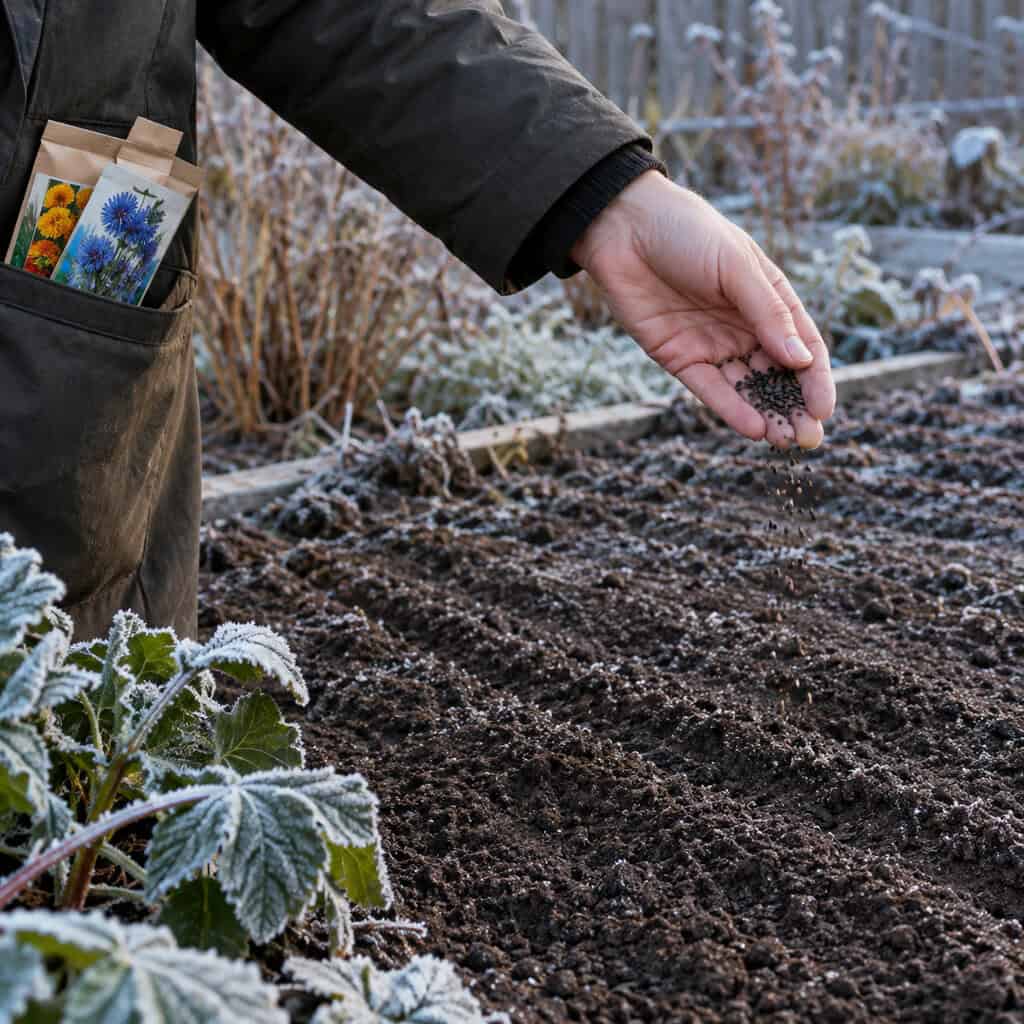
Scatter the seed once the first few frosts have passed, then simply leave it alone for the next five months.
Both are hardy annuals that germinate best after spending time in cold, wet soil. Larkspur sown in fall blooms noticeably earlier than spring-sown plants and grows a foot taller, thanks to the root system it built over winter.
Rake a section of bare soil, scatter the seed across it, and press it down with your boot. No watering, no covering, no extra effort required.
After that first planting, they’ll reseed themselves year after year, and you’ll never need to buy the packet again.
Fall or Spring: The Numbers Don’t Lie
Here’s how the two seasons stack up against each other, side by side:
| Fall Planting | Spring Planting | |
|---|---|---|
| Soil temperature | Warm, root-friendly | Cold, slow to wake |
| Weed competition | Nearly none | Peak crabgrass season |
| Watering demand | Rain does most of it | Daily, then heat stress |
| First bloom or harvest | Same spring | Often a year later |
| Plant prices | End-of-season markdowns | Full retail |
Spring’s only real advantage is the mood — it simply feels like the season to garden. But on every practical measure that actually affects the plant, fall comes out ahead.
Get It Done Before the Soil Freezes Solid
Each of these 30 entries trades an hour or two of cold, unglamorous effort now for a reward that shows up long after you’ve stopped thinking about it.
That window won’t stay open long. Once soil temperatures drop and the ground hardens, bulbs are stuck sitting in the garage and grass seed has to wait until next year.
Spring doesn’t just happen to a yard on its own. It’s something you set in motion months earlier, on some gray Saturday, dirt caked under your fingernails, a bag of daffodil bulbs waiting at your feet.