


Drive down any suburban street in December and you’ll see it. A slumped nylon heap staked to a lawn, cords snaking toward an outlet, waiting for dusk.
Nobody plans to cheapen their house. These things arrive one at a time — a gift, a clearance bin, a weekend project that seemed like fun.
But curb appeal is cumulative, and the eye reads a yard in about three seconds. Michigan State researchers found that design sophistication alone moved perceived home value by double digits — same house, same square footage, different front yard.
Most of what follows isn’t ugly. Some of it is genuinely beloved. It just sends a signal the owner never intended.
Here are 27 yard decorations that work against a house, and what the eye actually registers when it passes by.
1. The Inflatable Santa (and His Daytime Deflation)

This isn’t a tradition. It’s barely older than the iPod.
Gemmy released the first Airblown Inflatable in 2001 — an 8-foot Santa — and the design inspiration was the giant blow-up gorilla on car dealership roofs. That’s not a knock. That’s the documented origin, and it’s exactly the association a passing eye makes.
The real damage happens in daylight. For roughly 14 hours a day, that Santa is a wet puddle of nylon staked to dead grass, printed face folded into the mud.
Run it at night. Pull it in by morning.
2. Candy-Red Dyed Mulch Rings
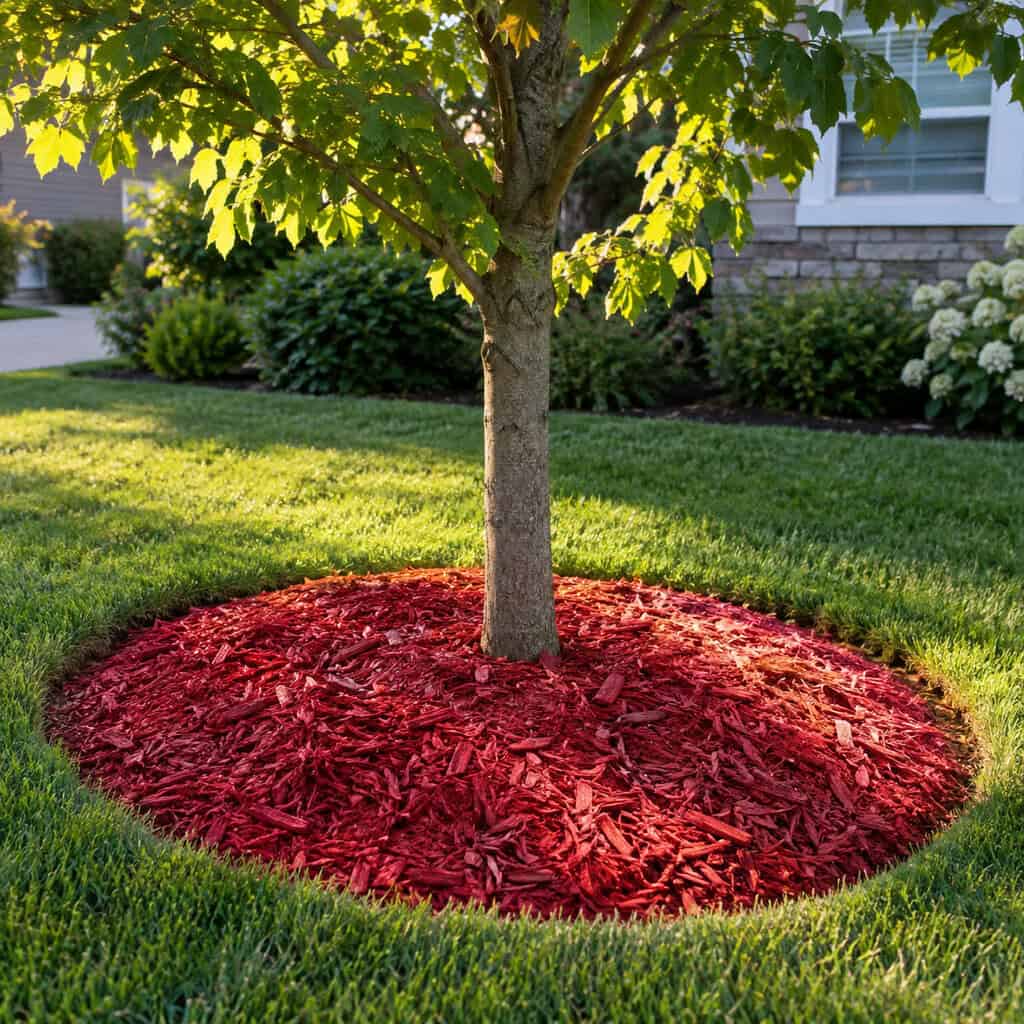
Almost nobody thinks of mulch as decoration. It is.
Dyed red or black mulch pulls the eye straight to the ground, which is the one place you don’t want attention. Your hydrangeas lose to a ring of carpet-colored wood chips.
It fades blotchy within a single season — orange-pink in sun, still crimson in shade. And the base material is usually recycled construction waste, which is why Naturescapes and most landscape designers steer homeowners toward undyed hardwood instead.
Natural brown costs the same. It just disappears, which is the entire job of mulch.
3. Pink Plastic Flamingos

Don Featherstone sculpted the original in 1957 for Union Products in Leominster, Massachusetts. Roughly 20 million have sold since.
Two of them, placed with obvious wink, read as camp. The owner is in on the joke.
Nine of them read as clutter, and the joke evaporates somewhere around flamingo five. Sun also turns that saturated pink into a pale salmon within two summers, which drops the whole thing from intentional to abandoned.
4. Dollar-Store Solar Stake Lights

You know the row. Eight stakes along a walkway, leaning at eight different angles, four of them dead.
The giveaway is the color. Bargain multipacks throw a cold blue-white glow that makes brick look gray and grass look dead at night.
Then the plastic lens clouds and the output drops to something like a dying firefly. Buy six warm-white fixtures instead of twenty cheap ones, space them well apart, and pull any that stop working.
5. The Gnome Menagerie

One gnome is a personality. Fifteen is a collection, and collections belong indoors.
Real estate pros draw this line clearly — Bob Vila’s roundup of value-hurting landscape features flags the menagerie, not the single ornament.
Gnomes, rabbits, turtles, a meerkat for some reason. Once there are more figures than shrubs, the yard reads as unkempt no matter how clean the edges are.
6. Scalloped Plastic Bed Edging
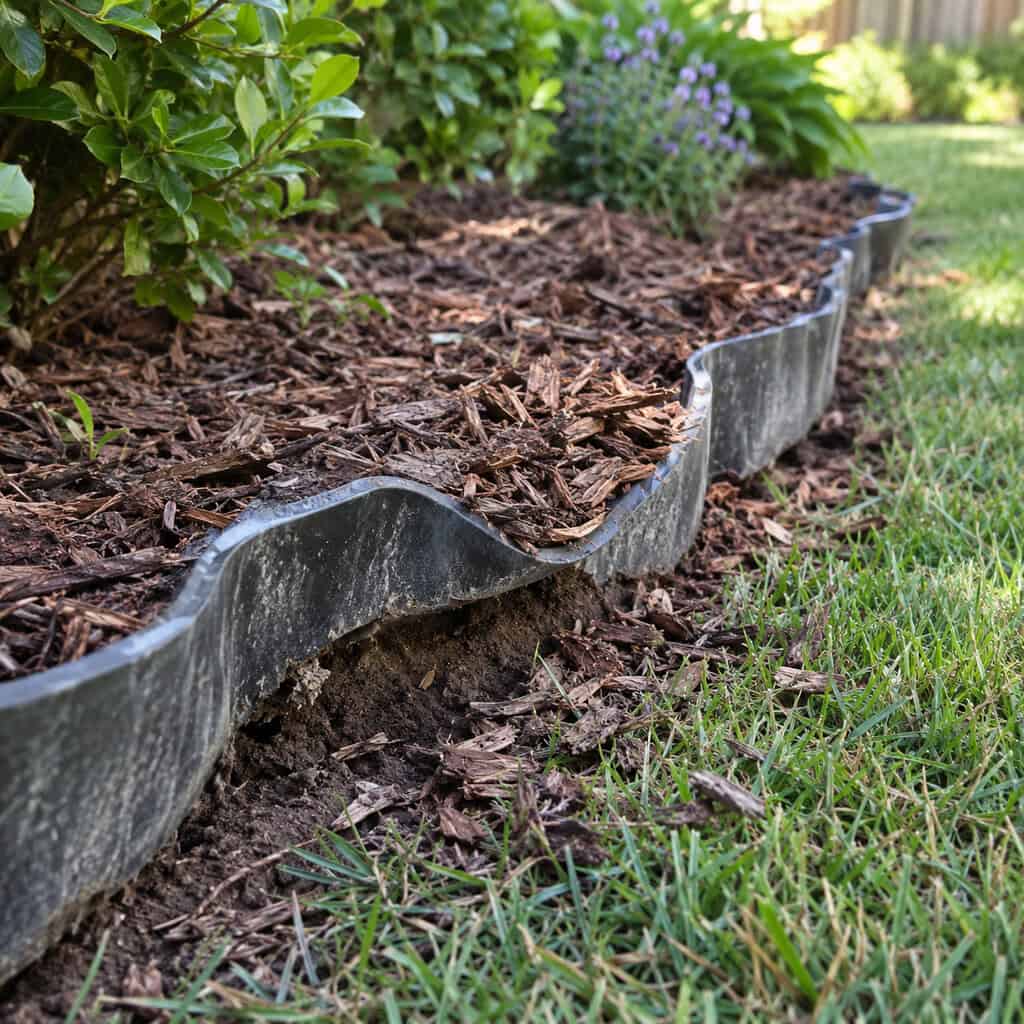
Two winters. That’s about how long it stays in the ground.
Freeze-thaw cycles push it up an inch at a time until the scalloped top is waving like a ribbon and the mulch has escaped underneath. The black plastic chalks gray in UV.
It announces that the beds were installed in a weekend rather than designed. A cut spade edge costs nothing and looks better for decades.
7. The Resin Deer Family

Buck, doe, fawn, arranged mid-lawn like a suburban nativity.
The ears break first. They always do — thin resin, long lever arm, one bad lawnmower pass.
Dark brown resin fades to a chalky gray-tan in about five years, so what was sold as naturalistic ends up looking like weathered styrofoam. Meanwhile actual deer are eating your hostas, which is its own conversation about deer-resistant landscaping.
8. The Fake Boulder Hiding the Well Head

Everyone knows what’s under it.
A single plastic rock sitting in the middle of a flat, otherwise rockless lawn is the most conspicuous object in the yard. Nobody has ever walked past one and thought “nice geology.”
What’s underneath is usually a septic tank riser, a well cap, an irrigation manifold, or a utility pedestal. Those aren’t problems — they’re normal infrastructure on millions of homes. But the fake rock turns a neutral detail into a question mark, and buyers who notice it start asking the expensive version of that question.
Here’s what actually goes through a buyer’s head. If that’s a septic lid, when was the tank last pumped, is the drain field healthy, and will the inspection come back clean? A conventional system runs $5,000 to $15,000 to replace, and an alternative or mound system can push past $25,000. If it’s a well cap, they’re thinking water test, pump age, pressure tank, and whether the casing is sealed against surface runoff.
The lid itself isn’t the issue. Advertising it is.
Better approach: plant around it rather than over it. A loose, asymmetrical grouping of low ornamental grasses or compact shrubs set back 18 to 24 inches breaks up the outline from the street without blocking service access — and you still need that access, because pumping trucks and well technicians have to reach the lid.
Never bury a septic lid under soil or mulch to hide it. Inspectors have to find it, codes in most counties require it accessible, and a buried riser means somebody’s digging on closing day.
And keep the grass over a drain field healthy but never irrigated heavily. Soggy turf above the field is the exact symptom a buyer’s inspector is looking for.
9. Christmas Lights Left Up Year-Round

In July, nobody sees the lights. They see the clips.
Those little plastic gutter hooks catch sunlight in a dotted line across the fascia, visible from the sidewalk. Staples are worse — they leave permanent holes and rust streaks down the trim.
Plenty of HOAs regulate exactly how long holiday decor can stay up, and WTOP covered how routinely those rules get enforced. Thirty days after the holiday is the common cutoff, and it’s a reasonable one. If you’re leaving them up, you may also be making some of the other Christmas light mistakes neighbors notice.
10. The Mirrored Gazing Ball on a Pedestal

Real blown-glass gazing globes are beautiful objects with a 400-year history, and a good one on a stone base still looks sophisticated.
That’s not what’s in most yards.
The common version is chrome-sprayed plastic over a hollow shell. The coating crazes into a spiderweb, then flakes, and by year three it’s a broken hubcap on a stick.
11. Concrete Geese in Seasonal Outfits

A bee costume in June. A raincoat with a tiny yellow hat in April. Santa suit in December.
This is real Midwest folk tradition and there’s genuine warmth in it — somebody’s grandmother sewed those outfits, and she changed them on schedule for thirty years.
To everyone else it reads as a time capsule. That’s the whole tension of this list: decoration that feels like love from the porch and like 1991 from the street.
12. Silk Flowers and Fake Topiary Balls Outdoors

One summer. That’s how long polyester petals hold color.
After that they bleach to a uniform pale beige, which somehow looks deader than an actual dead plant. Dust and pollen cake into the fabric and never wash out.
Stuck into a real garden bed, they send a specific message: this soil can’t grow anything. If the bed is struggling, there are shade plants that thrive where grass refuses to grow, and almost all of them beat polyester.
13. Sentiment Plaques and Novelty Yard Signs

Routed-wood “Live Laugh Garden.” The hanging family-name sign with the est. date. Cursive “Gather” leaning against a porch post.
Mass-produced sentiment timestamps a house the way avocado appliances timestamp a kitchen. You can name the year it was bought within about eighteen months.
Anything that trended on Pinterest will eventually read as a date stamp. Skip it.
14. White Marble Chip and Lava Rock Beds
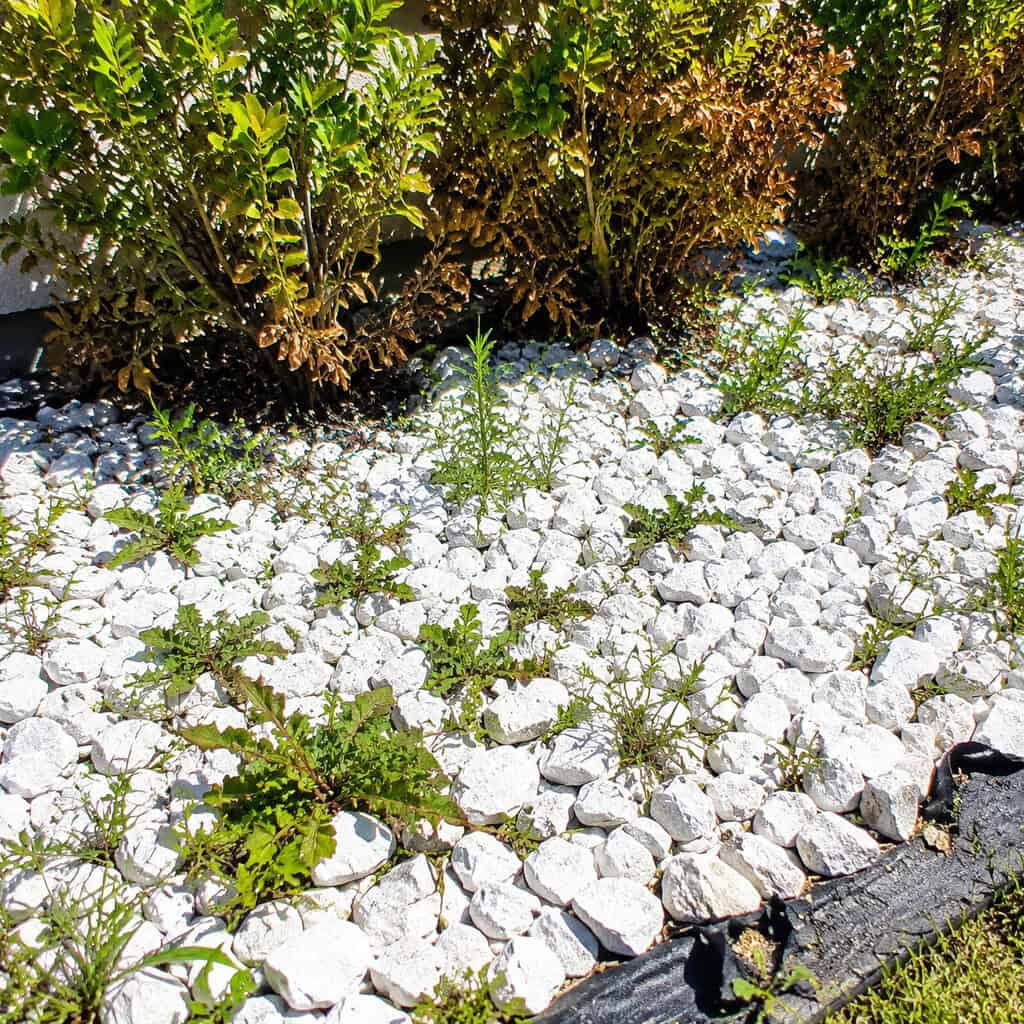
Rock doesn’t decompose. That’s the pitch, and it’s also the trap.
The landscape fabric underneath fails in five to seven years, so weeds come up through stone that’s now permanently fused into the top three inches of soil. Removing it is a shovel-and-wheelbarrow project priced in days, not hours — and a buyer does that math standing in the driveway.
Blinding white marble chip also bounces heat and light into the foundation plantings right behind it, which is why the shrubs in those beds always look scorched on the lower leaves.
15. The Whitewall Tire Planter

Cut, inverted, scalloped with a utility knife, painted white. There’s real craft in a well-made one, and it’s honest working-class yard art with a history going back to the 1950s.
It also signals thrift-first landscaping instantly, and the rubber works against you. Tires chalk and crack from UV, and paint sits on top of that breakdown without stopping it.
Two seasons in, the white is gray and the scallops are splitting.
16. The Dressed-Up Mailbox

Magnetic seasonal wraps. Vinyl name decals. A resin frog clinging to the post.
The mailbox is the one object every single visitor stands within arm’s reach of, which makes it a bad place to age badly. Wrap edges lift, water gets behind the magnet, and the steel underneath rust-stains in a perfect rectangle.
Vinyl letters fade unevenly, so the name goes patchy before it goes away. A clean black box and clear reflective numbers beat all of it.
17. Miniature Wishing Wells, Windmills, and Wheelbarrow Planters

A four-foot windmill. A cedar wishing well with a little shingled roof. A wheelbarrow tipped forward full of petunias.
Any one of them, alone, is fine. All three in one front yard and the tiny buildings start competing with the actual building.
Designers call this doing too much — Apartment Therapy put it as every yard-art idea ever invented appearing simultaneously with no regard for the space between them.
18. Metal Wind Spinners and Pinwheel Stakes
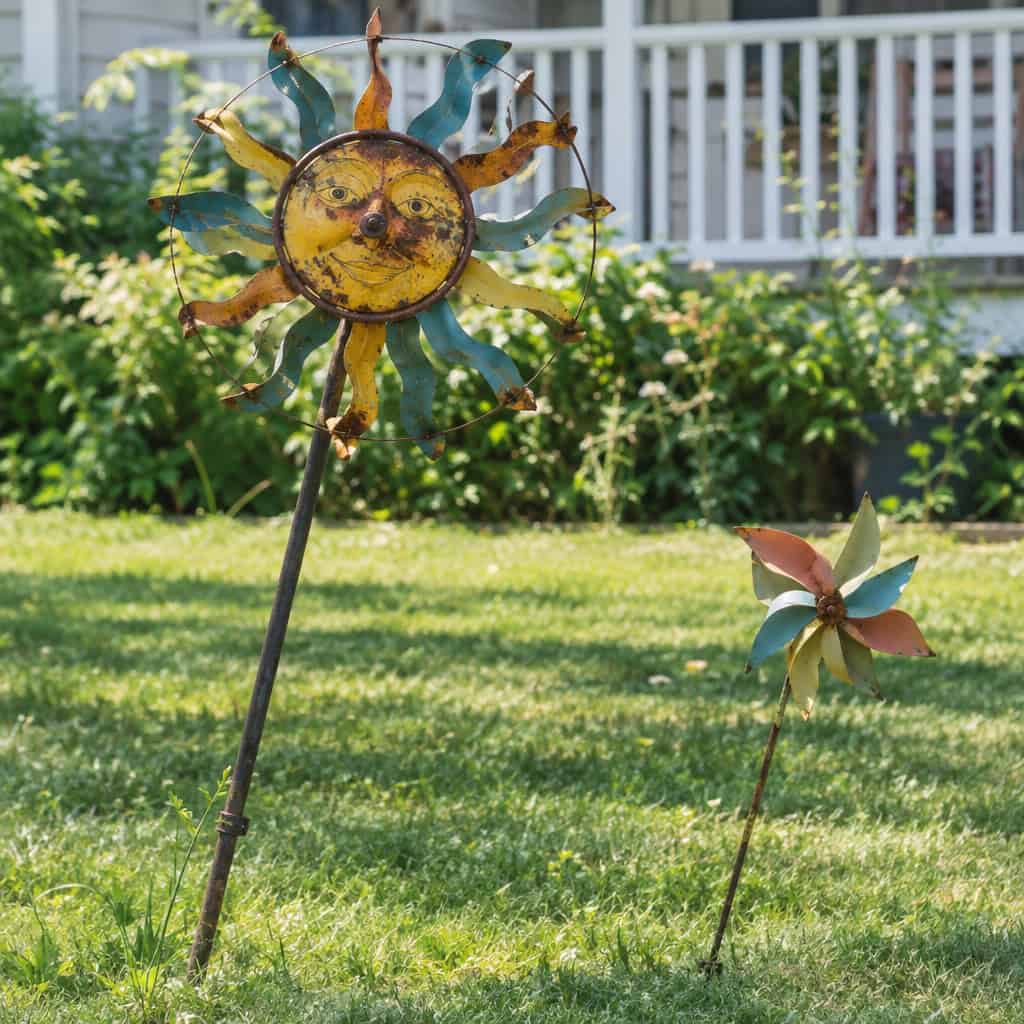
Motion wins every time. That’s the problem.
A spinning kinetic sculpture captures the eye before the roofline, the front door, or the mature oak you actually paid for. You’ve spent your best visual real estate on a $19 craft-fair stake.
Then the bearing seizes — usually inside two years — and it stops spinning except in a hard gale. Now it’s a crooked pole with a rusted sun on top.
19. Artificial Turf in the Front Yard
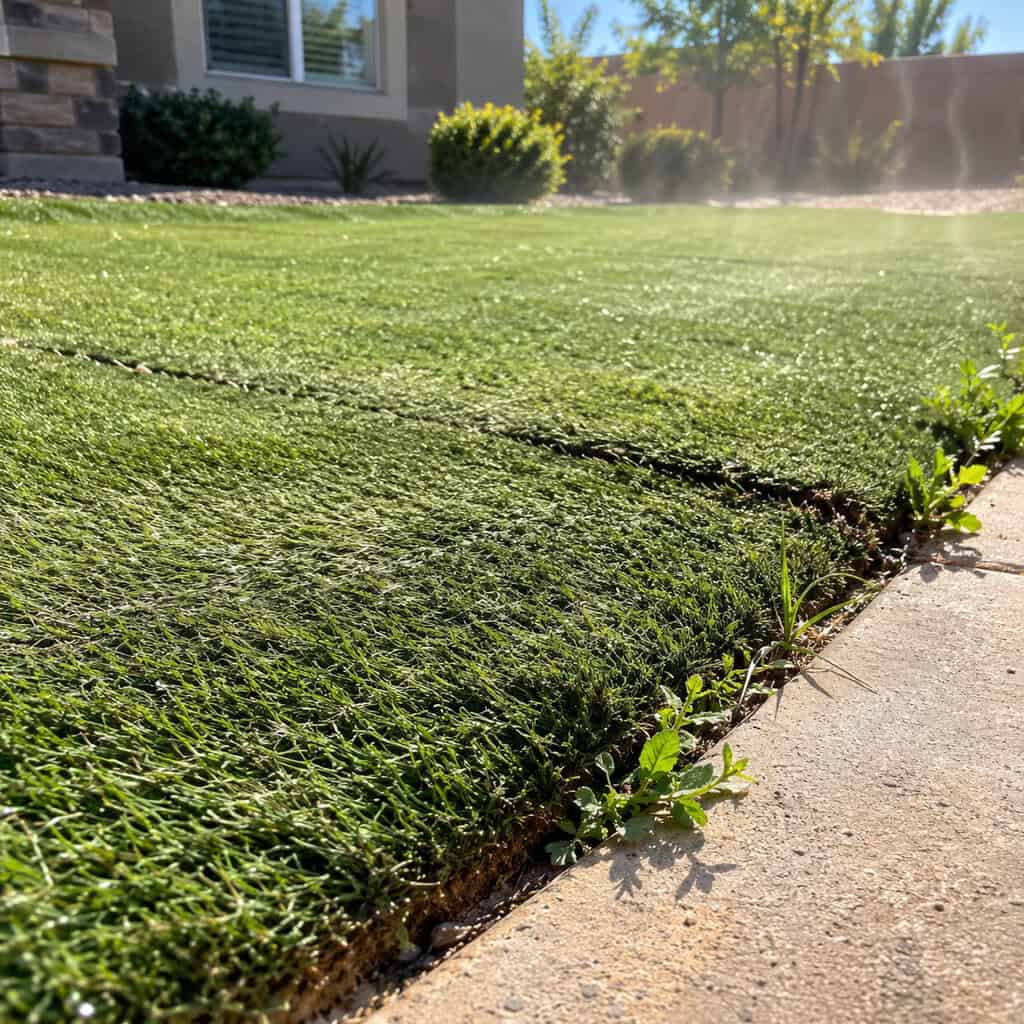
Sold as freedom from mowing. Read by buyers as a commitment with an expiration date and a bill attached.
Installed cost runs roughly $8 to $20 per square foot depending on base prep and pile quality, so a modest 800-square-foot front lawn lands somewhere between $6,400 and $16,000. Lifespan is typically 10 to 15 years before UV breakdown and matted fibers make it look worn. A buyer walking on seven-year-old turf is doing subtraction, not addition.
Heat is the detail people underestimate. Synthetic blades have no transpiration, so surface temperatures can run 40 to 60 degrees above ambient air on a sunny afternoon — hot enough to be genuinely unpleasant on bare feet and hard on dogs’ paw pads in July.
There’s a drainage question too. Turf sits on a compacted aggregate base, and if the perforated backing clogs with pet waste, fines, and organic debris, you get standing water and odor in exactly the spot you can’t aerate your way out of.
HOA rules cut both directions. Some communities now ban synthetic lawns outright on appearance grounds, while a number of drought-state laws have gone the other way and prohibit HOAs from banning them. Check your covenants before anyone breaks ground.
Roundups of landscaping mistakes that lower home value keep flagging front-yard turf for the same reason: a large share of buyers simply want real grass, and you can’t undo it in a weekend.
Here’s the honest comparison most installers don’t lay out:
| Artificial Turf | Real Lawn | |
|---|---|---|
| Upfront cost | $8–$20 per sq ft | $0.20–$0.80 per sq ft seeded |
| Lifespan | 10–15 years | Indefinite with care |
| Summer surface temp | Up to 60°F above air | At or below air temp |
| Annual upkeep | Rinsing, infill top-up | Mowing, feeding, water |
| Buyer reaction | Mixed to negative | Neutral to positive |
If the goal is less work, a tough drought-tolerant grass or a ground cover does more for resale than plastic ever will.
20. Vintage Blow-Mold Santas and Nativity Sets

Credit where it’s due. Empire Plastics blow-molds from the 1960s and ’70s are legitimately collectible now, and a crisp lit one on a clean porch reads as charming period detail.
The cheapening version is specific: sun-yellowed white plastic, a cracked base shimmed with a brick, and an orange extension cord running diagonally across the front walk.
Condition is the whole story with these. Keep the good ones, retire the ones that have gone translucent amber, and bury the cord along the bed edge.
21. The Green, Unmaintained Fountain or Pond

A water feature adds value for exactly as long as the water is clear.
After that it’s two liabilities in one object. Buyers see algae and think pump failure, liner leak, and a maintenance habit the sellers clearly gave up on. House Digest lists neglected water features among the landscaping choices that actively work against a sale.
The pest side is worse. Mosquitoes need about a week of undisturbed standing water to go from egg to adult, and they’ll breed in less than a cup. A still, algae-skinned basin is close to ideal habitat, and Culex mosquitoes — the West Nile carriers — specifically prefer stagnant, organically rich water.
Watch for these before it gets away from you:
- Surface film that doesn’t break when the pump runs
- Water level dropping more than an inch a week in dry weather
- Wrigglers visible along the edges at dusk
- White mineral crust above the current waterline
- A pump that’s gone quiet and nobody noticed
Fixes are cheaper than people assume. A running pump and a small aerator stop mosquito breeding cold, since the larvae can’t survive moving water. Mosquito dunks with Bti target larvae without harming fish, birds, or pets.
Slow leaks are usually the liner seam or a settled edge letting water wick out over the rim, not a puncture. Both are patchable in an afternoon with liner tape and a level.
And if you’ve genuinely stopped caring about it, drain it and fill it. A planted bed where a green basin used to be is a net gain — and it removes one of the things in your yard inviting mosquitoes in the first place.
22. White Vinyl Lattice Skirting
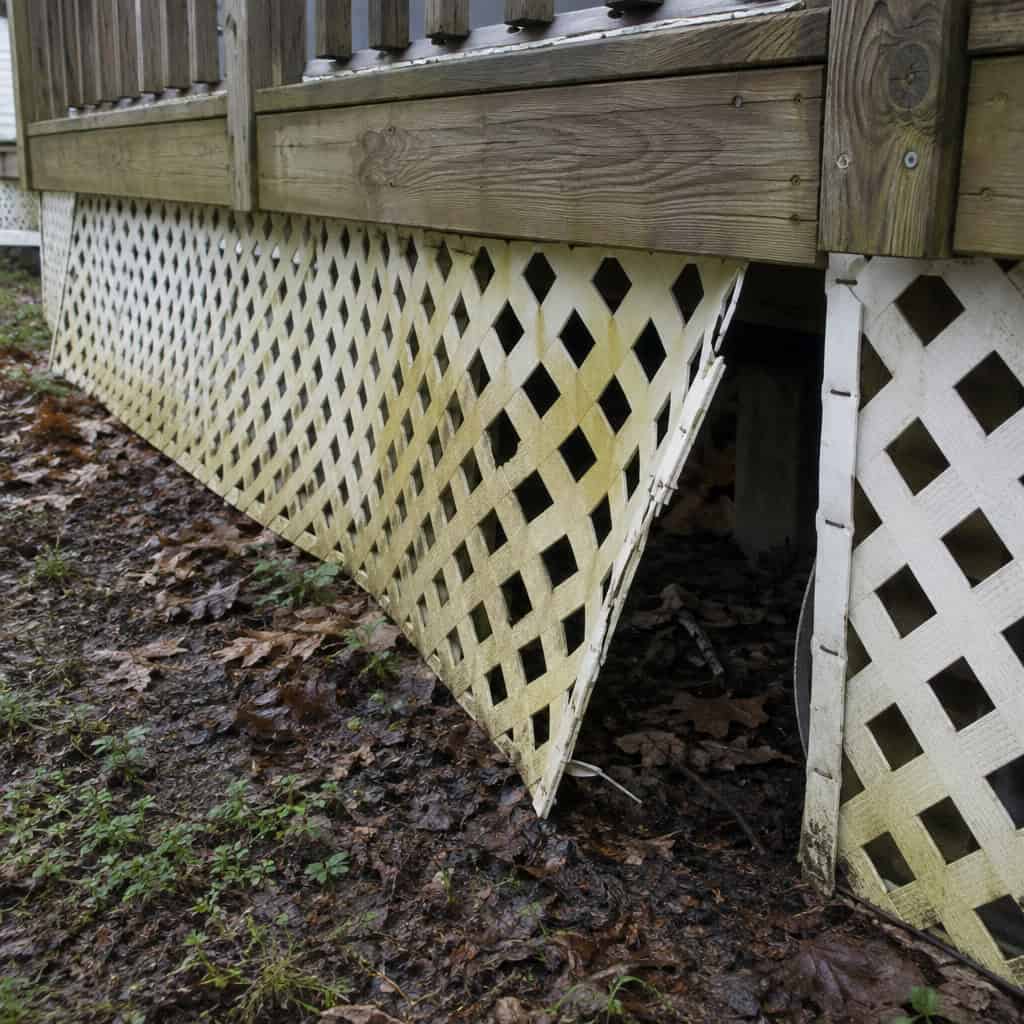
The diamond grid under a deck or porch is the single most-stared-at square footage on many houses, and almost nobody realizes it.
It fails in a predictable sequence. White vinyl yellows unevenly after four or five summers, the panels bow outward in the middle because they were stapled instead of framed, and then they snap at the staple points in a windstorm.
But the cosmetic failure is the small part. When a buyer sees a bowed, broken lattice panel with a dark gap behind it, they’re not thinking about vinyl. They’re thinking about what’s living under there.
That gap is an open invitation. Skunks, groundhogs, opossums, feral cats, and rats all nest under decks and porches, and a wildlife removal and exclusion job commonly runs $300 to $900 before any repair work.
Then come the moisture questions. Lattice gives the illusion of a sealed skirt while actually blocking airflow enough to trap humidity against joists and the crawl-space foundation. Damp, dark, poorly vented spaces are where wood rot, mold, and subterranean termites all set up.
A home inspector will open that panel. If the soil underneath is damp, if there’s efflorescence on the block, if joist ends are soft to a screwdriver — that’s a negotiation line item, and crawl-space encapsulation or structural repair runs into real thousands.
Do this instead. Replace lattice with horizontal slats or a framed screen panel with intentional, consistent gaps for airflow. Grade the soil so it slopes away from the house. Keep a removable access panel so the space can be inspected rather than ignored.
And look under there twice a year. Everything expensive about a crawl space starts as something cheap you didn’t see.
23. The Dead Hanging Basket Still on Its Hook

A brown shell of a Boston fern swinging on a porch hook in October.
It says something no ornament does: this house was decorated once, and then it wasn’t. Somebody had plans in May.
The hook is the real detail. An empty hook implies seasonal rhythm. A hook with a dead plant in it implies the rhythm stopped.
Take it down. It’s a thirty-second fix with an outsized return.
24. A Frayed American Flag Left Up Through Every Season

The flag is never the problem. The condition is.
Year-round residential display became common after 2001, and a lot of those flags have been on the same bracket ever since. Nylon flown continuously through sun, rain, and winter wind lasts maybe 90 days before the fly end starts shredding.
What people see from the street is a washed-out pink stripe and a hem unraveling into threads. That’s not patriotism reading back — it’s neglect, and it colors everything else in the yard.
The U.S. Flag Code addresses this directly: a flag no longer fit for display should be retired with dignity, and most American Legion and VFW posts will do it for free.
A new all-weather flag runs about $25. It’s the cheapest curb-appeal fix on this entire list, and it’s the one that matters most.
25. The Sun-Bleached Plastic Owl on the Gutter

It stopped working within a week. Birds habituate to a motionless decoy almost immediately, which is why they now perch on its head.
Years of UV turn the brown feather detail into a mottled gray-white, so what reads as “predator” up close reads as “forgotten object on the roofline” from the street.
If you need bird deterrence, reflective tape or spikes do the job without becoming permanent architecture.
26. The Monthly Garden Flag on a Shepherd’s Hook
Pumpkins in October, shamrocks in March, a cardinal in a snowy branch all winter.
Rotating it is a kind of care, and the people who do it genuinely enjoy it. But the hook leans within a season, the polyester fades to pastel, and the hem frays the same way any outdoor fabric does.
The yard ends up looking like a gift-shop endcap instead of a landscape. One tasteful, well-made flag flown on purpose beats a twelve-pack cycled on a calendar.
27. The Cluster of Security and “Beware of Dog” Signs

Three alarm decals on the storm door, a yard sign by the walk, a camera sticker on the window.
Intended message: this house is protected. Received message: this block has problems.
One discreet sign is standard and nobody blinks. A cluster makes a buyer open their phone and look up the neighborhood crime map before they’ve even walked inside. If the yard already reads as tired, this stacks on top of the yard features buyers run from.
Almost none of this is about taste. It’s about what survives weather, time, and the three seconds a stranger spends looking.
The pattern underneath every entry is the same — these things all started out looking fine and then aged badly in public. Sun, freeze, and UV do the cheapening. The owner just stops seeing it.
So do the walk. Park at the curb, get out, and look at your own house like you’re thinking about buying it.
You’ll know within about ten seconds which three things to carry to the garage.