

The tree looked perfect at the nursery. Five feet tall, balled and burlapped, a tidy little canopy. The tag promised fast shade or instant privacy or a wall of spring flowers.
You dug the hole. You watered it. You waited.
Then year three arrived, and the trouble started. A limb came down in a storm. Roots crept under the walk. Seedlings popped up in the flower beds. The smell hit you on a warm afternoon and you couldn’t figure out where it was coming from.
Most planting regret happens fast — usually inside the first five years, right when the tree is big enough to cause damage but not yet big enough to be worth the cost of removal. By then you’re stuck.
Here are 26 trees homeowners plant with high hopes and curse not long after.
1. Bradford (Callery) Pear
It blooms like a postcard. Clouds of white flowers, the first thing going in early spring, every yard on the block planting one in the 1990s.
Then you walk outside and smell it. The blossoms reek of rotting fish.
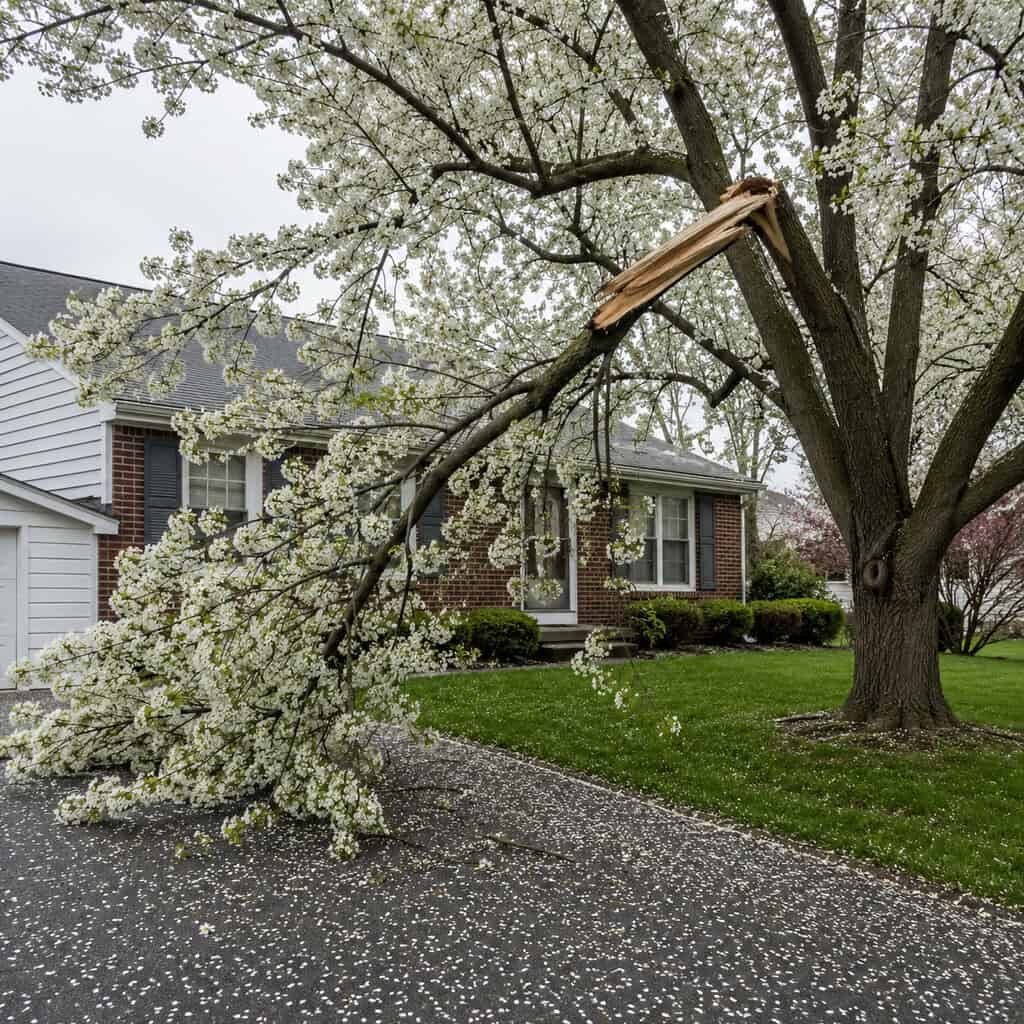
The real problem comes later. Bradford pears grow with tight, narrow branch angles that crowd against each other, and around year five those weak crotches start splitting under their own weight. One ice storm and half the tree is on your driveway.
They also cross-pollinate and spread into thorny wild thickets that choke out native plants. Ohio banned the sale of Callery pears outright in 2023, and several other states followed. Don’t plant it.
2. Leyland Cypress
Sold as a privacy wall you can grow in a hurry. Three to four feet a year, no waiting.
That’s the trap. It doesn’t stop at fence height — it keeps climbing toward 50 or 60 feet, far too big for the property line where most people stuff it.
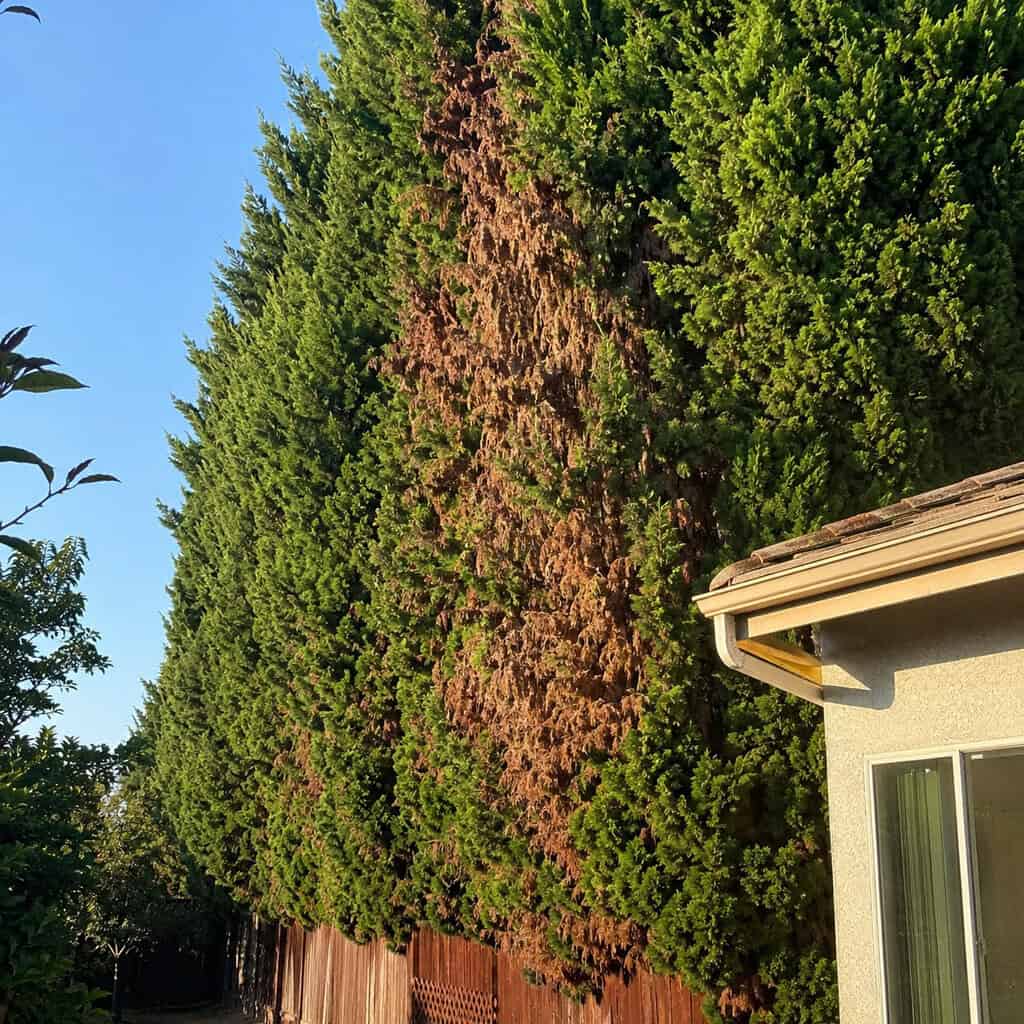
Plant a row of them and you’ve built a monoculture. When seiridium or botryosphaeria canker shows up, it doesn’t take one tree, it takes the whole screen, and the browning spreads down the line like dominoes.
Extension offices report Leyland cypress as the single biggest source of tree-problem calls they get. The instant hedge becomes an instant headache.
3. Silver Maple

The shade tree of the postwar housing boom. Builders planted them by the thousands because they grew fast and filled out a bare new lot in a few seasons.
Fast growth means soft wood. The limbs are brittle and the first big storm after the tree matures starts dropping them on your roof and your car.
The roots are worse. Shallow and hungry, they surface across the lawn so you can’t mow cleanly, then push into sidewalks, septic fields, and drain lines hunting water.
Some cities banned silver maple from the strip between sidewalk and street. If you inherited one with an old house, you already know why.
4. Weeping Willow
Nothing looks more romantic by a pond. The trailing branches, the soft sway, the storybook silhouette.
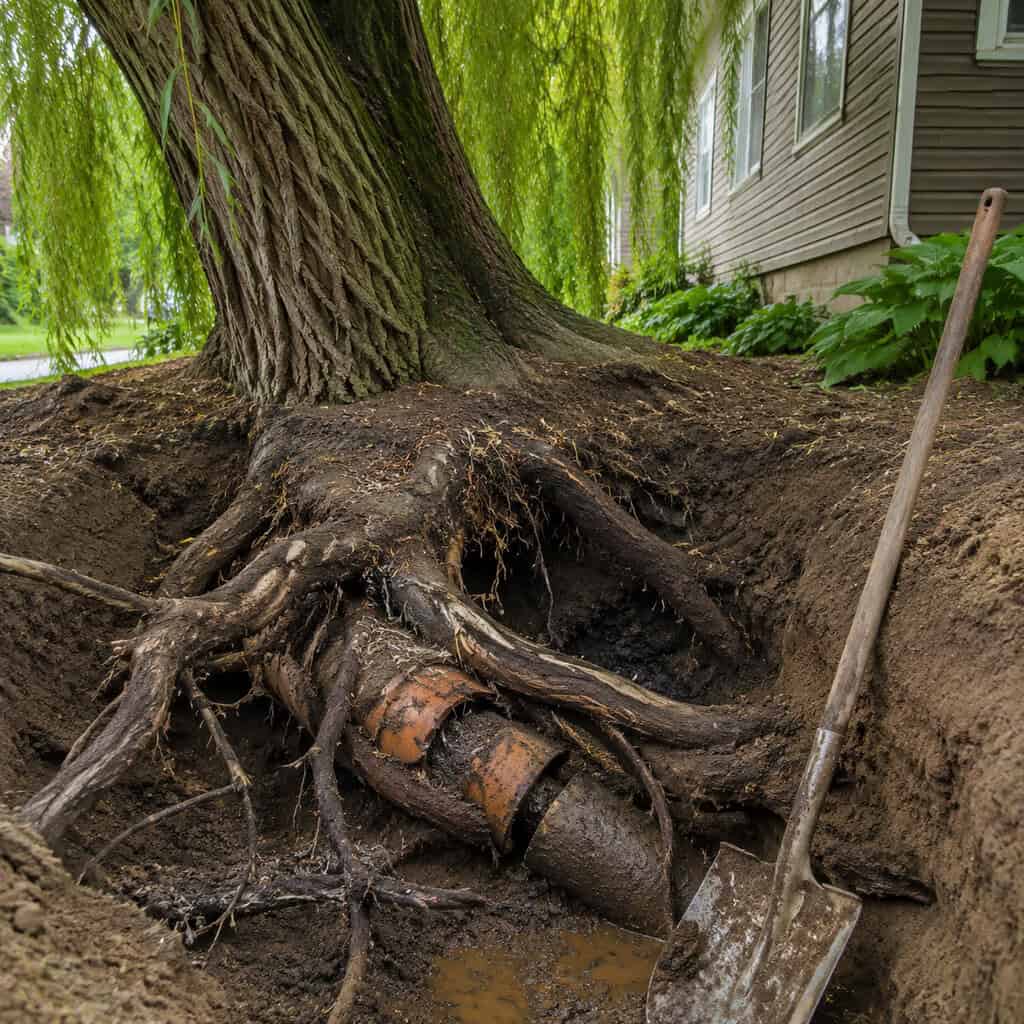
Now look underground. A willow’s roots can spread up to three times the height of the tree, and they grow with one obsession: water.
They find it wherever it leaks. A hairline crack in a clay sewer lateral, a weeping foundation footing, a buried irrigation line — the roots locate the moisture and grow straight into it, then expand and crush the pipe from the inside.
By the time you notice, it’s not cheap. A sewer line invaded by willow roots can mean repeated rooter visits at a couple hundred dollars a pop, and a full lateral replacement runs $3,000 to $25,000 depending on depth and length. Roots that reach a foundation can lift slabs and crack footings, and foundation repair routinely climbs past $10,000.
The canopy is no prize either. Willow wood is weak and the tree sheds branches constantly, littering the yard year-round.
Plant it 50 feet from any structure or pipe, or don’t plant it at all. A willow needs more room than almost any homeowner actually has.
5. Hybrid Poplar

Marketed as the fastest shade money can buy. Some grow eight feet in a single year, and the catalog photos sell hard on instant gratification.
The gratification is real. So is the regret.
Those shallow, water-seeking roots head straight for drain tile, septic systems, and irrigation lines. And the tree throws up suckers — little clone shoots — far from the trunk, popping through the lawn and the flower beds where you never planted anything.
Fast in, fast out. Hybrid poplars are also short-lived and prone to disease, so the quick shade is gone about the time the root problems peak.
6. Eastern Cottonwood
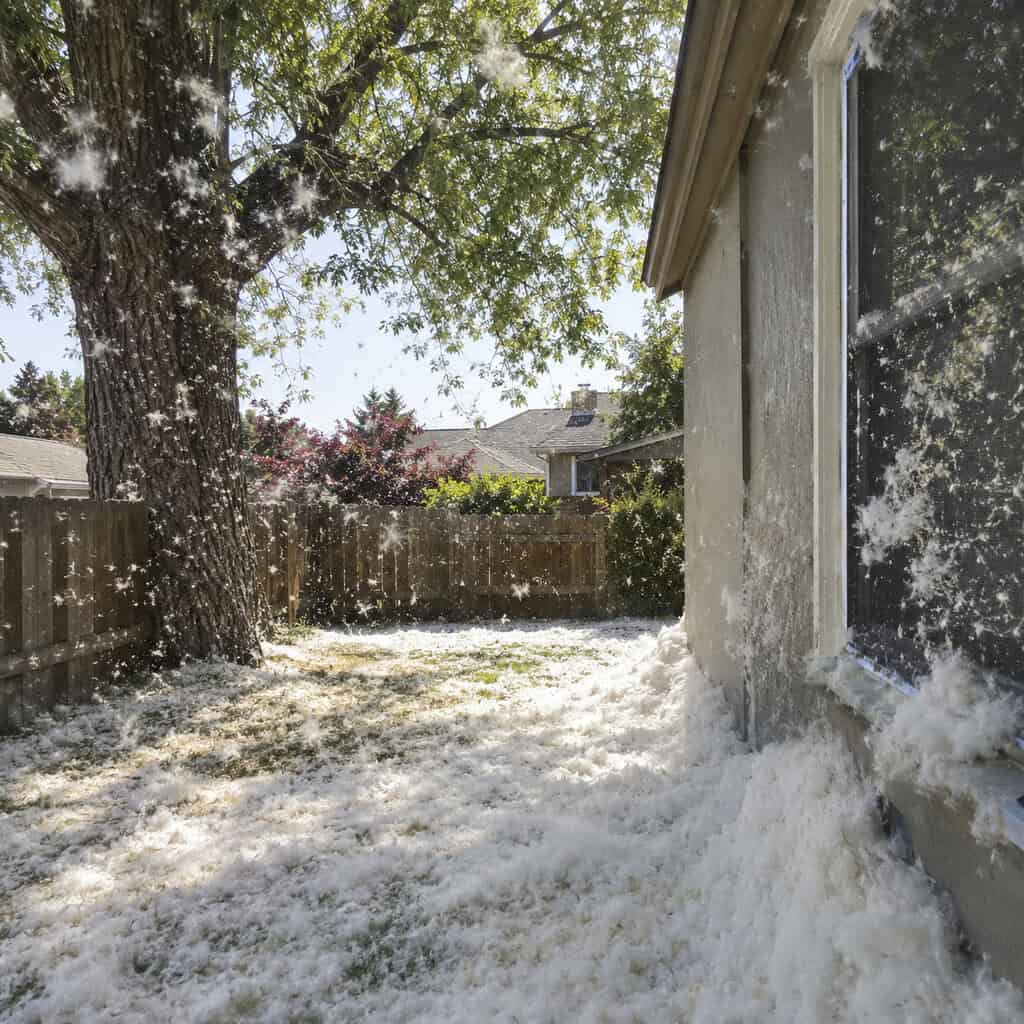
Big, fast, and majestic along a riverbank. In a yard, it’s a different story.
The root system is shallow and soft, which makes a mature cottonwood unstable in high wind. The wood rots from the inside, so large limbs let go without warning.
Then there’s the cotton. Every spring the female trees release fluffy seed that drifts across the yard like snow, clogging screens and AC units and piling against the fence.
Webworms tent up in the branches by midsummer. Looked great at five feet, regretted at fifteen.
7. Mimosa (Silk Tree)
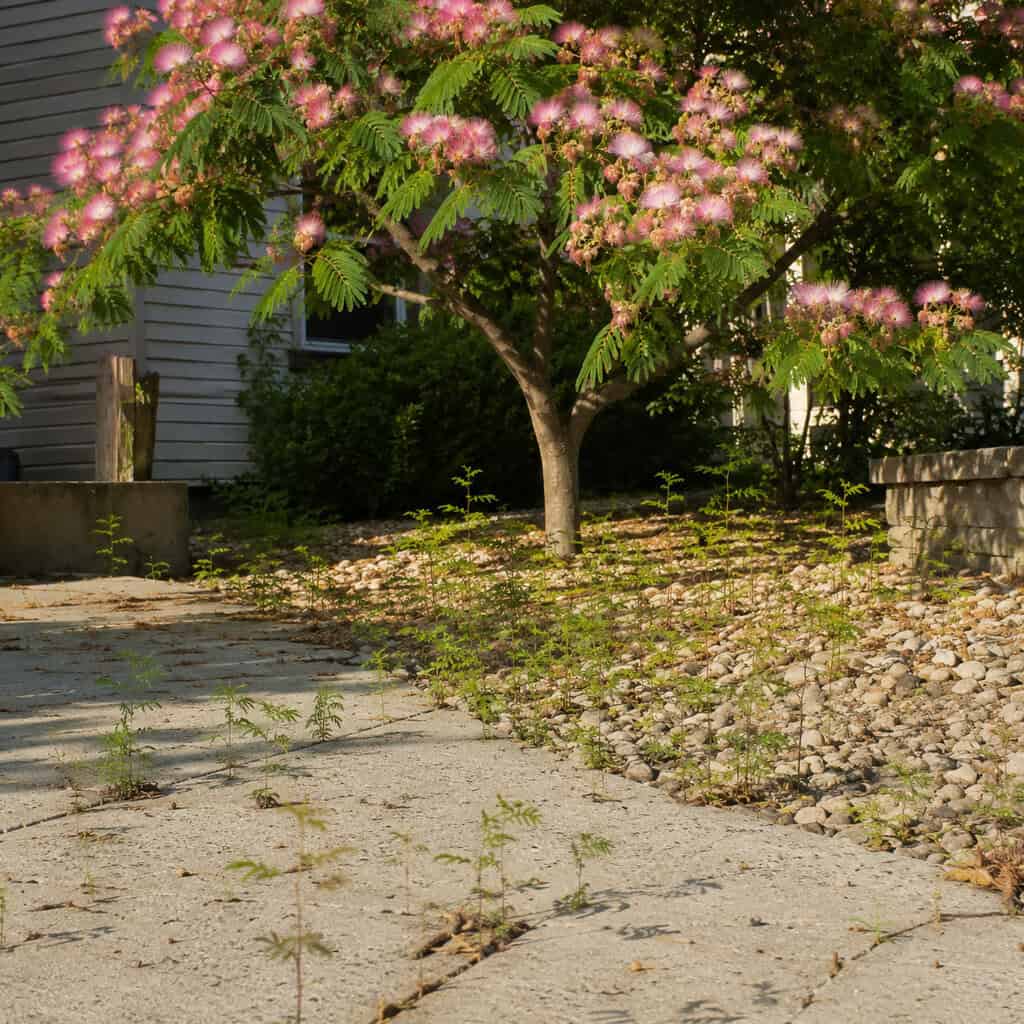
Pink powder-puff flowers and ferny leaves. It looks tropical and dreamy in June.
It’s also a seed machine. Mimosa pods drop hundreds of seeds that stay viable in the soil for years, sprouting in cracks, beds, and gutters all over the property.
The shallow roots are strong enough to buckle concrete near the trunk. And just when it’s spreading everywhere, fusarium wilt kills the parent tree young, leaving you with a dead trunk and a yard full of babies.
It’s listed invasive across much of the South and the coasts. Romantic up front, relentless after.
8. Princess / Empress Tree (Paulownia)

Billed as the fastest-growing shade tree on Earth, and that’s not marketing fluff — a young paulownia can shoot up 15 feet in a single season. People plant it expecting a miracle.
The miracle has consequences. A single mature tree can release over 20 million seeds a year, fine enough to ride the wind for miles, and they germinate anywhere they land.
The roots are the bigger threat to your house. Paulownia roots grow aggressively in search of water and have the strength to crack foundation footings, lift slabs, and break into sewer laterals — the same expensive damage profile as a willow, just faster.
And it’s nearly impossible to remove once established. Cut the trunk and it resprouts from the stump and roots with a vengeance, so you’re looking at repeated cutting plus herbicide treatment, or a full stump grind and root excavation. Professional removal of an established invasive tree near a structure commonly runs $1,500 to $5,000, and that’s before any foundation or pipe repair the roots already caused.
It’s regulated as invasive across the Mid-Atlantic and beyond. The free firewood and the fast shade aren’t worth what it does to the ground under your house.
9. Tree of Heaven
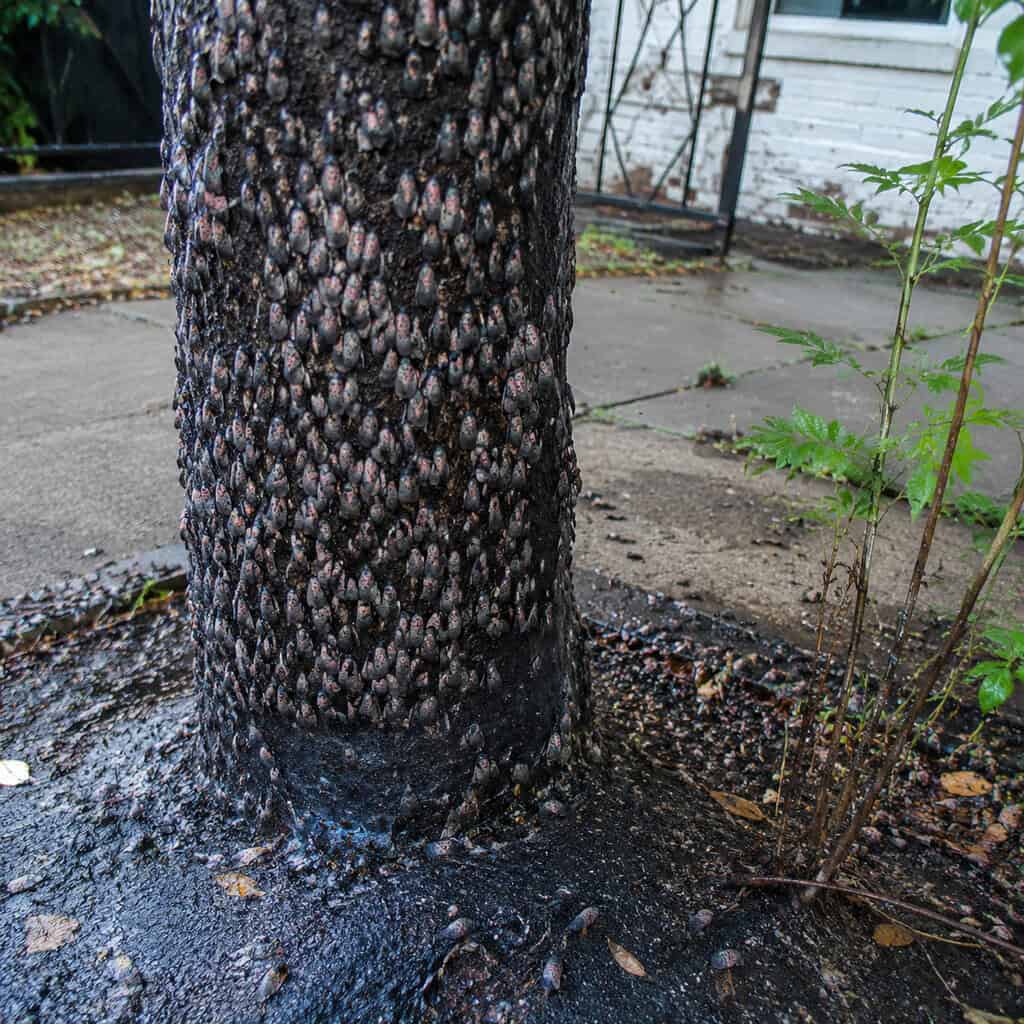
An old Victorian ornamental that escaped into alleys and fence lines across America. You’ve seen it growing out of cracked pavement in every city.
It earned a new reputation as the preferred host of the spotted lanternfly, the invasive pest chewing through the eastern states. If you’ve got tree of heaven, you’re rolling out a welcome mat.
The lanternfly swarms it by the hundreds, feeding on the sap and raining sticky honeydew that grows black sooty mold on everything below — patios, cars, siding. Once they’re established, you’re into ongoing management: tree banding, targeted insecticide, and in heavy infestations a pest-control contract that can run several hundred dollars a season.
The tree itself fights back when you try to kill it. Cut it down and the roots send up dozens of suckers across the yard, each one a new tree. Herbicide injection in late summer is about the only thing that works, and even then it takes more than one round.
The crushed leaves smell like rancid peanut butter. Nobody plants this on purpose anymore — but if it volunteered in your yard, deal with it fast, before the lanternflies find it.
10. Norway Maple

The default street tree for decades. Cheap, tough, and it cast dense shade fast, so cities lined whole neighborhoods with it.
Now those same cities discourage it. The thick surface roots buckle sidewalks and creep toward foundations, and the canopy is so dense that grass won’t grow underneath.
It seeds aggressively too, and it’s listed invasive across much of the country, crowding out native maples in nearby woods.
You get bare dirt under it, a heaved walkway around it, and seedlings everywhere. Skip it.
11. Russian Olive
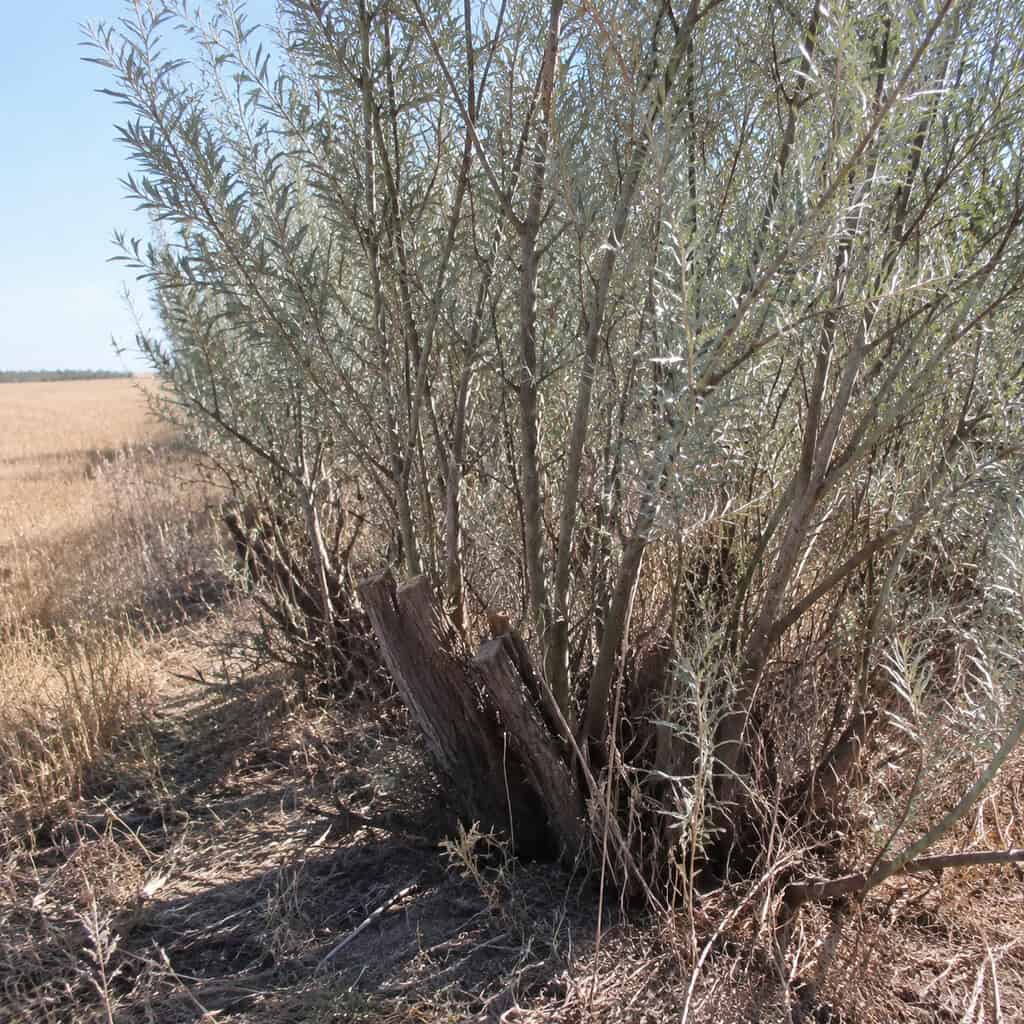
Silvery foliage, drought-proof, tough as nails. Too tough.
Birds eat the fruit and spread the seed for miles, and it forms dense crowding thickets that take over open ground. Cut one down and it resprouts from the stump like nothing happened.
It’s classified invasive and banned from sale in several states. A few years in, you’re not landscaping — you’re fighting an infestation you started.
12. Siberian Elm
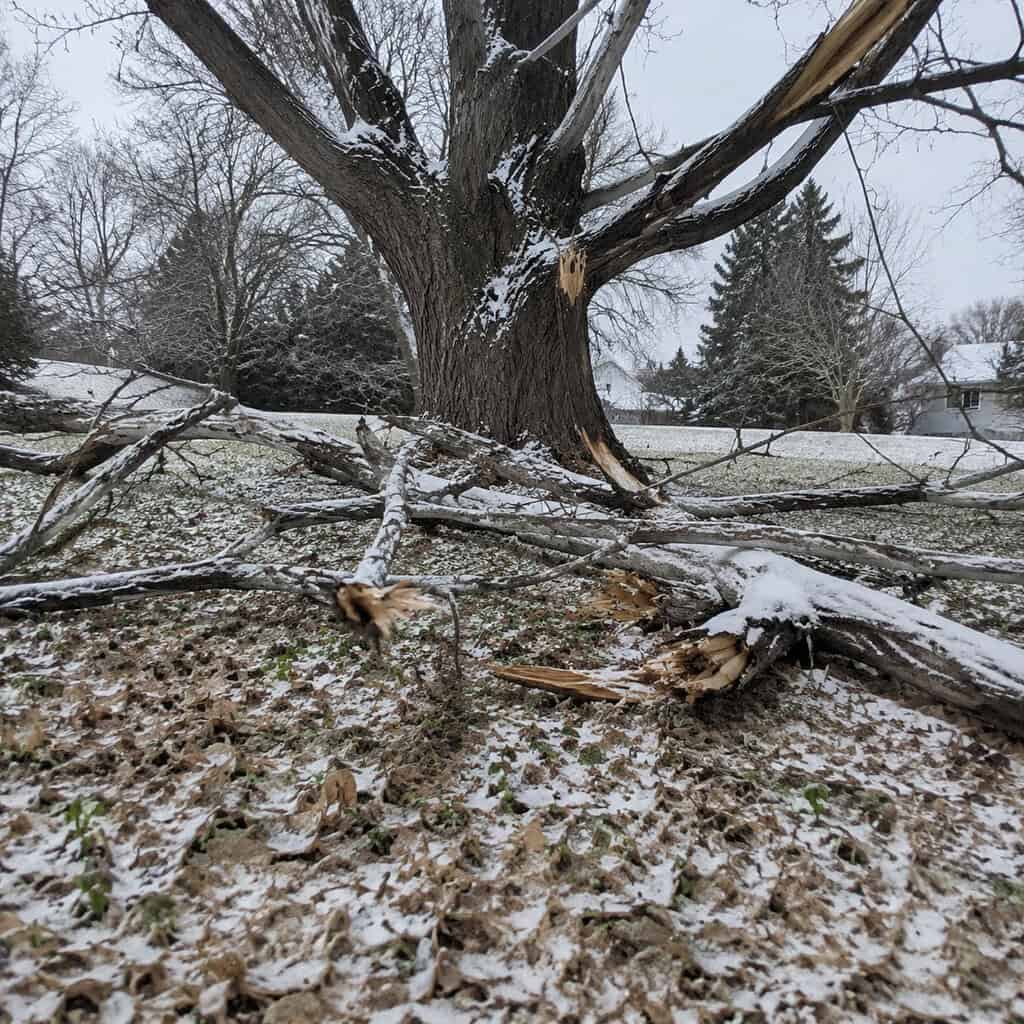
At the nursery it looks like a fast, tidy, drought-tough shade tree. The price is right and it grows quick.
The wood is weak. It shatters in snow and high wind, dropping limbs across the yard every storm season.
And it seeds like mad. Thousands of papery samaras spin down and carpet the lawn with seedlings you’ll be pulling for years. A textbook why-did-I-plant-this tree.
13. Sweetgum
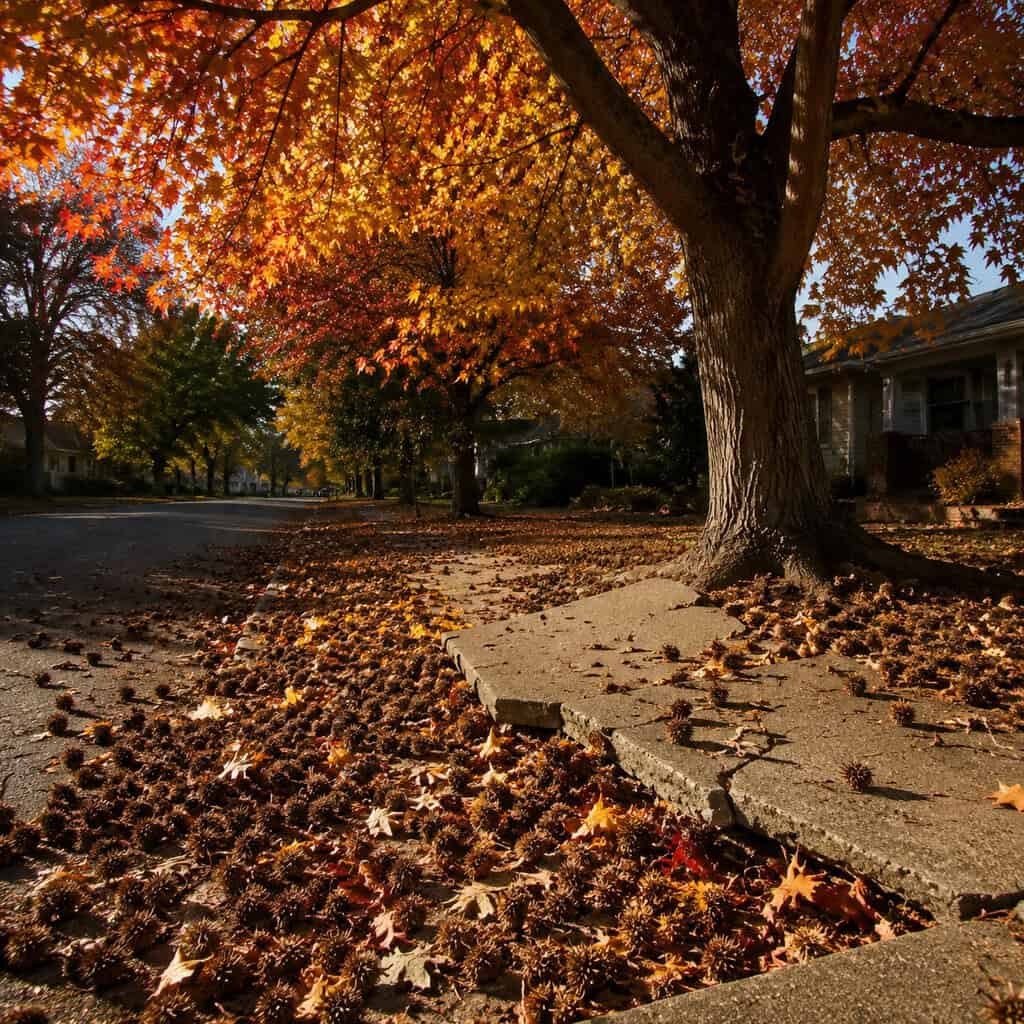
The fall color is genuinely spectacular — deep reds, purples, and gold all on one tree. That’s the bait.
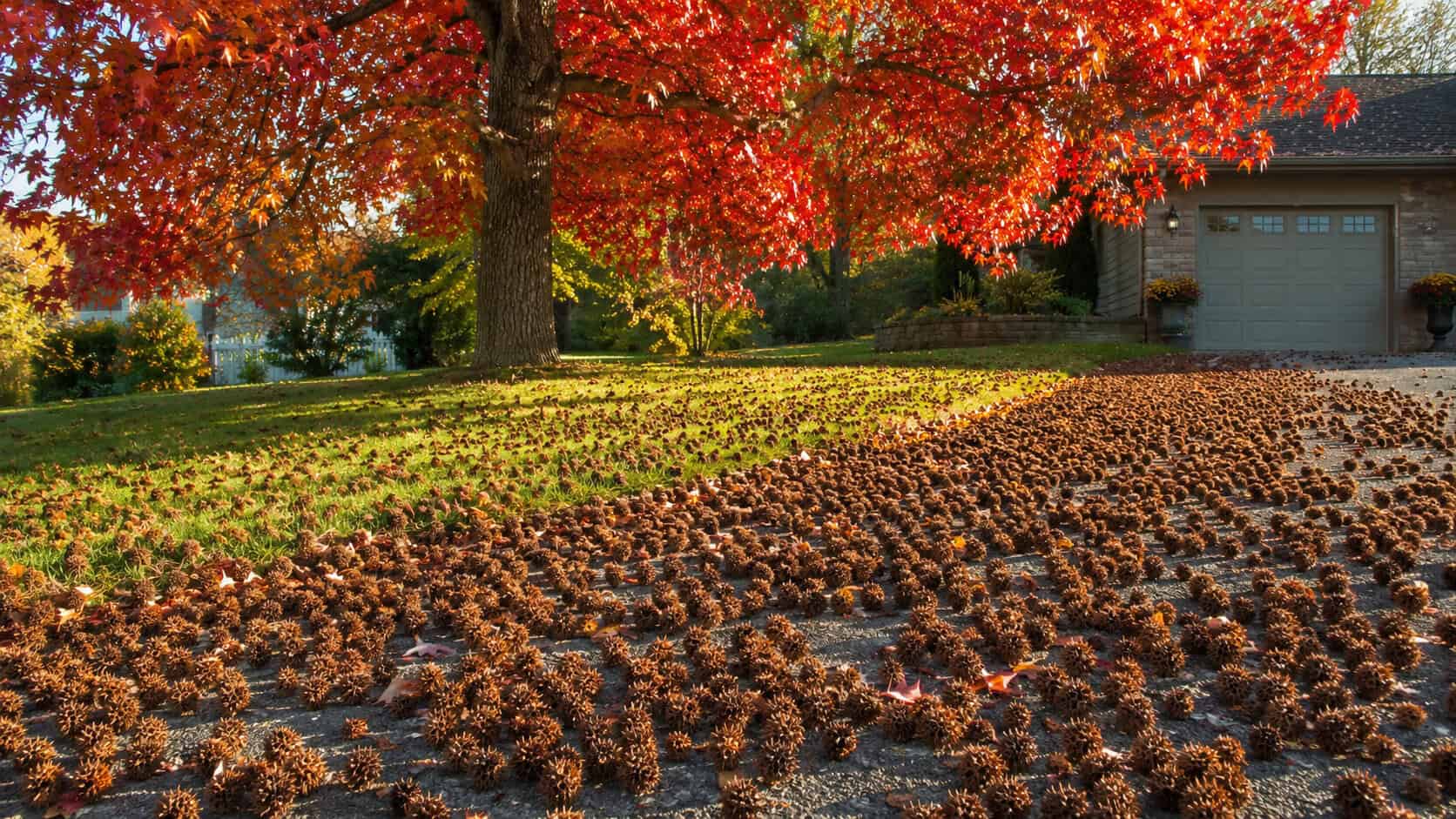
Then come the gumballs. Spiky woody seed balls, thousands of them, dropping all winter and rolling underfoot like ball bearings. Step on one in bare feet and you’ll remember it.
You can’t mow over them and you can’t rake them easily. Meanwhile the roots crack sidewalks and lift driveways.
Seedless cultivars exist. Most people didn’t know to ask, and bought the spiky one.
14. Black Walnut

The wood is prized and the nuts are edible, so it sounds like a win. It isn’t, if you garden.
Black walnut roots secrete juglone, a natural toxin that poisons the soil around the tree. Tomatoes, peppers, hydrangeas, peonies, and azaleas wilt and die within the root zone, and the zone is wide.
This is the tree that quietly kills a vegetable garden and leaves you blaming the weather. Anything sensitive within 50 to 60 feet of the trunk is at risk.
Then there are the nuts — weeks of them, dropping hard, staining everything, drawing maggots and squirrels while you rake. Beautiful timber, terrible neighbor.
15. Honey Locust

The fine, fern-like leaves cast a light, dappled shade that grass actually grows under. That’s why it became a go-to lawn tree.
The problem is what you got if you didn’t buy a sterile, thornless cultivar. The wild type drops foot-and-a-half seed pods by the bushel and suckers up little thorny treelets around the base.
Those thorns are no joke — three to four inches long and hard enough to flatten a tire or a boot. And the surface roots push up the sidewalk over time.
Even the named cultivars can revert to thorny growth where they’re pruned. Read the tag before you dig.
16. Eastern White Pine

A landscaping favorite for generations — soft, fast, and evergreen. People still plant it for a quick screen.
It drops needles constantly and bleeds sticky sap that gums up everything beneath it, including the car you parked there.
The wood is soft and breaks badly under ice and heavy snow, so a mature tree sheds big limbs in winter. And white pine blister rust plus general decline since around 2009 has made it a far riskier bet than it used to be.
Pretty in the right spot. The right spot is rarely a small yard.
17. Female Ginkgo
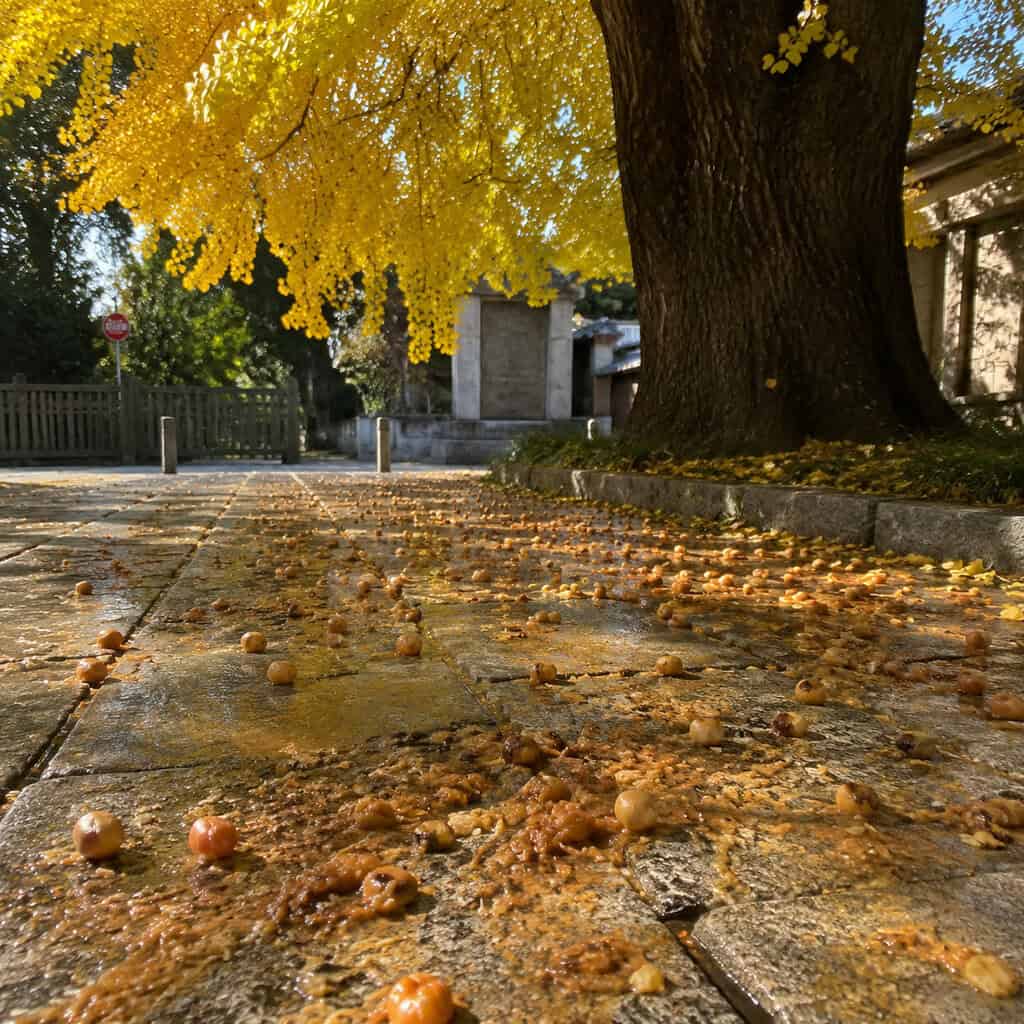
Ginkgo is one of the toughest shade trees going — disease-proof, pollution-proof, basically bulletproof. The catch is buying the wrong one.
The female trees drop fleshy fruit, and around year five they hit fruiting age. The fruit is slippery underfoot, stains masonry and car paint, and smells like vomit when it rots.
An unsexed seedling is a coin flip. Buy a named male cultivar — ‘Autumn Gold,’ ‘Princeton Sentry’ — and you get all the upside and none of the stink.
18. Mulberry
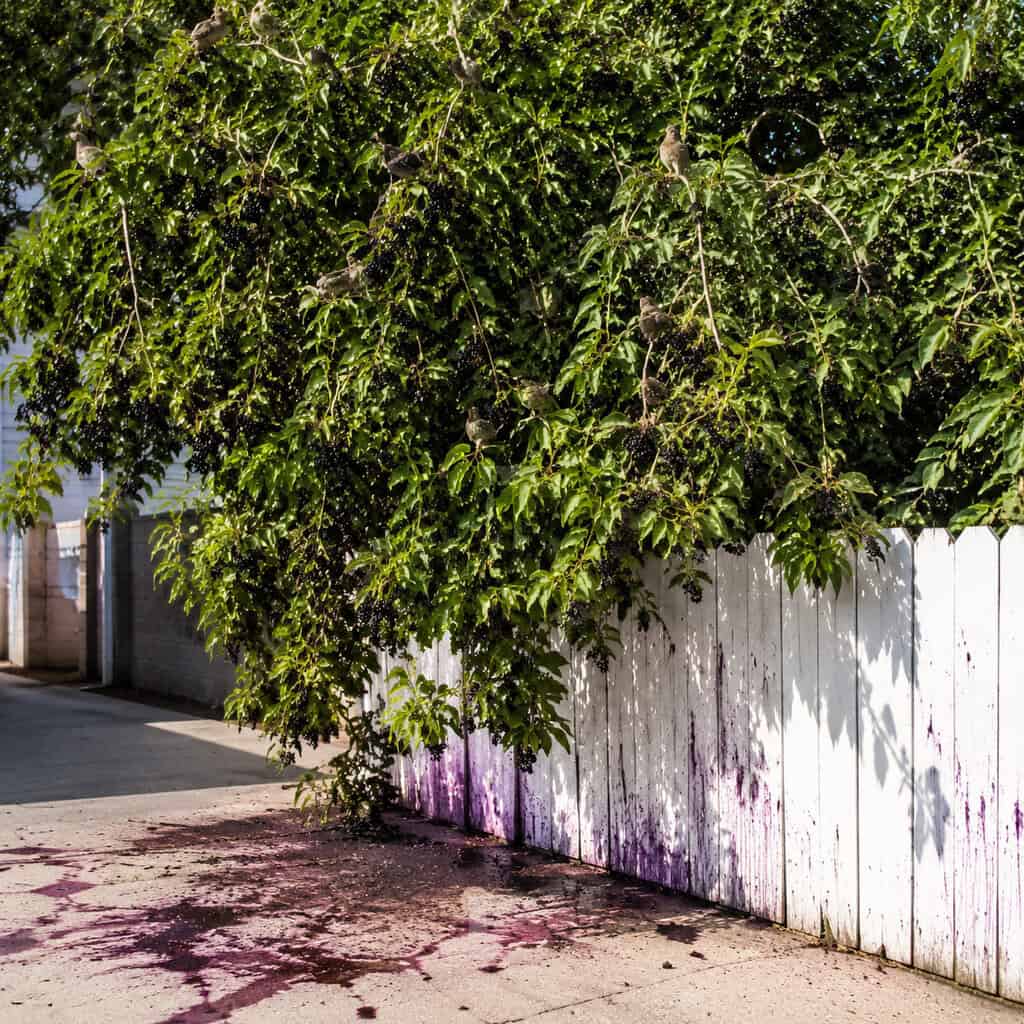
Fast shade and free fruit, and the birds love it. So far so good.
The fruit is the first regret. It drops in purple-black slop that stains driveways, decks, and anything parked nearby, and it draws insects and bird traffic all summer.
The pollen is the bigger one. Male mulberries throw heavy, highly allergenic pollen — bad enough that some cities banned planting them. The vigorous, water-seeking roots round out the trouble.
It crowds in fast and overstays its welcome faster.
19. Quaking Aspen
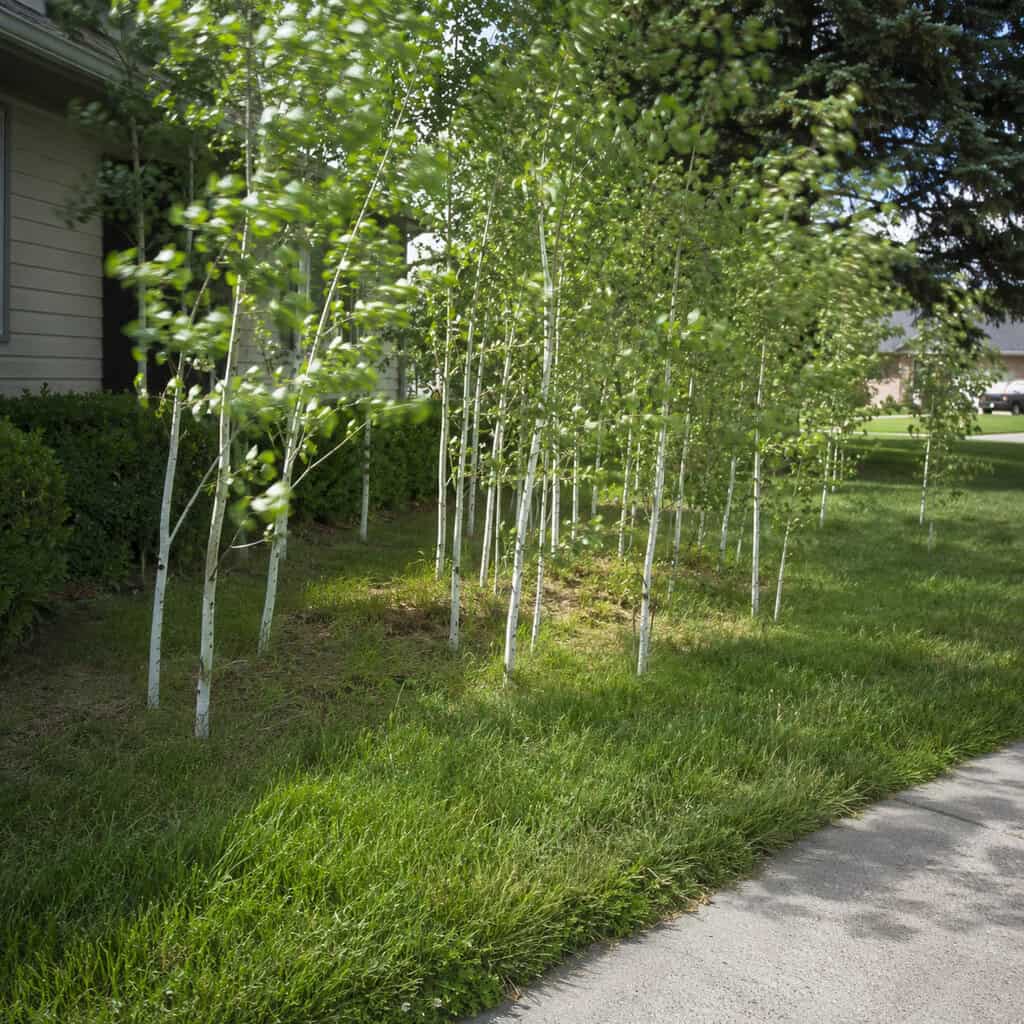
The trembling leaves and chalk-white bark are unforgettable in the mountains. In a flat suburban lot, it’s a different animal.
Aspens clone themselves. The roots send up suckers, and one tree becomes a thicket of identical stems marching across the lawn, into the septic field, and up against the sidewalk.
The wood is weak and storm-prone on top of it. You planted one. Now you’ve got fifty, and mowing them down only makes them angrier.
20. American Sycamore
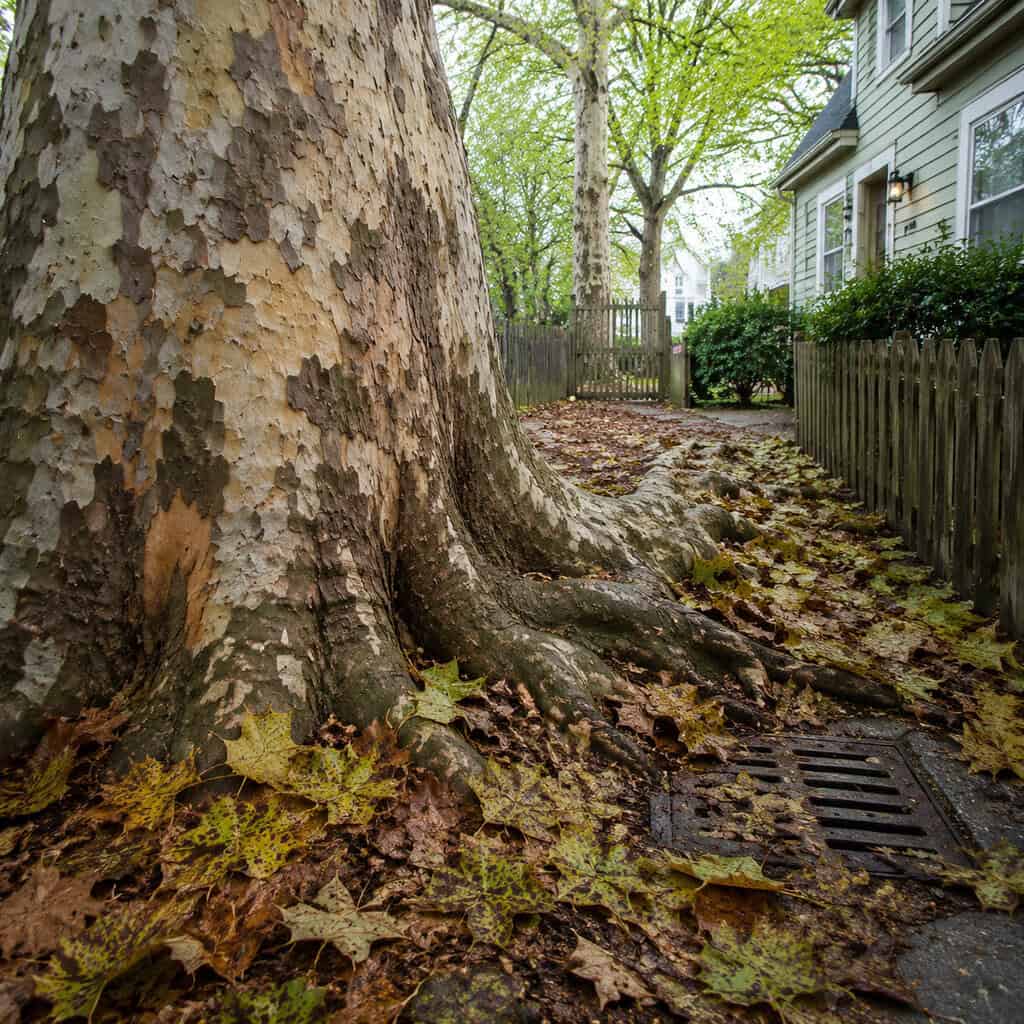
The mottled, peeling bark is gorgeous and the leaves are huge. In a park it’s a showpiece.
The roots are vigorous and drawn to water and air, which means they find old clay sewer laterals and storm drains and crack them open. Repair bills follow.
Up top it’s a mess — those giant leaves drop in heaps, and anthracnose makes the tree look half-dead every spring as it sheds and refoliates.
Better suited to a riverbank than a narrow yard. Most lots can’t hold it.
21. American Elm
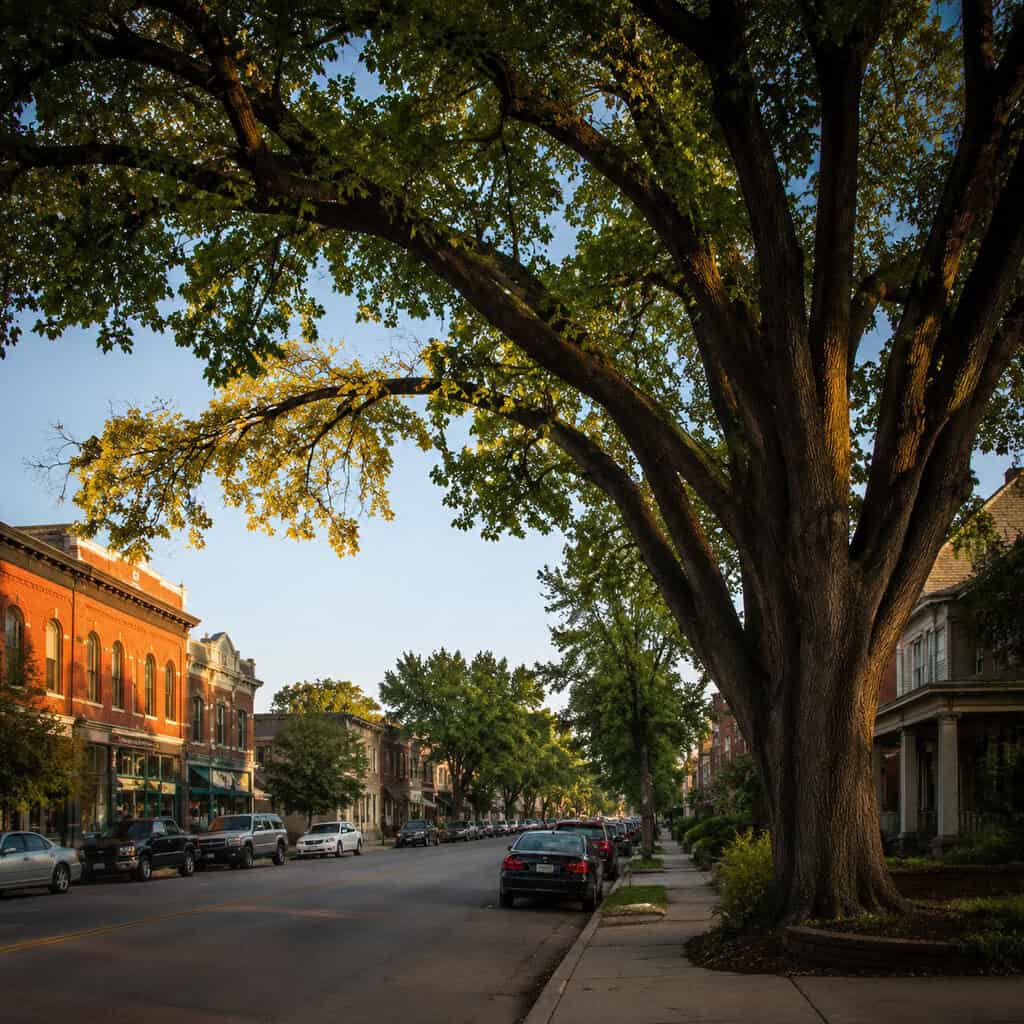
The tree that built the American street. Those soaring vase-shaped canopies that arched over Main Street and turned ordinary roads into green cathedrals — that was the American elm, planted by the millions from the 1800s onward.
Then Dutch elm disease arrived in the 1930s and erased them. The fungus, spread by bark beetles, has killed an estimated 75 percent or more of the elms across the country, and it’s still out there. Plant a non-resistant elm today and you’re betting against a disease with a long track record of winning.
Even a healthy elm brings a second problem underground. The roots are aggressive and water-hungry, and they invade water mains, well lines, and foundation footings — the high-dollar damage no homeowner wants. A root-cracked water main or a heaved foundation runs into five figures fast, and a mature elm that succumbs to disease becomes a removal job of its own, often $2,000 to $5,000 for a large street tree near the house and wires.
Disease-resistant cultivars like ‘Princeton’ and ‘Valley Forge’ exist now and they’re worth seeking out if you want the classic shape. But the old unimproved American elm is a nostalgia trap — beautiful history, expensive future.
22. River Birch
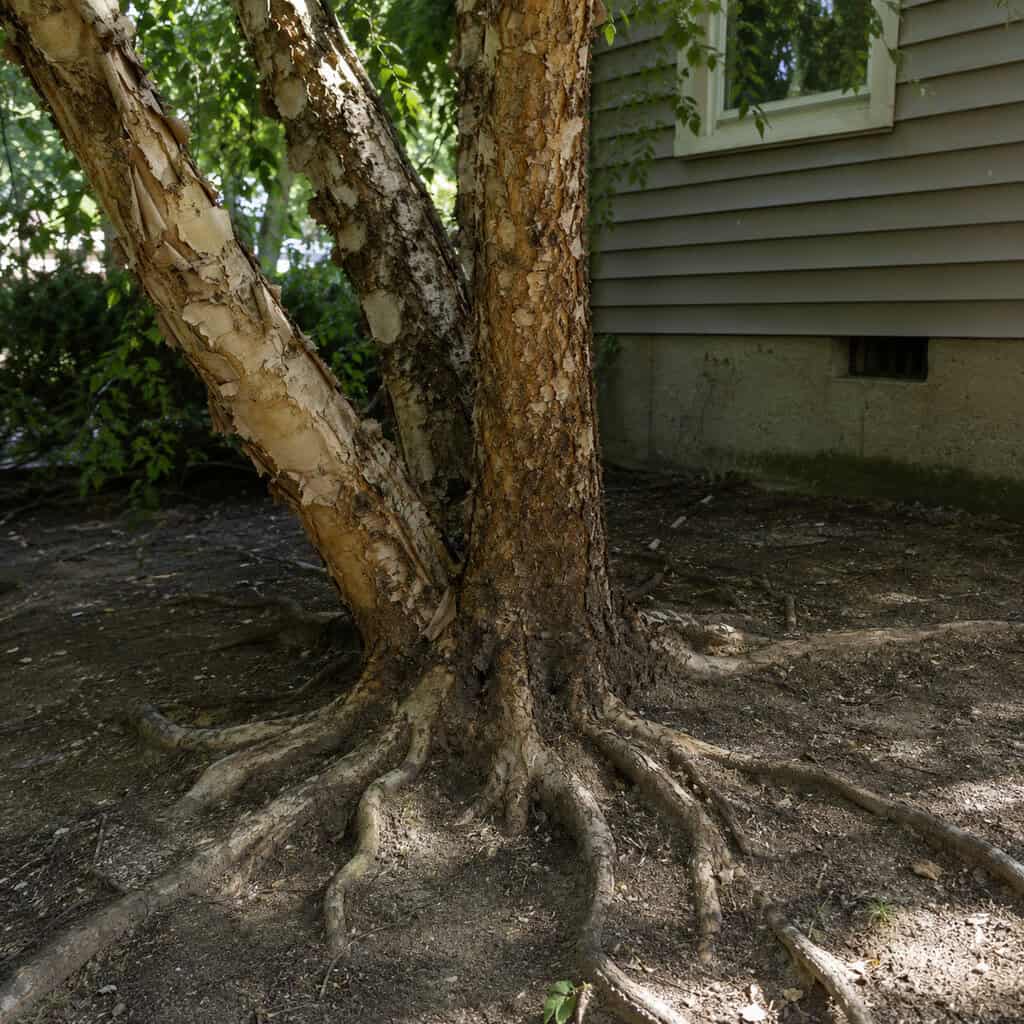
The peeling, two-toned cinnamon bark sells it, and it grows fast enough to satisfy impatient planters. Nurseries push it hard.
The roots stay near the surface and spread wide, hunting cracks in water and sewer lines like the rest of the water-seekers on this list.
Those surface roots also make it nearly impossible to grow anything underneath — no grass, no beds, just exposed root and bare dirt. River birch needs about 20 feet of clearance from the house and pipes.
Most people give it five. Then they wonder why the lawn died and the lateral backed up.
23. Green Giant Arborvitae

The new default privacy screen. It’s everywhere along new-build property lines because it grows fast, stays green, and stacks up into a wall in a few years.
The wall is a buffet. Bagworms — the caterpillar that builds those little spindle-shaped cocoons out of needles — adore arborvitae, and a heavy infestation can strip an entire tree bare in a single summer. Once the foliage is gone on an evergreen, it doesn’t grow back, so the brown patch is permanent.
Catching them matters. The bags are easy to miss until midsummer, and by then the caterpillars are inside feeding. Handpicking the bags off in winter and early spring breaks the cycle for free; for established outbreaks you’re spraying Bt or spinosad in late spring when the larvae first emerge, and a pro treatment across a long screen can run a few hundred dollars per visit. Spray too late and the bags are sealed and the insecticide can’t reach them.
Deer browse it hard in winter, and wet snow splays and snaps the columns apart. Fast privacy, high-maintenance reality.
24. Eucalyptus

Fast, fragrant, and exotic — it shoots up and smells like a spa. In a yard with clay soil, it’s a foundation hazard.
Eucalyptus is one of the thirstiest trees you can plant. The roots chase moisture relentlessly, and in clay soils that’s a real structural problem.
Clay swells when wet and shrinks when dry. A big eucalyptus near the house pulls so much water out of the ground that the clay under the foundation shrinks and pulls away, the slab settles unevenly, and the walls crack — the same mechanism that wrecks foundations in a drought, except the tree creates the drought year-round on one side of the house.
Foundation repair from soil movement is among the most expensive fixes a homeowner faces — piering and slab leveling commonly run $10,000 to $30,000. It’s listed among the worst trees to plant close to a structure, and on clay it earns the ranking.
Keep it far from the house, or skip it where the soil moves.
25. Tulip Poplar
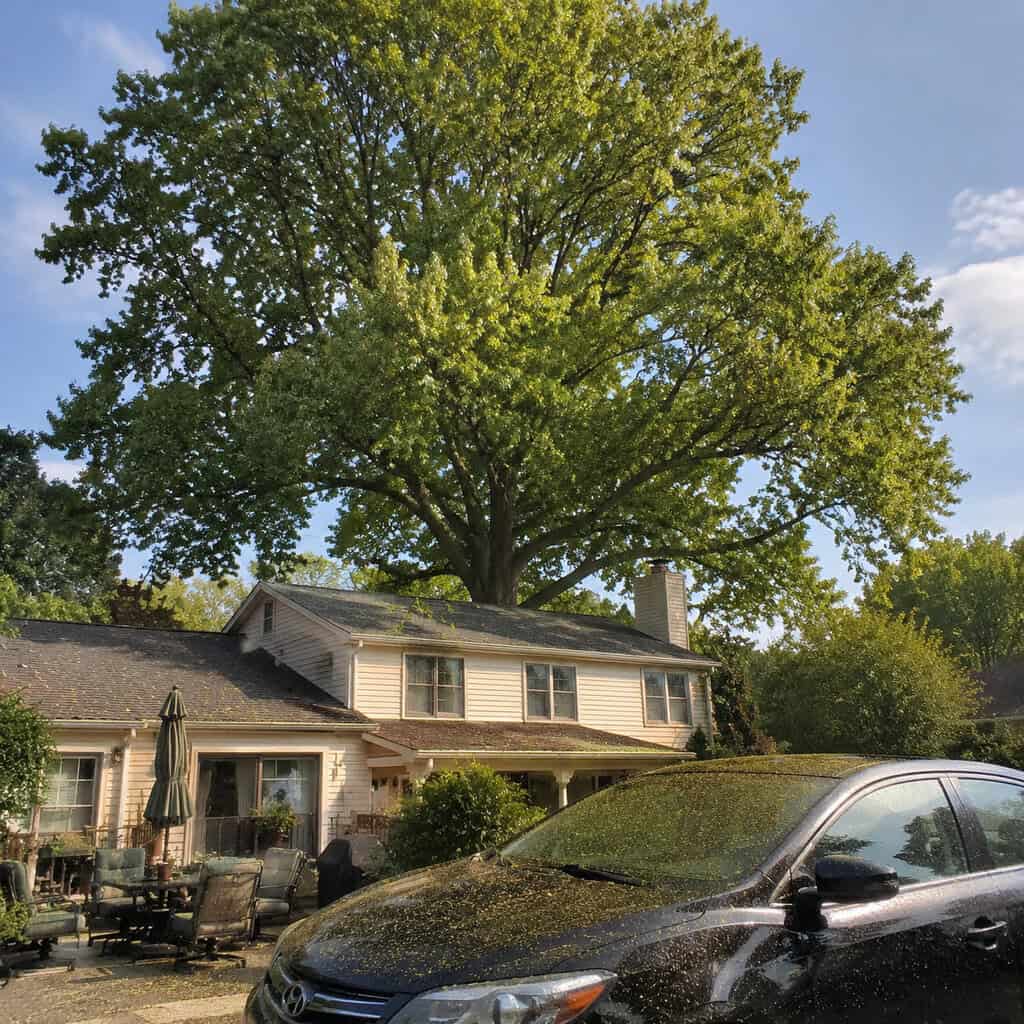
A fast native with tulip-shaped blooms and quick, clean shade. Homeowners love it on day one.
It doesn’t stay polite. Tulip poplars rocket past 100 feet, towering over a typical lot and dwarfing the house it was supposed to shade.
Aphids colonize the canopy and rain honeydew — a sticky, sugary mist that coats cars, patio furniture, and decks below, then grows black mold. You’ll be pressure-washing all summer.
Right tree, wrong yard. Glorious in a forest, oversized almost anywhere else.
26. Green Ash / White Ash

Lush, fast, and a reliable shade tree for decades. Cities planted ash everywhere to replace the elms that Dutch elm disease took.
Then the emerald ash borer arrived from Asia and started the same story over. The metallic-green beetle has killed tens of millions of ash trees across more than 35 states, and an untreated ash in an infested area is close to a death sentence.
Saving one means ongoing insecticide injections every couple of years for the life of the tree — a permanent expense — and a dead ash gets brittle fast, making removal urgent and pricey before it drops limbs.
The fast lateral roots add the usual pipe and walk trouble. Plant something the borer can’t touch.
The Takeaway
Every tree on this list looked like a good idea at the nursery. The regret is always on a delay — a few quiet years while the roots spread and the canopy fills, then the damage all at once.
Before you dig, check three things: how big it gets, how the roots behave, and whether your state lists it as invasive. A ten-dollar tag read carefully beats a ten-thousand-dollar foundation repair.
Ask the extension office, not the garden center clerk on commission. And when in doubt, pick the slow-growing native — the boring tree you’ll still be glad you planted in twenty years.
The best time to plant the wrong tree was never. The best time to plant the right one is this weekend.
Forgot a real bad one, the River Burch. Sheds leaves middle of the summer, roots grow right on the surface causing mower damage, dropped limb in anything over 10 mph wind. A truly lousy tree.
you forgot LIQUID AMBER with there spiked seed pods that wont allow you to walk on lawn!
No they didn’t. Liquidambar styraciflua is the latin name for Sweetgum.
An few additional cautions about the Blue-Gum Eucalyptus:
[1] They’re messy, dropping not only leaves, but seed-pods and bark, too. In addition, they repel boring insects by leaking sap that can be toxic to pets (people too!)
[2] The wood is extremely brittle, and limbs have proven heavy enough to kill folks who are walking underneath.
[3] The roots (and decomposing leaves) release acids which lower surrounding soil pH, inhibiting nearby gardens, ground-covers, and landscaping.
[4] Finally, oils in the leaves and bark are quite volatile, so the damned trees burn like a torch and the fire crowns very rapidy, throwing off flaming embers onto your neighbors’ homes…
I love my.mullberry trees. The jam I make is yummy. Out in the country there is no fuss about them