


Spring is when everyone panics about their lawn. October is when it’s actually decided.
The thin patches that show up in April were set in motion when soil temperatures were still in the 60s. The brown footprints across the front yard came from somebody walking to the mailbox on frosted grass in December. The strip along the driveway that never greens up got buried under salty snow for four months straight.
None of that is fixable in spring. You can only fix it now.
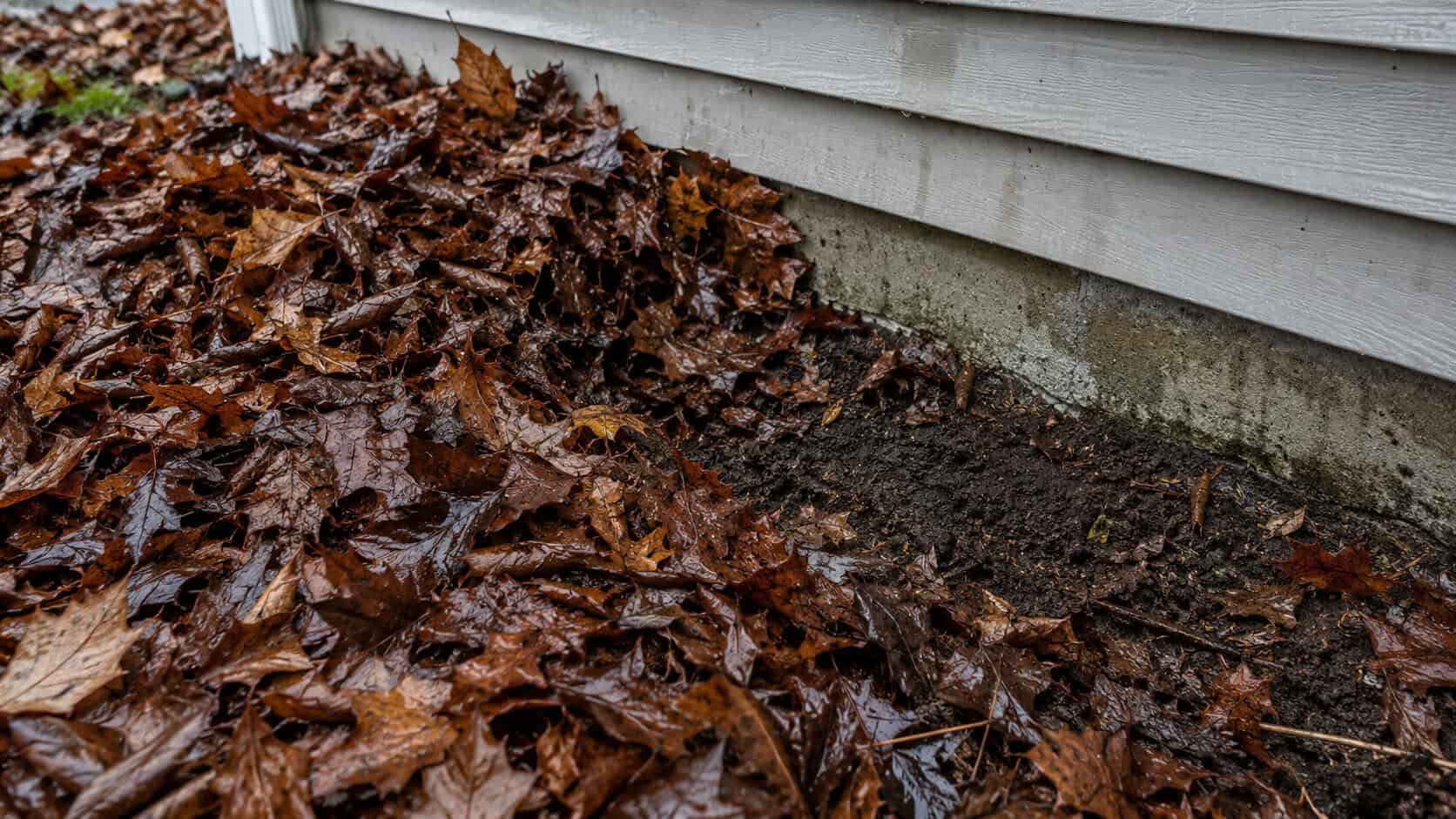

Fall is the one season where cool-season turf builds roots instead of just surviving. Warm soil, cool air, less weed pressure, more rain. The grass is doing the heavy lifting — the only question is whether you help or get in the way.
Here are 29 things to do this fall that decide what your lawn looks like next year.
1. Overseed in the Late-August-to-Mid-September Window
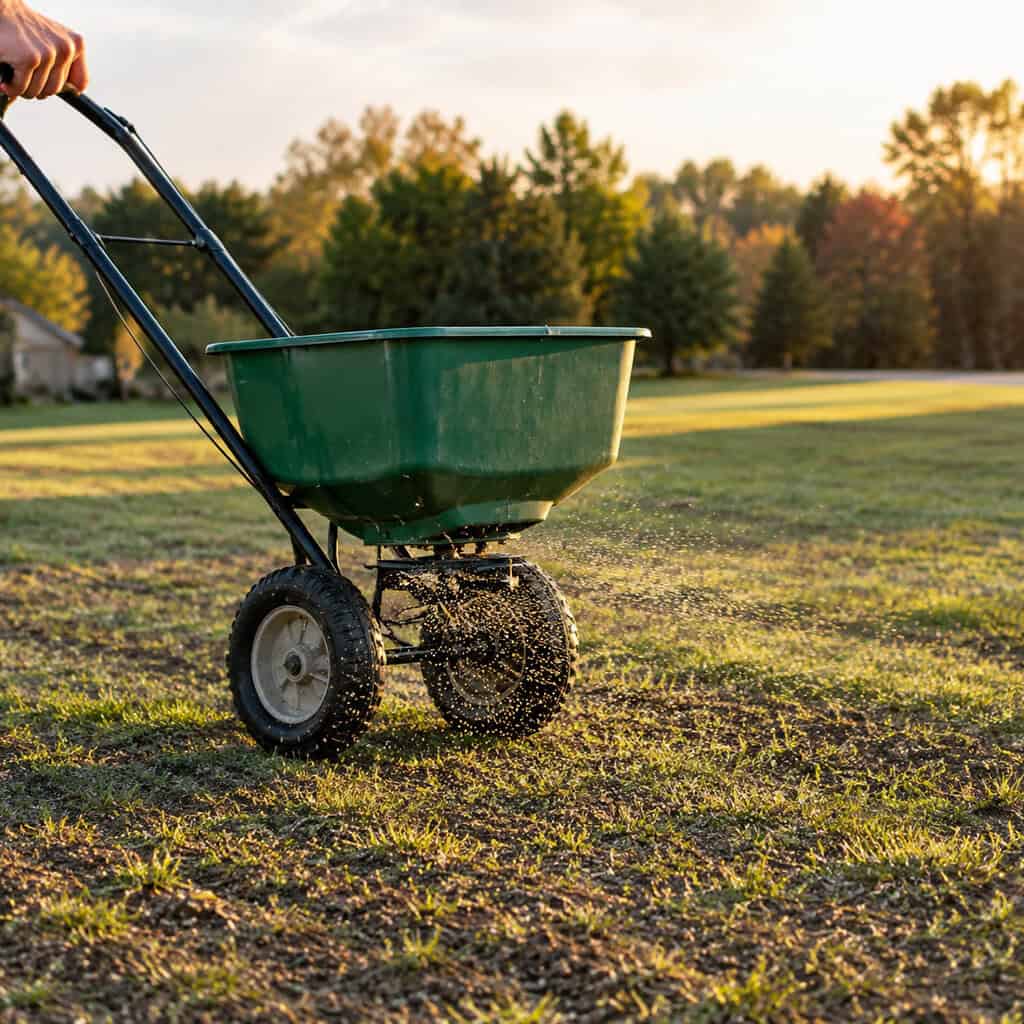
This is the single biggest lever you’ve got. Soil is still warm enough to germinate seed fast, air is cooling, and crabgrass has stopped competing.
The University of Minnesota Extension puts the sweet spot at roughly August 20 through September 10 in cool-season regions. Slide south and the window slides later.
Seed that goes down now gets two full cool growing seasons — this fall and next spring — before it ever faces real summer heat. Spring seeding gets one, and it’s the short one.
Miss by three weeks and germination rates fall off a cliff. If you’re unsure of your local timing, check when to reseed your lawn in fall for your region before you buy seed.
2. Mulch the Leaves In Instead of Bagging Them
Most people rake because their parents raked. The turf research says otherwise.
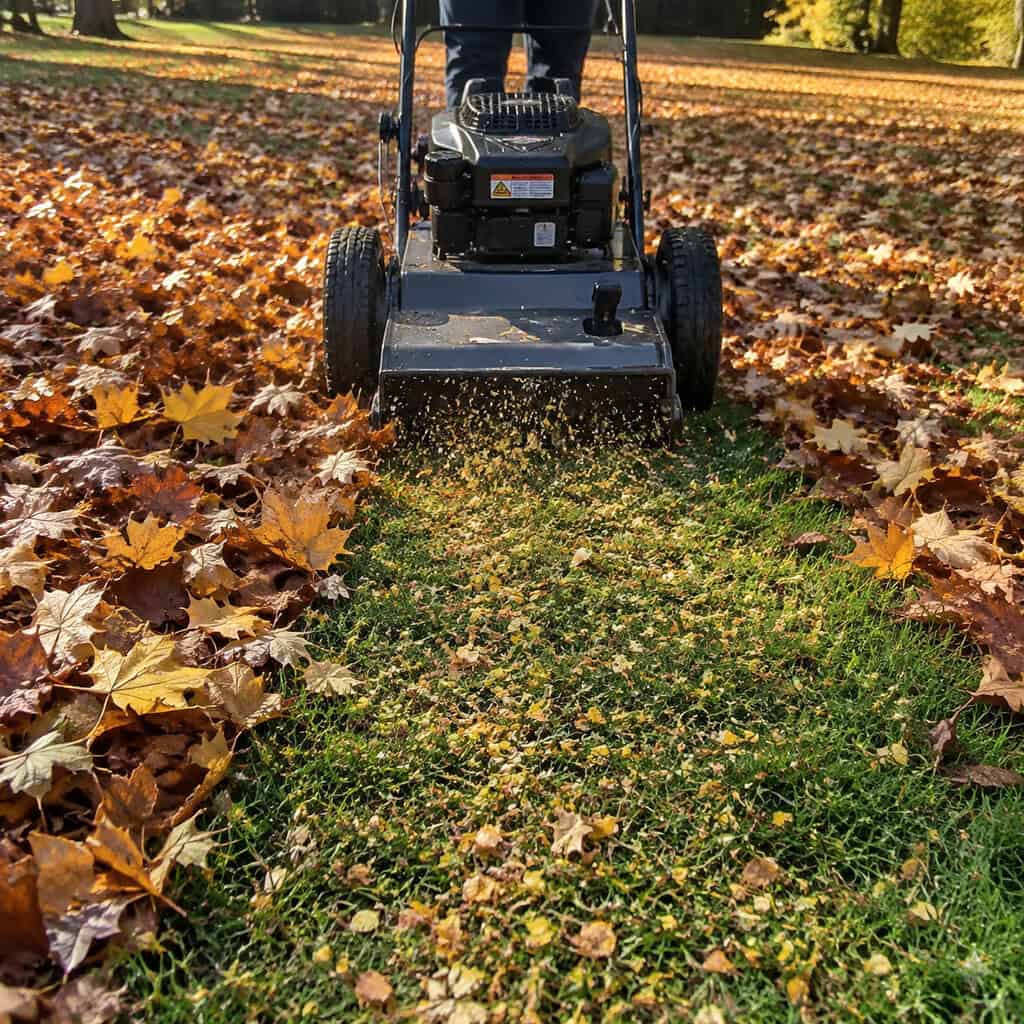
Michigan State ran multi-year trials mowing whole leaf loads directly into lawns — no bagging, no raking. The turf came out fine. Missouri’s work found increased soil organic matter with no pH shift.
Make two or three passes with a mulching blade when the leaves are dry. You want dime-sized pieces that disappear into the canopy, not a shredded blanket sitting on top.
The one rule: don’t let a solid wet mat sit for weeks. Fall leaves can kill grass when they pack down and block light, but chopped fine they’re free fertilizer.
3. Pull Real Cores, Not Spike Holes
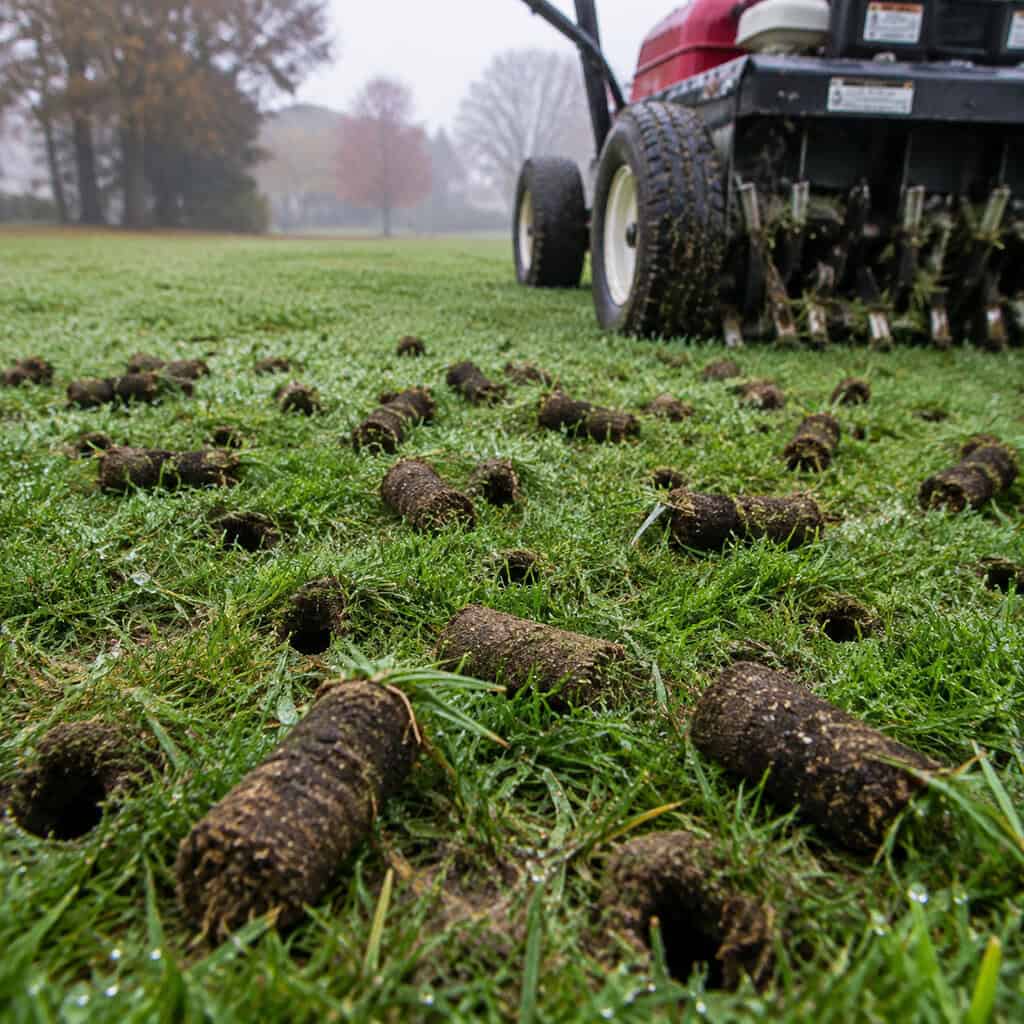
Spike aerators push soil sideways. That’s compaction, not relief.
A core machine yanks out plugs three to four inches deep and leaves them on the surface. That’s the only version that does anything for a compacted lawn.
Water an inch two or three days ahead so the tines can actually penetrate. Dry clay bounces the machine right off.
Make two passes in different directions. One pass on a rental unit barely counts.
4. Spray Broadleaf Weeds in October, Not May
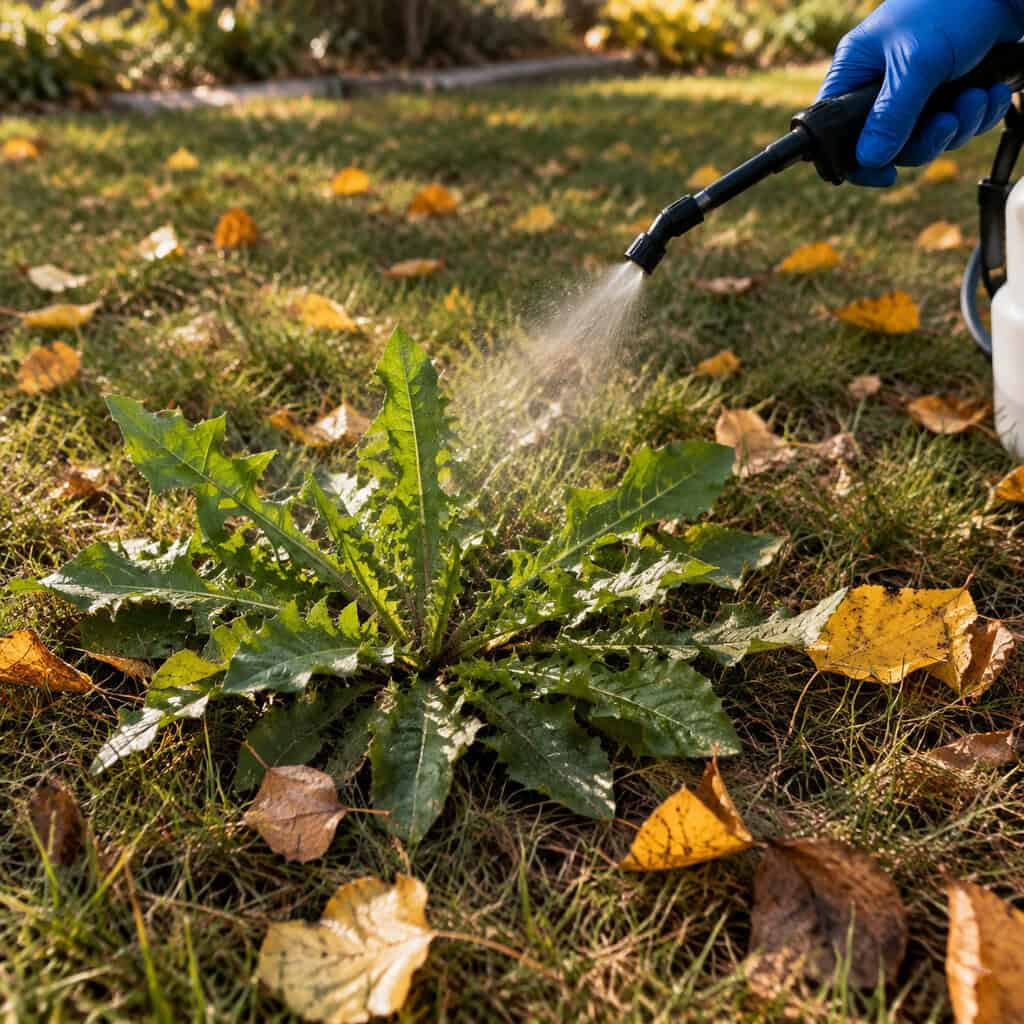
Dandelions, plantain, clover, ground ivy and violets all start shipping carbohydrates down to their roots in fall. Herbicide hitches a ride.
Spray in May and you scorch leaves while the root survives underground. Spray in October and the chemical goes where the plant lives.
Iowa State calls fall the best perennial broadleaf window of the entire year. Aim for a calm day above 50°F, before a hard freeze shuts the plants down.
Violets and ground ivy — the two everybody gives up on — are far easier to kill now than they’ll ever be in spring.
5. Send Off a Soil Test
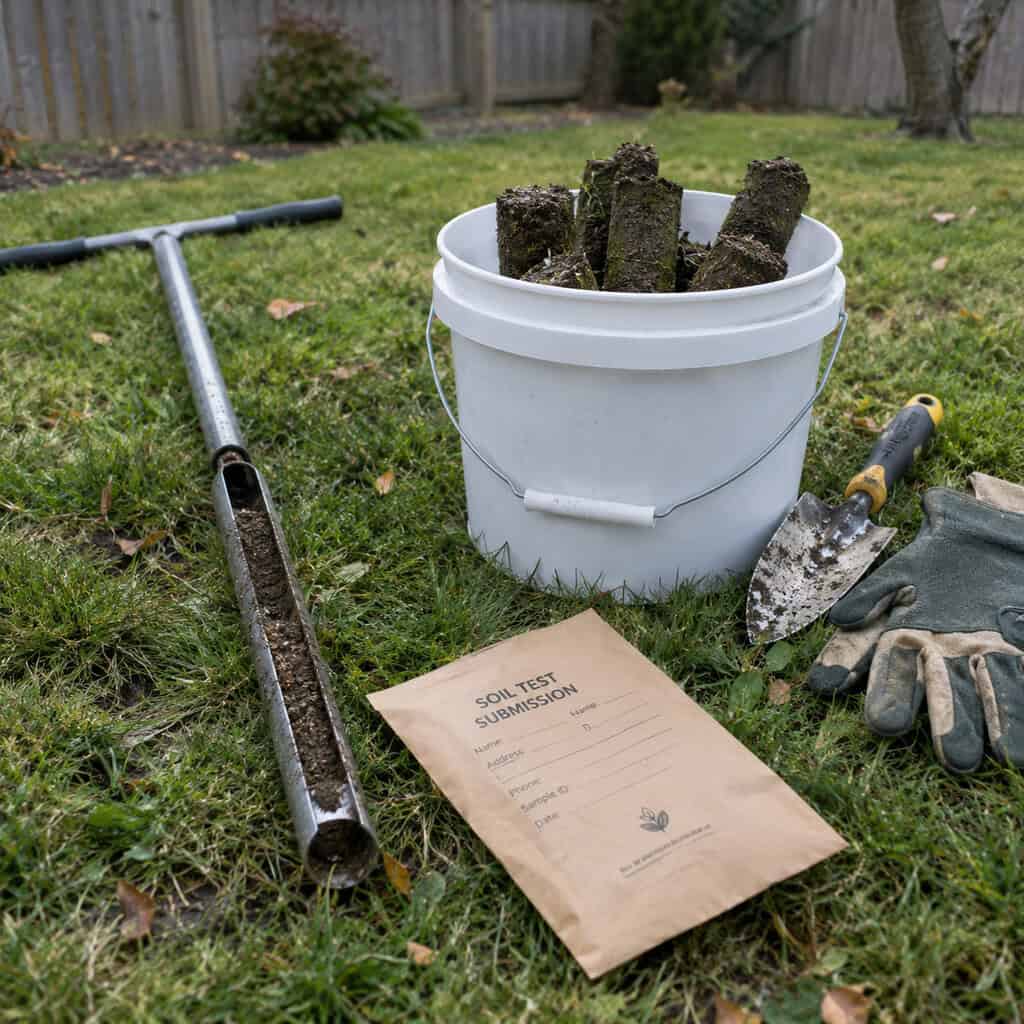
Most homeowners have been fertilizing on guesswork for a decade.
A test through your county extension runs $15 to $25 and tells you pH, phosphorus, potassium and organic matter. Fall submissions come back during the off-season, so results actually arrive in time to act on.
Pull plugs from six or eight spots, four inches deep, mix them in a clean bucket. Bag it and send it.
You may find out you don’t need half of what you’ve been buying.
6. Match the Seed to the Light You Actually Have

That bare patch under the maple isn’t a care problem. It’s the wrong grass.
Turf-type tall fescue handles heat, drought and foot traffic. Fine fescues — creeping red, hard, chewings — tolerate dry shade better than anything else in the cool-season lineup. Kentucky bluegrass wants sun and repairs itself by spreading.
Read the tag. Look for zero percent “other crop” and under 0.5% weed seed. Cheap contractor mix is cheap because it’s full of annual ryegrass that dies.
Under 4 hours of direct sun, no grass is going to thrive — that’s where shade plants that thrive where grass refuses to grow stop being a compromise and start being the answer.
7. Feed Once in September and Make It Count

If you fertilize exactly once a year, do it now.
The target is 0.5 to 1.0 pound of actual nitrogen per 1,000 square feet, with at least half of it slow-release. That’s roughly 3 to 6 pounds of a 20-0-5 product per 1,000 square feet, depending on the rate.
Roots are still growing hard at 50°F soil temperature even after the blades slow down. Everything you put down in September goes into storage for spring.
Calibrate the spreader. Guessing gets you stripes.
8. Measure the Thatch Before You Rent a Dethatcher
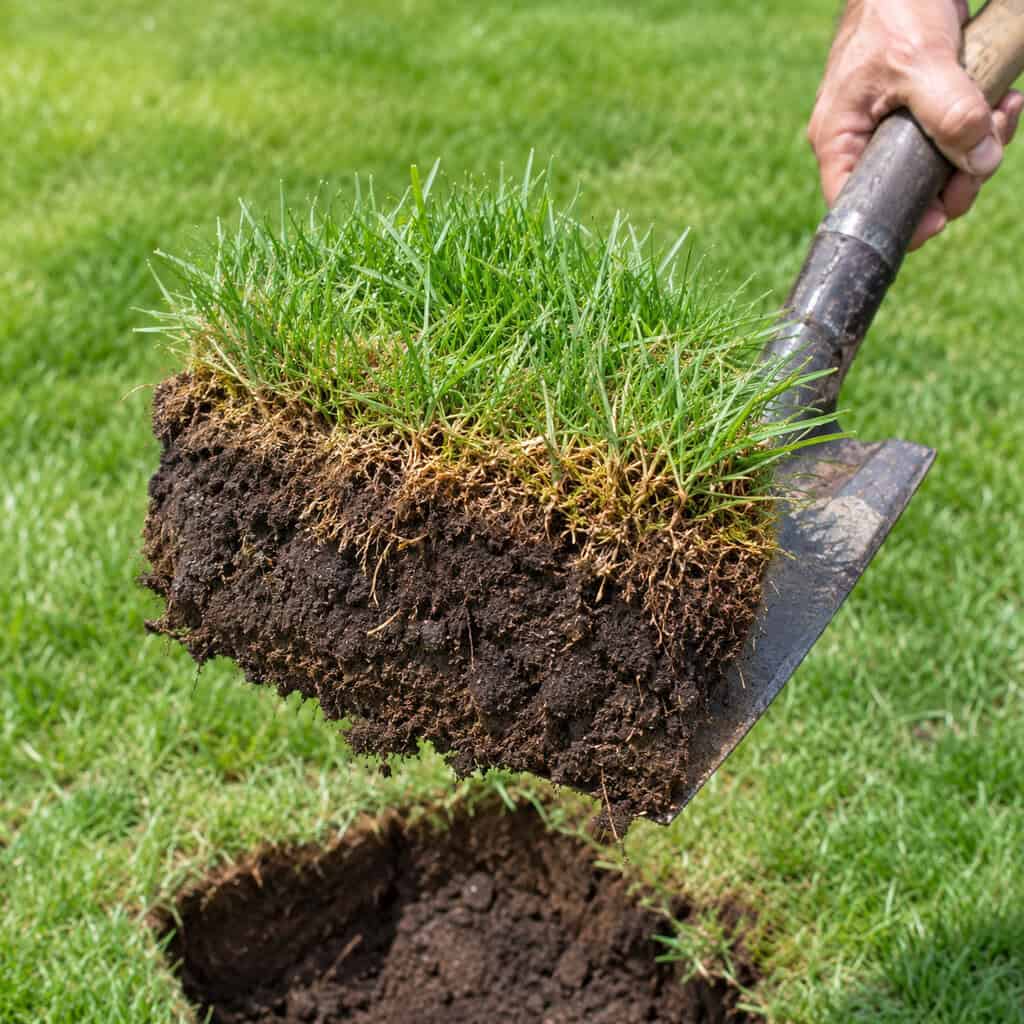
Cut a wedge of sod with a spade and look at the side.
That spongy brown layer between green blades and soil is thatch. Under half an inch, it’s insulation and moisture retention — leave it alone. Over three-quarters of an inch, it’s blocking water and harboring disease.
Power-raking a lawn that doesn’t need it tears out healthy stolons and rhizomes for nothing. The rented dethatcher is one of the most over-used machines in suburbia.
Core aeration handles moderate thatch on its own, without the carnage.
9. Choose: Overseed or Pre-Emergent, Not Both

Nobody at the garden center warns you about this one.
Fall pre-emergents target annual bluegrass, henbit and chickweed. They work by stopping seed germination — and they don’t know the difference between poa annua and the Kentucky bluegrass you just spread.
Prodiamine and dithiopyr can hold that barrier for three to four months. Seed into it and you’ve bought an expensive bag of nothing.
Pick a lane for the season. Overseed this fall, pre-emergent next fall. Write it on the calendar so you don’t forget which year you’re in.
10. Keep Mowing Until the Grass Actually Stops
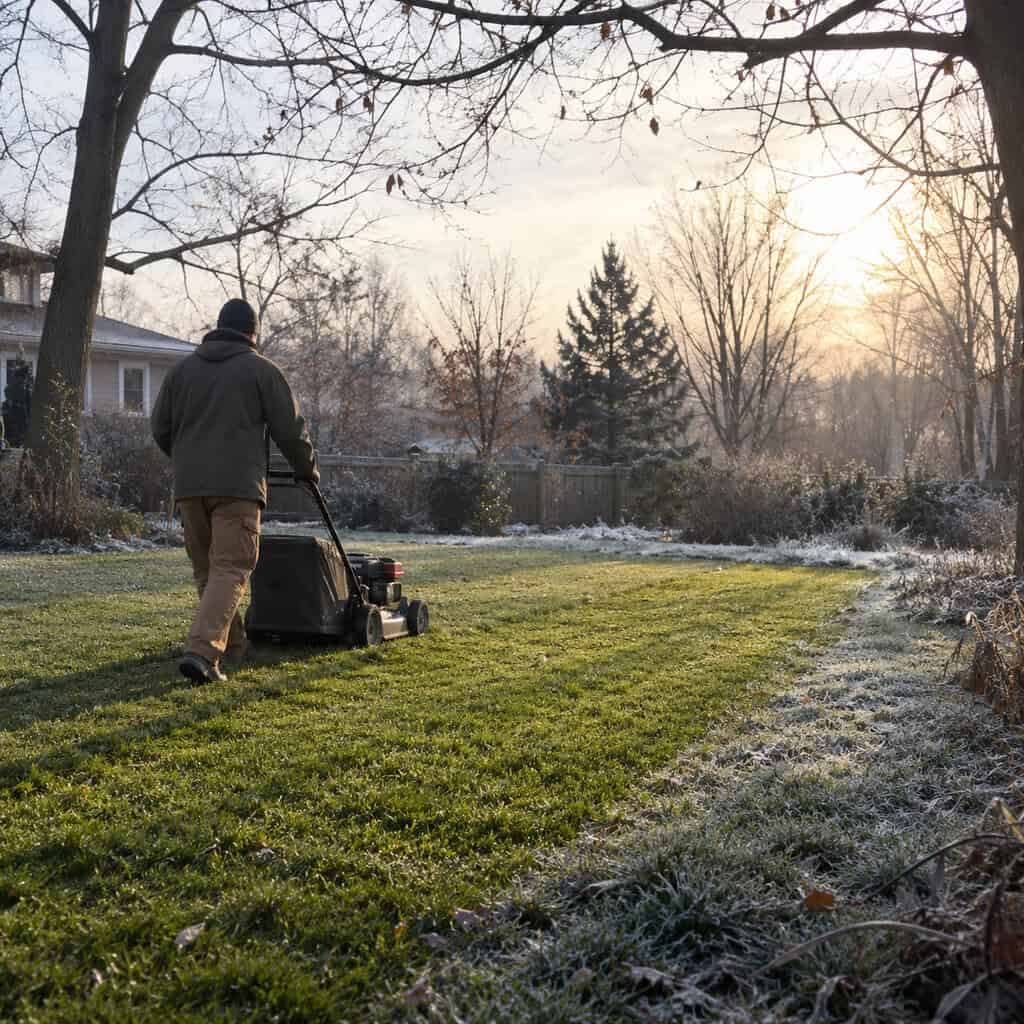
People quit mowing on a date. Grass quits on temperature.
Cool-season turf keeps pushing growth until soil temps drop under about 45°F, which in a lot of places means mowing into November. The last flush of the season is often the greenest one.
Grass that goes into winter six inches tall folds over into a damp mat. That mat is where snow mold starts.
11. Dig One Square Foot and Count the Grubs
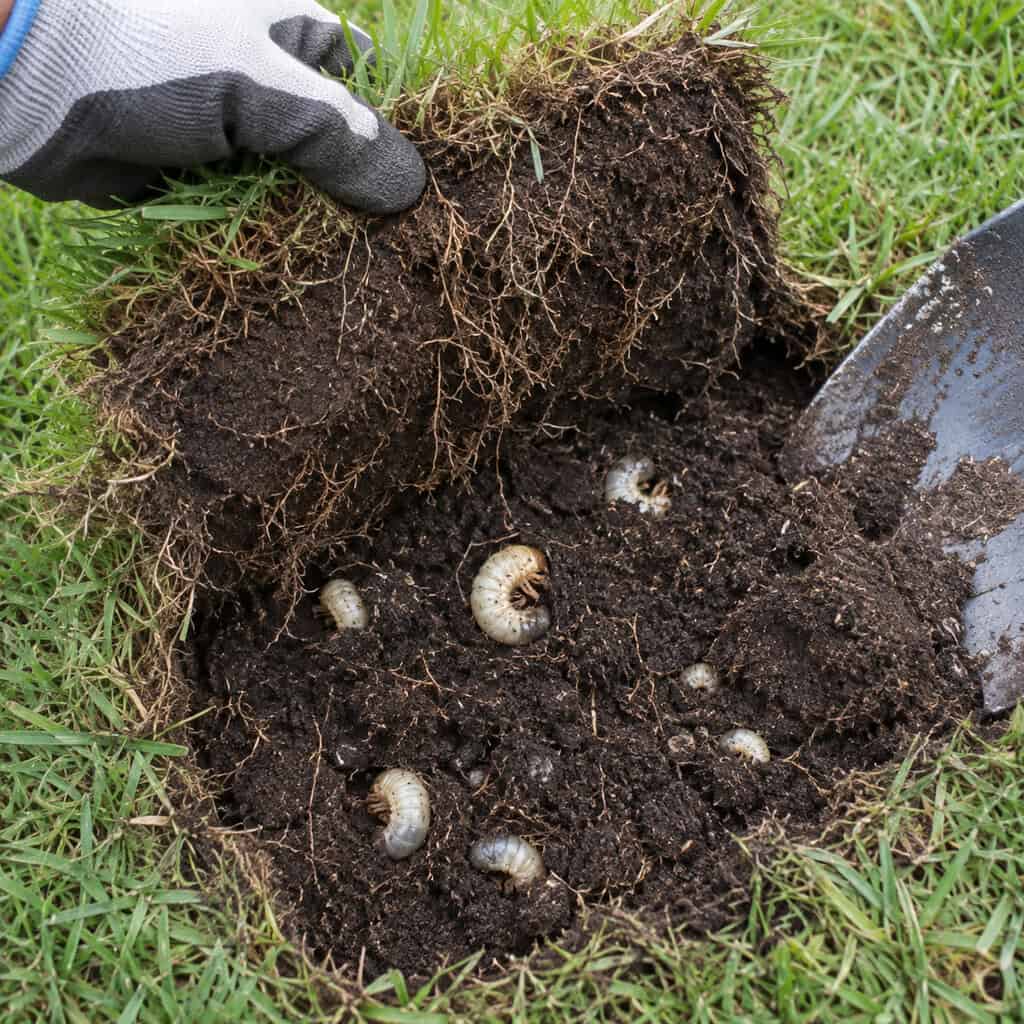
Cut three sides of a one-square-foot flap of sod about three inches deep and peel it back like a carpet corner. Then count what’s underneath.
White grubs are C-shaped, cream colored, with a brown head and six legs up front. They’re the larval stage of Japanese beetles, masked chafers and European chafers, and in September they’re big and feeding hard right under the root zone.
The threshold most extension programs use is 8 to 10 grubs per square foot on an average lawn. Under that, healthy turf outgrows the damage and you do nothing. Over it — especially over 15 — you’ve found the reason last August’s dead patches peeled up like loose carpet.
Check two or three spots: one at the edge of a dead patch, one in healthy turf, one in the sunniest, most irrigated section. Grubs concentrate where beetles laid eggs in July, and that’s usually the greenest, best-watered part of the yard.
Skunks and raccoons digging golf-ball holes at night are a free diagnostic. They aren’t attacking your lawn. They’re eating something in it.
Timing matters more than product. Preventives — chlorantraniliprole, imidacloprid — belong to late spring and early summer, before eggs hatch. Putting them down in October is money lit on fire. Fall calls for a curative like trichlorfon or carbaryl, applied to grubs that are still near the surface and still feeding, then watered in with a half inch of water immediately.
Once soil drops below about 55°F the grubs burrow deep and nothing reaches them. After that, wait and plan the preventive for June. If damage is already done, repairing a grub-damaged lawn is mostly a reseeding job, not a spraying job.
12. Lime Only If the Test Says So

Lime raises pH. If your soil is already at 6.8, raising it locks up iron and manganese and turns the lawn a dull yellow-green.
Fall applications have all winter to react, which is why October and November are ideal — for lawns that need it.
Pelletized lime is easier to spread than pulverized and won’t coat you in dust. Rates run anywhere from 20 to 50 pounds per 1,000 square feet depending on how far off you are and whether your soil is sand or clay.
No test, no lime. Simple as that.
13. Water Until the Ground Freezes
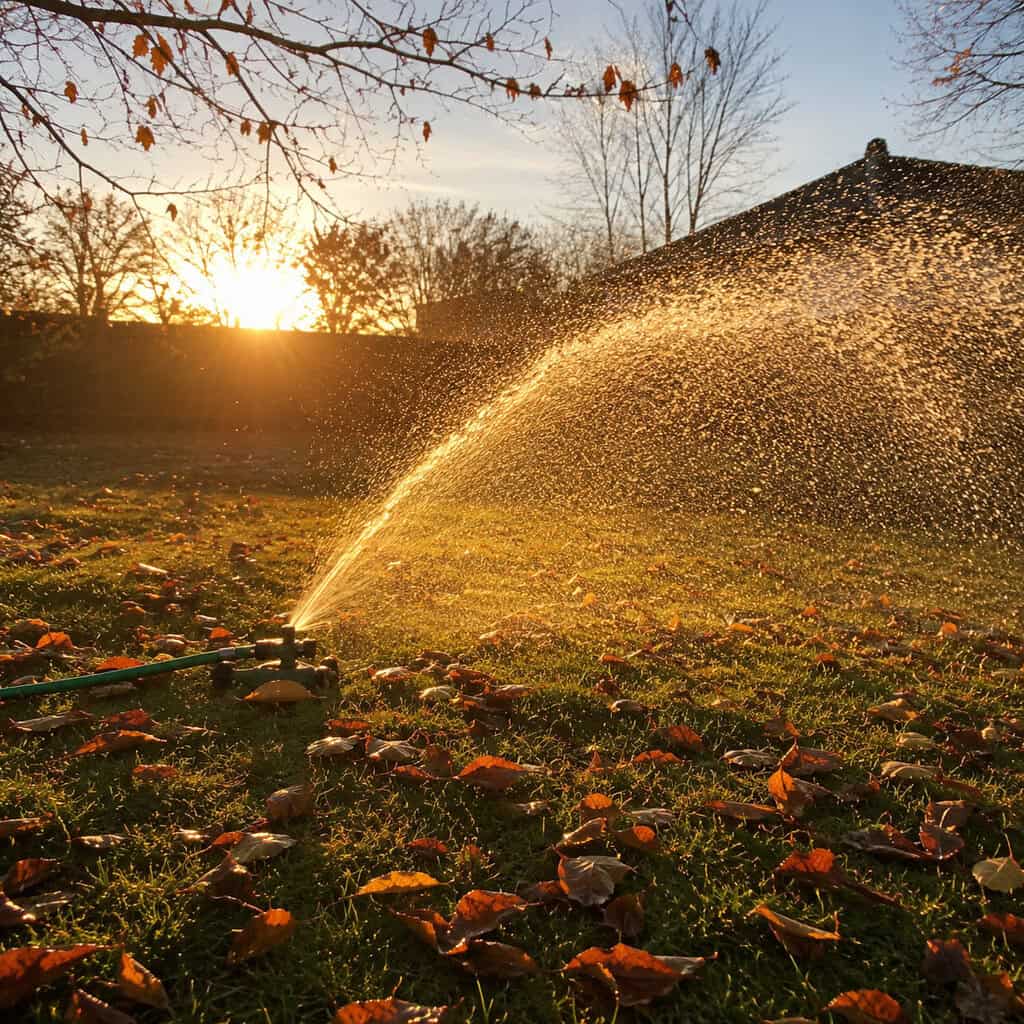
Sprinklers feel absurd in October. Roots disagree.
New seedlings have maybe two inches of root and dry out in a day. Established turf keeps drawing moisture until the soil actually freezes solid.
Grass that enters winter dry comes out desiccated — that grayish-brown that doesn’t green up until May, if it greens up at all. Cold wind on frozen ground pulls water out of blades that can’t replace it.
Keep watering roughly an inch a week through fall, and give one deep soaking before the first hard freeze. New seed is different — watering new grass seed in fall means light and frequent until it’s rooted.
14. Take the Last Cut Shorter

Drop the deck for the final mow. Not to the scalp setting — to about 2 to 2.5 inches.
Long blades fold over under snow into a wet, airless mat. That’s exactly what pink and gray snow mold want.
Cut too short and you expose the crown to freeze damage, which is the opposite failure and just as ugly in March. Two inches is the compromise that avoids both.
15. Topdress With Compost While the Holes Are Open
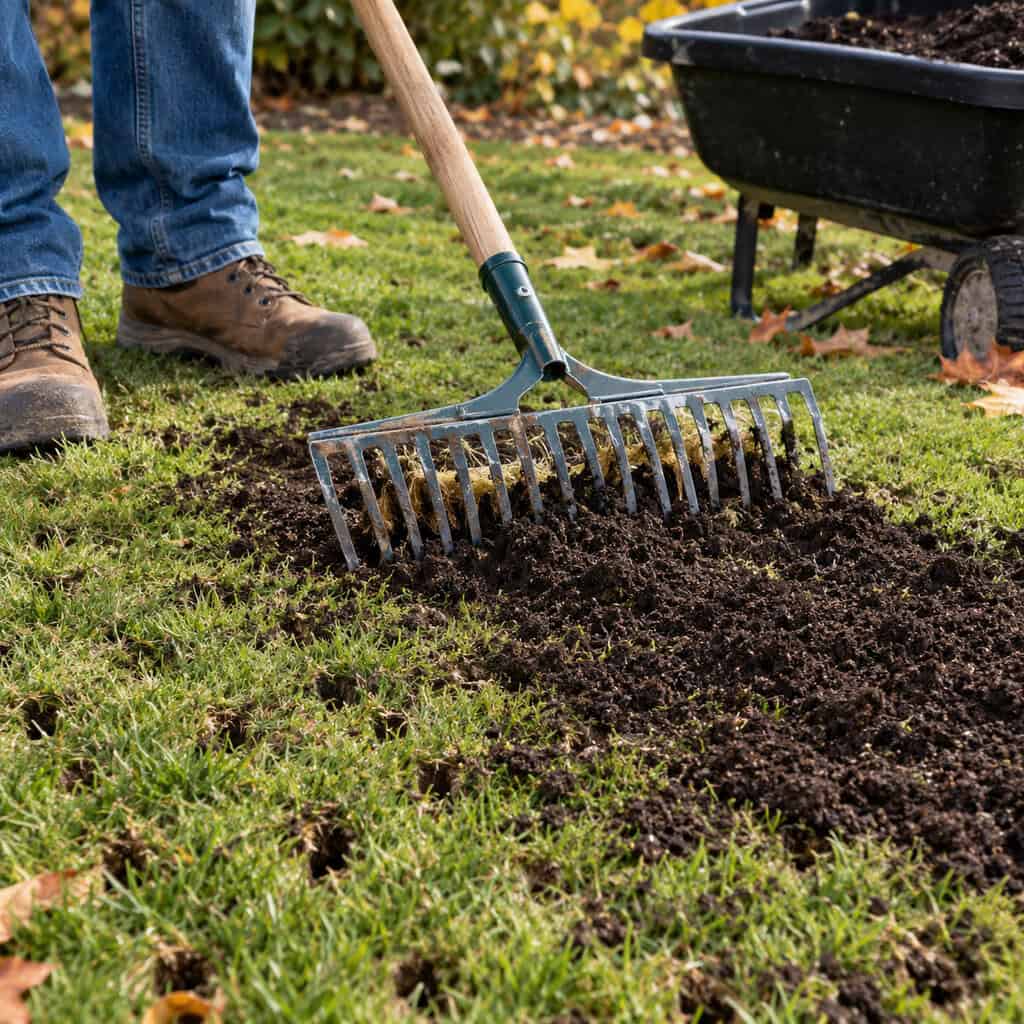
The window right after core aeration is the cheapest soil improvement you’ll ever get.
Spread a quarter inch of screened compost and drag it in with the back of a leaf rake. It falls into the open holes and goes straight to the root zone instead of sitting on the surface.
Leave the plugs where they are. They break down in two or three weeks and blend right in.
Do this three years running on clay and you’ll feel the difference underfoot.
16. Read the ‘Winterizer’ Bag Before You Buy It
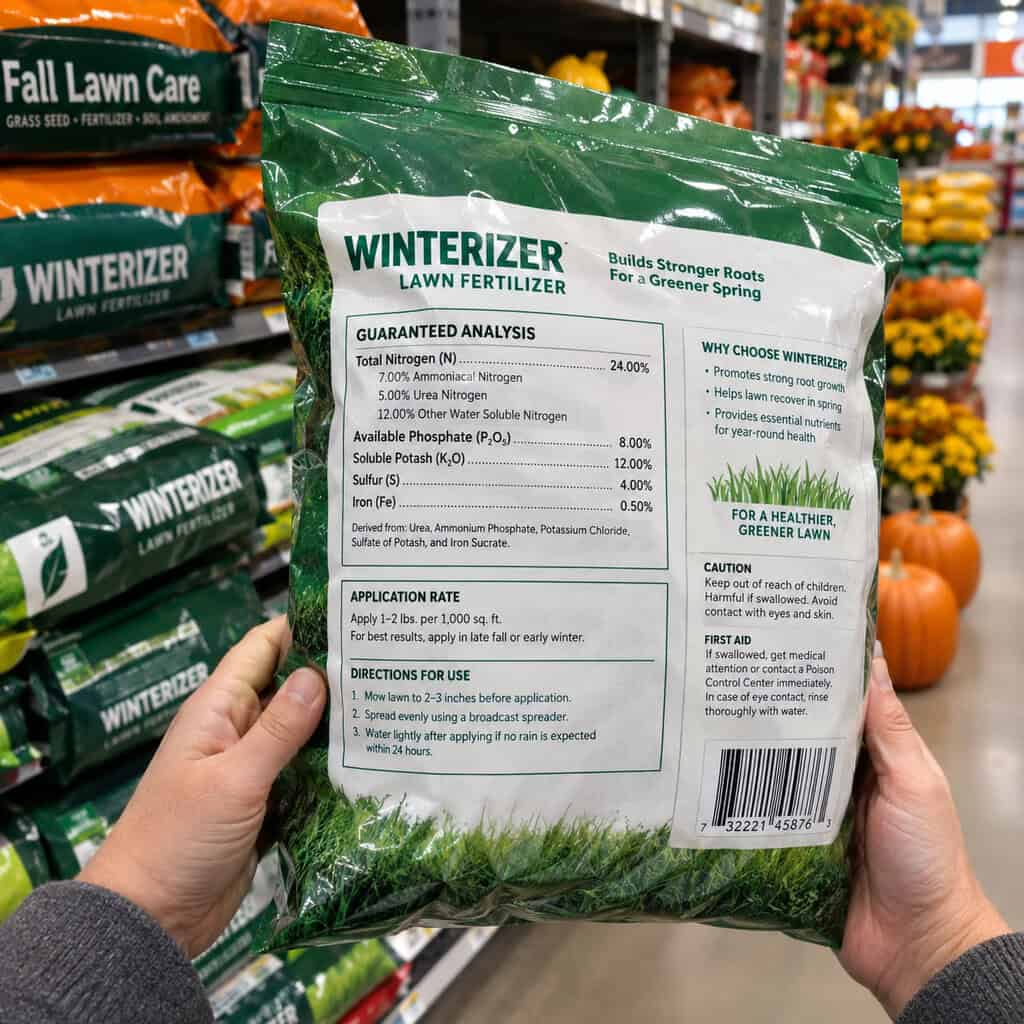
“Winterizer” is a marketing word, not a formulation standard.
NDSU warns that quick-release nitrogen applied in October in the northern Plains can push tender new growth right into a killing freeze. Virginia Tech, working in a milder zone, supports a low-rate late-fall nitrogen application once top growth has stopped.
Both are right. The difference is latitude.
Flip the bag and read the guaranteed analysis. If it’s mostly fast-release urea and you’re north of about 42 degrees, put it back and do your feeding in September instead. Timing questions like when it’s too cold to fertilize matter more than the label promise.
17. Blow Out the Irrigation Before the First Hard Freeze
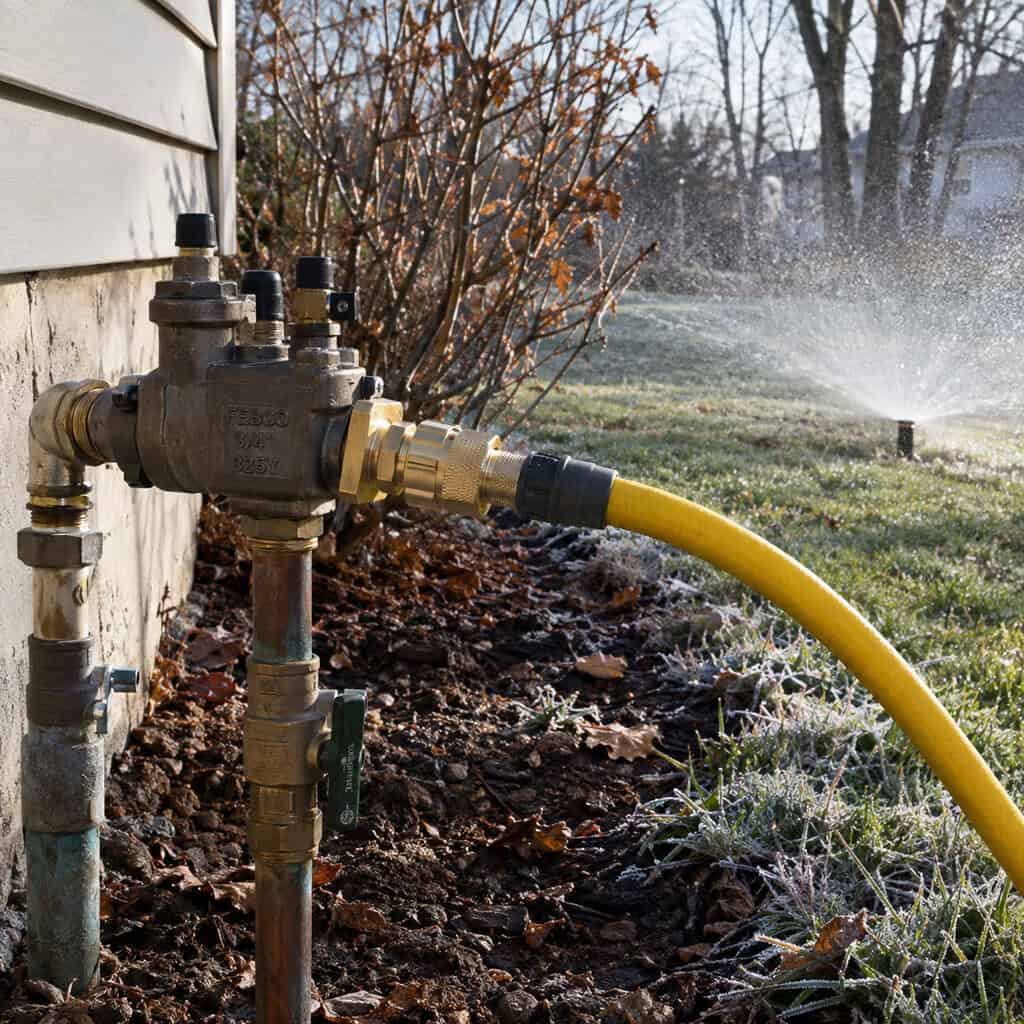
Water expands about 9% when it freezes. A sprinkler lateral doesn’t.
Draining isn’t enough on most systems — low spots hold water even after you open the valves. Compressed air is what actually clears the lines, run zone by zone at 40 to 80 PSI depending on whether you’ve got poly or PVC pipe.
A pancake compressor from the garage won’t do it. You need volume, not pressure: roughly 20 to 50 CFM for a residential system. Renting that unit runs $60 to $100 a day, and a professional blowout usually lands between $75 and $150 depending on zone count.
Compare that to the failure. A cracked backflow preventer is $200 to $600 to replace. A split main line under the lawn means excavation, and the repair often can’t even be scheduled until the ground thaws.
The worst part isn’t the money. It’s the calendar. A system that fails in April means no water during the exact three weeks spring green-up needs it most, and by the time it’s fixed you’ve lost the season’s best growth window.
Book early. Every irrigation contractor in a cold climate is slammed the week after the first frost warning, and the ones still taking calls in late November are the ones you didn’t want anyway.
Shut off the backflow, insulate the exposed assembly, and drain any above-ground components. Then set a phone reminder for next October.
18. Fix the Low Spots and Soggy Corners
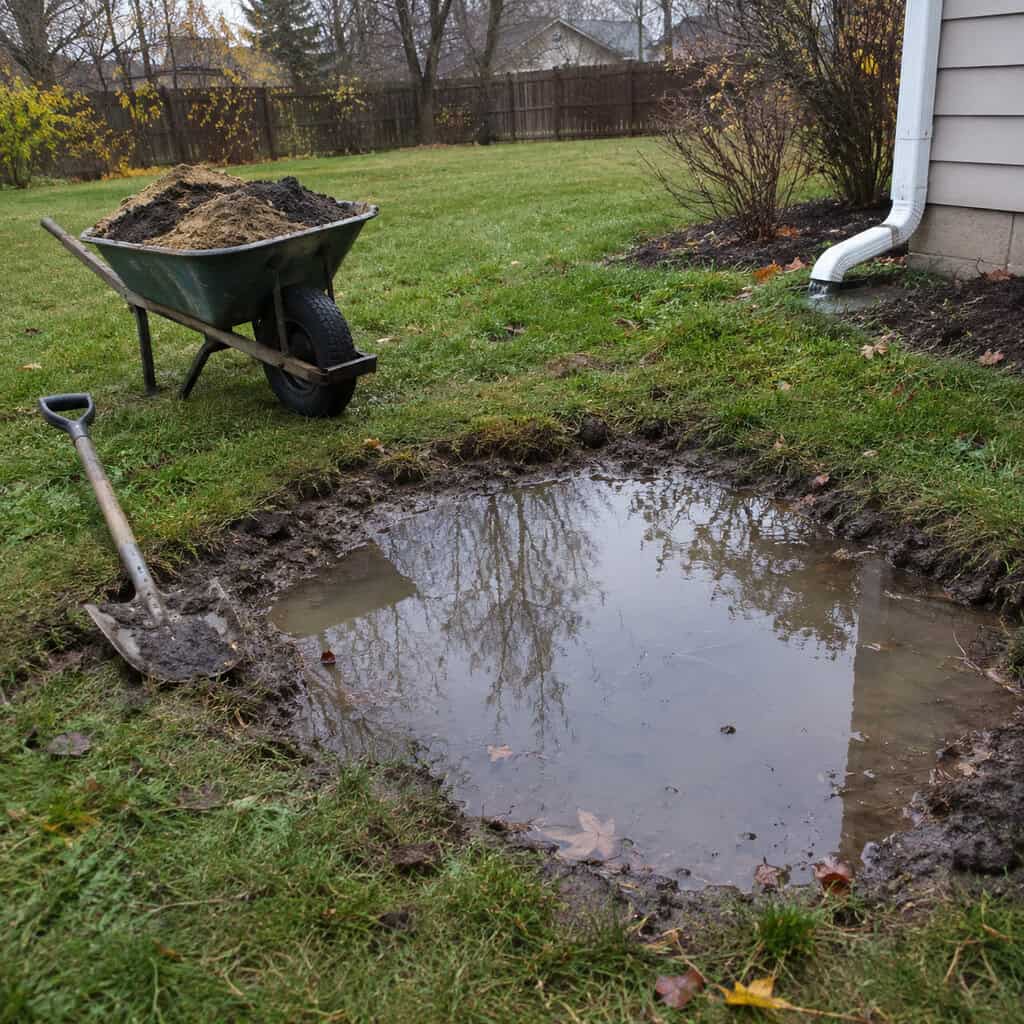
Walk the yard after a heavy rain and mark every spot that’s still holding water two hours later. Flags, spray paint, whatever.
Those puddles freeze into ice sheets. Turf under solid ice for more than 30 to 45 days suffocates — no gas exchange, and toxic byproducts build up under the crown. That’s why the same corner is bare every single April.
Shallow dips under about an inch and a half fix themselves with topdressing. Spread a 50/50 mix of sand and compost, no more than half an inch at a time, and let the grass grow through it. Repeat next season if needed. Dump three inches of soil on living turf at once and you’ll smother it.
Deeper depressions need the sod cut, lifted, soil added underneath, and the sod laid back down. It’s an afternoon with a flat shovel.
Then follow the water. That soggy corner is usually the low end of a grade problem, and if the same runoff is heading toward the house, you’ve got a bigger issue than turf. Downspouts dumping within six feet of the foundation are the usual culprit — extensions that carry water 10 feet out solve a surprising number of “drainage” complaints. Broader fixes for yard flooding when it rains usually start there.
If water sits for more than a day across a large area, you’re looking at a French drain or a regrade, and fall — dry soil, dormant plants, contractor availability — is the right time to get quotes.
Seed whatever you patch. Bare soil in a low spot is where next year’s nutsedge moves in.
19. Reseed the Dog Spots
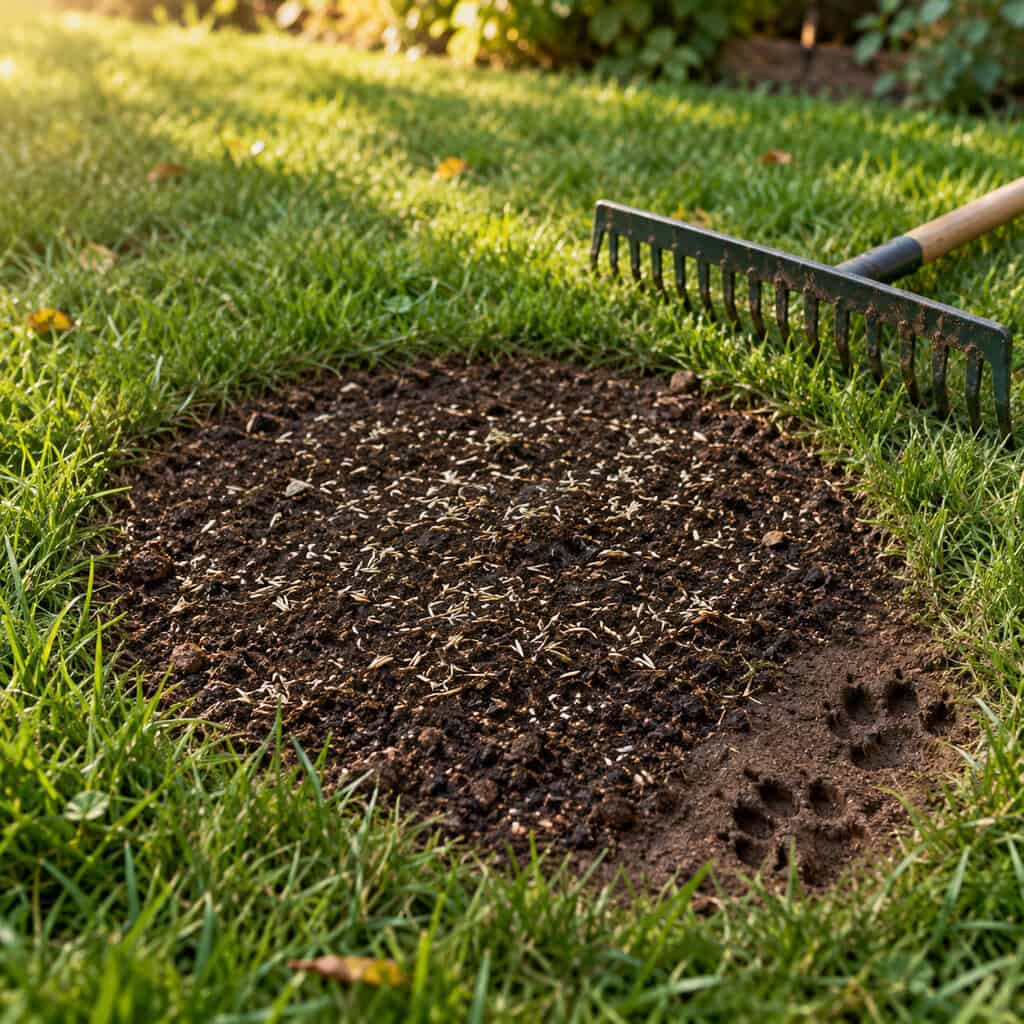
Urine burn is a salt and nitrogen overload, not a disease.
Flush the spot with water first — a few gallons, right on the dead center. Then rake out the dead thatch down to soil, drop seed, and cover lightly with compost.
Patched in September, those circles blend in by May. Left open, they widen every year and fill with crabgrass and knotweed.
Keep the dog off the new seed for three weeks. Temporary fencing beats redoing the whole thing.
20. Limb Up the Shade Trees
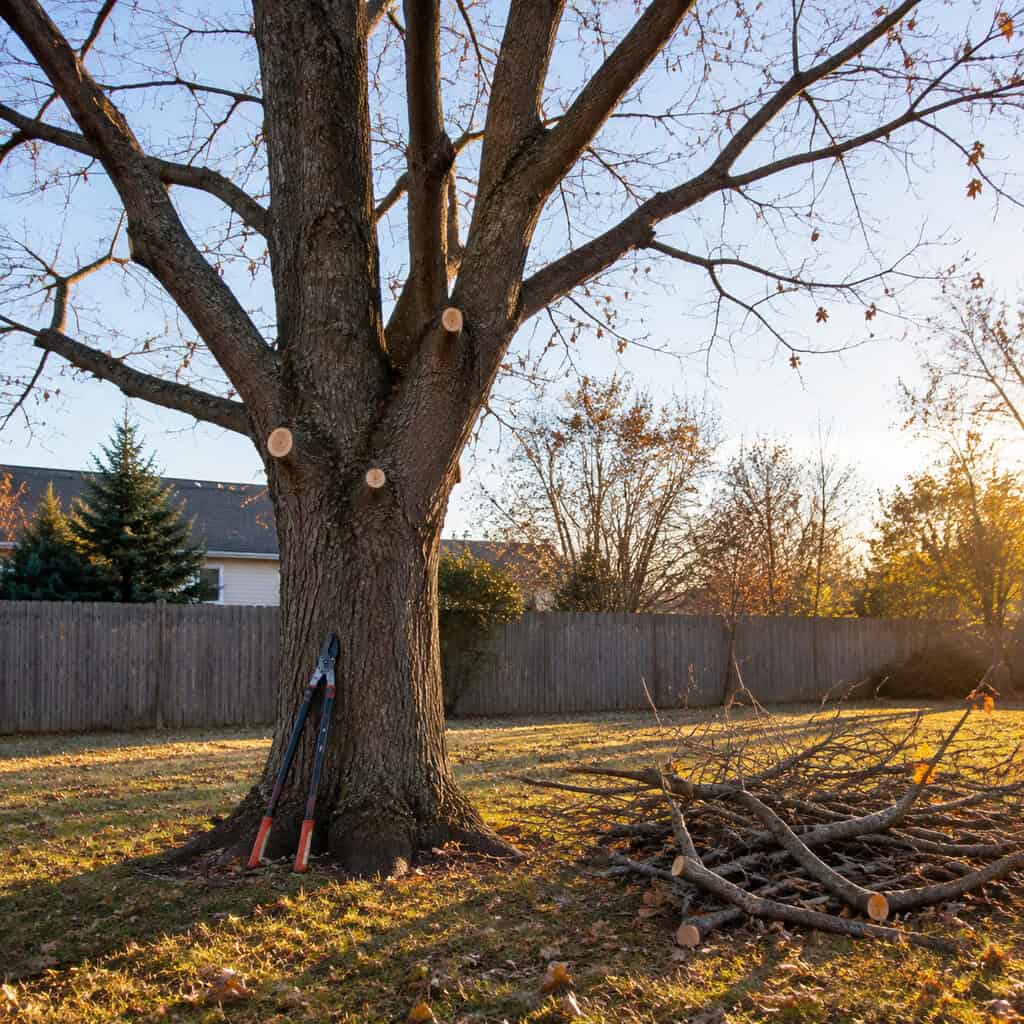
Thin grass under a maple is a light problem before it’s a grass problem.
Raise the canopy by removing the lowest branches and selectively thin the interior. You’re aiming to get morning sun onto the turf, which dries dew fast and cuts disease pressure at the same time.
Late fall, after leaf drop, is when the branch structure is visible and most deciduous trees handle pruning best.
Two extra hours of spring sun changes what species will survive there.
21. Sharpen the Blade, Then Put the Mower to Bed
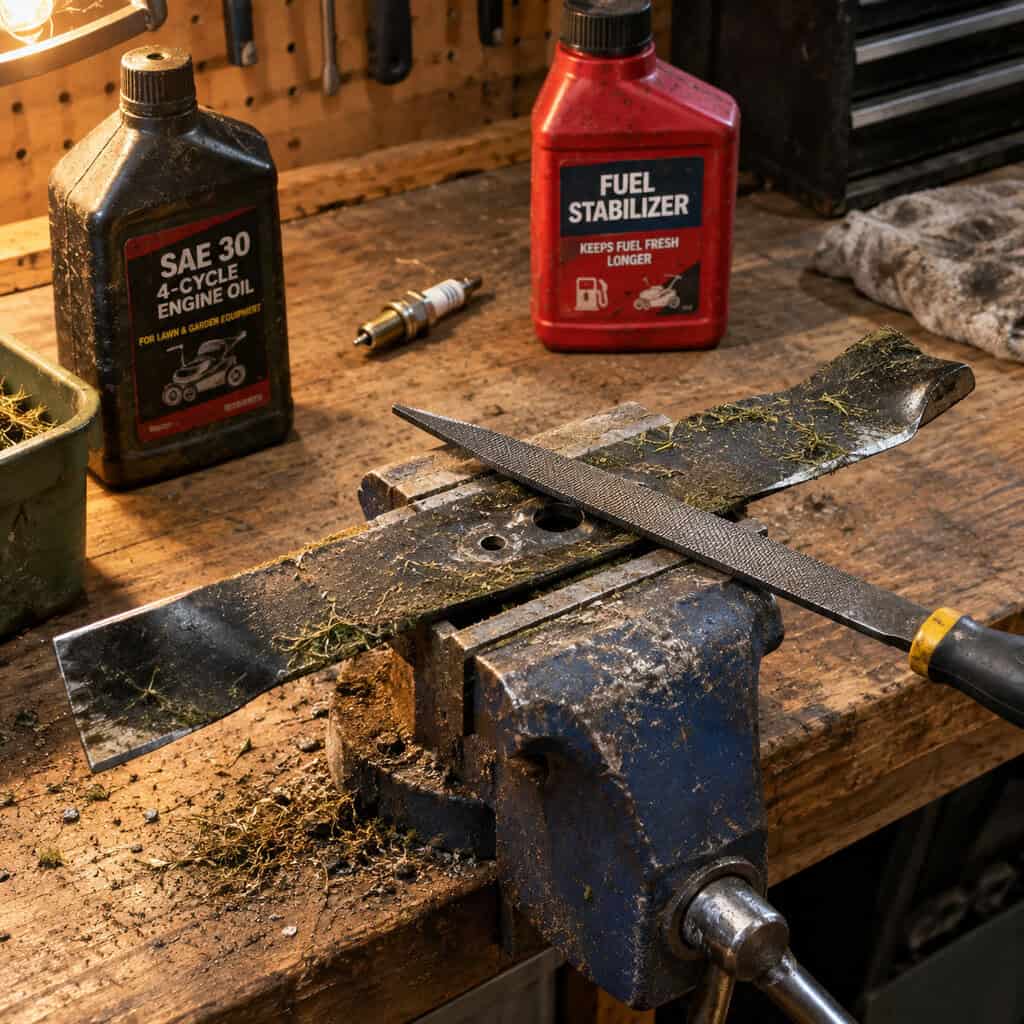
A dull blade tears instead of cutting. Those shredded tips turn white, then brown, and open the plant to fungal infection right when it’s least able to fight.
Sharpen before the last mow, not after. Then do the winter routine:
- Fuel stabilizer, then run the engine five minutes to circulate it
- Oil change while the engine’s still warm
- Scrape the deck — packed wet clippings hold moisture and rust it out
- Pull the spark plug and check the electrode
- Battery on a maintainer, not in a cold shed
Ten minutes now versus three weeks in the repair shop queue every April. Run through a full lawn mower inspection checklist if you want to be thorough about it.
22. Clear Every Object Off the Grass Before Snow
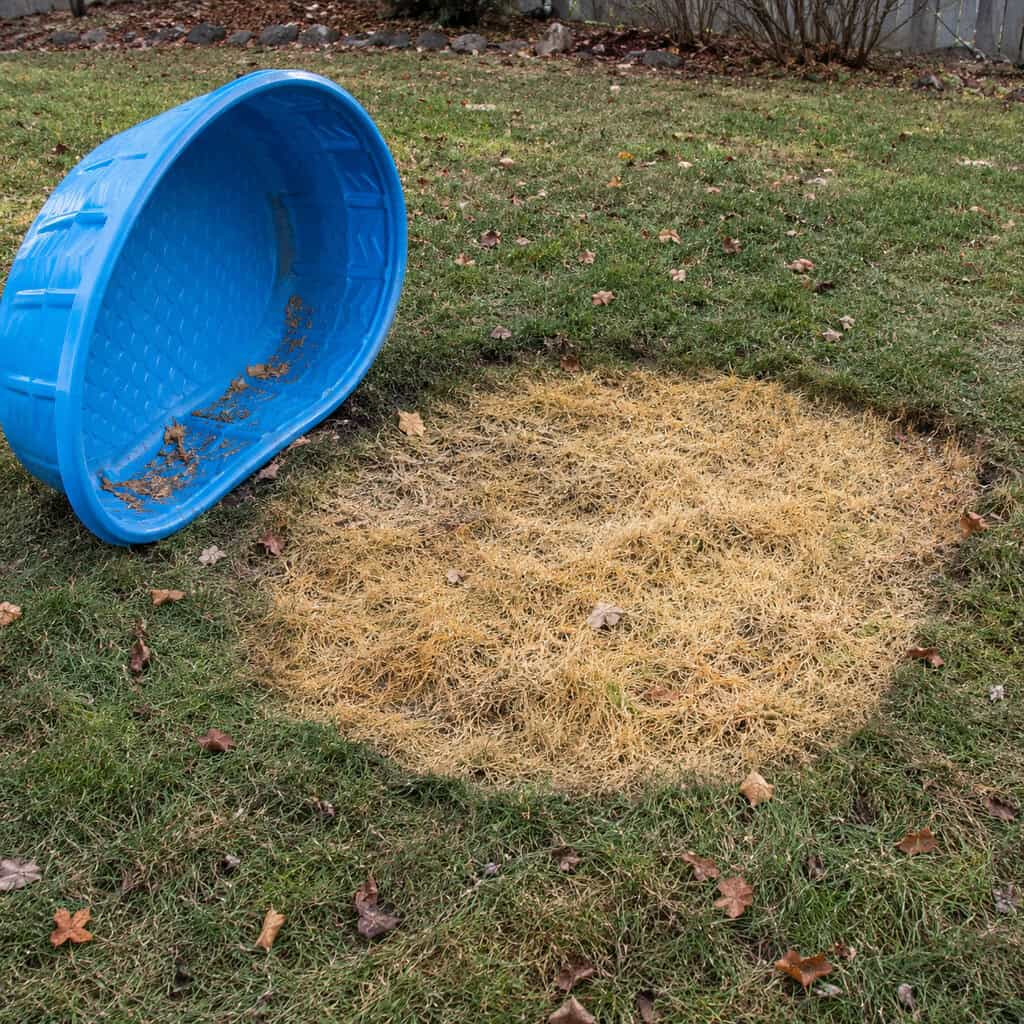
Walk the yard once with a wheelbarrow and take everything that isn’t grass.
The kiddie pool. The folded tarp. The coiled hose. The half-used bag of mulch you meant to spread in August. Each one leaves a perfectly shaped yellow ghost that takes until June to recover.
Anything solid sitting on turf for four months kills what’s under it. Doesn’t matter what it is.
23. Stop Walking Across Frosted Grass
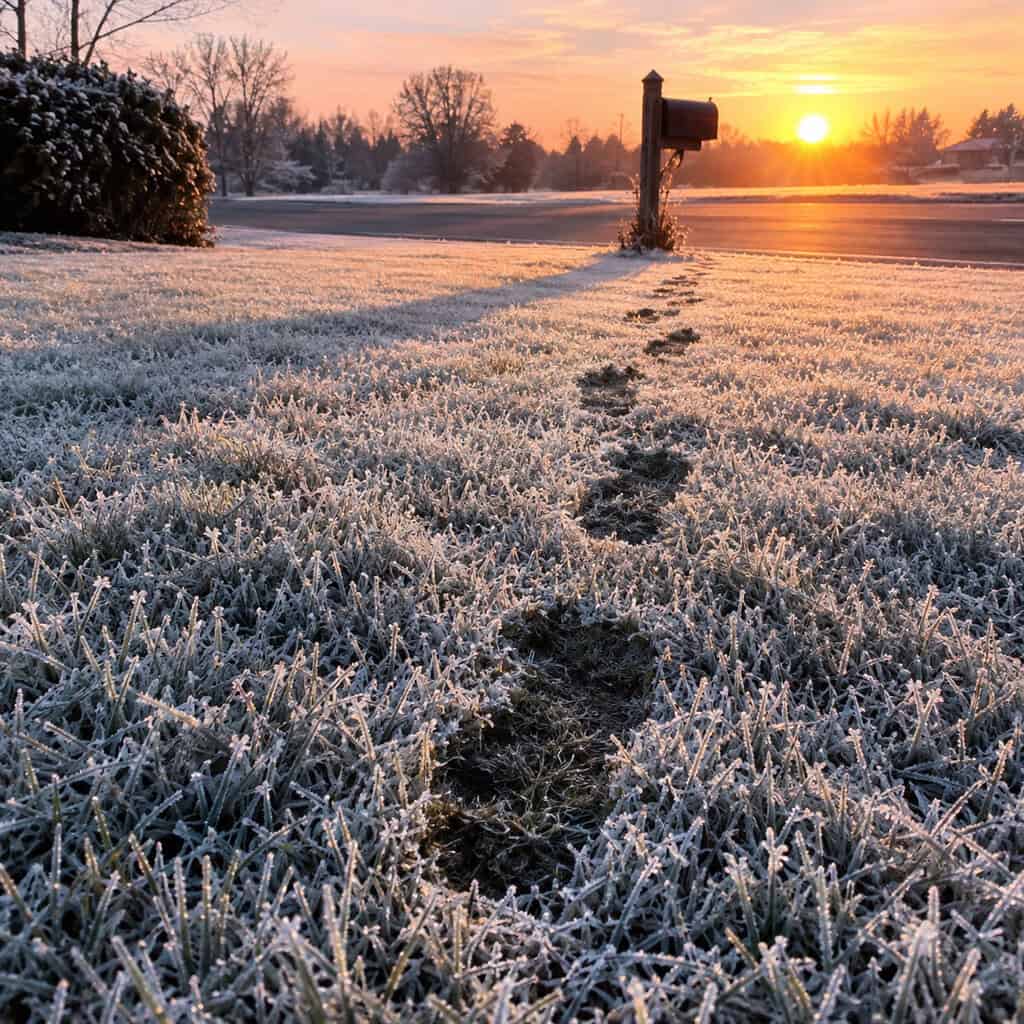
Frozen blades don’t bend. They fracture.
Walk the same line to the mailbox on frosty mornings all winter and you’ll see the path again in March — brown, compacted, and slower to green up than everything around it.
Wait until the frost melts, or reroute. Move the trash can path to the driveway. Put stepping stones on the shortcut you know everyone takes anyway.
24. Cut Back the Tall Growth Where Voles Set Up

Voles are the reason a lawn can look fine in November and look vandalized in March.
They’re stubby, short-tailed rodents about four inches long, and they don’t hibernate. Under snow cover they’re active all winter, tunneling through the space between snowpack and soil, eating grass crowns and gnawing bark off young trees at the base.
What you find at thaw is a maze of inch-and-a-half-wide runways carved across the turf, sometimes dozens of feet long, with the grass chewed down to dirt. It looks like someone dragged a rake through your lawn while you slept.
Cover is what they need. Unmowed edges, tall ornamental grass left standing, deep mulch piled against trunks, brush stacked along a fence line — all of it is vole habitat.
So take it away before the snow comes. Mow the edges short where the lawn meets beds, fence lines and wood piles. Pull mulch back three to four inches from every tree trunk and shrub base. Cut ornamental grasses down in late fall if voles have been a problem, even though leaving them standing looks better.
For young trees, quarter-inch hardware cloth cylinders around the trunk, sunk an inch or two into the soil and standing 18 to 24 inches tall, stop girdling entirely. Girdled bark all the way around the trunk kills the tree, and there’s no fixing it in spring.
The runways themselves usually recover. Rake out the debris, throw seed down in early spring, and the turf fills back in. The trees don’t get a second chance.
25. Decide Now Where the Snow and Salt Will Go

Every winter the plow driver piles snow in the same spot. Every spring that spot is dead.
Sodium chloride pulls water out of roots and wrecks soil structure — it displaces calcium and magnesium and leaves clay soil tight and airless. A strip that gets four months of salty meltwater doesn’t just brown out. It stays bare, and weeds claim it by June.
Pick the pile location before the first storm and stake it out. You want snow going onto pavement, gravel, or a bed you don’t care about — not the same three feet of front lawn every single year.
Stake the driveway edges with reflective markers while the ground is still soft. That’s what keeps the plow blade on the asphalt instead of peeling sod.
Then rethink the deicer. Rock salt is cheapest and hardest on everything — turf, concrete, and paws. Calcium chloride works to lower temperatures and you use less of it, but it’s still a chloride.
For pet households, urea-based and propylene-glycol products are gentler on paws, and calcium magnesium acetate is the least damaging to both plants and concrete. None of them are harmless if a dog eats a mouthful, so store the bag where it can’t be chewed open and wipe paws after walks — the bigger risk is usually the salt picked up off a neighbor’s sidewalk.
Plain sand or non-clumping cat litter gives traction with zero chemistry. Not on steps you’ll track inside, but fine on a walkway.
Come spring, flush the salt-exposed strips with heavy watering before you try to reseed them. Gypsum helps displace sodium in clay soils if the damage is repeated year after year.
26. Warm-Season Lawns: Do Almost the Opposite
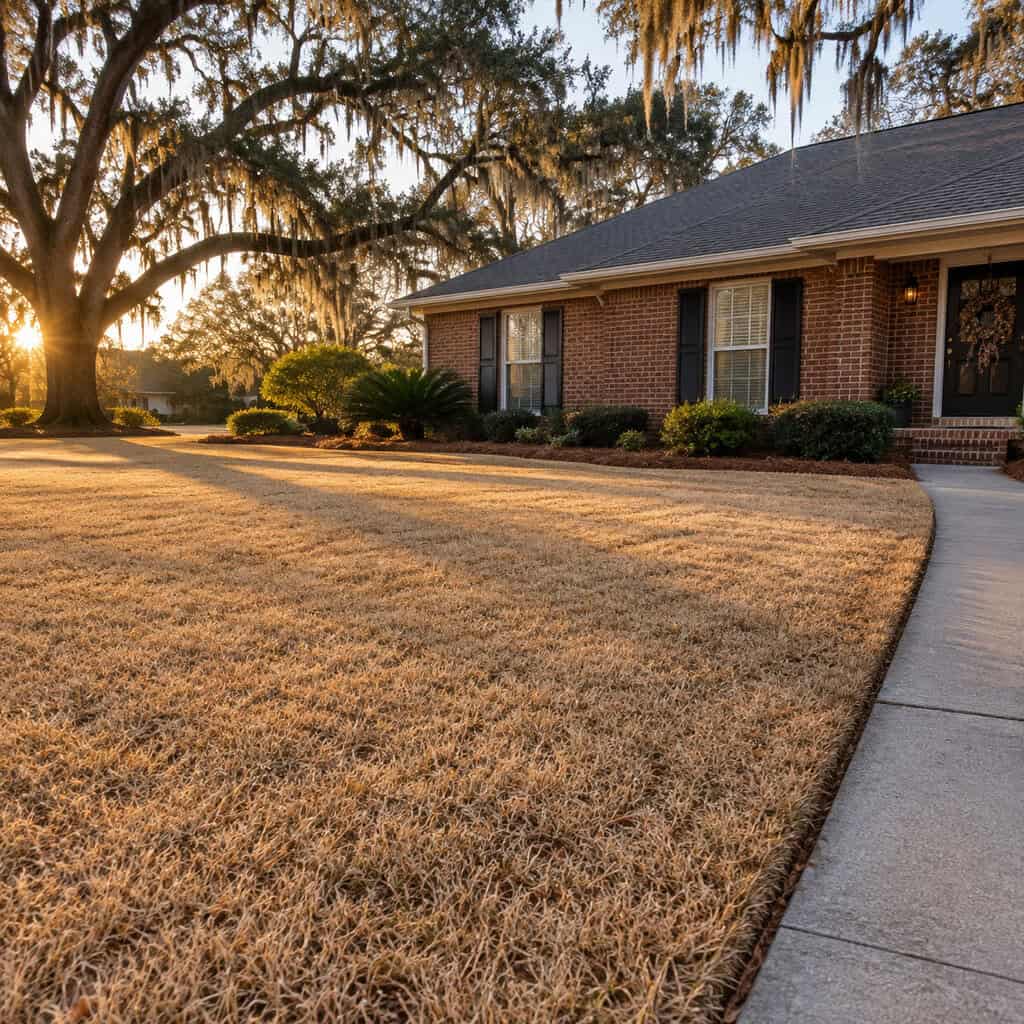
Everything above assumes fescue, bluegrass or rye. Bermuda, zoysia, centipede and St. Augustine run a different calendar.
Warm-season turf is heading for dormancy in fall, not building. NC State cautions against late-season nitrogen on these grasses — it pushes soft growth into the first freeze and invites winterkill and spring dead spot.
Aeration belongs to June and July, when the grass is actively growing and can heal. Core-aerating zoysia in October just leaves open wounds all winter.
Potassium in early fall is fine. Nitrogen after late August usually isn’t.
Overseeding with annual ryegrass for winter green is a cosmetic choice, and it competes with the base turf during spring transition. Skip it unless you really want green in January.
27. If You Missed the Window, Plan a Dormant Seeding
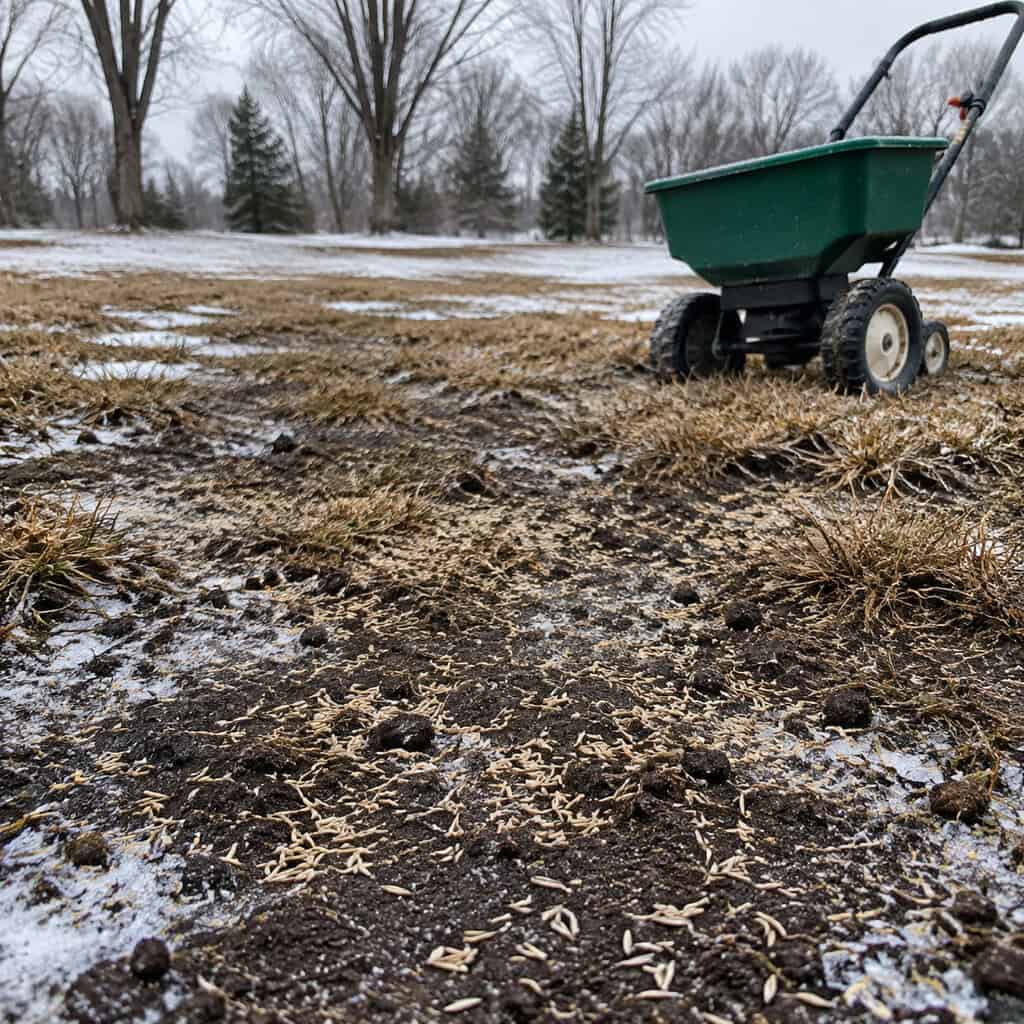
Penn State draws the line at roughly mid-October for fall seeding in the Northeast. Past that, seed germinates too late to survive.
But seed put down on soil that’s already below 40°F doesn’t germinate at all. It just sits there.
That’s the point. Freeze-thaw cycles work the seed into the soil surface all winter, and it sprouts the moment conditions allow — usually weeks before you could get a spreader onto a muddy spring lawn.
Wait until the ground is cold and staying cold, typically late November or December. Spread at the normal rate on bare or thin areas, skip the fertilizer, and don’t water. Then leave it alone until March.
28. Be Honest About Patch vs. Full Renovation
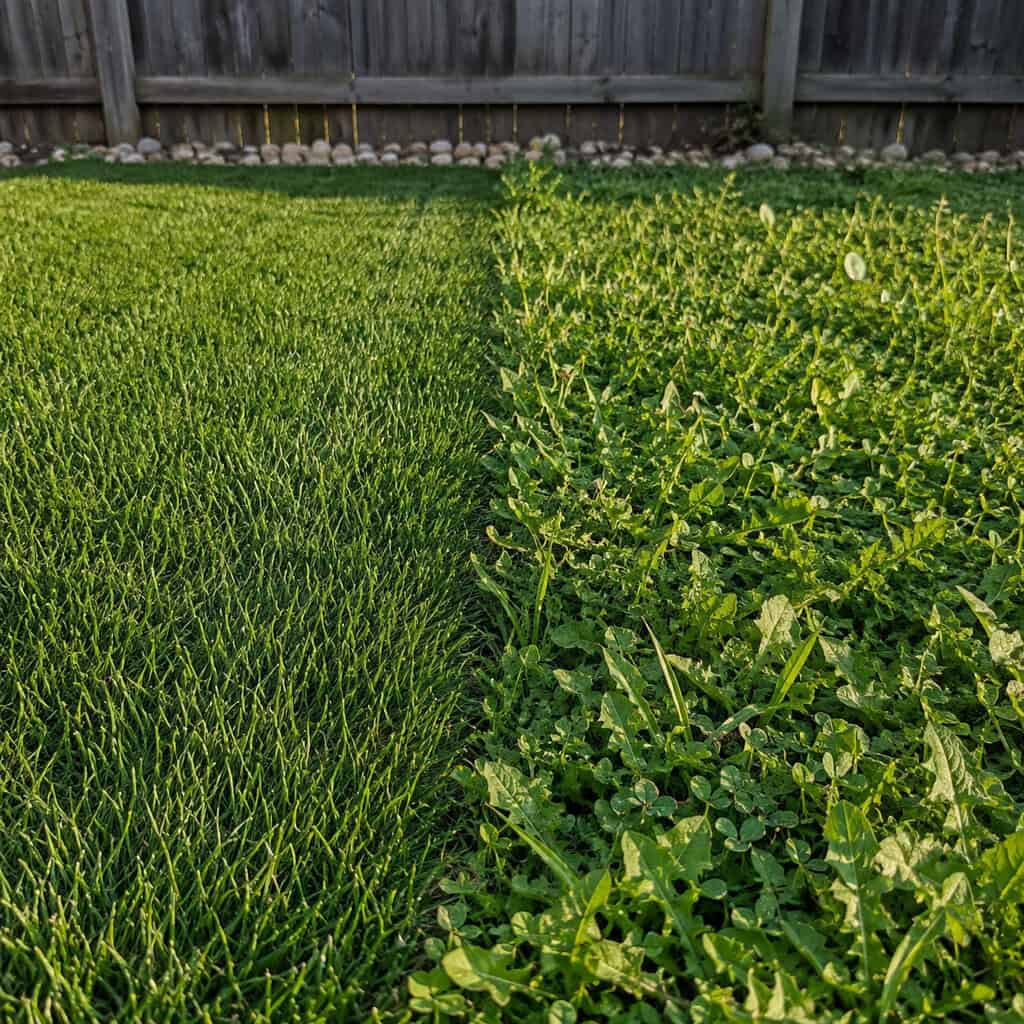
Count what’s actually out there. If more than half the lawn is weeds and undesirable grasses, overseeding is feeding the competition.
Seed dropped into a crabgrass and nutsedge stand loses. It doesn’t matter how good the seed is.
The full renovation route — kill everything, wait, seed into the dead thatch — takes about three weeks of glyphosate and patience, and fall is the only window where the result establishes before summer. Doing it in spring means a bare lawn in July.
The decision itself costs nothing. Making it in August instead of next May saves an entire wasted year of half-measures. If that’s where you are, killing a lawn and starting over is less dramatic than it sounds.
29. Walk the Lawn Once and Write Down What You See

Take twenty minutes on the last warm weekend of the year. Walk the whole yard. Write things down.
The corner that’s still wet. The bald strip along the driveway. The section that browns out first every August. The spot where the dog turns around.
All of it is obvious in November and completely invisible by April, when everything is green and you’ve forgotten which patch was the problem.
Notes on your phone are enough. Photos are better.
Next spring you’ll open that list and know exactly where to start — instead of standing in the yard in March wondering why it doesn’t look like you remembered.
A lawn doesn’t get good because of what you do in May. It gets good because of what you did in October and then forgot about.
Most of these jobs take an afternoon. A few take ten minutes. None of them can be moved to spring.
Do six of them this fall and next year’s lawn will be the one the neighbors ask about.
I very much appreciated this informative article. Thank you!