

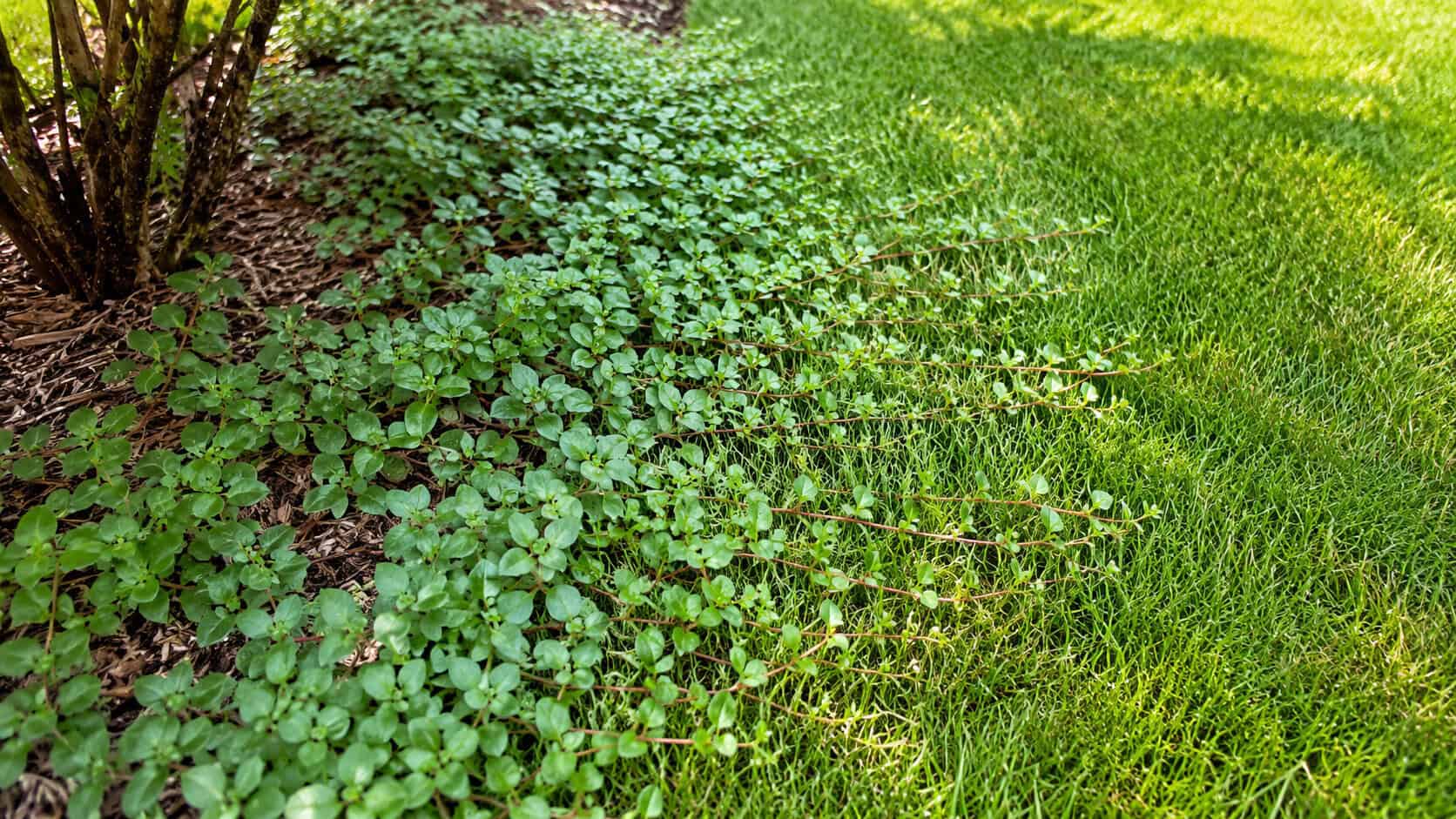
The plant tag said “spreads easily.” That should have been the warning.
You wanted to fill a bare slope or a shady strip along the fence. Something green, something cheap, something you’d never have to mow. The nursery had a whole table of them, and the word stamped across half the labels was “low-maintenance.”
Here’s what that phrase often means: this plant cannot be stopped.
The ones that fill in fast are the ones that don’t know where to quit. They root where they touch. They jump curbs and bed edges. Some climb your trees and pull them down. A few of them snap off at the root, and every broken piece becomes a new plant.
Some on this list are illegal to sell in certain states. Some are nicknamed after kudzu. One smells like fish.
Here are 23 ground covers that sound great on the tag and turn into a decade-long fight in the ground.
1. English Ivy (Hedera helix)
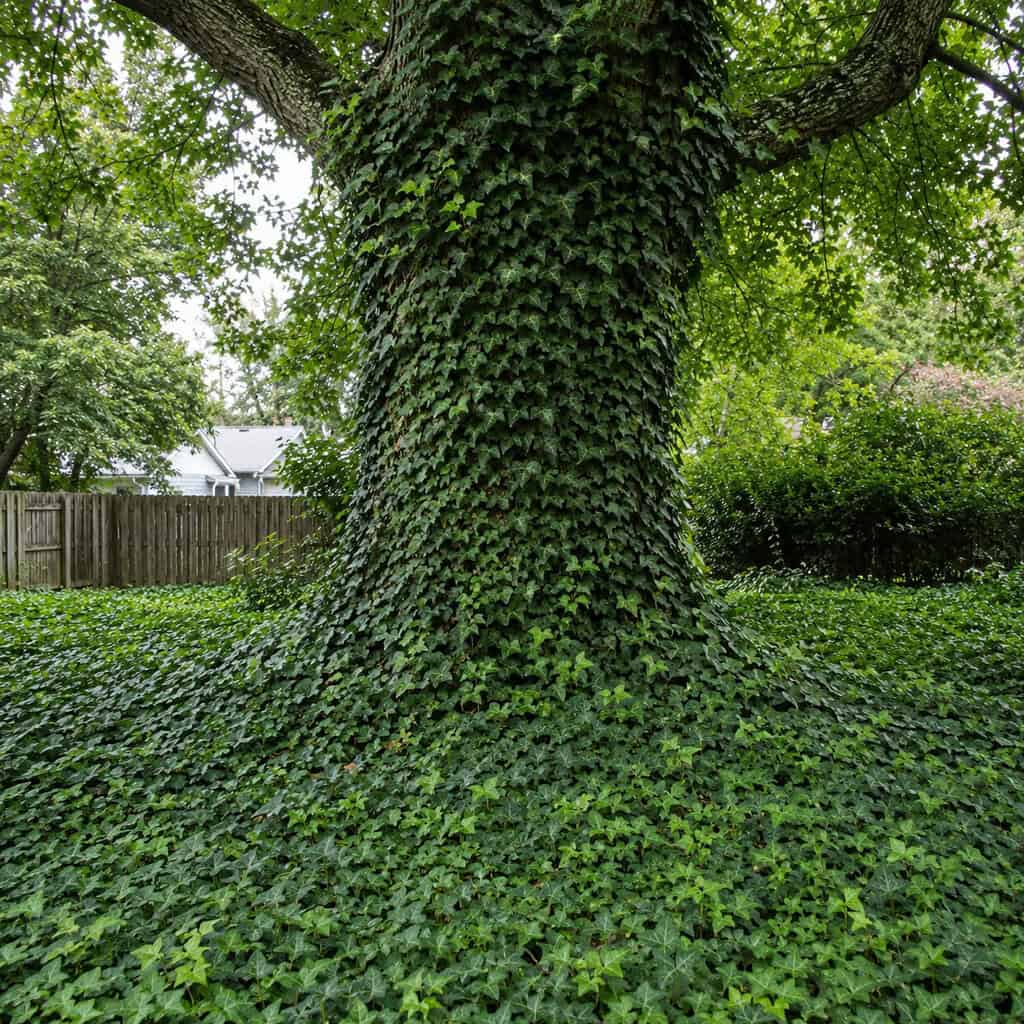
The carpet that ate the carpet. English ivy is the plant people picture when they say “evergreen ground cover,” and it’s the one most likely to follow you to your grave.
It roots wherever a stem touches soil. So a single plant doesn’t stay a single plant — it advances in every direction at once, rooting as it goes.
Then it climbs. Up your fence, up your siding, up your trees. The weight of mature ivy can make a tree top-heavy enough to fall in a storm, and the dense cover hides rot in the trunk underneath.
It’s now listed as invasive across much of the country, as Backyard Boss and a long line of extension offices point out. Skip it. Plant native pachysandra or wild ginger instead.
2. Common Periwinkle (Vinca minor)
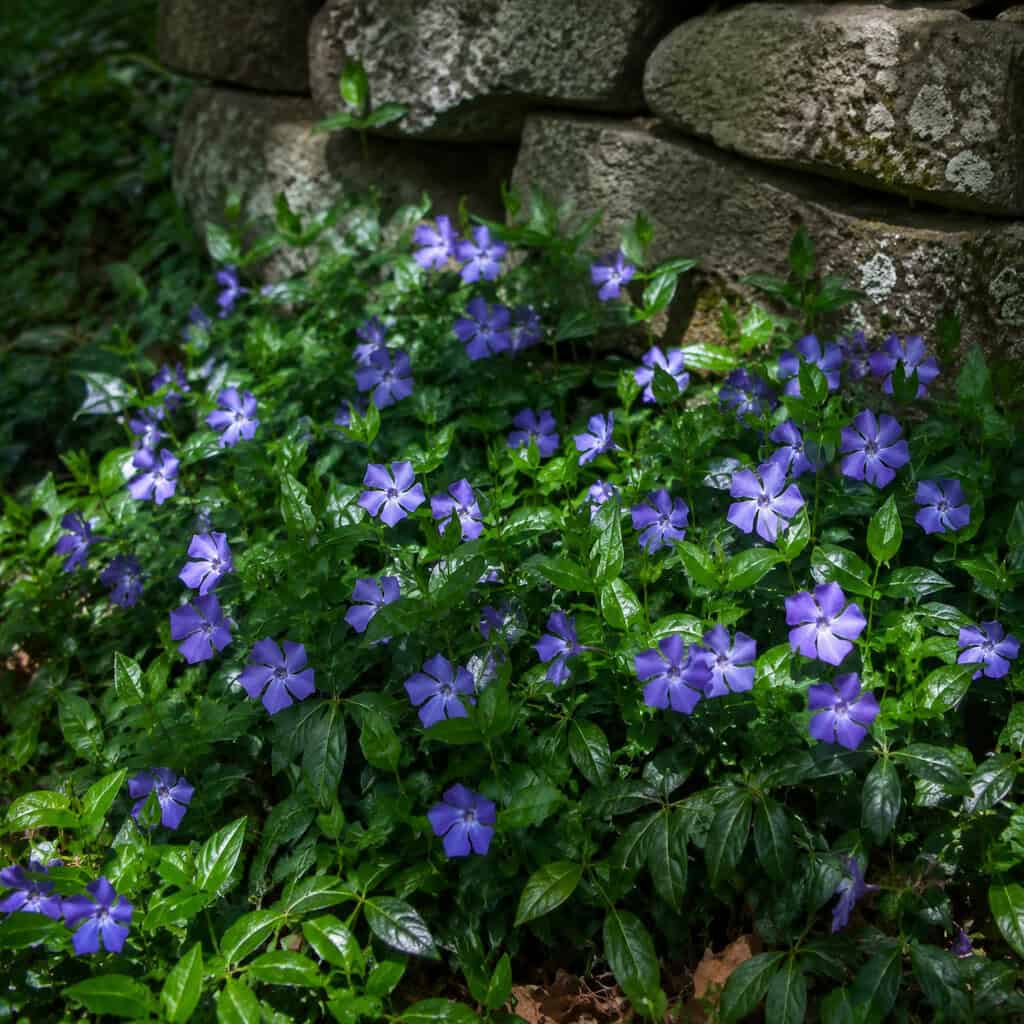
This one hurts, because it’s genuinely pretty. Glossy evergreen leaves, blue-violet flowers in spring, the kind of plant that softens an old stone wall.
You’ll find it carpeting cemeteries and shady slopes everywhere, which is exactly the problem. It got out, and it kept going.
Vinca re-roots as it spreads, building dense mats that nothing native can push through. The wildflowers and spring ephemerals that used to live in those woods just vanish under it.
Both the smaller V. minor and the larger V. major are flagged as troublemakers. Plant instead: foamflower or creeping phlox for the same low, flowering carpet without the takeover.
3. Wintercreeper (Euonymus fortunei)
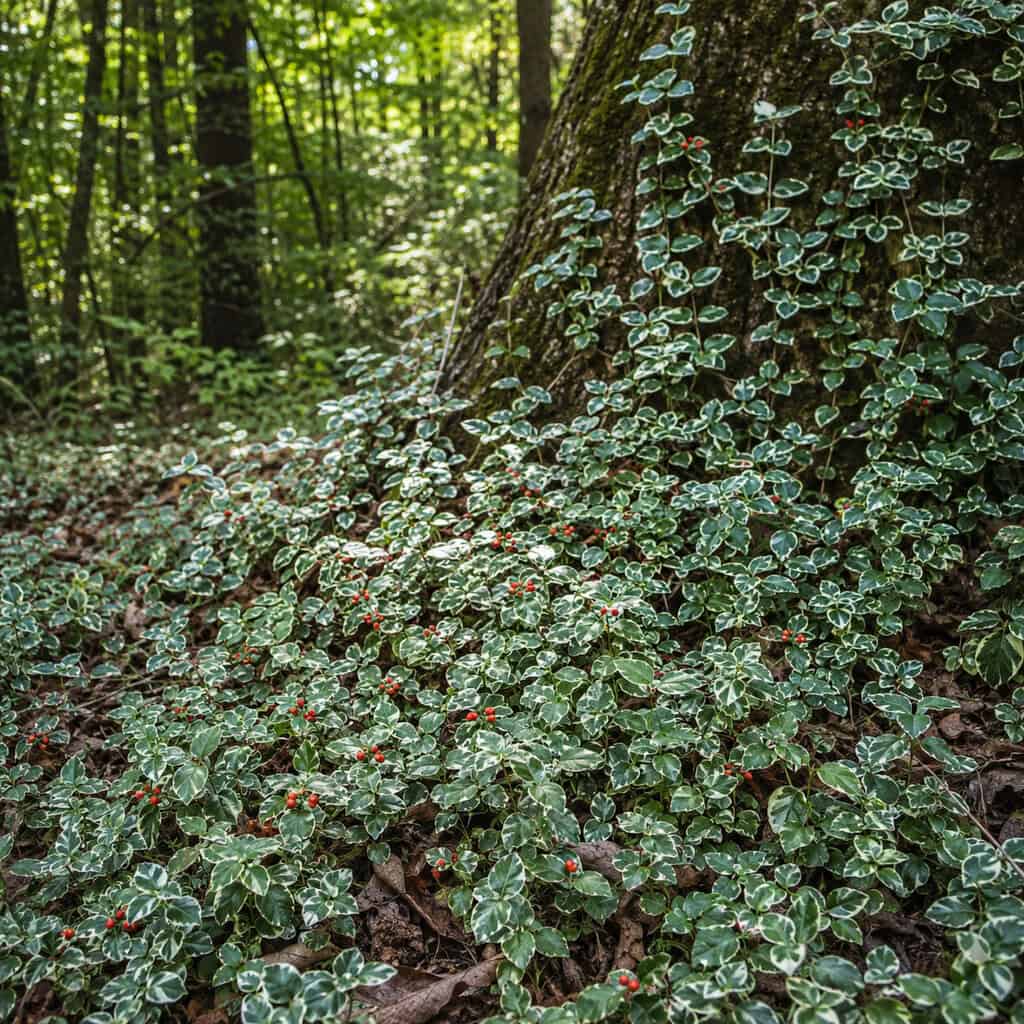
Cream-and-green leaves, little red-orange berries in fall. It checks every box at the garden center, which is how it ended up in so many yards.
Wintercreeper does two bad things at once. It runs flat across the soil like a ground cover, and it climbs vertically like ivy.
The result is a uniform mat where a diverse plant community used to be. Birds eat the berries and plant the next colony a mile away.
Maryland took it seriously enough to make it illegal to sell. The University of Maryland Extension steers gardeners toward native alternatives for a reason. Skip it.
4. Bishop’s Weed / Goutweed (Aegopodium podagraria)
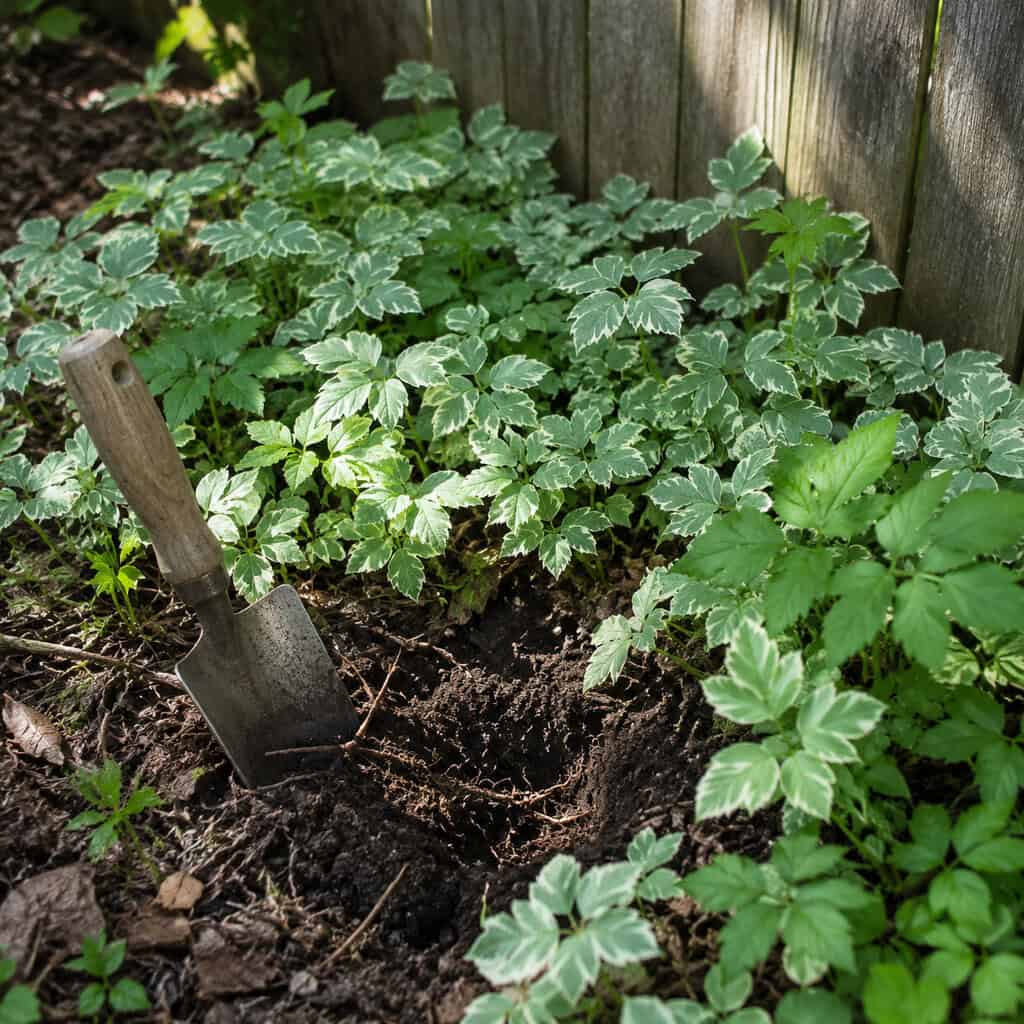
The botanical name translates roughly to “little goat feet,” named for how fast it scampers off. Believe the name.
It’s sold as a tidy variegated plant — “Snow-on-the-Mountain,” cream-edged leaves, great for tough dry shade. Then the variegation reverts to plain green and the whole thing turns into a thug.
Digging it out is a trap. Every root fragment you leave behind resprouts into a fresh plant, so the more you dig, the more you get.
Wisconsin lists it as a restricted invasive. Don’t plant it — and if you inherited it, smother it under cardboard and mulch for a full season rather than trying to dig.
5. Creeping Jenny / Moneywort (Lysimachia nummularia)
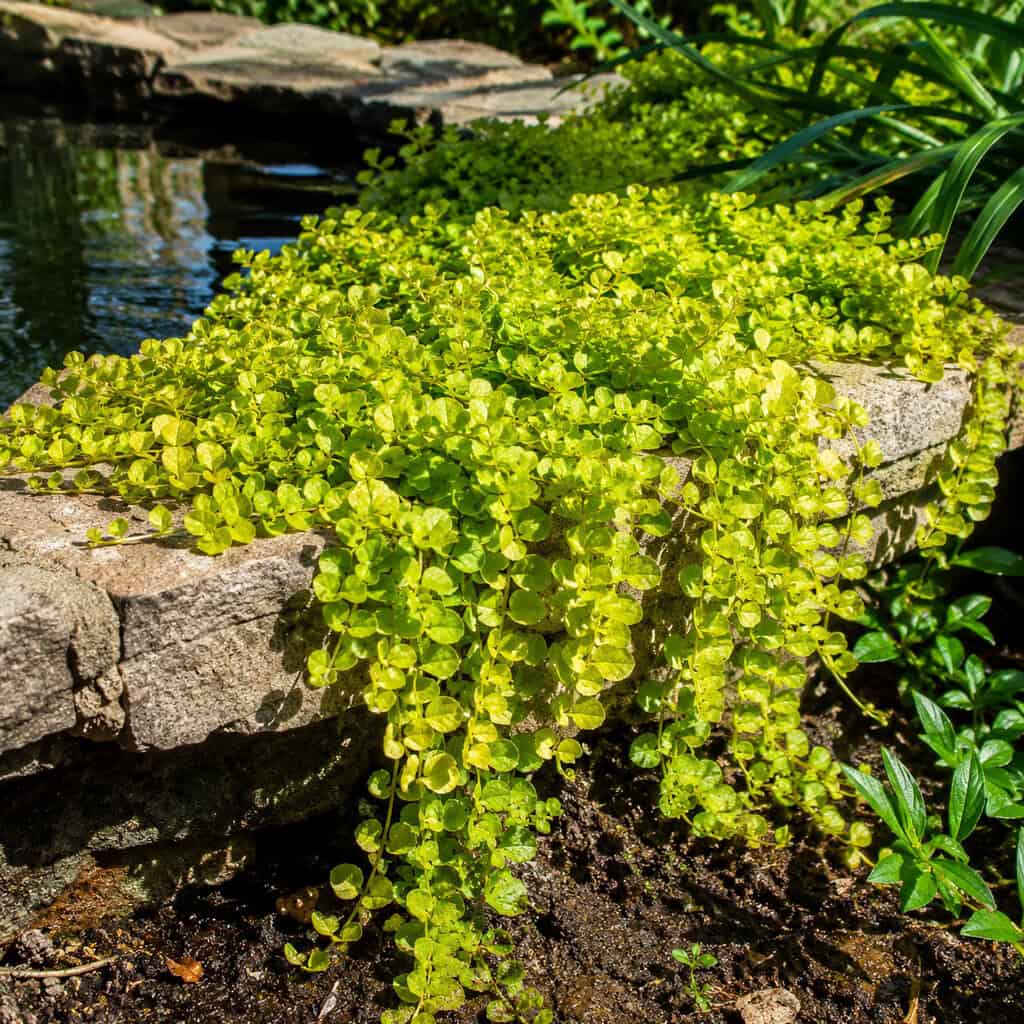
That chartreuse “Aurea” version is everywhere now, spilling out of containers and glowing along pond edges. It looks like sunshine on the ground.
It roots at every single leaf node. So it doesn’t creep so much as stitch itself permanently into the soil, inch by inch.
It loves moist ground, the same damp spots where most other ground covers struggle. That’s not a feature. That’s it outcompeting everything that might keep it in check.
The Missouri Botanical Garden flags it as too aggressive for borders. Keep it trapped in a pot if you must grow it at all.
6. Ajuga / Bugleweed (Ajuga reptans)
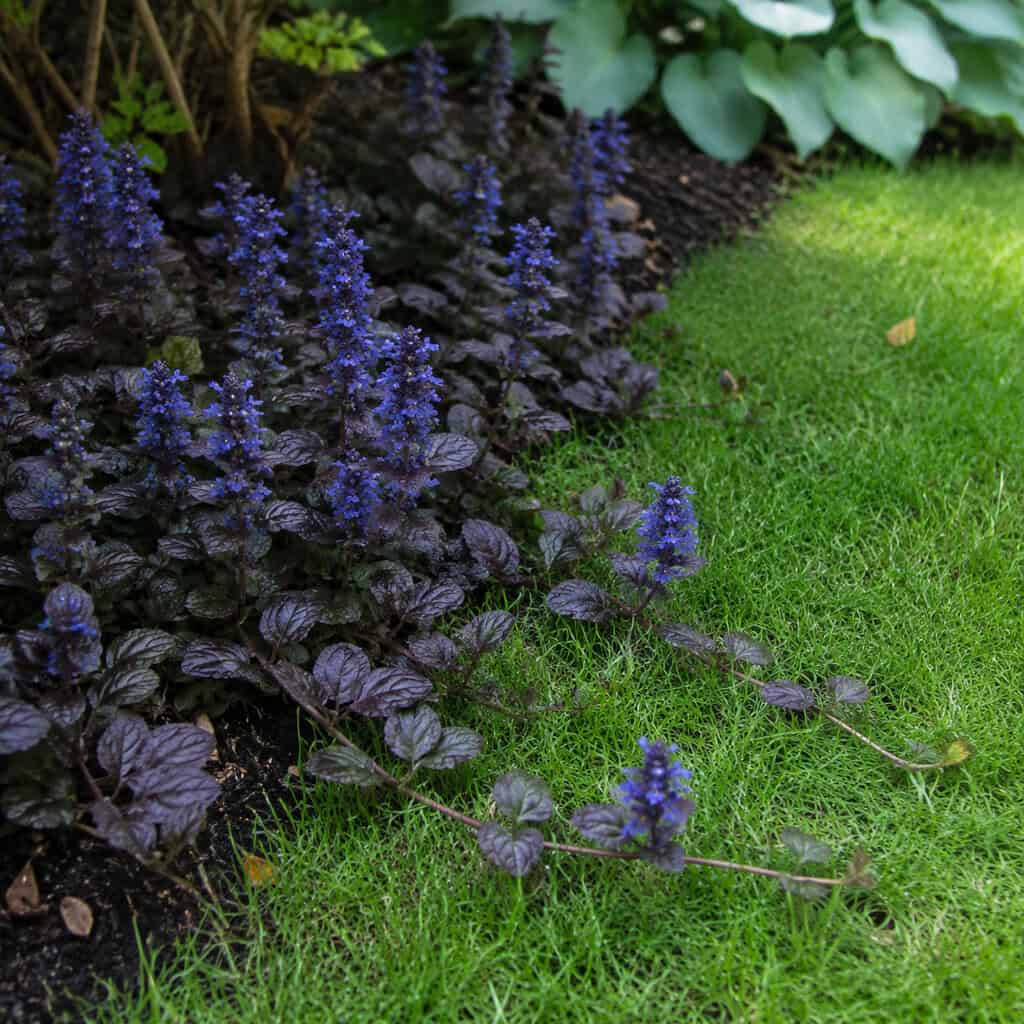
Sold for fast color in shade, and it delivers — blue flower spikes over bronze-purple leaves, filled in within a season.
The word “reptans” means creeping. Those runners don’t respect bed edges, and they slip straight into your lawn and colonize it.
Like the rest of the mint family, it regrows from root fragments, so mowing and tearing only multiply it.
It’s listed as invasive in Maryland, Oregon, and West Virginia. Plant instead: the better-behaved Geneva bugleweed (Ajuga genevensis), which doesn’t send out runners.
7. Lily of the Valley (Convallaria majalis)
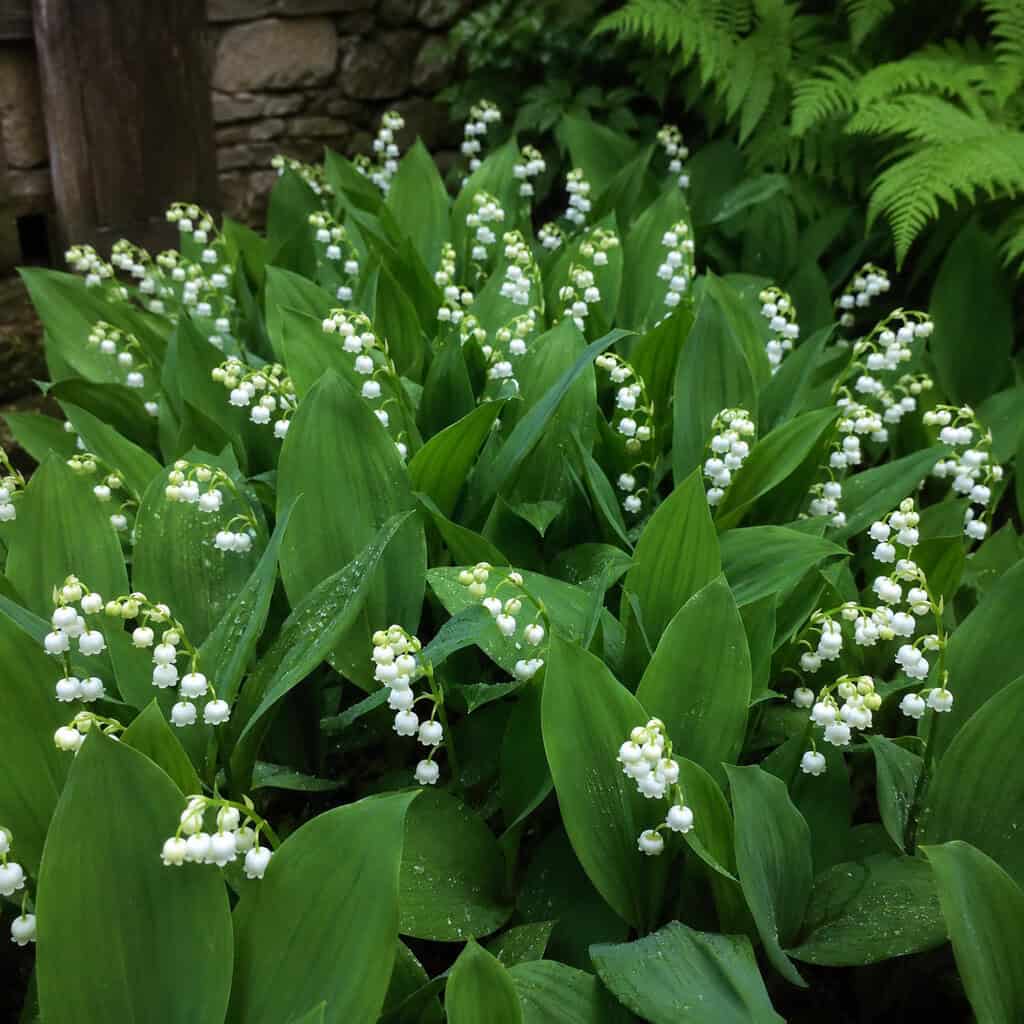
Grandmother’s plant. Those little white bells smell incredible, and that nostalgia is doing a lot of heavy lifting.
Underground, it’s all rhizome. It spreads into large colonies with what one grower called “amazing speed,” and once a patch establishes, it owns that ground.
There’s a second problem for anyone with a dog or cat. Every part of the plant is toxic — leaves, flowers, berries, even the water in the vase.
Aggressive and poisonous in one fragrant package, per Gardening Know How. Think hard before planting.
8. Crown Vetch (Securigera varia)
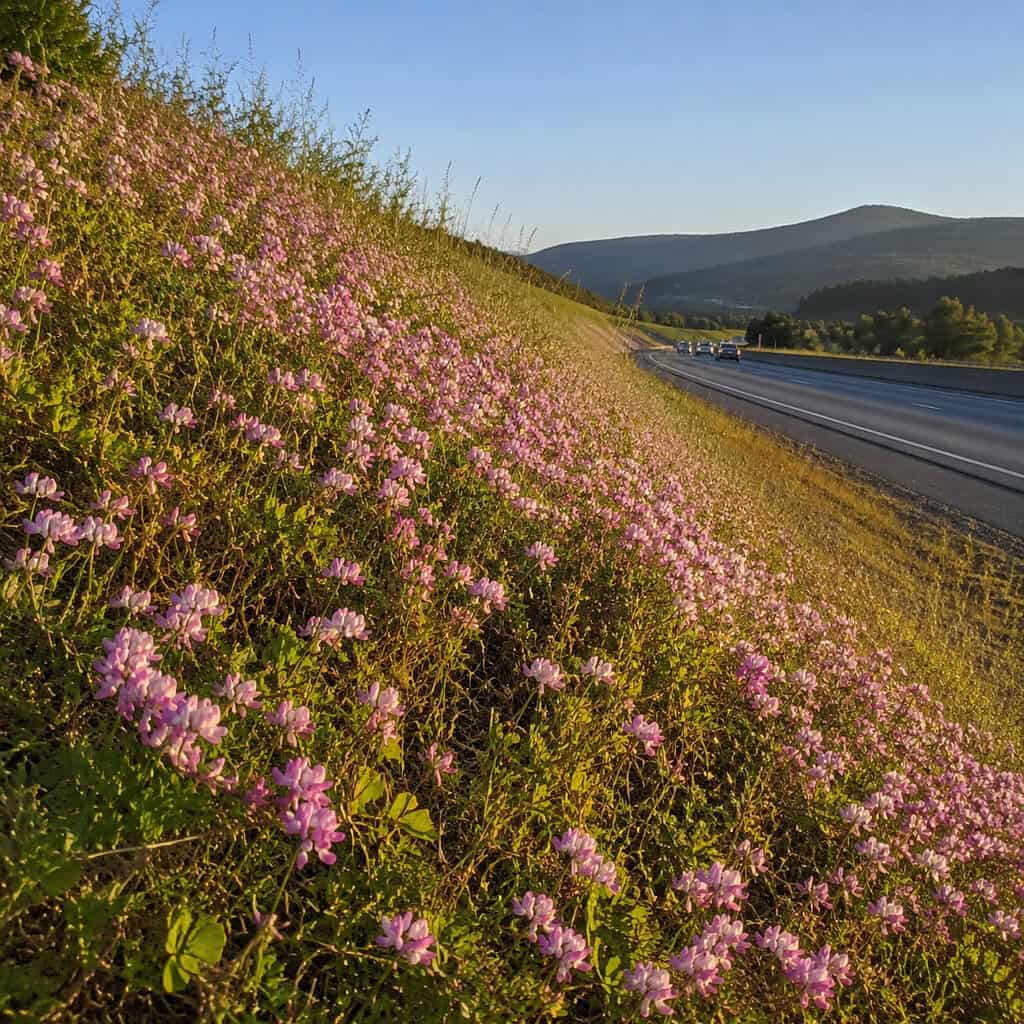
This one sounds so practical you almost can’t argue with it. Erosion control. Pretty pink flowers. Plant it on the steep bank and forget it.
Forget it is right. A single crown vetch plant can blanket 70 to 100 square feet in four years.
The seeds stay viable in the soil for 15 years or more, so even after you kill the living plants, a new generation is waiting underground.
Imported in the 1800s and mass-planted on highway slopes by the 1950s, it’s now a prohibited noxious weed in states like Minnesota. The Minnesota Department of Agriculture bans it outright. Use native sedges or little bluestem for slopes instead.
9. Sweet Woodruff (Galium odoratum)
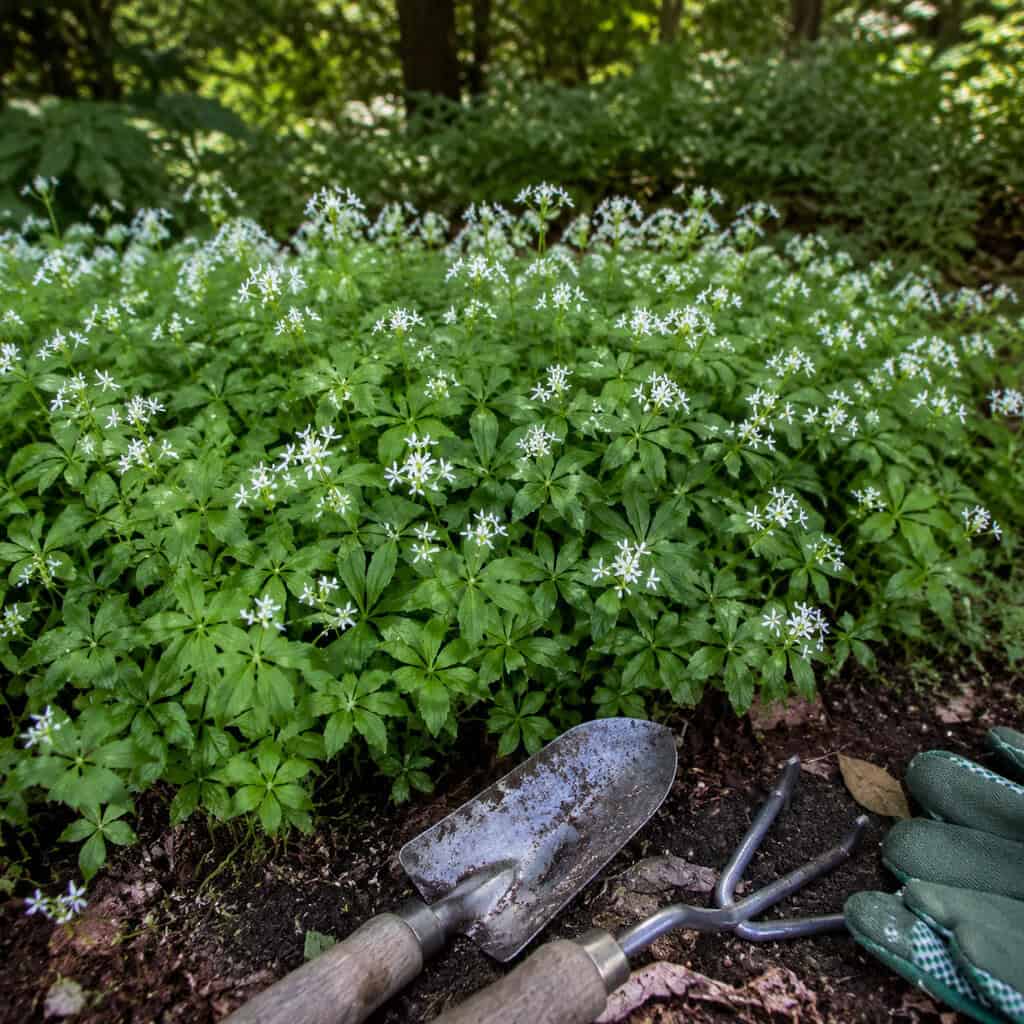
Delicate whorled leaves, tiny white star flowers, the smell of fresh-cut hay. It’s the picture of a gentle woodland carpet.
Plant one. Come back in two years to find a dense mat where the one used to be.
It spreads by rhizome, and broken bits of root travel around the yard on your tools and boots, starting new patches in places you never planted.
Charming until it isn’t. Confine it to a bed with hard edges, or pick a clumping shade plant that stays put.
10. Chameleon Plant (Houttuynia cordata)
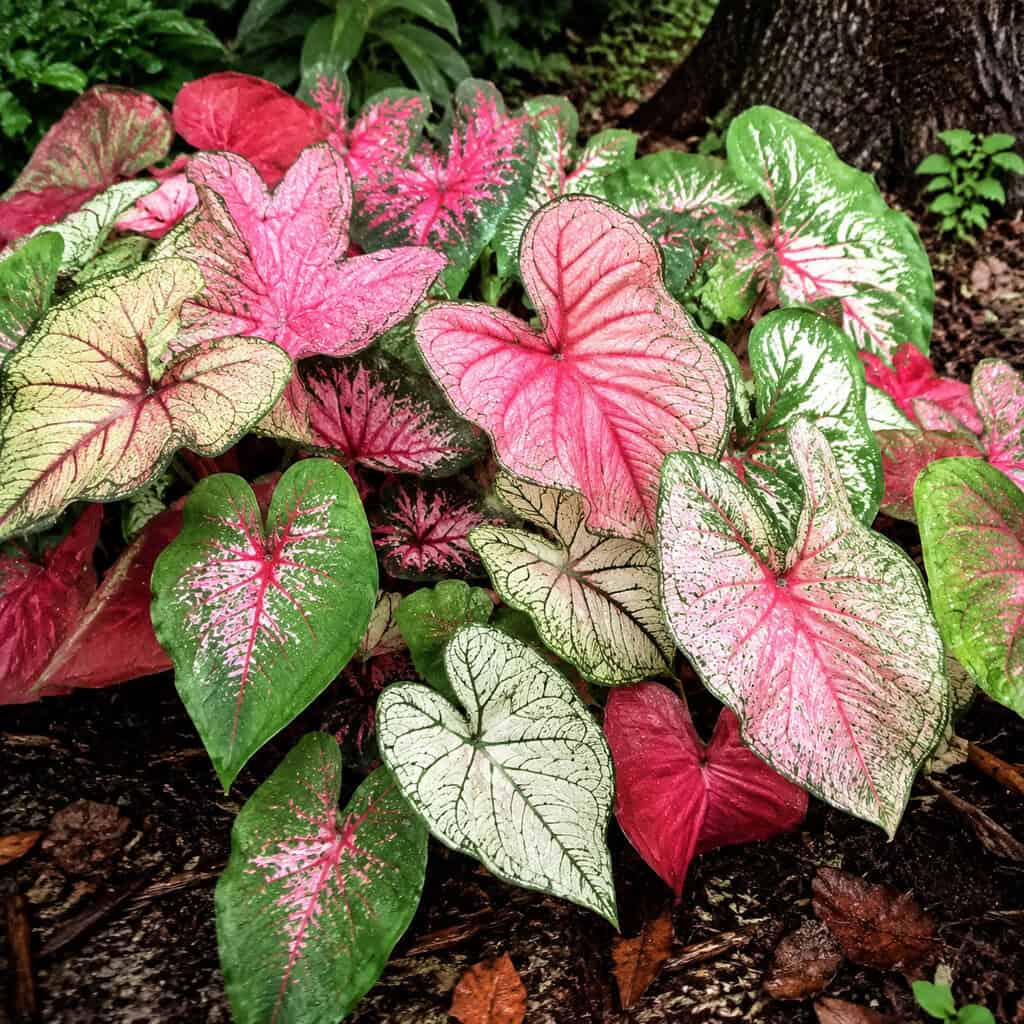
Pink, cream, green, and red all on one leaf — it’s the showiest plant on this list, and the one gardeners beg each other not to plant.
The rhizomes resprout from the tiniest broken fragment. You can dig for years and still lose.
Crush a leaf and it smells like fish. That’s the plant’s calling card and a hint of how little it cares about charming you.
New Jersey lists it as invasive. Never plant it in open ground. If you love the foliage, grow it sealed in a pot with no drainage to the soil.
11. Gooseneck Loosestrife (Lysimachia clethroides)
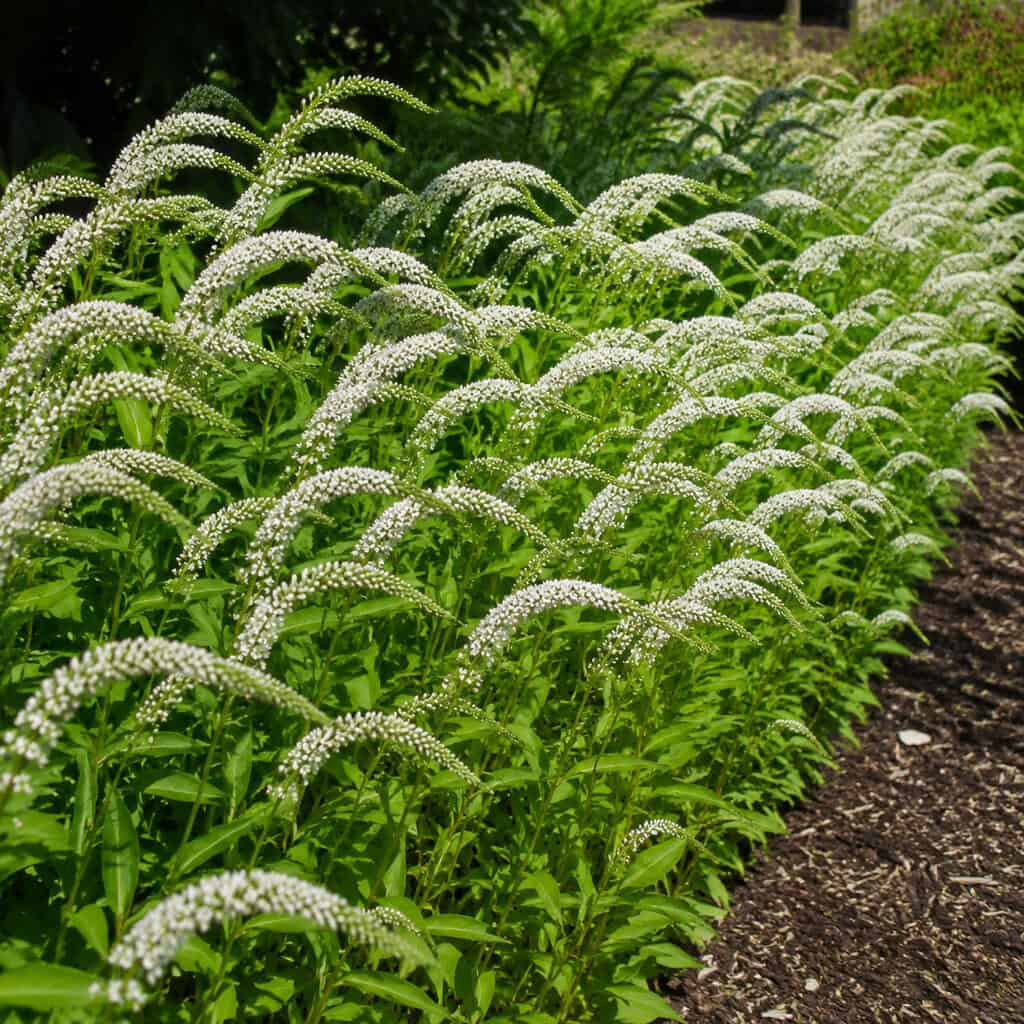
Those arching white flower spikes really do look like a row of geese craning their necks. They make a lovely cut flower.
Then you meet the roots. White rhizomes push outward as much as four feet in a single season.
Extension writers compare it to bamboo and use the word “thug” without hesitation, including the team at NC State Extension.
If you want it, sink a root barrier at least a foot deep, or grow it in a buried container. Anything less and it owns the bed.
12. Yellow Archangel (Lamium galeobdolon)
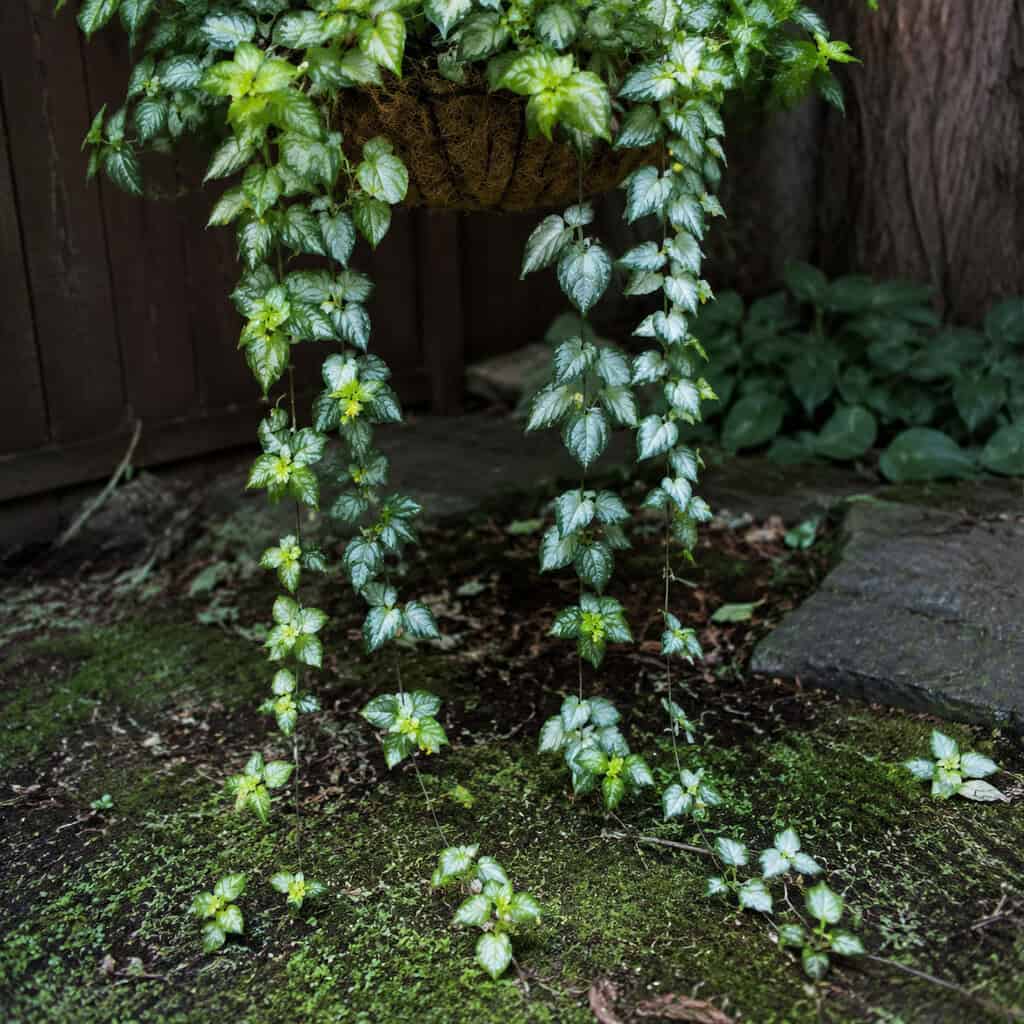
Silver-splashed leaves, yellow flowers, sold as a no-fuss filler for shade and hanging baskets. It trails beautifully over the edge of a pot.
The trouble is the straight species, which spreads with no off switch and has overrun forest floors across the Pacific Northwest.
Plants that escape baskets and compost piles root and run. A tossed cutting is all it takes.
Plant instead: a restrained cultivar like ‘Herman’s Pride,’ which clumps rather than runs. Never the wild form.
13. Spotted Deadnettle (Lamium maculatum)
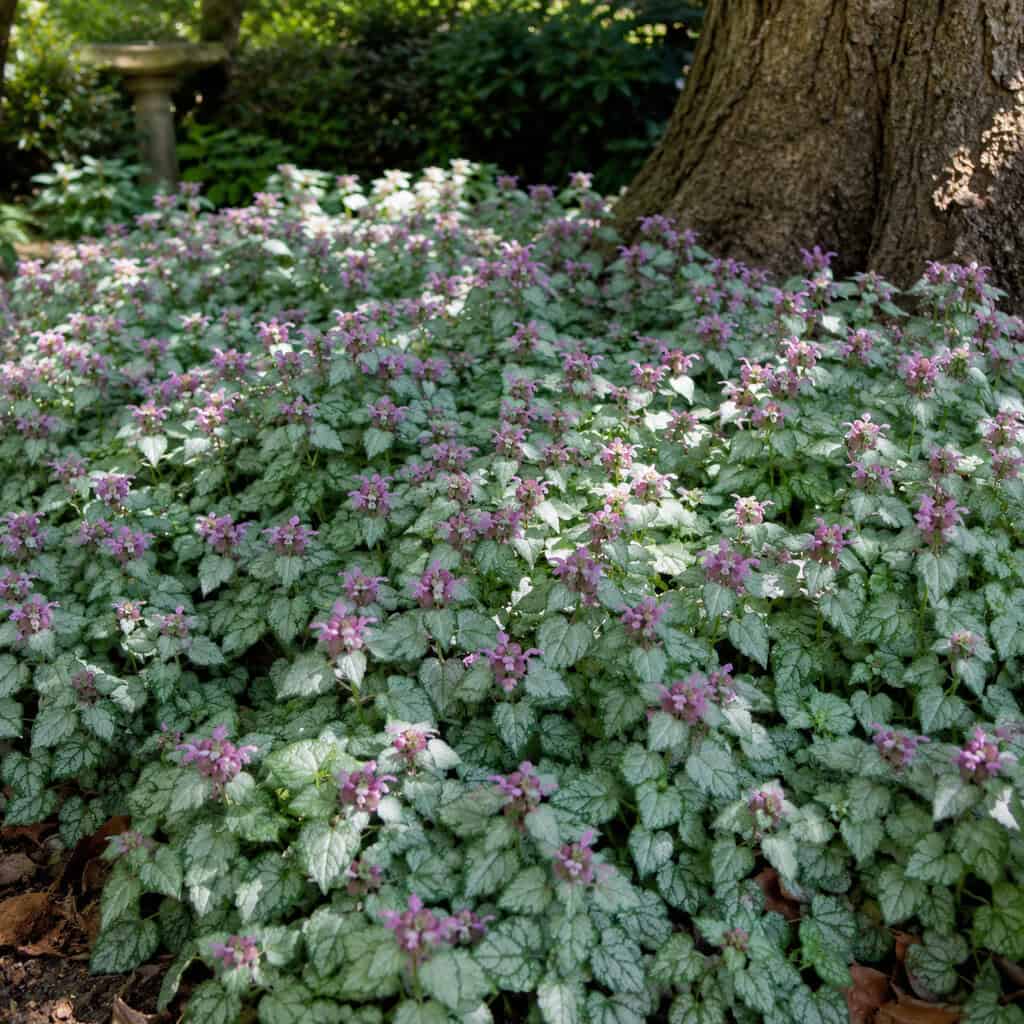
Meet yellow archangel’s cousin. Same family, same silvery leaves, same shady beds — and the older cultivars run just as hard.
It’s a staple of shade gardens because it fills in fast and flowers for months. Fast is the part that gets you.
The newer named varieties behave better and stay in tidy mounds. The vintage species form does not.
If you’re buying it, read the cultivar name and choose a clumping selection. The generic flat of “deadnettle” is the gamble.
14. Creeping Charlie / Ground Ivy (Glechoma hederacea)
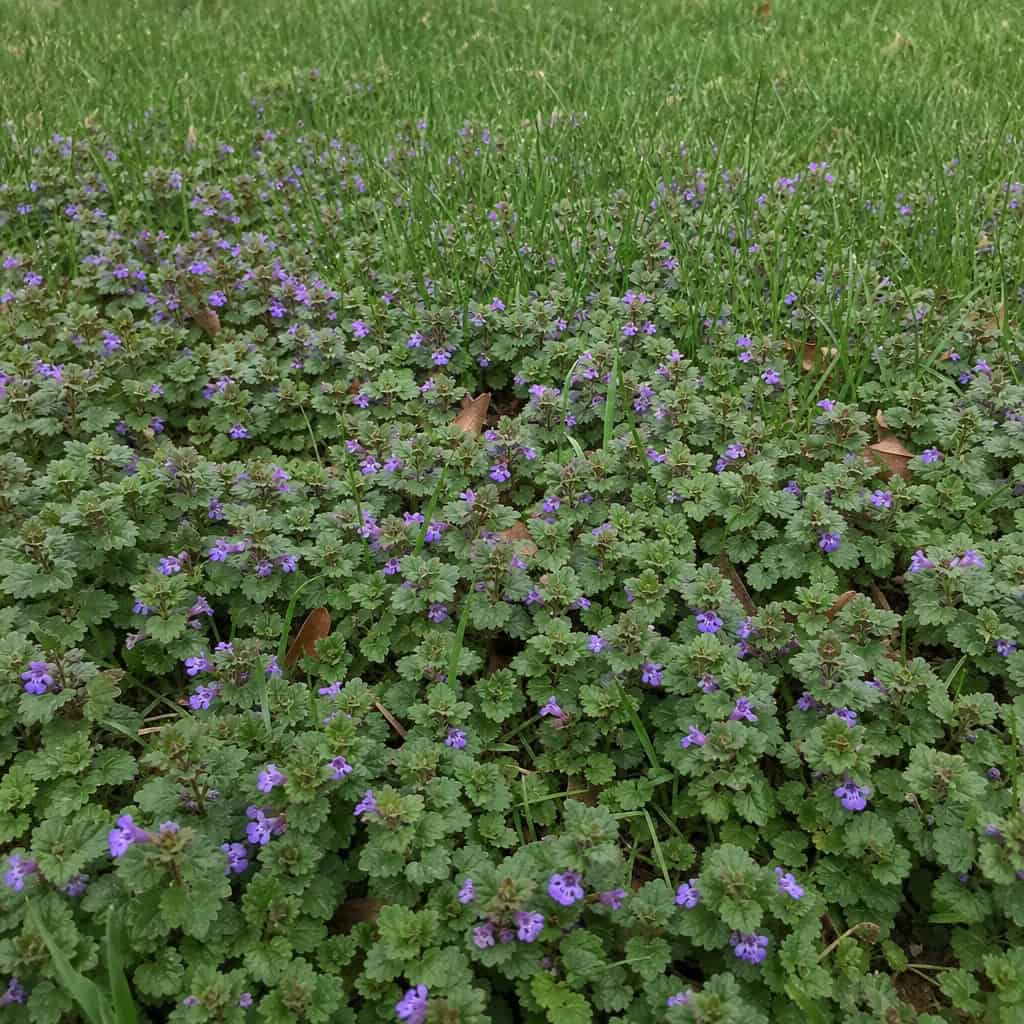
You already know this one. It’s the scalloped-leaf weed crawling through your lawn right now.
People still occasionally plant it on purpose for tough shade, which is like adopting a raccoon for pest control. It forms dense mats that smother beds and grass alike.
Every stem fragment re-roots. So whatever you do with the clippings matters enormously.
Never compost it — you’ll just seed your whole garden. Bag it and throw it out.
15. Mint (Mentha spp.)
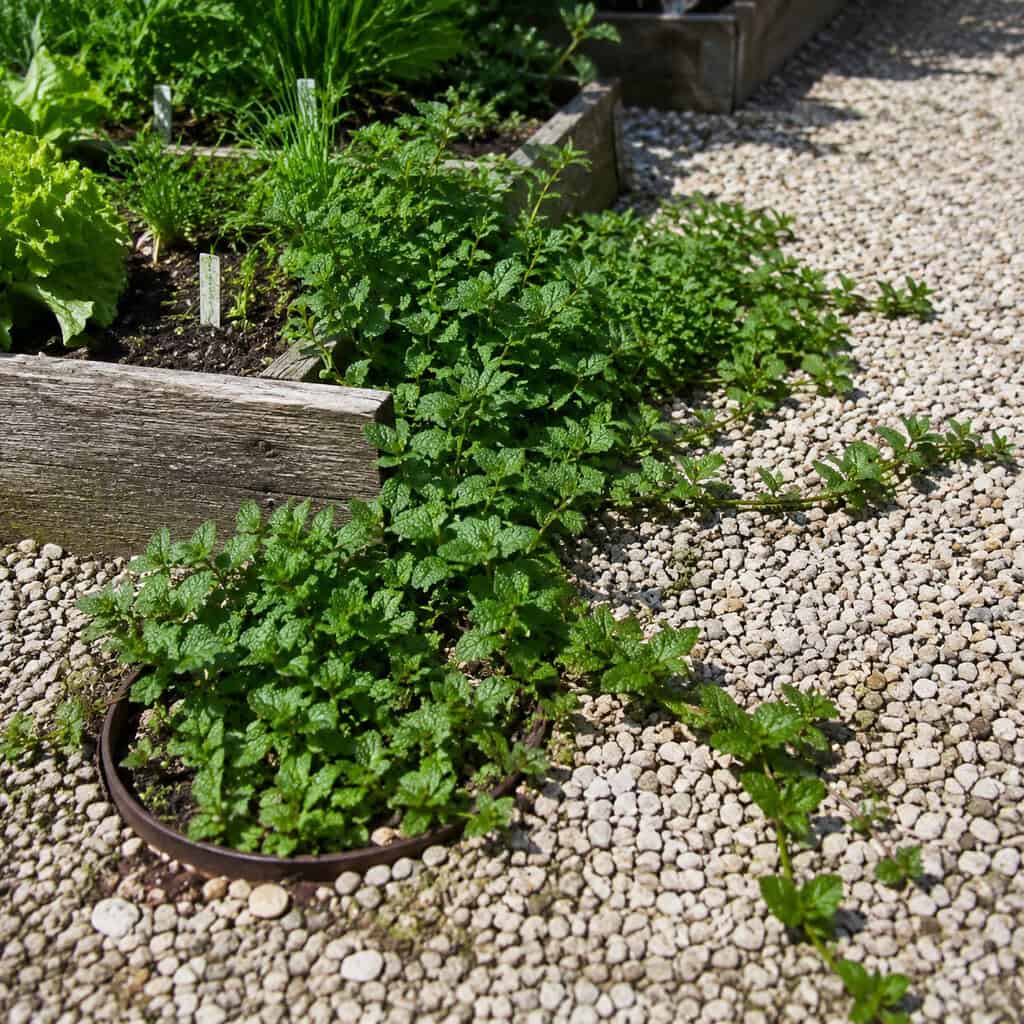
Everyone learns this lesson once. You plant mint for tea, and two summers later it’s in the lawn, the cracks, and the neighbor’s bed.
It runs by underground rhizome and simply doesn’t stop. There’s a reason every gardener you’ve ever met says the same three words: keep it potted.
The save is simple. Sink a bottomless pot or a five-gallon bucket into the ground and plant the mint inside it, with the rim an inch above soil so the runners can’t escape over the top.
That’s the only way to grow mint in the ground and still own your yard a year later.
16. Mock Strawberry (Potentilla / Duchesnea indica)
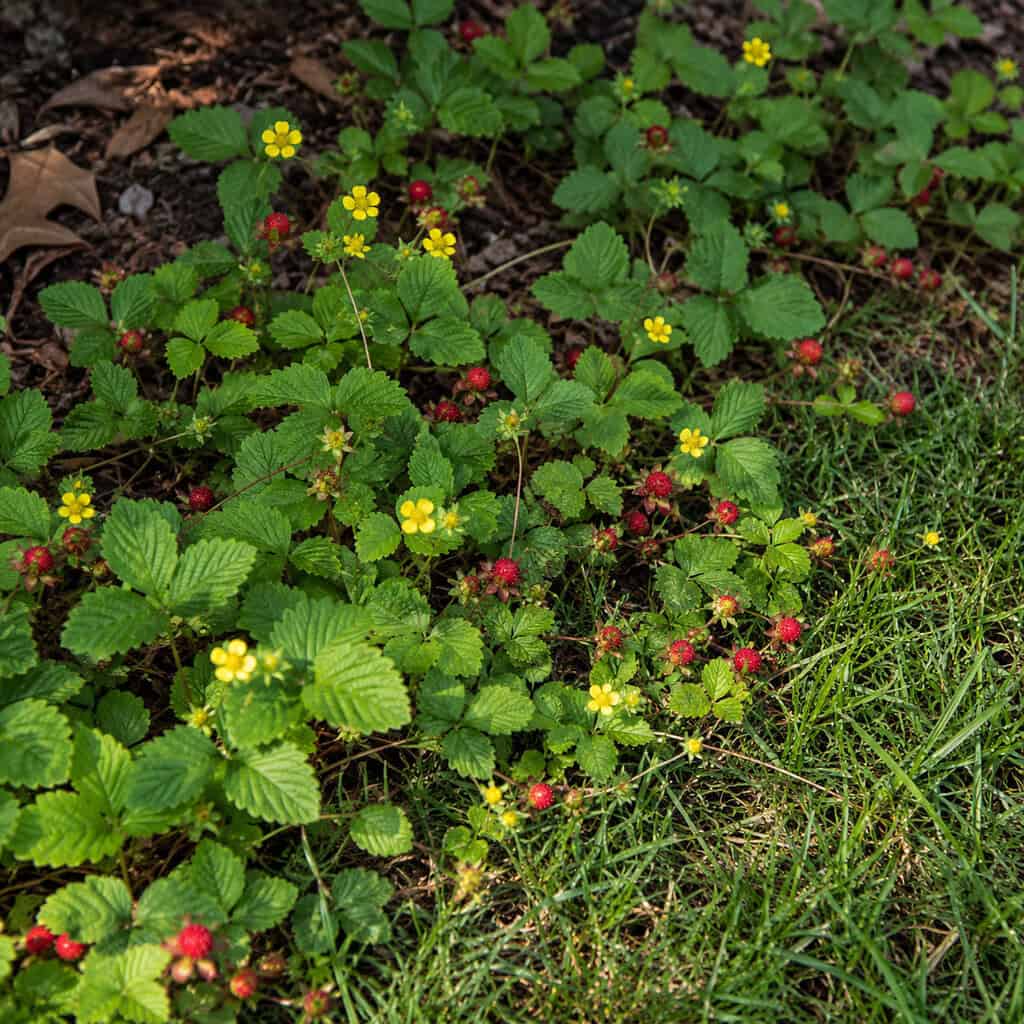
This one slips in because it looks innocent. Little yellow flowers, tiny red fake strawberries, the whole thing reads like a harmless wild plant.
It isn’t. One master gardener in Durham watched it overrun a bed and out-muscle even creeping Jenny, which is no small feat.
Then it jumped the edge into the lawn and kept going. The Durham Master Gardeners wrote a whole confessional about trying to stop it.
People let it stay because they think it’s a real strawberry. It’s not, and it doesn’t fruit anything worth eating. Pull it while the patch is small.
17. Sweet Autumn Clematis (Clematis terniflora)
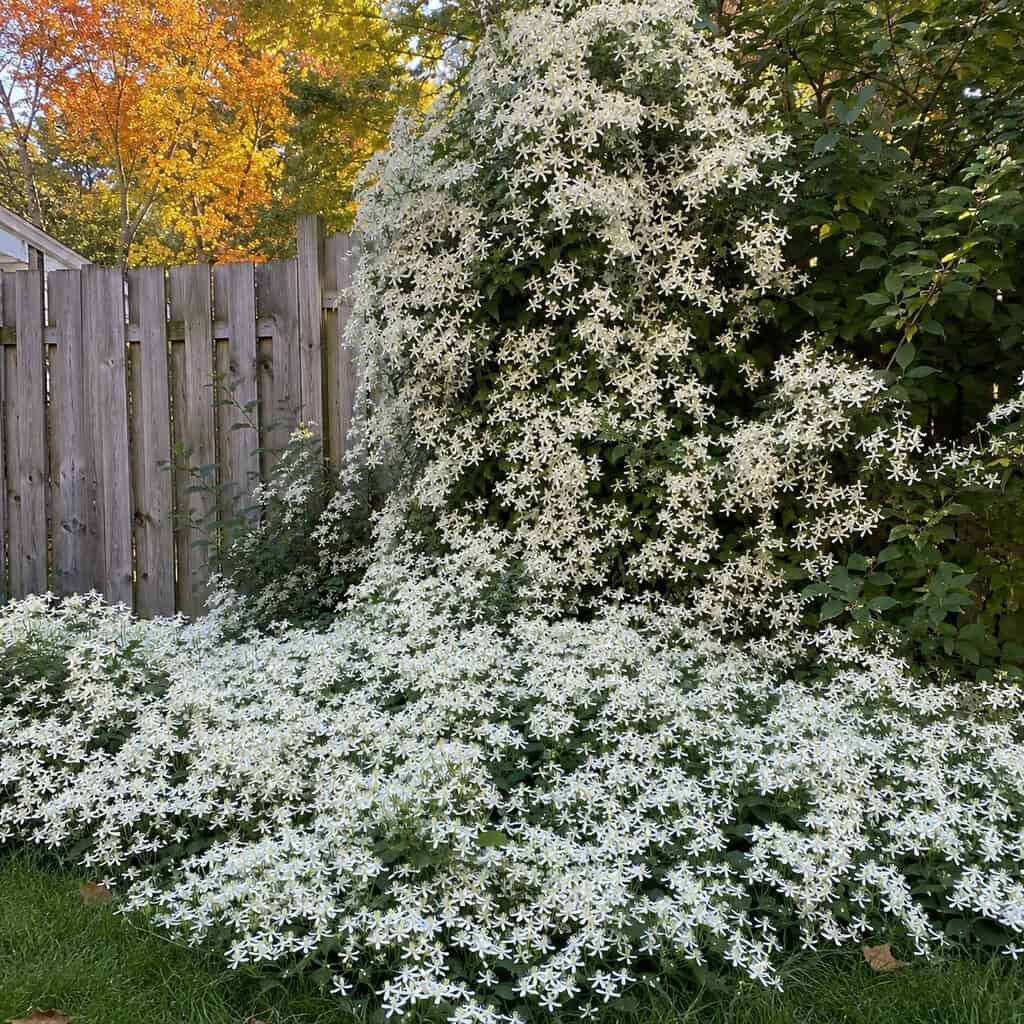
In September it produces clouds of small white flowers that smell like vanilla. The scent alone sells it.
Most people think of it as a vine, but the many-branching stems sprawl flat across the ground until they find something to grab.
When they find it — a shrub, a fence, a small tree — they climb and smother. The seeds blow everywhere and sprout where they land.
Plant instead: the native virgin’s bower, Clematis virginiana, which gives you a similar fall show without colonizing the county.
18. Beach Vitex (Vitex rotundifolia)
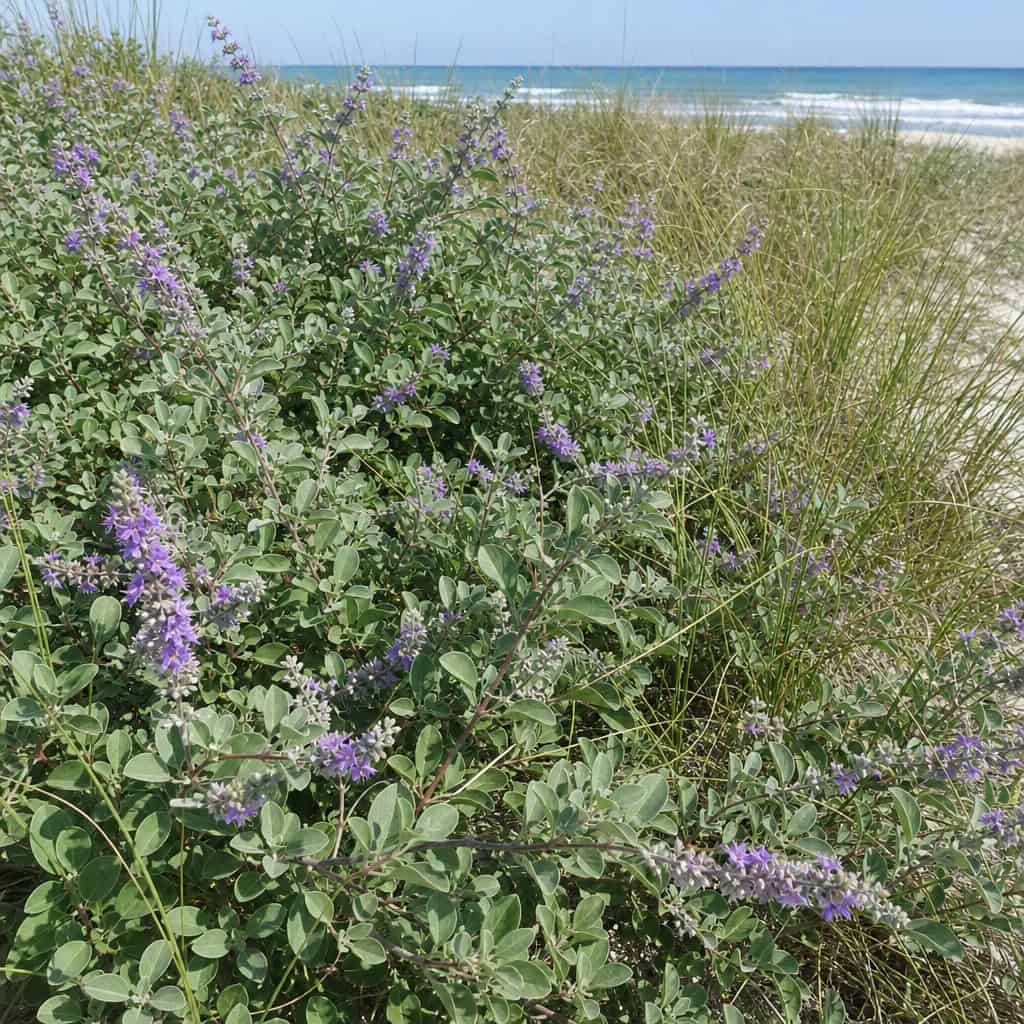
They call it “beach kudzu” on the Southeast coast, and that nickname is the whole story.
It was brought in on purpose to stabilize sand dunes, which it does — by smothering everything else that lives there.
Native dune plants and the wildlife depending on them got buried under its woody runners. Sea turtle nesting habitat took the hit.
If you’re anywhere along the Carolina coast, this is the plant the dune restoration crews are paid to rip out. Don’t plant the thing they’re fighting.
19. Mind-Your-Own-Business / Baby’s Tears (Soleirolia soleirolii)
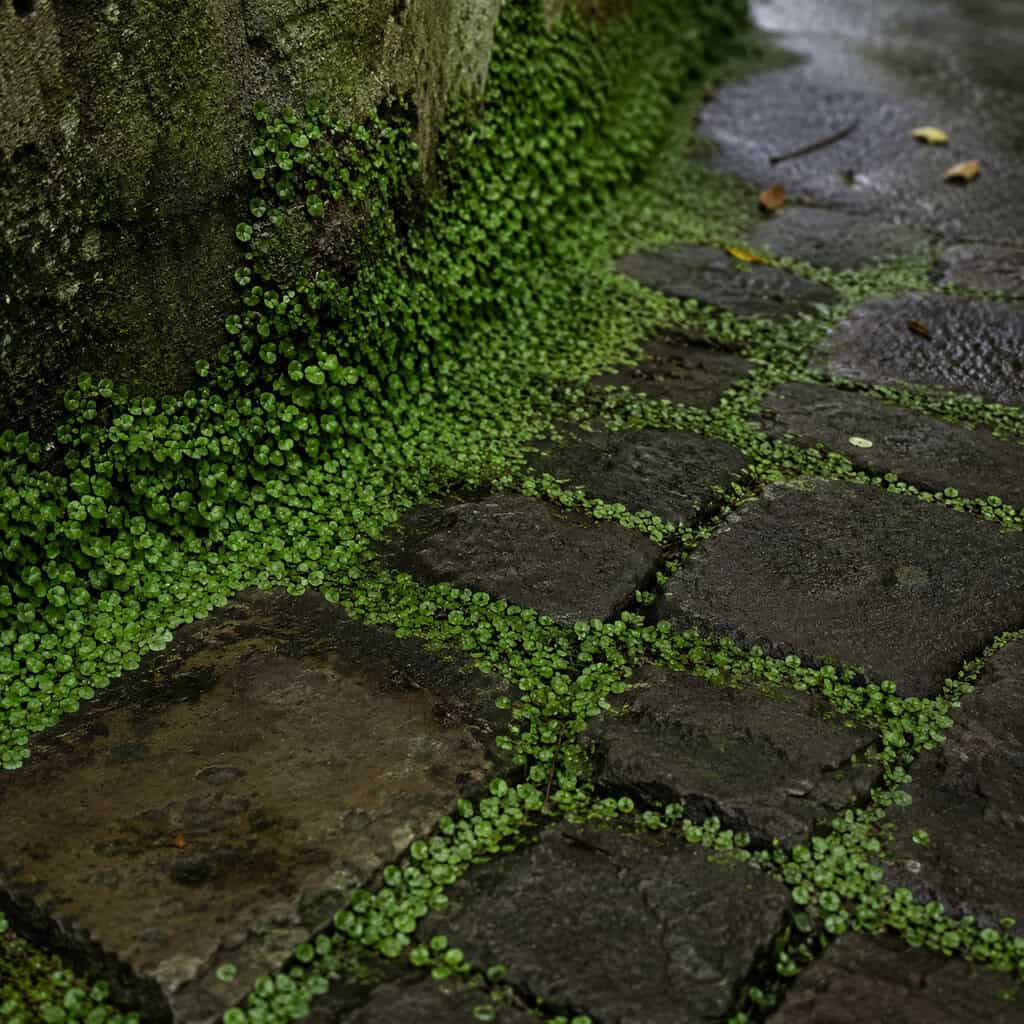
The name is a joke at your expense. This is the last plant that minds its own business.
Those tiny round leaves form a soft green film that looks magical between pavers and along shady cracks. Then it threads through every wall gap and paving joint it can find.
One professional gardener admitted it kept popping up across the whole garden, miles from where it started.
The one mercy: it’s fussy about heat and hard cold, so harsh climates knock it back. In a mild damp climate, you’ve made a permanent decision.
20. Bear’s Breeches (Acanthus mollis)
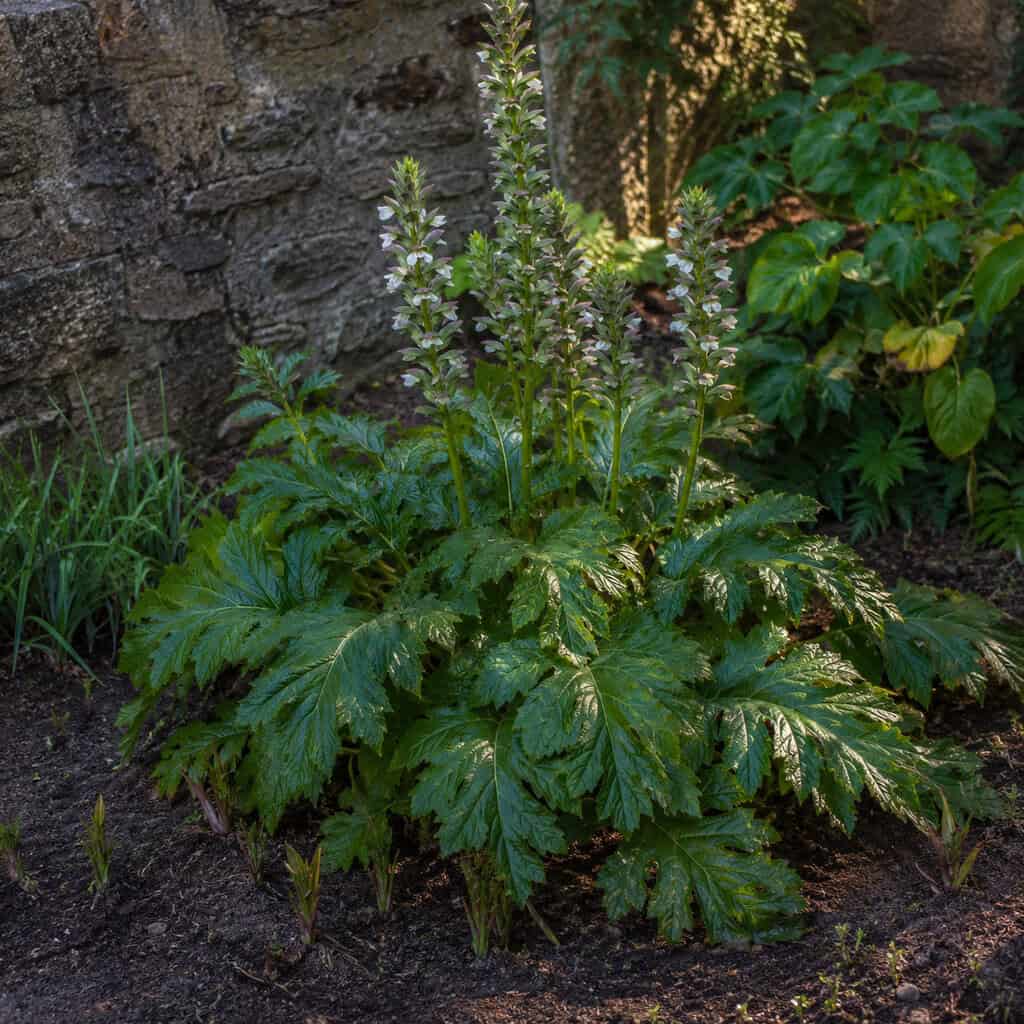
Those glossy, deeply cut leaves are so architectural the ancient Greeks carved them into the tops of columns. Gardeners fall for the drama every time.
Then it suckers. Up through the lawn, up in dry shade, up through soil so root-choked nothing else will grow there.
The deep taproot makes it nearly impossible to remove. Snap the root and the fragment left behind starts a new plant.
It’s considered invasive in Oregon and other regions. Grow it in a large pot if you can’t resist the leaves, never loose in the bed.
21. Butterbur (Petasites)
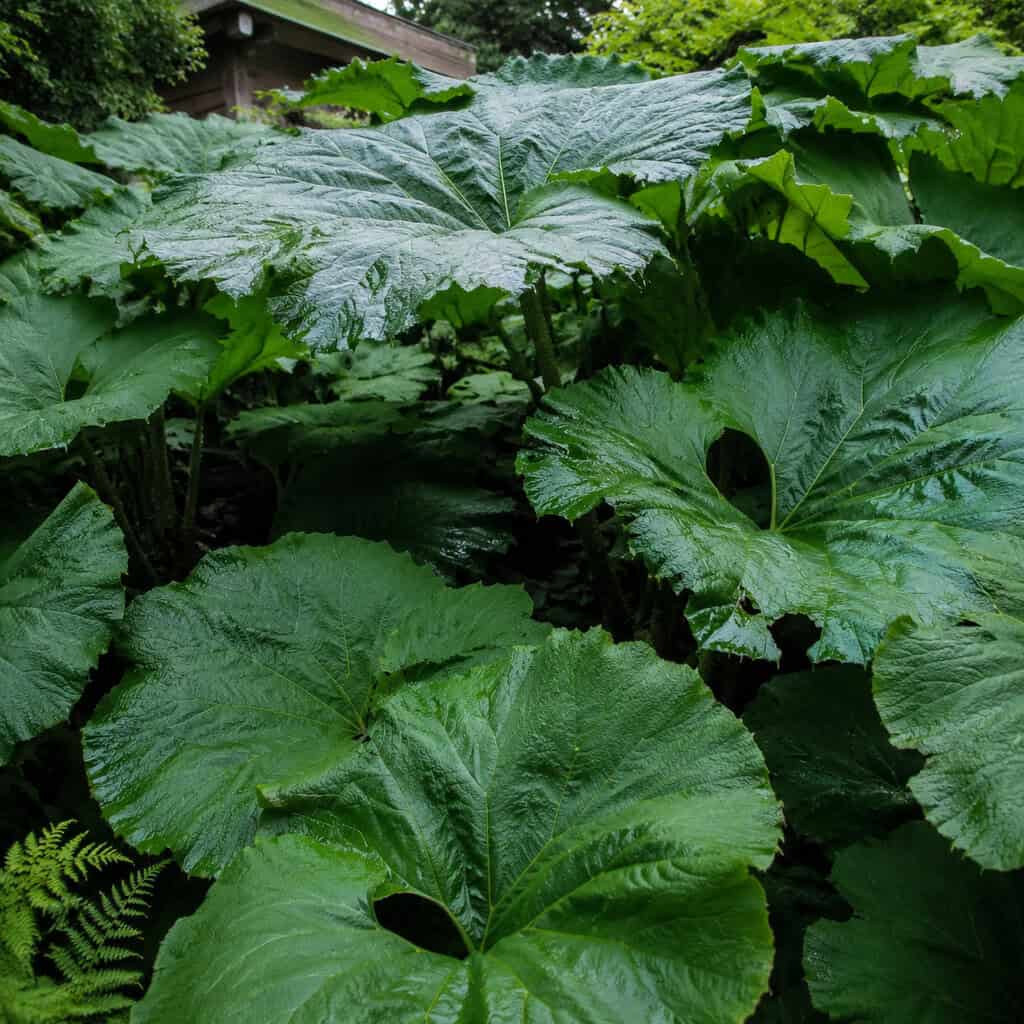
The leaves are enormous — umbrella-sized, tropical-looking, the kind of thing that makes a shady damp corner feel like a jungle.
That corner won’t stay a corner. The thick rhizomes spread until they occupy, in one grower’s words, every square millimeter available.
A small shade garden disappears under it in a couple of seasons. Then it comes for the next one.
Plant instead: Ligularia or Rodgersia for the same bold, big-leaved look without the underground conquest.
22. Common Buckthorn (Rhamnus cathartica)
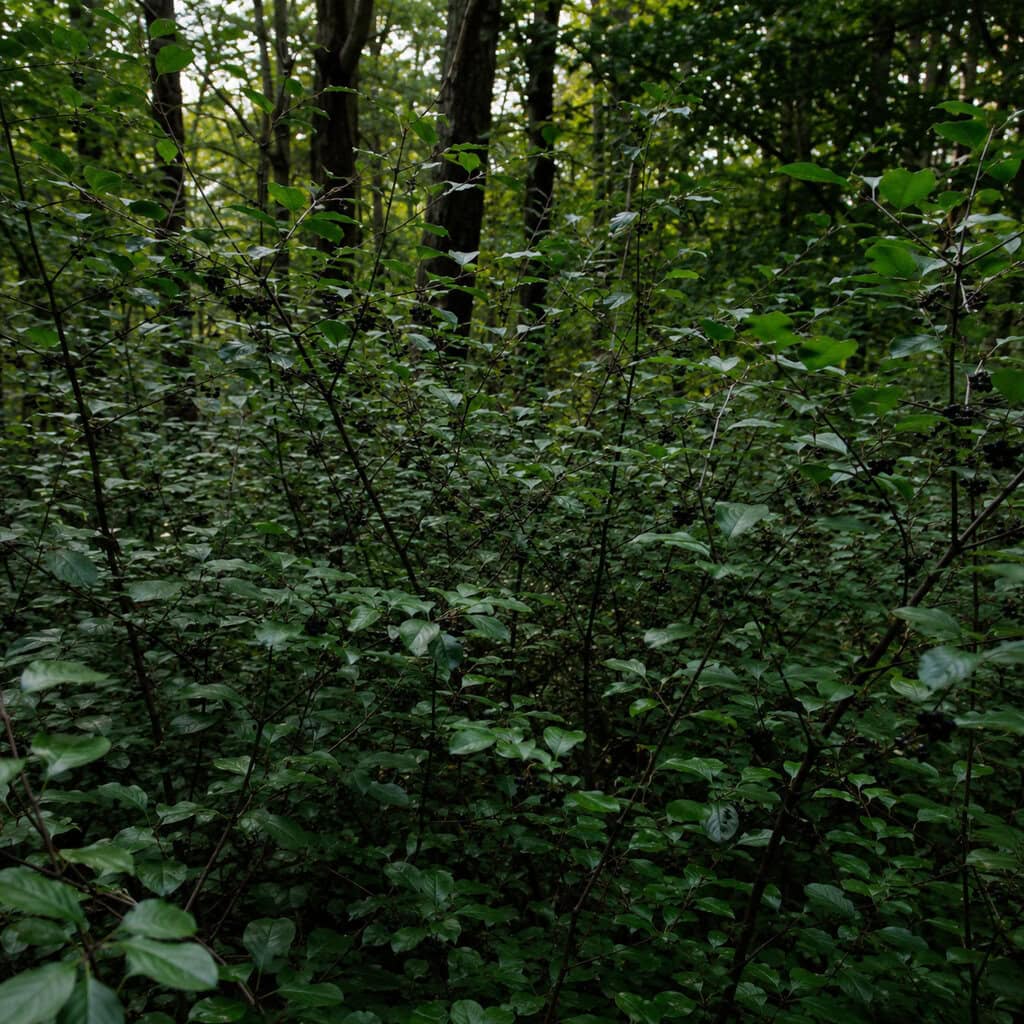
This one’s a ringer. People think of buckthorn as a hedge, but in the woods it behaves like a fast-spreading living carpet at the shrub layer.
It was imported in the 1800s for hedging, then escaped into forests across the northern states, where it forms dense thickets that shade out everything below.
Birds eat the black berries — which act as a laxative, hence “cathartica” — and broadcast the seeds for miles.
Once it’s established, removing it is a chainsaw-and-herbicide project. Pull seedlings the moment you spot them, before they grow trunks.
23. Purple Loosestrife (Lythrum salicaria)
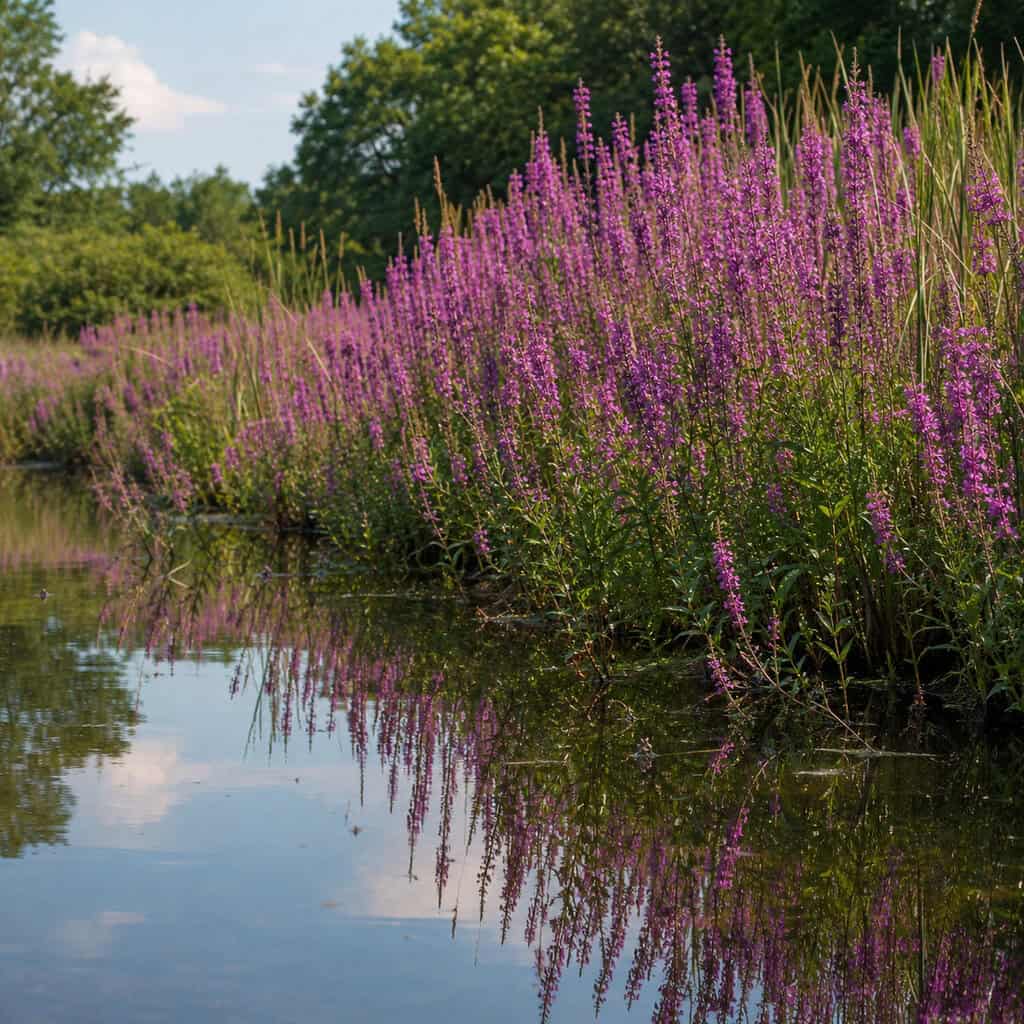
Tall magenta spikes that light up a wet ditch in July. It’s beautiful from a passing car, which is exactly how it spread.
This is a wetland invader, not a backyard ground cover, but it earns a spot because the same logic applies — one pretty plant, one ruined ecosystem.
A single mature plant produces over two million seeds a year. It carpets marshes and chokes out the cattails and sedges that wildlife actually needs.
It’s banned for sale across much of the Northeast and Midwest. If a nursery still offers it, walk away — and tell them why.
Conclusion
Notice the pattern. Almost every plant here was sold as a solution to a chore: cover the slope, fill the shade, never mow again.
The plants that solve that chore the fastest are the ones that can’t tell where your yard ends. Fast and tidy don’t come in the same pot very often.
Before you buy anything labeled “vigorous,” “spreads easily,” or “low-maintenance ground cover,” look up whether your state lists it. The five minutes you spend reading beats the five years you’ll spend digging.
The best ground cover is one you can still walk away from.
Angelina sedum is another wildly spreading plant that can take over a bed very quickly.