

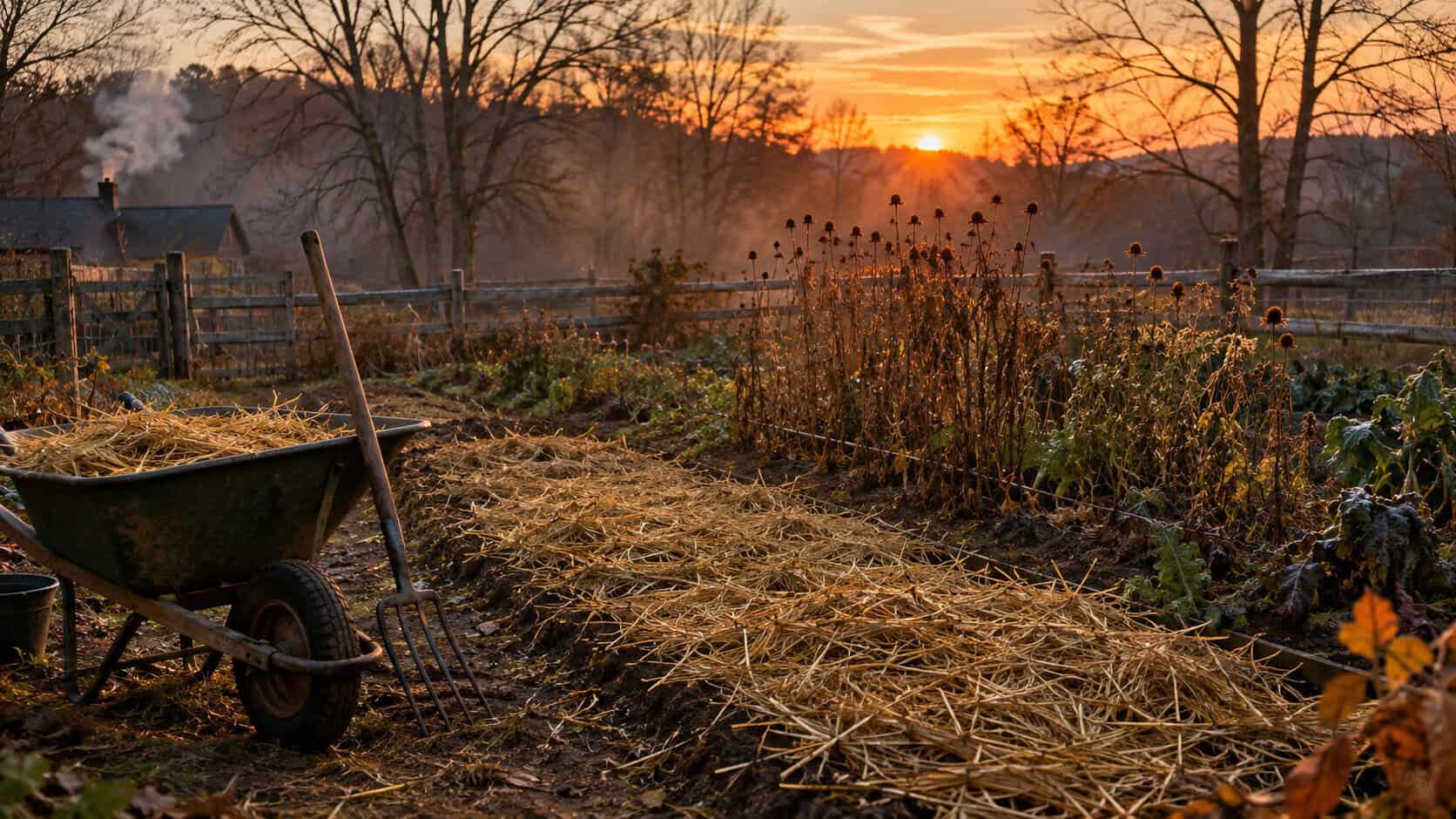
October smelled like woodsmoke and wet leaves at her house. The garden was half wrecked — blackened tomato vines, a bean row gone to string — and she was out there anyway in a cardigan and rubber boots.
She wasn’t cleaning up. She was setting things up.
Almost everything that went right in her garden the following May was decided in a three-week window in the middle of October. Not with products. With timing, and a few habits she never bothered to explain because she assumed you were watching.
Most of it still works. Some of it works better than anything sold in a bag today.
Here are 33 things she did in October that carried the garden straight through winter.
1. Waiting Until the Ground Froze to Mulch
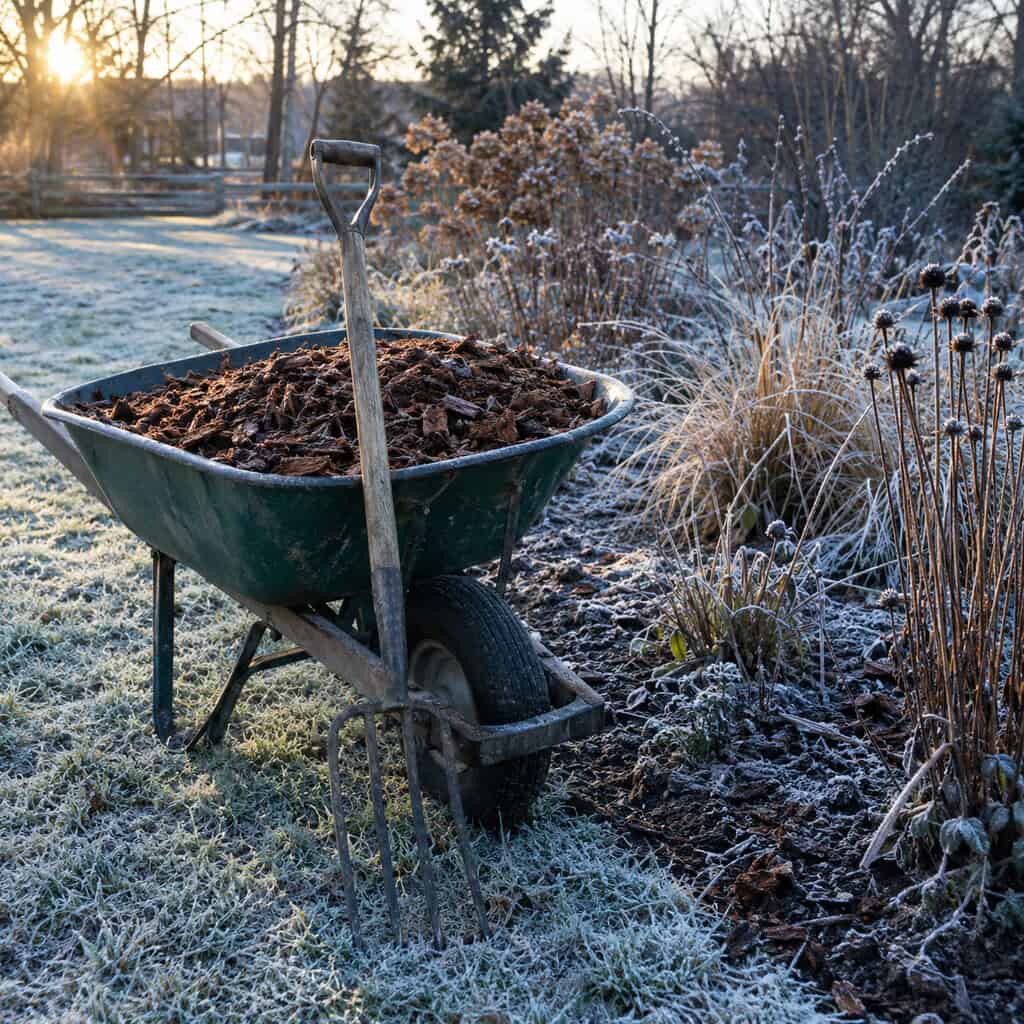
This is the one that trips up nearly everyone. Winter mulch isn’t a blanket to keep roots warm — it’s there to keep the soil uniformly frozen.
Pile it on in early October and you trap heat and moisture right when the plant is trying to shut down. Crowns rot. Voles move in. Dormancy gets delayed.
She waited for several hard frosts, sometimes into mid-November, then spread it. The point was stopping the freeze-thaw cycle that heaves perennials halfway out of the ground by February.
Late mulch protects. Early mulch smothers. University of Missouri Extension makes the same distinction about winter mulching depth and timing.
2. Hilling Soil Over the Rose Bushes
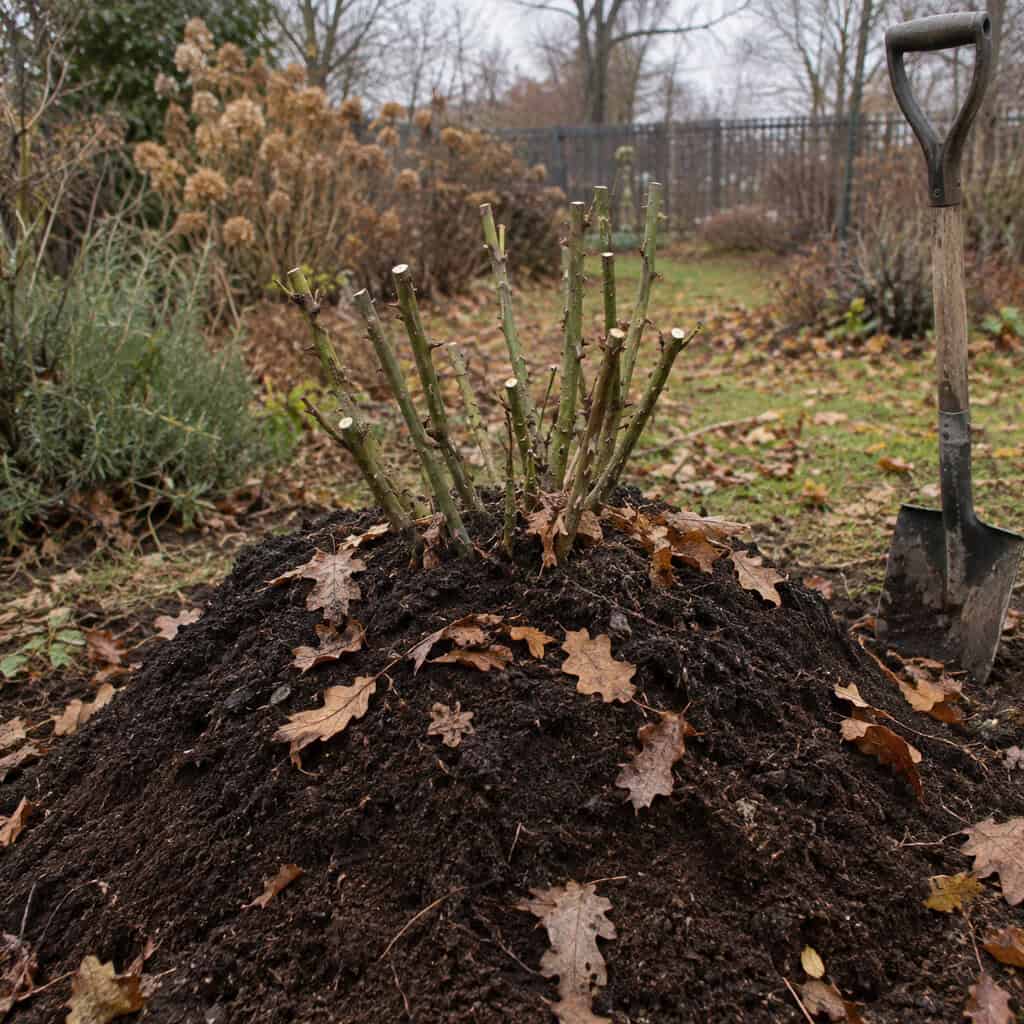
Before anybody sold styrofoam cones, the whole neighborhood mounded dirt.
Ten to twelve inches of loose soil or finished compost, heaped up over the graft union. Not scraped from around the plant’s own roots — hauled in from elsewhere. Then once the ground froze, another foot of oak leaves or cut evergreen boughs went over the mound.
The detail she understood and most people miss: the material has to drain. Wet and cold kills a rose far faster than dry and cold does. Heavy clay packed against a graft union is a rot factory.
3. Green Tomatoes Wrapped in Newspaper

A cardboard box on the cellar steps, every green tomato in its own newspaper sleeve, ripening one at a time through November.
Some years she skipped the wrapping entirely and pulled the whole vine, roots and all, then hung it upside down from a garage rafter. The fruit kept ripening off the plant.
Either way the bed came clean before frost turned everything to mush. Fresh tomato slices at Thanksgiving felt like getting away with something.
4. Garlic Planted Around Columbus Day
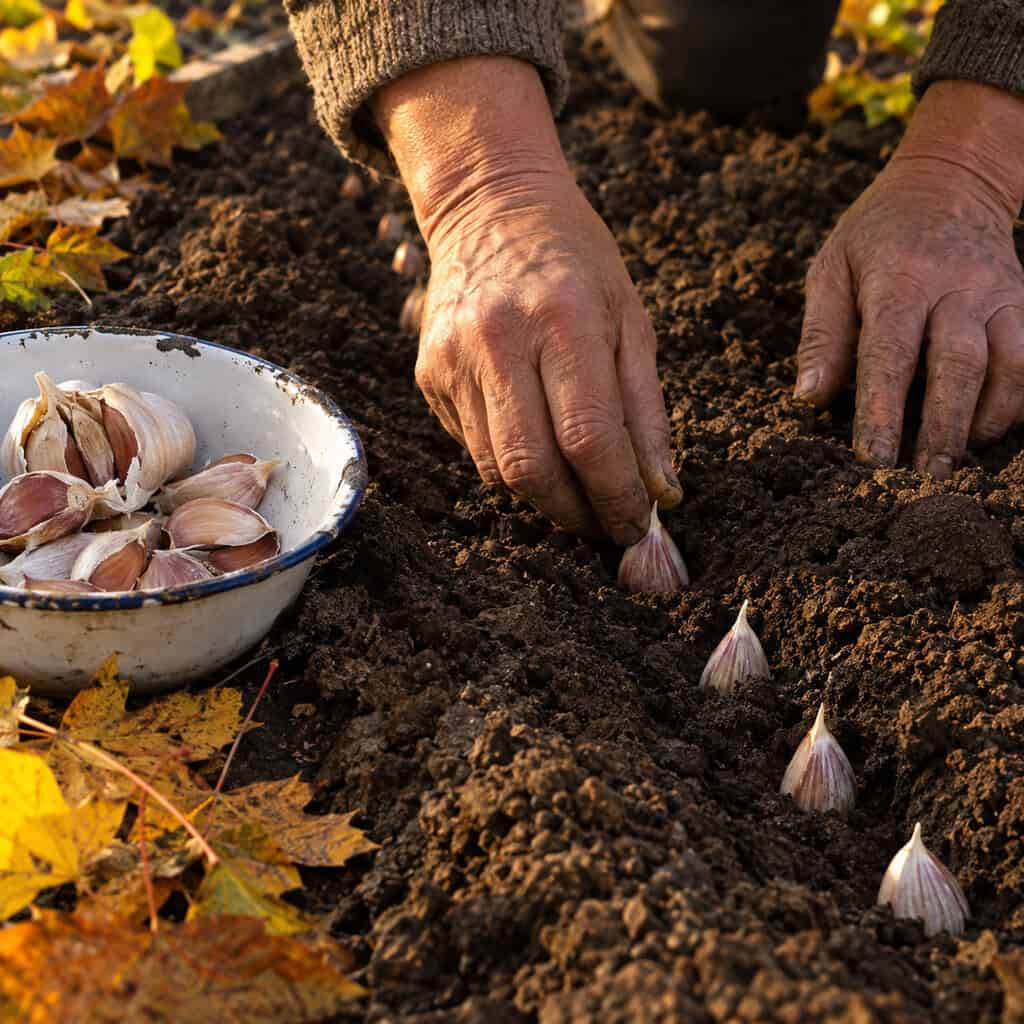
The folk calendar said plant on Columbus Day weekend and harvest around the Fourth of July. It’s still about right across the northern half of the country.
Plant too early and the cloves send up green shoots that winter burns off. Too late and the roots never take hold. Mid-October splits the difference — enough warm soil to root, not enough to sprout.
Cloves went in pointy end up, four inches apart, then a few inches of straw over the row. She never bought seed garlic. She just saved the biggest heads from July.
5. Deep Watering the Evergreens Before Freeze-Up
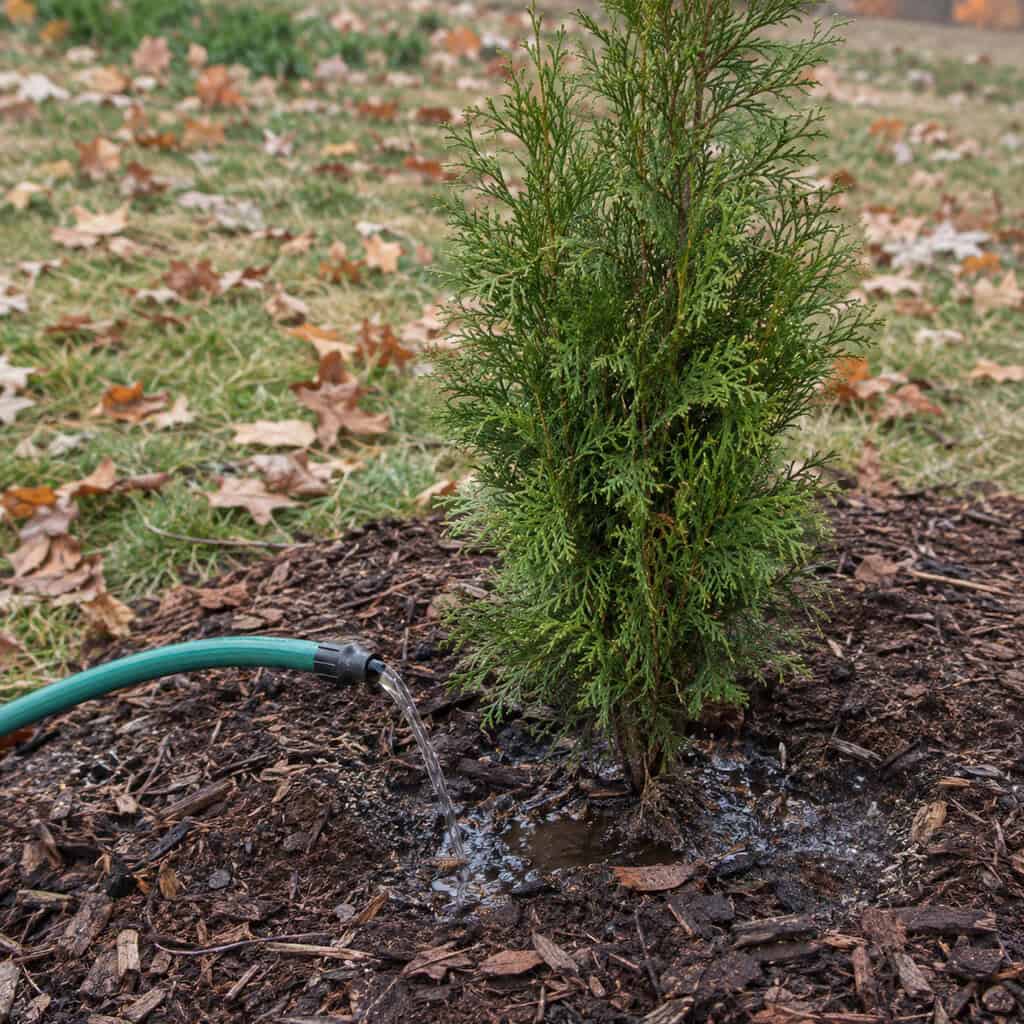
Watering in October feels wrong. Do it anyway.
Evergreens keep transpiring through their needles all winter, but once the soil freezes solid they can’t replace a drop. That’s what causes the brown, scorched-looking foliage people blame on cold snaps. It’s drought, not frost.
In a dry fall she soaked the yews and arborvitae slowly — ten to fifteen gallons a week for anything young — right up until the hose came off. Newly planted evergreens got the most, because their roots hadn’t spread past the planting hole yet.
6. Digging the Dahlias and Gladiolus
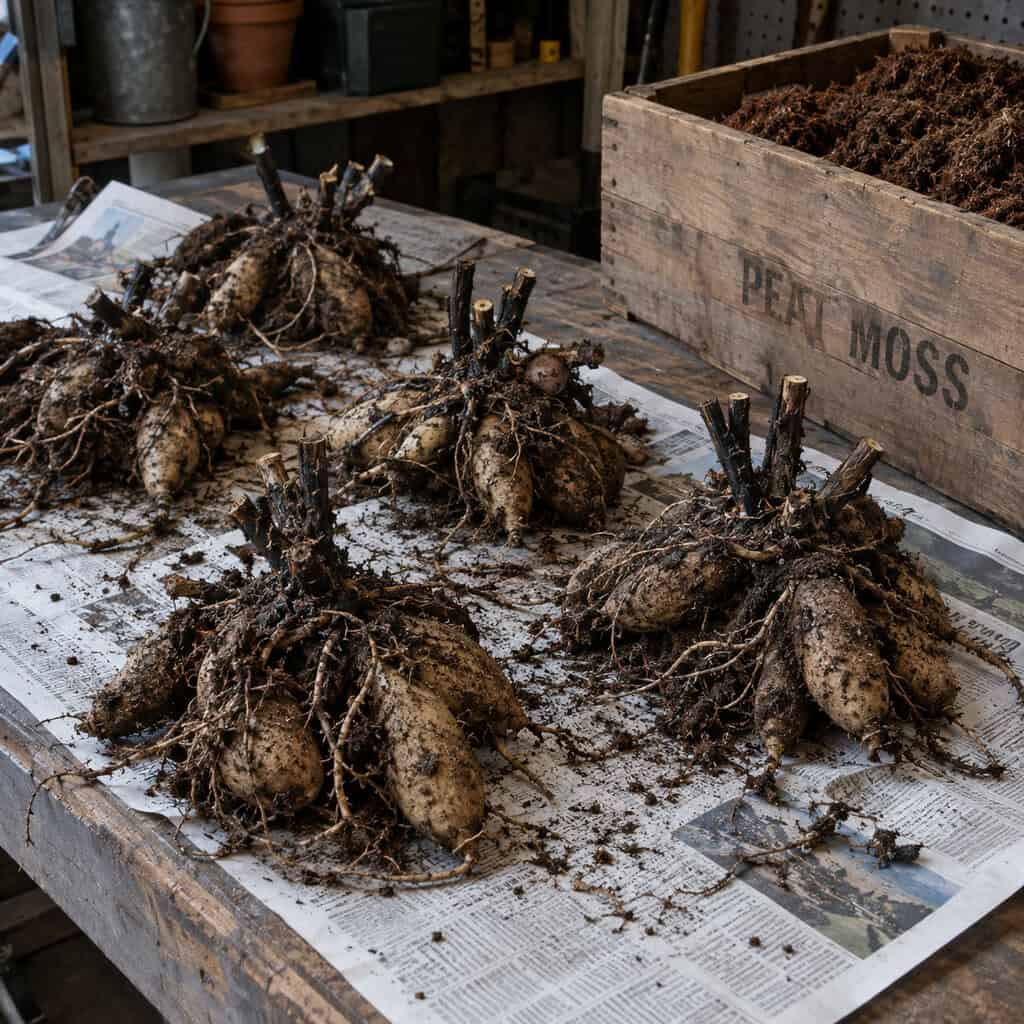
She waited for the first frost to blacken the tops. That’s the signal, not the calendar.
Then the clumps came up with a spading fork, got hosed off and left to cure a week somewhere dry, and went into cardboard boxes of peat moss or sawdust. Cannas and caladiums rode along in the same crate.
A dozen dahlia tubers is sixty dollars at a garden center in May. Hers were free, year after year, and the same dark red one kept showing up in every photo from 1961 onward.
7. Burying Kitchen Scraps Right in the Empty Rows
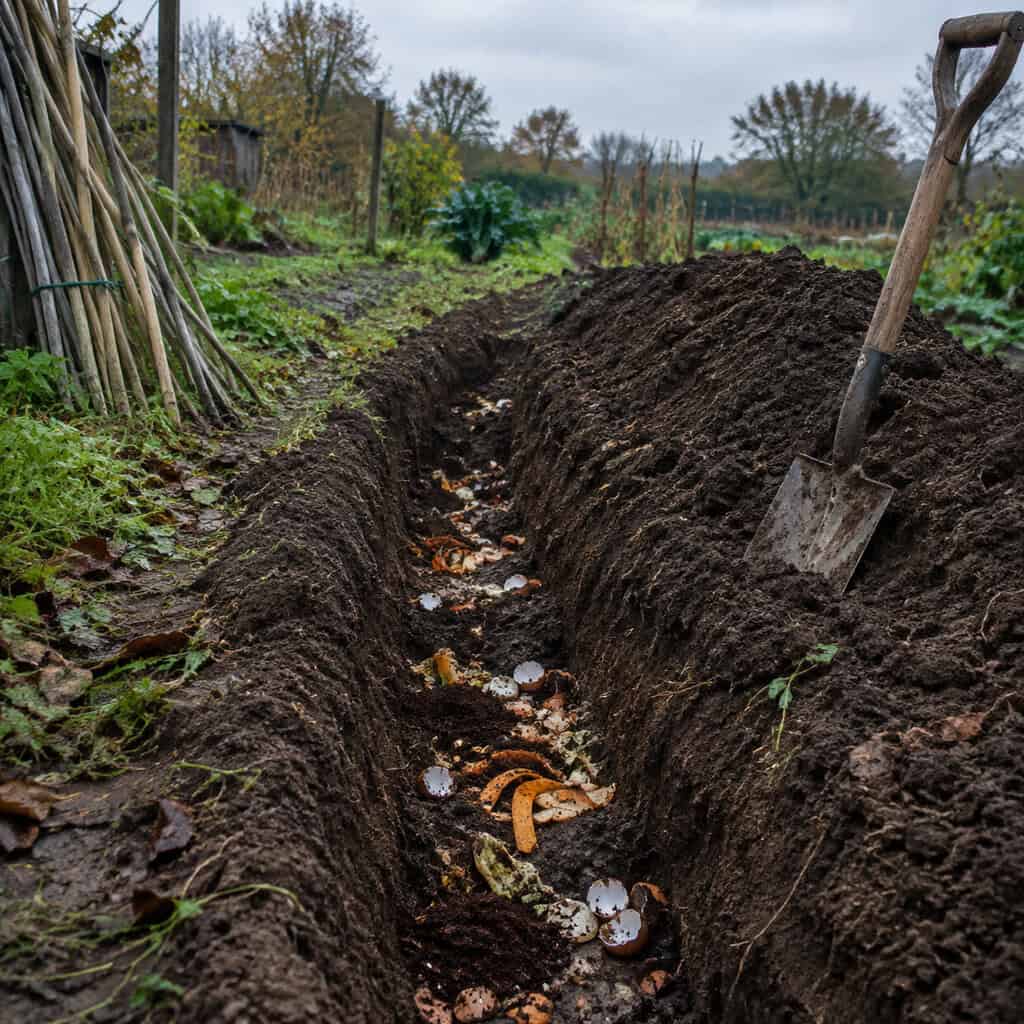
No bin. No tumbler. No thermometer stuck in a pile.
She dug a trench a foot deep where next year’s beans were going and buried peelings, coffee grounds and crushed eggshells in it all winter, moving down the row as she filled it. Snow on top, worms underneath.
By May that strip was black and crumbly and the beans knew it. If you’d rather run an actual pile, composting the usual way gets you there too — it just takes more equipment than a shovel.
8. Carrots and Beets Packed in Damp Sand

Tops snapped off an inch above the crown. Roots layered into a wooden crate so no two touched, damp sand between every layer.
Damp — never wet. Wet sand rots the shoulders.
Held around 35°F with high humidity, those carrots stayed snapping-crisp until spring without a refrigerator anywhere in the picture. Beets did the same. She’d dig one out in February and it tasted like September.
9. Leaf Collars Wired Around the Tender Shrubs
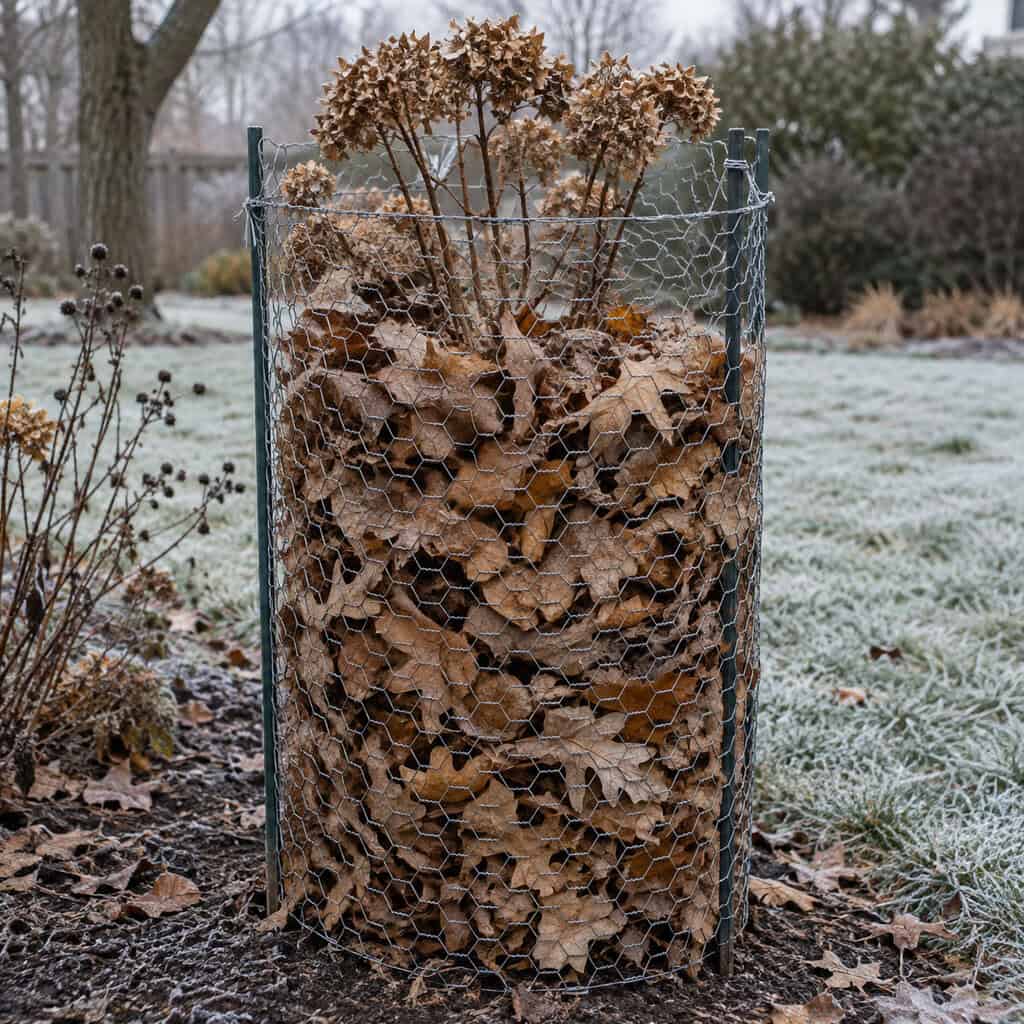
A cylinder of chicken wire staked around a hydrangea or a young boxwood, then stuffed full of dry oak leaves.
Oak leaves specifically, because they’re curled and stiff and don’t mat down into a wet mass the way maple leaves do. Air stays in the pile, and air is the insulation.
It’s the homemade ancestor of every insulated shrub wrap sold today, and extension horticulturists still rate the collar-and-leaves method above plain soil mounding for tender woody plants.
10. Leaving the Seed Heads Standing

Her fall cleanup was selective. Coneflower, sedum, rudbeckia and ornamental grasses all stayed up.
Standing stems catch drifting snow, and snow is the best insulation a perennial bed ever gets. Goldfinches and juncos worked the seed heads all winter. Hollow stems housed overwintering native bees.
The whole “leave the leaves” movement is rediscovering what she never stopped doing — University of Illinois Extension now spells out exactly which debris to leave for pollinators. And frankly, frost on a sedum head beats bare mulch in January.
11. Hardware Cloth Collars on the Young Tree Trunks
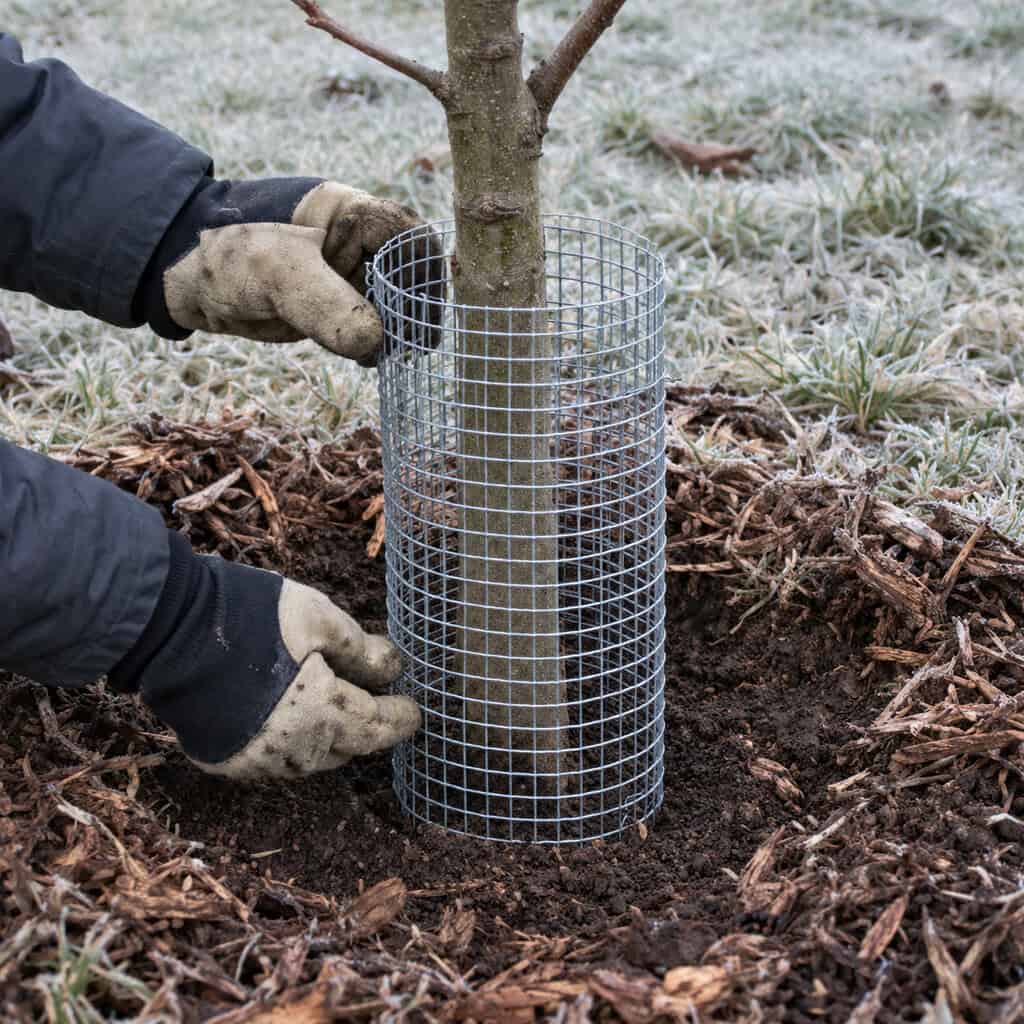
This one saved trees, and losing a young tree to something this preventable stings for years.
Under snow cover, meadow voles chew bark at the soil line and rabbits work higher up — as high as the snowpack lets them reach. If they chew a complete ring around the trunk, the tree is girdled. Water still goes up, sugars can’t come down, and the thing leafs out weakly in May and dies by August. You didn’t lose it to winter. You lost it in November and found out in August.
The damage is easy to spot once you know it. Vole work looks like narrow irregular gnaw marks, roughly an eighth of an inch wide, running at odd angles right at ground level, often hidden under mulch. Rabbit damage is cleaner — a sharp 45-degree clip on twigs and bark stripped in patches a foot or two up the trunk.
Her fix was a cylinder of quarter-inch hardware cloth, tall enough to clear the expected snow depth by a few inches, set an inch or two into the soil so nothing tunnels under. Quarter-inch mesh matters: half-inch lets young voles through. Leave a couple inches of gap between the mesh and the bark so it doesn’t chafe, and check the diameter every fall as the trunk fattens.
Then she pulled the mulch back. A volcano of mulch against a trunk is a heated, hidden vole apartment with food on the walls. Bare soil for three or four inches around the base, mulch spread flat beyond that.
Fruit trees got the collars first. Then the young maples. It took ten minutes a tree and it was the cheapest insurance in the yard.
12. Geraniums Pulled Up and Hung Bare-Root in the Cellar

Yank the whole plant, shake the soil off the roots, and hang it upside down from a nail in the basement. Or drop it in a paper grocery bag on a shelf.
It looks like an act of violence. It works because old cellars ran cool and damp — about 50°F — and a dormant geranium asks for almost nothing.
In March the roots went into a bucket of water overnight, then into fresh potting soil, and the thing leafed out like nothing had happened. Same geranium in the same porch pot for fifteen years.
13. Straw Over the Strawberry Bed
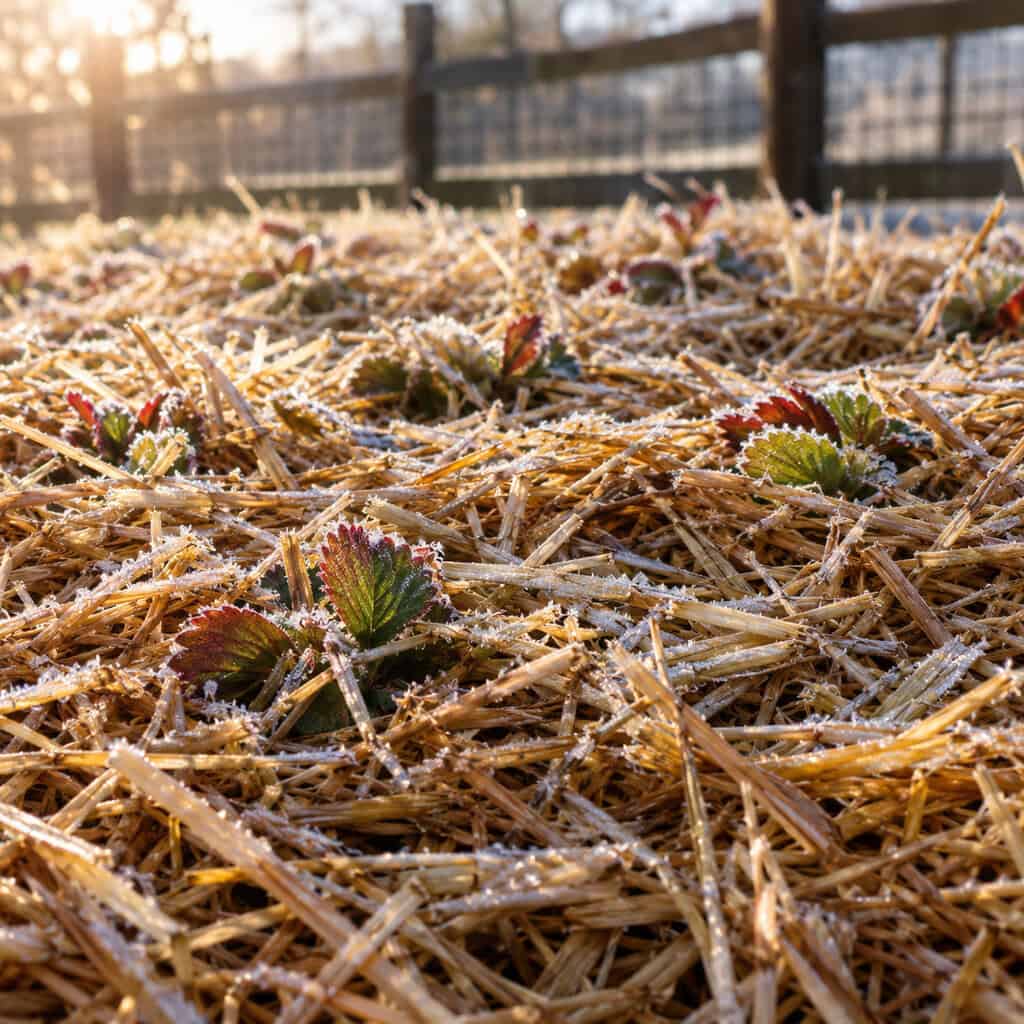
The name is the instruction.
Three to four inches of loose straw over the whole bed — but only after several hard freezes, once the plants have hardened off and gone fully dormant. Cover them while they’re still growing and you get mold and rotted crowns.
Strawberry crowns sit right at the soil surface, which makes them the first casualty of freeze-thaw heaving. The straw stops the soil from cycling. In April she raked it into the aisles and left it there for clean fruit.
14. Winter Rye Sown Over the Empty Vegetable Garden
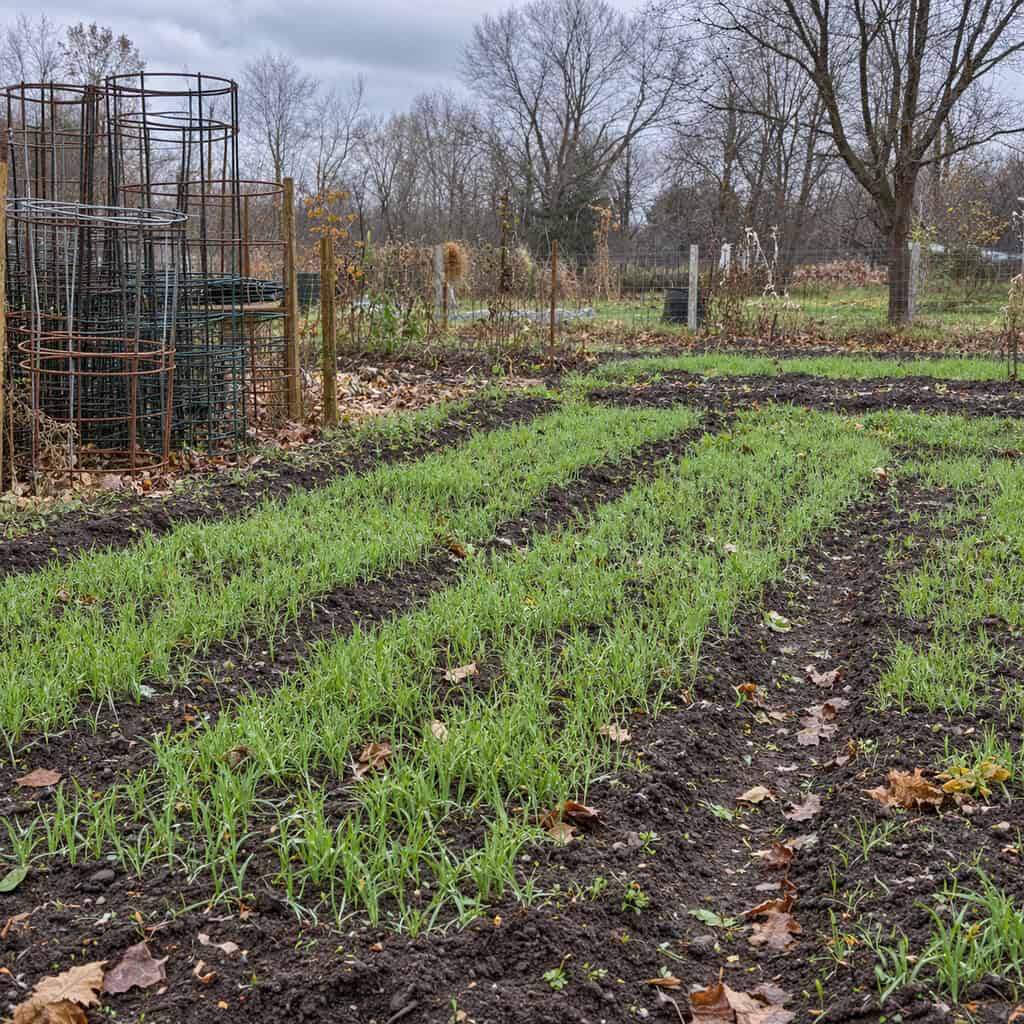
Green manure, the farmers called it. Broadcast the rye over bare rows in early October, rake it in, walk away.
Rye germinates in soil too cold for almost anything else. By Thanksgiving there’s a green fuzz holding topsoil against every winter rainstorm, and roots down deep breaking up compaction.
Turn it under in April, wait two weeks, plant. Free organic matter, no bag, no truck. It’s a large part of why her soil looked like chocolate cake while the neighbor’s looked like a driveway.
15. Digging and Dividing the Peonies
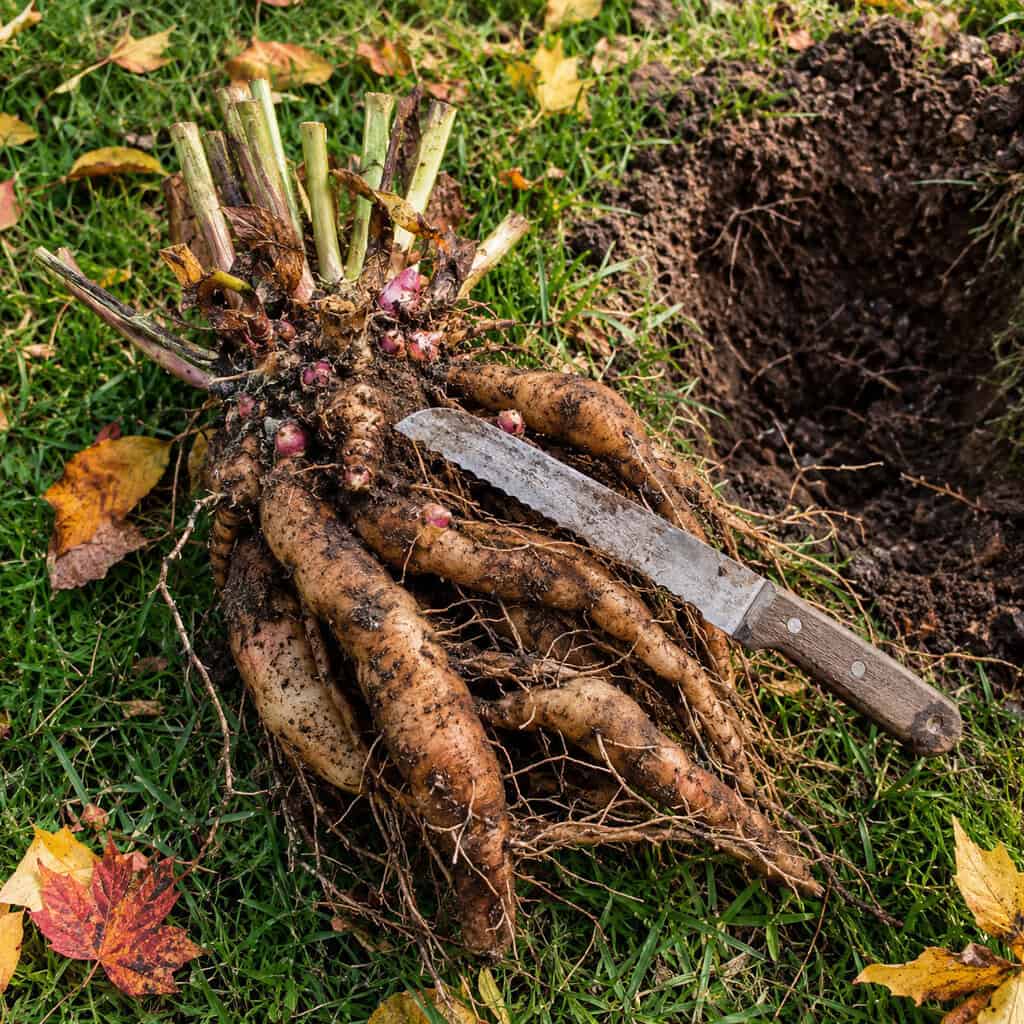
Peonies are the one perennial that will not tolerate a spring move. September into October, or don’t bother.
She lifted the clump, hosed the crown clean, and cut it into pieces with three to five eyes each using an old bread knife. Then the part everyone gets wrong: the eyes go no more than one to two inches below the finished soil surface.
Plant a peony four inches deep and it will grow lush foliage and refuse to bloom for a decade. Every “my peony never flowers” story in America traces back to that one mistake.
16. Curing the Winter Squash Before It Went Down Cellar

Hubbards, butternuts and pie pumpkins came in with the stems left on — two inches of stem, like a handle you’re forbidden to carry it by.
Then a week or two somewhere warm and dry, around 80°F: the back porch in the sun, or the furnace room. The rind hardens and small scrapes heal over.
After curing they went to a cool, dry shelf — never the damp root cellar with the carrots. Different crop, different climate. Cured squash lasted until February. Uncured squash collapsed into a puddle by Christmas.
17. Bulbs Planted Only After the Soil Cooled
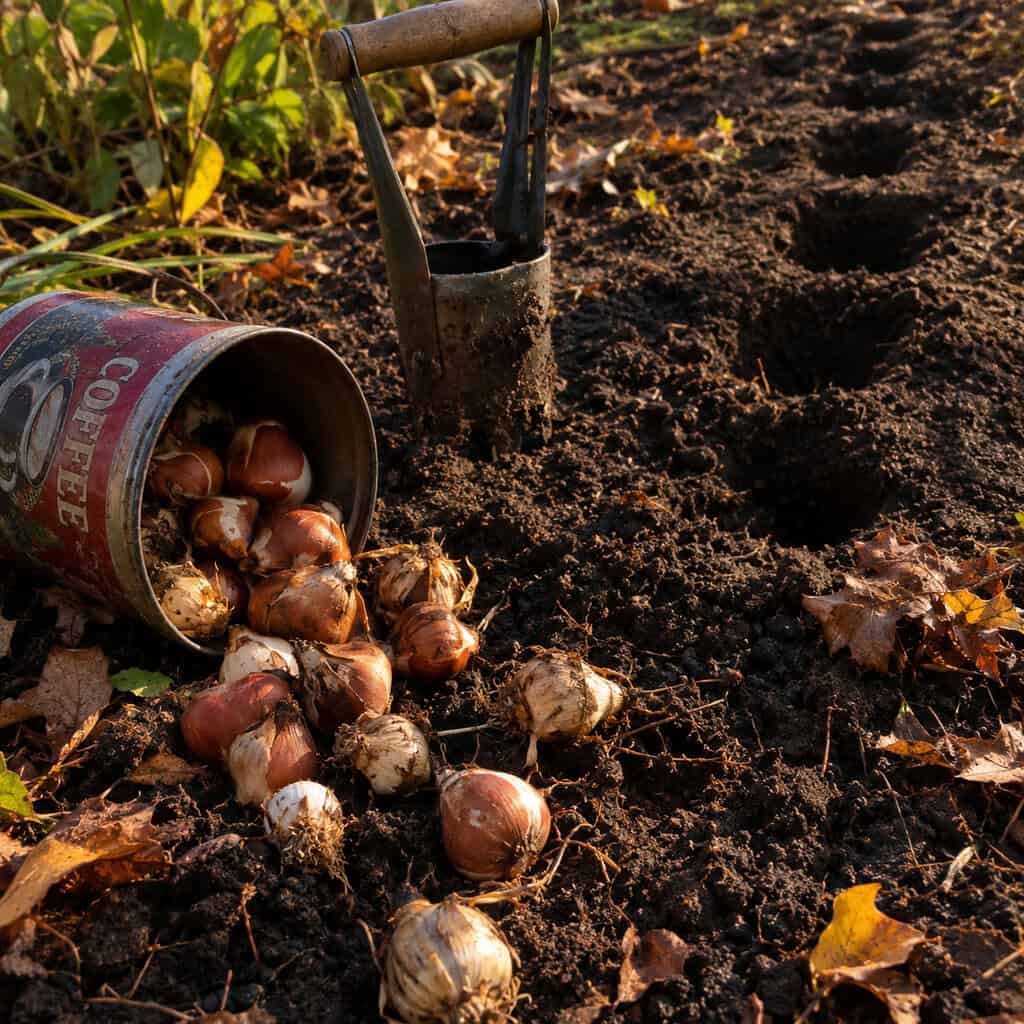
Tulips and daffodils went in late on purpose, usually after the first frost, sometimes the week before the ground stiffened.
Warm soil pushes premature top growth, and then winter kills it. Cool soil lets roots form without any shoot at all — which is exactly what you want.
Depth rule: about three times the bulb’s height, pointy end up. Every grandchild in the country has been drafted into that job, kneeling on cold dirt, handed a coffee can of bulbs and told to space them a fist apart.
18. The Leaf Mold Pile Behind the Garage
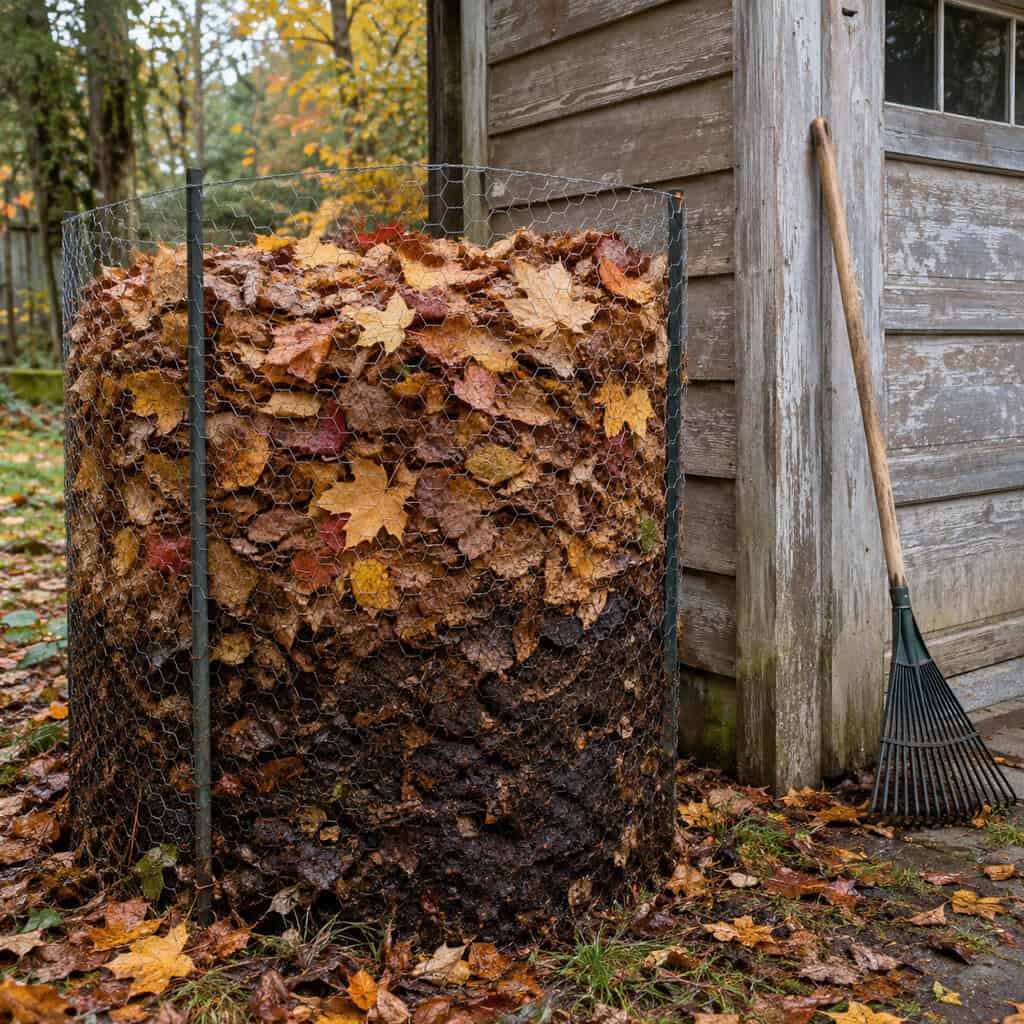
Leaves were never trash at her house. Nobody dragged forty bags to the curb.
They went into a hoop of chicken wire behind the garage and sat there for two years, doing nothing, needing nothing. What came out the bottom was leaf mold — dark, spongy, sweet-smelling stuff that outperforms most bagged amendments and costs zero.
It also kept a wet mat of maple leaves off the lawn all winter, which is its own kind of save. A layer like that left in place will smother turf right through to bare dirt — one of the quieter winterizing mistakes that kill lawns before spring.
19. The Cold Frame Under the Old Storm Windows
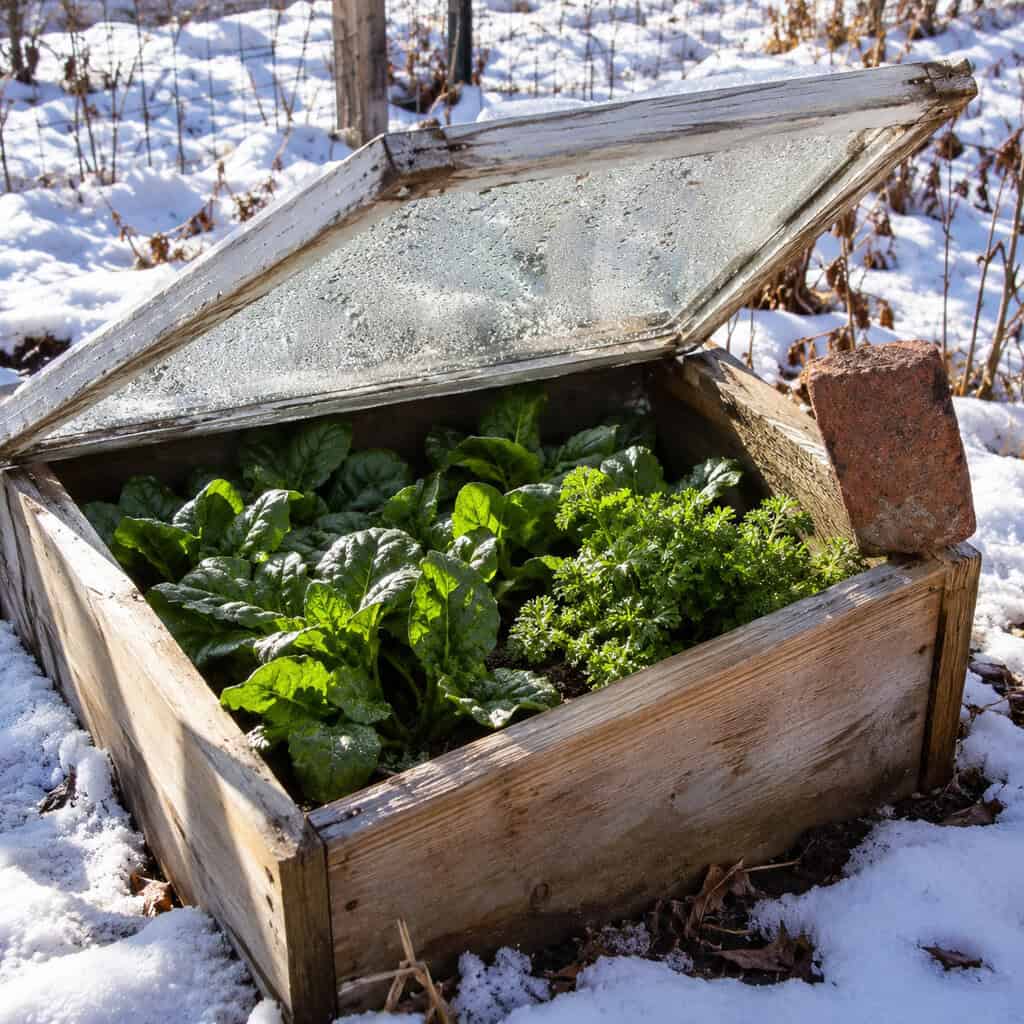
A bottomless wooden box, knocked together from scrap, taller in back than in front. A salvaged storm window sash laid on top. A brick to prop the sash open on sunny days so nothing cooked.
Spinach, mâche and parsley kept producing into December in there — sometimes past it. Snow on the glass, salad underneath.
In February the same frame got a foot of fresh horse manure dug in beneath it, which heated as it broke down and turned the whole thing into a hotbed. Seedlings in the snow, heated by nothing but rot.
20. Cutting Down the Peony and Iris Foliage — and Never Composting It
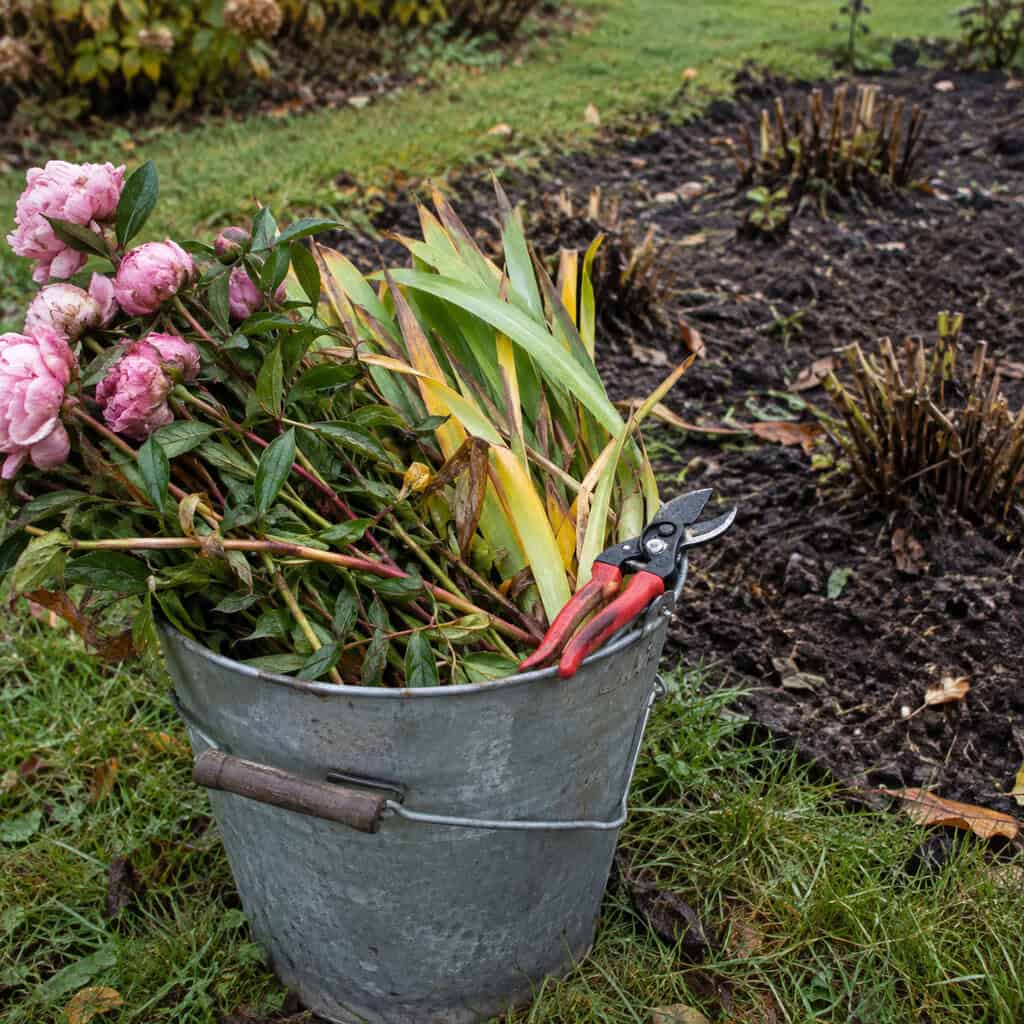
Selective cleanup means knowing which plants are the exception.
Peony leaves carry botrytis spores that overwinter in the debris and re-infect the crown in spring. Iris foliage hides iris borer eggs laid right at the base. Both got cut flat to the ground in October.
And neither went in the compost pile. Burned, or bagged for the curb. Home piles rarely run hot enough to kill either one, and all you’d be doing is spreading the problem around next May.
21. Parsnips and Carrots Left in the Ground Under a Hay Blanket
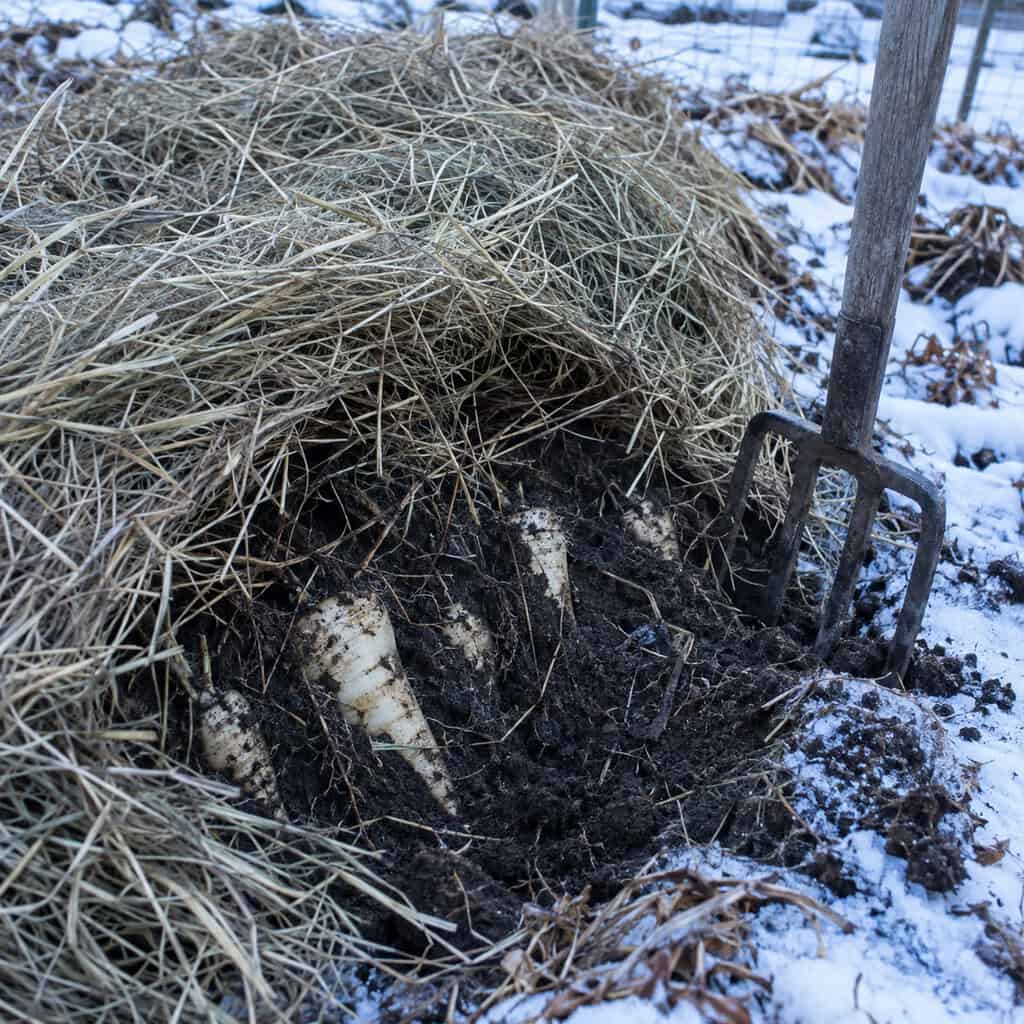
Half the root crop went to the cellar. The other half stayed right where it grew.
Frost triggers parsnips to convert stored starch into sugar, so a parsnip pulled after a hard freeze tastes sweeter than one dug in October. Cold makes the crop better, not worse.
A foot of loose hay over the row kept the ground from locking up solid. She’d go out in January with a fork and a flashlight and dig dinner out from under the snow.
22. Bulbs Potted Up for Forcing in the Cellar

While she was planting the outdoor bulbs she potted a few extra — hyacinths, tulips, paperwhites — into clay pots and set them on the cellar floor.
Twelve to fifteen weeks of cold dark, checked occasionally for moisture. Then up to a sunny kitchen window in January, where they’d shoot up in about three weeks.
Hyacinths in bloom on a table in the dead of winter, the whole room smelling like April. That was the entire point of the exercise.
23. A Load of Aged Manure Spread Over the Beds
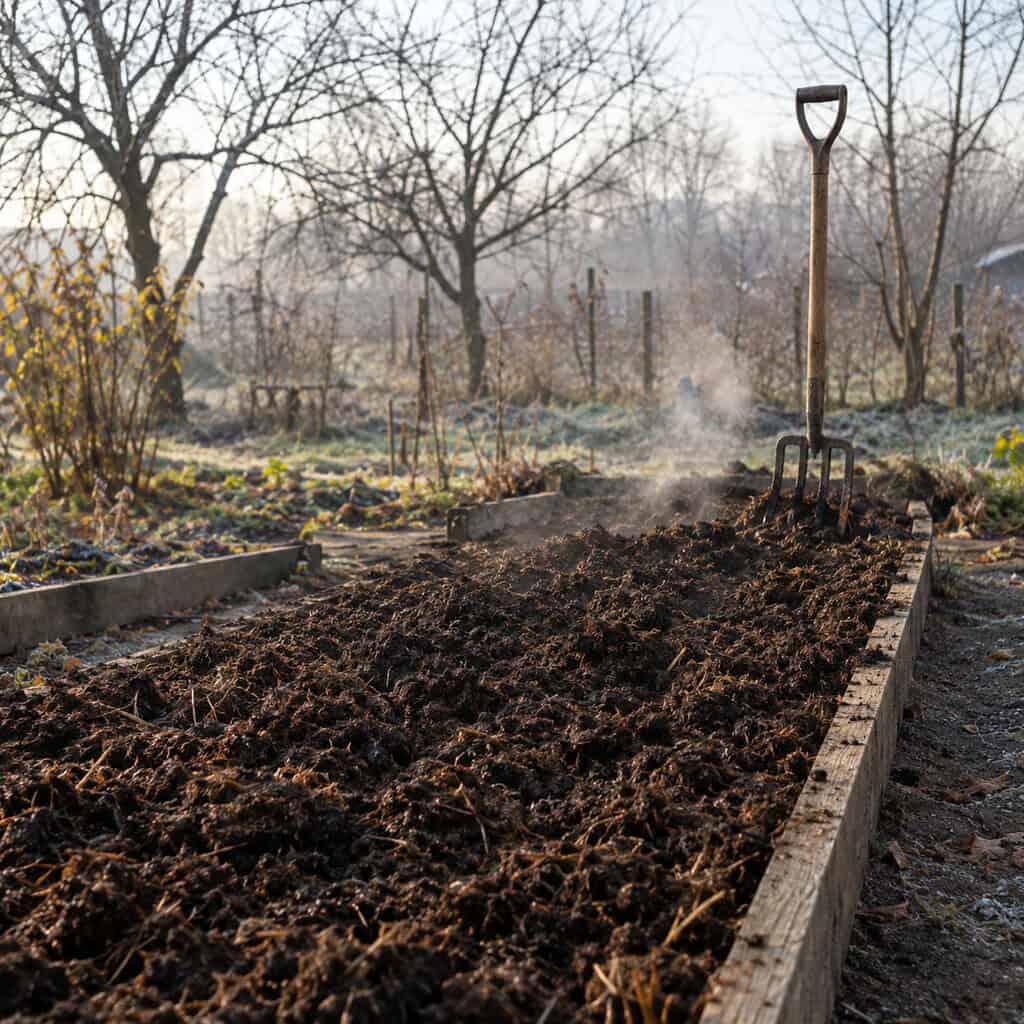
October, not spring. That timing is the whole trick.
Spread it in fall and let it sit through rain, snow and freeze-thaw. By May the harsh ammonia salts have leached off and the coarse material has broken down into something plants can actually use.
The same manure applied in April burns roots and scorches seedlings. Applied in October, it’s perfect by planting time — and the frost does the tilling for you.
24. Raking Up Every Windfall Apple
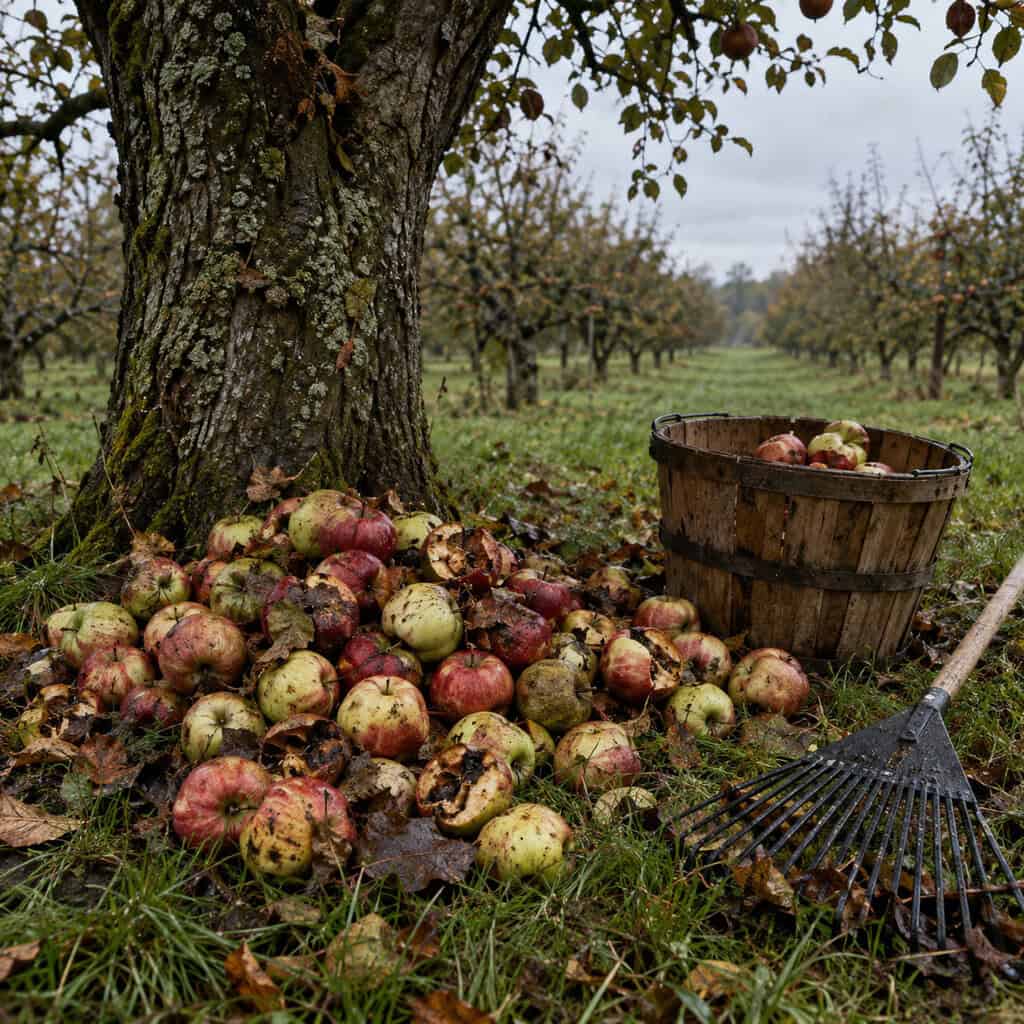
The drops on the ground under a fruit tree look like waste. They’re actually next year’s pest population, sitting there waiting.
Codling moth is the classic wormy-apple culprit. The larva tunnels straight to the core, feeds, then chews its way out and crawls down to overwinter as a cocoon under loose bark or in ground litter and debris around the base of the tree. Come spring it pupates, emerges as a moth, and lays eggs on the new fruit. Leave the drops and the litter and you’ve hosted the entire cycle for free.
Apple maggot works differently and arguably worse. The female stings the skin and lays eggs inside the fruit, the larvae tunnel through the flesh leaving brown winding trails, and then the infested apple drops early. The maggot exits into the soil and overwinters as a pupa a couple inches down, directly beneath the tree it came from.
So her October rule was blunt: not one apple stays on the ground. Rake them, bag them, and get them off the property or bury them deep — don’t toss them on the compost pile at the edge of the orchard, which just relocates the nursery.
She raked the leaf litter under the trees too, and scraped loose flaking bark off the older trunks where codling moth cocoons hide.
One afternoon of raking, repeated every fall, cut the wormy-fruit rate dramatically without a drop of spray. It’s the oldest pest control there is, and it’s still one of the most effective — sanitation beats chemistry when the pest spends winter in the mess you left behind.
25. Parsley, Chives and Rosemary Potted for the Kitchen Window
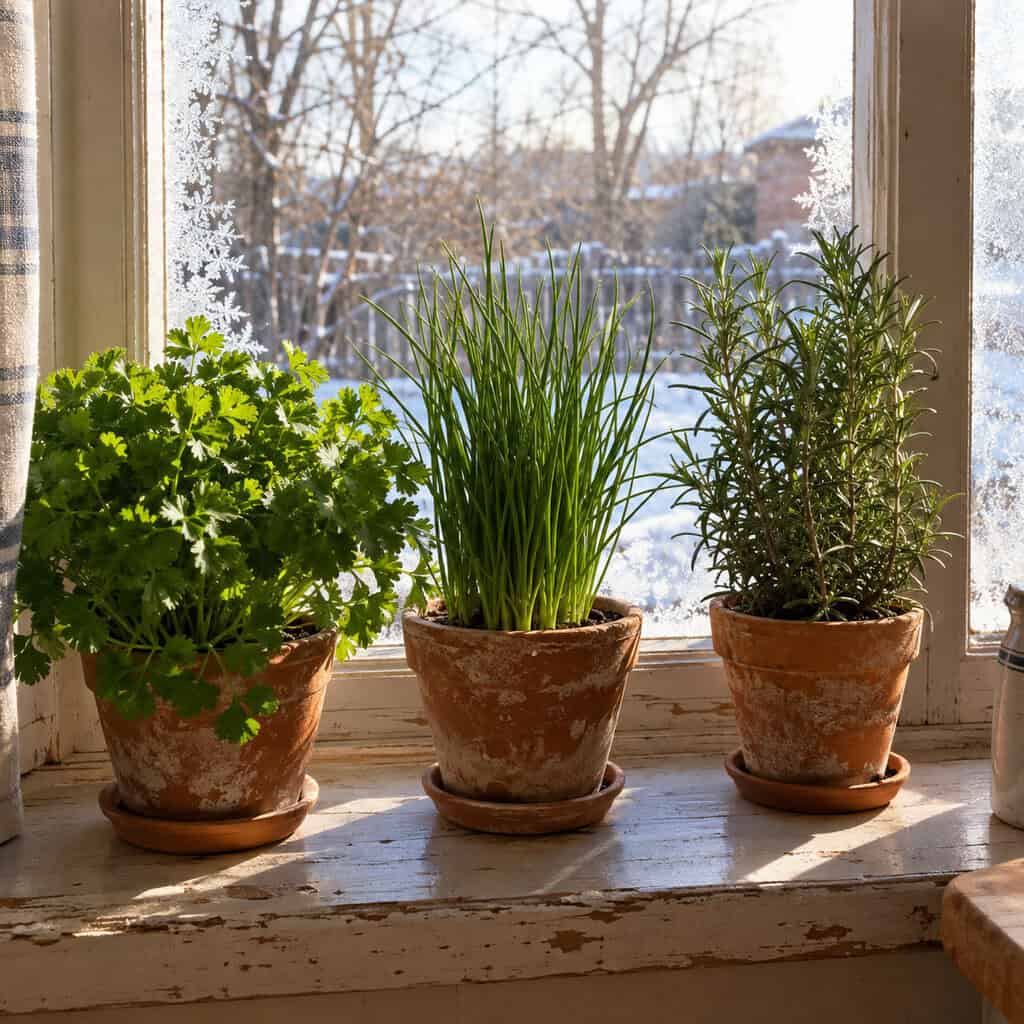
Rosemary came in before the first frost, no exceptions — it won’t survive one in most of the country.
Chives got the opposite treatment. She dug a clump and deliberately left it outside in a pot to freeze hard for a few weeks, because chives need a dormancy period before they’ll sprout indoors. Bring them straight in from the garden in September and they just sulk.
Parsley transplanted well enough to keep clipping through February. Three pots on a south sill, fresh green all winter, nothing spent.
26. Wood Ashes From the Stove Scattered on the Garden
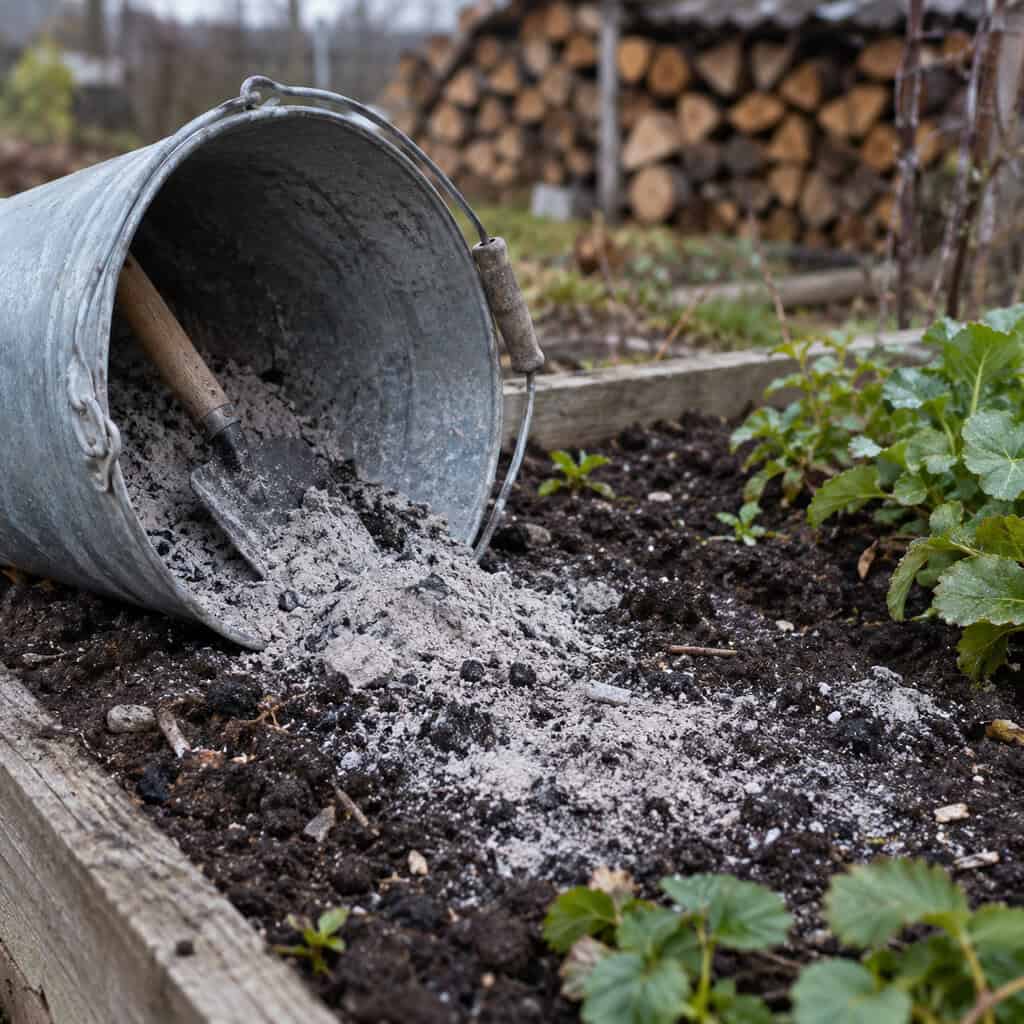
The ash bucket got emptied onto the vegetable beds, not into the trash.
Wood ash supplies potassium and calcium and raises pH, which was welcome on the acid soils east of the Mississippi. Genuinely useful, and genuinely easy to overdo — a heavy hand can push pH high enough to lock out nutrients for years.
She spread it thin, like flour on a counter, and never near the blueberries, the potatoes or the azaleas. Those want acid ground, and ash is the fastest way to ruin it.
27. Draining the Hose and Shutting the Outdoor Spigot

The last October chore, done in fading light, and the one modern homeowners skip more than any other.
Hose disconnected. Interior shutoff valve closed — usually in the basement or crawlspace, a few feet back along the same pipe. Then the outside spigot opened and left open so whatever water sits in that stub of pipe can drain out instead of sitting there. Hoses drained, coiled, hung in the shed.
Here’s what’s at stake. Water trapped in a supply line expands as it freezes, and the pressure it generates splits copper like a seam. The split usually isn’t at the spigot where you’d see it — it’s a foot or two back inside the wall cavity, where the pipe crosses into heated space.
You often don’t find out in January. You find out the first warm day when the ice thaws, the line pressurizes, and water pours into the wall behind your kitchen. By the time a stain shows up on the ceiling you’re looking at drywall, insulation, framing and possibly flooring — water damage remediation on a burst supply line routinely runs into the thousands, and mold follows if it sat.
Frost-free sillcocks help, since the actual valve seat sits back inside the heated wall. But they only work if you disconnect the hose. Leave a hose attached and water can’t drain out of the long stem, which defeats the entire design and freezes it anyway.
Five minutes in October. That’s the whole insurance policy.
28. Burlap Screens Staked Around the Arborvitae and Boxwood

Not wrapped. Screened.
She drove two or three stakes on the windward side of the plant and stapled burlap to them, leaving the top open and the leeward side clear. Wrapping burlap tight around an evergreen traps moisture, blocks light and encourages rot.
A screen blocks the desiccating wind and the salt spray thrown off the road by plow trucks, while air and light still move through. It’s the reason the driveway hedge never browned out on one side while the neighbor’s did every single March.
29. Clean Tools Plunged Into a Bucket of Sand and Oil

A five-gallon bucket of builder’s sand in the corner of the shed with a quart of old motor oil or boiled linseed oil worked through it.
Shove the spade in and pull it out a few times. It comes out scoured clean of soil and coated in a film of oil. Same for the hoe, the trowel, the fork.
Wooden handles got rubbed down with linseed oil so they wouldn’t crack. Pruner blades got sharpened and the pivot oiled. Nothing in that shed was ever rusted shut in April.
30. Asparagus Ferns Cut Down and the Crown Fed
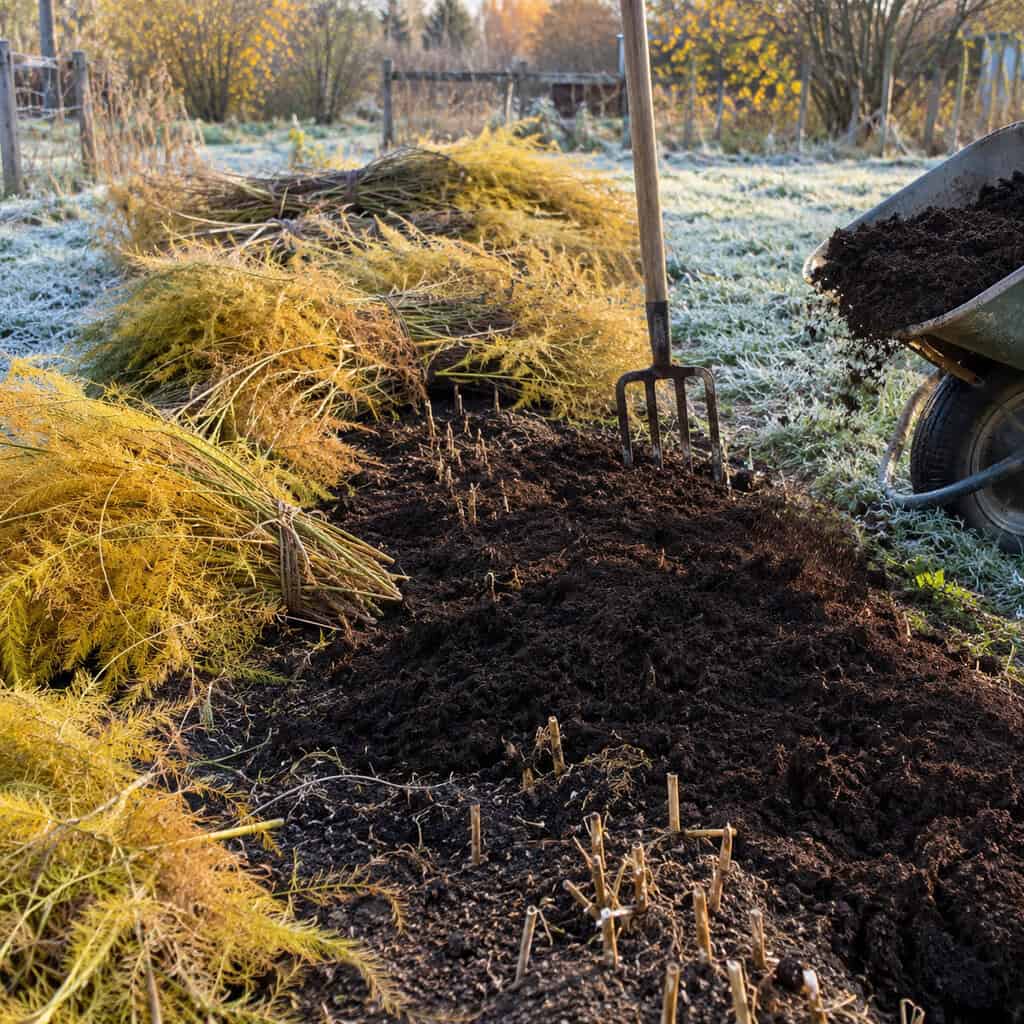
Patience first. The ferns had to yellow completely before anything happened, because right up until then the plant is pumping sugars down into the crown for next spring’s spears.
Cut early and you get a weaker harvest. Every time.
Once they yellowed she cut them flat at the ground and hauled them off — which removes overwintering asparagus beetle eggs stuck to the stems — then top-dressed the whole row with compost or aged manure. That bed produced for twenty years running.
31. Stakes Marking Where the Late Sleepers Slept

Balloon flower, hardy hibiscus, butterfly weed. All three sleep so late in spring that you’ll swear they’re dead.
Then you dig there in April and they genuinely are.
A wooden stake with the name in pencil, or an upturned clay pot over the crown, put in during October when you still remember. It cost nothing and doubled as the only written record of what got planted where — which matters more when you’re filling in around perennials that come back every year and can’t remember what’s underneath.
32. Seeds Saved in Paper Envelopes in a Coffee Tin

Tomato seeds fermented in a jar for a few days, rinsed, and dried on a plate on the windowsill. Bean and dill seeds dried right on the stalk.
Then folded into small paper envelopes — never plastic, plastic holds moisture — labeled in pencil with the name and the year, and dropped into a Maxwell House tin on the cool cellar shelf.
That tin got handed down. Somewhere out there a tomato nobody sells anymore is still coming up every June, because a woman in 1958 wrote a name on an envelope and put the lid back on.
33. Onions and Garlic Braided and Hung in the Attic

Soft-neck onions and garlic got their tops left on, dried a couple of weeks, then braided while the leaves were still pliable enough to bend without snapping.
The braid went up on a nail in the attic stairwell or the back of a closet door — cool, dry, dark, with air moving. She’d cut one off the bottom of the braid whenever the soup pot needed it.
Practical storage that happened to be beautiful. Nobody was trying for that. It just was.
None of this required money. That’s the part that gets lost — she wasn’t buying frost cloth and bulb crates and shrub wraps. She was using newspaper, sand, straw, chicken wire, an old storm window and a coffee tin.
What she was actually spending was attention, in a three-week stretch when most people had already decided the season was over.
Pick five of these this October. The garden will tell you in May which ones mattered.
Thanks
When do you pull the geraniums from the ground to hang?