


The look you’re after is simple to picture. Giant glossy leaves. Flowers the size of dinner plates. That heavy, humid, resort-at-dusk feeling where every corner of the yard drips with green.
Most people assume you need to live somewhere warm for that. You don’t.
A banana plant can regrow ten feet in a single summer as far north as New England. Palms survive winters that dip below zero. And some of the most jungle-looking foliage you can plant is hardier than a rose.
The trick is layering the right plants — a few big-leaf anchors, some bold color, and cheap fast fillers that explode in a single season. Cold-climate gardeners lift the tender ones, mulch the borderline ones, and let the tough ones ride out the winter.
Here are 26 plants that build a convincing tropical backyard, whether you’re in Florida or Fargo.
1. Elephant Ears
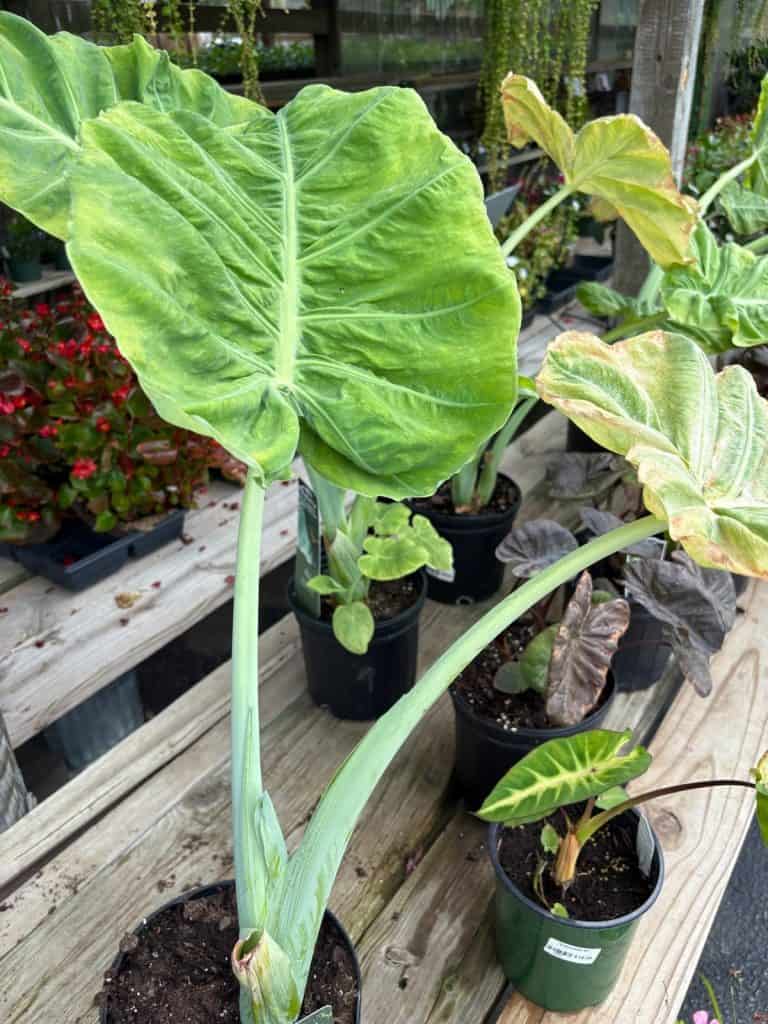
Nothing else delivers this much jungle per plant.
The upright Alocasia types throw huge, shiny, arrow-shaped leaves that can stretch up to three feet long. Plant three of them and a plain corner reads as pure rainforest by July.
They’re tender — perennial in zones 8 through 11, grown as a lifted annual everywhere colder. In fall, dig the tubers, let them dry, and store them somewhere frost-free. According to Gardenia, they want rich soil and steady moisture to hit that full size.
Start here. Everything else builds around them.
2. Colocasias

The water-loving branch of the elephant ear family. Where Alocasia points up, Colocasia leaves droop down in big heart shapes — the classic “elephant ear” silhouette.
They love wet feet. Plant them at a pond edge or in a boggy low spot and they thrive where other plants rot.
This is the same plant grown across Hawaii for taro and poi. Most types want zones 8b to 11, but the cultivar ‘Pink China’ is reported hardy all the way to zone 6, which puts a genuine elephant ear in a lot more backyards than people expect.
3. Hardy Banana

A banana leaf is the fastest way to sell the illusion. Musa basjoo makes it possible far north of the tropics.
The roots survive to zone 5 under a heavy mulch mound. The top dies back every winter, then rockets back ten feet or more each summer.
It won’t fruit in cold climates. Doesn’t matter — you’re growing it for those enormous paddle leaves waving over the patio.
Cut it to the ground after the first hard frost. Pile mulch on the stump. Walk away.
4. Cannas
The workhorse of any fake-tropics border. Paddle-shaped leaves in burgundy and bright green, topped by flamboyant red, orange, and yellow flowers.
They move fast, hitting six to eight feet in a single season. That speed makes them perfect for filling a young bed that still looks sparse.
They’re hardy in zones 7 through 10. Colder than that, treat them like the University of Minnesota Extension suggests — dig the rhizomes after frost and store them dry over winter, then replant in spring.
Cheap to buy, easy to multiply. A few rhizomes become a jungle in two seasons.
5. Cordyline

This is your color anchor. Sword-like foliage in cherry red, deep pink, and burgundy that gives any container instant island flair — the plant garden centers sometimes label a “spike.”
It’s perennial in zones 9 through 11 and grown as a container or annual plant everywhere else. Bring the pot indoors before frost and it’ll ride out the winter as a houseplant.
One thing matters more than the look here. Cordyline is toxic to cats and dogs.
The leaves contain saponins, and a curious pet that chews on them can end up vomiting, drooling, or worse. The North Carolina Extension Gardener Plant Toolbox lists it as toxic, and it’s a plant worth siting carefully if animals roam your yard.
If you share your space with pets, keep this one in raised containers on the patio, out of nose-and-mouth range. It’s a stunning plant — it just deserves a spot where the dog can’t sample it. For a fuller rundown, see our list of common landscaping plants that are toxic to dogs.
6. Palms
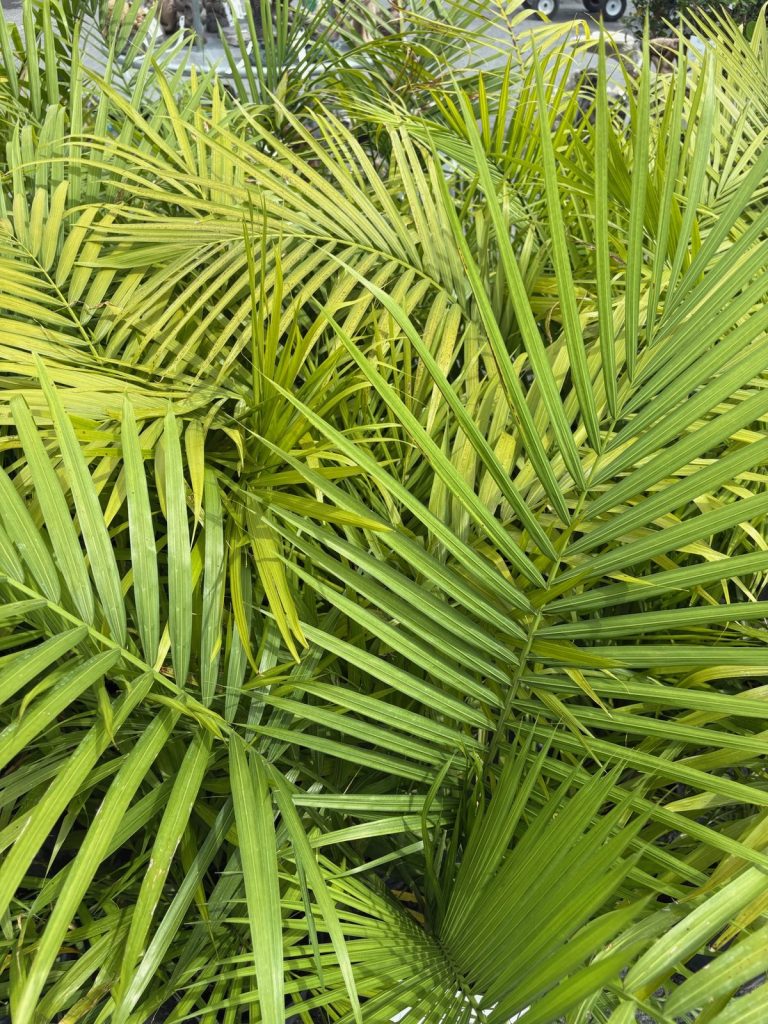
The ultimate tropical shorthand. And cold-climate readers are genuinely shocked they can grow one.
The windmill palm handles winters down to around 5°F with a little protection, which covers most of zone 7 and the warmer edge of 6. Its fan-shaped fronds are unmistakable.
The needle palm is the hardiest palm on earth. It shrugs off temperatures well below zero and keeps its dense, spiky crown through it all.
Plant one against a south-facing wall where it catches reflected heat. Suddenly the whole yard has an accent nobody expects to survive your zip code.
7. Bird of Paradise

Broad, banana-like leaves and that crane-shaped orange flower. If the tropics had a logo, this would be it.
Strelitzia is perennial in zones 9 through 11. Anywhere colder, grow it as a statement patio pot that comes indoors for winter.
It takes a few years to bloom, so buy a mature specimen if you want flowers soon. Even without flowers, the foliage alone earns its spot.
One big pot flanking a doorway does a lot of heavy lifting.
8. Mandevilla

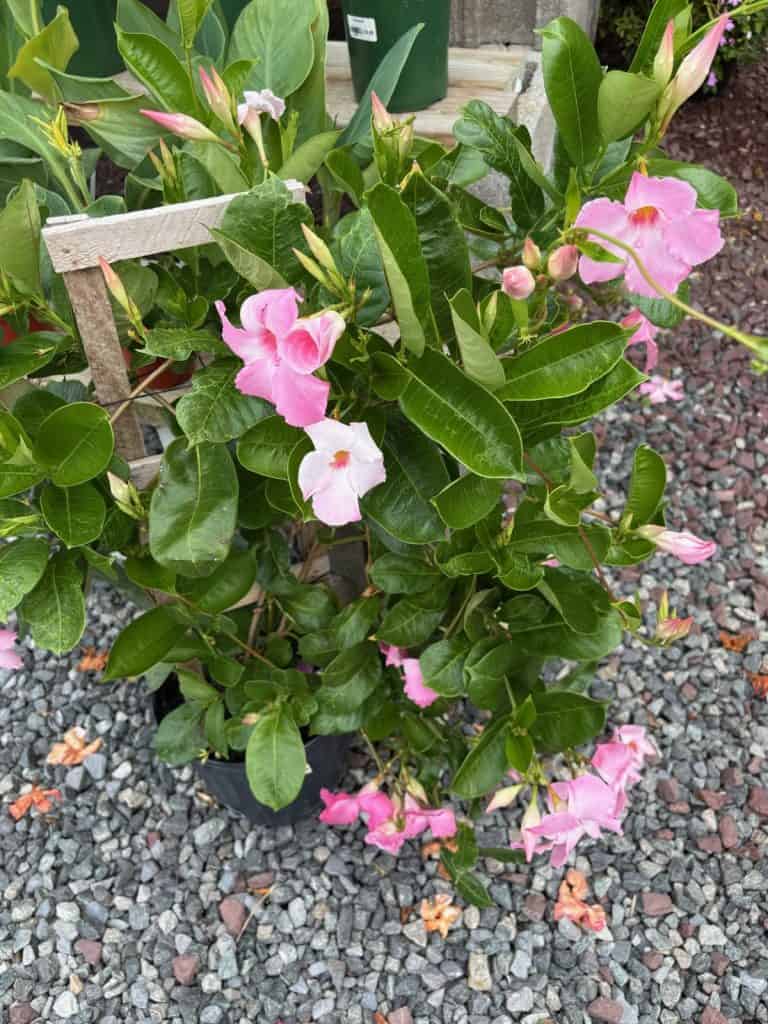
The climbing half of a famously confused pair. Mandevilla is a vigorous vine that clothes a trellis, post, or arbor in big trumpet flowers — reaching 15 to 20 feet in a warm season.
Train it up a support near a seating area and you build a wall of pink or red blooms.
Here’s the buyer’s warning. It’s frequently mislabeled at garden centers, sometimes sold under the wrong name entirely. If you specifically want the climber, check the tag and the growth habit before you pay. The Clemson Cooperative Extension covers the care details.
Treat it as an annual in the cold, or overwinter it indoors and cut it back hard.
9. Dipladenia

Mandevilla’s bushy cousin. Same genus, different personality — mounding and cascading instead of climbing, with finer, glossier leaves.
That habit makes it the ideal filler for hanging baskets, window boxes, and the front edge of a container.
The two get mixed up constantly, and there’s a reason. Dipladenia was folded into the Mandevilla genus back in the 1930s, so botanically they’re relatives that never fully separated in the trade.
Want a spiller that blooms all summer? This is it. Our front porch container combos lean on plants exactly like this.
10. Bougainvillea
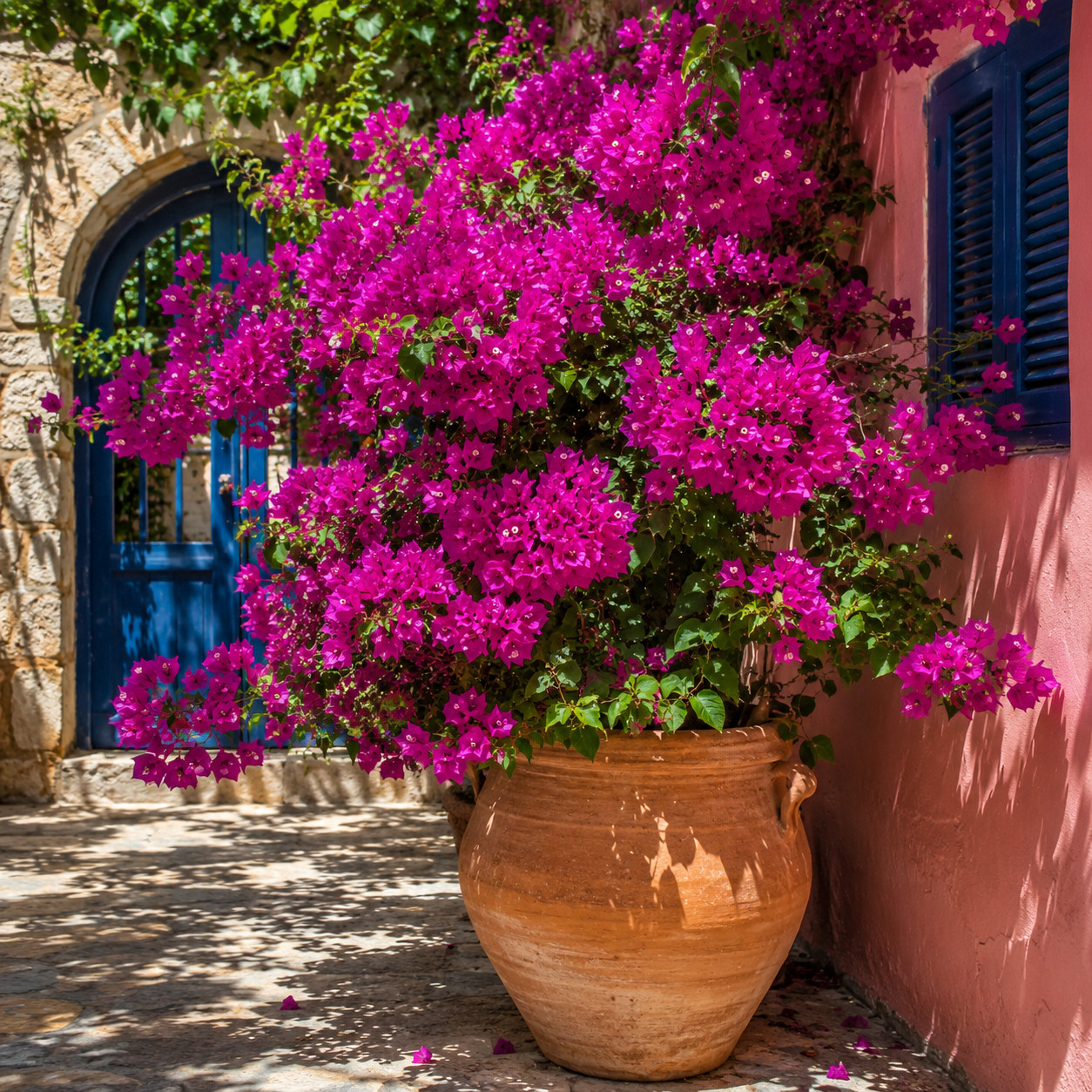
Papery, hot-magenta bracts that scream Caribbean courtyard. Few plants pack this much saturated color.
It’s not cold-hardy — anything below zone 9 means a container that comes inside. But it thrives in a pot you can drag around, and it blooms hardest when a little root-bound and slightly stressed.
Give it full sun and go easy on the water once established.
One well-placed plant pulls the eye clear across the garden.
11. Hibiscus
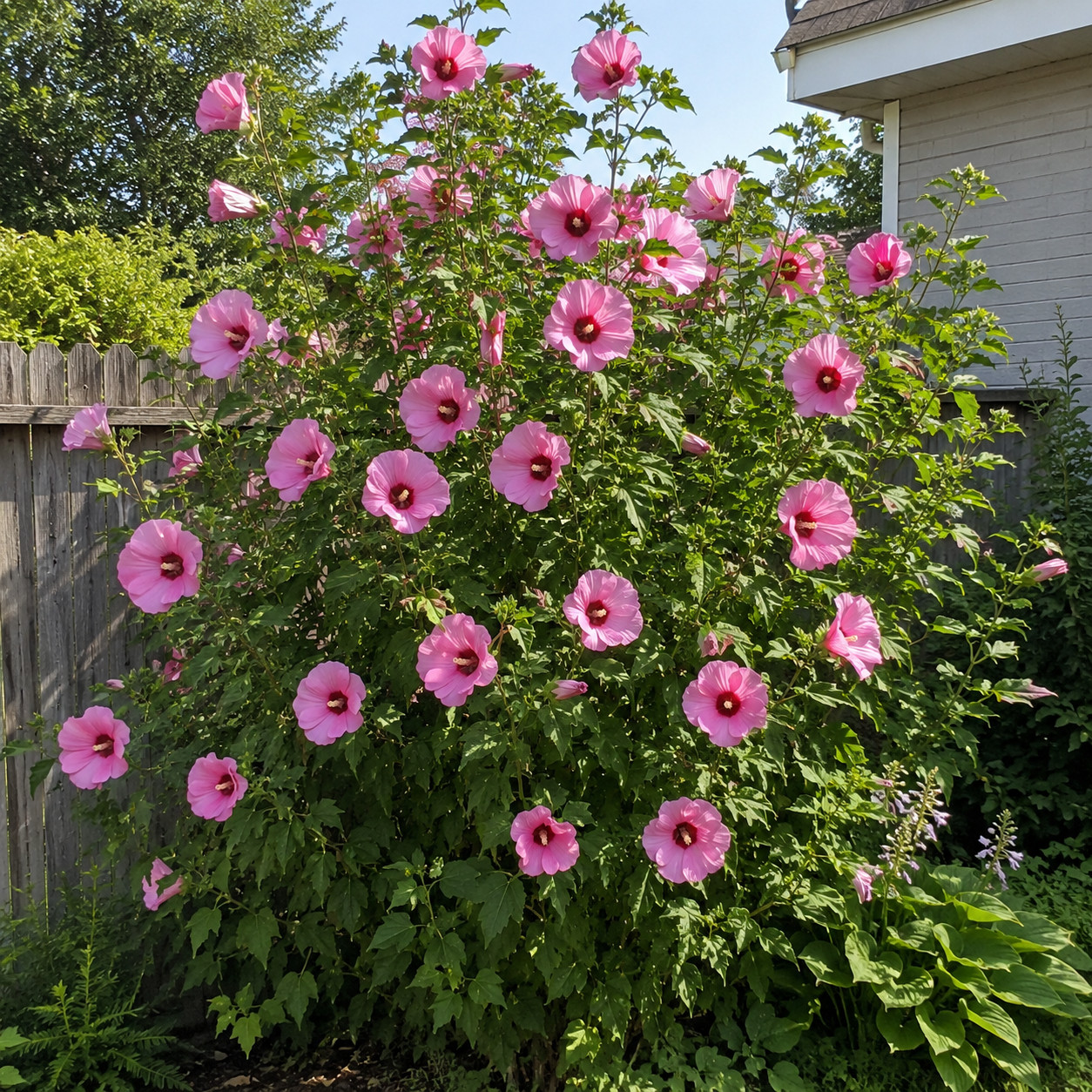
Dinner-plate blooms. The quintessential luau flower.
Tropical hibiscus is tender, so cold-climate gardeners grow it in pots and haul it inside. If that sounds like too much fuss, there’s a smart substitute.
Rose of Sharon — Hibiscus syriacus — is a hardy shrub to zone 5 that grows 8 to 12 feet and covers itself in the same trumpet-shaped flowers. It shrugs off cold that would kill the tropical type outright.
Grow the tender one in a pot for the die-hard collector look, and plant Rose of Sharon in the ground for the same effect on autopilot.
12. Pentas

Clusters of star-shaped flowers — the “Egyptian star” — that bloom nonstop through the worst heat and humidity you can throw at them.
They’re perennial in zones 9 and up, grown as a summer annual everywhere else. And they pull in butterflies and hummingbirds all season long.
For this audience, one detail stands out. Pentas carry no significant toxicity concerns, which makes them a rare tropical-look plant you can plant without worrying about pets or kids. The UF/IFAS covers their easy care.
Nonstop color, no anxiety. Pair them with the other plants that keep hummingbirds coming all season.
13. Passion Flower

The most alien-looking flower a cold-climate gardener can grow. Fringed, purple, geometric — it barely looks real.
The native maypop, Passiflora incarnata, is startlingly hardy, surviving below -20°F. It dies back and returns as a vigorous vine each year.
Blooms arrive from midsummer into fall, followed by egg-shaped fruit. Give it a fence or trellis and it’ll cover it.
It spreads by runners, so plant it somewhere you’re happy to let it roam.
14. Bromeliad

Rosettes of vivid, exotic foliage pulled straight from a rainforest understory. Some flush red and pink at the center like a flower that never fades.
They’re frost-tender, landscaped in the ground only in zones 9 through 12. Everywhere else, use the sink-and-lift trick.
Sink the potted plants into your beds for summer so they read as planted, then pull the pots indoors before frost. A few tough genera — Puya, Dyckia, and some Aechmea — even tolerate temperatures around 20°F, per Gardening Know How.
Tuck them at the base of taller plants to fill the shady lower layer.
15. Castor Bean

Enormous palmate leaves on a plant that rockets skyward in one summer. It builds a lush, towering backdrop faster than almost anything on this list.
But this entry comes with a serious warning that matters more than the look.
The seeds of the castor bean are highly toxic. They contain ricin, and swallowing even a few can be fatal to a person or a pet. This isn’t a mild-stomachache plant — it’s genuinely dangerous.
If you have children, dogs, or cats who spend time in the yard, think hard before planting it at all. The showy spiky seed pods are exactly the kind of thing a curious kid or dog investigates.
If you do grow it, cut the flower spikes off before they set seed. That removes the hazard while keeping the dramatic foliage.
Honestly, for most family yards, a hardy banana or castor’s look-alike leaves from elsewhere on this list give you the same jungle scale without the risk. Skip this one if there’s any doubt.
16. Giant Rhubarb (Gunnera)
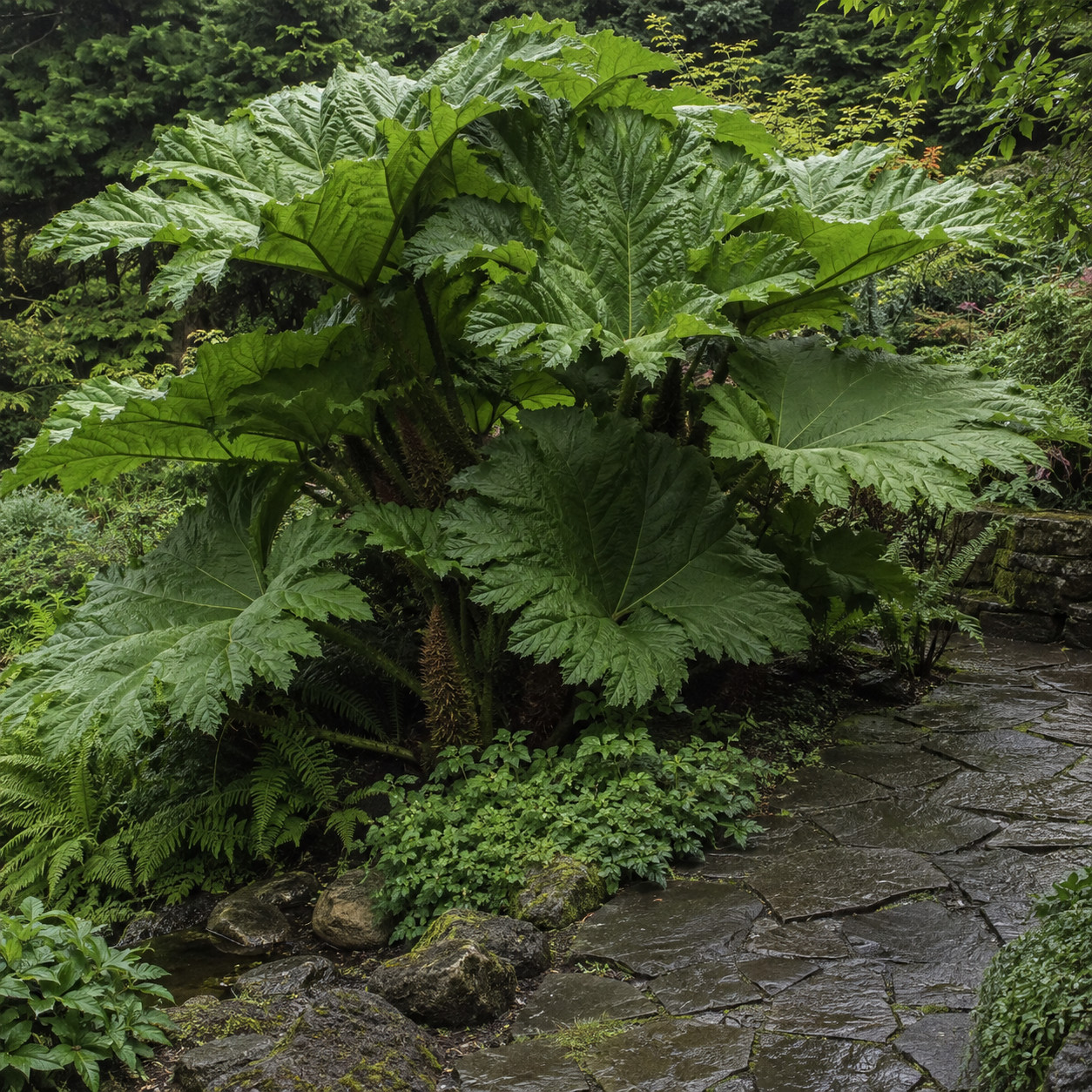
Prehistoric, umbrella-sized leaves that look like something a dinosaur grazed on. It reads as deep jungle.
Yet it’s far hardier than it looks. Ornamental rhubarb species tolerate extreme cold when the crown is mulched heavily for winter.
It wants moisture and rich soil — a damp low spot suits it perfectly. Give it room, because a single plant can spread wide.
This is the “no one believes that survives my winter” plant. Lean into it.
17. Fatsia (Japanese Aralia)
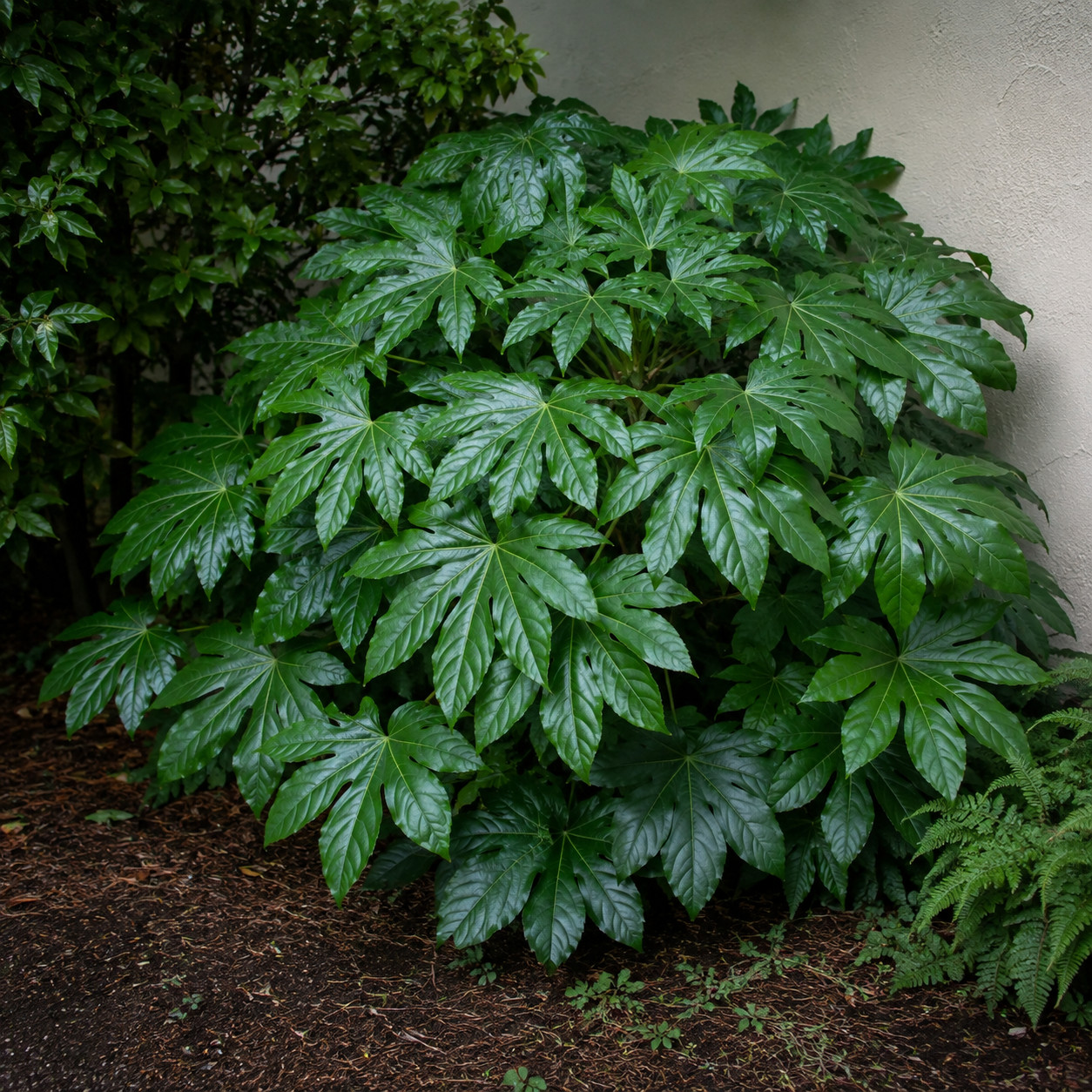
Big, glossy, deeply lobed leaves that hold a tropical look year-round. And it’s an evergreen shrub hardy to about zone 7.
Even better, it thrives in shade — the exact spot where palms sulk and most bold foliage refuses to grow.
The variegated ‘Camouflage’ cultivar splashes cream across those leaves and extends the exotic effect. Plant it under a tree or against a north wall for permanent structure.
It’s one of the few tropical-looking plants that just stays put and keeps its leaves. Pair it with other shade plants that thrive where grass won’t grow.
18. Japanese Painted Fern
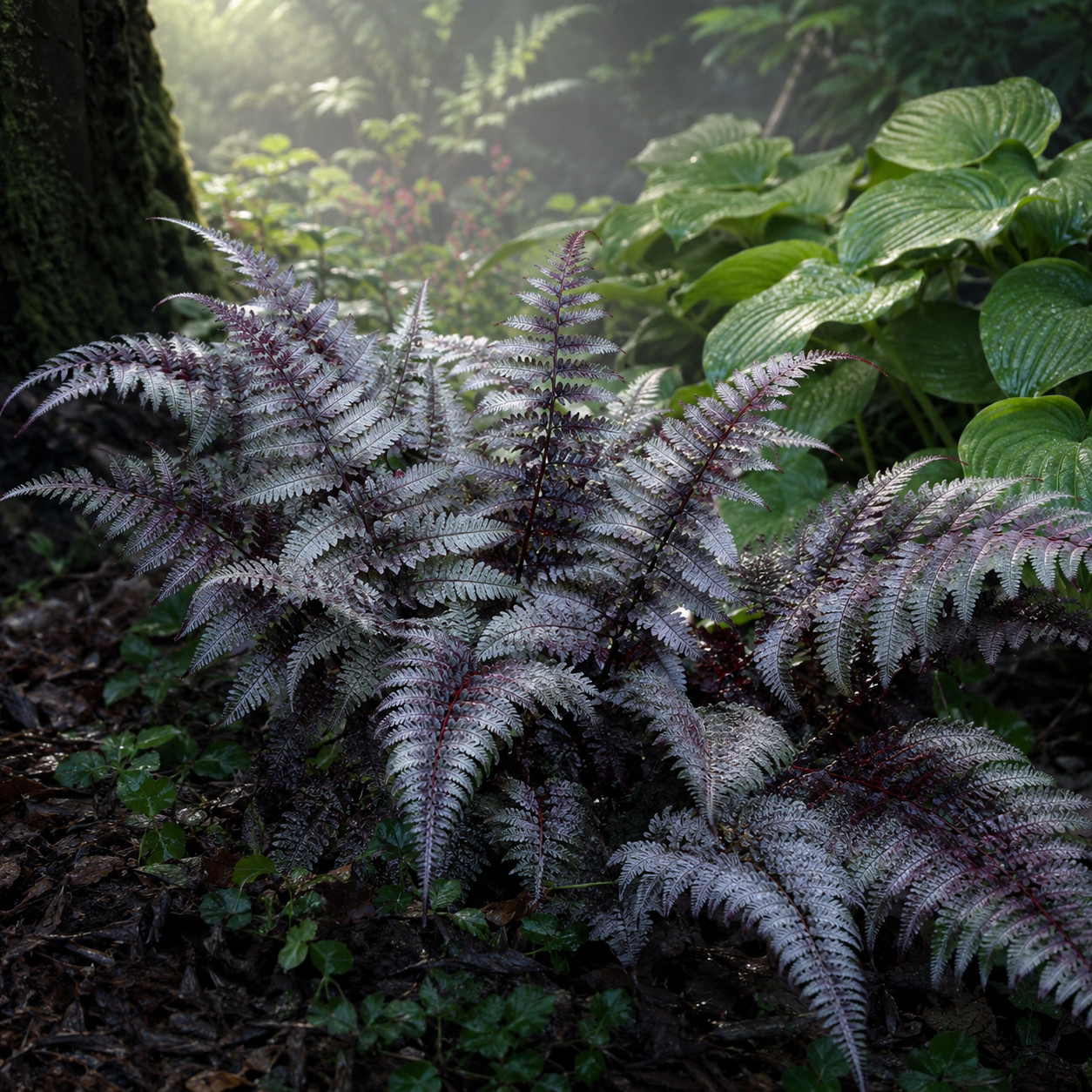
Silver-frosted fronds with a whisper of burgundy. They bring the misty, shaded jungle floor to life.
Tougher than they look, too — hardy to zone 4, and zone 3 with mulch.
Use them for texture contrast. Set them at the feet of elephant ears and hostas and you build convincing rainforest layers from the ground up.
They spread slowly into a soft silver carpet. No fuss, no lifting, no winter drama.
19. Hostas
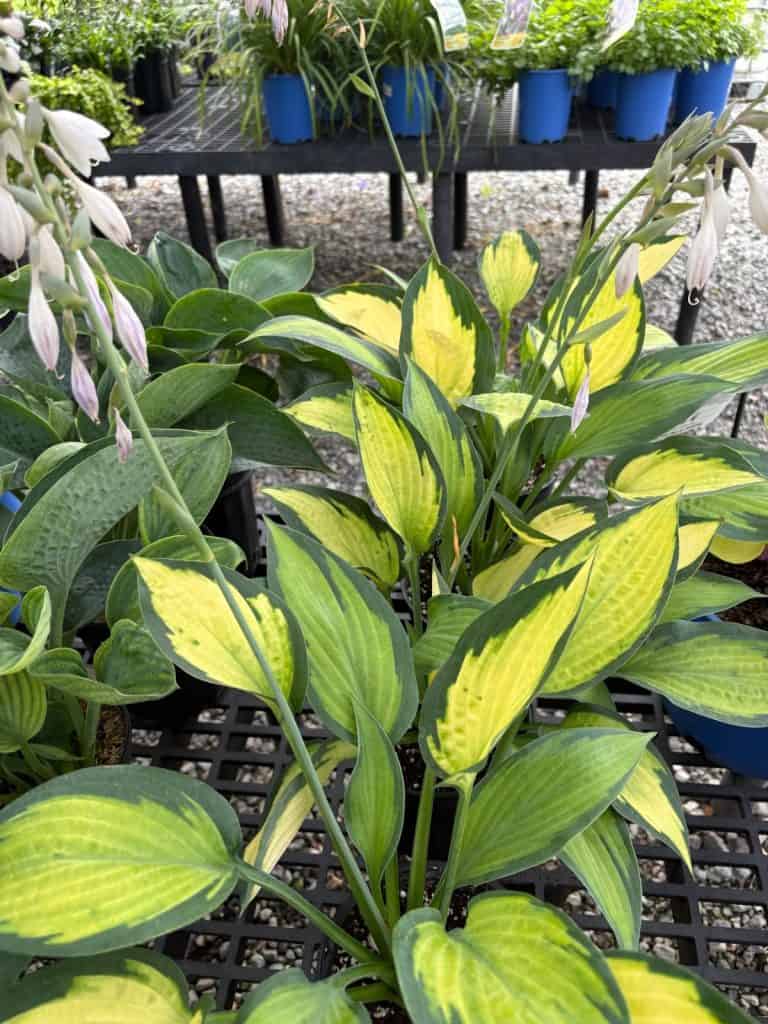
The cold-climate cheat code. Big, bold, layered foliage in shade — with zero winter worry.
The giant blue-green varieties do a shockingly good impression of tropical understory leaves. Some reach four feet across.
They’re fully hardy across roughly zones 3 through 8, coming back bigger every year. That reliability is the whole point.
Plant them in a mass under taller foliage and the illusion holds. Watch for slugs, and otherwise leave them alone.
20. Ornamental Grasses
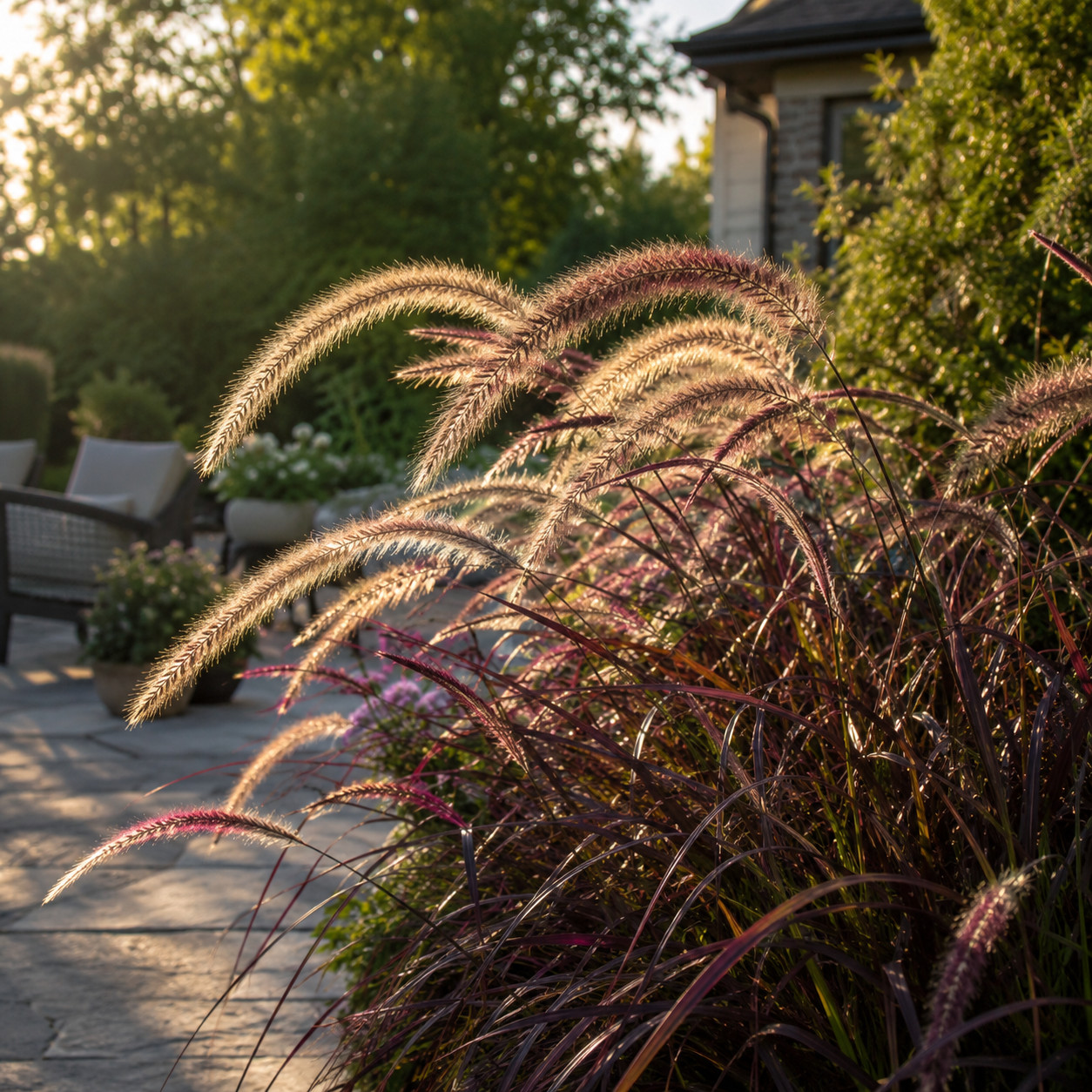
Movement is the thing a tropical scene needs, and grasses supply it. Arching plumes that sway like a resort poolside in the slightest breeze.
Many are hardy to zones 4 and 5, so they anchor the planting through winter. Purple fountain grass reads especially exotic, though it’s tender — cheap enough to treat as a one-summer accent.
Here’s a quick way to sort the workhorse hardy grasses from the tender accent types.
| Hardy Grasses | Tender Accents | |
|---|---|---|
| Winter | Comes back yearly | Grown as annual |
| Hardiness | Zones 4–5 | Zones 9+ |
| Best use | Permanent structure | Bold summer pop |
| Cost | Buy once | Replace each year |
Mix both. Let the hardy ones hold the frame and the tender ones bring the drama.
21. Coleus

Riotous leaf color — lime, magenta, burgundy, sometimes all three on one leaf. It lights up shade like a tropical understory.
Tender, but who cares. It’s a cheap, fast annual that fills gaps within weeks.
When a bed still looks thin in July, coleus is the “more color, now” answer. Endless varieties mean you can match any scheme.
Pinch the flower spikes and it stays bushy and vivid all season.
22. Sweet Potato Vine

The classic spiller. Chartreuse or near-black leaves cascade over container edges and mound into lush groundcover.
It grows aggressively for something that costs almost nothing. A single plant sprawls several feet in a summer.
The lime-green kind glows against dark foliage. The black kind adds depth no other cheap annual matches.
Let it spill off a raised pot and it softens every hard edge in the scene.
23. Yucca
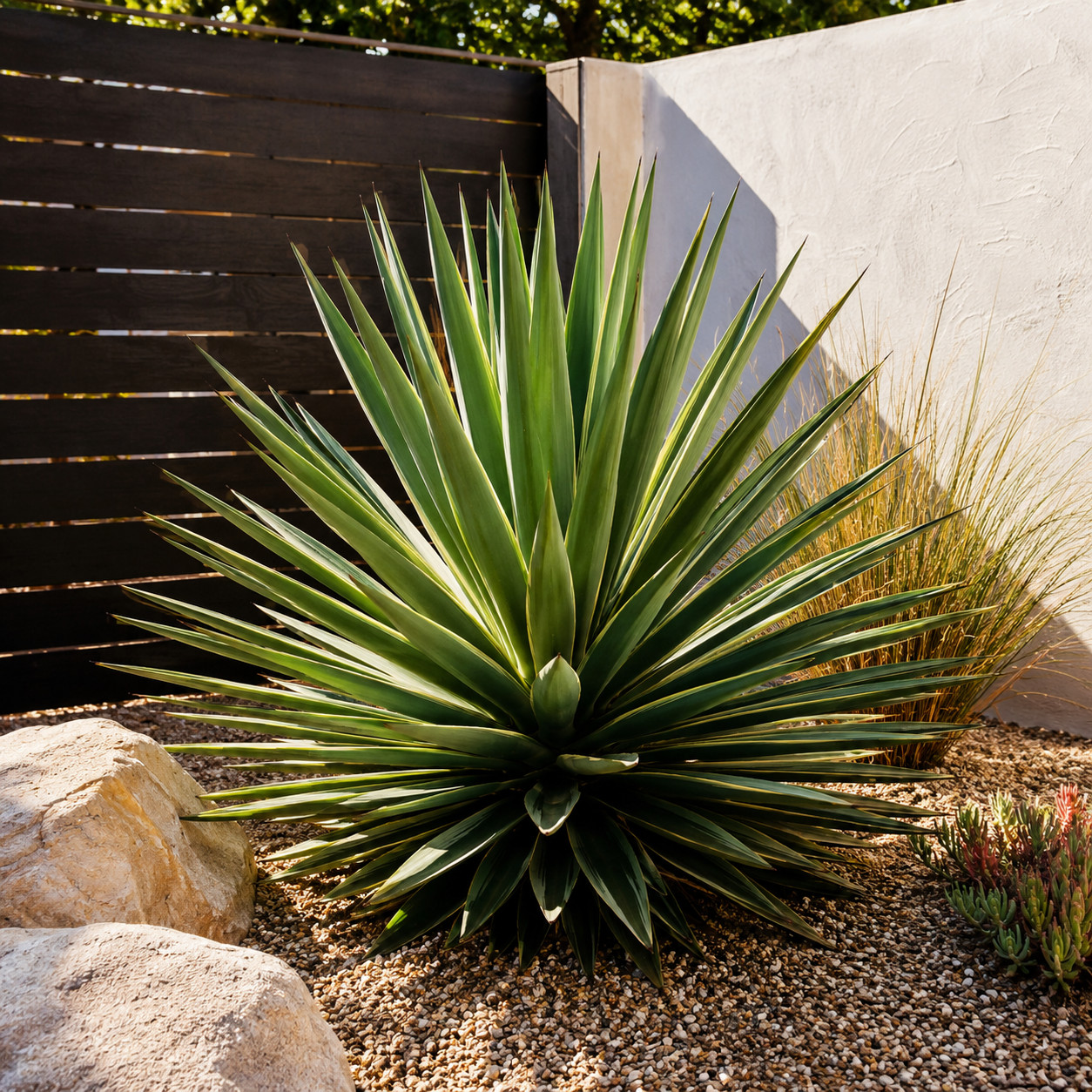
Spiky, architectural rosettes with a desert-meets-island vibe. They add bold structure that holds when the annuals are long gone.
And they’re brutally tough. Beaked yucca and small soapweed survive zones 4 and 5, staying evergreen through winter.
Use one as a focal point where you need a sharp, sculptural shape. It contrasts beautifully against soft banana and elephant ear leaves.
Full sun, sharp drainage, and it basically fends for itself.
24. Agapanthus (African Lily)

Globes of blue or white flowers on tall clean stems. It’s the high-end resort look — restrained, elegant, unmistakably exotic.
Tougher than most gardeners expect. Hardy strains survive to about zone 6 or 7, while tender types overwinter indoors in a pot.
The strappy foliage looks good even before the flowers open. Then the blooms rise above it on bare stalks like fireworks frozen mid-burst.
Mass them along a walk for a look that reads expensive.
25. Mimosa Tree (Silk Tree)
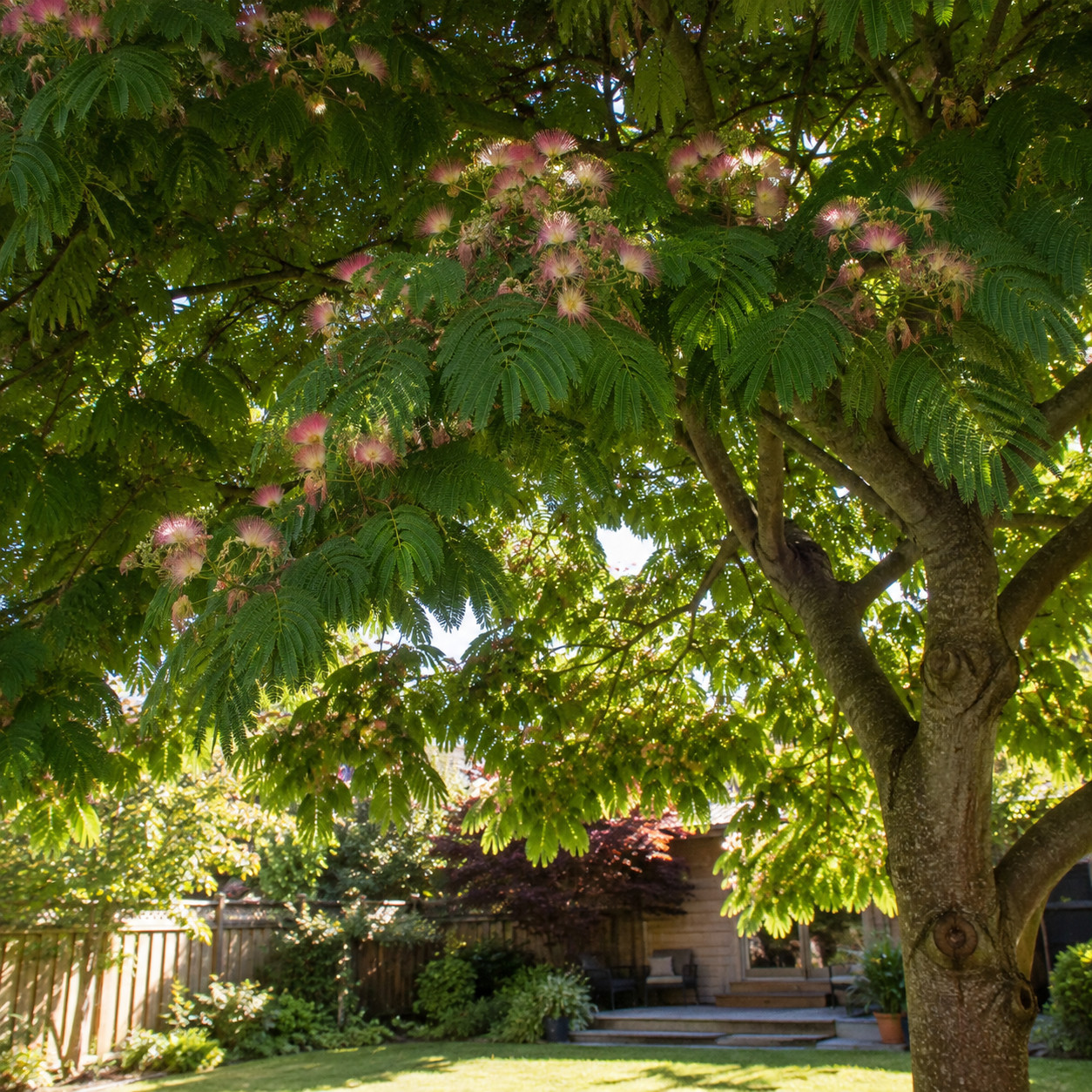
The overhead layer. Ferny canopy foliage plus fuzzy pink pom-pom blooms give you a cold-hardy tropical tree, roughly zones 6 through 9.
It filters light beautifully and casts the kind of dappled shade a jungle would.
One honest caveat. It’s invasive in parts of the U.S., seeding itself aggressively where it isn’t wanted.
Check whether it’s a problem in your region before planting. If it is, find another small tree for overhead structure — the ferny-canopy look isn’t worth turning loose an invasive.
26. Split-Leaf Philodendron (‘Monstera’)

The swiss-cheese leaf you probably already own indoors. Those iconic holes and splits are tropical instantly.
It’s tender, so it lives as a summer container plant outside and a houseplant come winter. Set the pot on a shaded patio and it looks like it’s been growing there for years.
Move it into dappled light — direct sun scorches those big leaves. Bring it in well before the first frost.
It’s the low-effort finishing touch: one plant you already have, doing double duty outdoors all summer.
Pulling It All Together
A tropical yard isn’t one hero plant. It’s layers — big leaves overhead, bold color at eye level, soft texture and spillers down low.
Cold-climate gardeners just cheat the seasons. Lift the tender rhizomes, mulch the borderline crowns, and let the hardy anchors ride out the winter underground.
Two cautions worth repeating: keep cordyline away from pets, and think twice about castor bean anywhere kids or animals roam.
Do it right and the neighbors will assume you flew the whole scene in from somewhere warm.