

Most of what you plant is on a clock. Annuals die by frost. Tulips fade after three springs. Even a lot of so-called perennials quietly give up around year four, and you never quite notice they’ve been replaced.
Then there’s the other kind.
The peony blooming beside a farmhouse that’s been empty for decades. The iris that’s the same color at every old house on the block. The clump of daylilies growing out of a crack between a sidewalk and a foundation, thriving on nothing.
These plants outlast their gardeners. Some outlast the houses.
The trick is knowing which ones actually mean it — and which ones resent being dug up so much that moving them once will kill them. Here are 26 perennials you plant a single time and never think about again.
1. Peony
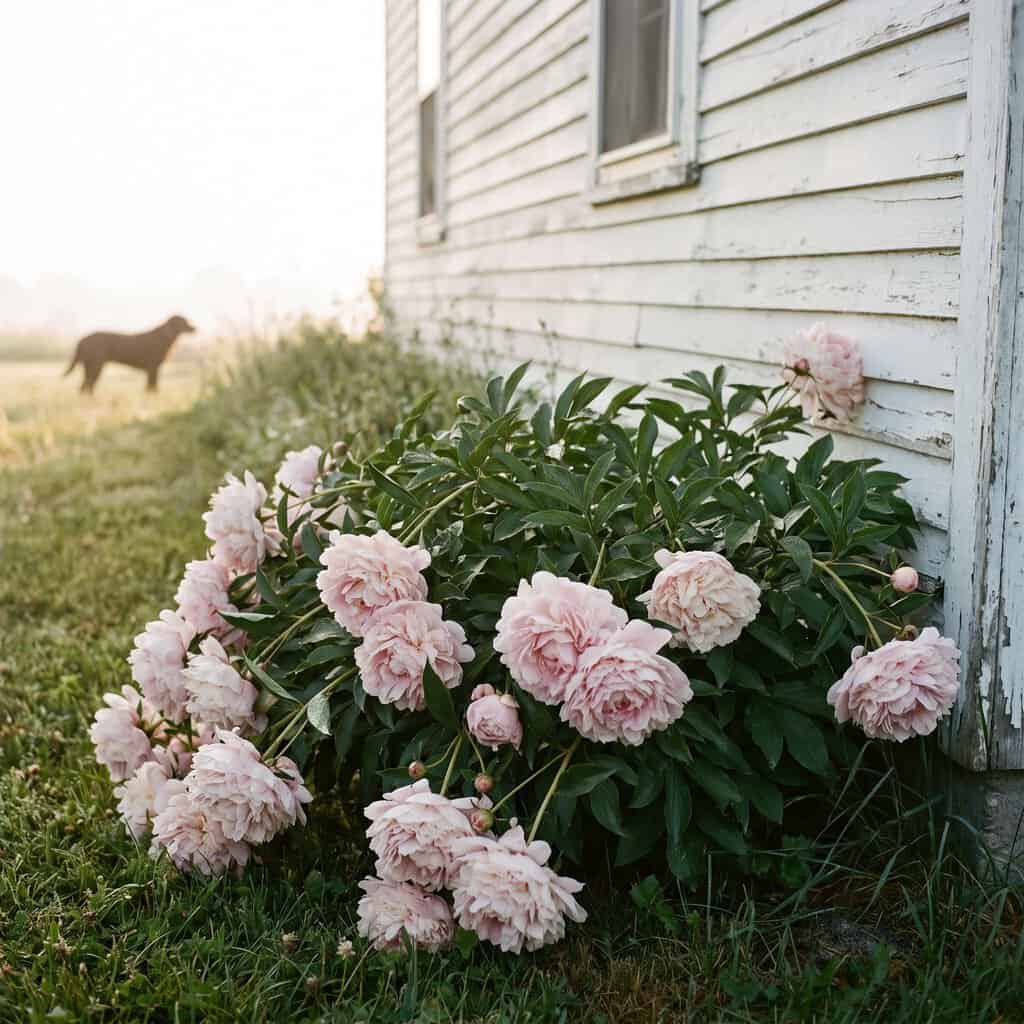
A peony can outlive the person who plants it. Established clumps still bloom at 50 years, and some push past a century in the same spot.
They hate being divided. The fleshy roots snap like carrots, and a butchered peony can sulk for years before it flowers again. So pick the spot once and commit.
There’s exactly one way to fail with a peony, and it’s planting it too deep. Set the eyes — the pink buds on the root — no more than 1.5 to 2 inches below the soil. Bury them deeper and you’ll get lush leaves and not a single flower, sometimes for a decade. The University of Minnesota Extension is blunt about leaving mature clumps alone entirely.
One serious note if you have pets. Peonies are toxic to dogs and cats. The bark and roots contain paeonol, and ingestion causes vomiting, diarrhea, and general GI upset, according to the ASPCA.
It’s rarely life-threatening, but it’s miserable for the animal. If your dog decides to sample a fresh clump — and some will — call your vet or the ASPCA Animal Poison Control Center at (888) 426-4435. Keep an eye on curious puppies during peony season, because the low, heavy blooms sit right at nose height.
2. Baptisia (False Indigo)
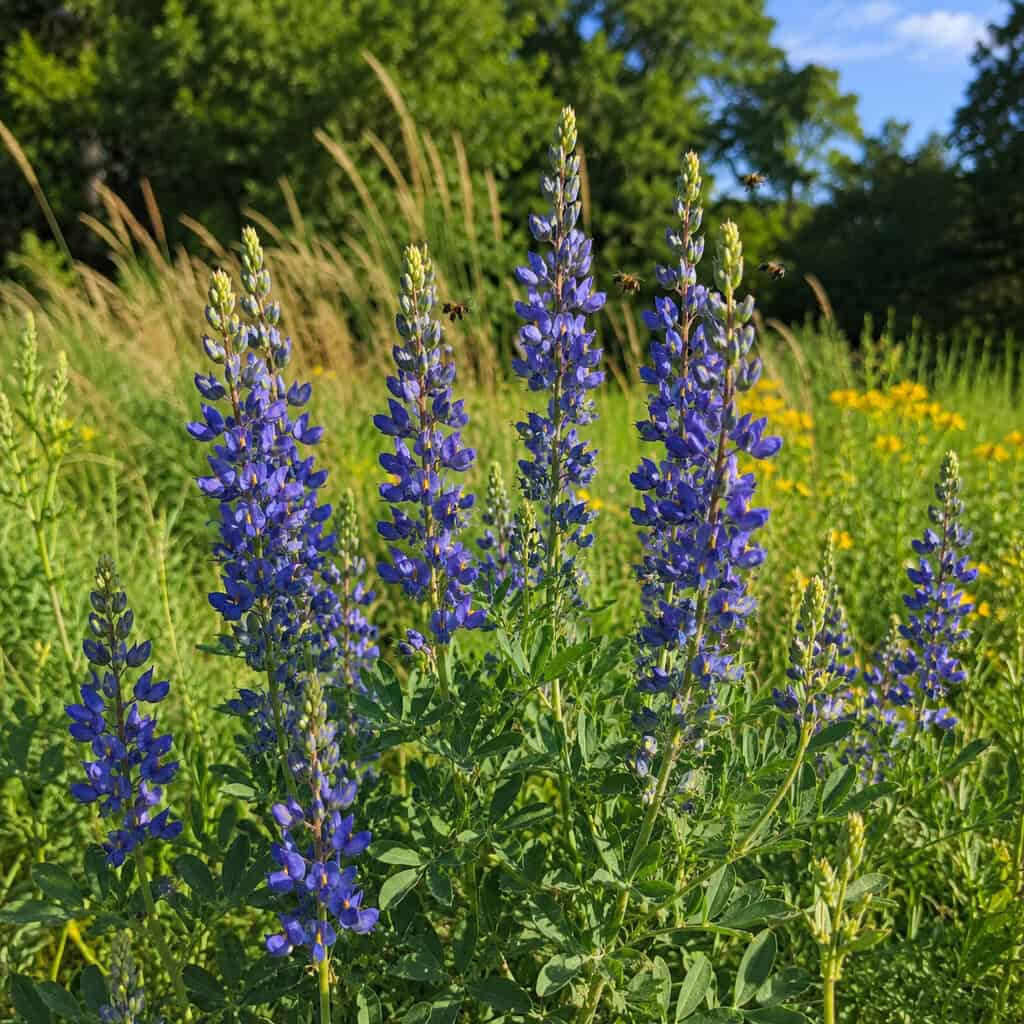
This is the plant this whole list is built around.
False indigo is a native prairie perennial that sends a taproot down as far as seven feet. That root grabs nitrogen straight out of the air and feeds itself, which means no fertilizer, ever.
It doesn’t want dividing. It doesn’t want moving. It doesn’t want much of anything from you.
Blue spikes in late spring, then a shrubby blue-green mound that holds its shape all summer. Clemson’s extension office notes it can bloom in the same spot for decades. Plant it and forget you did.
3. Gas Plant (Dittany / Dictamnus)
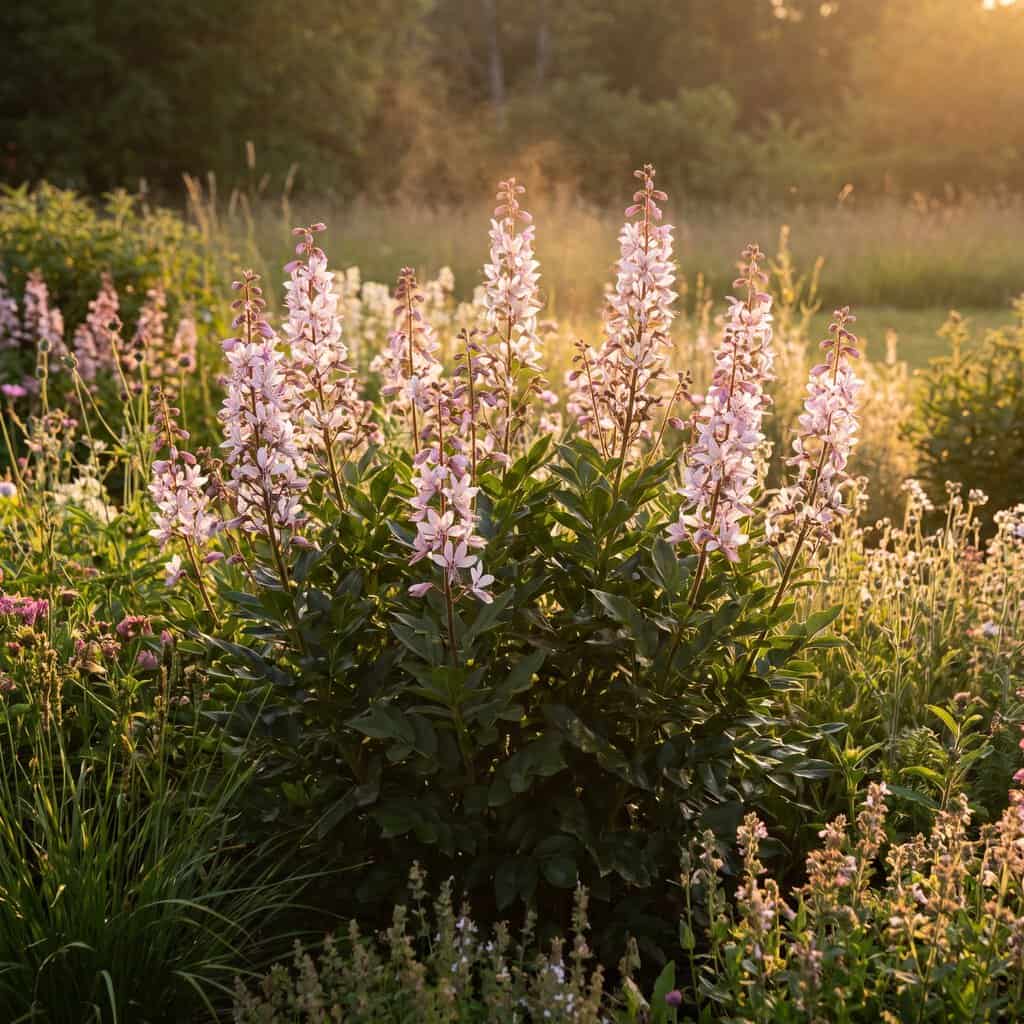
Nobody talks about this one, and that’s a shame.
A gas plant can thrive for 50 years or more from a single planting. It builds a deep taproot and absolutely refuses to be moved — disturb it and you’ll usually lose it.
The name isn’t decoration. On a hot, still summer evening, the plant releases so much volatile oil from its flower stalks that you can briefly touch a lit match to the air around it and see a faint flash.
Slow to establish, glacial to mature, then immortal. Site it where it can live out its long life undisturbed.
4. Bearded Iris
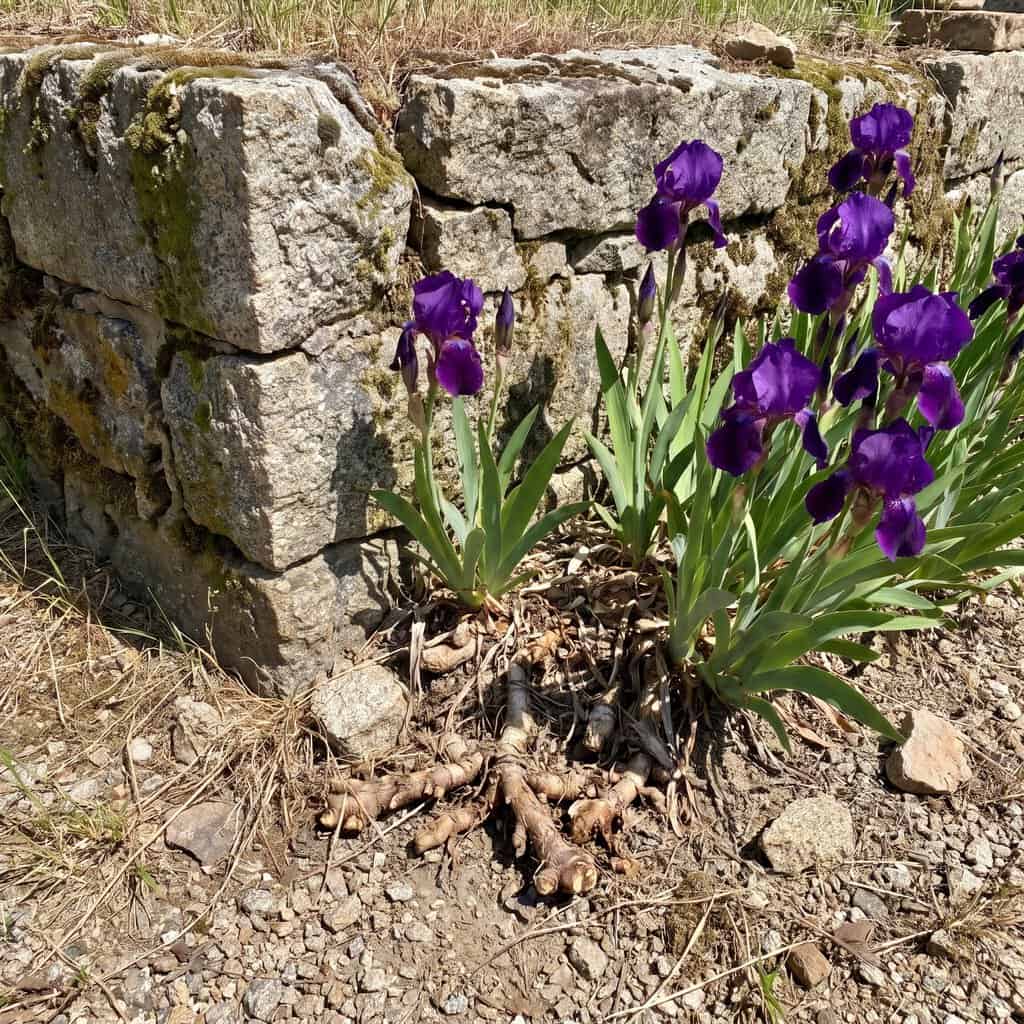
Look at the old houses on any street. The bearded iris blooming in those yards is often the exact same plant, the same passalong rhizome, handed down and never touched for a generation.
It thrives on neglect. Poor, dry, gravelly soil suits it fine, and rich pampered beds actually make it flop and rot.
The one rule: keep the rhizome half-exposed at the surface. It wants to bake in the sun like a lizard.
Bury it and it sulks. Leave it alone and it’ll outlast you.
5. Siberian Iris
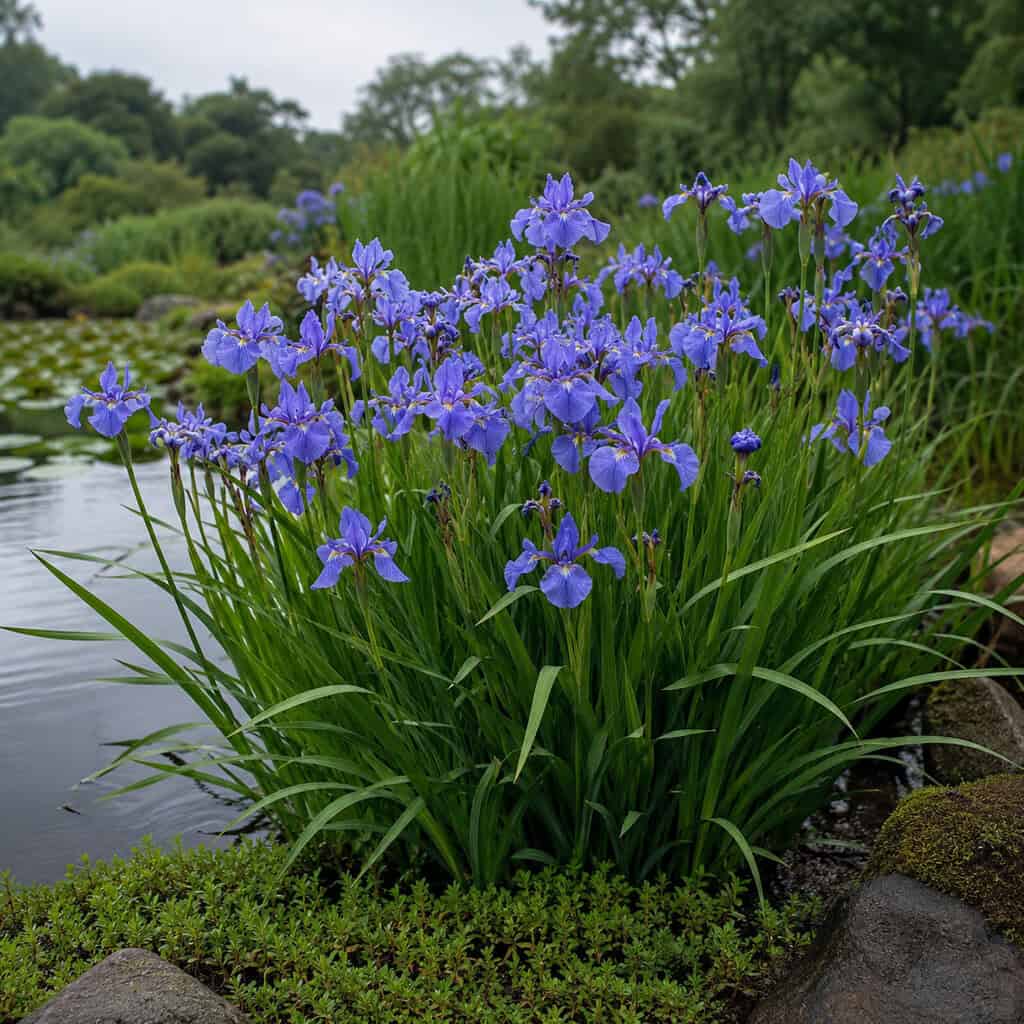
Lower drama than its bearded cousin, and arguably tougher.
Siberian iris forms fountains of grassy foliage that look good from spring until frost — not just during the two weeks it’s in flower. It shrugs off wet springs and dry summers alike.
You only ever split it if you want more plants for elsewhere. The clump itself never needs it to stay healthy.
Delicate blue and purple flowers, iron constitution. A rare combination.
6. Daylily
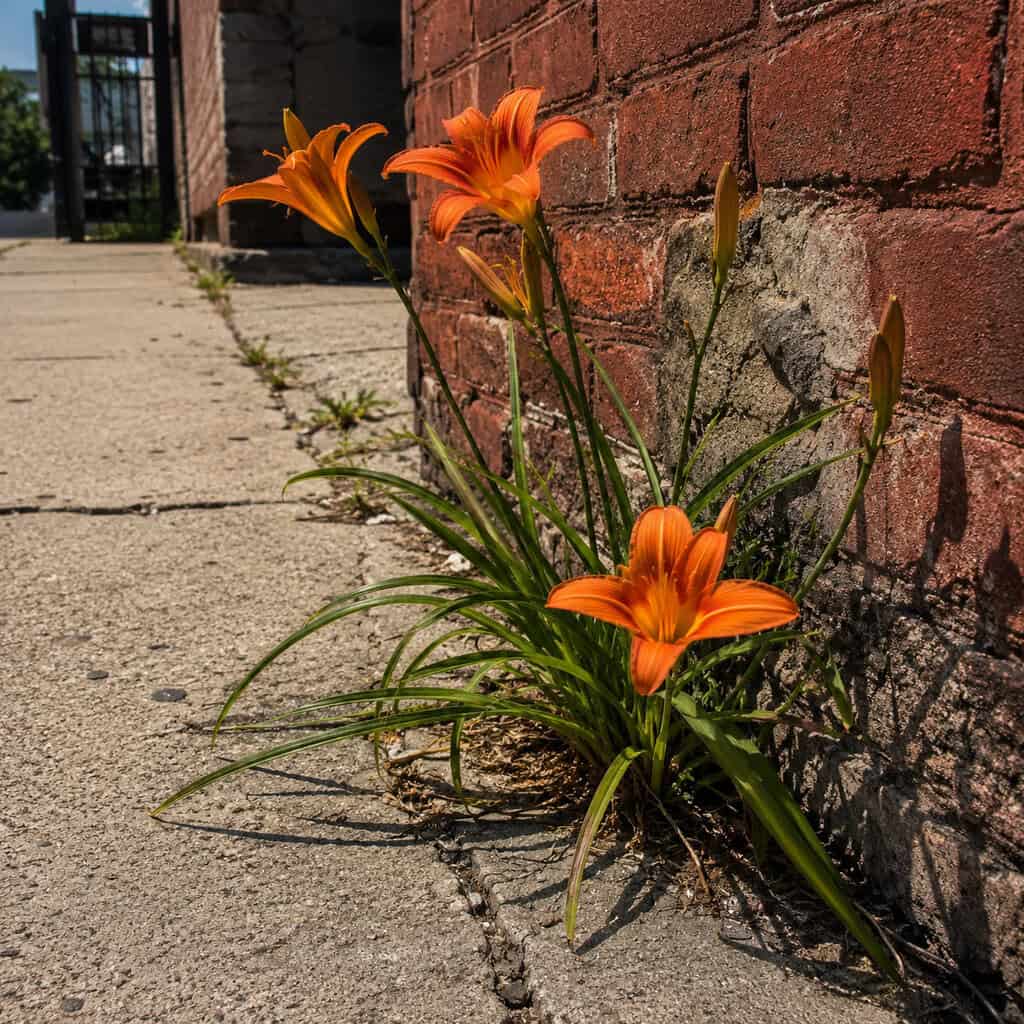
Daylilies are close to indestructible. Gardeners routinely find them thriving between pavement and a building wall a full generation after someone planted them and moved away.
They multiply, bloom, and ask for nothing. Drought, clay, neglect — none of it fazes them.
But there is a warning here that outweighs everything else, and it’s the single most important safety point on this entire list.
Daylilies are fatal to cats. Not “upset stomach” fatal — kidney-failure fatal, and fast. Every part of the plant is dangerous, and even a cat chewing a leaf, biting a flower, or licking pollen off its fur can go into acute kidney failure within 24 to 72 hours.
The ASPCA lists daylilies among the most acutely toxic plants for cats. If you catch your cat anywhere near one, treat it as an emergency and get to a vet immediately — survival depends on aggressive fluid treatment started within hours. The ASPCA poison line is (888) 426-4435.
Note that daylily foliage is edible for people, which fools a lot of owners into assuming it’s harmless. It isn’t, not for cats. If you keep cats, this is one plant to admire in someone else’s yard.
7. Hosta
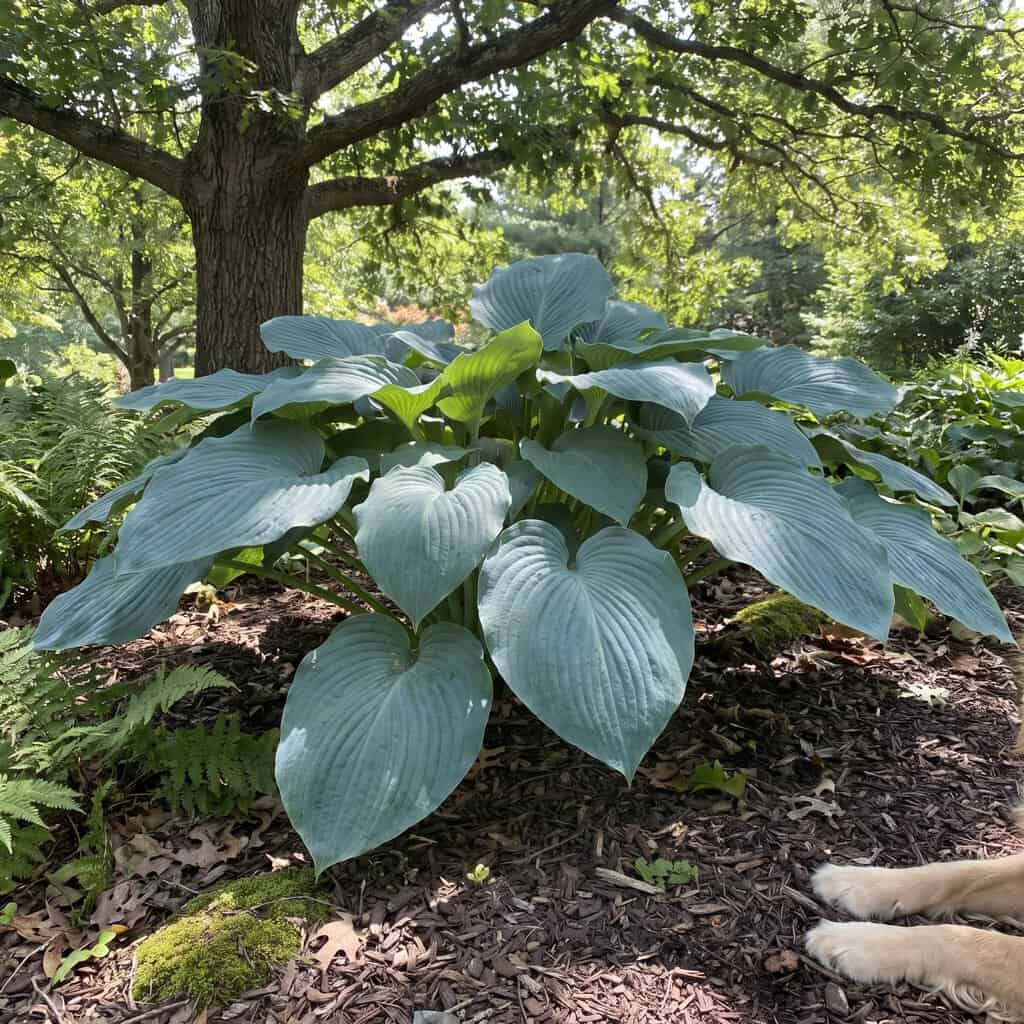
The backbone of every shade garden, and one of the longest-lived things you can plant in one.
A mature hosta lives 20 to 30 years or more, and each spring it emerges a little bigger than the last with zero help from you. It never needs dividing for its health — only if you want free plants.
Pop it in dappled shade, keep it watered its first summer, and step back.
The pet note matters here because hostas are everywhere pets roam. They contain saponins and are toxic to dogs, cats, and horses, per the ASPCA. Reactions are usually mild — vomiting, diarrhea, some drooling — and rarely serious.
Still worth knowing if you’ve got a dog that treats the shade bed like a salad bar.
8. Hellebore (Lenten Rose)
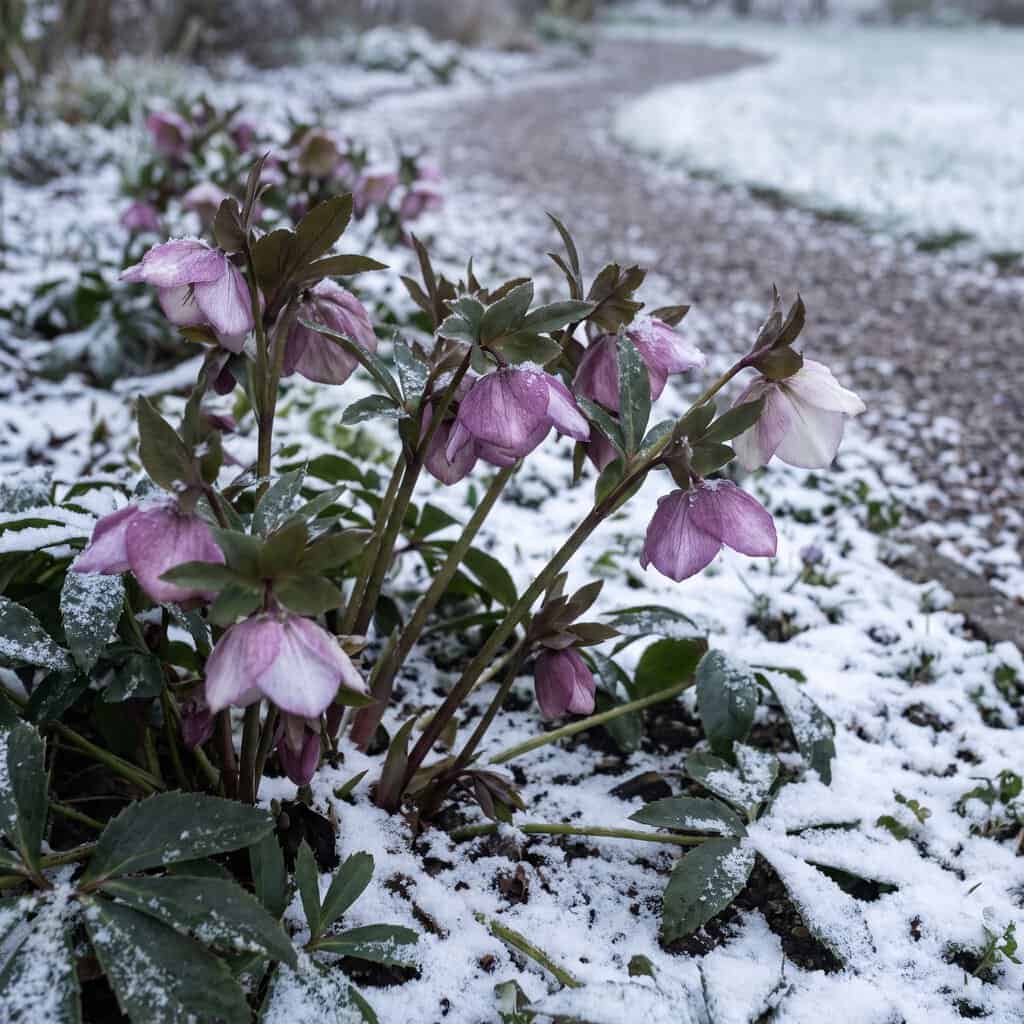
This one flowers when nothing else dares to. Late winter, snow still on the ground, and the hellebore is blooming in nodding cups of green, white, and dusty purple.
It’s deep-rooted, long-lived, and quietly seeds itself into gentle drifts over the years. It doesn’t need division and doesn’t want it.
Deer and rabbits leave it completely alone, thanks to alkaloids in the foliage. Those same compounds mean you should wear gloves when you cut the old leaves back — the sap can irritate skin.
Plant it near a path where you’ll actually see it in February. That’s when it earns its keep.
9. Amsonia (Blue Star)
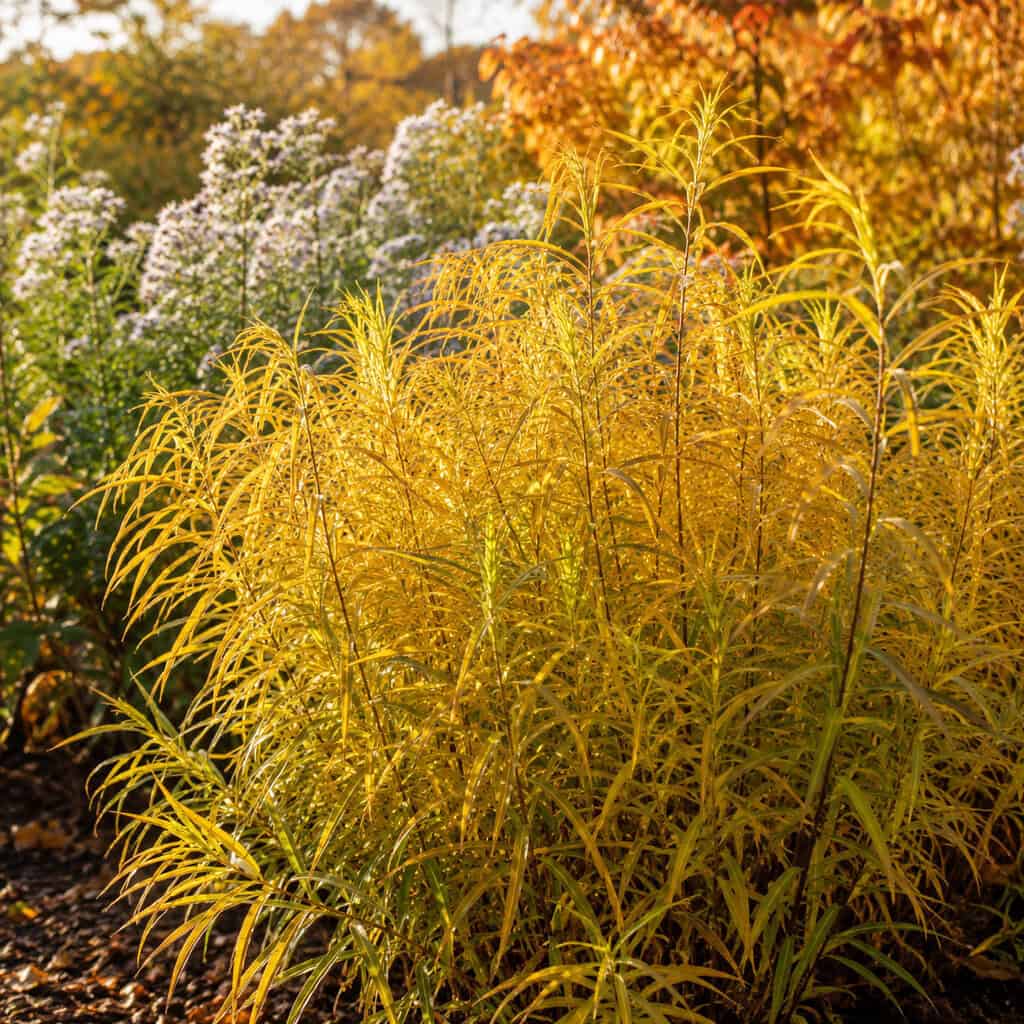
Three seasons of work from one plant, and hardly anyone grows it.
Pale blue star-shaped flowers in spring. Soft, willowy, ferny foliage all summer. Then a fall color show — brilliant gold — that most perennials can’t touch.
It’s long-lived and settles in for the long haul. Dividing it is simply unnecessary.
Give it sun and it’ll reward you three times a year for a decade or more.
10. Oriental Poppy
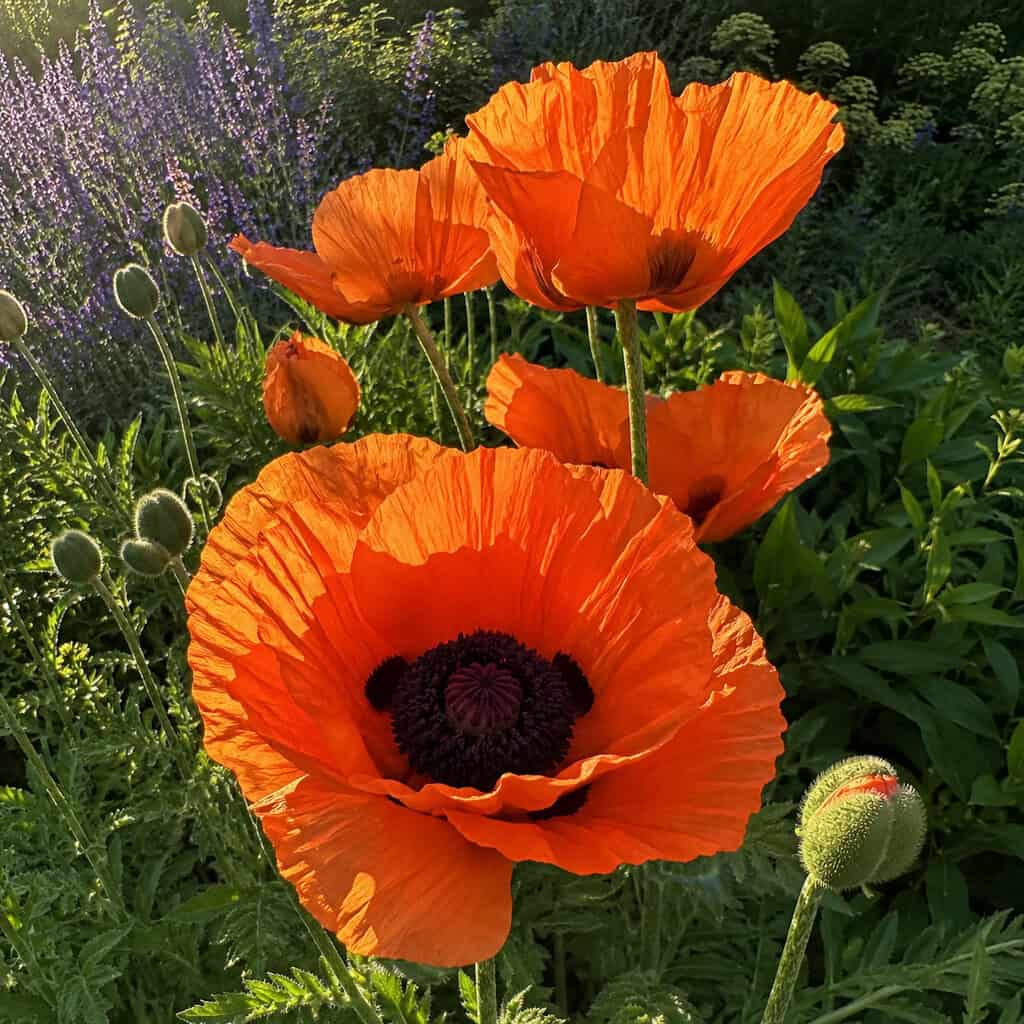
The bloom is unforgettable — huge crepe-paper petals in screaming orange and red for a couple of weeks in late May.
Then it vanishes. By midsummer the whole plant goes dormant and leaves a hole in the bed.
That’s the catch, and it’s why you choose the spot once. Oriental poppy resents disturbance, so moving it to fix the gap usually just kills it.
Plant something bushy beside it — a hardy geranium, a catmint — to flood into the space when the poppy naps. Then leave the poppy where it is forever.
11. Foxtail Lily (Eremurus)
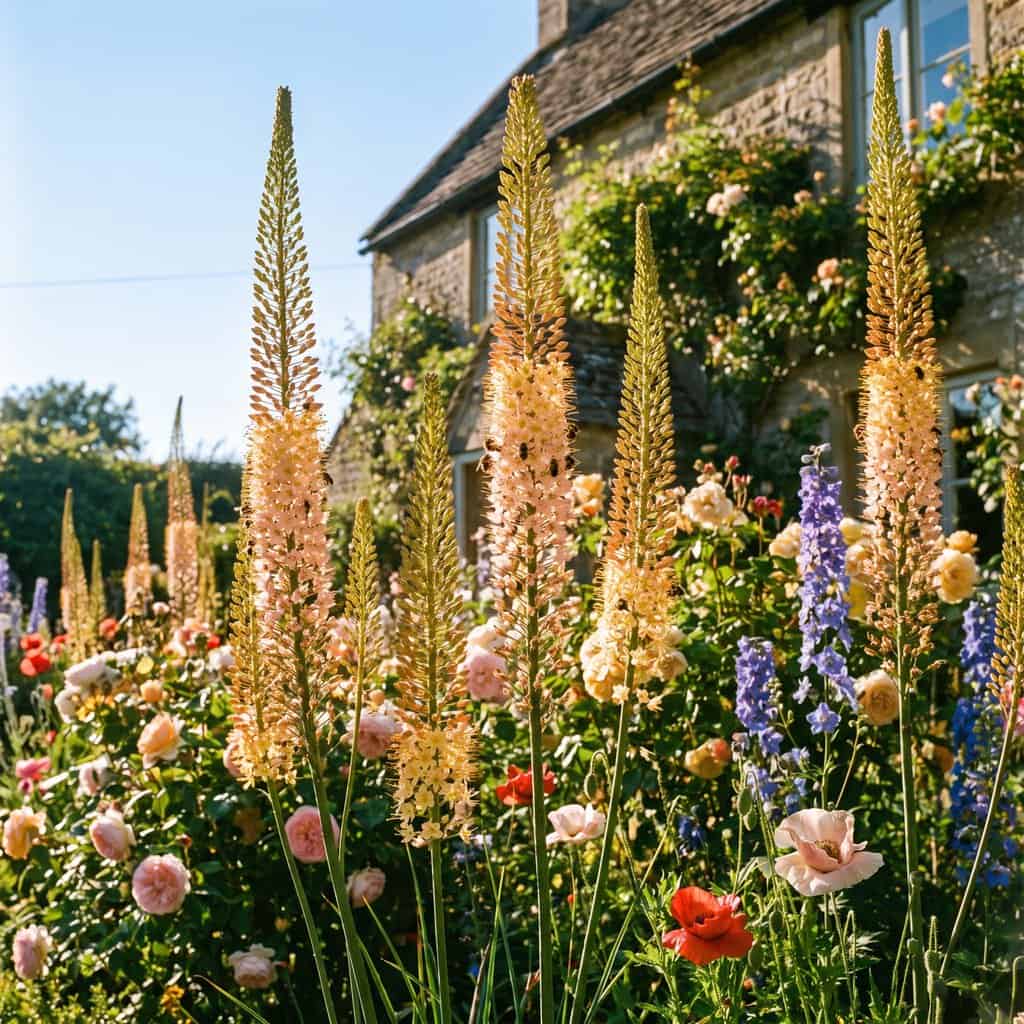
Six-foot flower spikes that look like fireworks frozen mid-launch. Bees swarm them.
The root system is the reason this belongs here — a brittle, octopus-like crown that snaps at the slightest mishandling. Even minor transplant damage kills the plant outright.
So you get one shot at placement. Set it, mark it, walk away.
Each year it matures, it throws more spikes. A plant that literally punishes you for touching it and rewards you for patience.
12. Goat’s Beard (Aruncus)
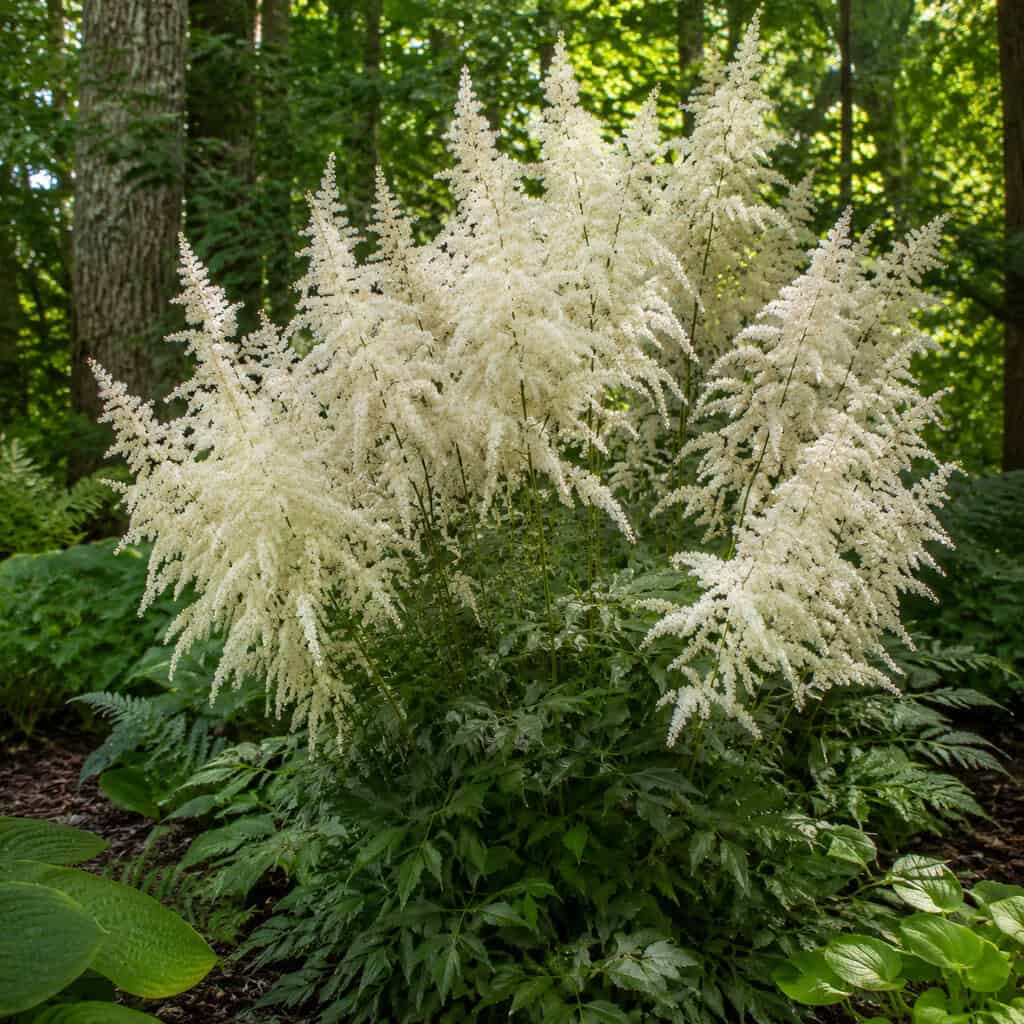
A native shade plant with creamy plumes like a giant astilbe, standing three to five feet tall in the gloom under trees.
Its roots are notorious. Thick and woody, they often need a saw to cut through — which tells you everything about whether you’ll be moving it. You won’t.
Pest-free and deer-resistant on top of it all. Plan the spot, plant it, and let it anchor the shade for good.
13. Sedum ‘Autumn Joy’ (Stonecrop)
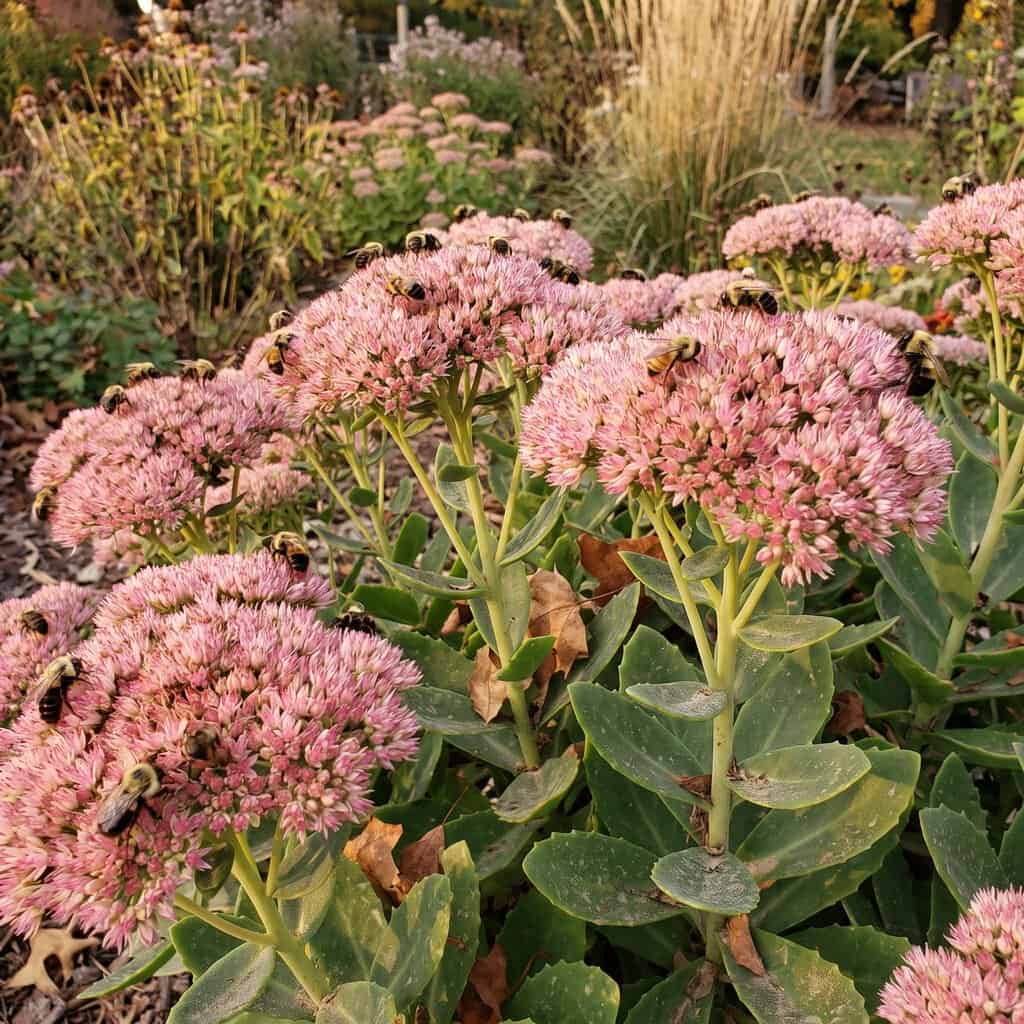
Maybe the most bulletproof plant on this list.
It’s a drought-proof succulent that runs for decades on essentially nothing. Green mounds in summer, dusty-pink flower heads in fall, then rusty-red seed clusters that stand through winter snow.
No watering once established. No fertilizer. No division.
Bees cover it in September. Leave the dried heads up all winter and they’ll catch frost like little cups.
14. Russian Sage
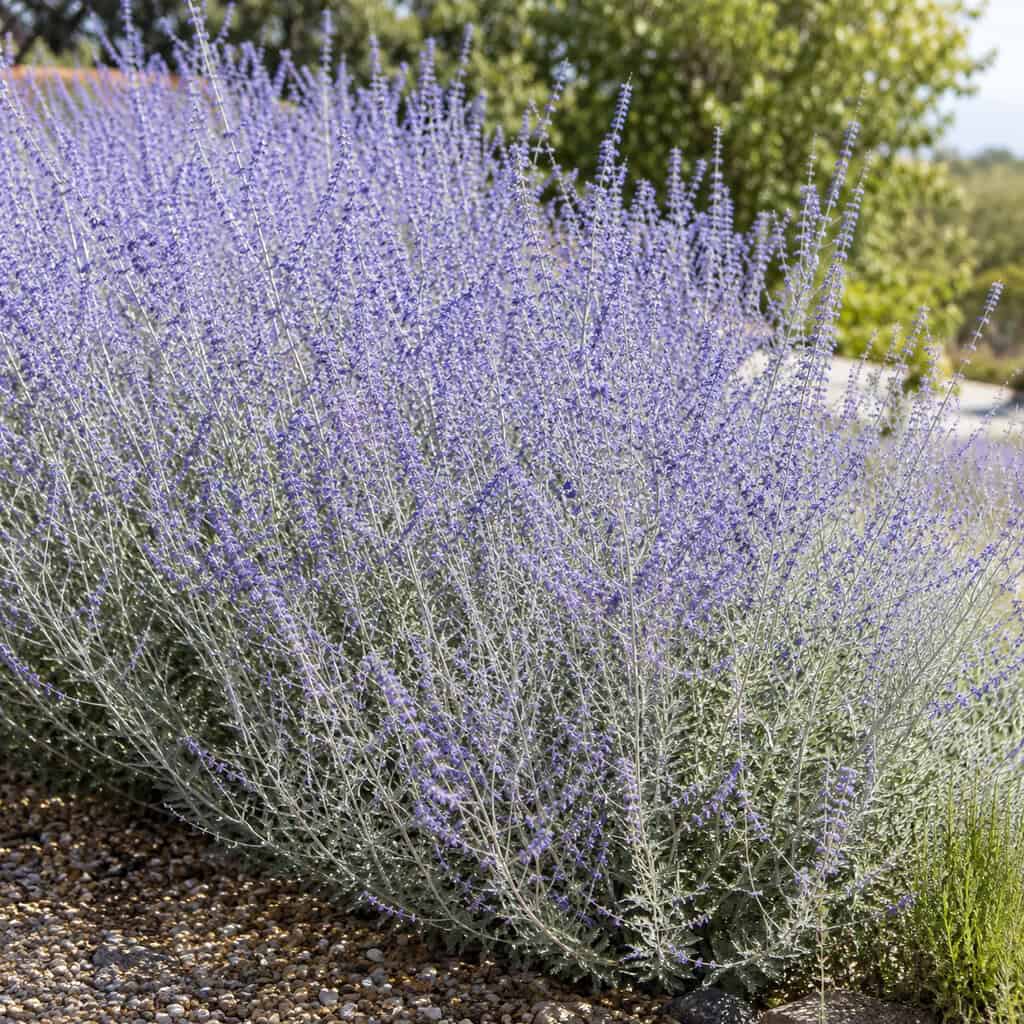
Named Perennial Plant of the Year back in 1995, and it hasn’t lost a step since.
Silvery aromatic stems throw up a haze of lavender-blue flowers from July clear through September. It wants lean, dry, poor soil — the worse you treat it, the better it looks.
Deer won’t touch it. The landscape designer Jan Johnsen rates it among the most forgiving plants going.
Cut it hard in spring, then ignore it for the rest of the year.
15. English Lavender
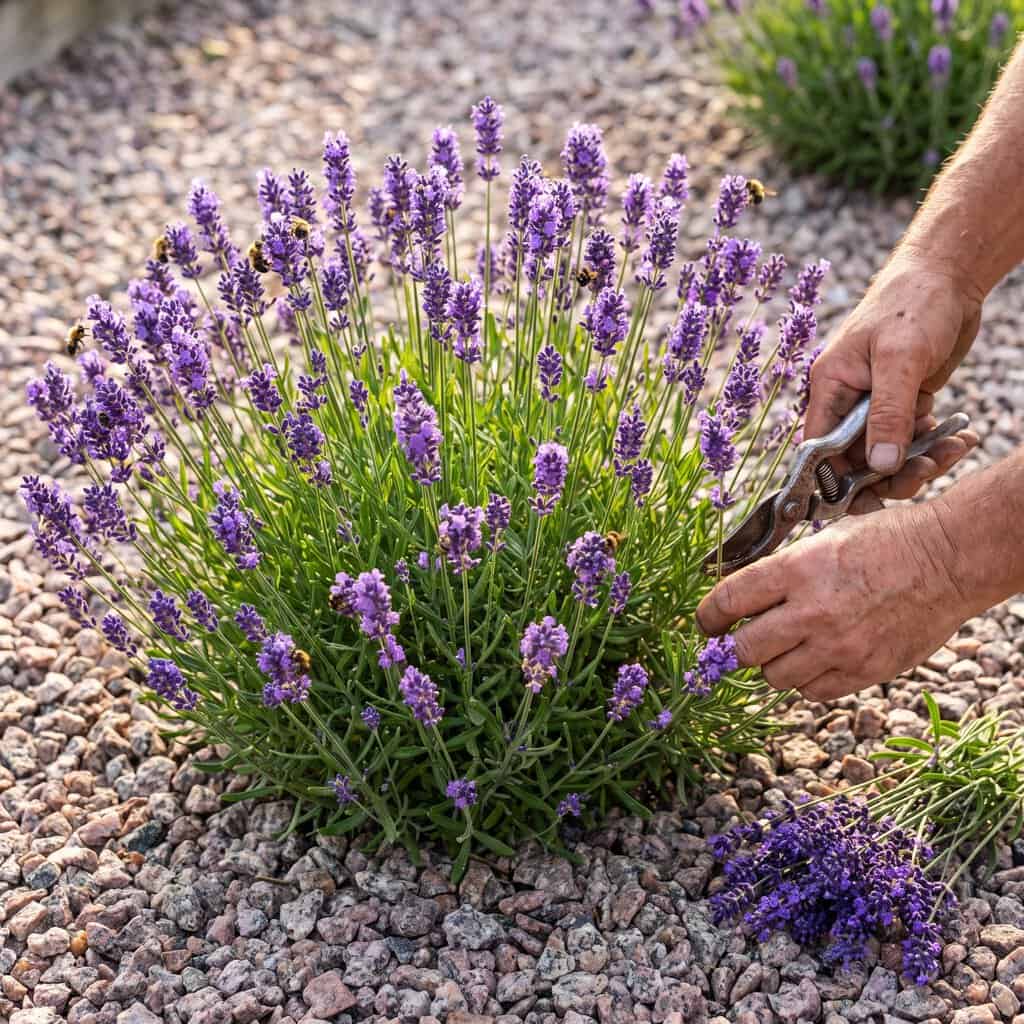
A woody herb that hates being moved and hates being divided even more. Want more of it? Layer a stem into the soil, don’t dig up the plant.
Drainage is the whole game. Lavender rots in wet feet faster than almost anything, so give it grit, gravel, or a slope.
Trim lightly right after flowering to keep it tidy — but never cut back into the old bare wood, because it won’t regrow from there.
Fragrant, bee-covered, pest-free. Get the drainage right and it’ll go for years.
16. Catmint ‘Walker’s Low’
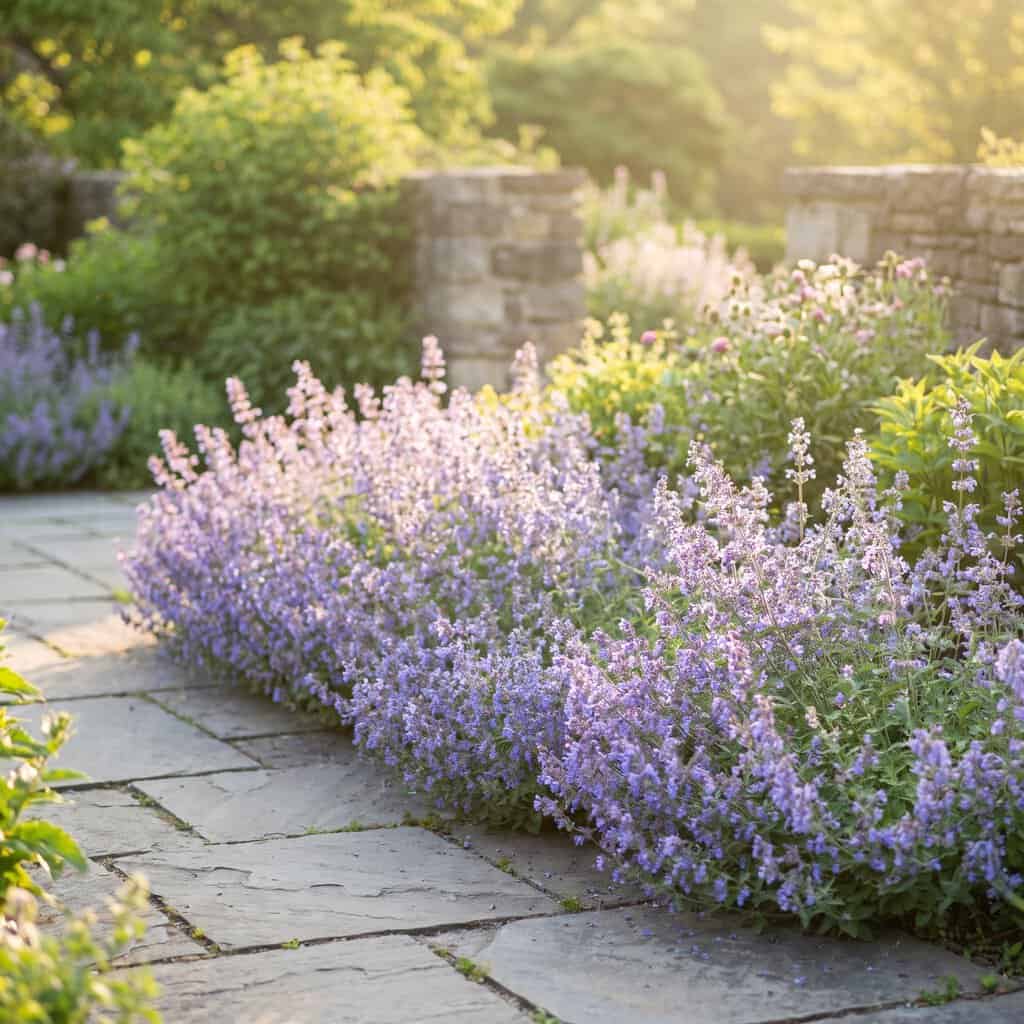
Perennial Plant of the Year for 2007, and a genuinely lazy gardener’s dream.
It blooms lavender-blue from late spring into fall with no deadheading required. Heat and drought roll right off it, and deer walk on by.
It never looks messy the way a lot of long bloomers do, and it rarely needs dividing. Use it to edge a path or spill over a wall.
One shear midsummer if it flops. That’s the entire maintenance schedule.
17. Perennial Salvia ‘May Night’
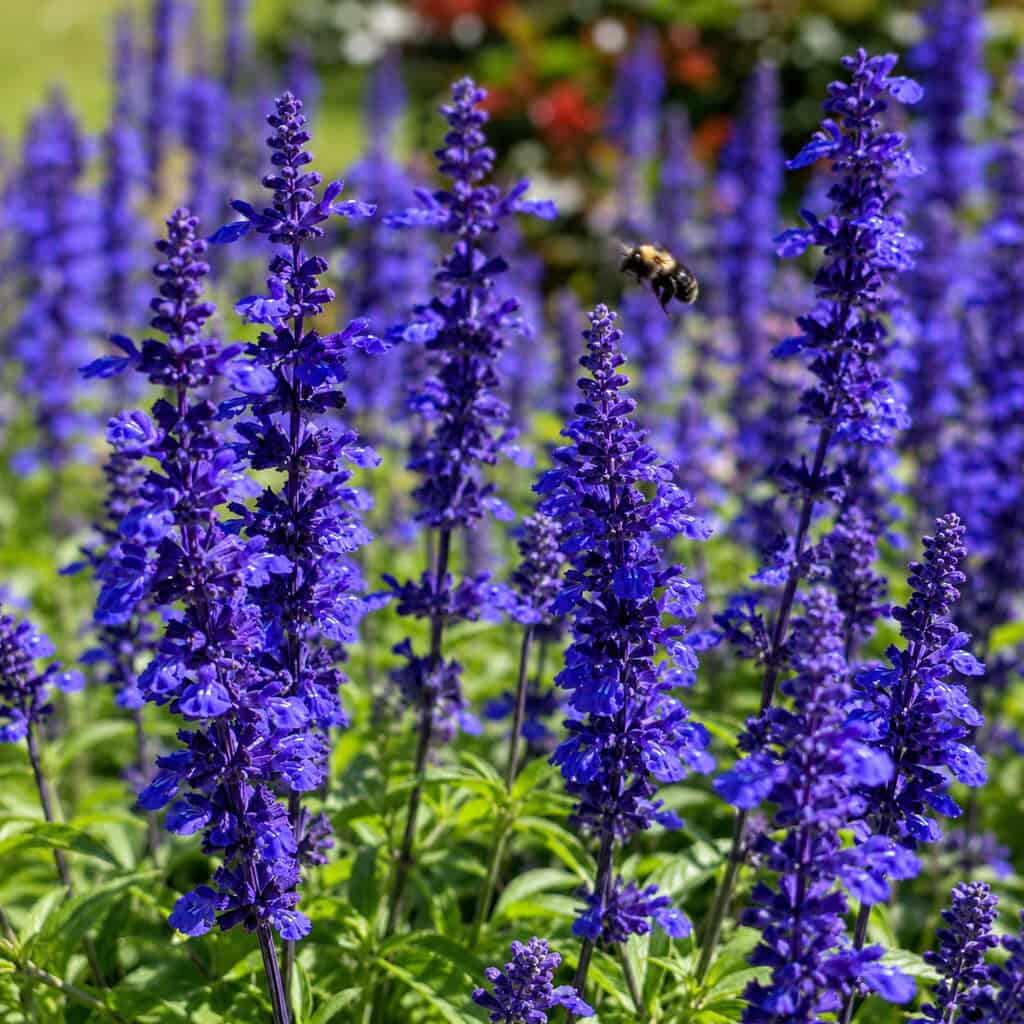
Deep blue-violet spikes starting in late spring, with a second flush if you shear it back after the first fades.
Native bees rank it among their top nectar sources, so it hums all season. Drought- and deer-resistant, and it comes back dependably every single year.
No coddling required. Plant it, shear it once for the rebloom if you feel like it, done.
18. Hardy Geranium ‘Rozanne’ (Cranesbill)
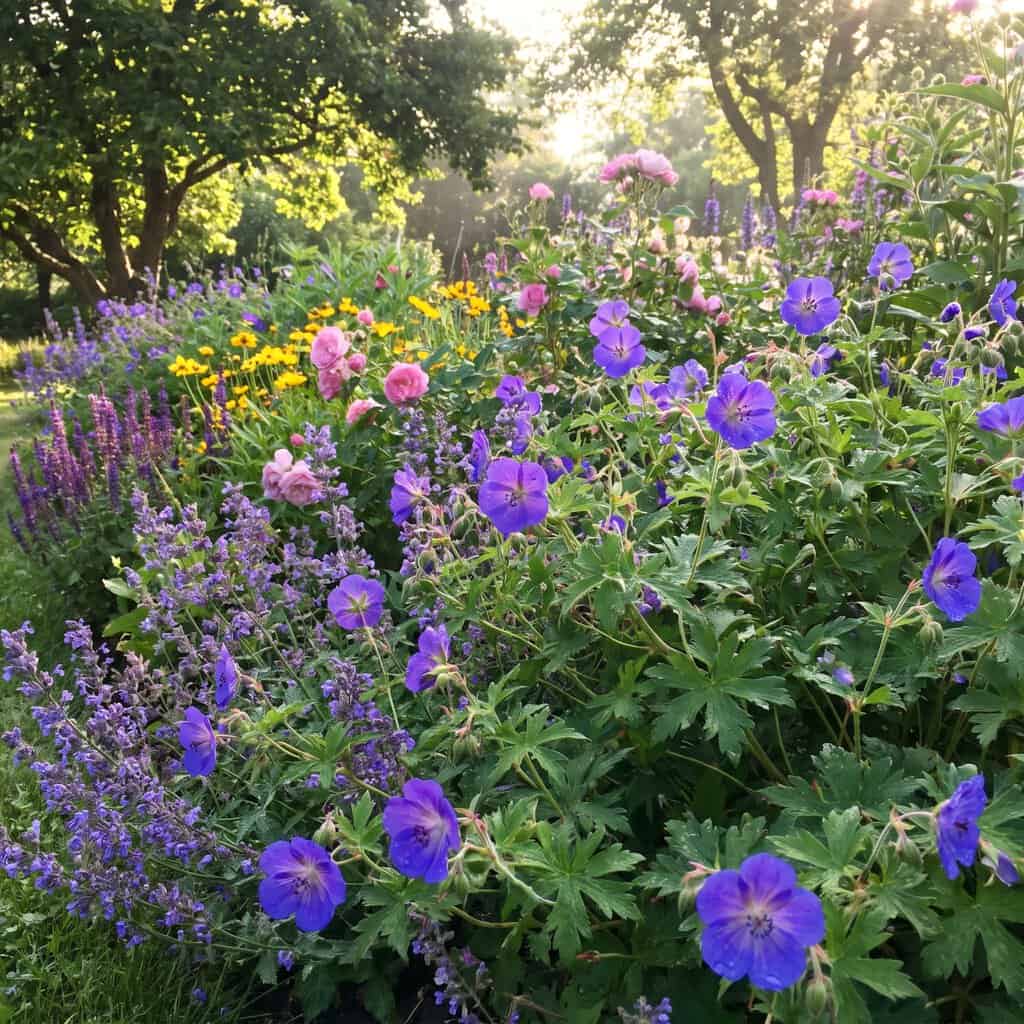
A marathon runner. ‘Rozanne’ flowers in violet-blue from early summer until frost — one of the longest bloom seasons of any perennial.
It’s also genuinely long-lived, which the two rarely go together. BBC Gardeners’ World lists it among its go-to fuss-free plants.
If it sprawls or slows midseason, cut it back by half and it flushes fresh within weeks. Perfect for weaving between poppies and other plants that quit early.
19. Coral Bells (Heuchera)
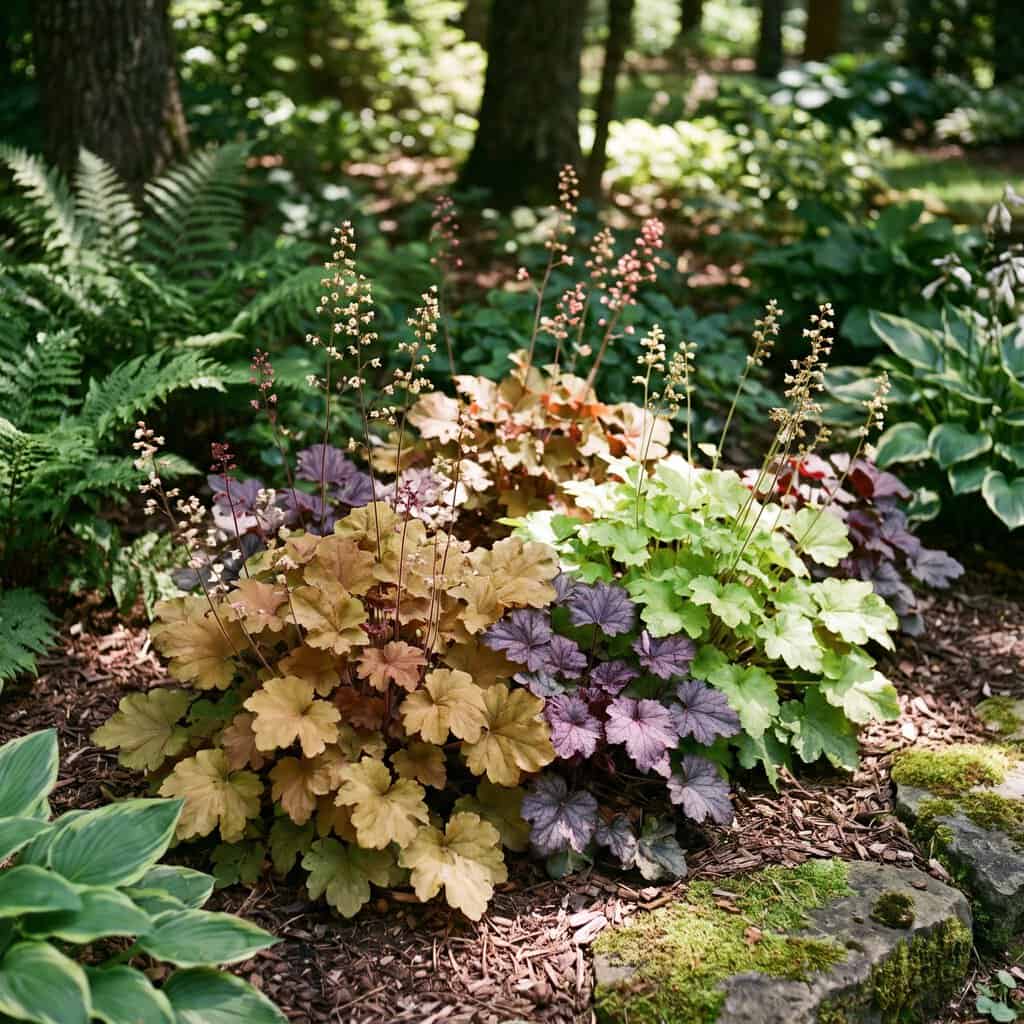
Grown for the foliage, not the flowers — leaves in caramel, lime, plum, and near-black that hold color for months.
Coral bells stay in one tidy clump. They don’t run, don’t sprawl, and never need dividing for their health.
That makes them a rare thing: a plant-once foliage plant that tolerates shade. Tuck them where you want a steady splash of color under taller plants and leave them be.
20. Hardy Hibiscus (Rose Mallow)
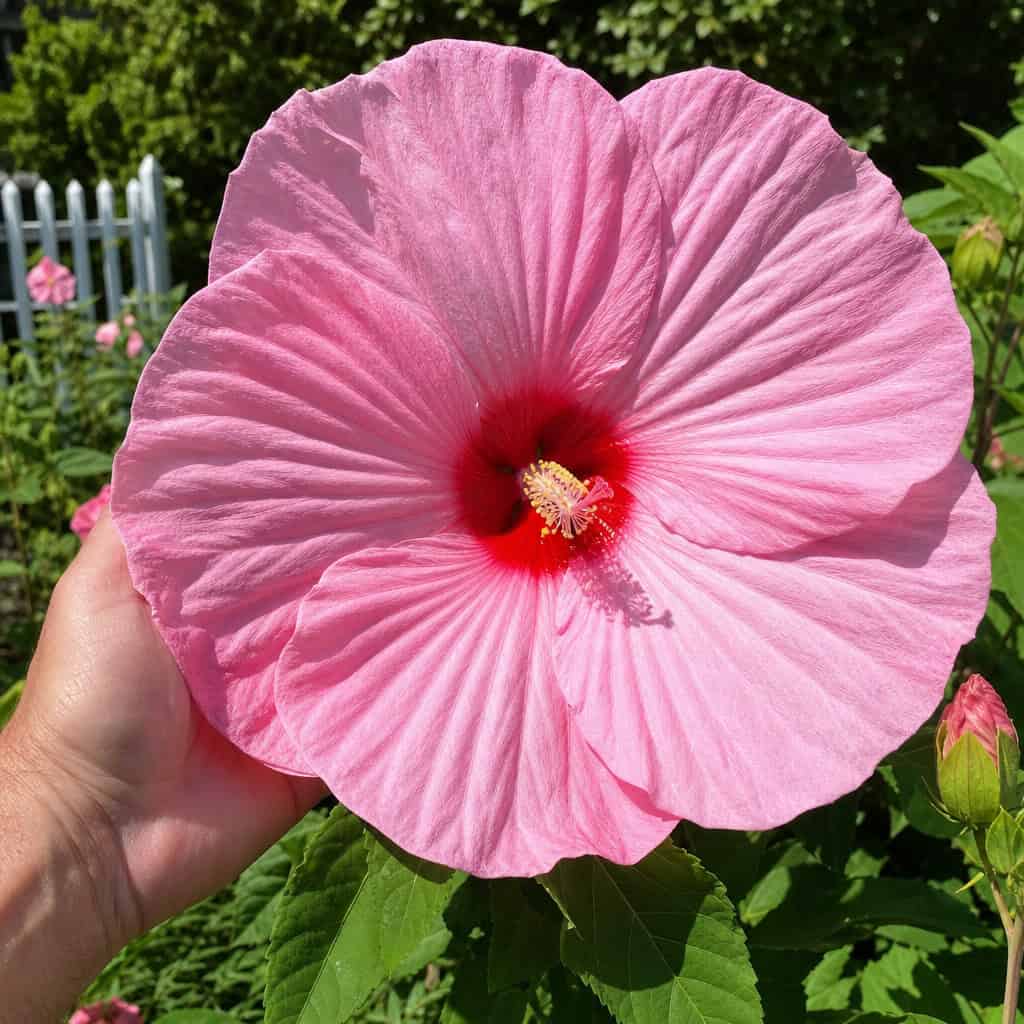
Dinner-plate flowers. Not an exaggeration — the blooms can span nine or ten inches across in high summer.
Like coral bells, it forms a single clump that never needs splitting. Just plant it in sun with room to spread its shoulders.
Here’s the part that panics new owners: it emerges very late in spring, long after everything else has leafed out. It’s not dead. It’s asleep.
Mark the spot so you don’t dig into it while it’s dormant, then wait. It always shows up.
21. Liriope (Lily Turf)
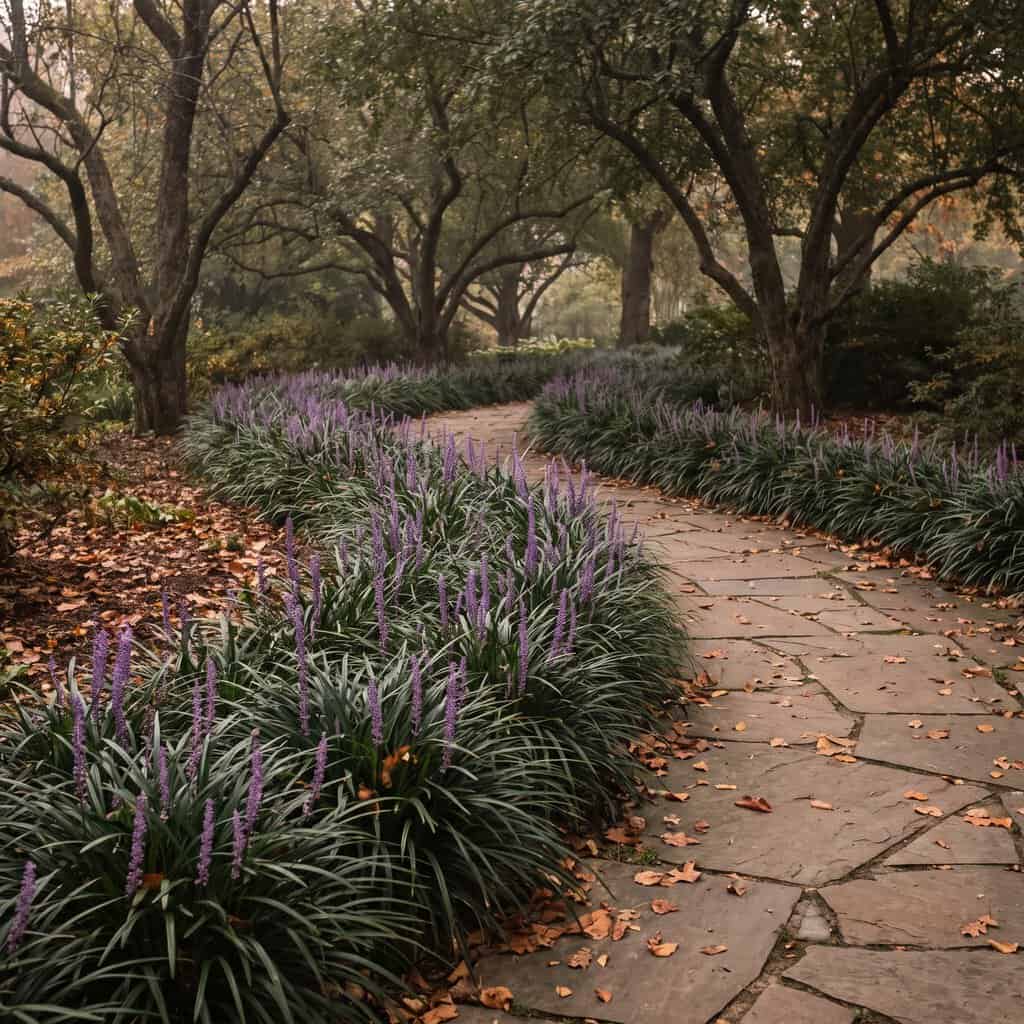
A tough evergreen groundcover for shade, with grassy foliage that stays green through winter.
In autumn it throws up little purple flower spikes just as the rest of the garden shuts down — a last splash of color when you need it most.
Maintenance is a single event per year. Shear it to the ground in early spring before new growth pushes, and it takes care of itself for the other 51 weeks.
22. Daffodils
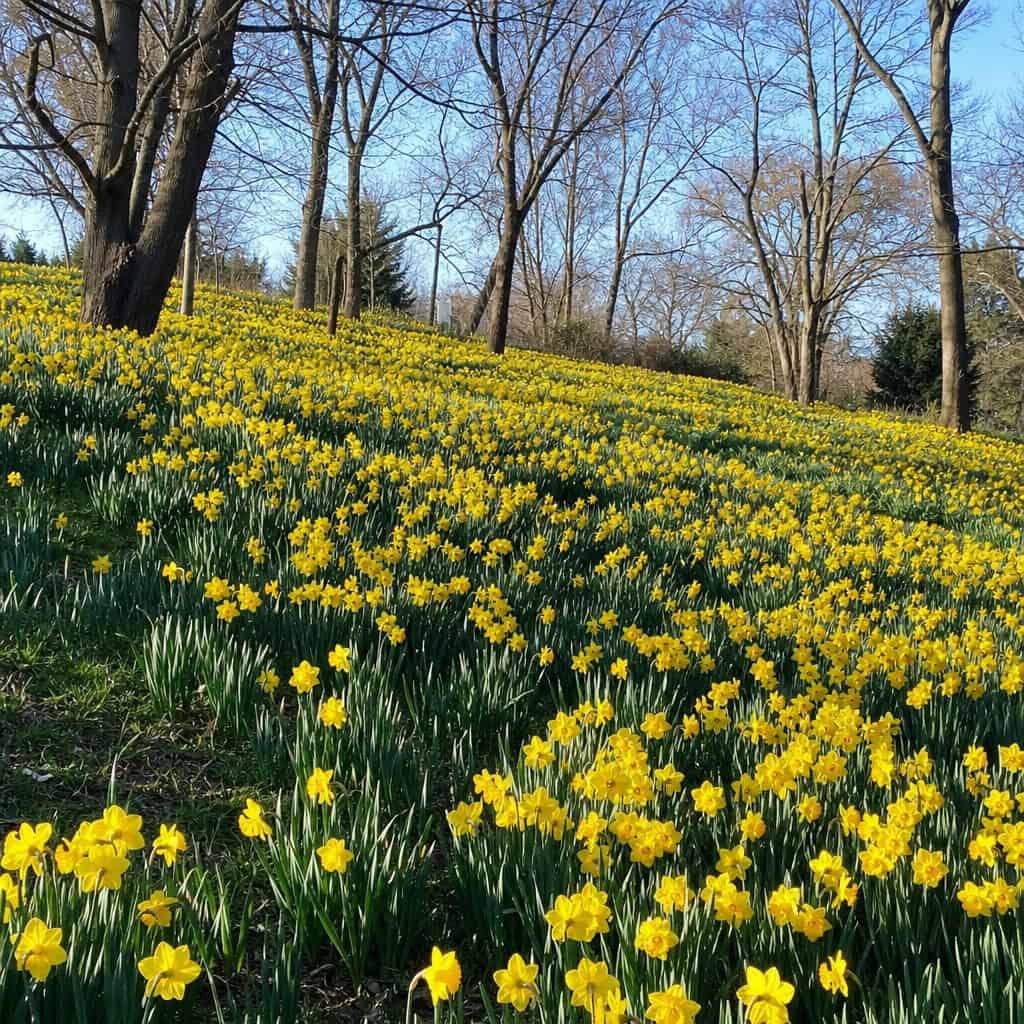
The one bulb that actually earns “plant once.”
Tulips fade and give up after a few years. Daffodils do the opposite — they naturalize into ever-widening golden drifts and get better with age, spreading a little more each spring.
Rodents leave them alone because they’re mildly toxic, which is also worth a note for pet owners. Dogs that dig up and chew the bulbs can get vomiting and drooling, so keep an eye on enthusiastic diggers.
Plant them in fall, scatter them in loose drifts, and watch them multiply for the next 20 years.
23. Swamp Milkweed
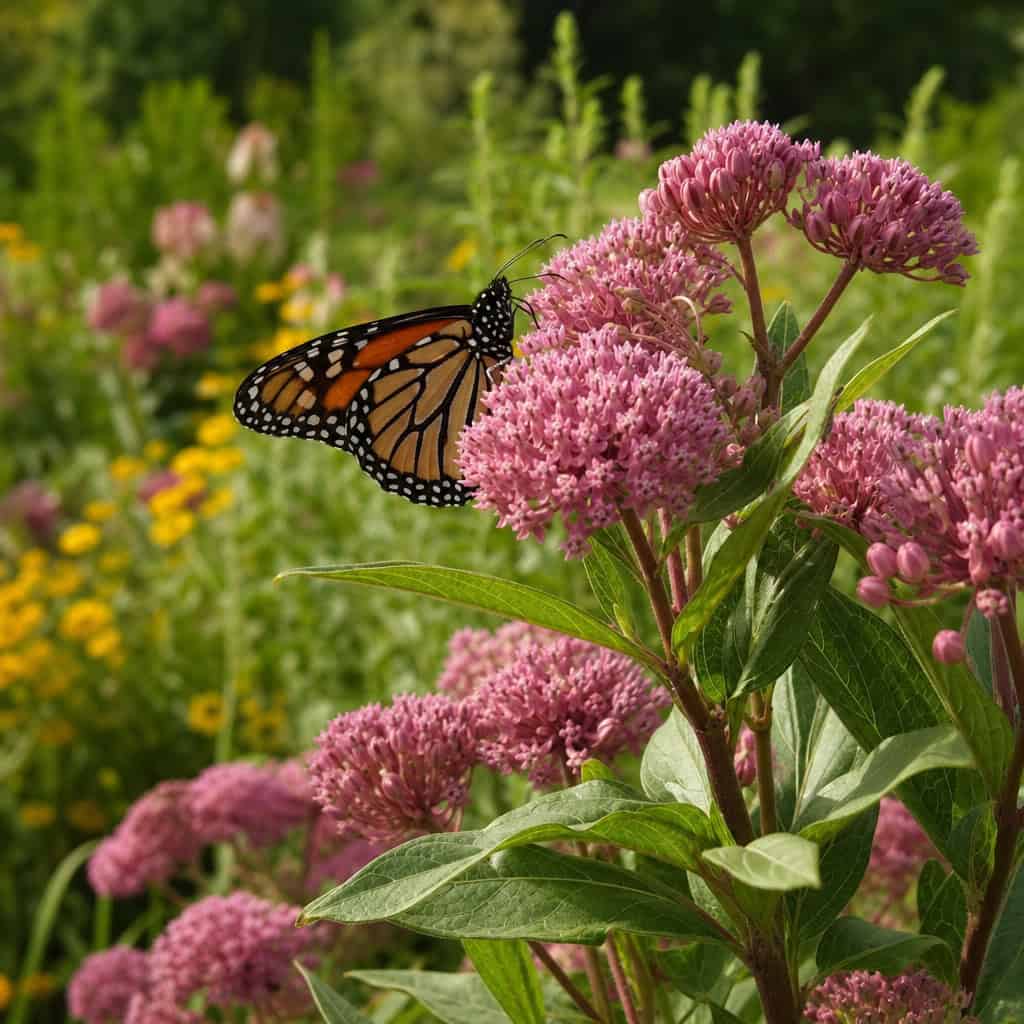
A monarch host plant and a pollinator magnet, and a good native note to close the taprooted plants on.
That taproot means it wants to be left alone once it’s in the ground. Disturb it and you set it back badly.
Don’t let the name scare you off dry yards — despite “swamp,” it handles average garden soil fine. Rose-pink flower clusters in mid to late summer bring in butterflies by the dozen.
Plant it, and you’ve built a monarch nursery that runs itself.
24. Yarrow (Achillea)
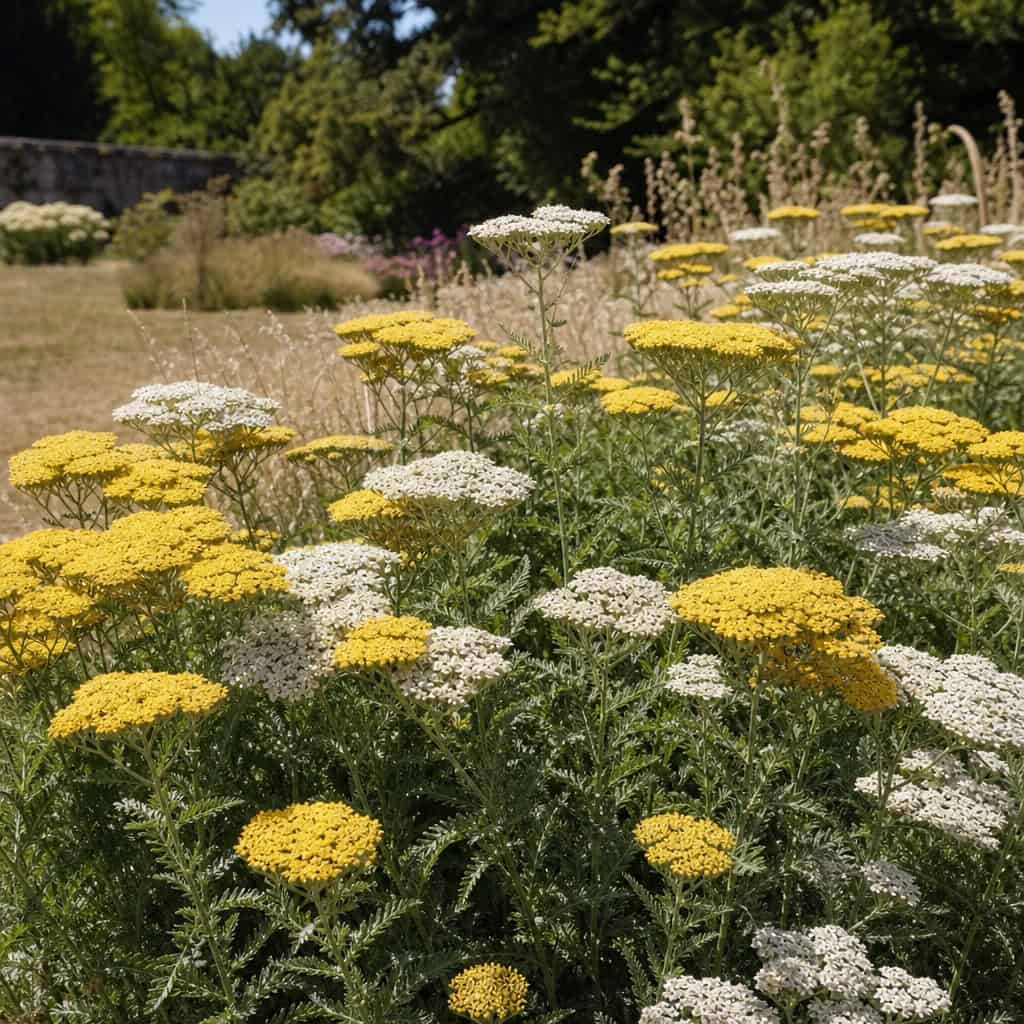
Tough as they come — drought-tolerant, sun-loving, edible, and medicinal, with flat flower heads in white, gold, red, and salmon.
One honest caveat keeps it near the bottom of this list. Yarrow spreads, and it can actually benefit from occasional division to keep the clump vigorous.
So it’s not a pure plant-and-ignore plant the way baptisia is. But if you want a hardy filler that laughs at neglect and don’t mind splitting it every few years, it delivers.
25. Purple Coneflower (Echinacea)
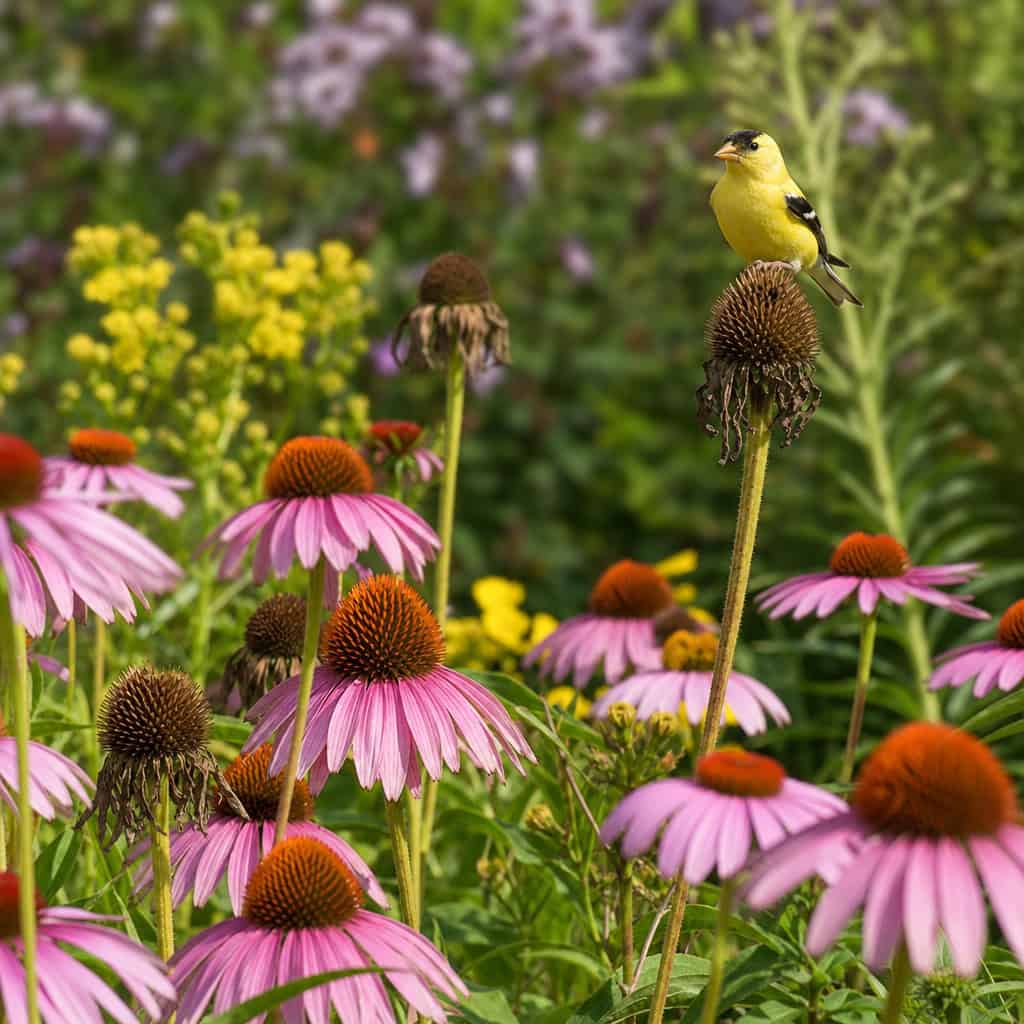
A beloved native, adored by goldfinches and bees, and a fixture of the pollinator garden.
A word of caution before you buy. Many of the flashy newer cultivars — the orange, coral, and double-flowered ones — are short-lived, often fading after three to five years.
Want the plant-once version? Buy the straight species, the plain purple Echinacea purpurea. That one is long-lived, self-sows, and holds a spot for years. Skip the fancy hybrids if longevity is the goal.
26. Shrub / Heirloom Roses
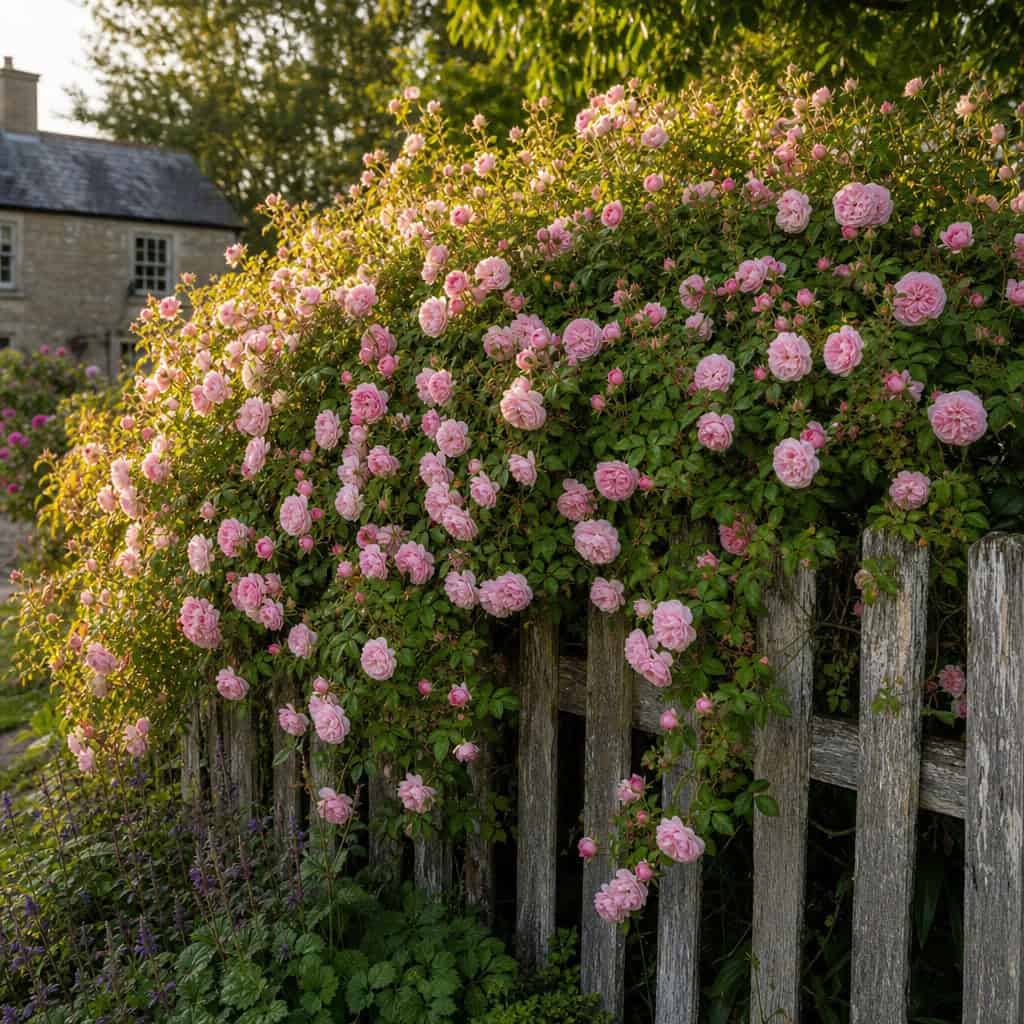
Plenty of shrub and heirloom roses live for decades — some old garden roses have survived a century in abandoned yards.
They’re disease-resistant and genuinely tough, which is why they belong in this conversation at all.
But they earn the last slot for a reason. Roses want annual pruning and feeding to look their best, so they’re higher-maintenance than everything above them. Long-lived, yes. Truly hands-off, no.
If you’ll do the yearly pruning, a good heirloom rose will outlive the fence it climbs.
Conclusion
The best gardens aren’t the ones replanted every spring. They’re the ones planted once, correctly, decades ago — and left alone to get better.
The theme running through this whole list is placement. Get the spot right the first time — the peony’s eyes shallow, the iris rhizome baking in the sun, the poppy where you’ll never need to move it — and the plant does the rest for 20, 50, sometimes 100 years.
And if you have cats, remember the daylily. Longevity and safety aren’t the same thing.
Plant for the person who’ll live in your house 40 years from now. Odds are, some of these will still be blooming when they do.