

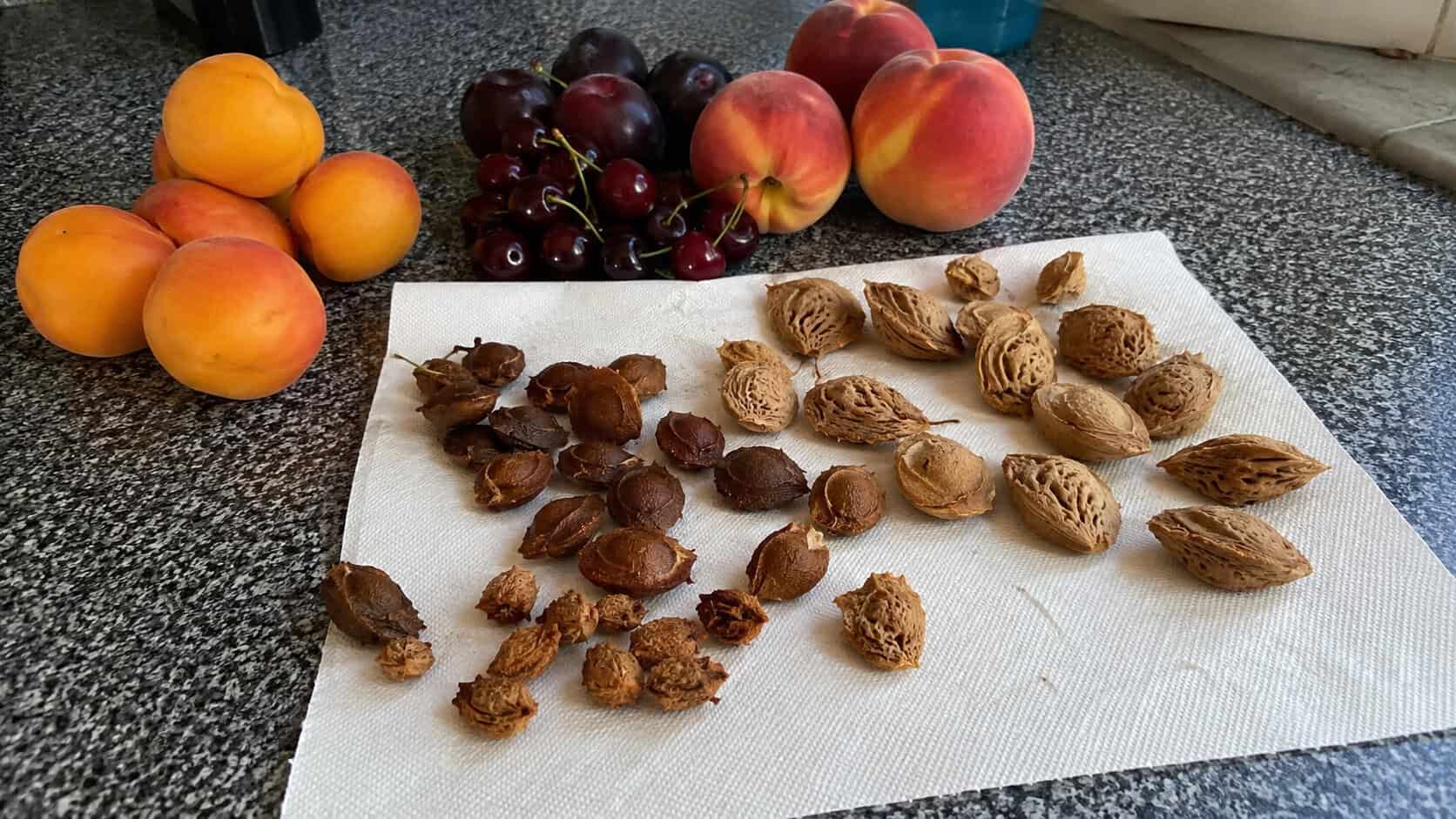
You eat the fruit and toss the middle. Everybody does it.
The pit rattles into the trash. The seeds get scraped off the cutting board. And you never think about them again.
But a lot of those leftovers are fully viable seed — the same seed a nursery would charge you twenty dollars for in a plastic pot. That slimy avocado stone, the dried mango husk, the cherry pits you spit out at a cookout. Real trees, waiting inside your compost bucket.
Some will fruit in a year. Some will make you wait a decade. A few won’t taste like the parent at all, and a couple are honestly better bought as a grafted tree. This guide tells you which is which.
Grab your kitchen scraps. Here are 28 fruit pits and seeds worth planting instead of pitching.
1. Avocado Pit
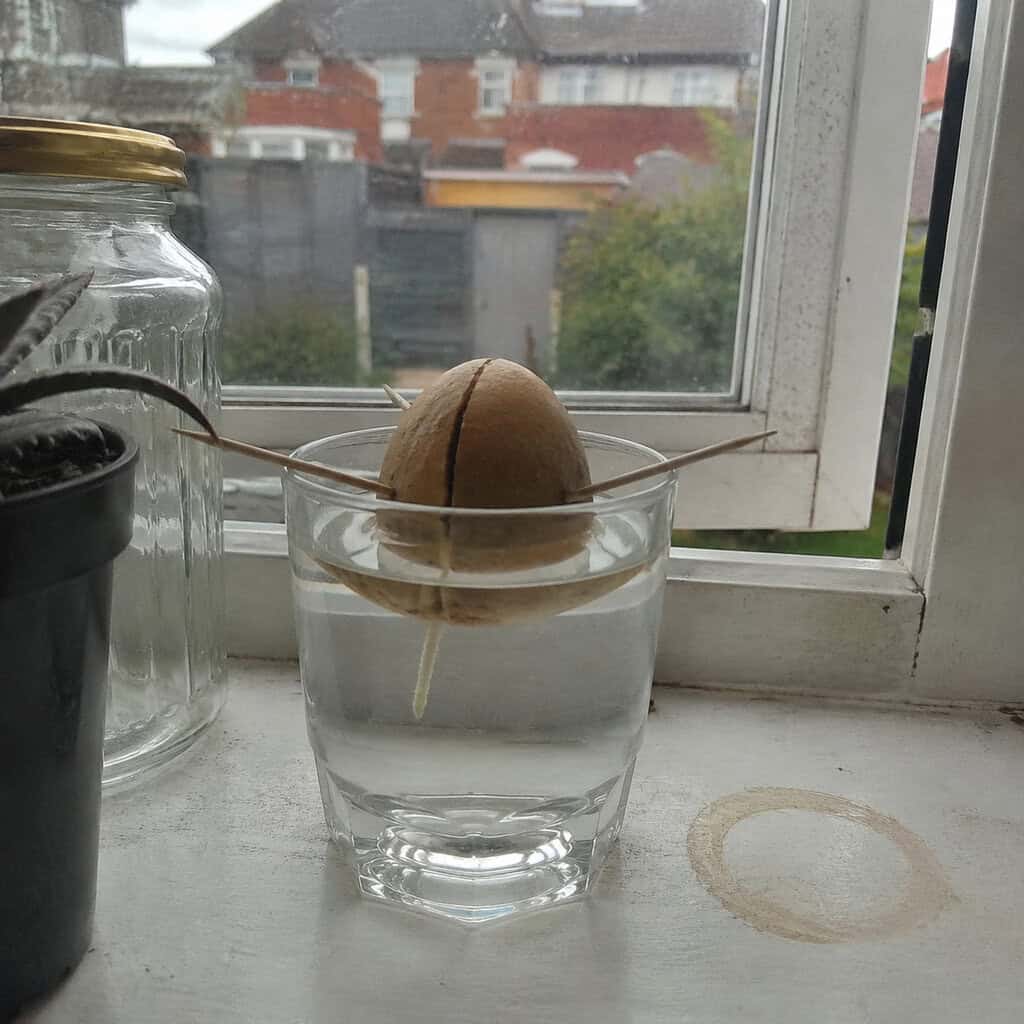
This is the one everybody’s tried. Three toothpicks, a glass of water, a pit balanced on the windowsill.
It works. A rinsed avocado pit will crack open and push out a fat taproot in a few weeks, and you’ll have a leafy little tree not long after. Nebraska Extension lays out the water-glass method step by step if you want the reliable version.
Here’s the honest part. Avocados are heterozygous, which means the pit won’t clone the fruit you ate. You get a surprise.
And if you want actual avocados off it outdoors in zones 9 through 11, plan on waiting anywhere from 5 to 13 years. Most people grow it as a glossy houseplant and never look back.
2. Mango Seed
Most people write off a mango pit as a novelty. That’s the mistake.
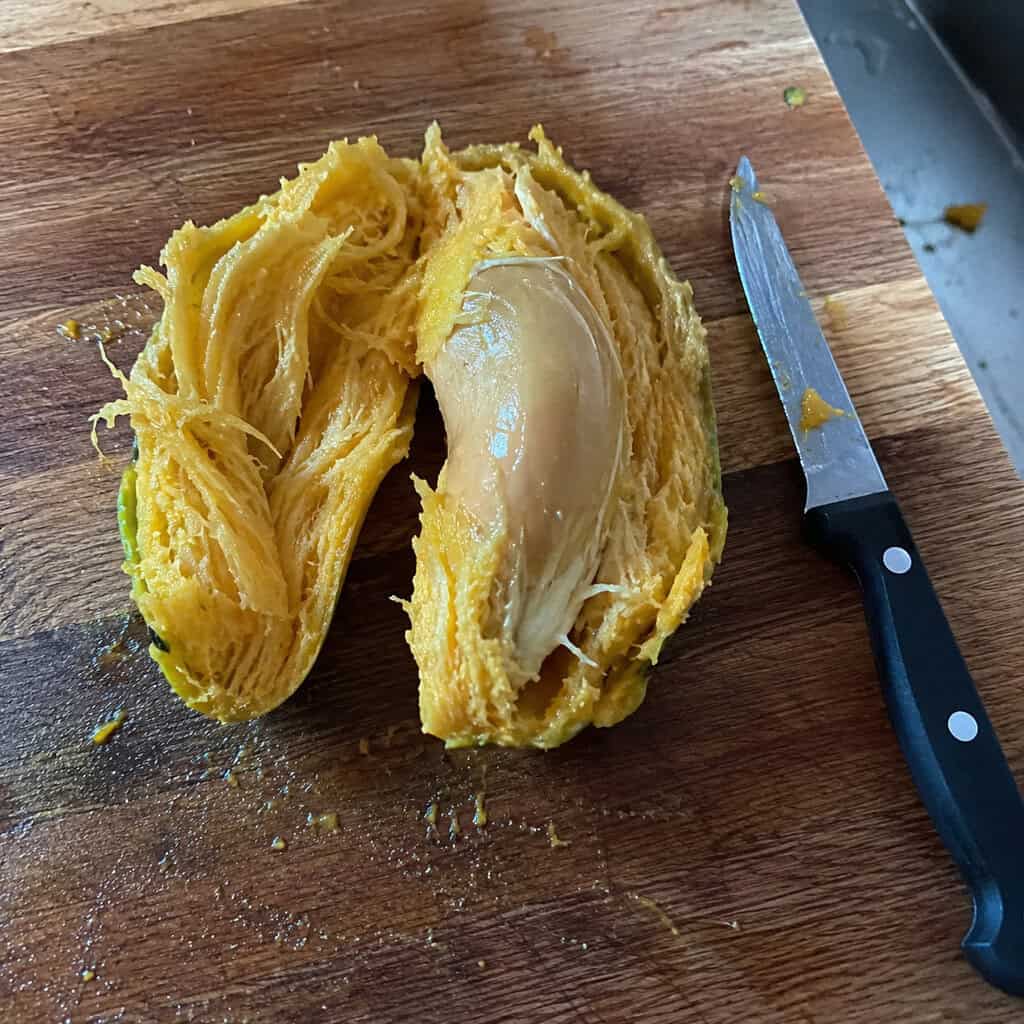
Crack the hard husk open and there’s a big, kidney-shaped seed inside. Plant it and it sprouts fast. The Epic Gardening method walks through prying the husk without wrecking the seed.
The surprise: polyembryonic varieties — Manila, Nam Doc Mai, Kensington Pride — sprout clones of the parent and can fruit in as little as 2 to 4 years, no grafting needed.
One rule though. If the seed dries out, it dies. Plant it within a few days of eating the mango.
3. Peach Pit
The summer treat you toss without a second thought. And it genuinely grows.
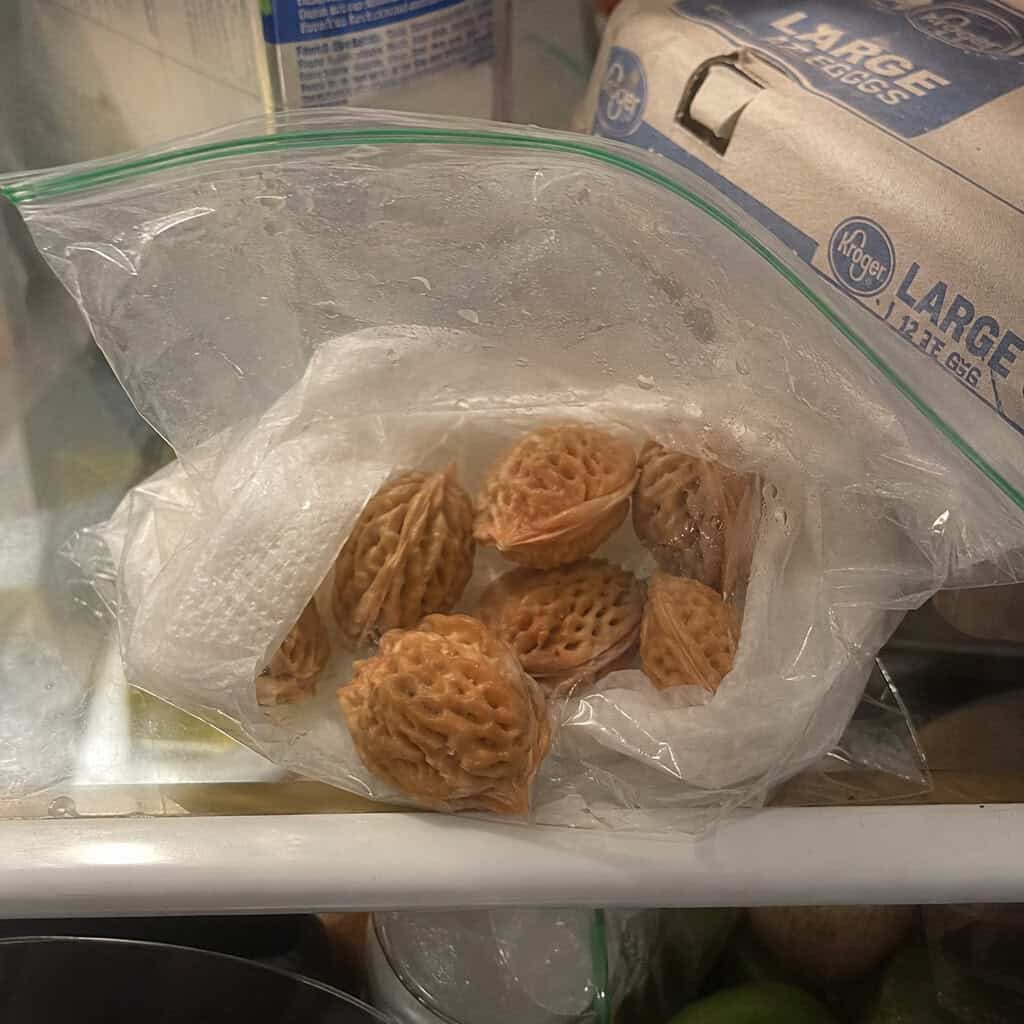
Peaches need a trick, though. The pit has to feel winter before it’ll wake up — a process called cold stratification. You fake it in the fridge: wrap the cleaned pit in damp paper towel, seal it in a bag, and give it 60 to 90 days of cold. University of Illinois Extension has a good rundown of which seeds need this and for how long.
Buy local. A pit from a peach grown in your zone handles your winters better than one from a grocery-store import trucked across the country.
Now the part nobody tells you. Peaches from seed are pest and disease magnets, and if you want fruit worth eating, you’ll manage that from year one. Brown rot turns ripening peaches to fuzzy mush on the branch. Plum curculio, a little weevil, punches crescent scars into young fruit and drops it early.
Two habits keep it in check. Rake up and trash every fallen fruit and mummy — that’s where the spores and grubs overwinter. And spray dormant horticultural oil in late winter before buds break to smother overwintering pests.
Do that and a seedling peach can fruit in 3 to 4 years. Penn State Extension notes seedlings won’t be identical to the parent, but stone fruit comes closer to type than apples do. Often close enough to be worth the wait.
4. Nectarine Pit
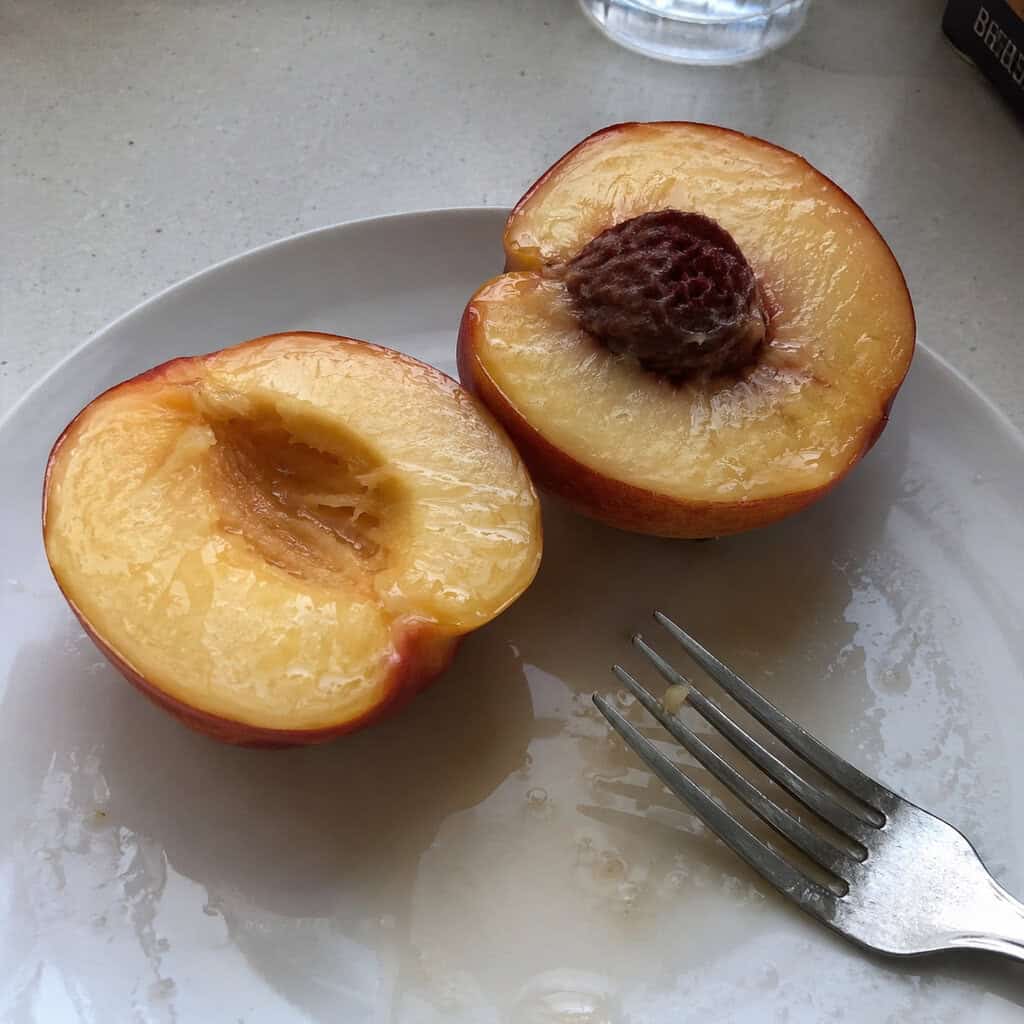
A nectarine is a peach without the fuzz. Same species, one gene apart.
So the process is identical. Clean the pit, stratify it cold for a couple of months, plant it in spring.
Most people never realize the pit is just as plantable as its fuzzy cousin. It is. Same 3-to-4-year timeline, same zones 5 through 9, same pest homework.
Treat it exactly like the peach above and you’re set.
5. Plum Pit
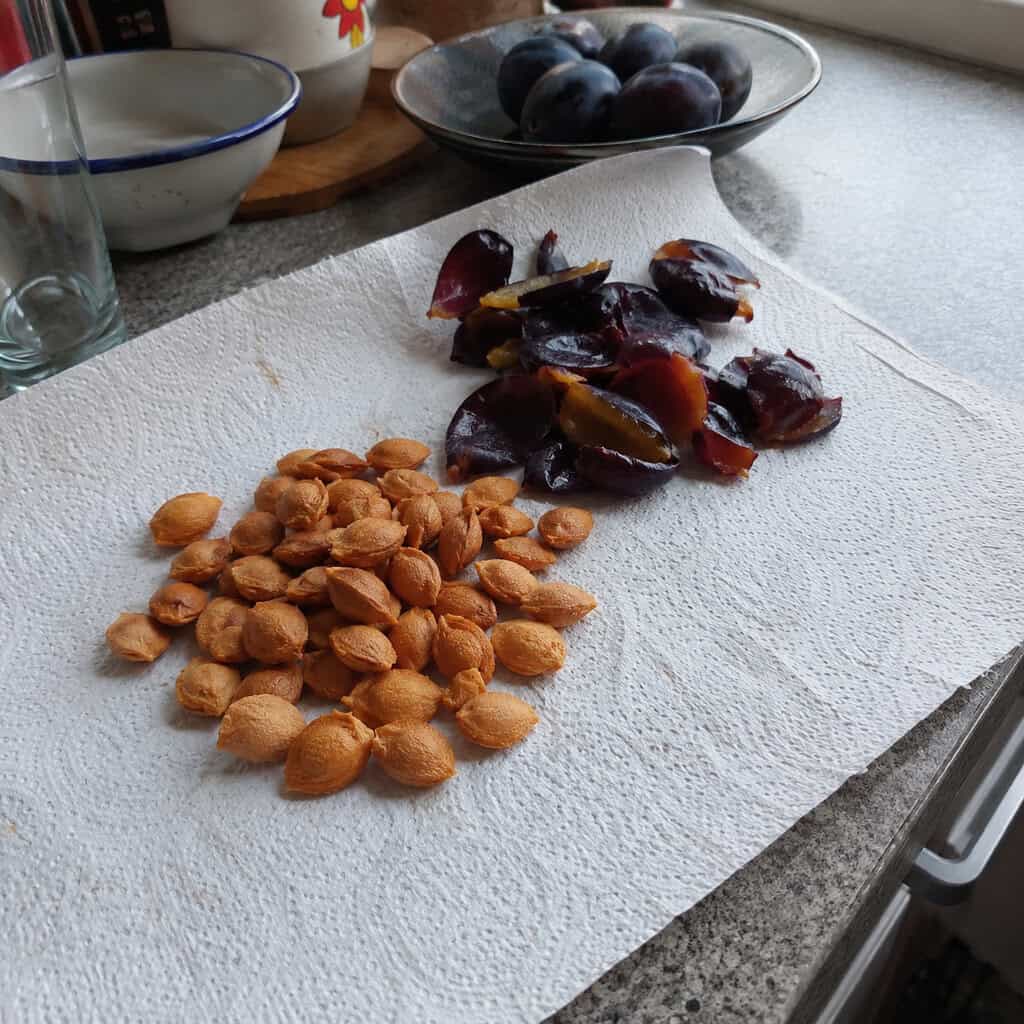
Plums play by the stone-fruit rules — a cold spell in the fridge, then into the ground.
The twist is the odds. Success rates from plum pits run low, so the experts’ advice is simple: plant a bunch. Save every pit through the season and start ten instead of one.
American and Chickasaw plums do best from pit, and as Martha Stewart points out, farmers-market fruit beats the grocery store for viable seed.
Give it 3 to 6 years. Some of those seedlings will surprise you in the best way.
6. Apricot Pit
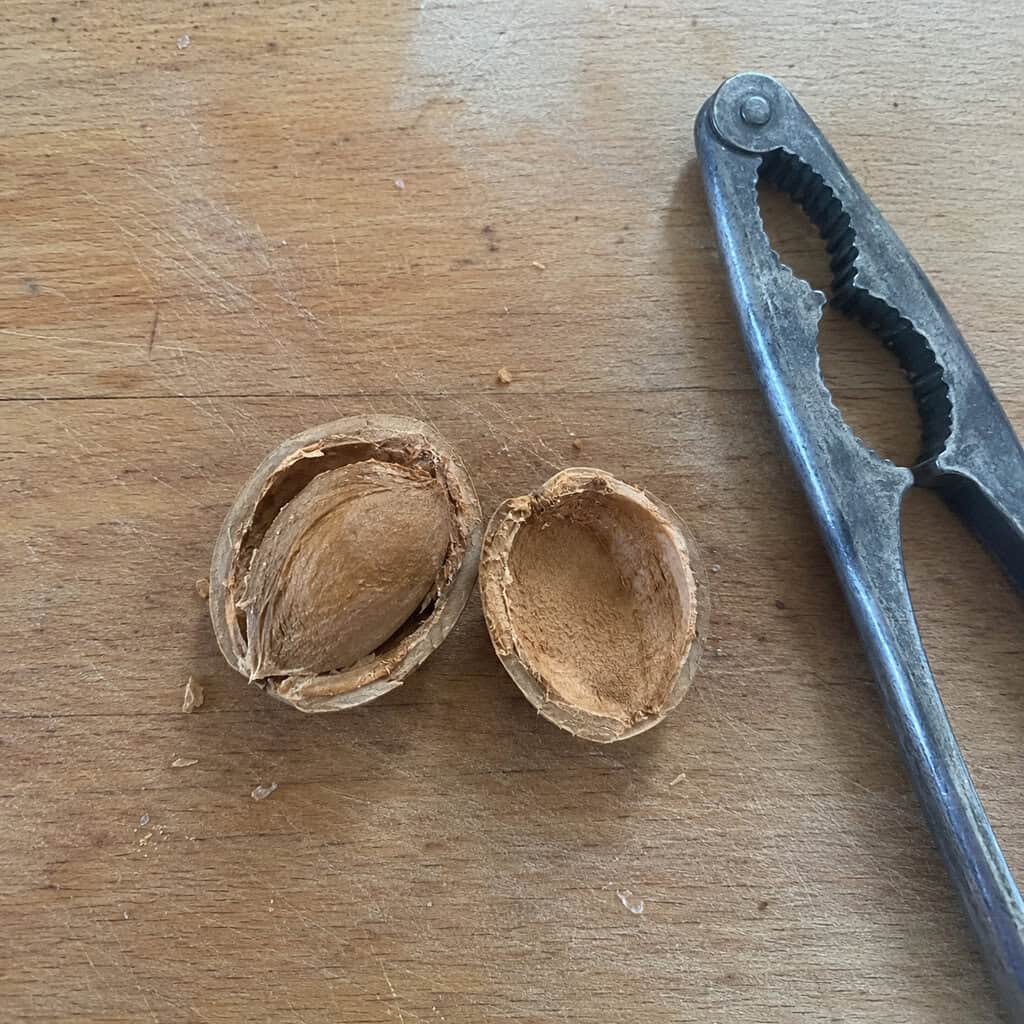
The forgotten member of the stone-fruit trio. Nobody plants apricot pits, and they should.
Crack the hard shell and there’s an almond-shaped kernel inside. That kernel is the actual seed — the whole pit is just armor. Once you’ve seen it, you look at every apricot differently.
Cold stratify like the others, then plant. Expect flowers in 4 to 5 years in a cold-hardy zone.
7. Cherry Pit
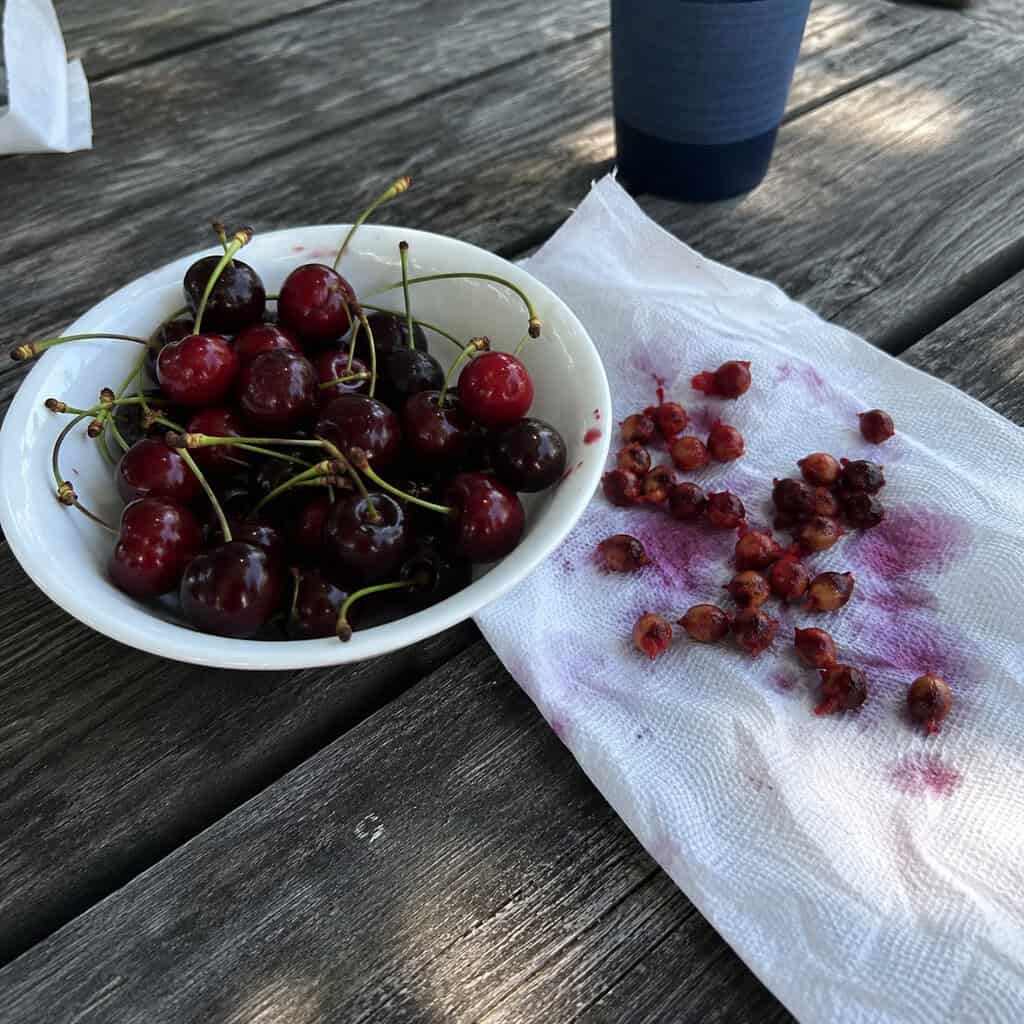
The pit you spit out at a summer barbecue can become a tree. That never stops being a little wild.
Sweet and sour cherries both sprout from pits after a cold stratification. Save them from a bowl of fresh cherries, clean off the flesh, chill them through winter.
Plant in spring and wait. Fruiting takes 4 to 6 years, and like the other stone fruits, the seedling is its own tree — not a carbon copy of what you ate.
Worth it for the nostalgia alone.
8. Lemon Seeds
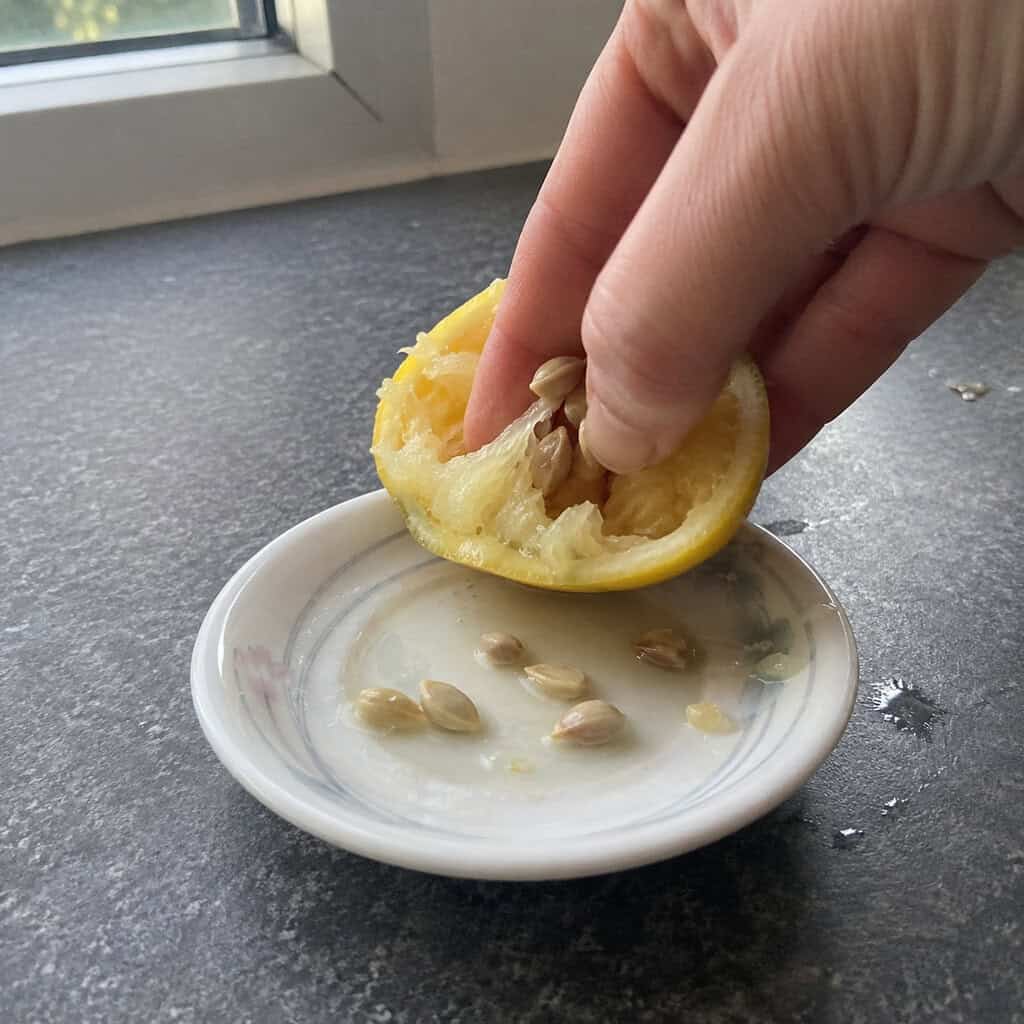
Citrus is where seed-growing gets easy and reliable. Lemons lead the pack.
Pick the plump seeds out of a fresh lemon, rinse off the sugar, and plant them fresh and moist. They sprout readily on a sunny windowsill. The Survival Gardener covers a handful of tropicals from seed and citrus is the gimme of the bunch.
Here’s why citrus beats apples: seedling citrus usually still makes decent, usable fruit even when it’s not identical to the parent. You’re not gambling on garbage.
Zones 8 through 11 outdoors, or a pot indoors anywhere. Fruit in 3 to 5 years.
9. Orange Seeds
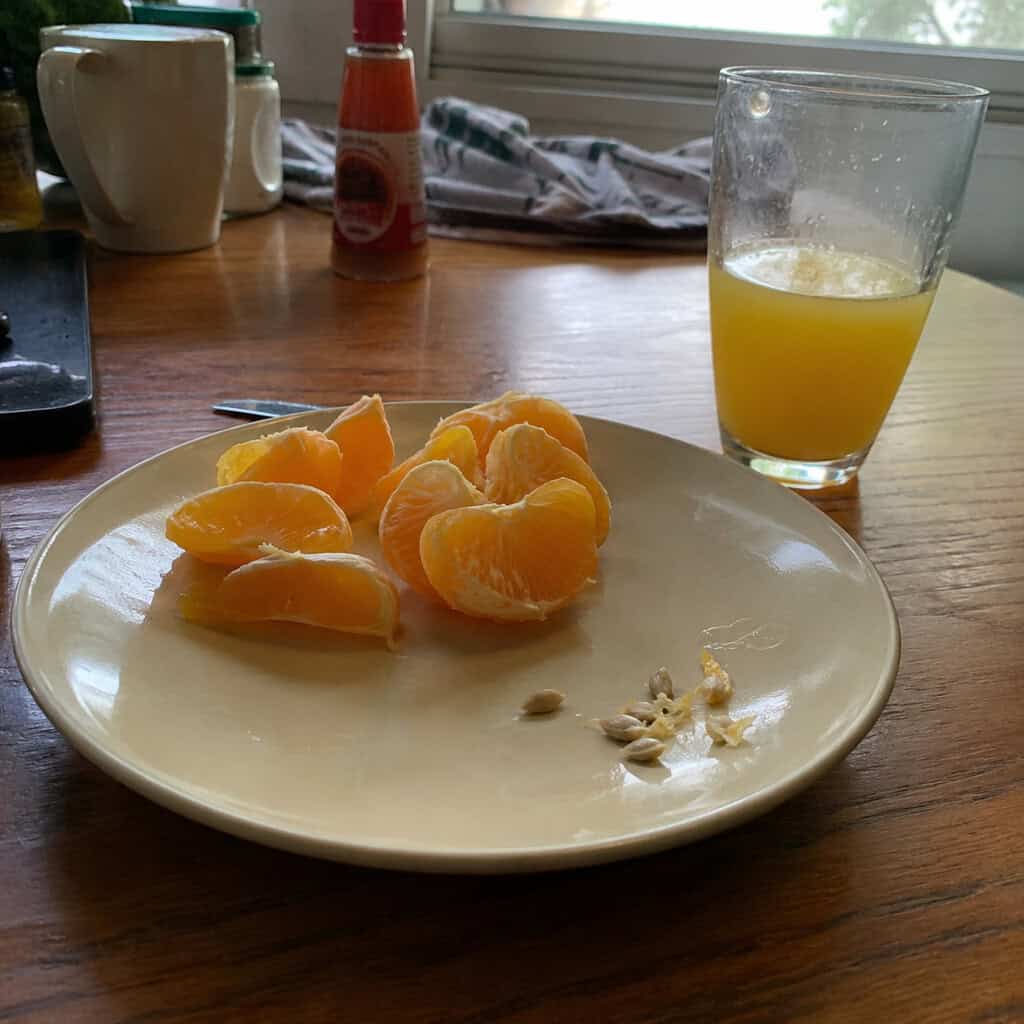
The seeds you flick out at breakfast and never think about? Plump, viable, and easy.
Plant them fresh, keep them warm, and they germinate without fuss. Oranges are often polyembryonic, so the seedlings can closely resemble the parent — a nice contrast to the apple lottery.
It’s slower than lemon. Give it several years to fruit in zones 9 through 11 or a bright indoor spot.
Rewarding, though, and cheaper than any nursery tree.
10. Grapefruit Seeds
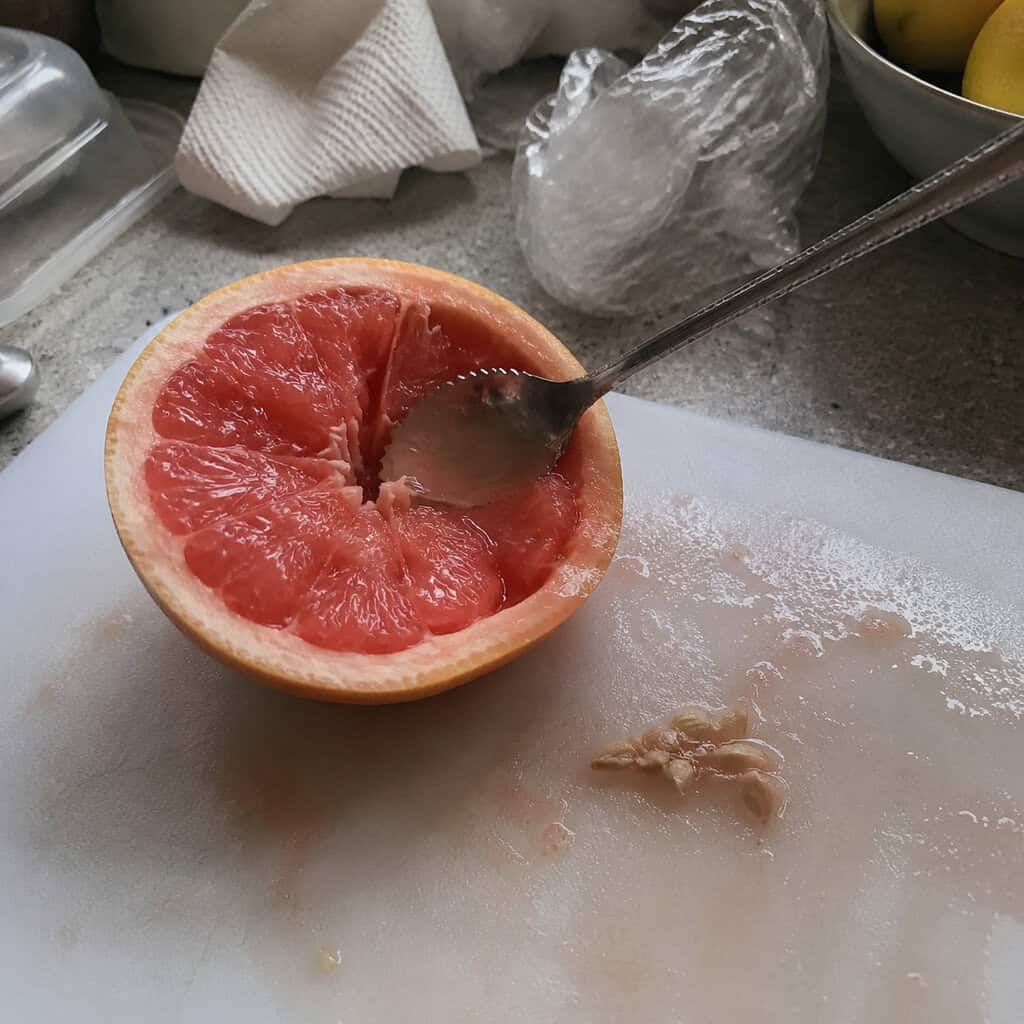
Every family has one member who tests everyone’s patience. In the citrus world, that’s grapefruit.
The seeds germinate just fine — that part’s easy. It’s the wait that gets you. A grapefruit from seed can take 8 to 10 years to fruit.
That long timeline is exactly why nurseries graft their trees instead of growing from seed. Grafting shortcuts the juvenile phase.
Plant it anyway if you’re patient, or in a big pot as a handsome foliage plant. Just know what you’re signing up for.
11. Lime Seeds (Key Lime)
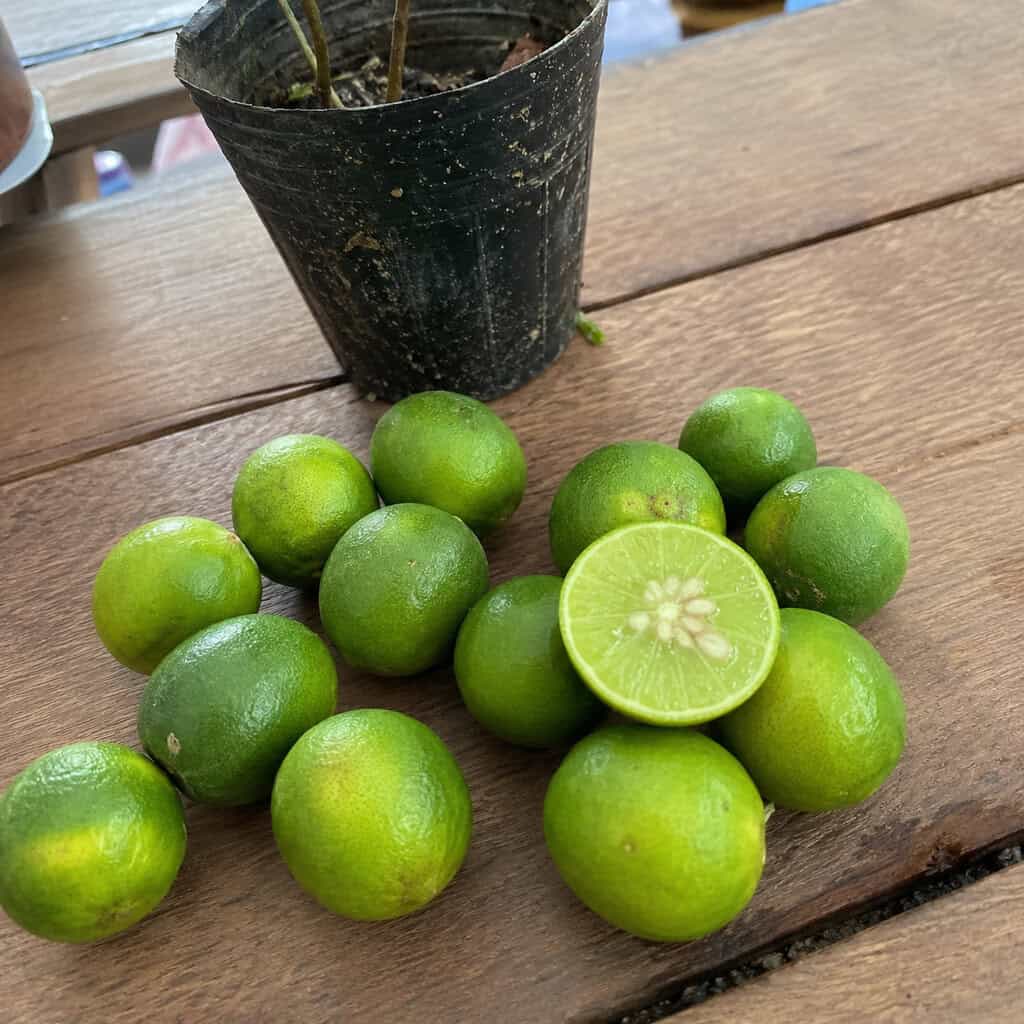
After grapefruit, here’s the payoff. Key limes are the speed demons of the citrus family.
A key lime from seed can fruit in just 2 to 3 years — faster than nearly anything else on this list. Pull the seeds from a fresh lime, plant them moist, keep them warm.
They stay compact enough for a container, which suits their warm-zone-only nature. Bring the pot inside when it’s cold.
The quick win right after the slowest citrus. Nice balance.
12. Mandarin, Clementine & Tangerine Seeds
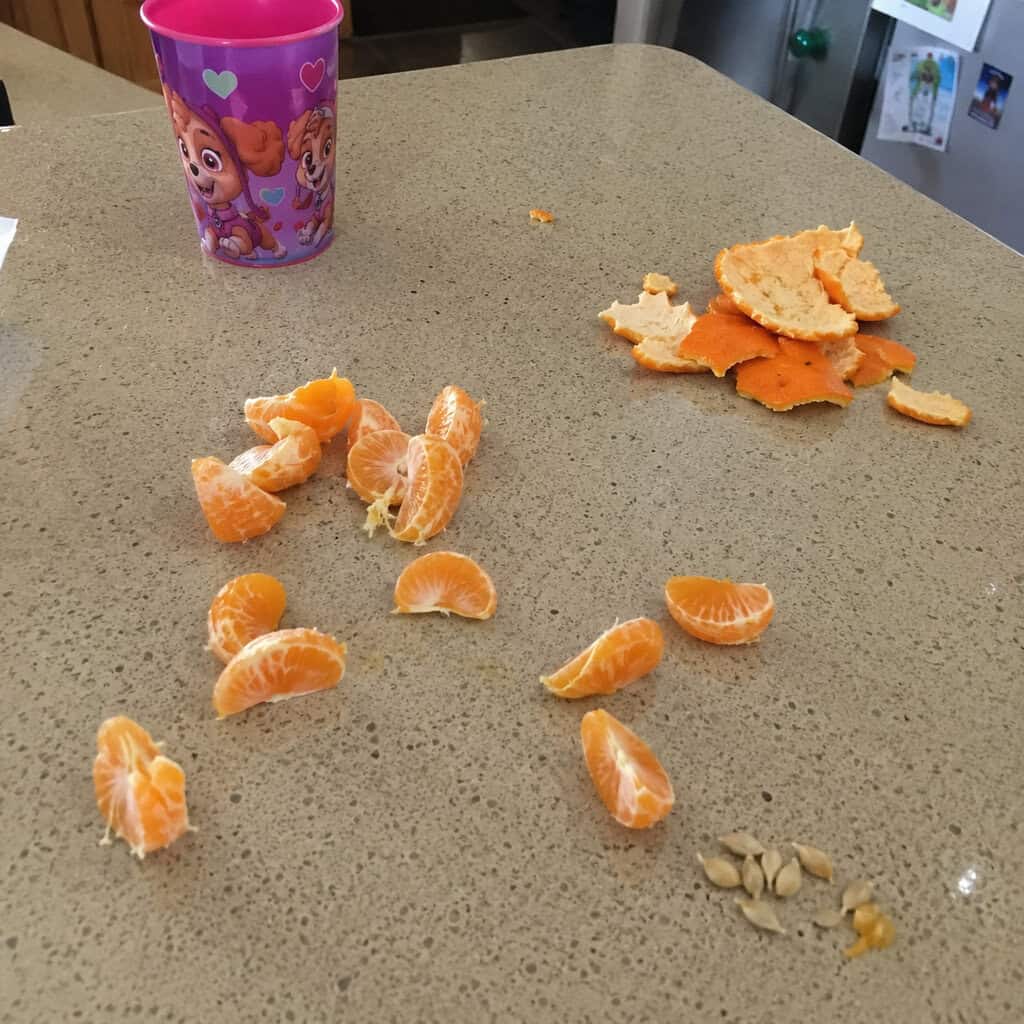
The easy-peel snacks the kids demolish are loaded with plantable seeds. Every one is a candidate.
Some clementines are marketed as seedless, but crack open a bunch and you’ll usually find a few plump ones hiding. Plant those fresh.
They grow like the other citrus — warm zones or a pot indoors, a few years to fruit. Compact trees that don’t mind a container.
Next time your kid leaves seeds on the plate, pocket them.
13. Apple Seeds
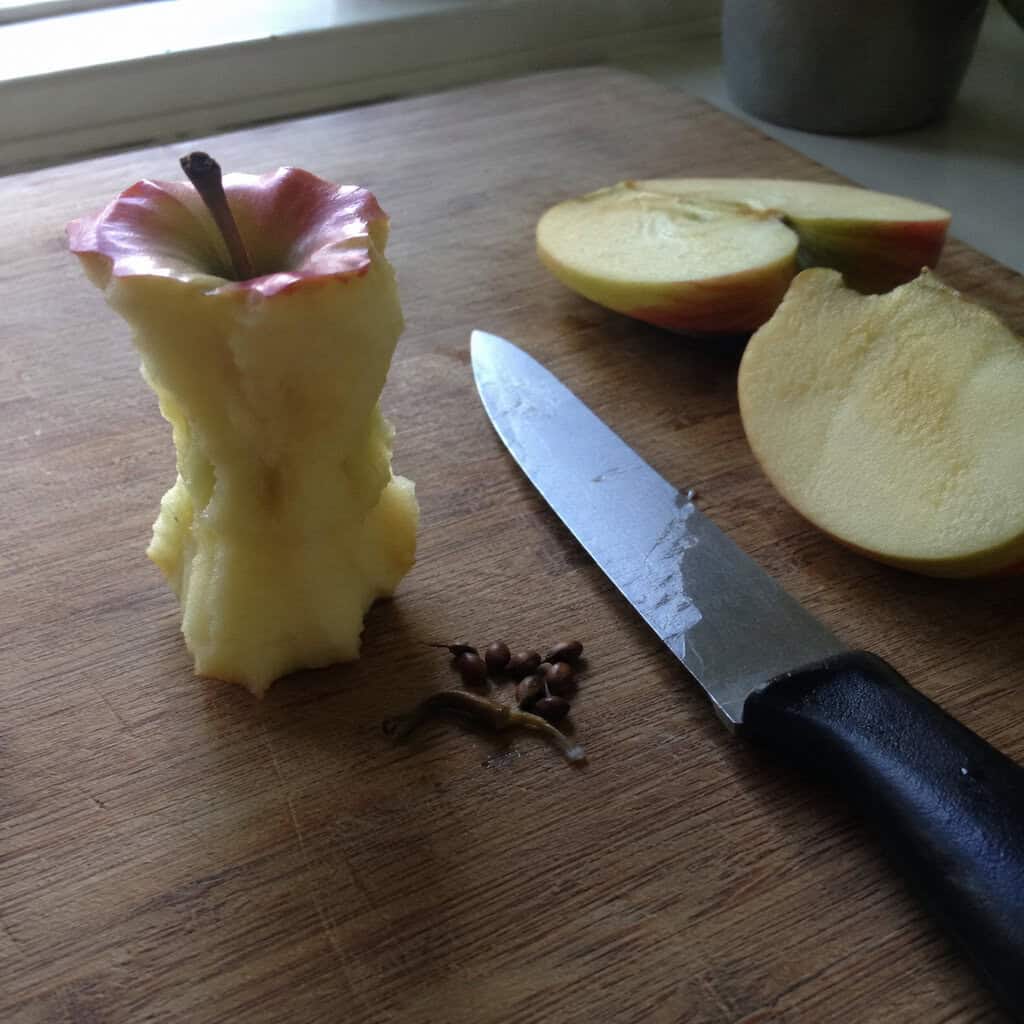
The famous cautionary tale. A Honeycrisp seed never makes a Honeycrisp.
Apples don’t come true to type — plant a seed and you get a total wildcard, usually a tree with small, tart, unremarkable fruit. That’s the reality Iowa State University Extension lays out plainly.
But there’s romance in it too. Every heirloom apple — McIntosh, Granny Smith, Golden Delicious — began as exactly this kind of chance seedling that somebody happened to like enough to graft.
The seeds need about 6 weeks of cold stratification, and fruit takes 7 to 10 years. Plant them for the adventure, not the guarantee.
14. Pear Seeds
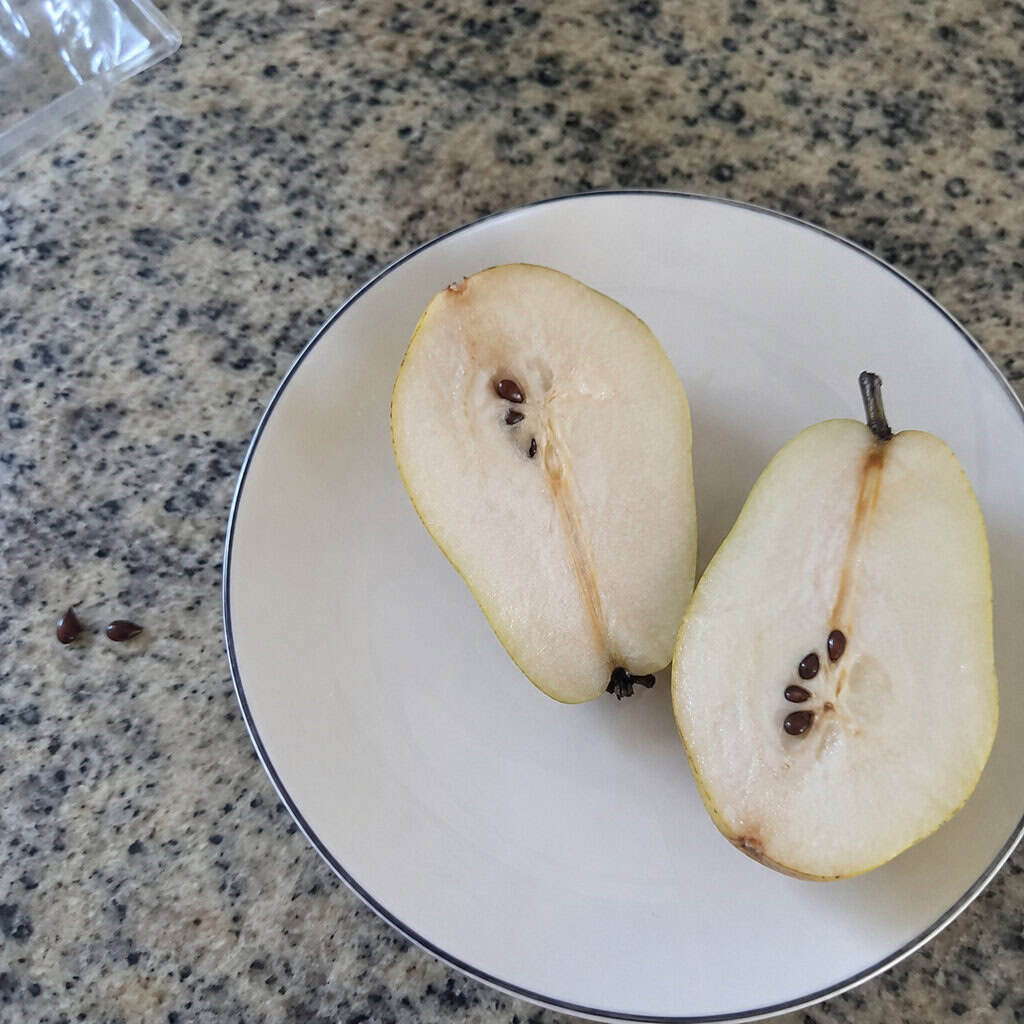
Same story as apple, far less talked about. Pears don’t come true to type either.
The seeds need cold stratification before they’ll sprout, and the seedling is a genetic gamble just like its cousin. Penn State groups them together for exactly this reason.
Most people have never even considered planting a pear seed. That’s what makes it a quiet surprise.
Long odds, long wait. But the same chance-seedling magic that gave us every named pear variety.
15. Pomegranate Seeds
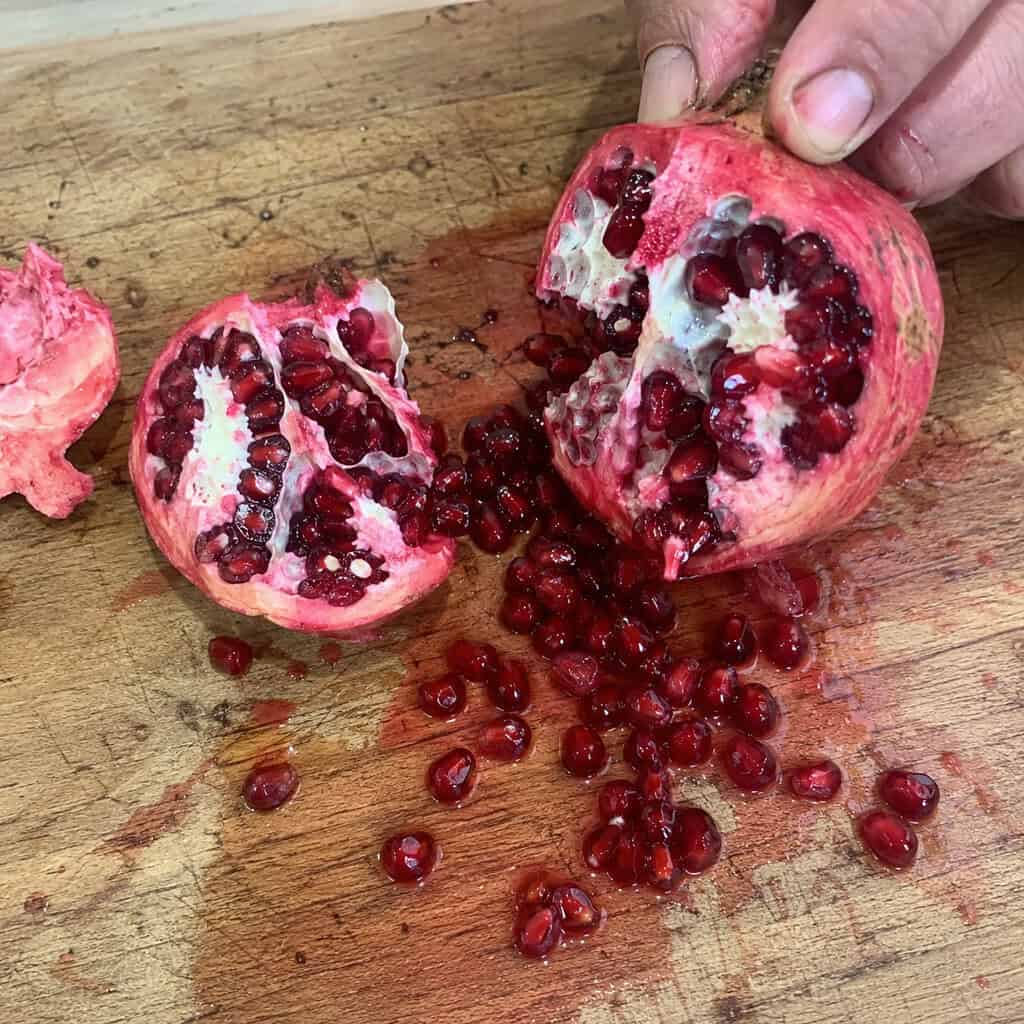
One of the simplest fruit trees to start from seed. Germination is famously forgiving.
Scoop the seeds, rinse off the juicy pulp, dry them a day or two, then plant. They come up without much drama, and you get showy orange-red flowers as a bonus even before any fruit sets.
Most store pomegranates are hybrids, so the flavor you get varies. But the plant itself almost wants to grow.
Hot, sunny zones outdoors or a big container. A very easy yes.
16. Persimmon Seeds
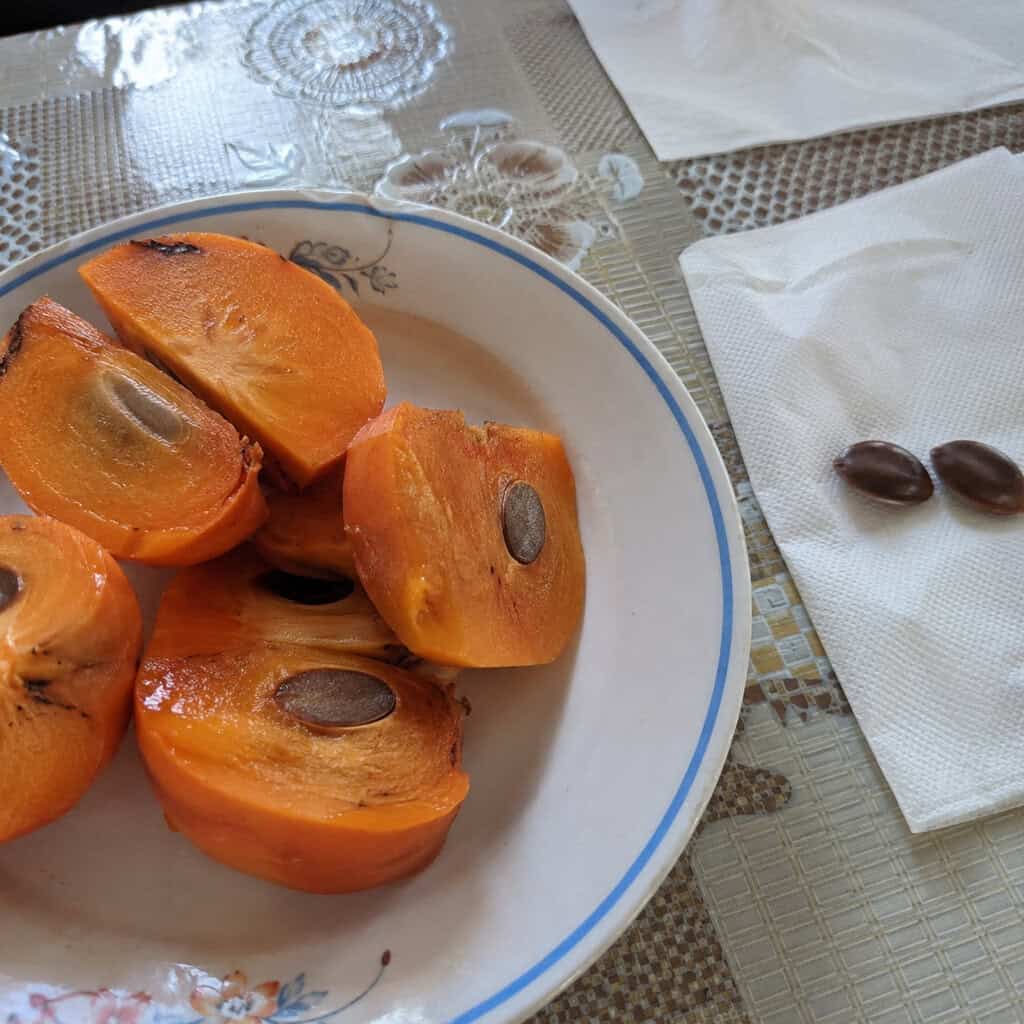
The “fruit of the gods” is underrated in the U.S., which makes it a genuine discovery.
Persimmons are drought-tolerant, low-fuss, and fruit relatively fast from seed — around 3 to 5 years. The seeds need a cold stratification, then they’re off. My Kitchen Garden walks through the whole thing.
The tree itself is gorgeous in fall, hung with orange fruit after the leaves drop.
If you’ve only ever bought them at the store, growing one feels like a small secret.
17. Date Pit
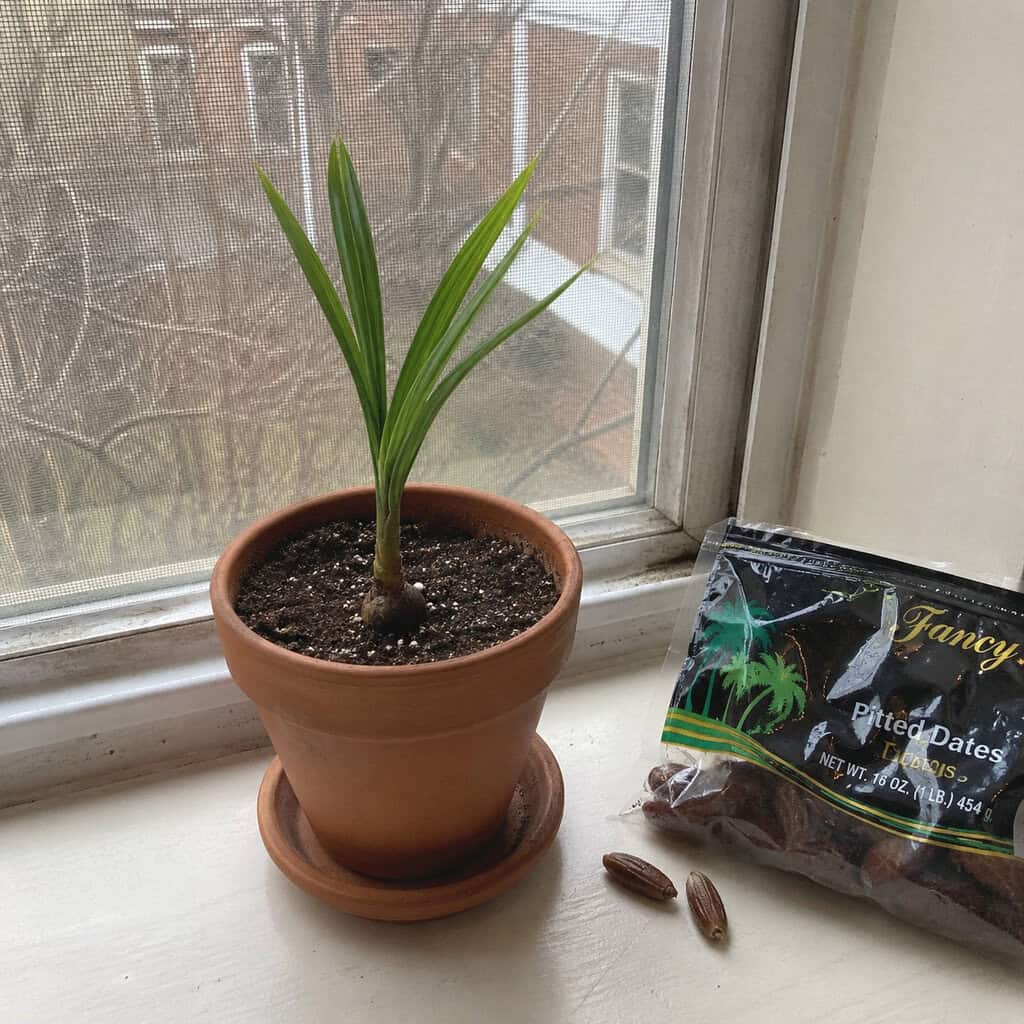
Save a pit from your snack dates and it really does sprout a palm. Great kitchen-scrap project for a windowsill.
Soak the pit a few days, plant it in warm soil, and be patient — germination is slow. What comes up is a feathery little palm that looks fantastic in a pot.
The honest caveat gives this one teeth. As Martha Stewart notes, true date palms hit 80-plus feet and need both a male and a female plant to fruit.
So most people grow it as a houseplant curiosity, or buy a pygmy date palm if they want the look without the skyscraper. Fruit’s a long shot at 5-plus years, in desert zones only.
18. Loquat Seeds
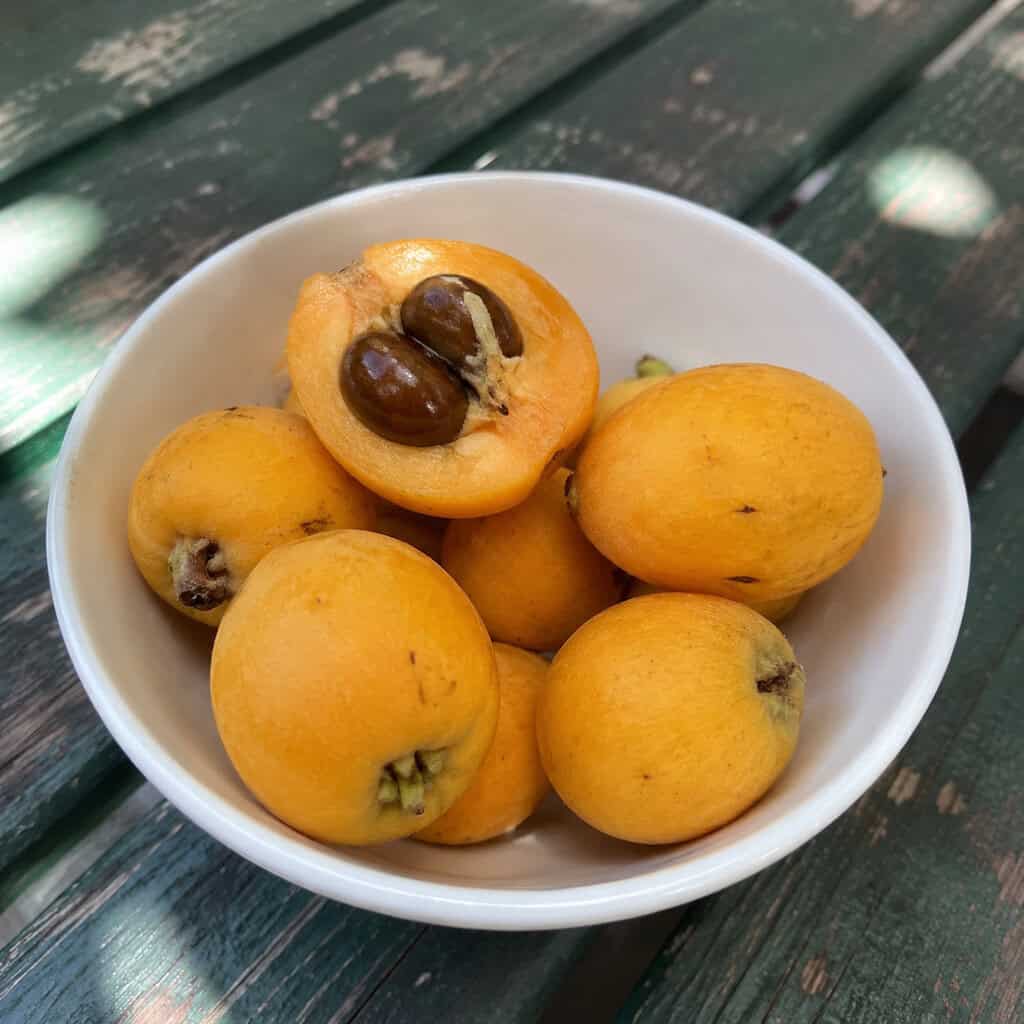
An underrated spring fruit with big, glossy brown seeds inside. Those seeds germinate easily.
Plant them fresh — they don’t like to dry out — and they sprout reliably. Real growers report seedlings that fruit well and taste good, which isn’t a given with seed-grown trees. The Epic Gardening guide covers it.
Loquats are evergreen and handle mild frost, making them a rare tropical-looking tree for the South and Southwest.
Zones 8 through 11, and some fruit in just a couple of years. A sleeper pick.
19. Lychee Seed
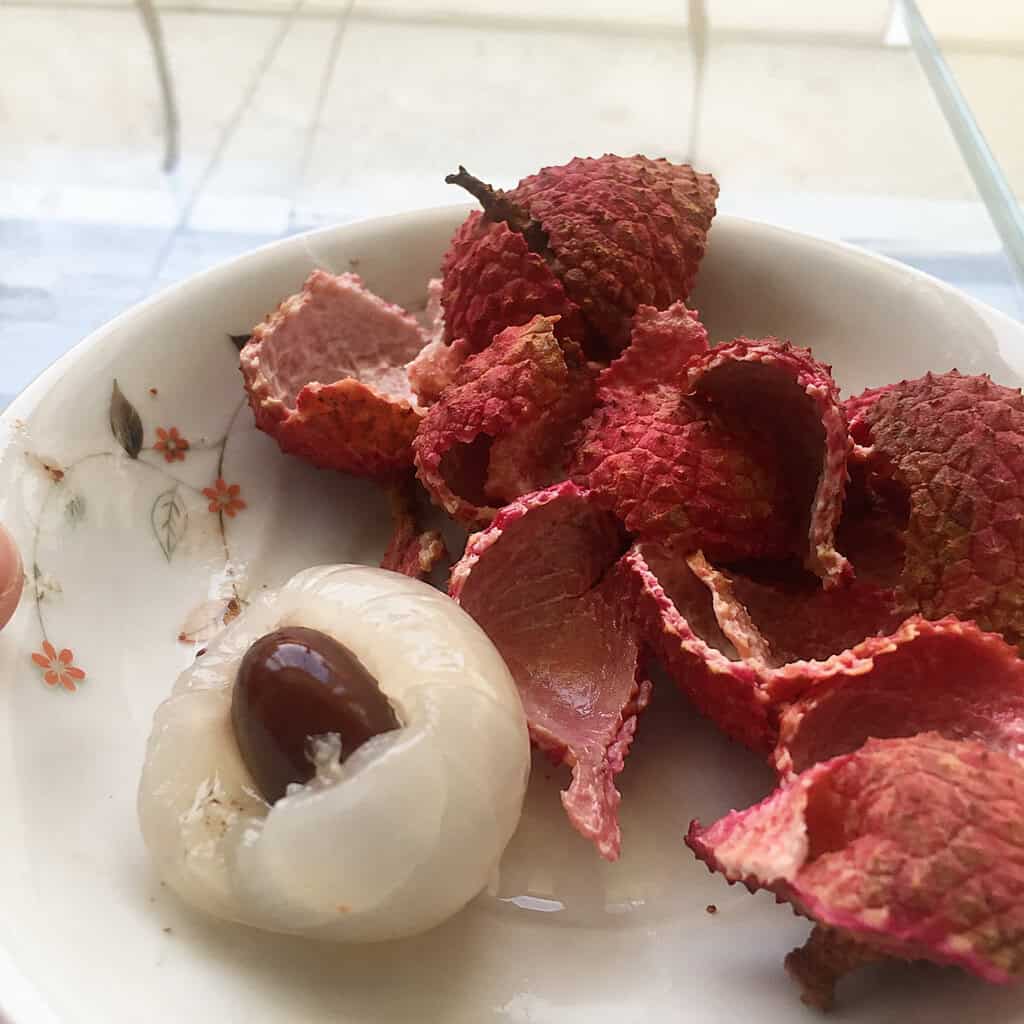
The shiny brown seed inside a lychee sprouts fast and reliably. That’s the trap.
Because germinating it is the easy part. A seed-grown lychee can take 15 to 20 years to fruit — if it ever fruits at all. Gardening Know How explains the seedling misses the mature-tree conditions it needs.
Plant it anyway for a beautiful glossy houseplant. Just don’t hold your breath for fruit.
An honest entry. Not everything on this list is a slam dunk, and that’s fine.
20. Guava Seeds
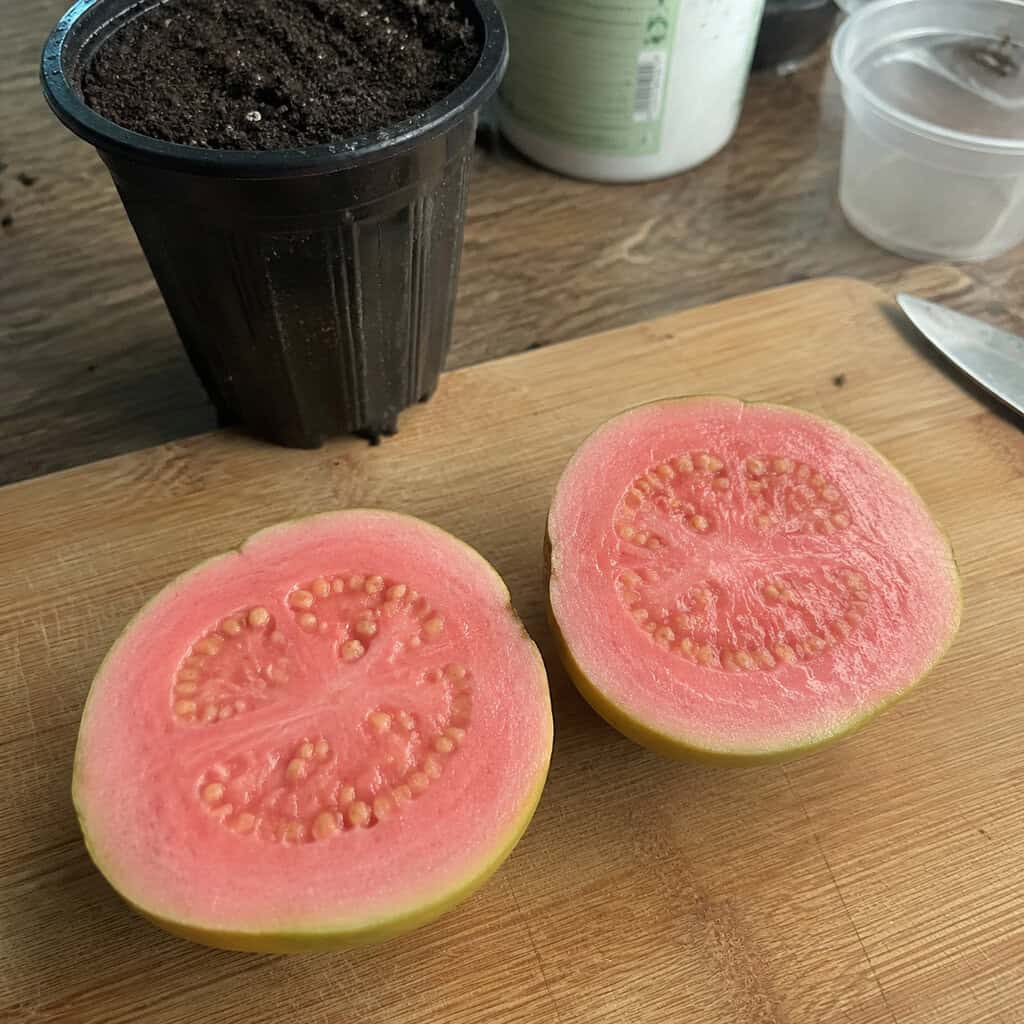
Now we’re back to rewarding. Guava is fast-growing, container-friendly, and starts fruiting young.
The tiny seeds are packed inside the pulp — scoop them out, rinse, and plant. They come up quickly and the plant behaves itself in a pot, which matters for a tropical.
Cattley guava — the strawberry guava — is even cold-hardy enough to shrug off light frost.
Zones 9 through 11 or a big container you can move. Fruit in a few years and worth every one.
21. Pineapple Guava (Feijoa) Seeds
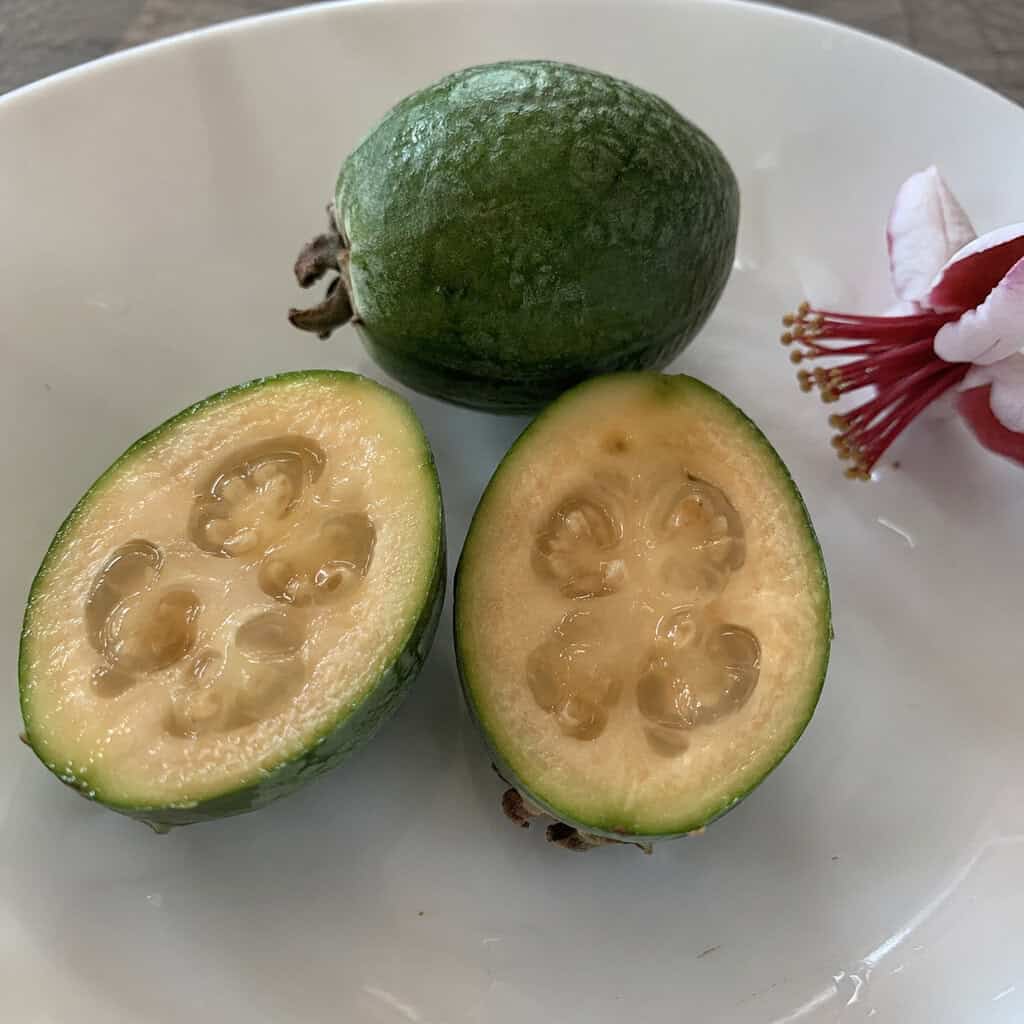
Distinct from true guava, and genuinely offbeat. This is the one for curious readers.
No dormancy requirement here — the seeds germinate in about four weeks, no cold treatment. And the edible flowers taste like marshmallow, which is not a sentence you read every day.
Scoop seeds from ripe fruit, plant, wait. Fruit shows up around year four in zones 8 through 11. House Digest flags it as a fast one from seed.
Plant it for the marshmallow flowers if nothing else.
22. Papaya Seeds
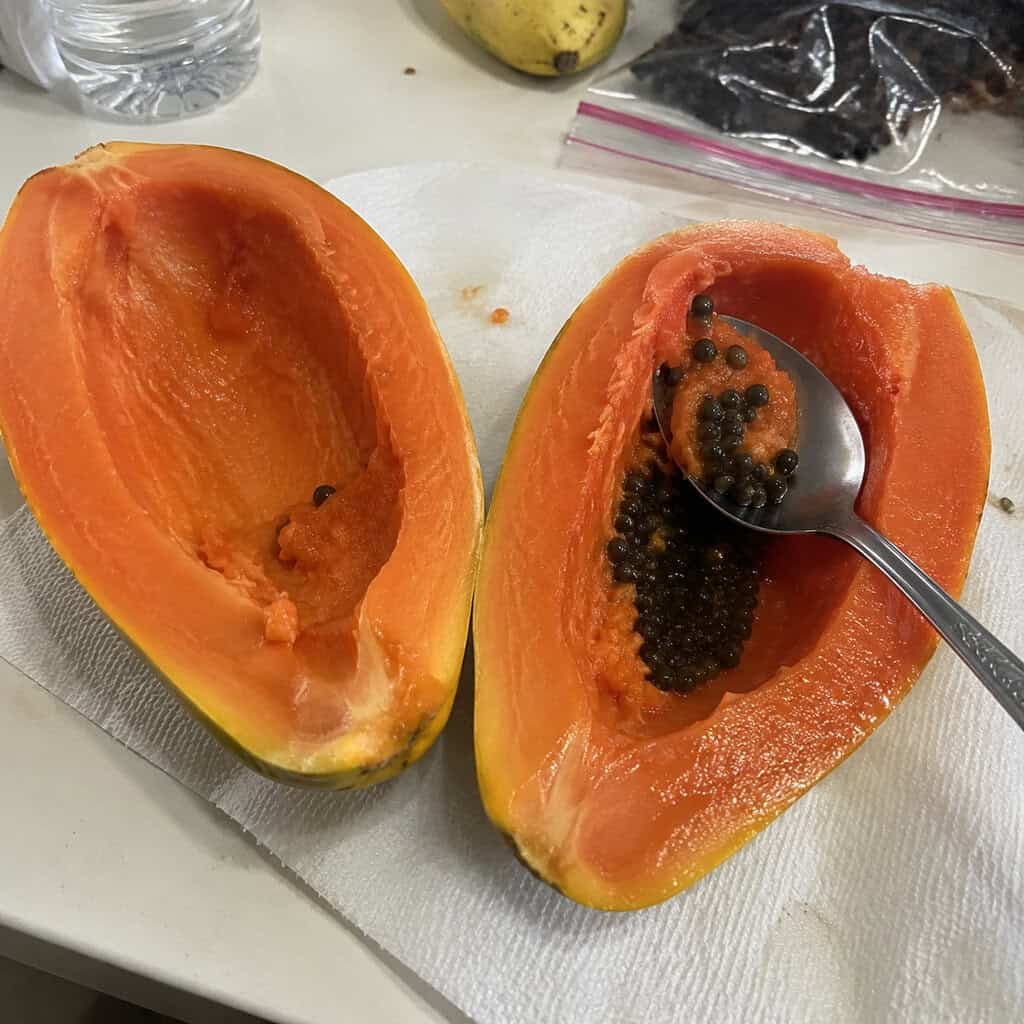
The speed champion. Those slippery black seeds can produce fruit inside a year.
Rinse the gelatinous coating off the seeds, plant several, keep them warm. In zones 9 through 12, you’re looking at fruit in 10 to 15 months. That’s not a typo.
The accuracy twist: papaya is technically a giant herbaceous plant, not a true tree. And seedlings come out male, female, or bisexual — so plant a cluster and thin to the fruit-bearers once they flower. UF/IFAS Extension tells the story well.
Fastest payoff on the whole list. If you want quick results, start here.
23. Jackfruit Seeds
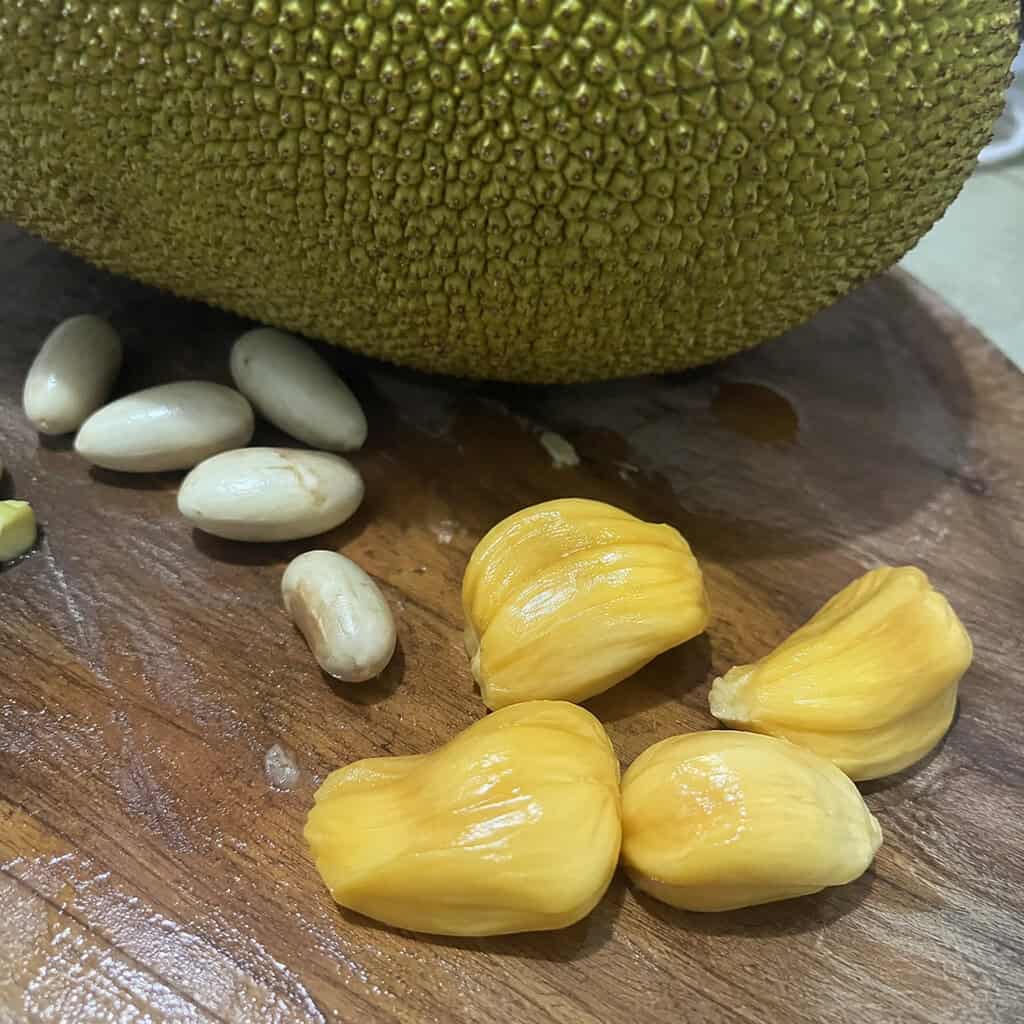
The seeds taste like roasted chestnuts. And they grow the largest tree-borne fruit on earth — single jackfruits can top 80 pounds.
Plant fast. Jackfruit seeds die within days of leaving the fruit, so there’s no saving them for later. Straight into warm, moist soil.
They sprout quickly and the tree grows fast, fruiting in 3 to 7 years in zones 9b through 11. UF/IFAS Extension has a solid growing guide for warm-climate readers.
A tree this big draws pests, and it pays to watch for them early. Borers tunnel into the trunk and branches. Scales and mealybugs cluster on new growth, coating leaves in sticky honeydew that turns to black sooty mold. And fruit rots can hit the giant fruits before you harvest.
Keep it simple. Prune out and destroy any dead or borer-damaged wood so the tunnels don’t spread. Hose off or spot-treat scale and mealybug colonies before they build up. And clear fallen, rotting fruit from under the tree so disease and insects don’t overwinter there.
Stay ahead of that and you’ve got the most jaw-dropping fruit in your yard.
24. Custard Apple / Sugar Apple Seeds
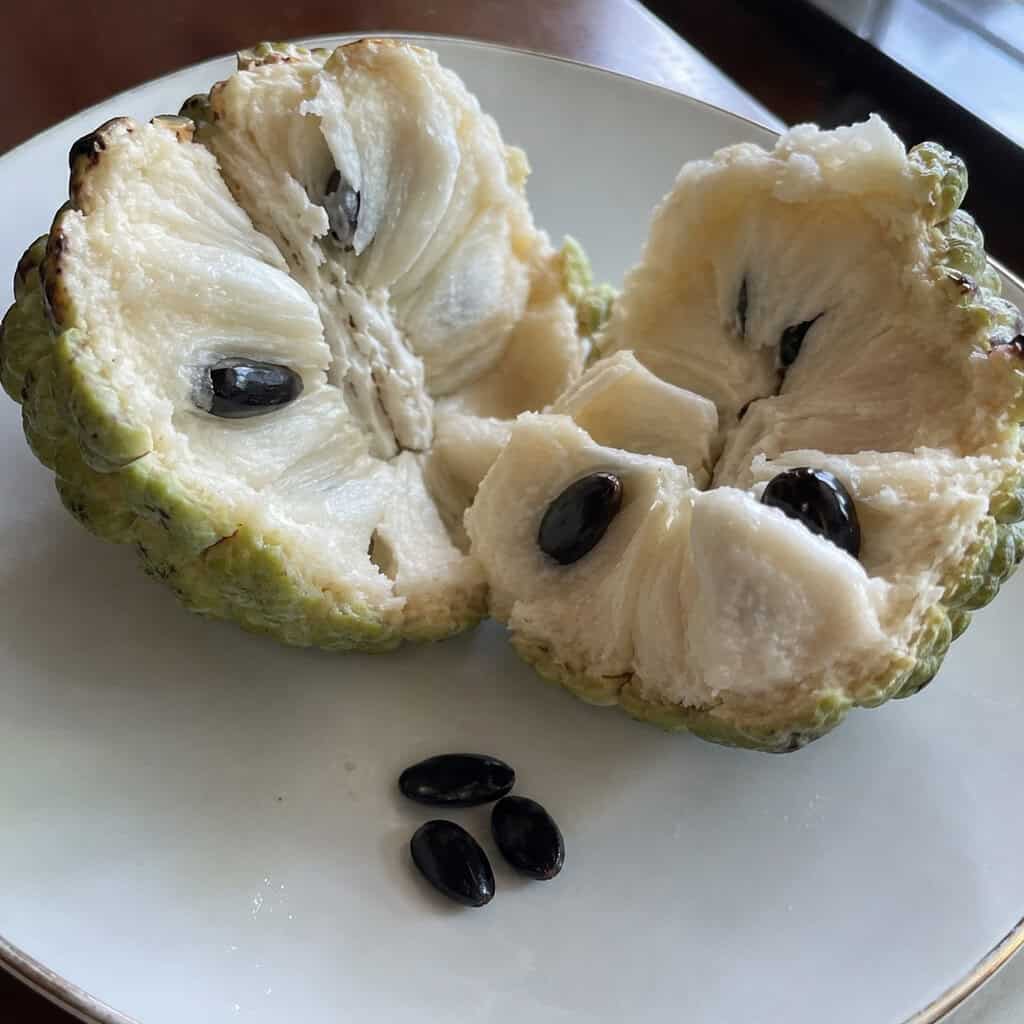
A satisfying finish for the tropicals — exotic, obscure, and genuinely doable indoors.
Annona seeds are the fastest-fruiting tropical trees from seed, turning fruit in 2 to 4 years. The trees stay small enough for containers, which is the whole appeal.
Scoop the black seeds from the creamy flesh, rinse, plant. They sprout readily in warmth.
Cold-climate readers can grow one in a big pot and haul it inside for winter. Few tropicals reward a container grower this fast.
25. Olive Pit
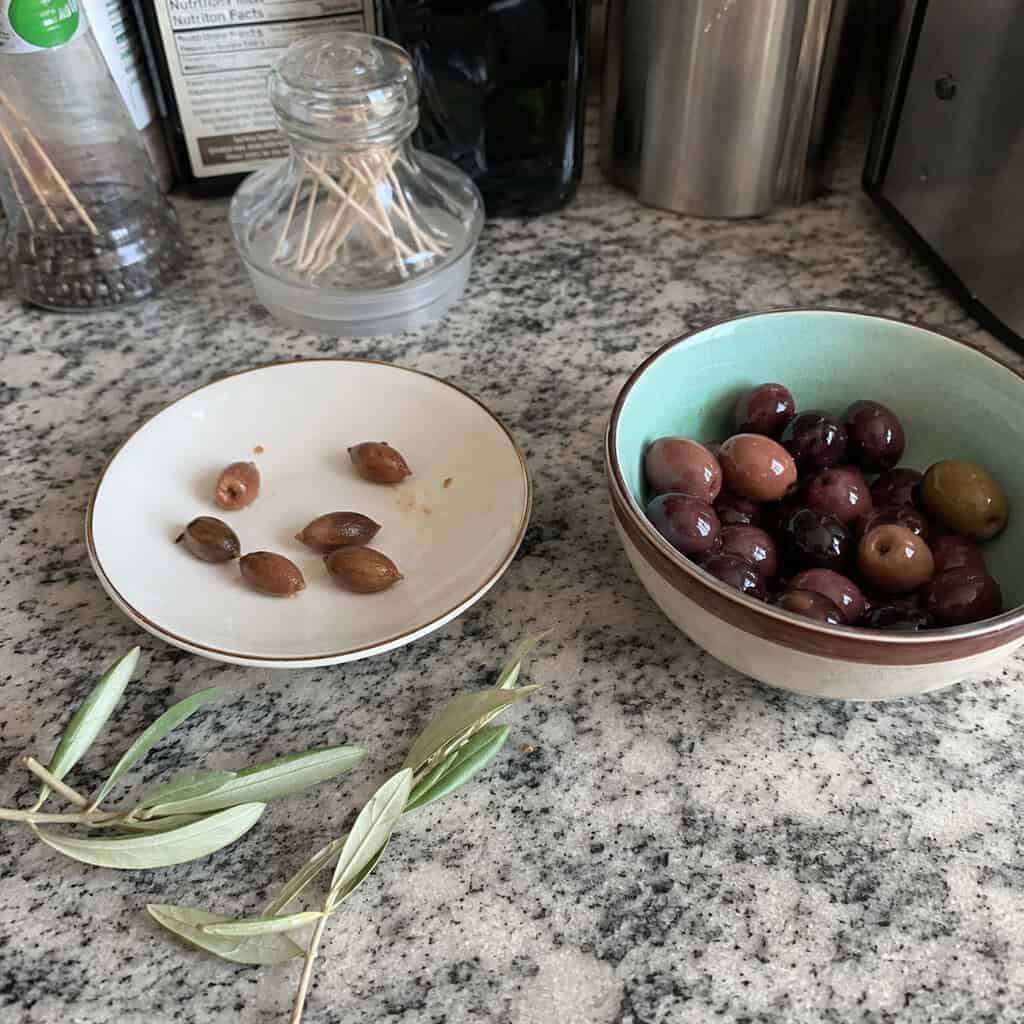
Olive pits do sprout. That’s the good news and most of the news.
The pit is stubborn to germinate and slow once it does, and you’re looking at roughly 8 years before any fruit. There’s not much novelty payoff to carry you through the wait.
It makes a handsome silver-leafed tree for zones 8 through 10 if you want the look.
Plant it as an ornamental. Buy a grafted tree if you actually want olives.
26. Longan Seed
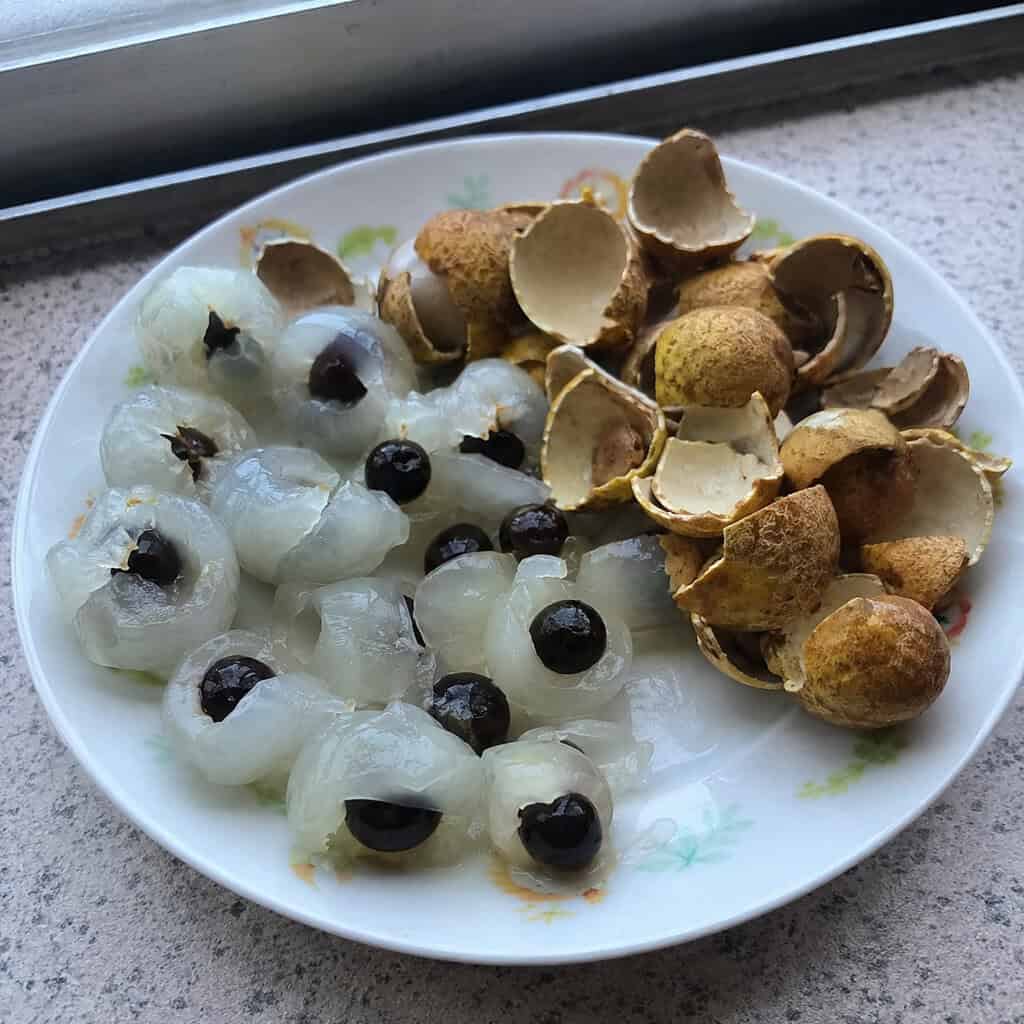
Lychee’s close cousin, and nearly the same story. The seed sprouts easily; the fruit is the hard part.
Seed-grown longan is slow to fruit and won’t come true to type, same as its relative. Plant it fresh — the seed doesn’t store.
You’ll get an attractive tropical tree for the effort, tucked into warm zones or a large pot.
An extra tropical for the collectors. Fruit’s a bonus, not a promise.
27. Tamarind Seed
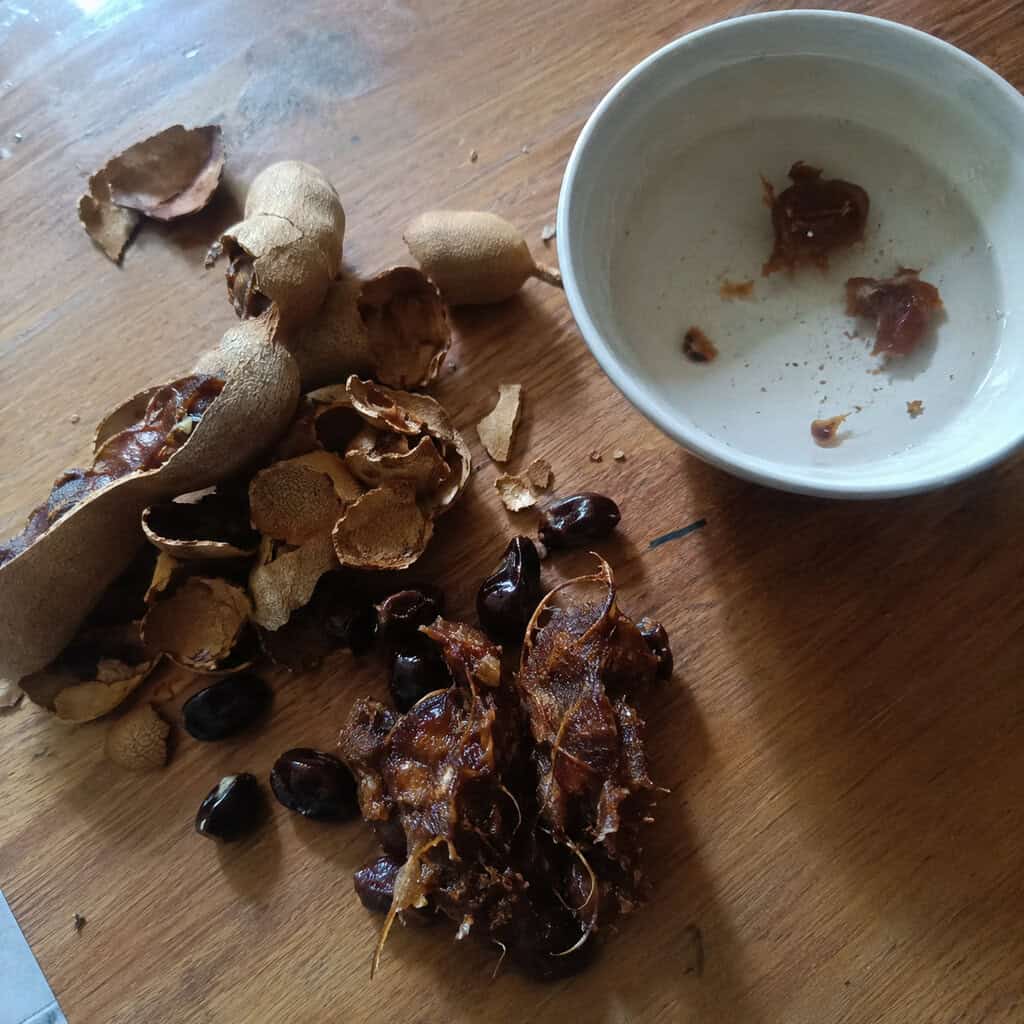
The seeds sprout readily and make a genuinely handsome tree. Germination is easy — that part’s a gift.
Soak the hard seeds overnight to soften the coat, then plant in warm soil. They come up without much coaxing in frost-free zones.
Fruiting, though, takes many years, and tamarind’s less familiar to a suburban U.S. audience.
A solid pick if you want an unusual, tough, good-looking tree and don’t mind waiting on the pods.
28. Fig Seeds
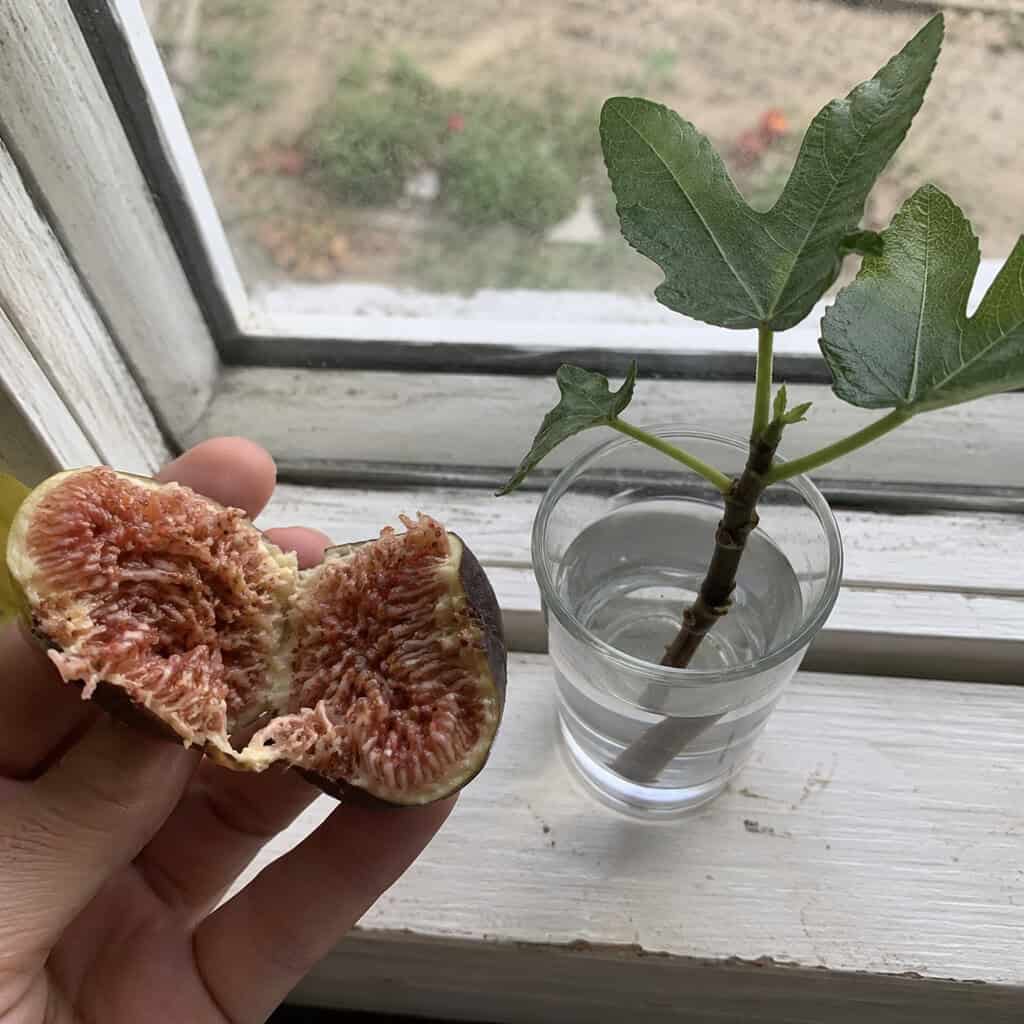
You can grow a fig from the tiny seeds inside the fruit. Technically.
But this is a caveat, not a recommendation. Cuttings root so fast and so reliably that experts steer everyone away from seed — a fig branch stuck in soil often beats a seed by years, and comes true to type besides.
The seeds are viable if you insist. Just know you’re doing it the slow, uncertain way.
Snap a cutting off a friend’s fig instead. That’s the move.
Before you dump the compost bucket, look at what’s actually in it. Half your fruit bowl is a tree in disguise.
Start with the sure things — lemon, pomegranate, papaya, guava — and let the wild cards like apple and lychee be experiments you’re not counting on. Match the plant to your zone or keep it in a pot you can drag indoors, and give the stone fruits their fake winter in the fridge before you write them off.
Not every one will fruit, and a couple won’t taste like the parent at all. But you paid for the fruit already. The tree is free.
Rinse the pit. Plant it. See what shows up.