

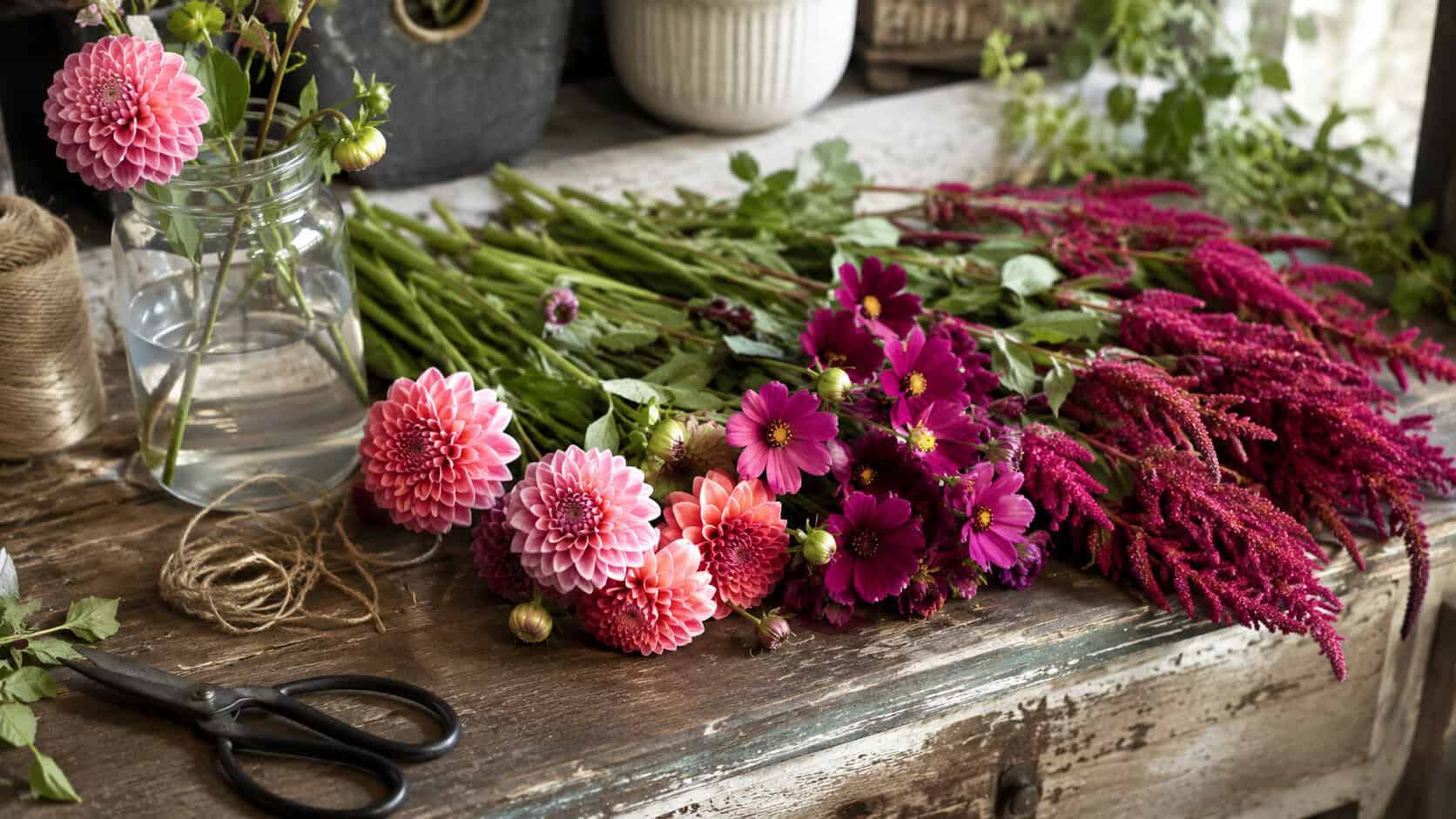
You cut a stem for the kitchen table. A week later, two more have taken its place. That’s the whole magic of a cut-and-come-again garden.
Most flowers quit the second you stop paying attention. These don’t. Snip them, feed them, keep the scissors moving, and they push out fresh blooms right up until frost knocks them flat.
It sounds like a trick. It isn’t. Cutting or deadheading tricks the plant into thinking it hasn’t finished its job — which is to make seed — so it just keeps flowering to try again. Extension offices have N.C. Cooperative Extension pages devoted to exactly this.
Some of these are one-summer annuals. Some are perennials you plant once and harvest for years. A few dry beautifully, so the bouquet outlasts the season entirely.
Here are 29 flowers that pay you back in armloads.
1. Zinnia
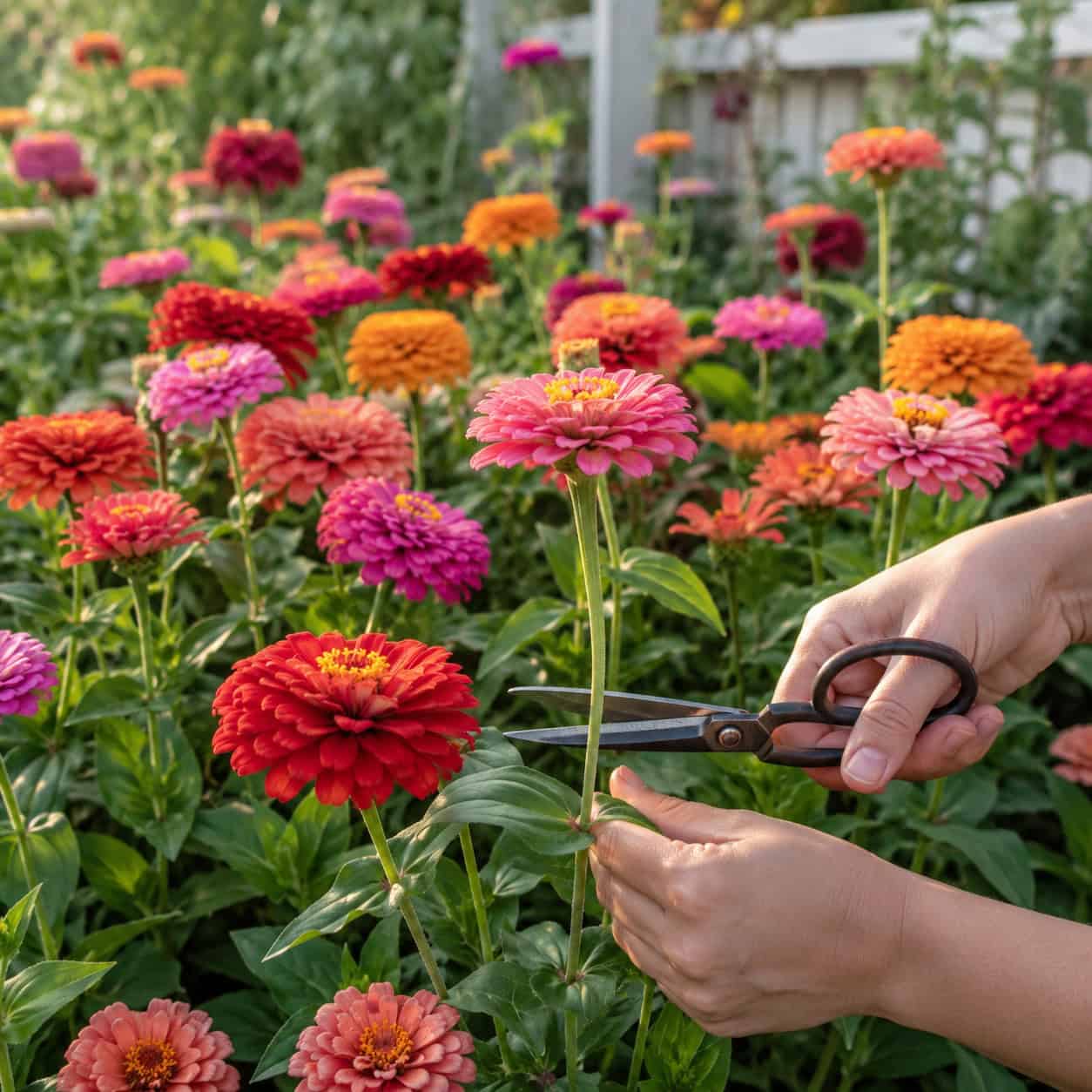
Start here. If you grow one cutting flower, grow this one.
Zinnias are the poster child for the whole idea. Cut a stem and the plant branches below the cut, sending up two or three more where there was one. The more you harvest, the bushier and more productive it gets.
They’re stupidly easy from seed sown straight in warm soil. By midsummer you’ll be drowning in them.
One tip: wiggle-test before you cut. Grab a stem and give it a shake. If it flops, it’s not ready; if it stays stiff, it’ll last in the vase. Mississippi State University Extension treats zinnias as a serious market crop for exactly this reason.
2. Cosmos
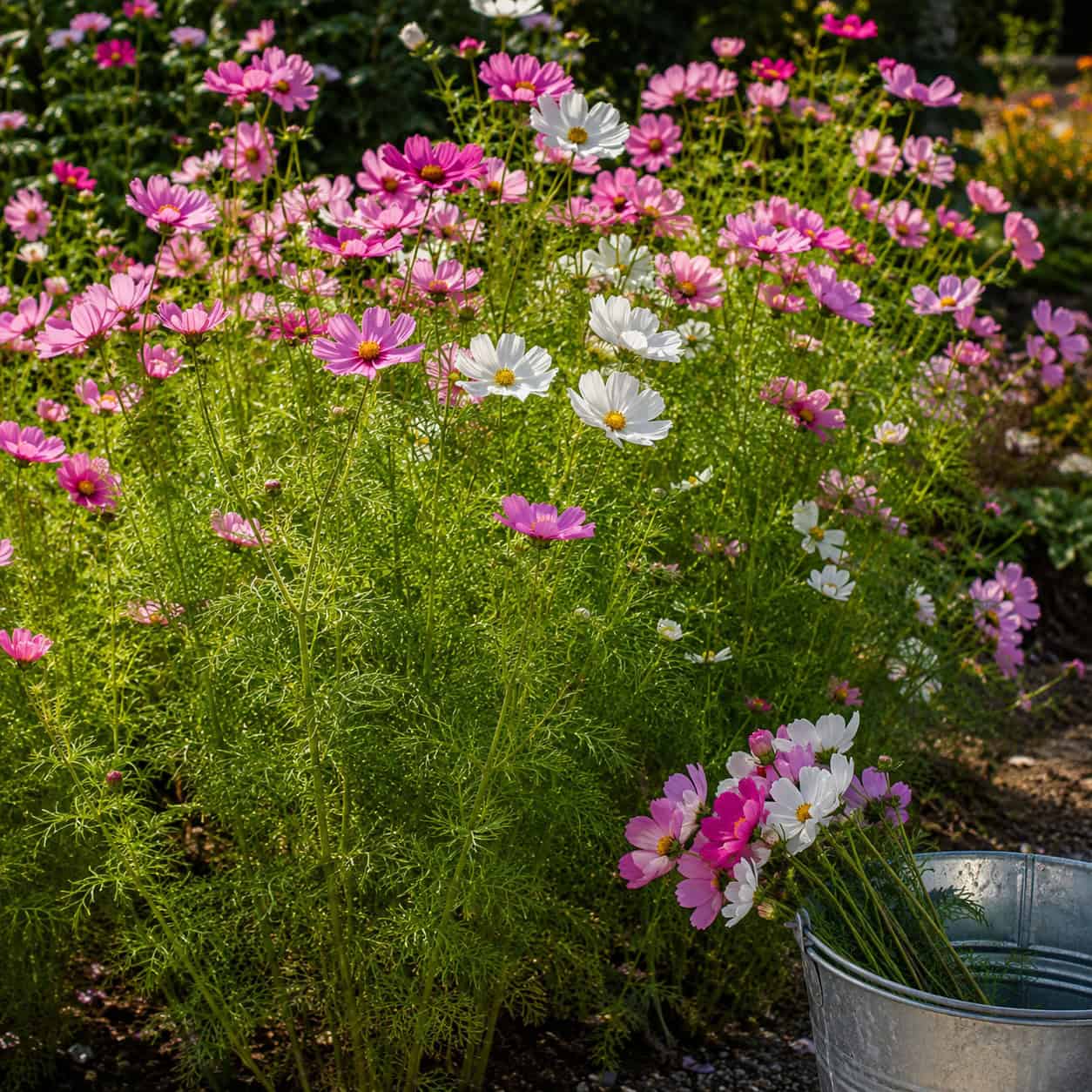
Frilly, feathery, and impossible to kill. Cosmos throw out stems all summer and give you more every single time you cut.
The foliage is airy and ferny, which makes them a natural filler in any arrangement. Left alone, they’ll set seed and slow down — so keep cutting.
Here’s a quirk worth knowing. Cosmos are short-day bloomers, so a mature plant tucked in early will flower harder through summer than one you’re babying from a late-sown seed.
Deadhead ruthlessly. They reward it.
3. Sweet Pea
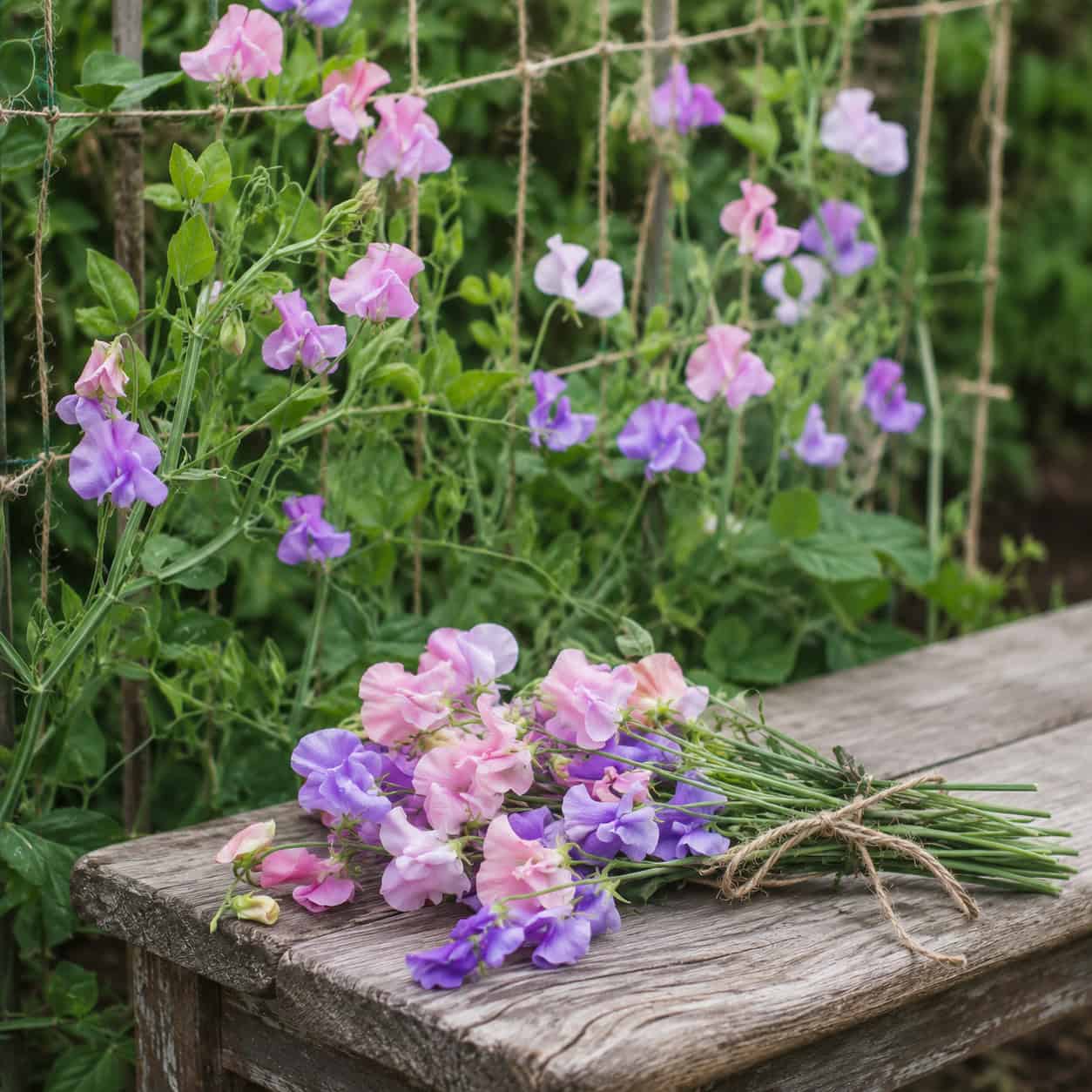
Close your eyes near a sweet pea vine and you’ll understand the fuss. Few flowers smell this good.
They climb, they scramble, and they follow the golden rule of cutting gardens: the more you pick, the more they bloom. Let a single pod form and the vine reads it as “done” and shuts down.
So pick every day if you can. A cool-season climber, sweet peas hate heat and fade once summer bears down.
Give them something to grab — netting, twine, a trellis — and they’ll do the rest.
4. Bachelor’s Button (Cornflower)
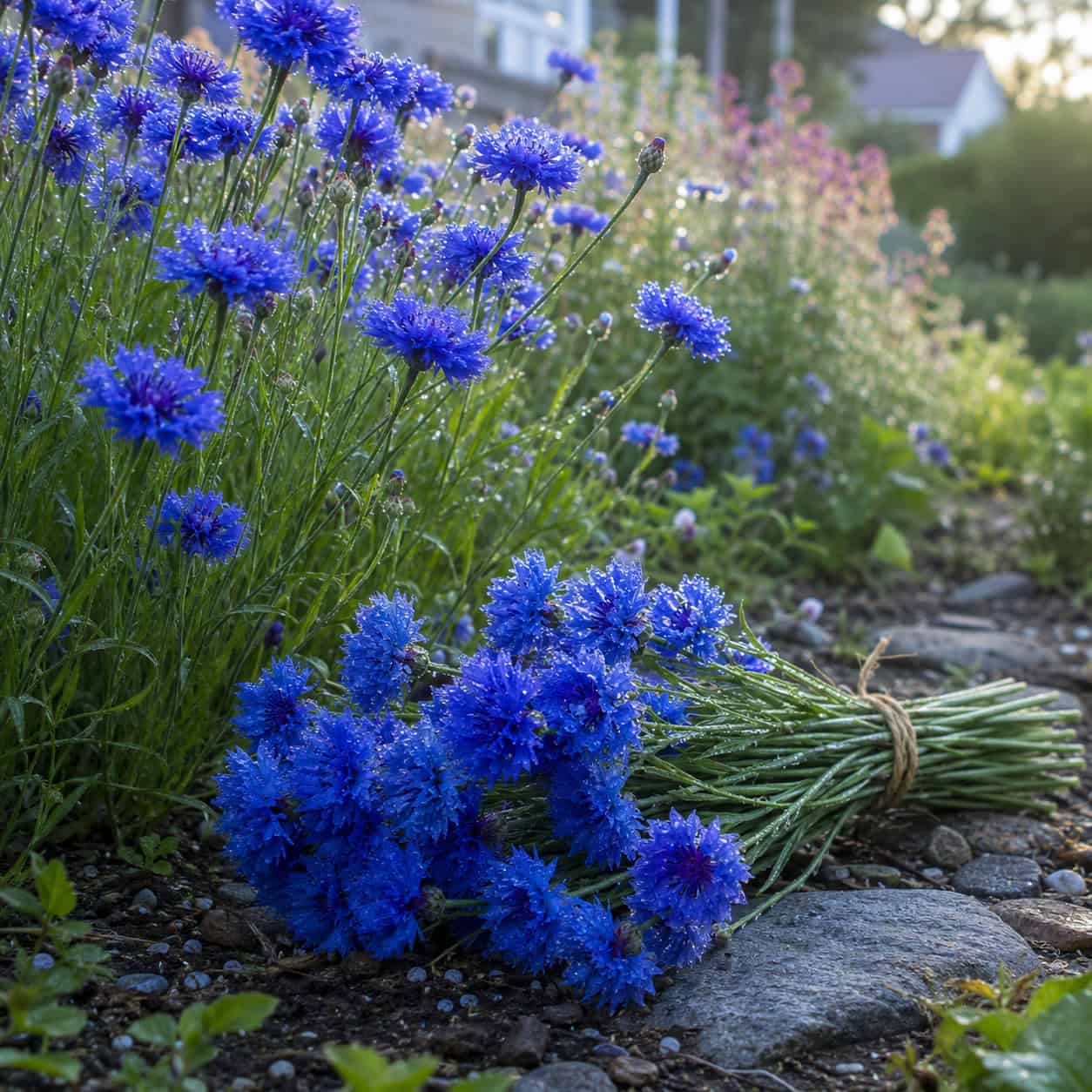
That true cottage-garden blue is hard to find anywhere else in the yard. Bachelor’s buttons bring it in spades.
They bridge the awkward gap between spring bulbs fading and summer heat-lovers waking up. Cool weather is when they shine.
Cut deep on the first harvest — down to a low set of leaves, three or four nodes from the ground. It looks brutal, but it forces longer stems and far more of them. The Old Farmer’s Almanac is blunt about keeping them picked.
Skip that first hard cut and you’ll get short, stubby stems all season.
5. Calendula (Pot Marigold)
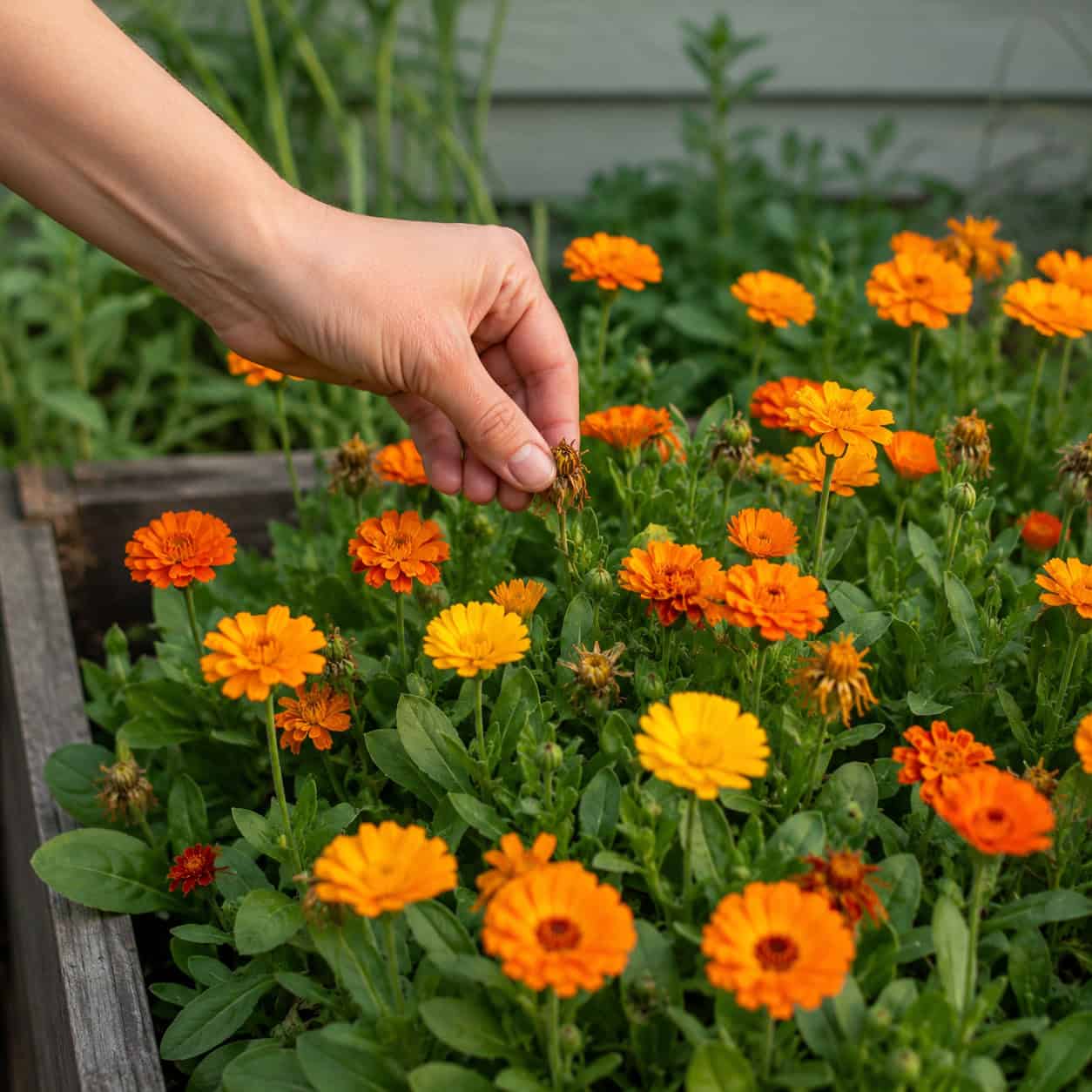
A workhorse that does three jobs. It’s a nonstop bloomer, the petals are edible, and it often reseeds itself into next year.
Deadhead it and calendula just keeps churning out those warm orange and yellow daisies through the cool ends of the season.
Toss the petals on a salad. Steep them for skin salves. People have leaned on this plant for centuries.
Let a few flowers go to seed at the end and you’ll likely find volunteers next spring — a perennial that isn’t technically a perennial.
6. Snapdragon
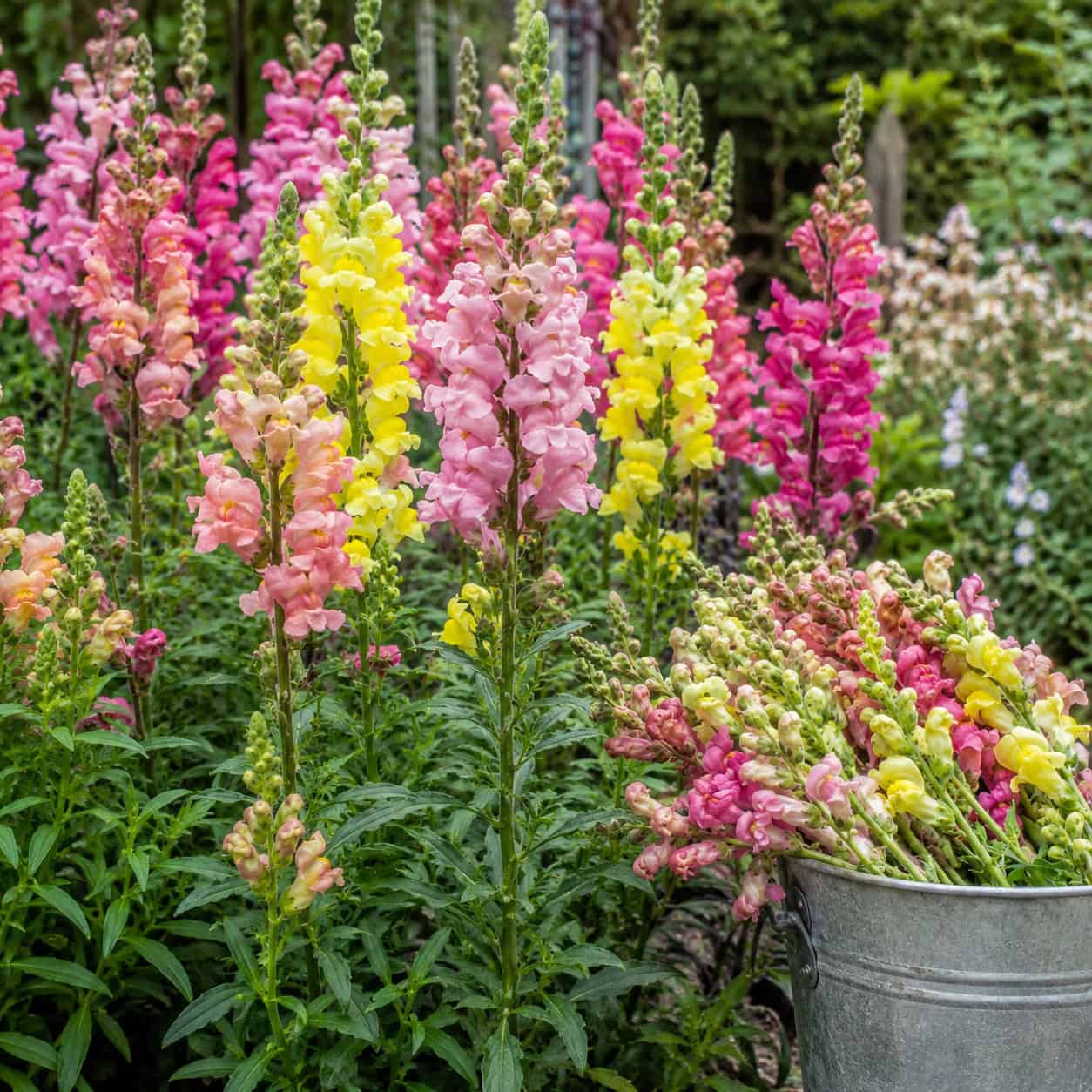
Every bouquet needs a vertical line to break up the round faces. Snapdragons are that spike.
They love cool weather and bloom from spring well into summer if you keep after them. Cut the main stem and side shoots muscle up to replace it.
Timing matters here. Harvest when about a third of the florets on the spike have opened — roughly three — and the rest will open in the vase. Wait too long and the bottom blooms are already spent when the stem hits water.
7. Celosia (Cockscomb)
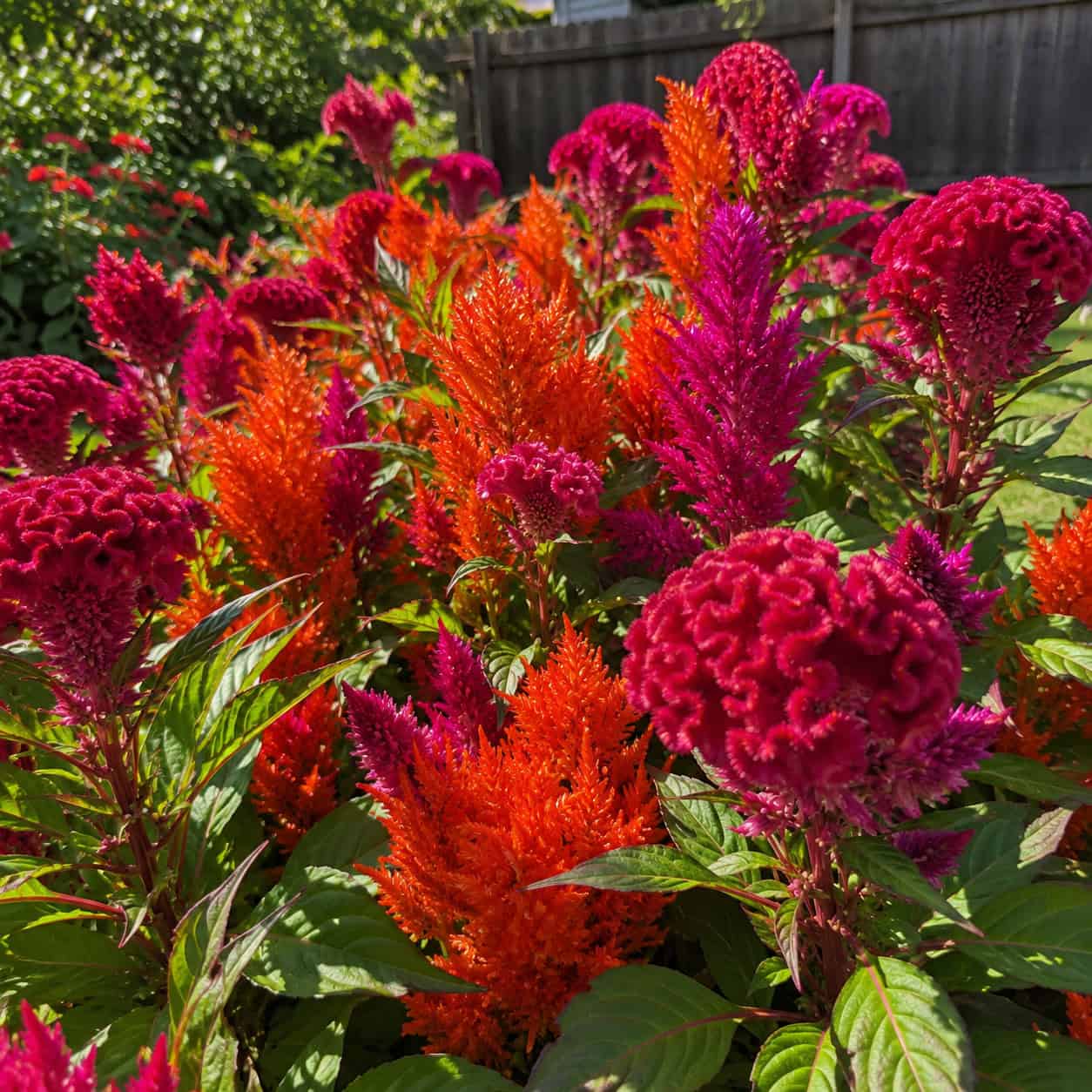
Velvety plumes. Brain-like combs. Celosia is the weird, wonderful texture flower nobody expects and everybody remembers.
It thrives in real heat, the kind that makes softer flowers sulk. And it keeps producing right through it.
Vase life is exceptional — a fresh celosia stem can hold for two weeks. It also dries like a dream if you want to keep it forever.
One bold stem can carry a whole arrangement.
8. Globe Amaranth (Gomphrena)
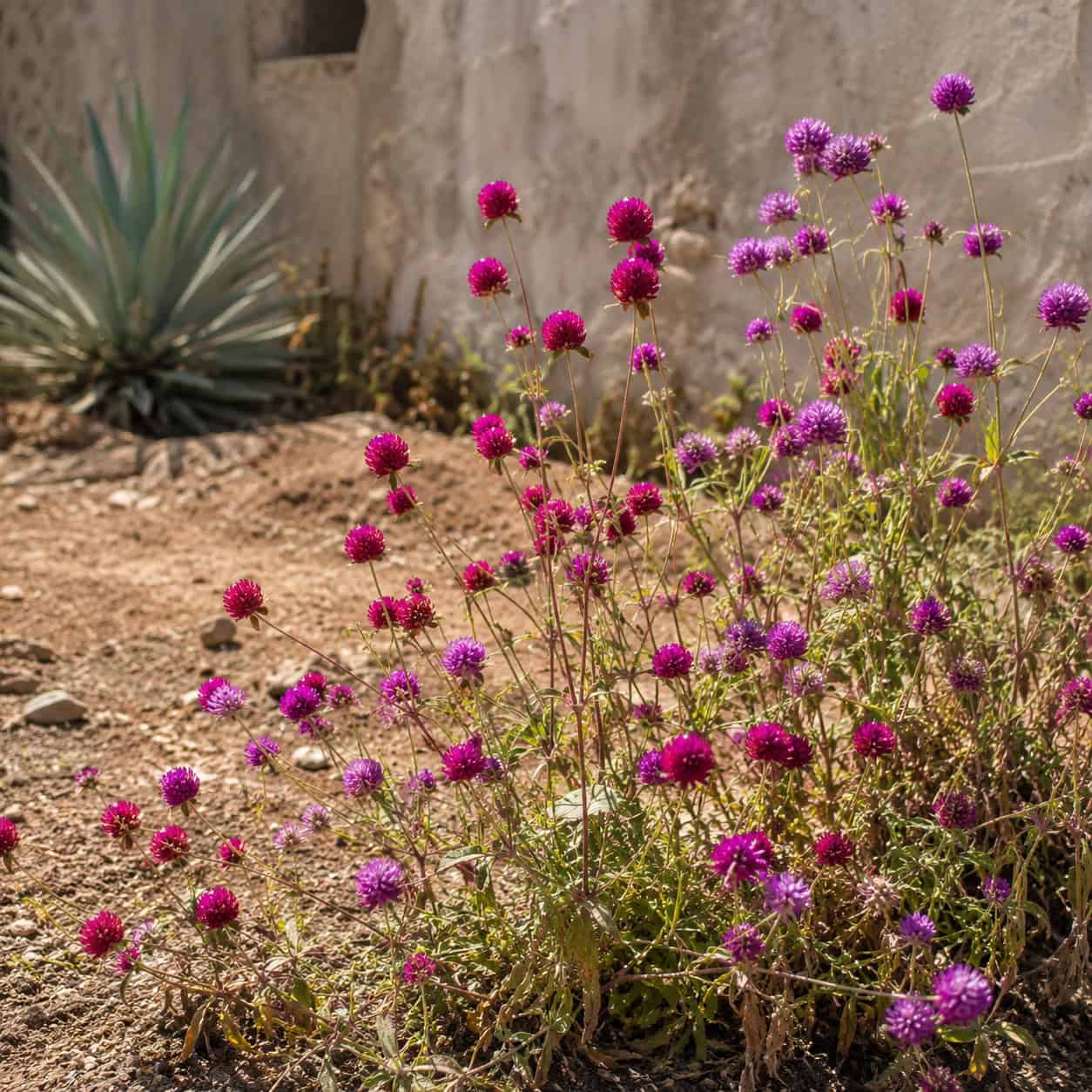
Little papery globes on wiry stems, in magenta, purple, and white. They keep coming all season and barely ask for anything.
This is your flower for the hottest, driest corner of the yard — the bed where the hose never quite reaches. Gomphrena shrugs off drought and heat that would flatten fussier plants.
Cut freely; it branches and keeps going. And because the blooms are basically already papery, they dry beautifully with zero effort.
9. Amaranth
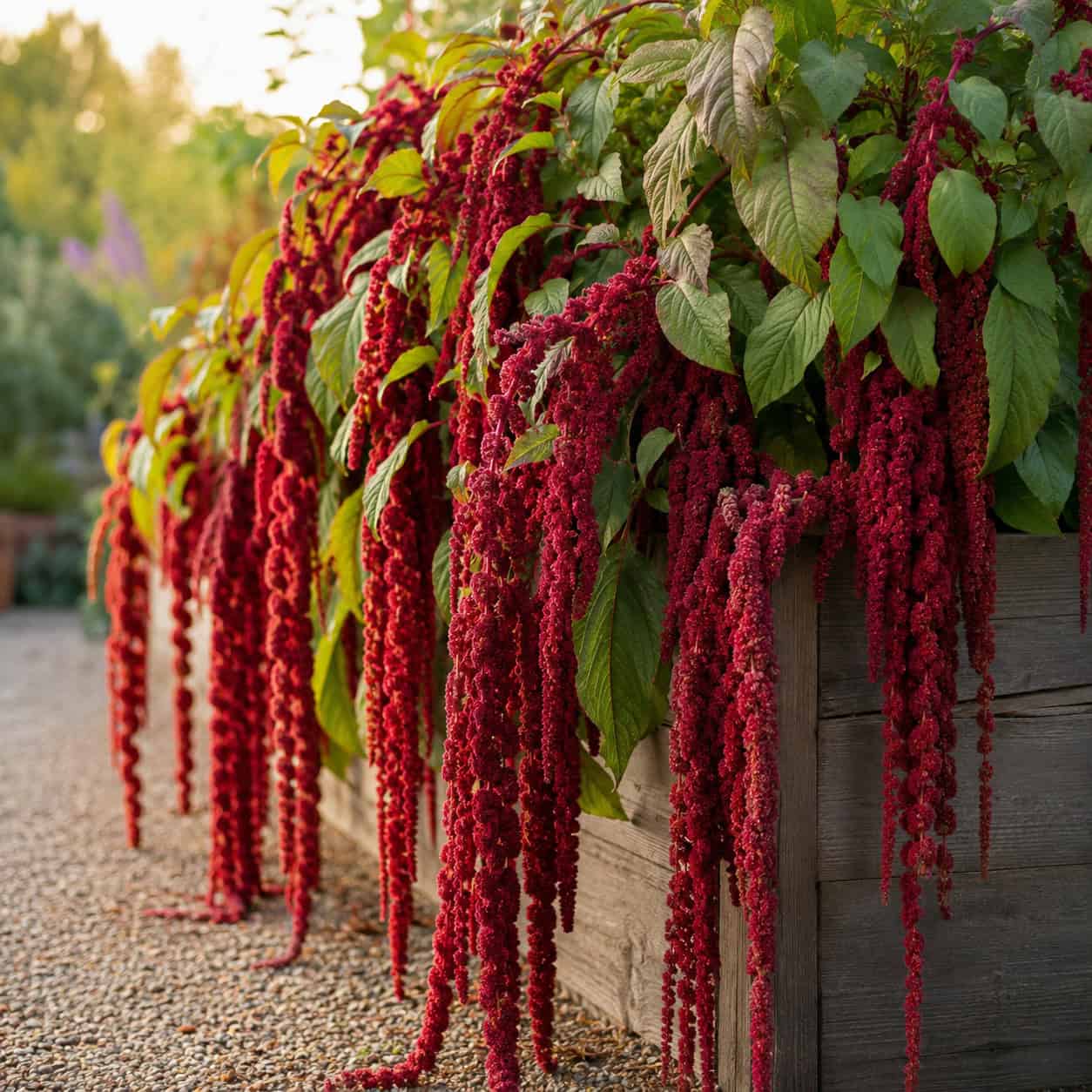
Drama. That’s what amaranth brings — long trailing or upright tassels that dangle and sway like something out of a Renaissance painting.
Grow it for height and movement in big arrangements. Few flowers give you that draping shape.
It’s also a crop. The seeds and leaves are edible, so you’re growing food and flowers on the same stalk.
Heat suits it fine. It’ll run from summer into fall.
10. Statice (Limonium)
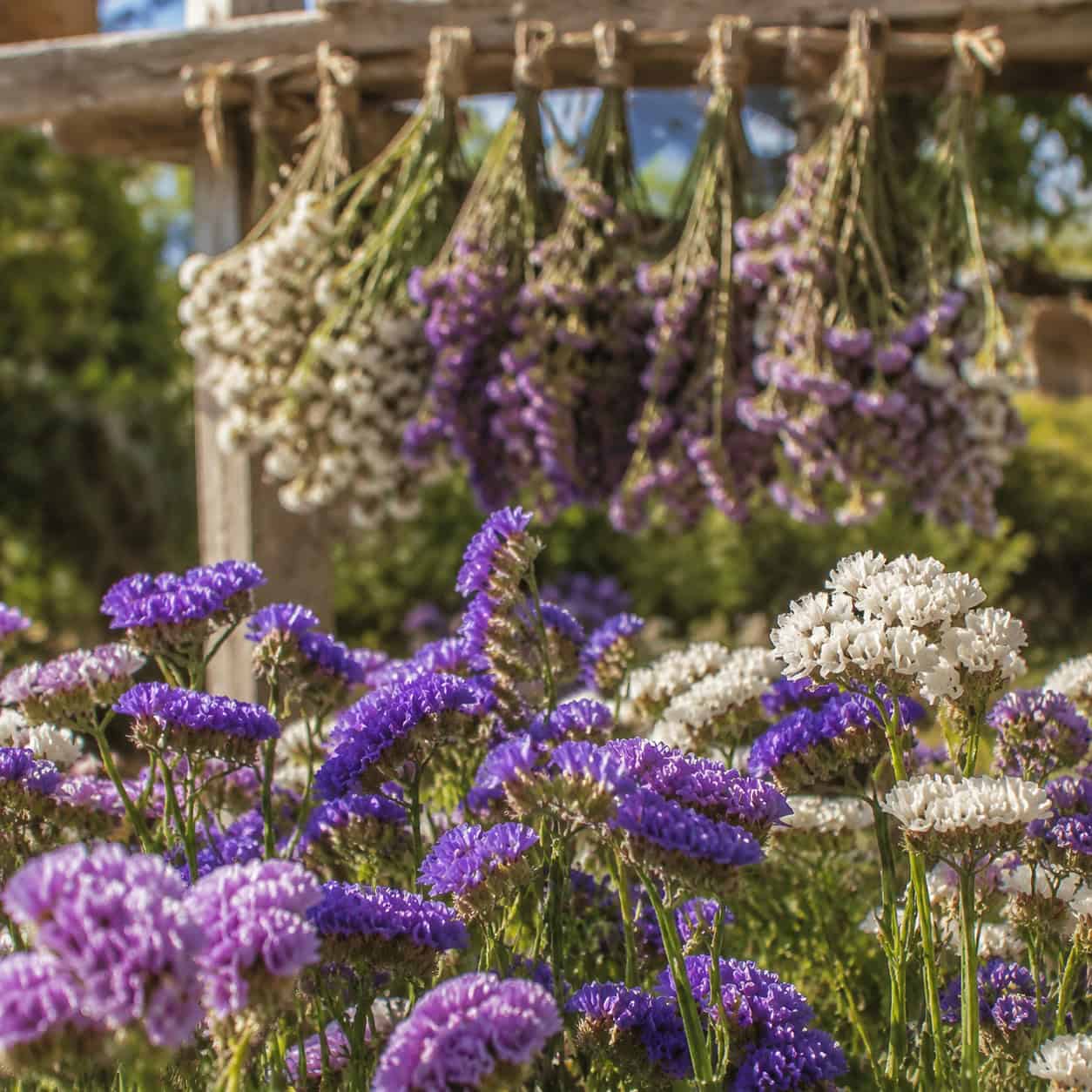
Ask a flower farmer for their most reliable producer and statice comes up fast. It pumps out stems into late October, long after other things have called it quits.
The blooms are papery and crisp, which means they dry into “everlastings” that hold color for months. It’s also a low-water crop — Utah State University Extension documents it as a genuine cut-and-come-again performer.
Cut it fresh for a bouquet or hang it upside down to dry. Either way, statice earns its bed space.
11. Strawflower
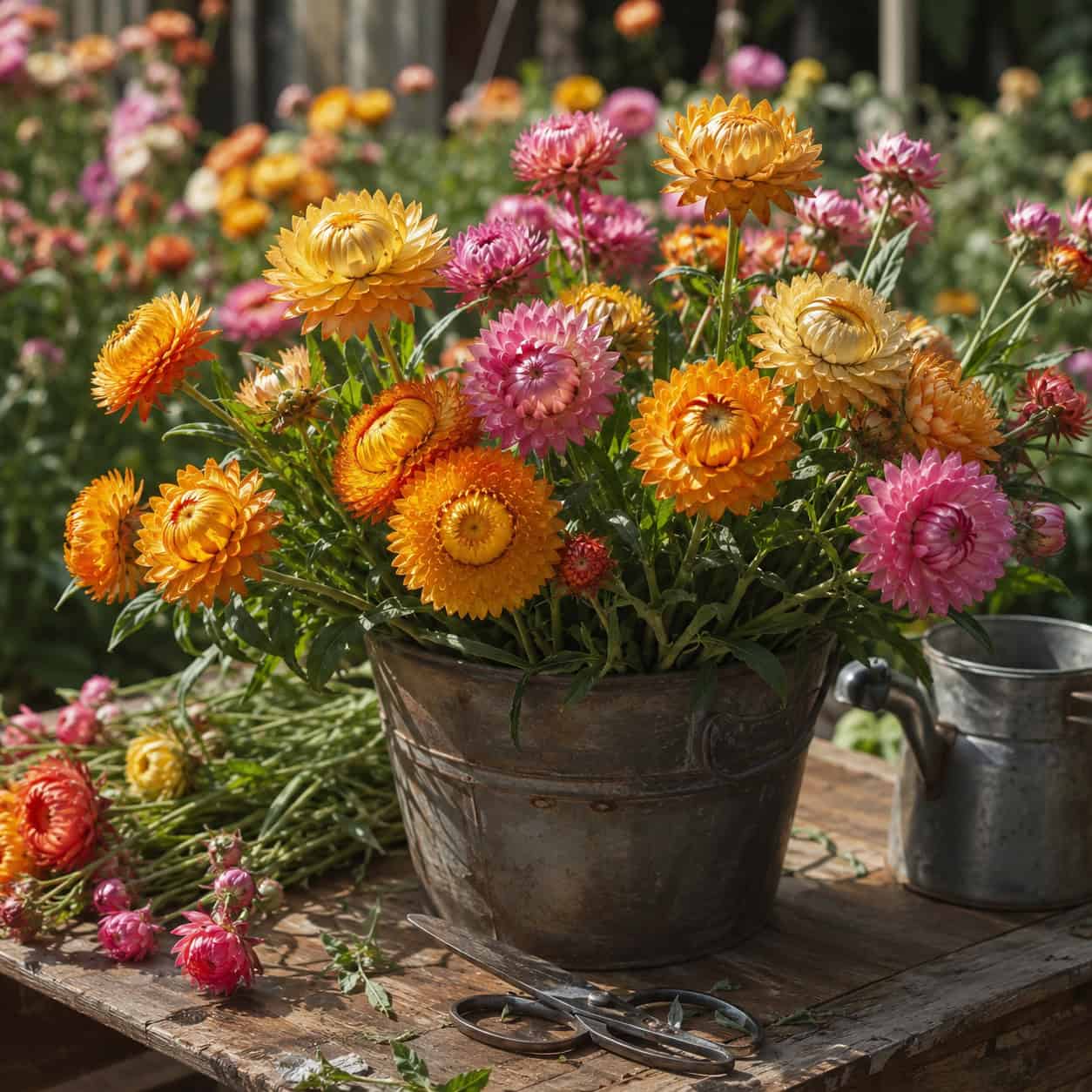
Touch a strawflower and you’ll swear it’s made of crepe paper. Those crinkly petals are the whole appeal.
Late-summer heat is when it hits its stride, branching and blooming when the garden’s starting to look tired.
It’s the darling of the wreath-and-craft crowd because it lasts practically forever, dried or fresh. Keep cutting and it keeps branching.
Harvest before the flowers open fully — they’ll continue opening off the plant.
12. Marigold (Tagetes)
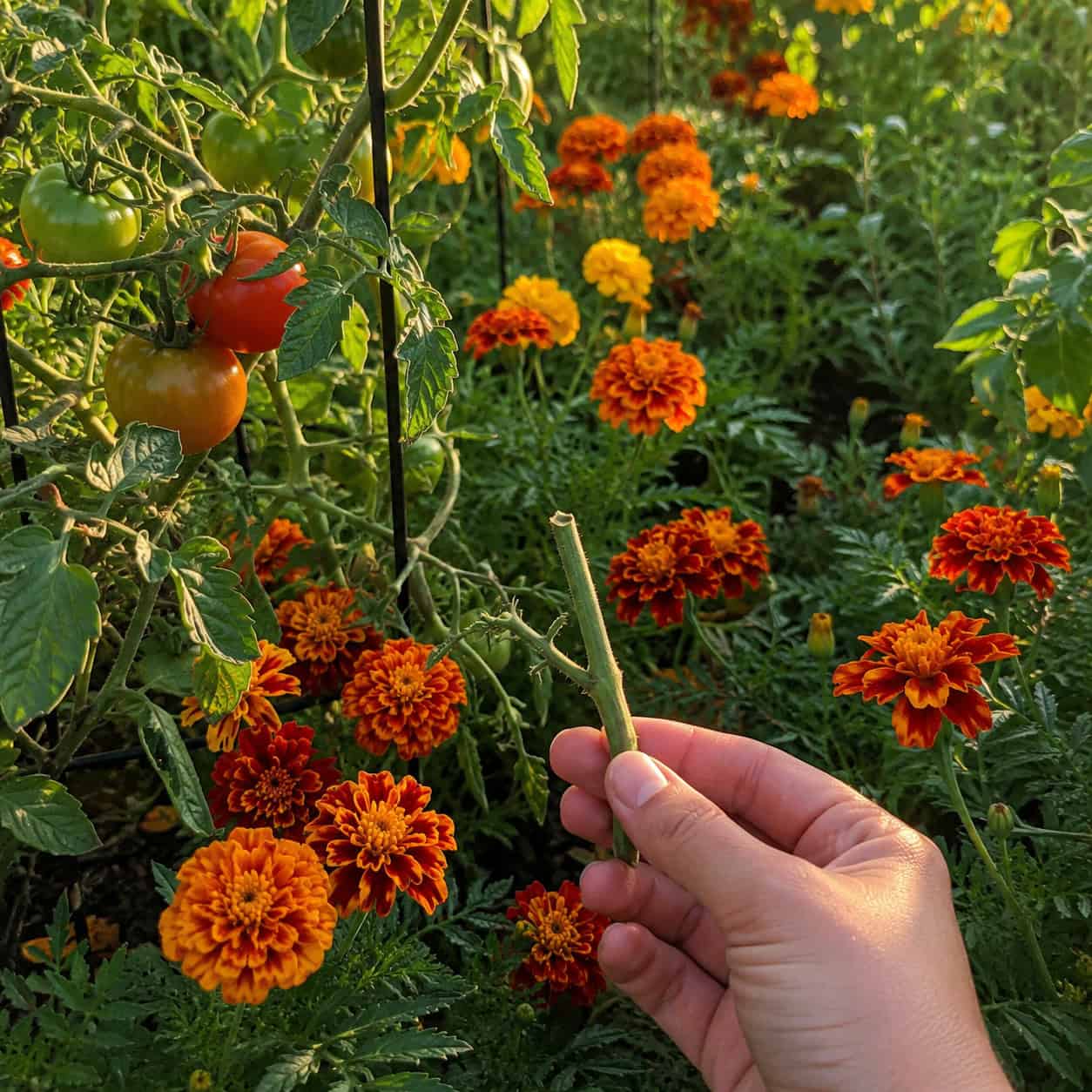
Extension services love pointing to marigolds when they explain cut-and-come-again. Snip a stem, and the plant simply grows a replacement. Iowa State University Extension lists them among the best garden flowers for cutting.
They bloom in that hot marigold gold and rust from summer until frost drops them.
Bonus: tuck a few into the vegetable patch. Gardeners have long planted them among tomatoes to help fend off pests.
Cheap seed, huge return.
13. Ageratum
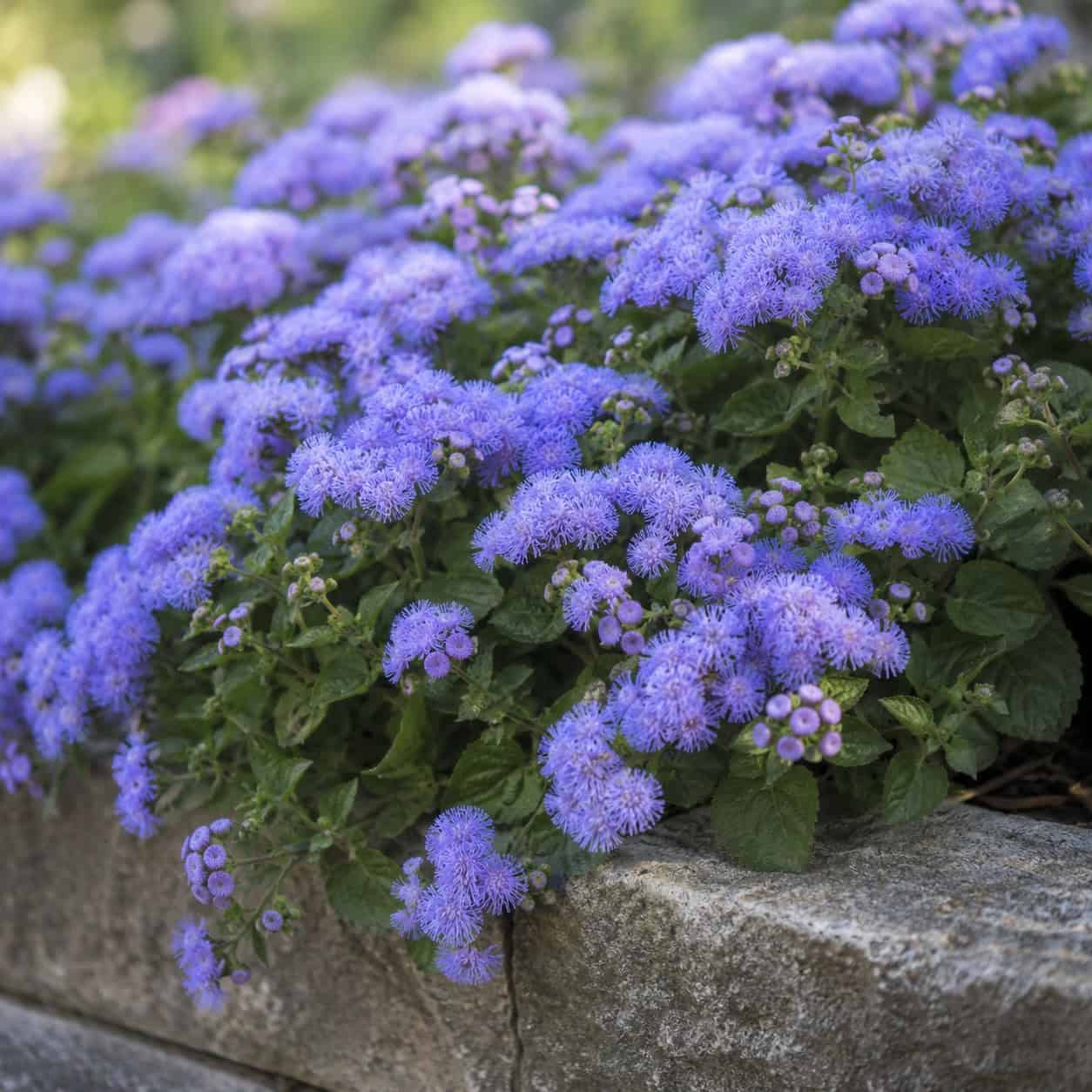
Fuzzy, cloud-like clusters in a blue you almost never see in flowers. Ageratum fills that rare color slot in a bouquet.
It’s a charming little filler that works in beds, containers, and arrangements alike.
Keep it cut and it stays fluffy and full through summer into fall. Neglect it and it goes leggy and tired.
Short, soft, and easy — a gentle counterpoint to all the spikes and daisies.
14. Scabiosa (Pincushion Flower)
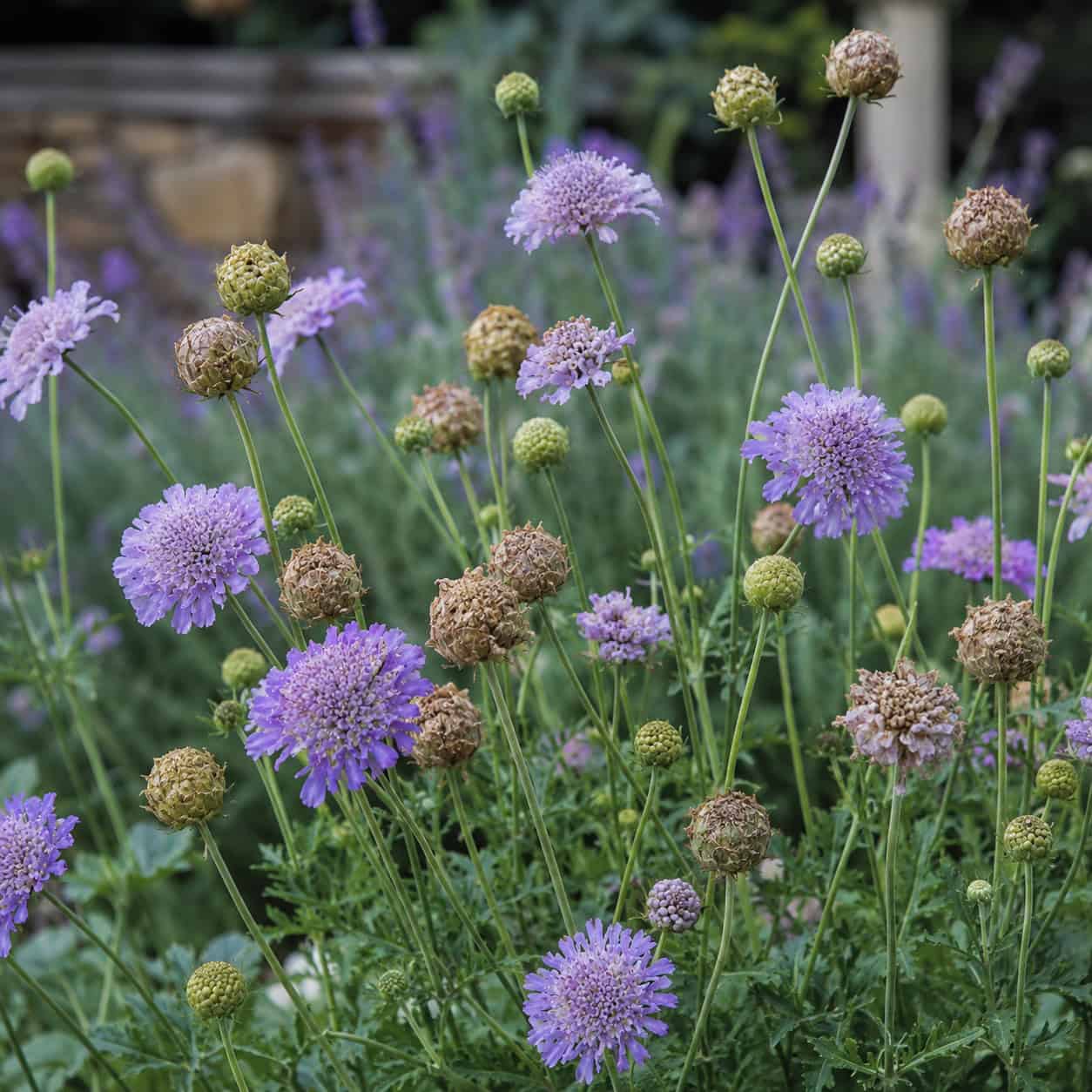
Long, wiry stems topped with pincushion blooms that just keep coming. Growers describe scabiosa with a shrug — it doesn’t stop.
Cut it for the flowers, then let some go to seed. The variety Scabiosa stellata forms papery seed pods that look like little spheres, and those are cuttable too.
Nothing on this plant goes to waste. Bloom, then pod, then bouquet again.
It flowers from spring straight into fall.
15. Annual Salvia
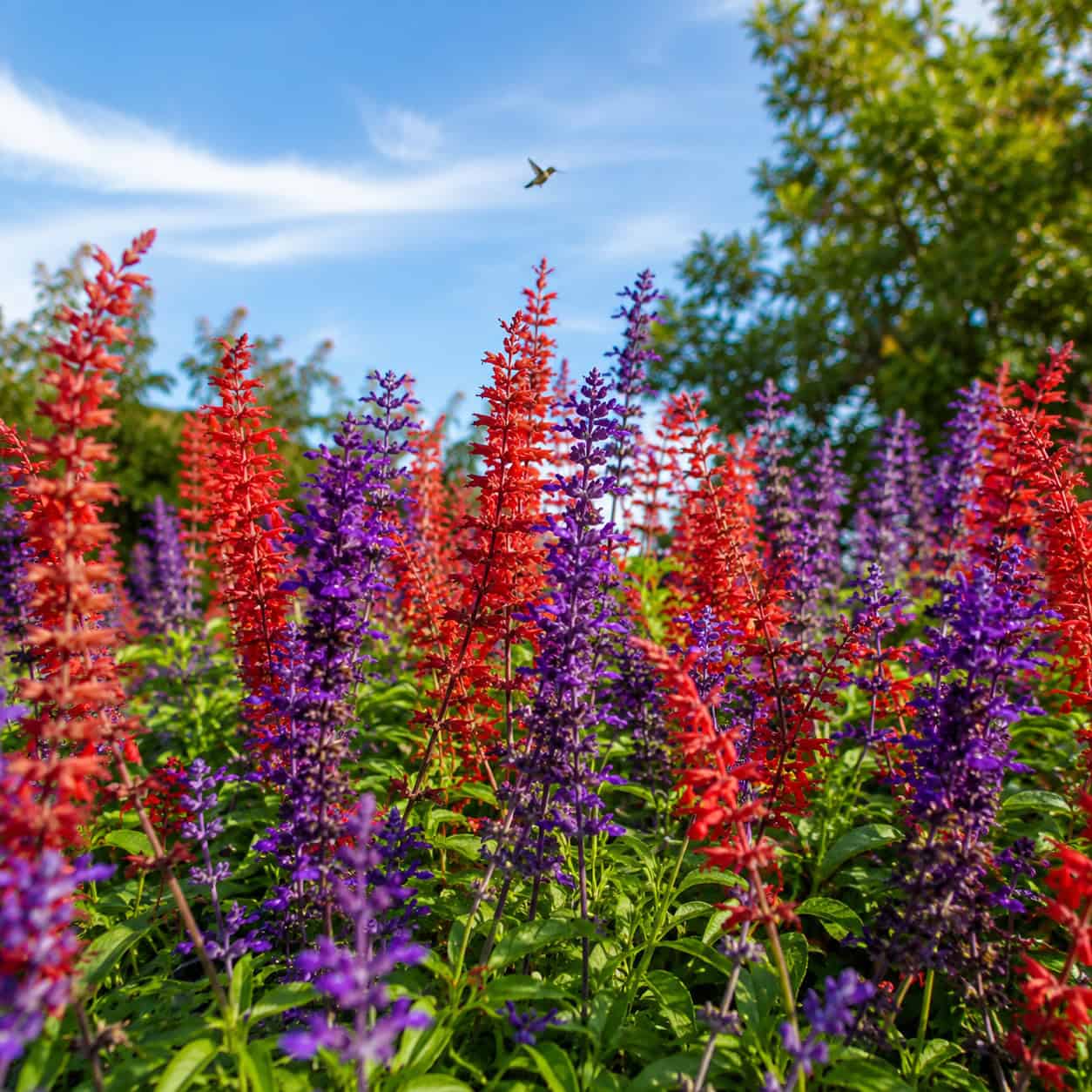
Spiky, saturated color that runs until frost and bounces back fast after cutting. Annual salvia is a genuine repeat performer.
It’s also a wildlife magnet. Hummingbirds and monarchs pass through and can’t resist those tubular flowers — a fair trade for a few stolen sips of nectar.
Deadhead and keep cutting; it rebounds quickly. Planters Place walks through the deadheading habit that keeps salvia going.
16. Black-Eyed Susan (Rudbeckia hirta)
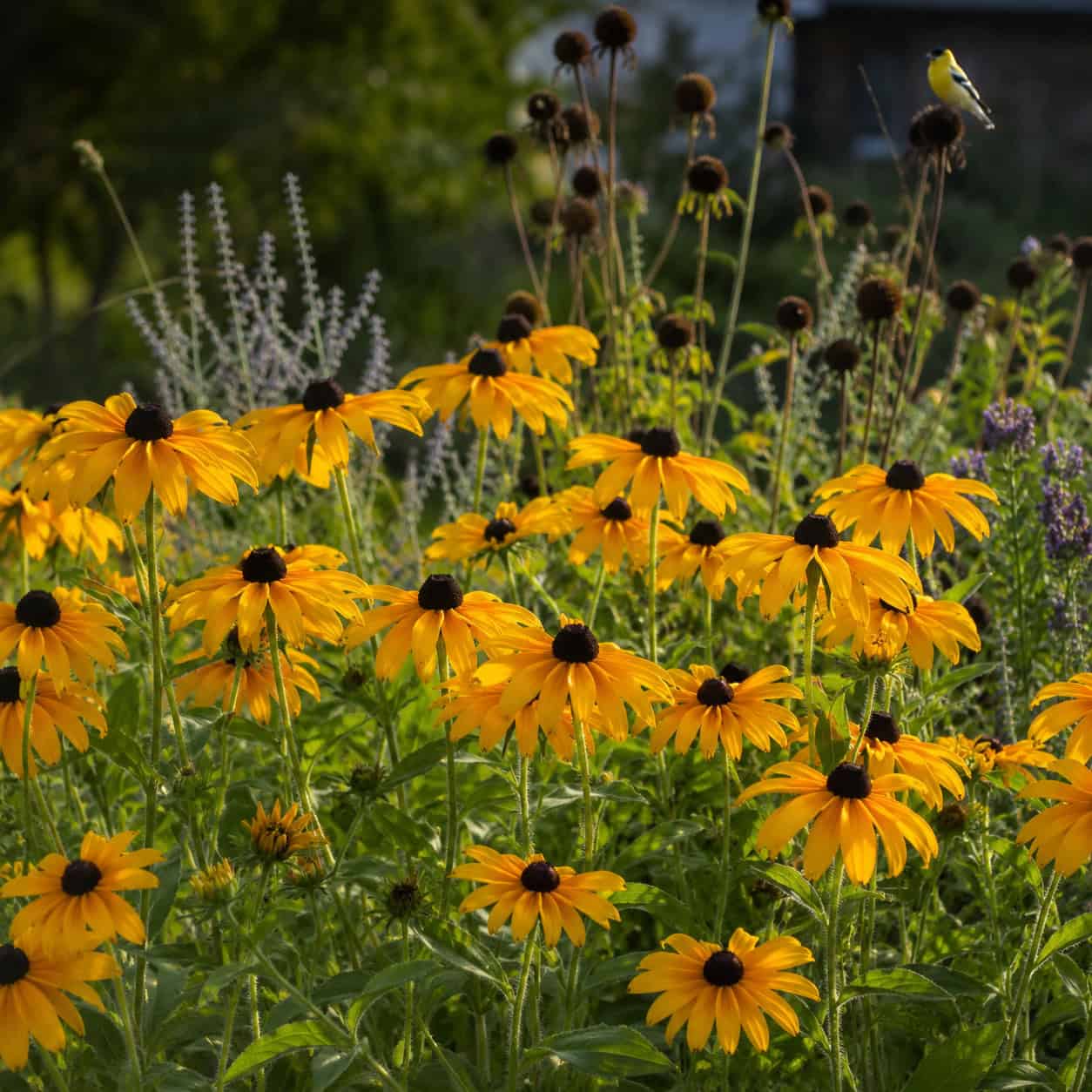
Those cheerful gold daisies with the dark button center feel like the middle of summer itself. Deadhead and feed them and they keep producing.
Grow the annual Rudbeckia hirta for the cutting bed — it flowers freely the first year.
Then, come fall, leave a handful of seed heads standing. Goldfinches will strip them clean through the cold months.
Beauty in July, birds in November. Good deal.
17. Branching Sunflower
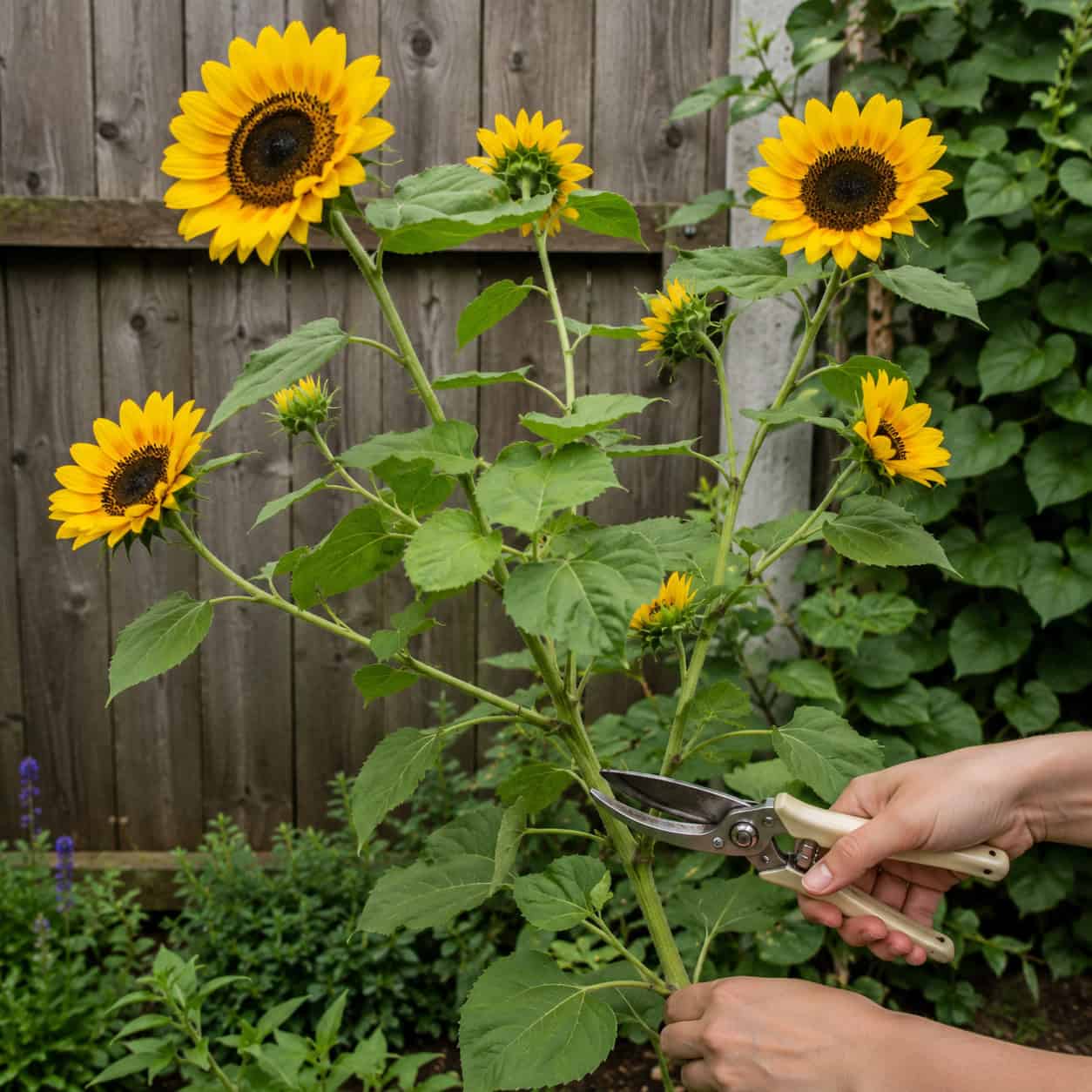
Read this one carefully, because it’s the difference between armloads and a single disappointing flower.
Only branching sunflowers come again. Single-stem varieties give you one giant bloom and then they’re done — one and done, no exceptions.
Pinch a branching type when it’s young and it responds by sending up six to eight cuttable stems instead of one. Abundant Blooms Flower Farm spells out the pinch.
Check the seed packet for “branching” before you buy. It matters more than anything else here.
18. Dahlia
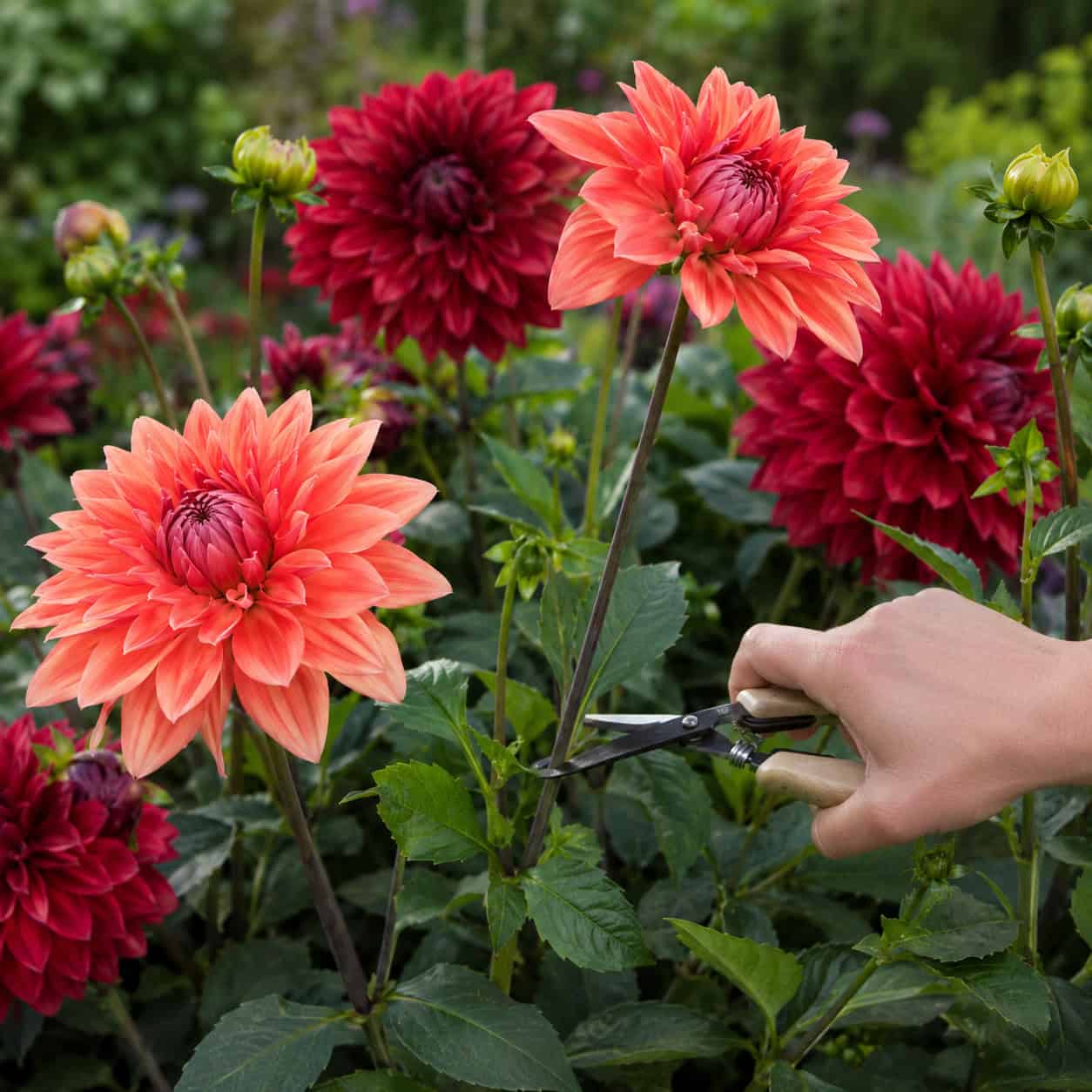
The showstopper. Dinner-plate blooms, dahlias make people stop mid-sentence.
And they’re officially cut-and-come-again — the more you harvest, the more the plant replaces. Leaving blooms on the plant actually slows it down.
The move that changes everything is an early pinch. When the plant hits 8 to 12 inches, snip out the growing tip. Longfield Gardens notes this can double or triple the season’s bloom count.
Cut deep, into the plant, on a long stem. It’ll thank you with more.
19. Coneflower (Echinacea)
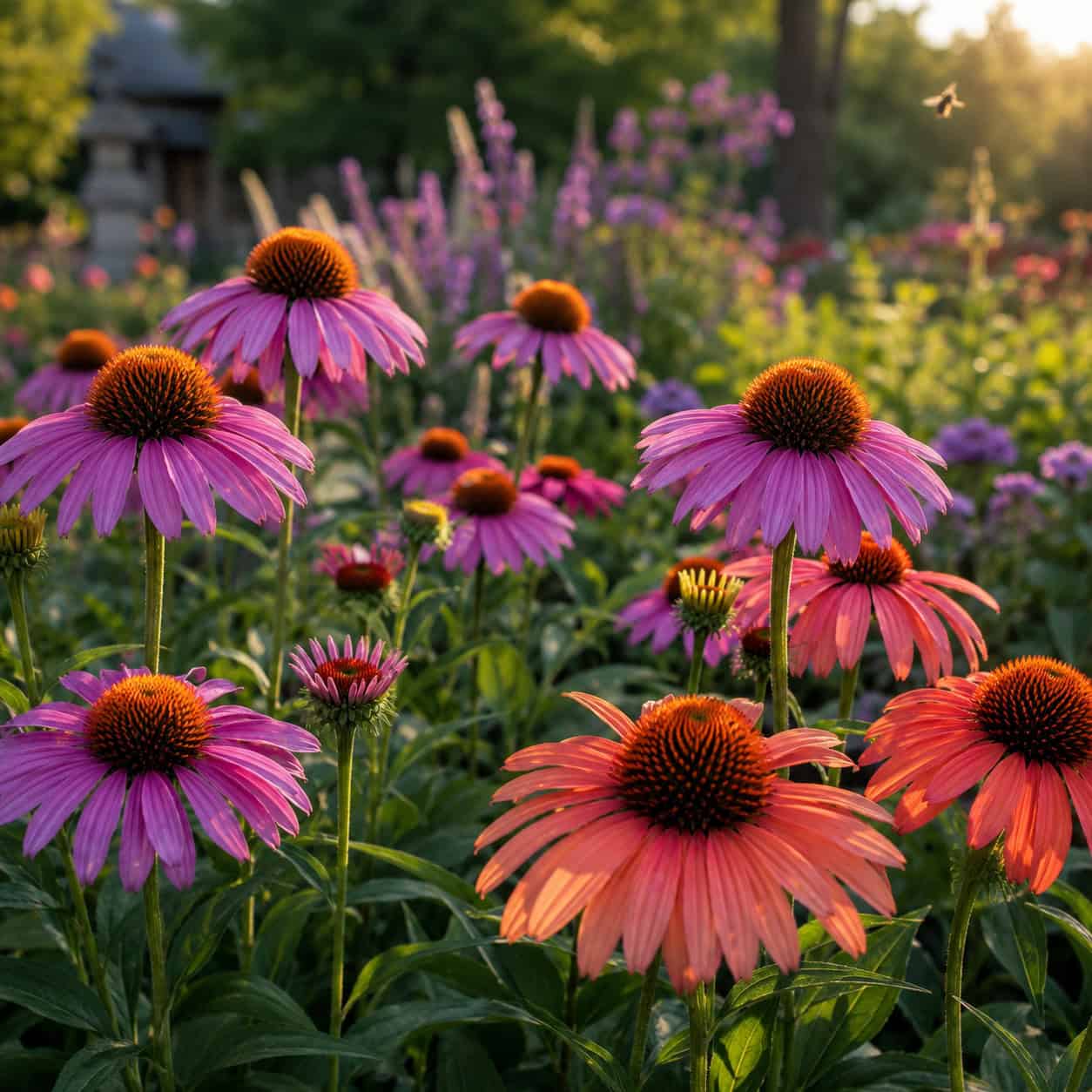
Here’s the pivot. Everything before this was mostly annuals you replant each year. Coneflowers you plant once and cut for years.
They come in a rainbow now — purple, coral, orange, white — and they rebloom when you deadhead. Daisy-family toughness in a perennial you barely have to think about.
Snip spent flowers and it pushes fresh ones from summer into early fall.
Plant it and forget it. Then harvest it every year.
20. Yarrow (Achillea)
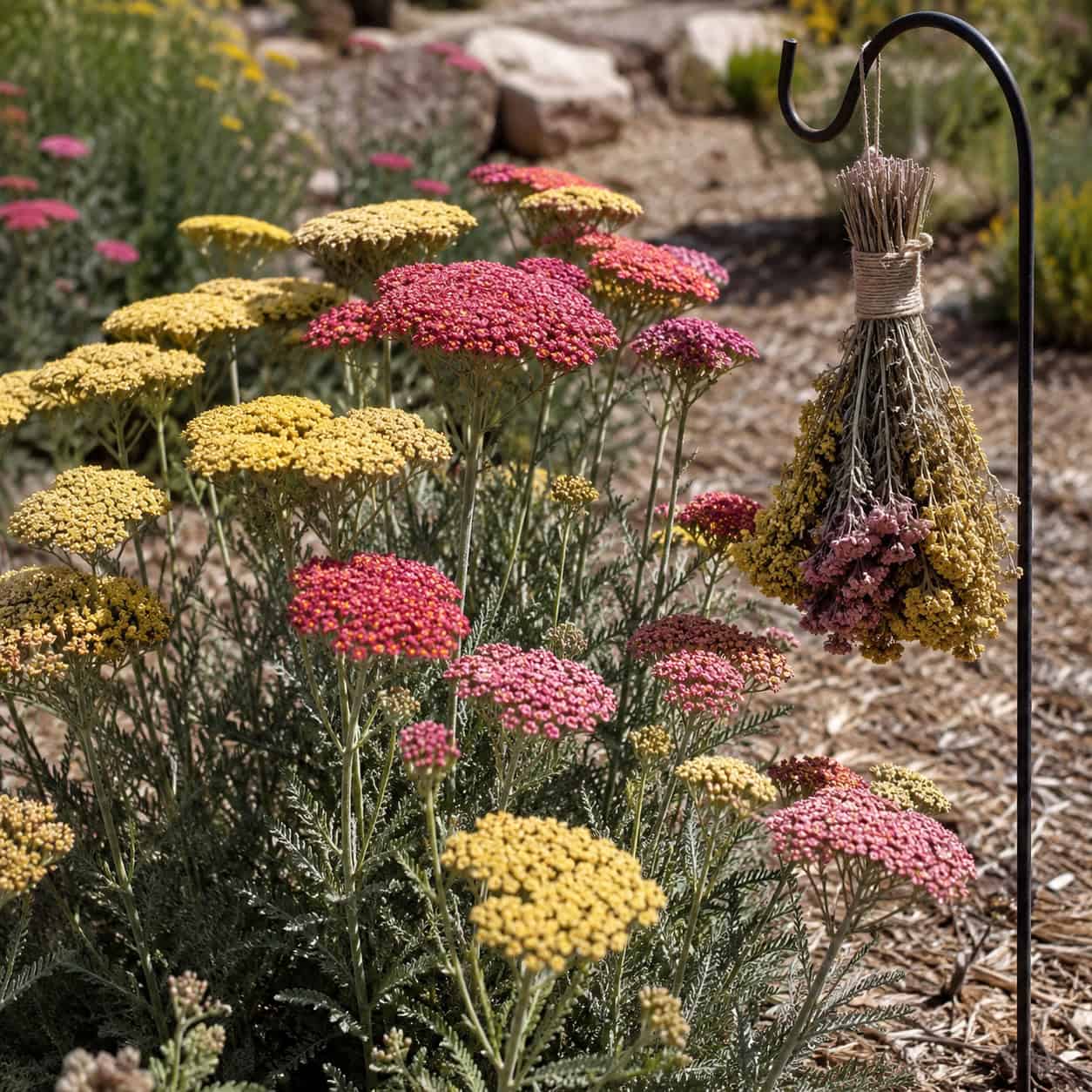
Flat-topped clusters that read as a solid plane of color — great for anchoring an arrangement.
Shear yarrow back after the first flush and a second wave follows in three to four weeks. It’s about as drought-tough as filler gets.
It dries well, too, holding its shape and color for everlasting bouquets.
A perennial that keeps giving on almost no water.
21. Coreopsis (Tickseed)
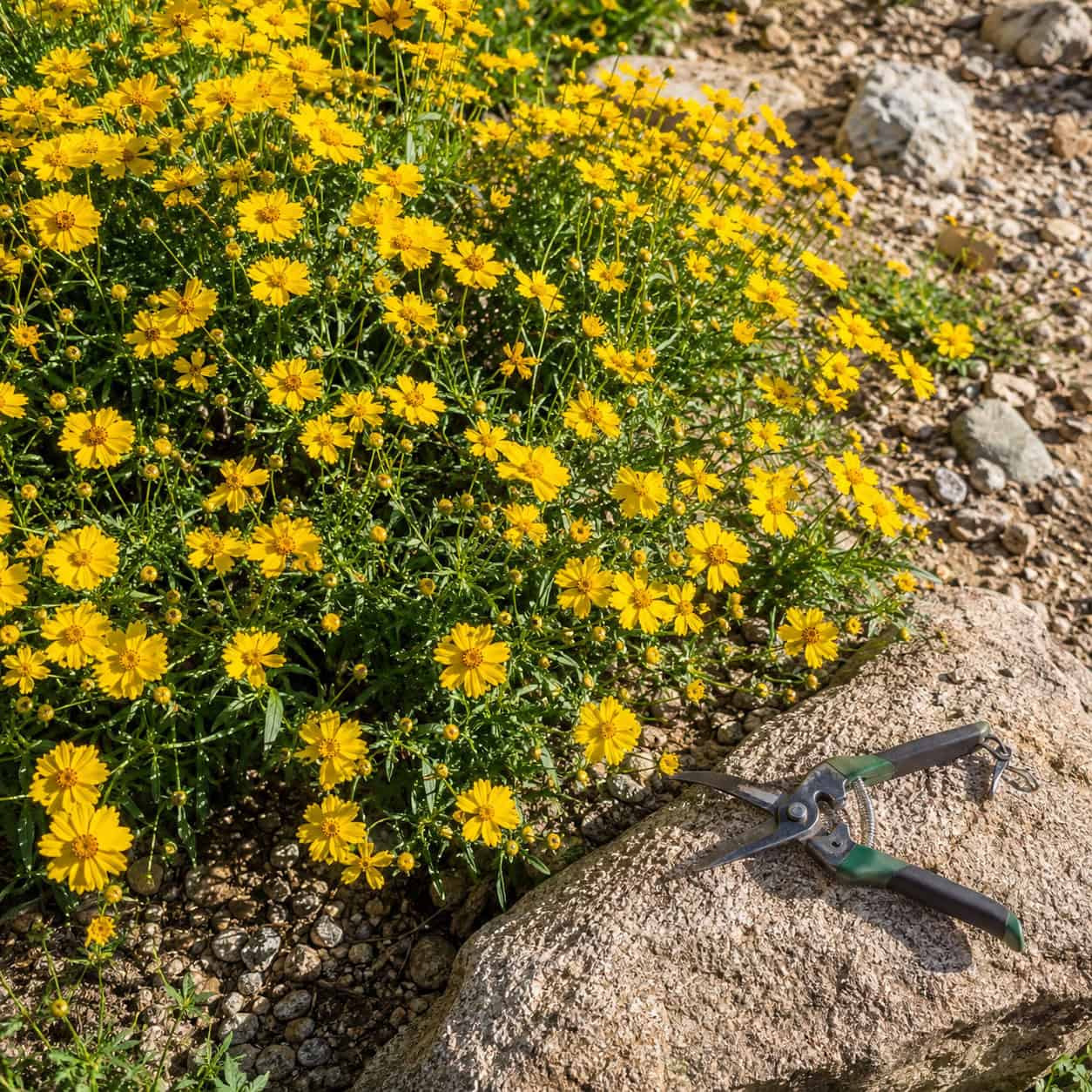
Sunny little daisies that flower from early summer well into fall. Extension offices confirm it as a reliable rebloomer.
Deadhead it, or just shear the whole plant back by a third when it starts to fade, and it flushes again. Iowa State University Extension covers the shear-back method.
Poor, rocky soil? Coreopsis doesn’t care. It might even prefer it.
Low-maintenance, long-blooming, and cheap to grow.
22. Perennial Salvia
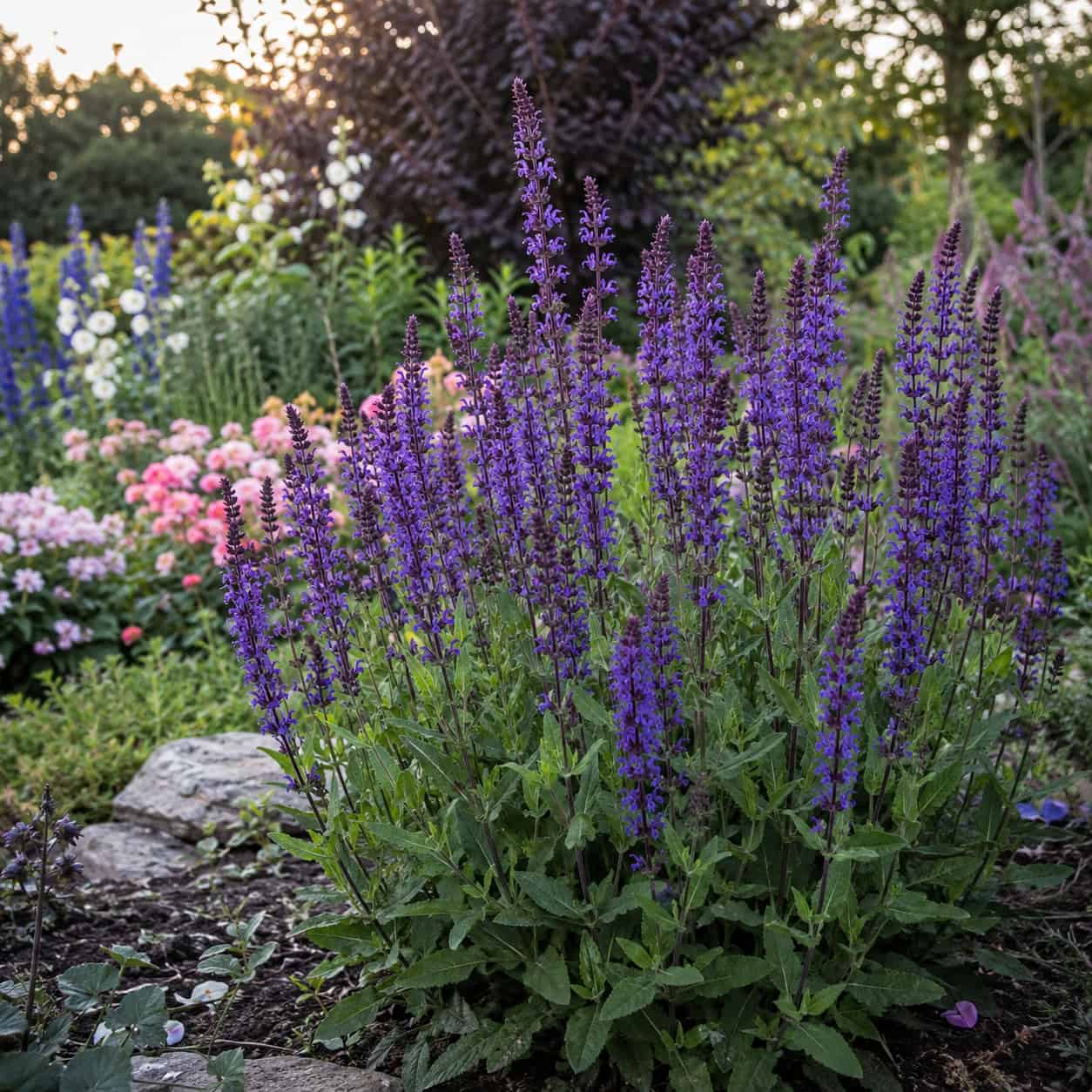
Cut-and-come-again isn’t only an annual thing. Perennial salvias prove it.
Varieties like ‘Caradonna’ put on a strong first flush of purple spikes, and if you cut them back hard afterward, they bloom again in late summer.
The spiky form gives bouquets the same vertical lift as snapdragons, but from a plant that returns every spring.
Shear it. Wait a few weeks. Cut again.
23. Garden Phlox
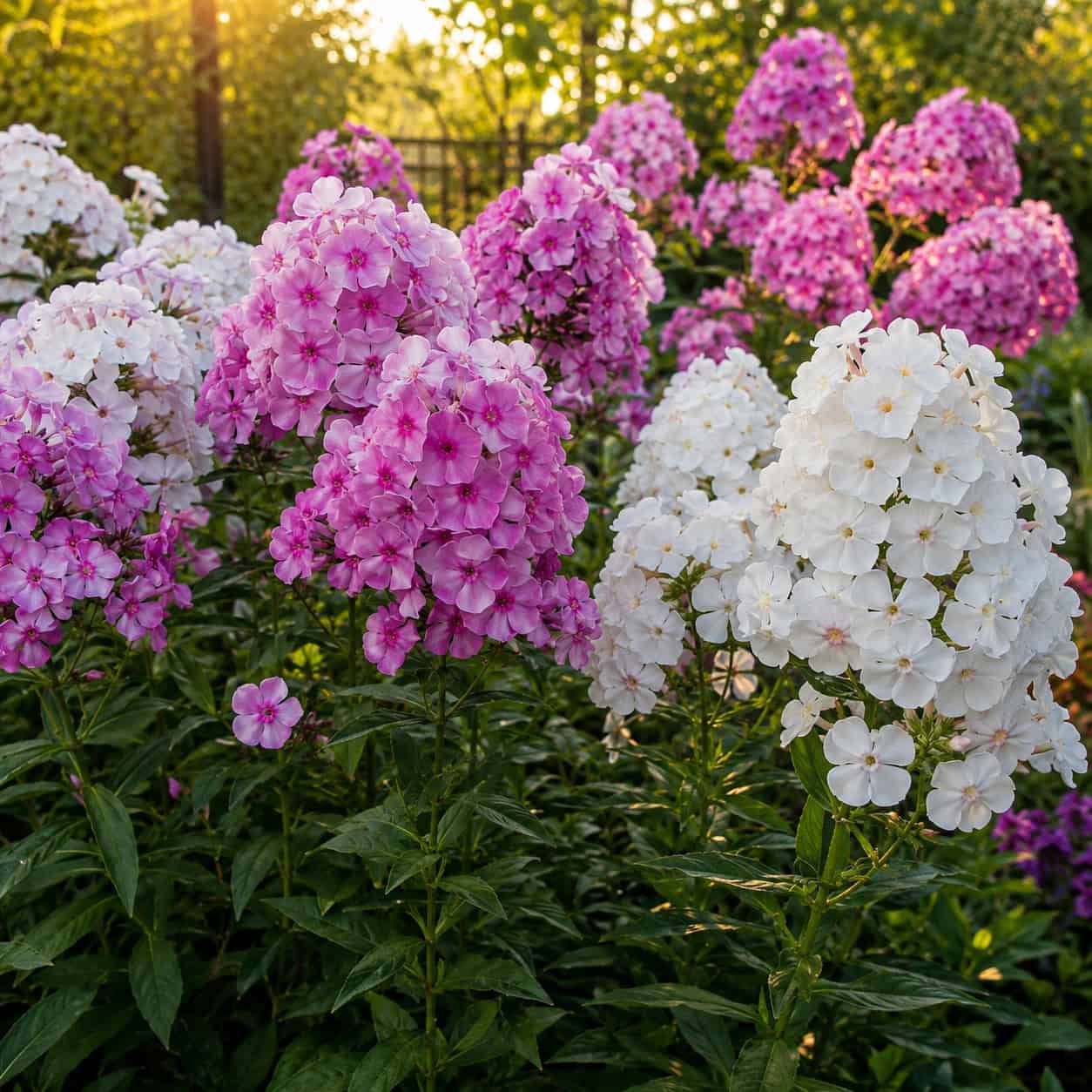
You’ll smell it before you see it. Garden phlox carries fragrance clear across the yard on a warm evening.
Those cone-shaped clusters bloom through midsummer into late summer, and prompt deadheading pushes continued flowering.
There’s a practical reason to deadhead beyond the extra blooms — it stops phlox from reseeding into a weedy mess. A few of those seedlings won’t even match the parent’s color.
Cut it for the vase, and cut it to keep it tidy.
24. Shasta Daisy
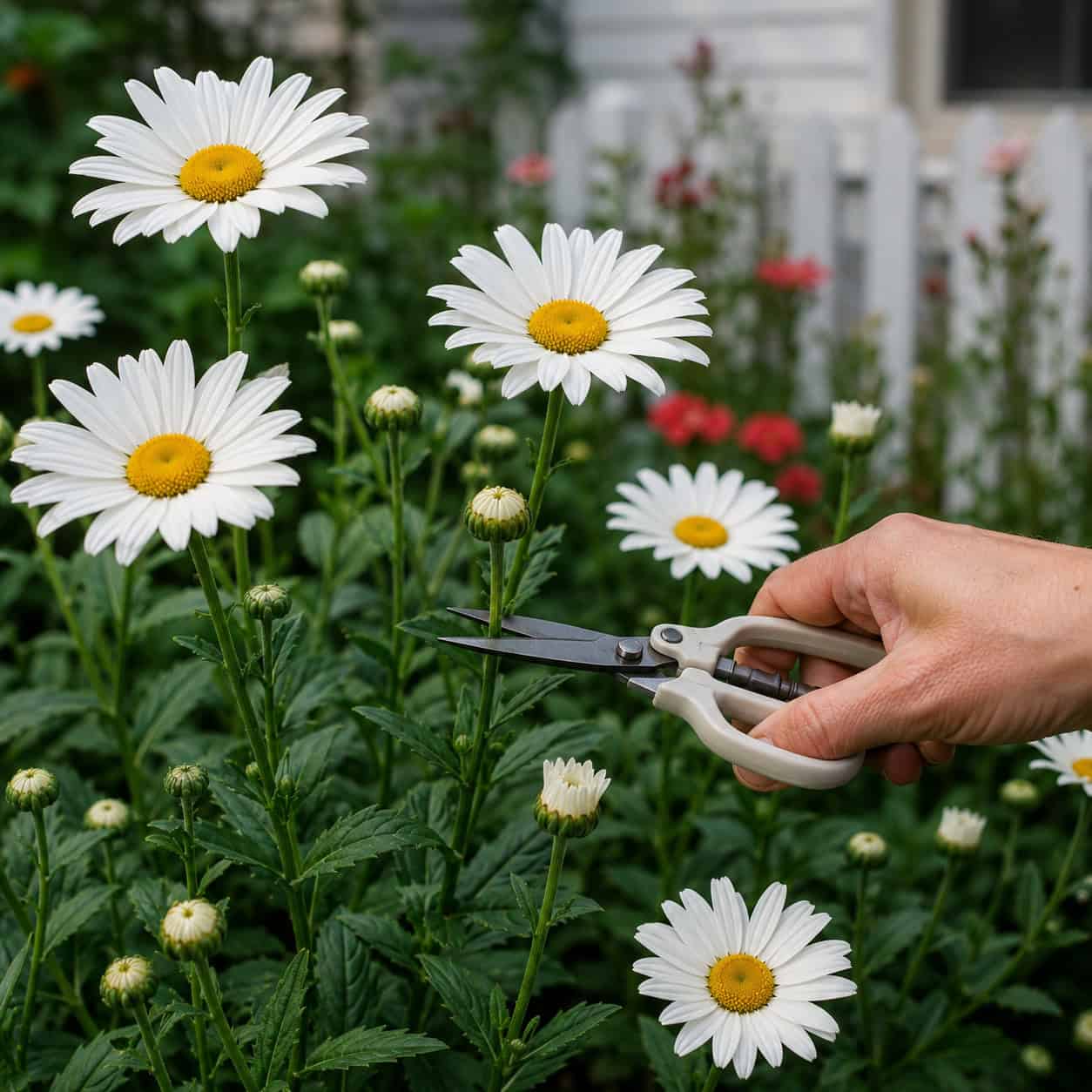
The classic white daisy. Dependable, tidy, and the backbone of any cottage bouquet.
Shastas produce lateral flowers down the stem. Cut a spent bloom back to the next bud and the plant keeps advancing bloom by bloom.
Deadhead through the season and you’ll stretch flowering well past the first flush. Fine Gardening details the deadheading habit for perennials like this.
White plays nice with everything. That’s why it never leaves the cutting bed.
25. Blanket Flower (Gaillardia)
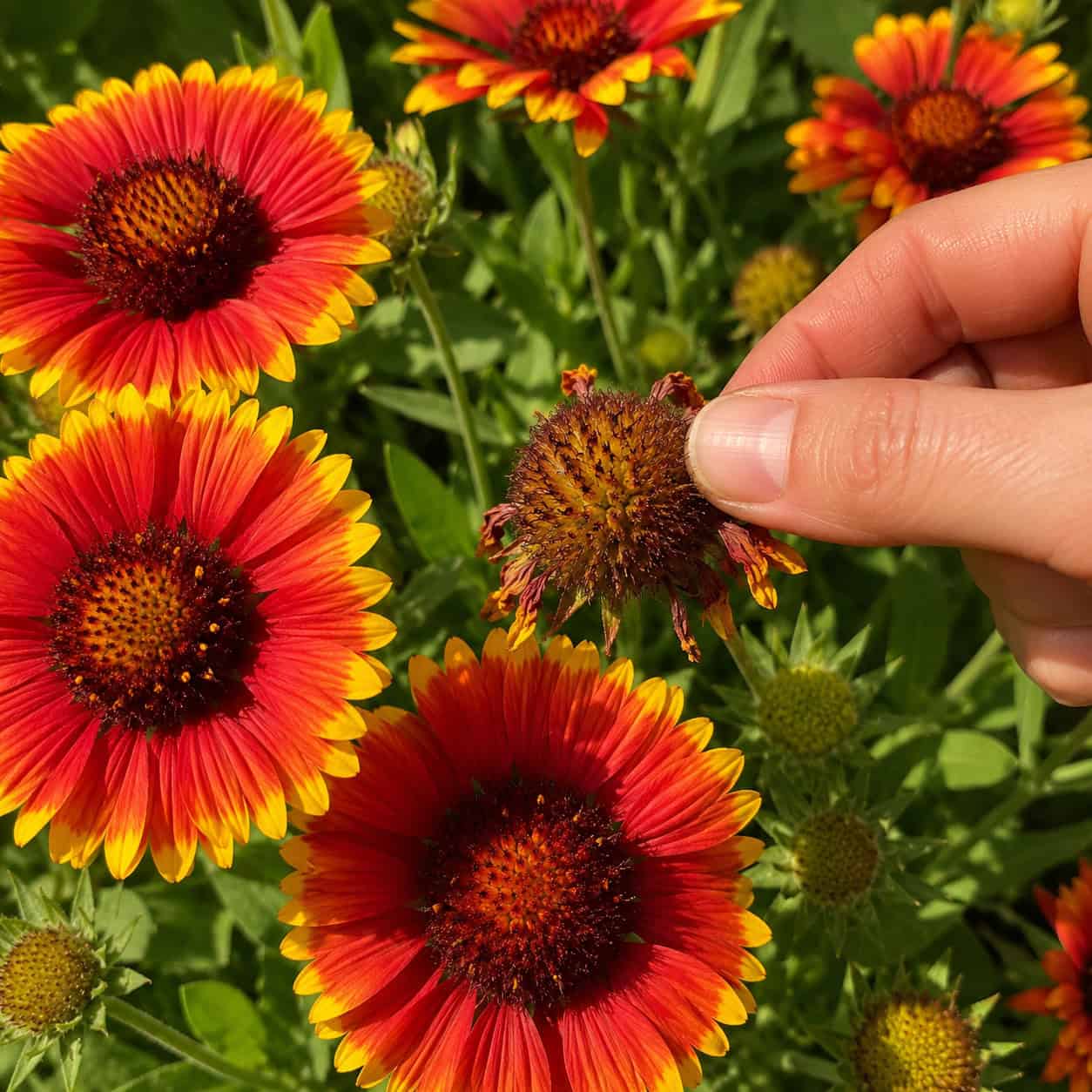
Fiery red-and-gold daisies that look like a tiny sunset on a stem. Blanket flower barely quits — but it slows way down if you ignore it.
The trick is to pinch spent blooms before seed forms. Once it sets seed, it eases off the throttle.
Stay ahead of it and you’ll keep that hot color coming through most of the summer.
Tough as nails and made for full sun.
26. Feverfew
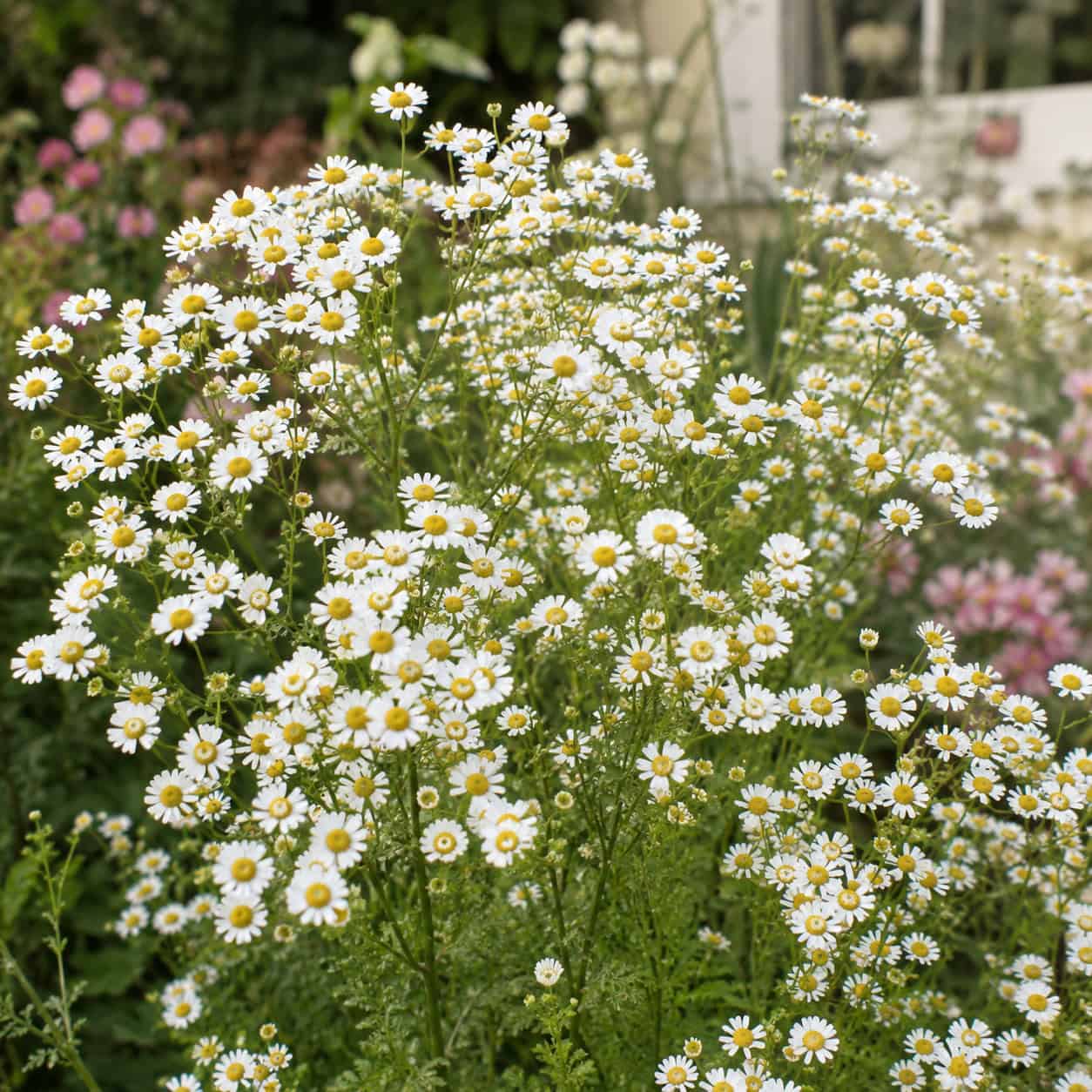
Clouds of tiny white daisies on airy stems. Feverfew is the cottage filler that makes everything else in the vase look intentional.
Cut it and it branches. Branch it and it blooms more. Simple loop.
It’s a short-lived perennial that reseeds itself freely, so you’ll likely see it pop up again next year without lifting a finger.
Delicate to look at, tough to actually get rid of.
27. Sweet William / Dianthus
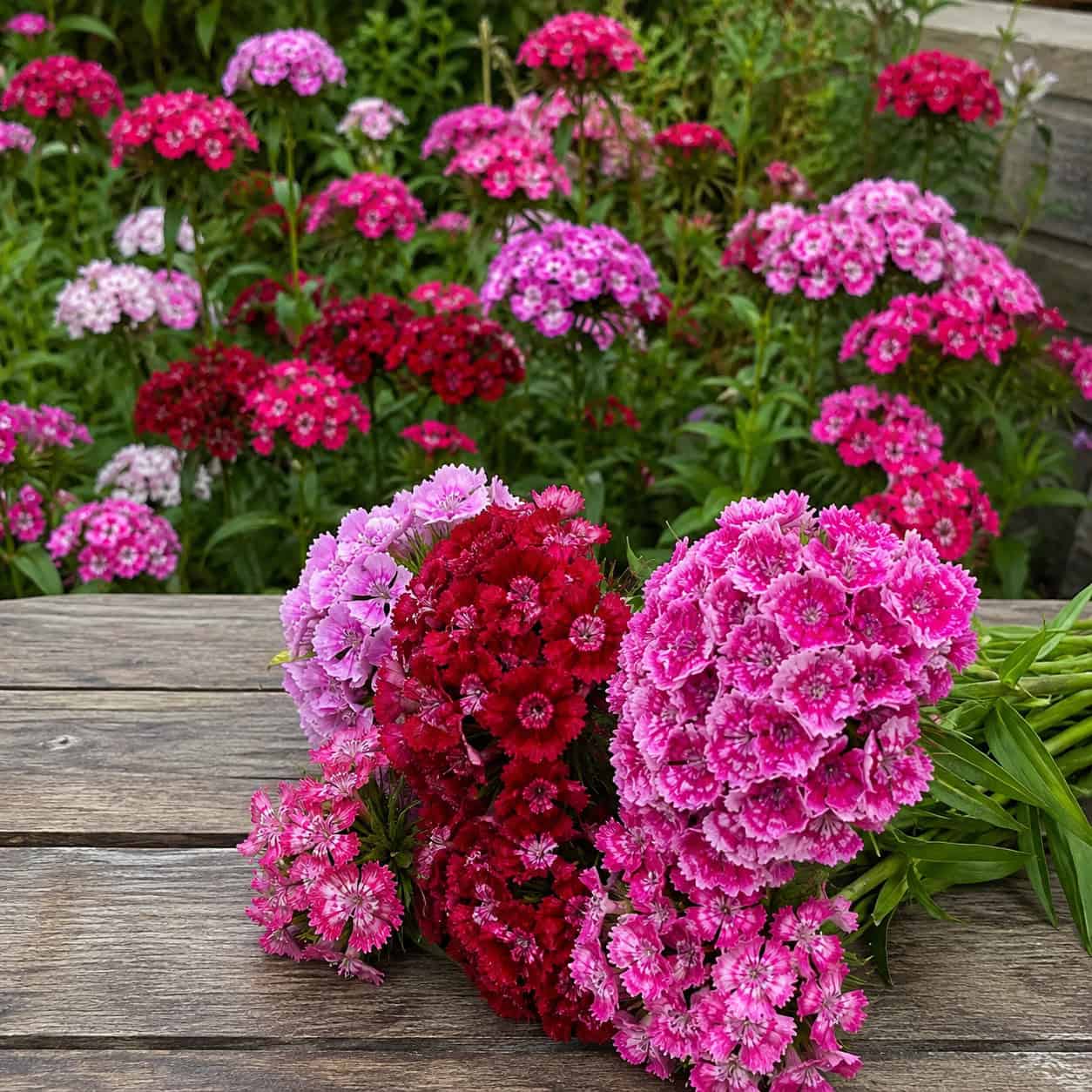
Bring your nose close and there’s clove hiding in there. Sweet William’s fragrance is old-fashioned in the best way.
Its packed clusters flower hard in June, and here’s the payoff — shear the plant after that flush and it often gives a genuine second bloom in September and October.
Two seasons of clove-scented color from one planting.
Charming, sturdy, and criminally underused in modern gardens.
28. Larkspur
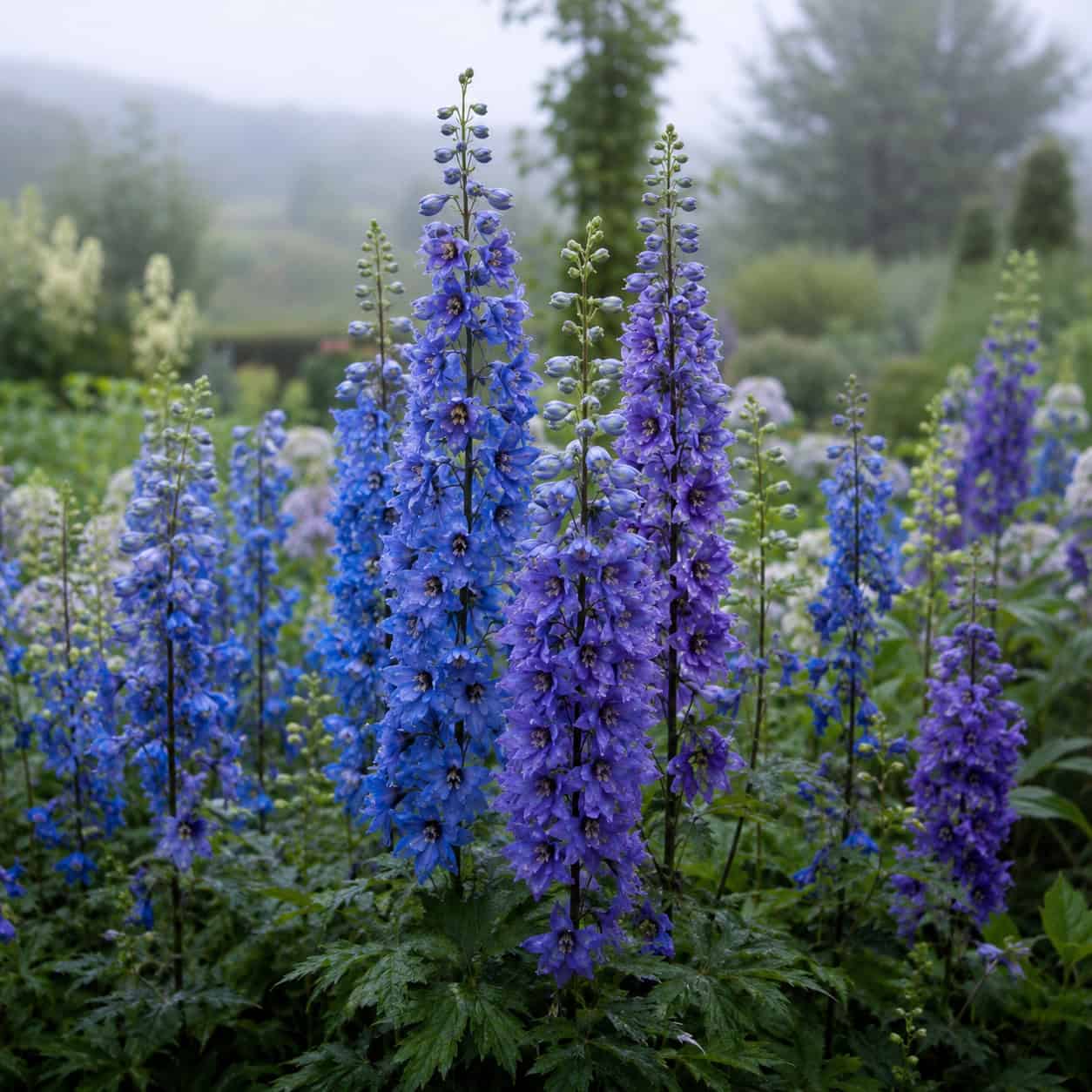
A gorgeous cool-season spire, larkspur brings dusky blues and purples that photograph like a dream.
Be honest with yourself, though. Larkspur leans more toward one strong flush than true cut-and-come-again — it won’t rebound the way a zinnia does.
Grow it anyway if you want another cool-season spike alongside your snapdragons. The color is worth the shorter run.
Sow it in fall or very early spring; it wants the chill.
29. Verbena bonariensis
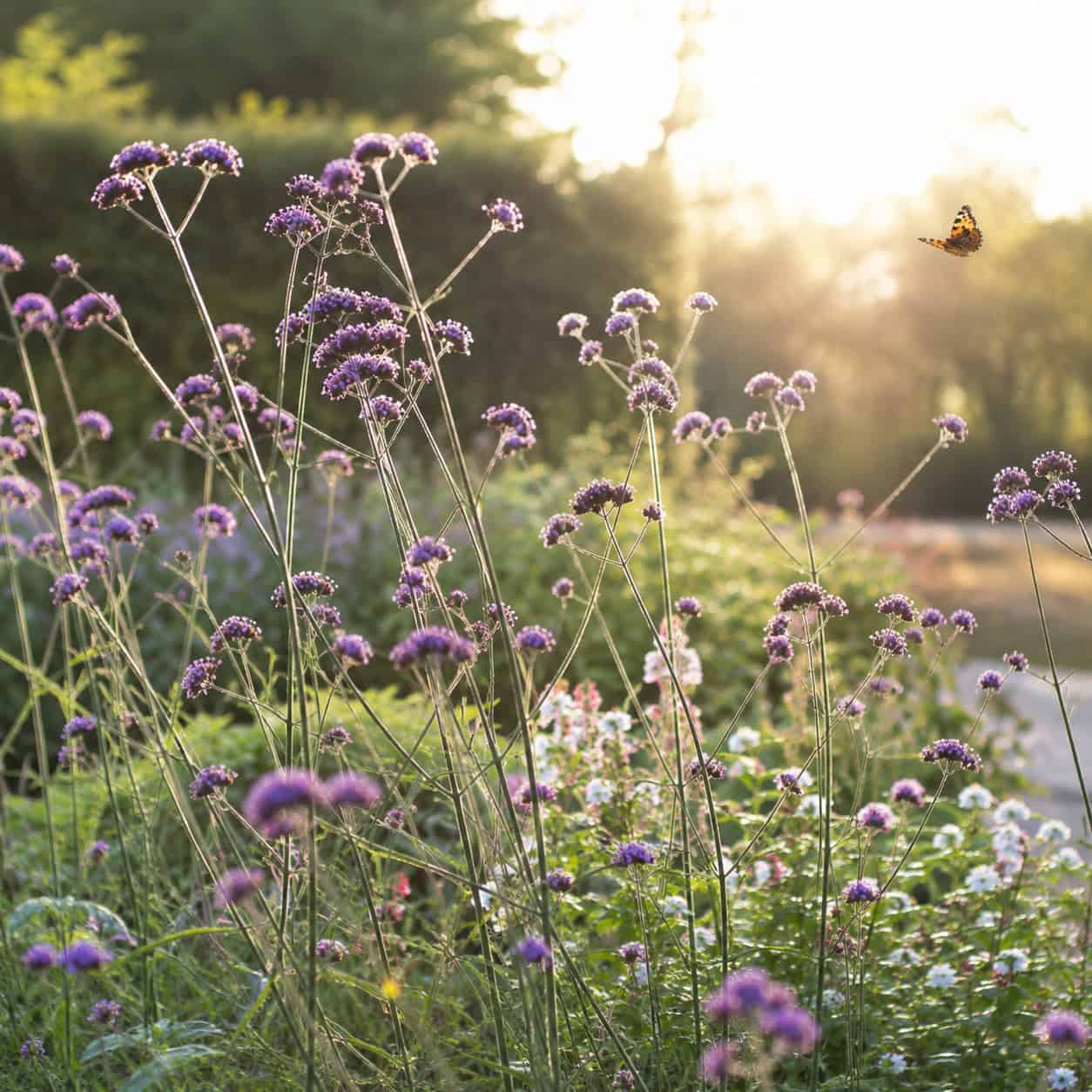
See-through purple wands floating on tall, wiry stems. Verbena bonariensis gives a bouquet air and movement without any bulk.
It blooms endlessly through summer and fall, and it self-sows so freely you’ll never have to plant it twice.
Pollinators swarm it. Butterflies especially treat it like a landing pad.
Use it as the ethereal filler that ties everything together — then let it seed and come back on its own.
Fill a bed with even half of these and you’ll spend the summer handing bouquets to neighbors instead of buying them at the checkout. That’s the payoff of a cutting garden: the harvest is the maintenance. The more you take, the more it gives.
Start with zinnias, cosmos, and a branching sunflower if you’ve never done this. They’re forgiving, fast, and they’ll hook you by July.
Keep the scissors sharp and a jar of water by the door. Grab a few stems every morning, and by the time frost arrives you’ll have cut hundreds of flowers off a patch of ground that never asked for much.
Cut them. They keep coming.