

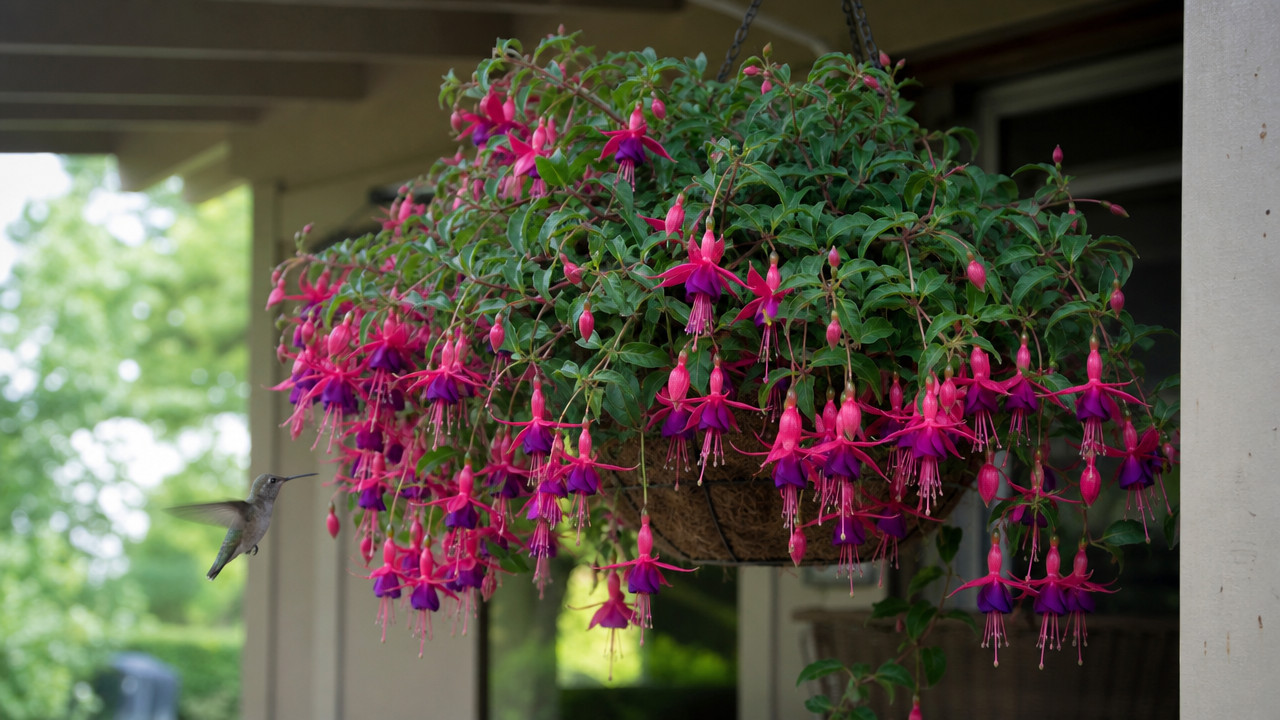
The first one shows up before the leaves are fully out. A ruby-throat, barely bigger than your thumb, hovering at a red flower spike in March like it knew exactly where to go.
It did. Hummingbirds map their route by bloom time, not by luck.
The trick to keeping them all season isn’t one perfect plant. It’s a relay — something opening in early spring for the first arrivals, something else blooming in July, and a late closer feeding the migrants that leave in fall.
Get the timing right and you’ll have birds from the first thaw to the first frost. Get it wrong and they’ll pass through once and move on.
These plants are grouped roughly by when they bloom, so you can build a garden that never goes empty. Here are 31 that keep the nectar flowing.
1. Red Buckeye
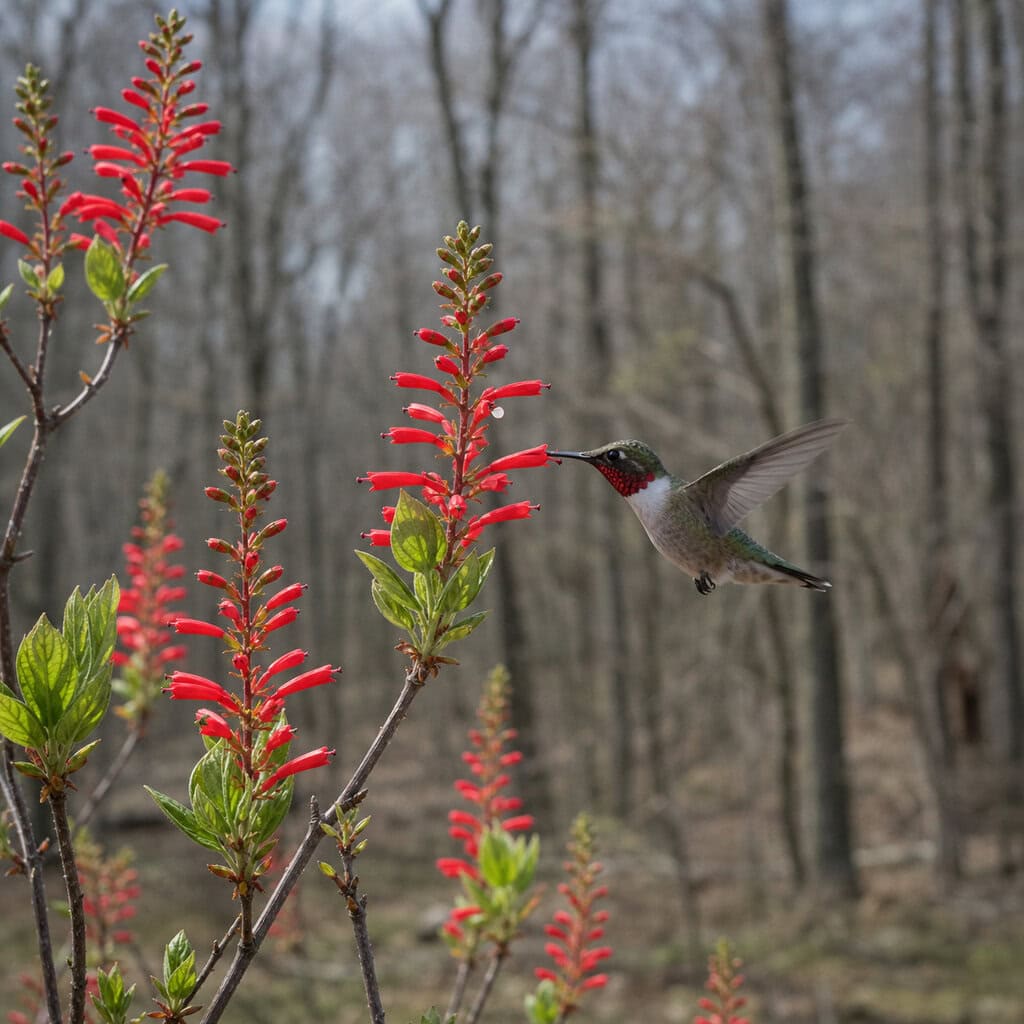
Serious birders watch this shrub the way farmers watch the sky. When its red tubular flower spikes open, the ruby-throated hummingbirds are days behind.
Red buckeye blooms just as the birds return north across the Gulf, when almost nothing else is flowering. That timing is the whole point.
It’s a small native tree or large shrub, happy in part shade at the edge of the woods. According to the NC State Extension Plant Toolbox, the flowers are built for hummingbird tongues, not bees.
Plant it and you’re feeding the very first arrival of the year.
2. Red-Flowering Currant
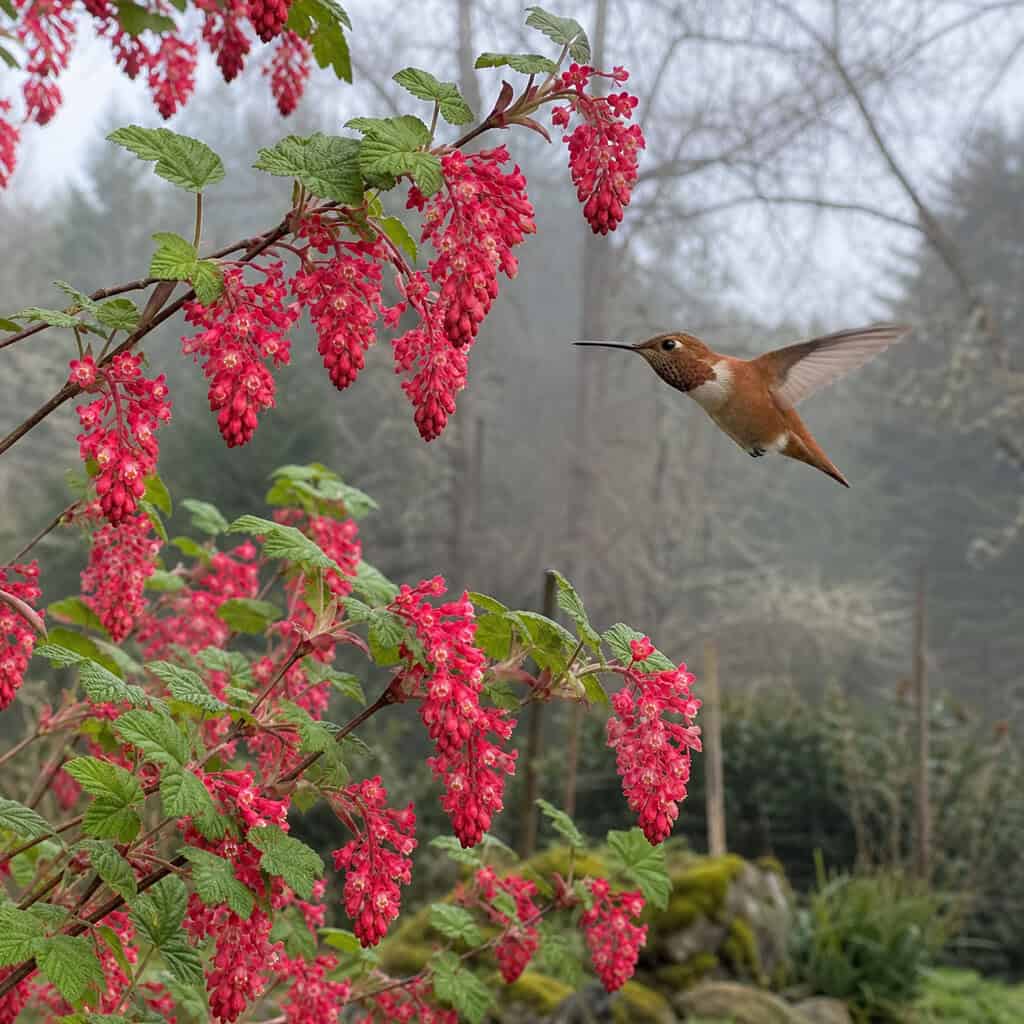
Out West, this is the wake-up call. One of the earliest bloomers on the Pacific coast, opening in late winter when the Rufous hummingbirds are still hungry from migration.
Dangling clusters of pink to deep-red flowers cover the shrub before most gardens have stirred.
It’s tough, drought-tolerant once established, and native across the West. Early nectar when there’s nothing else — that’s what makes it matter.
3. Virginia Bluebells
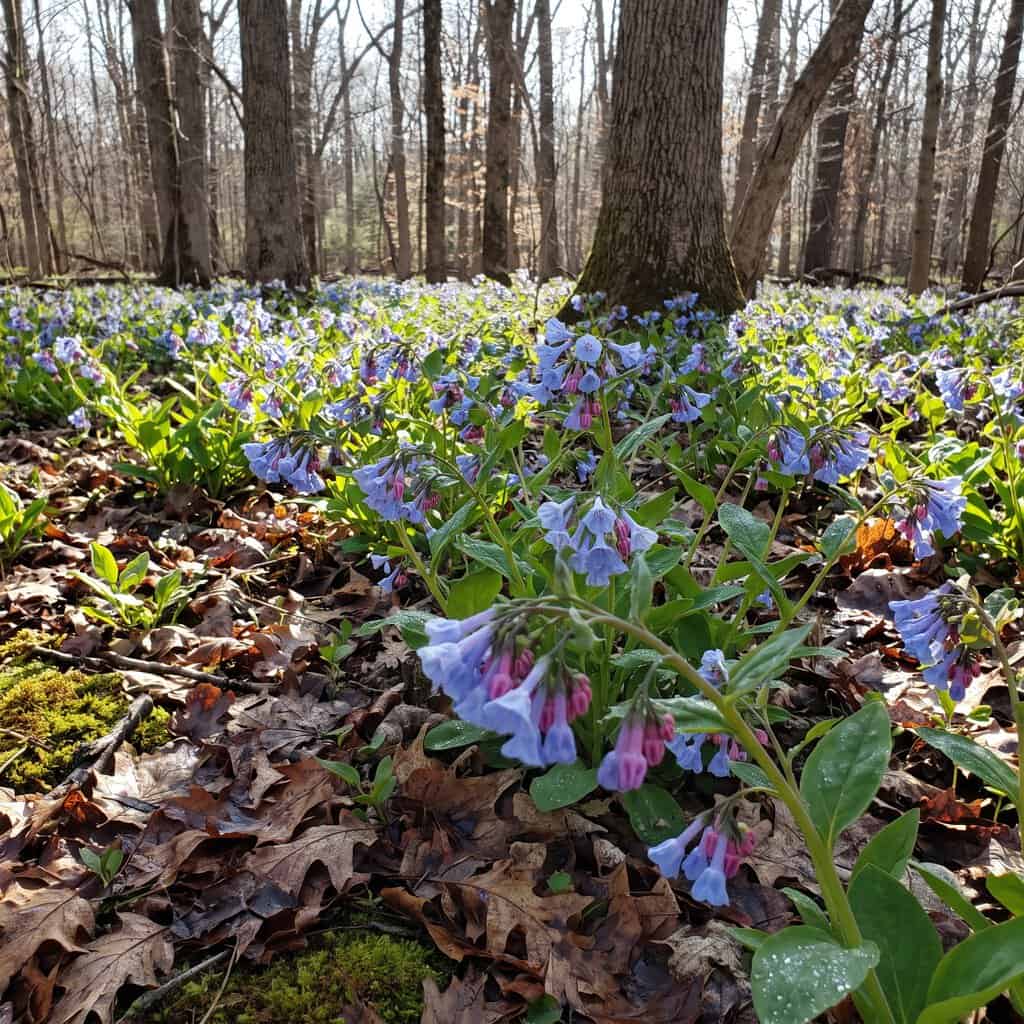
These open as early as March. Trumpet-shaped blooms that start pink and shift to a sky blue you don’t see anywhere else in the spring woods.
A woodland perennial for shady, moist spots. It feeds the first birds through in places where the sun barely reaches.
Bluebells go dormant by early summer and disappear entirely. Pair them with something later so the bed doesn’t go bare — shade plants that thrive where grass refuses to grow fill that gap well.
4. Eastern Red Columbine
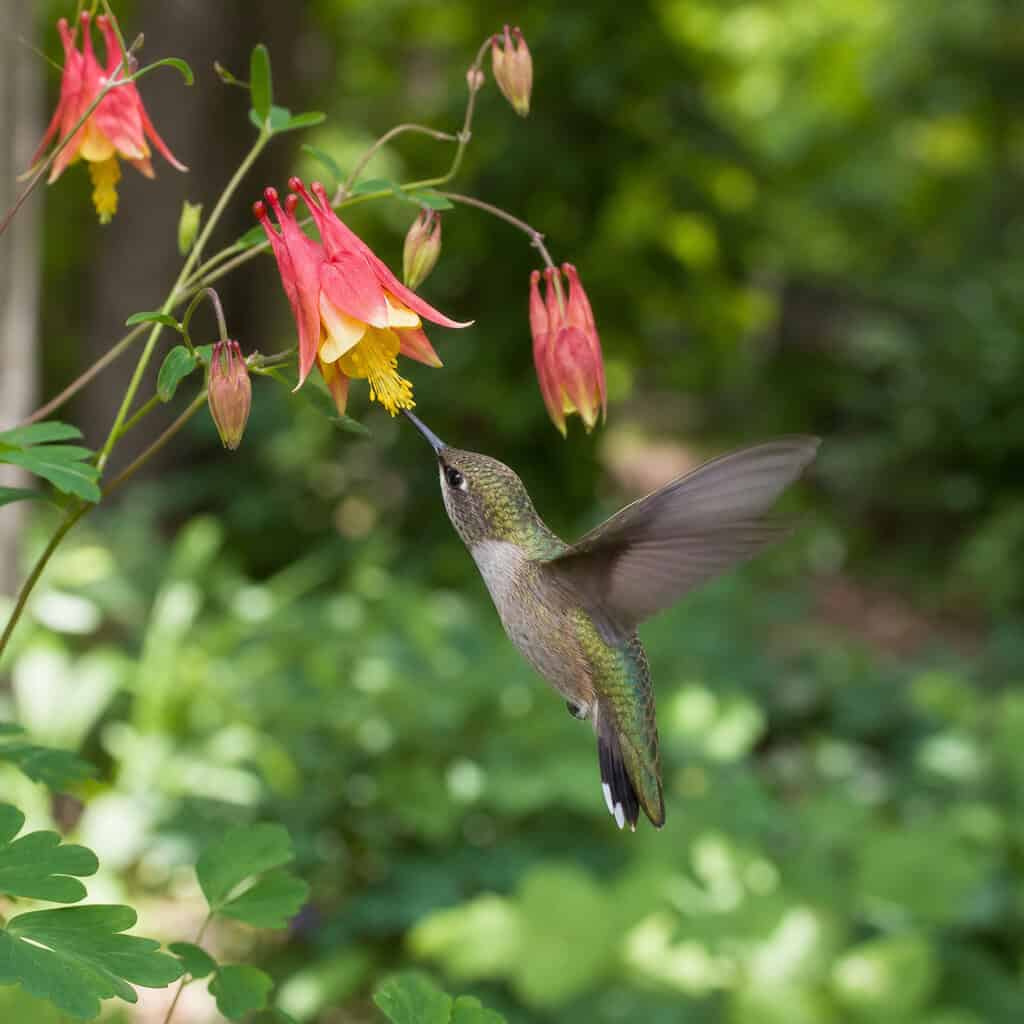
Nodding bells of red and yellow, dangling on thin stems. Hummingbirds hit them the moment they arrive, before the summer flowers have even thought about opening.
Columbine bridges that awkward gap — too late for buckeye, too early for bee balm.
It self-seeds without becoming a nuisance, so one plant slowly becomes a drift. Give it part shade and average soil and it mostly takes care of itself.
5. Bleeding Heart
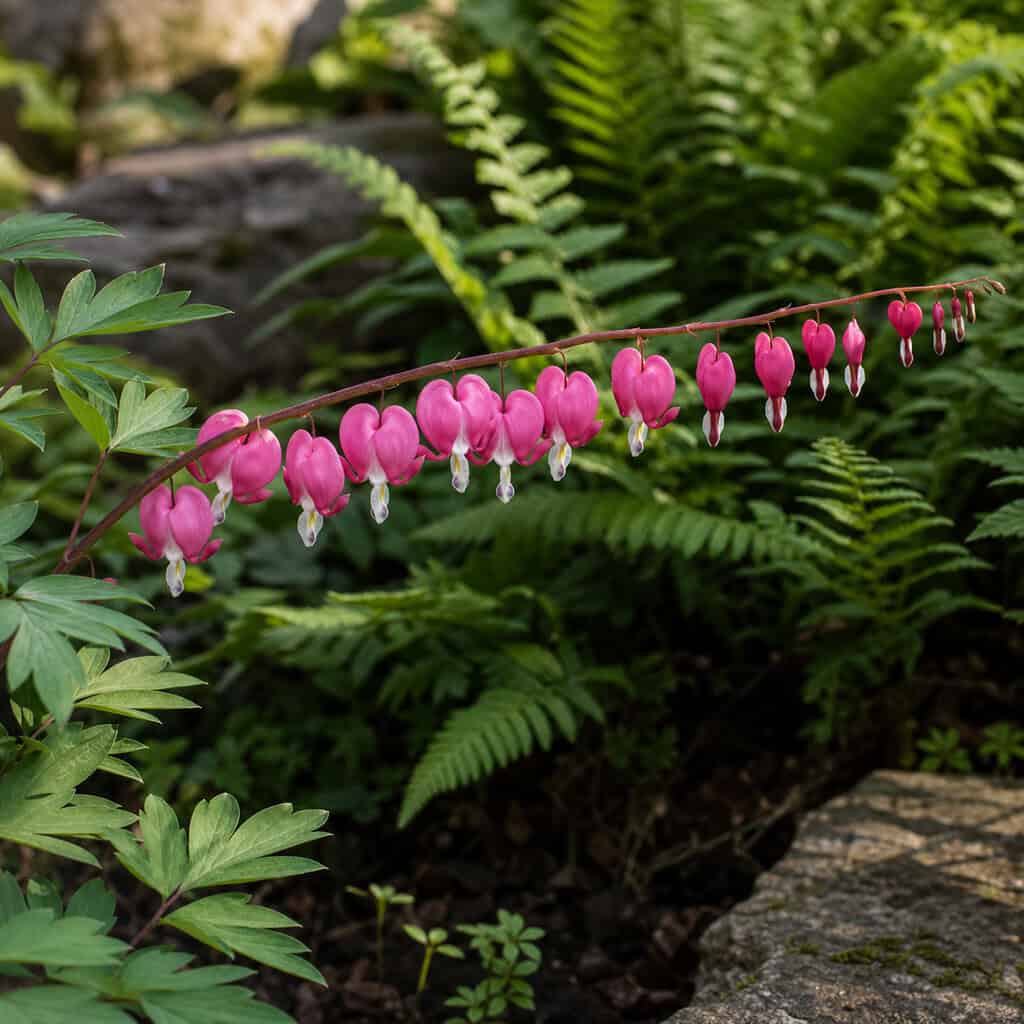
The cottage-garden classic earns its spot here. Heart-shaped pink blooms hang in rows along arching stems through April and May.
It thrives in shade, where most nectar plants sulk. That’s rarer than it sounds.
Cool spring days don’t bother it. By the time summer heat arrives, it fades back — plant a summer bloomer nearby to cover the retreat.
6. Native Azaleas
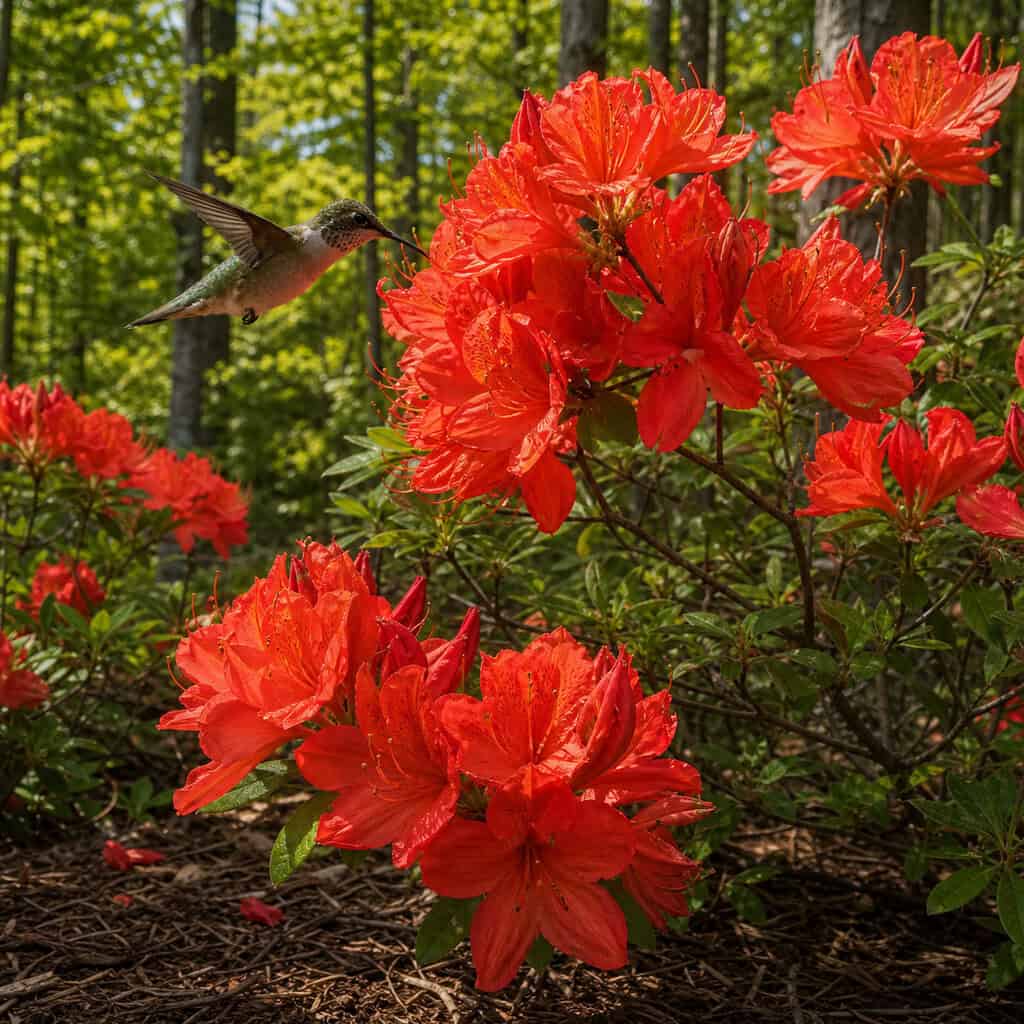
This is where landscaping and hummingbird gardening line up perfectly. Native azaleas — flame, pinxterbloom, sweet — bloom right as the migrants return, and they feed birds far better than the fancy hybrids do.
The distinction matters. Most azaleas sold at garden centers are Asian evergreen hybrids bred for a wall of color. They look great and offer little nectar.
Native deciduous azaleas are the opposite. Flame azalea (Rhododendron calendulaceum) throws orange-to-red trumpets that hummingbirds work over all day. Pinxterbloom opens soft pink in April. Sweet azalea adds fragrance and blooms a little later, stretching the window.
Buy by botanical name, not by the color tag. If the label just says “azalea” and the plant is evergreen, it’s almost certainly a hybrid.
Plant them in dappled shade with acidic, well-drained soil and a thick mulch layer over the shallow roots. Skip the heavy pruning — these bloom on old wood, so cut right after flowering or not at all.
A grouping of three or five native azaleas gives you a spring nectar wall and a landscape anchor at the same time. Few shrubs do both jobs.
7. Coral Honeysuckle
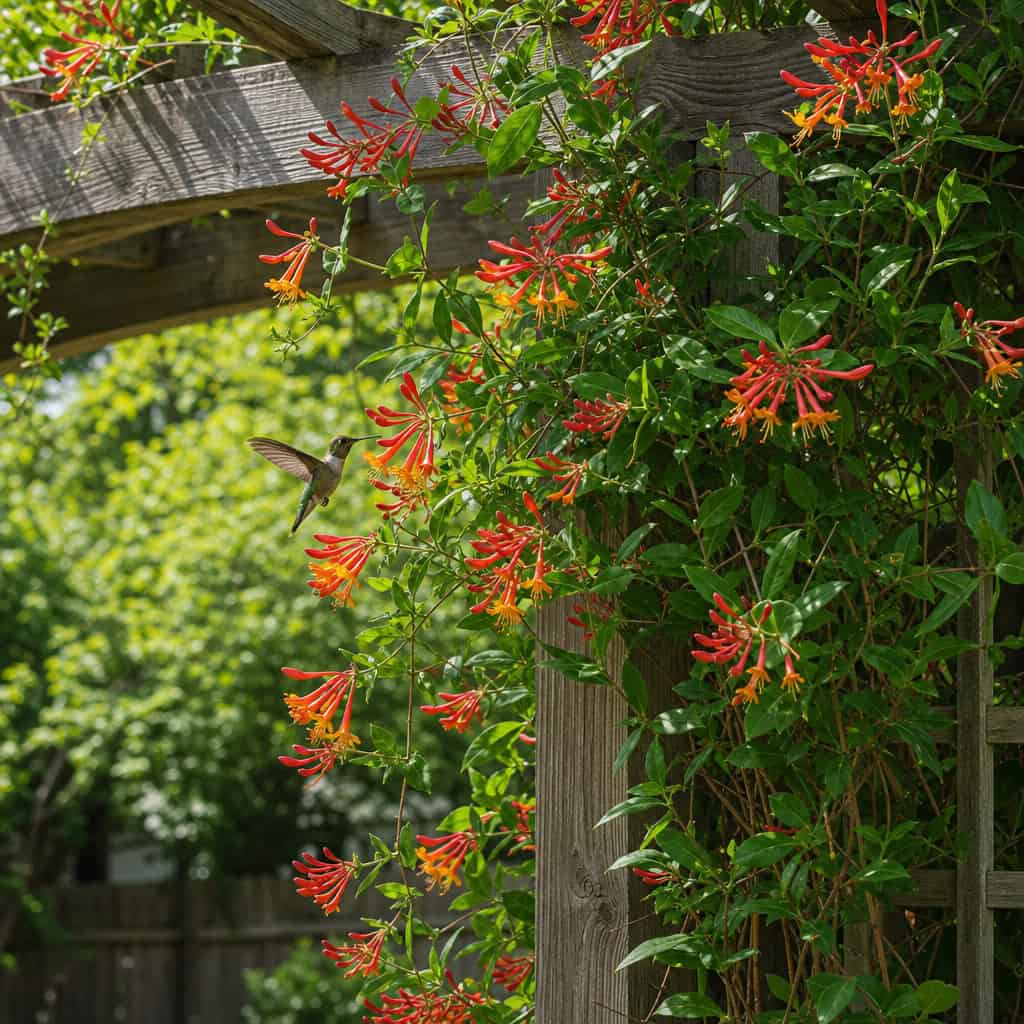
If you plant one thing off this list, make it this vine. Coral honeysuckle blooms from the birds’ spring arrival straight through fall — in warm years, clusters of red-orange tubes hang on nearly to Christmas.
It’s the season-bridger. Nothing else runs this long.
And it’s a native, not the thug. The Japanese honeysuckle strangling your neighbor’s fence is a different plant entirely. Coral honeysuckle stays polite on an arbor or trellis. The Virginia Department of Forestry lists it among the best natives for hummingbirds.
Give it something to climb and a spot in the sun. It’ll reward you for a decade — try it as one of the flowering vines that hide an ugly fence fast.
8. Coral Bells (Heuchera)
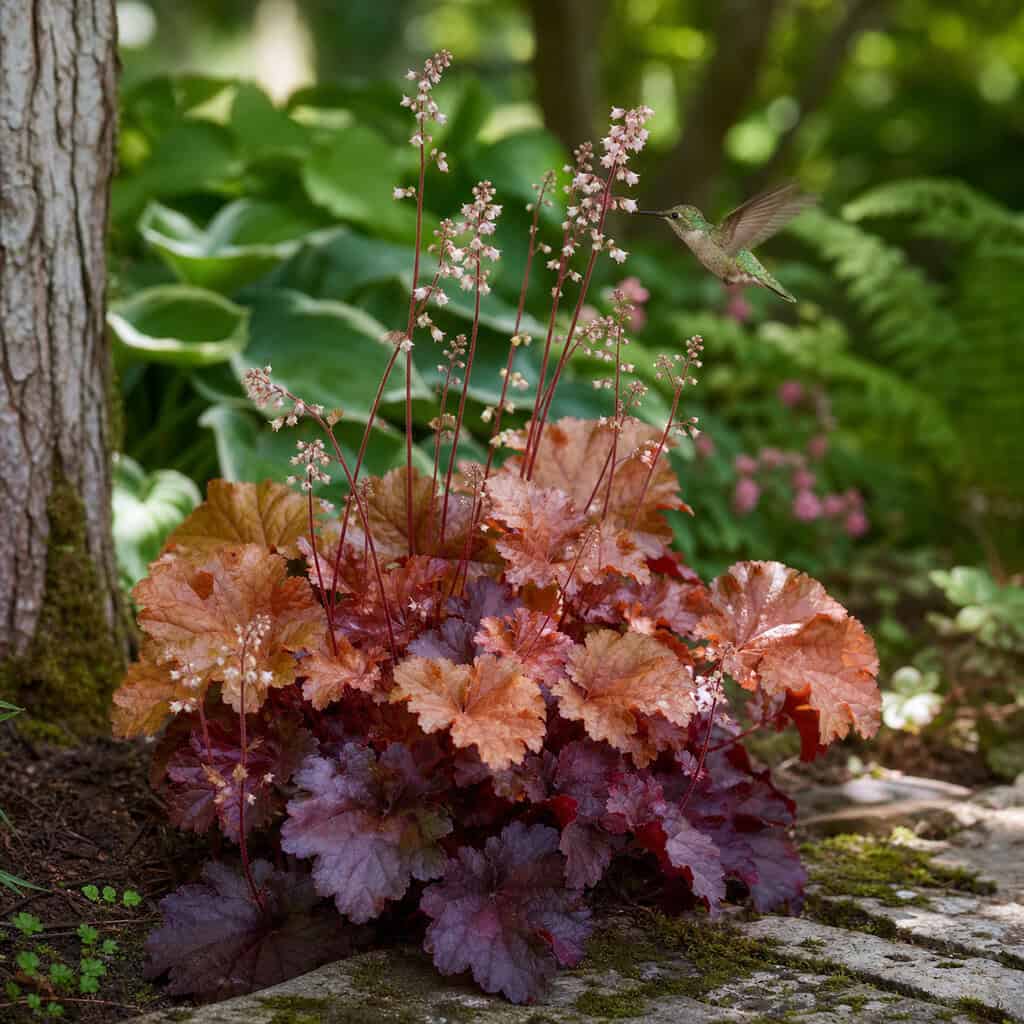
People buy heuchera for the foliage — those ruffled leaves in caramel, lime, and near-black. The flowers are an afterthought to gardeners, but not to hummingbirds.
Thin stalks lift dozens of tiny bell flowers into the air in early summer. Each one is packed with nectar.
There are Western native species for high-elevation gardens, too. Audubon Rockies names them among the best native picks for Colorado, Utah, and Wyoming.
Tuck them into part shade where you want color at the front of a bed. The birds find the flowers even when you don’t notice them.
9. Penstemon (Beardtongue)
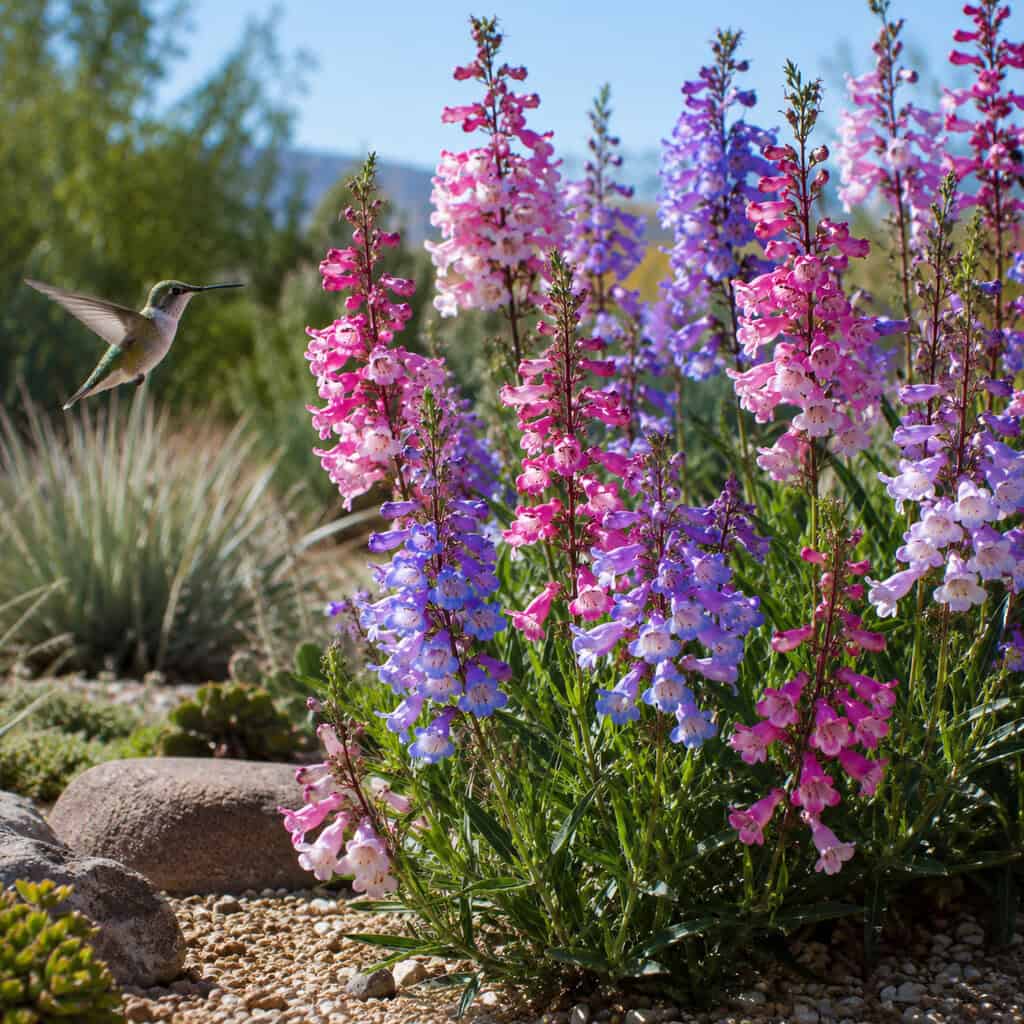
Tube-shaped flowers in red, pink, and purple, stacked up vertical stems. Penstemon is a hummingbird-garden staple for a reason — the shape is a perfect match for their bills.
It’s drought-tolerant once rooted, so it earns its place in dry beds.
Plant it alongside columbine and agastache. Together, the three cover early spring through midsummer without a gap.
Early to midsummer is its window. Deadhead spent spikes and you’ll often coax a second flush.
10. Bee Balm (Monarda)
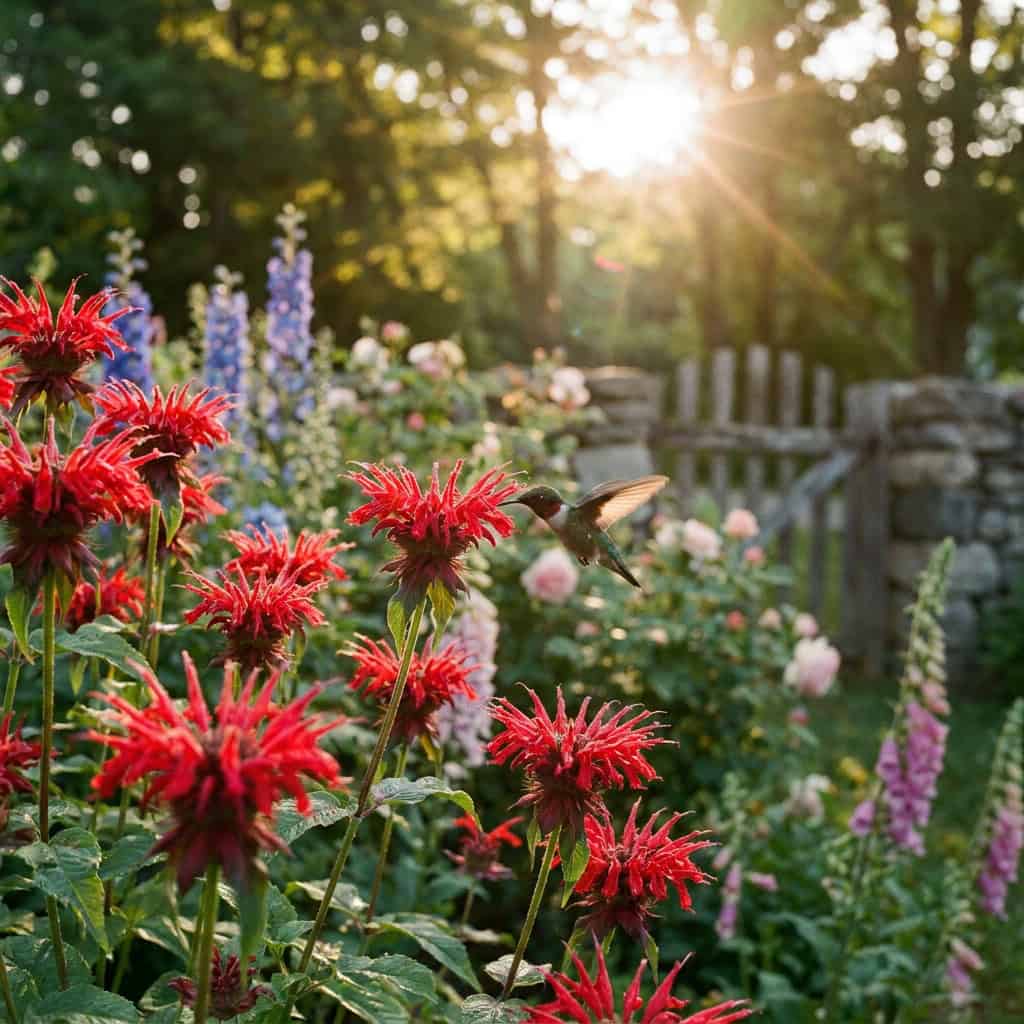
Shaggy crowns of red, pink, or lavender that look half-wild in the best way. Bee balm is one of the single best hummingbird perennials you can grow.
Stagger the species and you stretch the window wide. Early Bradbury’s monarda, scarlet M. didyma, and lavender wild bergamot don’t all peak at once.
The Kentucky Native Plant Society points out the seed heads feed songbirds into winter, so leave them standing.
Give it airflow. Crowded bee balm gets powdery mildew fast.
11. Catmint (‘Walker’s Low’)
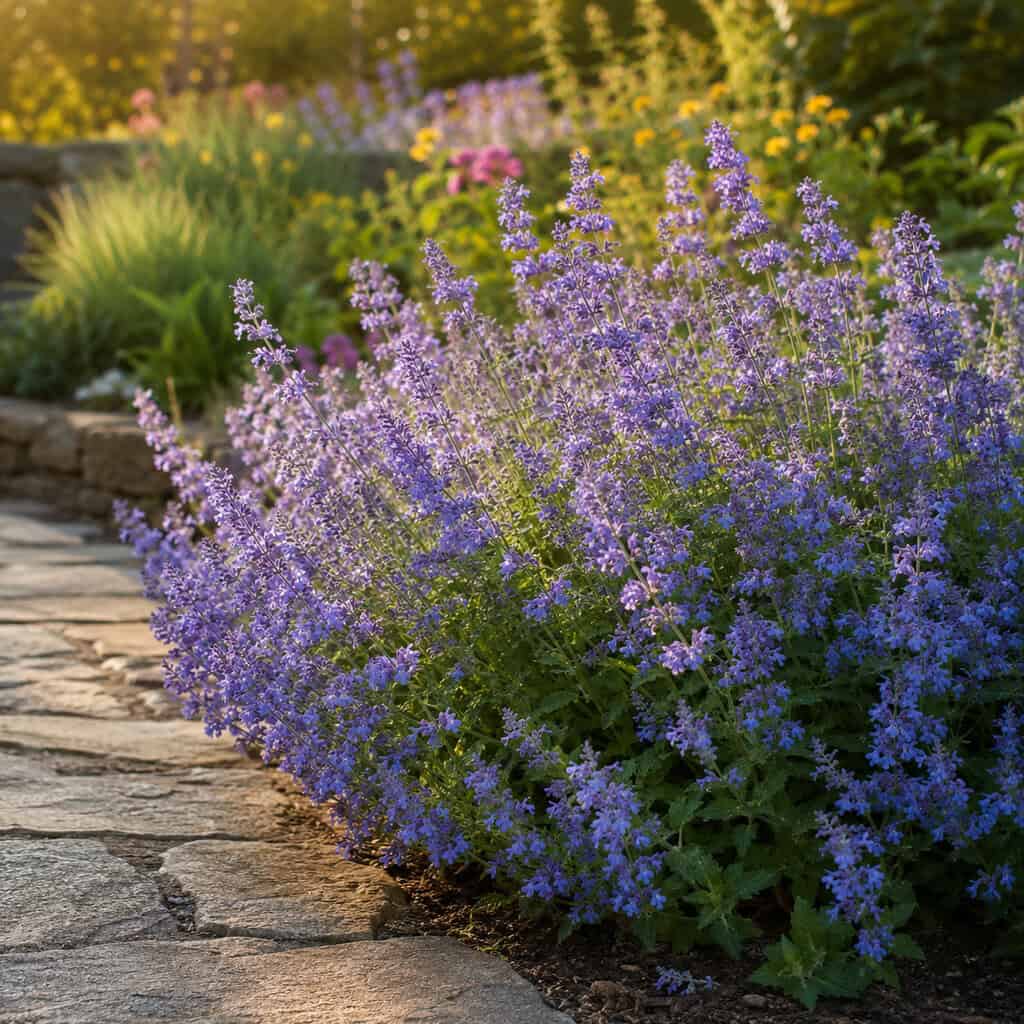
A soft mound of lavender-blue flowers that blooms from May clear to November. Almost nothing else on this list runs that long from a single plant.
The secret is a mid-season shear. When it flags in July, cut it back by a third and it reblooms within weeks.
It’s drought-proof, deer tend to leave it alone, and it spills nicely over a path edge. Birds & Blooms lists it among the reliable late-summer nectar plants.
Low effort, long payoff. That’s a rare combination.
12. Red Hot Poker (Kniphofia)
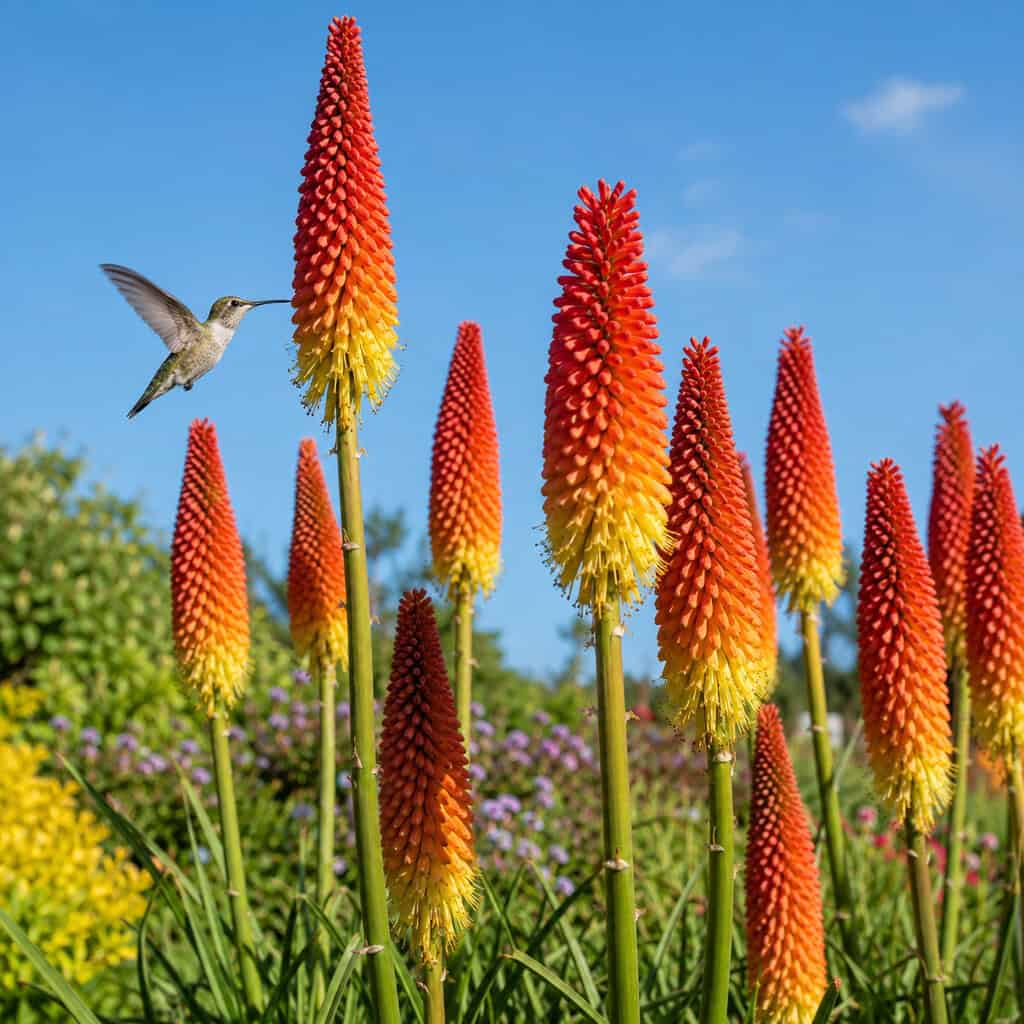
Fiery vertical spikes that fade from red at the tip to yellow at the base. Hummingbirds spot them from across the yard.
It’s an architectural plant — bold, upright, impossible to ignore. It also happens to be a feeding station.
Give it full sun and sharp drainage. Soggy winter soil is the one thing that kills it.
Each spike opens from the bottom up, so a single stalk feeds birds for weeks.
13. Crocosmia
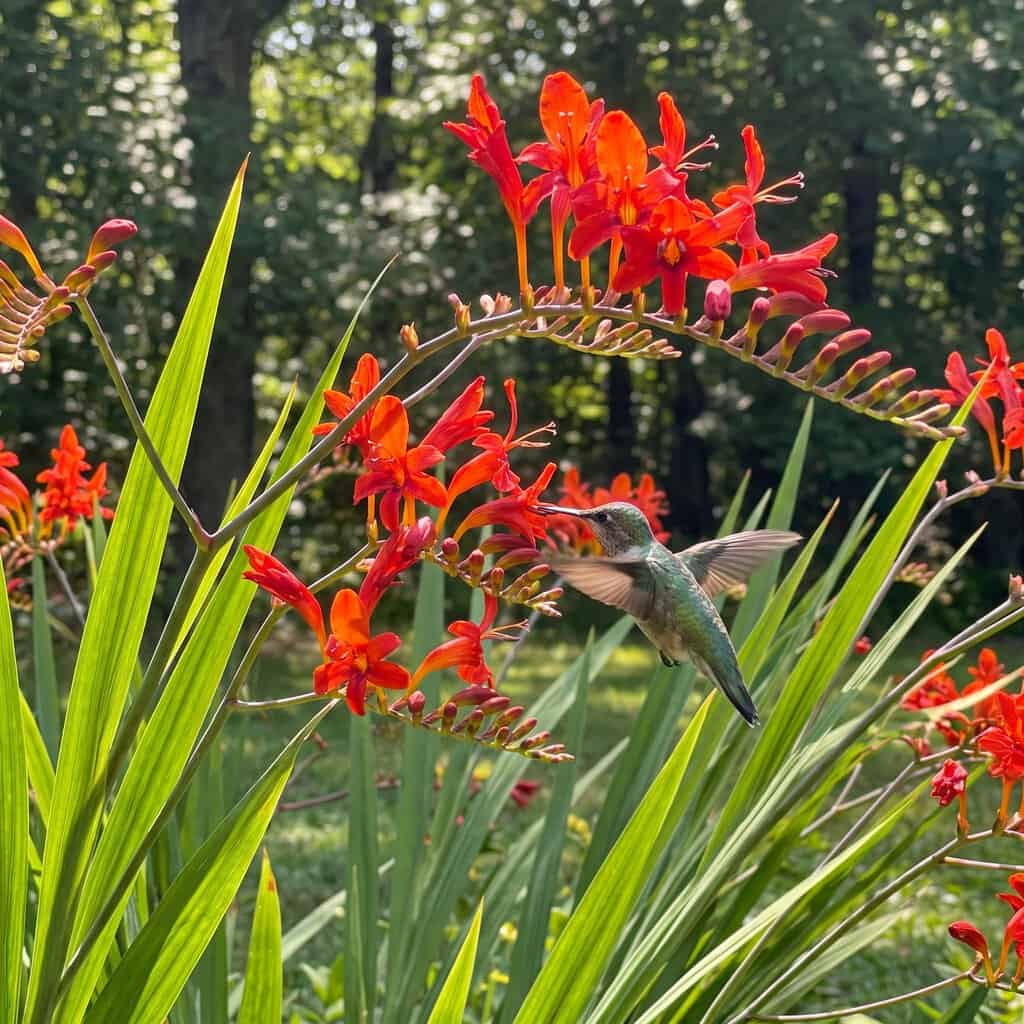
Arching stems of glowing red-orange trumpets, roughly July through September. It fills the mid-to-late summer gap when spring flowers are long gone.
The color is almost neon. As House Digest notes, that red-orange is exactly what hummingbirds hunt for.
It grows from corms and multiplies underground, so a small clump becomes a stand in a few seasons. ‘Lucifer’ is the classic — tall, tough, and the reddest of the bunch.
14. Trumpet Vine
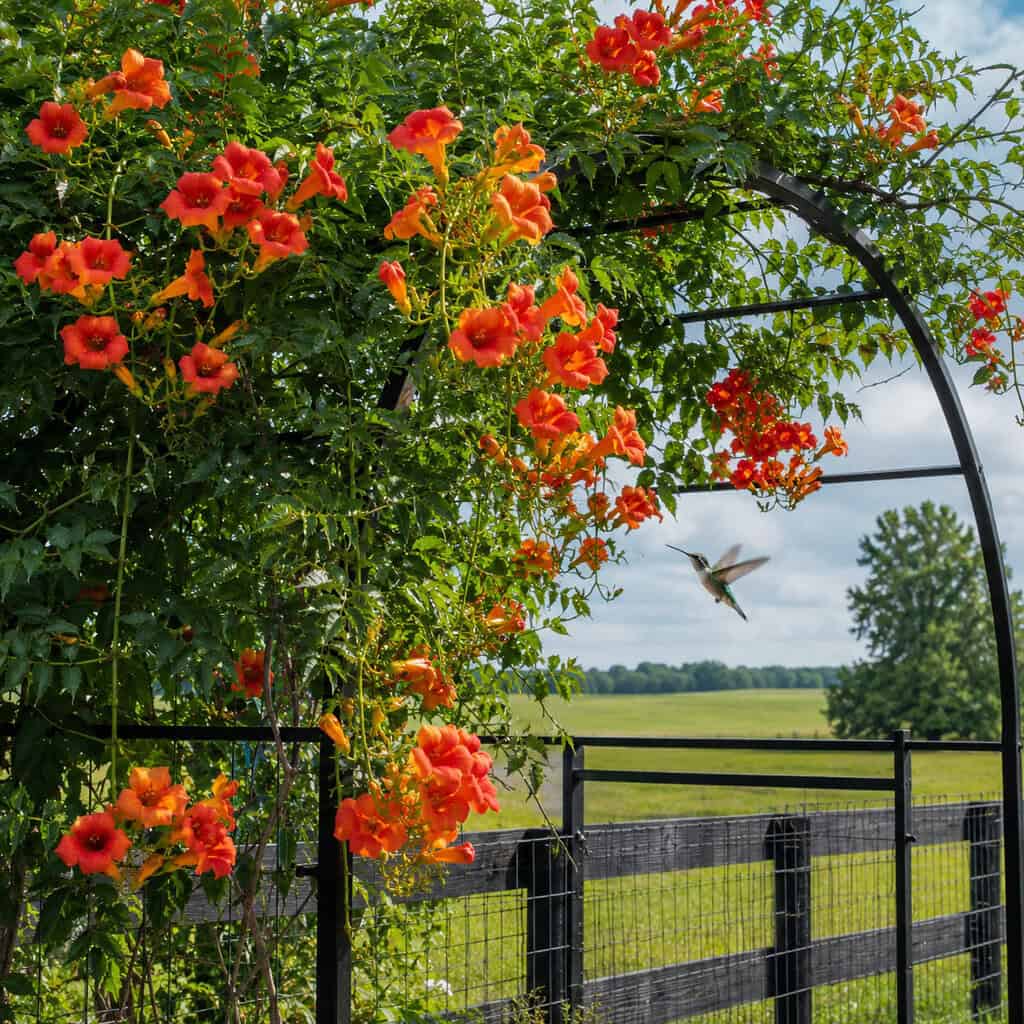
No plant on this list produces more nectar per bloom. A single trumpet vine flower holds enough to make a hummingbird choose it over anything else in the yard.
That’s the payoff. Now the warning.
Trumpet vine is aggressive — bordering on invasive in some settings. It sends up suckers yards from the parent plant, muscles into gutters and siding, and can crack fence posts with its weight. Plant it carelessly and you’ll be fighting it for years.
Contain it from day one. Give it a heavy-duty support — a steel arbor or a masonry wall, never a wooden fence you care about. Better yet, sink a root barrier 18 to 24 inches deep around the planting hole to stop the runners.
Mow over any suckers that pop up in the lawn; repeated cutting eventually starves them. If it climbs a structure, cut it back hard every winter to keep the woody stems from getting too heavy.
The Virginia Department of Forestry lists the native trumpet creeper as a top hummingbird plant — with the same caution about giving it room. Plant it where it can sprawl and be controlled, like a back fence line along a field, and it’s magnificent. Plant it by the patio and you’ll regret it.
15. Scarlet Sage (Salvia)
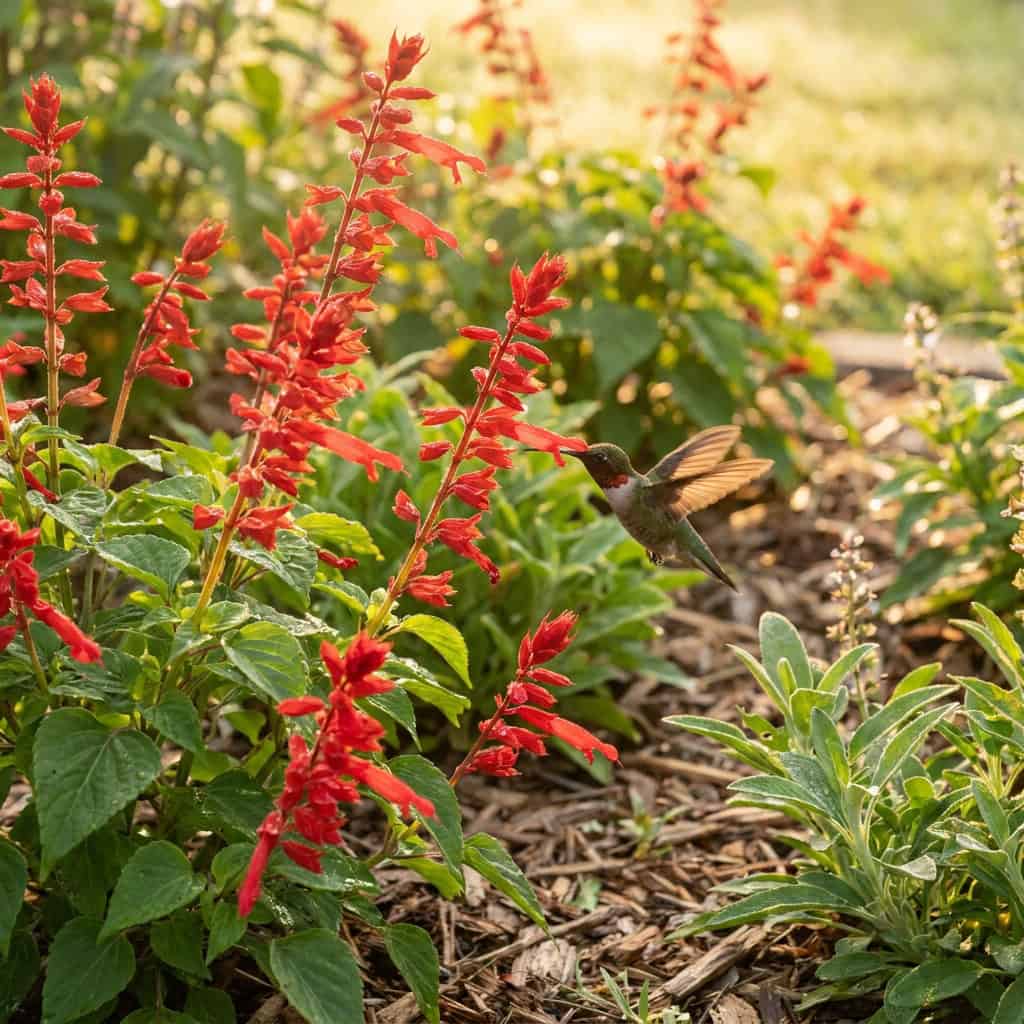
If you plant one hummingbird annual, plant this. Narrow red tube flowers on vertical spikes, blooming spring through frost without a break.
The flower shape is exclusionary in the best way. It rewards long-tongued birds and mostly shuts out short-tongued insects, so the nectar stays for the hummingbirds.
Blooming Expert ranks it at the top of the annual list, and it’s hard to argue.
Deadhead lightly, water in drought, and it just keeps going.
16. Agastache (Hummingbird Mint)
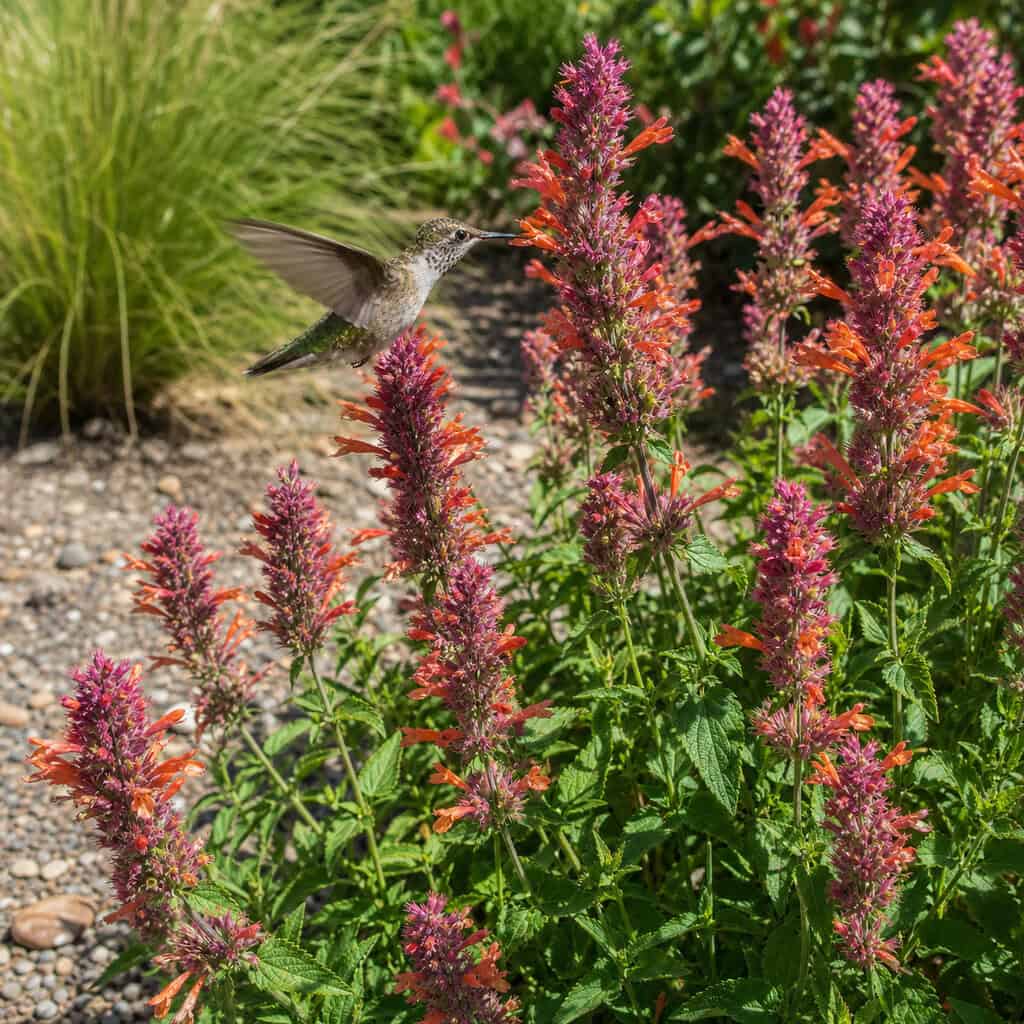
The nickname says it all. Tubular flower spikes in orange, pink, and purple, blooming for roughly three months from summer to the first hard frost.
Drought-resistant, deer-resistant, and fragrant when you brush it. The NC State Extension Plant Toolbox notes its long bloom season is a big part of the draw.
Birds get territorial over it. A single hummingbird will claim a clump and chase off every rival that comes near.
Give it lean soil and full sun. Rich, wet ground rots it.
17. Fuchsia
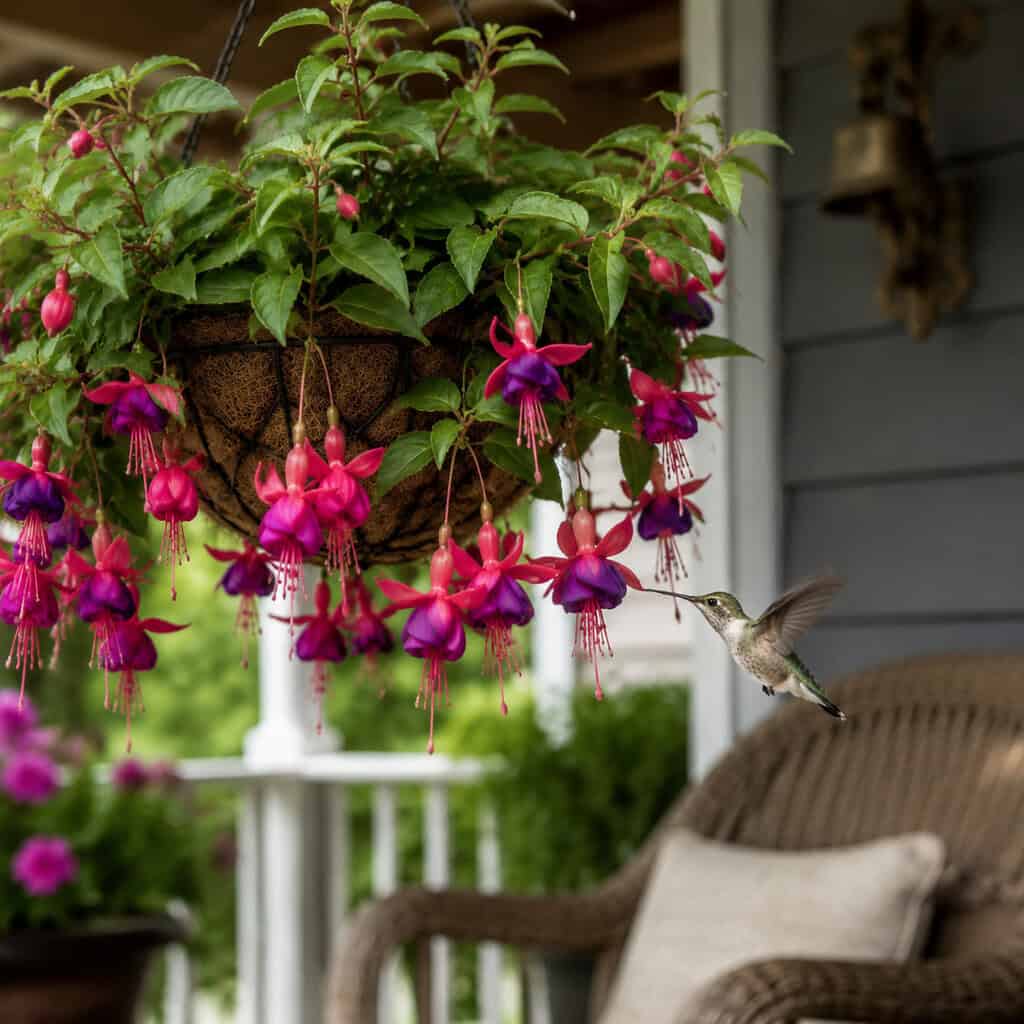
The answer for a shady spot or a hanging basket. Pendant bicolor blooms — often magenta and purple — hang like earrings from spring into fall.
Most nectar plants want sun. Fuchsia doesn’t, which makes it the go-to for a shaded porch or north-facing patio.
As Hunker points out, a basket at eye level puts the show right where you’ll see it.
Keep it watered and out of afternoon heat. It sulks when it dries out.
18. Petunias
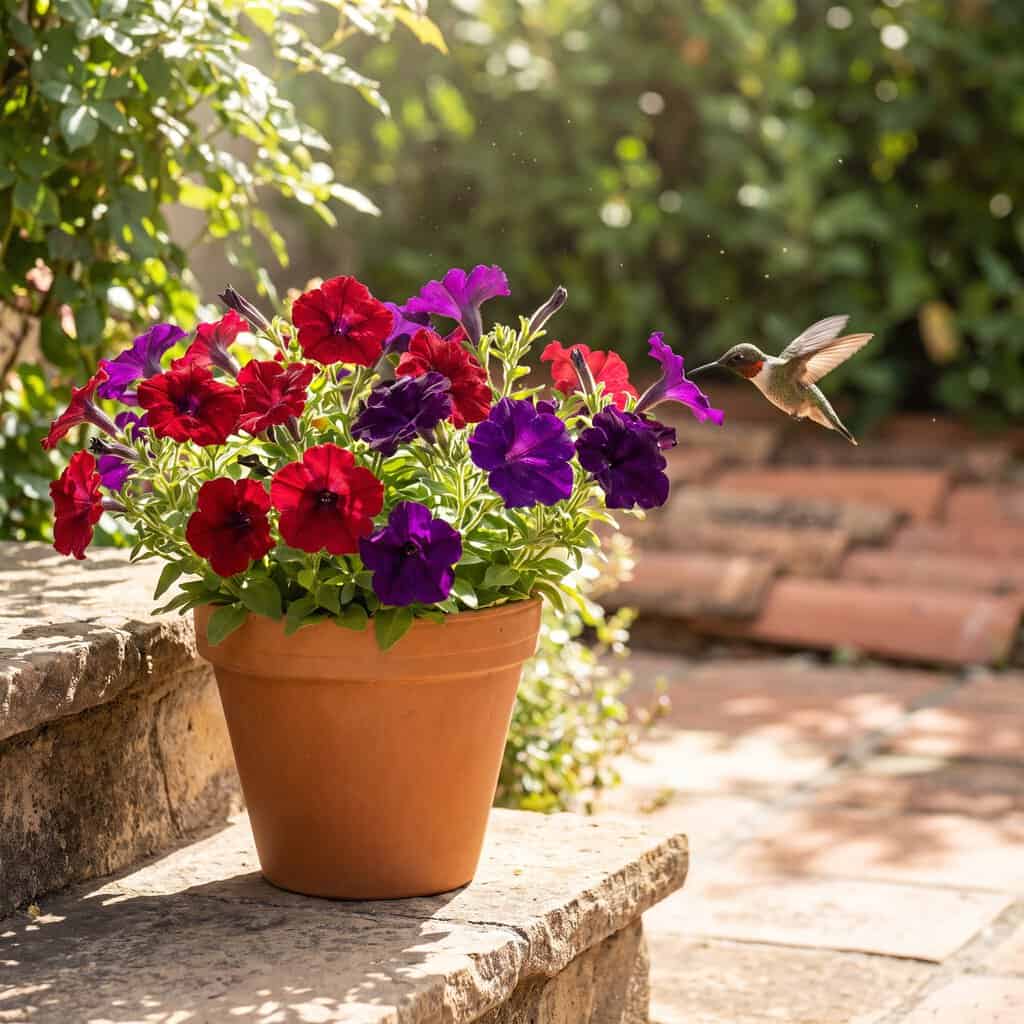
The container workhorse. Petunias bloom spring to frost and fill a pot fast with almost no fuss.
But choose carefully. Some show-bred cultivars are bred for size and color at the expense of nectar — pretty and empty as far as a hummingbird’s concerned.
Go for older, trumpet-shaped, nectar-rich types over the frilly doubles. The birds can tell the difference even if you can’t.
Deadhead often and feed regularly. Petunias are hungry plants.
19. Nasturtium
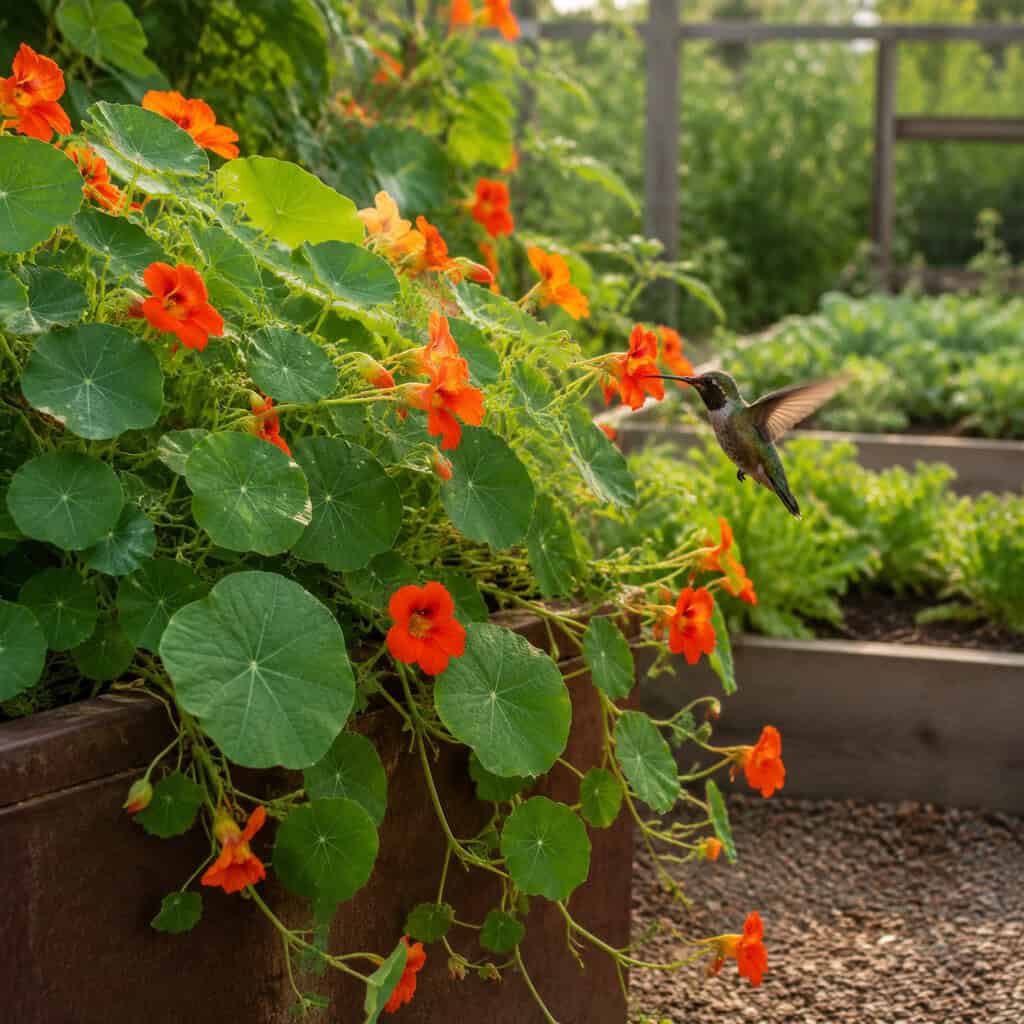
Birds and this flower go back a long way. The hummingbird’s tongue matches the nasturtium’s nectar spur — they evolved in step with each other.
It blooms spring through fall, stalls in a heat wave, then restarts just in time for the pre-migration feeding rush in early fall.
The peppery petals are edible, so it earns a spot in the kitchen garden too. Sow the big seeds straight into the ground after frost.
Poor soil is fine. Rich soil gives you all leaves and no flowers.
20. Lantana
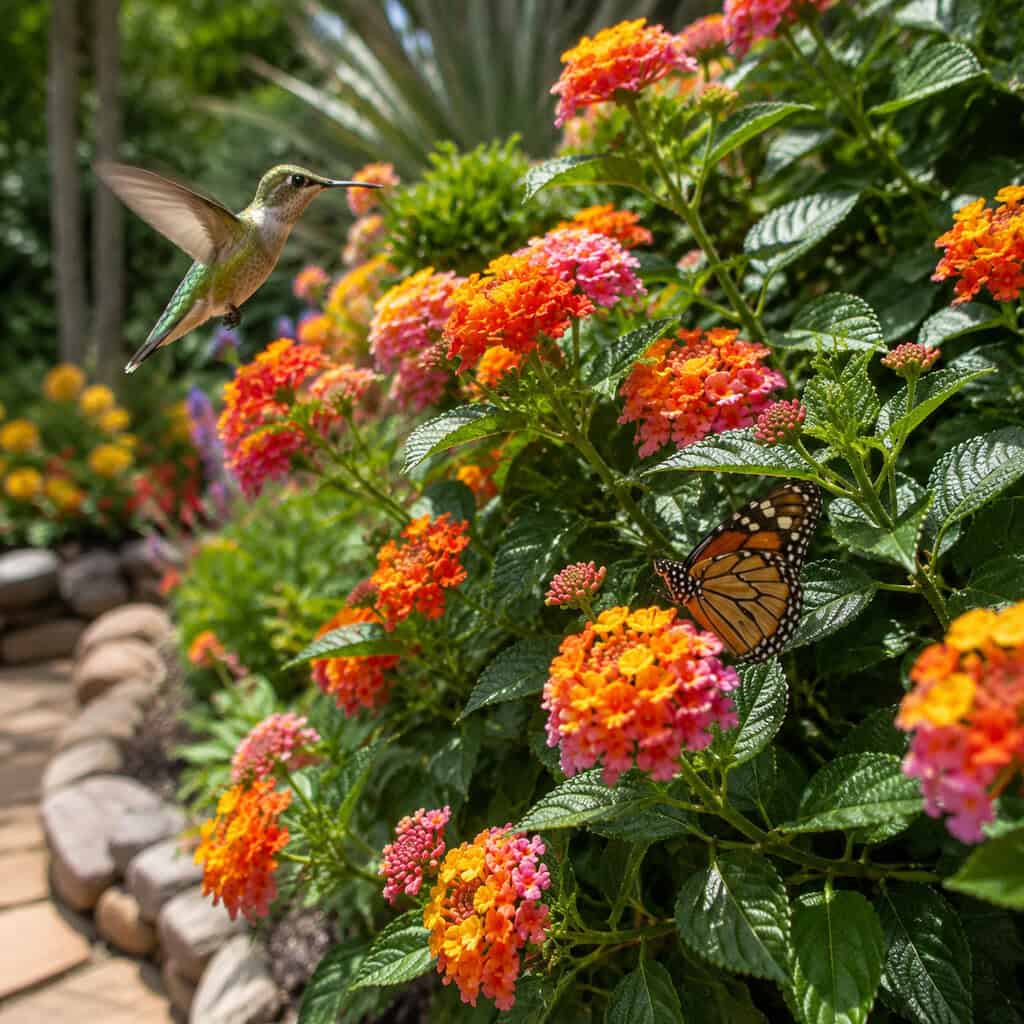
Clusters of tiny tubular flowers, often shifting color as they age, blooming midsummer to frost with almost no maintenance. Hummingbirds and butterflies both work it over.
Here’s the part you can’t skip. Lantana camara is invasive in Florida and other warm regions, where birds spread its seeds into natural areas and it crowds out native plants.
In the Deep South especially, planting the wild species is a real problem. It escapes gardens, forms dense thickets, and its foliage is toxic to livestock and pets.
The fix is to buy certified-sterile cultivars — varieties bred to set little or no viable seed. ‘Miss Huff’ and the sterile ‘Bloomify’ series give you the nectar and the color without the seed spread. Read the tag, and when in doubt, check with your state extension office before planting in the Southeast.
In colder zones where it dies back each winter, lantana behaves as a well-mannered annual. The invasiveness is a regional issue, not a universal one — but it’s worth knowing which side of the line you’re on.
21. Zinnia
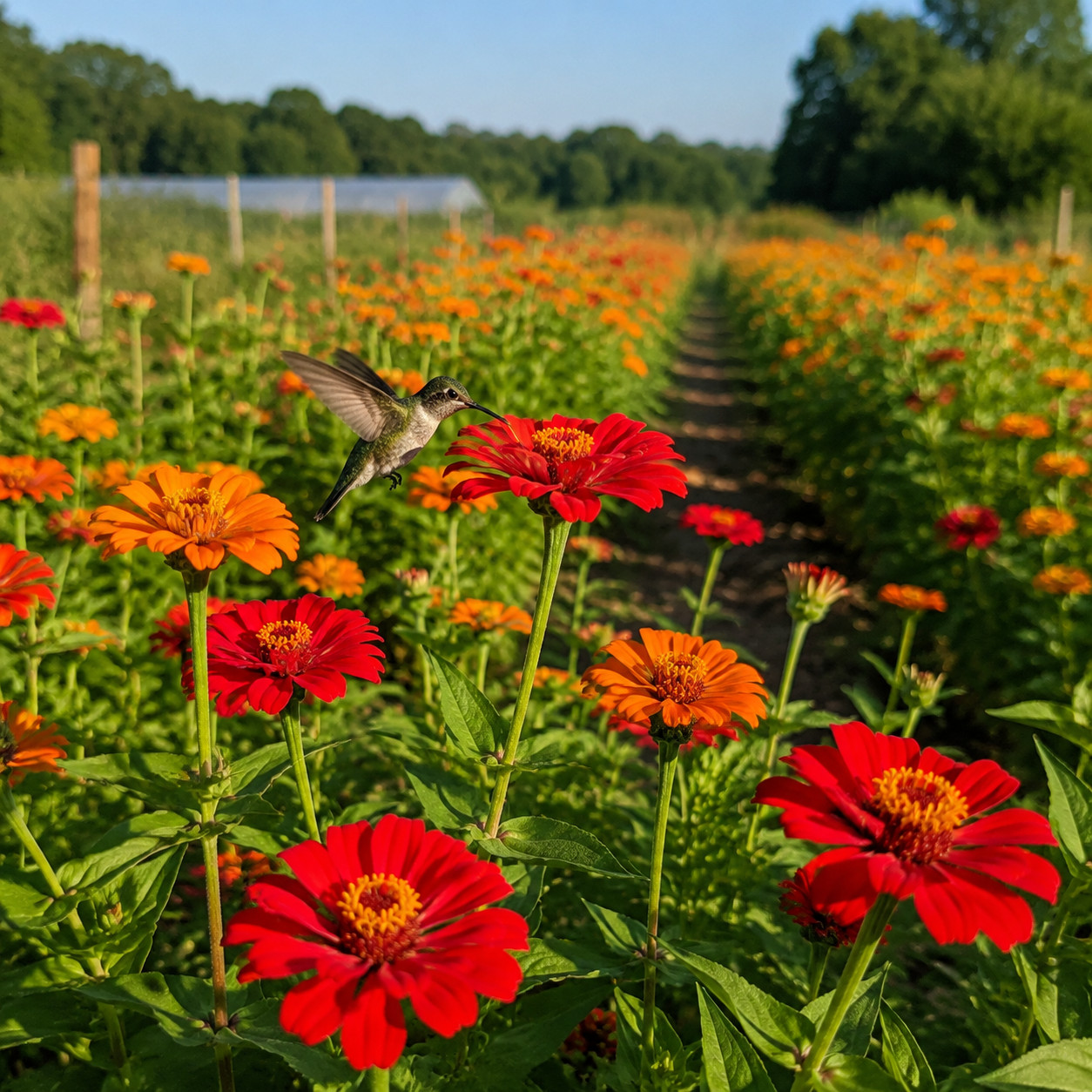
Cheap, easy, and endlessly generous. Zinnias in bold reds and oranges bloom all summer, and the more you cut them, the more they push out.
Single-flowered types beat the fluffy doubles here. Open, flat blooms give hummingbirds a clear landing and easy access to the center.
Sow them from seed for pennies and you’ll have a cutting garden and a nectar bar in one bed.
They love heat. Full sun and they hardly slow down until frost.
22. Cuphea (Firecracker Plant)
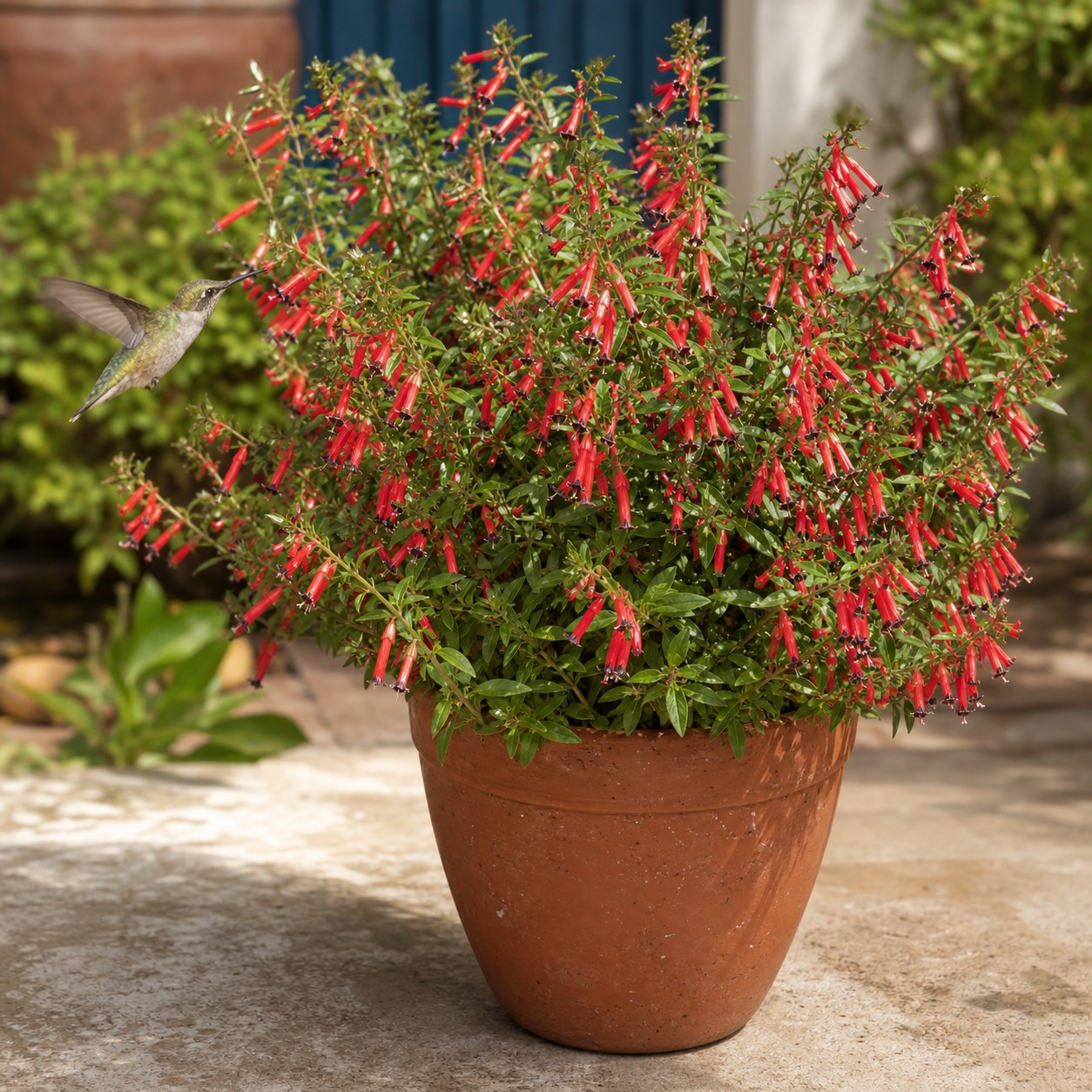
Underused, and it shouldn’t be. The tube-and-cigar blooms — red tipped with black and white — look exactly like tiny lit firecrackers.
It flowers nonstop from summer to frost once the soil warms past 60°F. That’s a long, uninterrupted run for an annual.
Blooming Expert rates it one of the highest-value hummingbird annuals you can plant, and the birds agree — a single cuphea in a pot gets constant traffic.
Give it heat and steady moisture. It resents cold soil, so don’t rush it out in spring.
23. Cypress Vine / Cardinal Climber
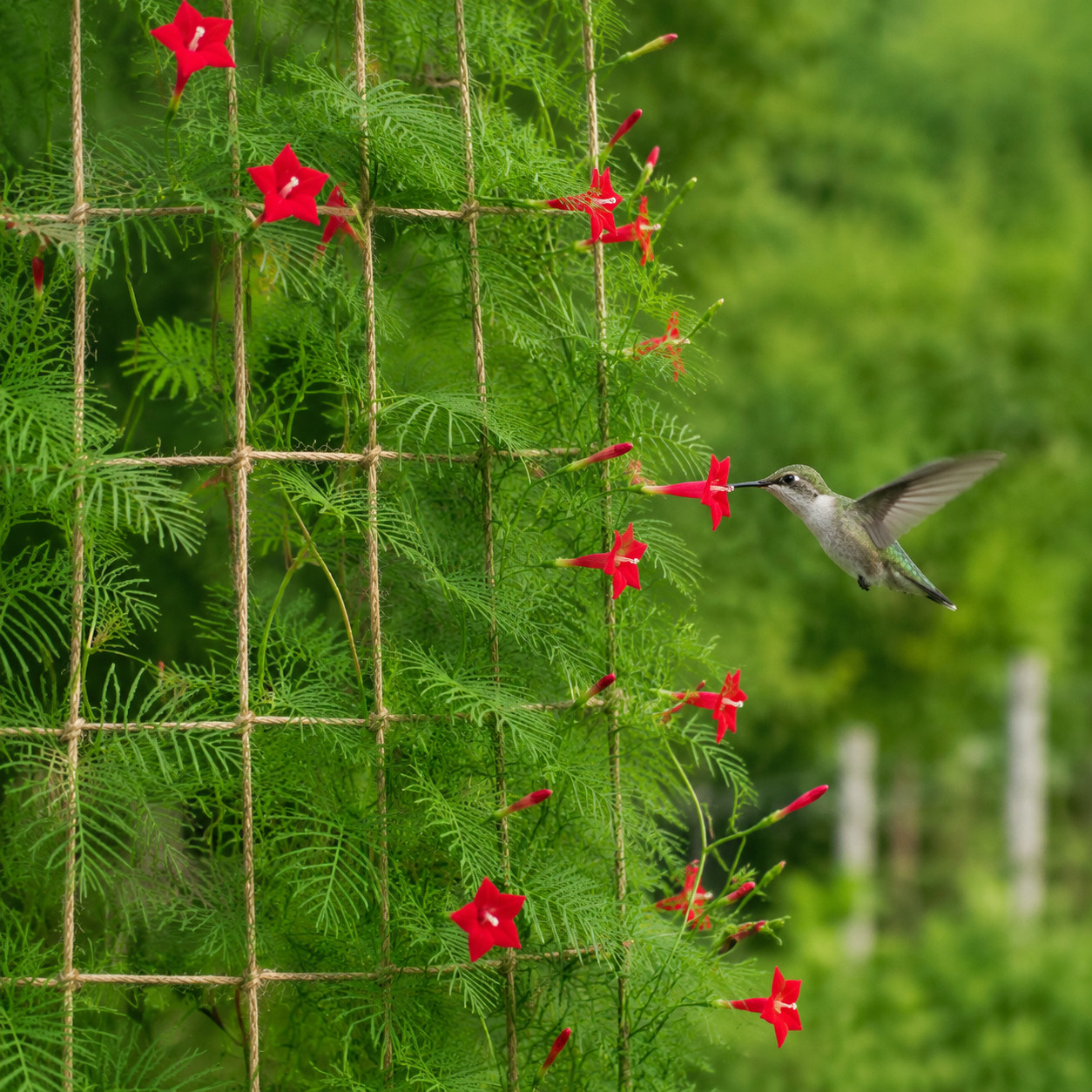
Feathery, fern-like foliage covered in tiny scarlet stars. This twining annual vine climbs a trellis fast and hummingbirds pick each little tube clean.
It re-seeds readily, which is a blessing and a warning. In parts of the Southeast it’s considered invasive, so pull volunteers you don’t want and deadhead before seeds drop.
As Garden Design notes, few annual vines pull hummingbirds as reliably.
Sow it against a string or netting and it’ll cover a mailbox post by August.
24. Mexican Sunflower (Tithonia)
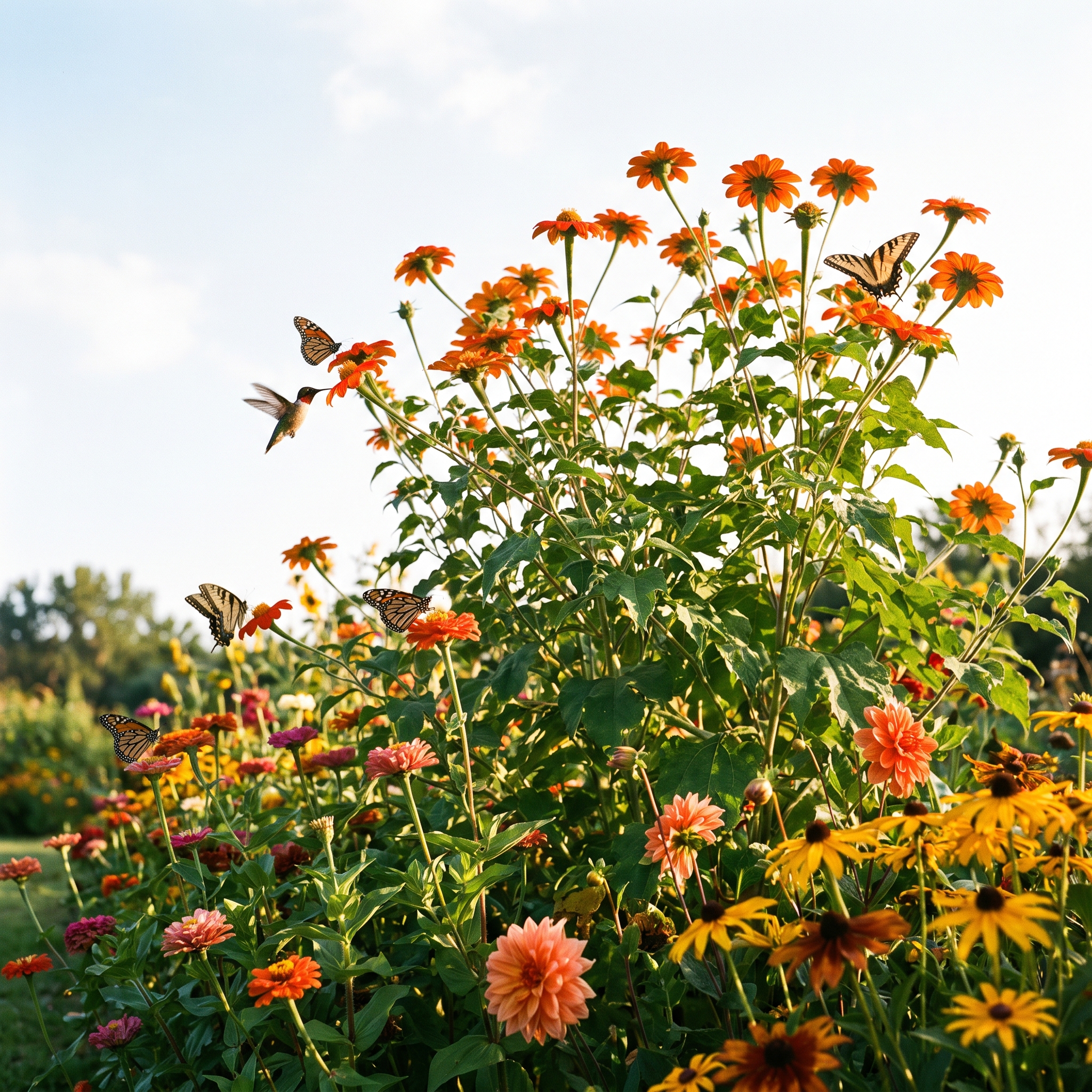
Big, cheap, and unstoppable in the heat. Mexican sunflower shoots up four to six feet and throws fiery orange blooms from midsummer to frost.
It pulls hummingbirds and butterflies at the same time, which makes it a two-for-one back-of-border statement.
The stems are hollow and can flop in wind, so give it room and maybe a stake in an exposed spot.
Sow from seed after the soil warms. It grows fast enough to fill a bare fence line in a single season.
25. Cardinal Flower
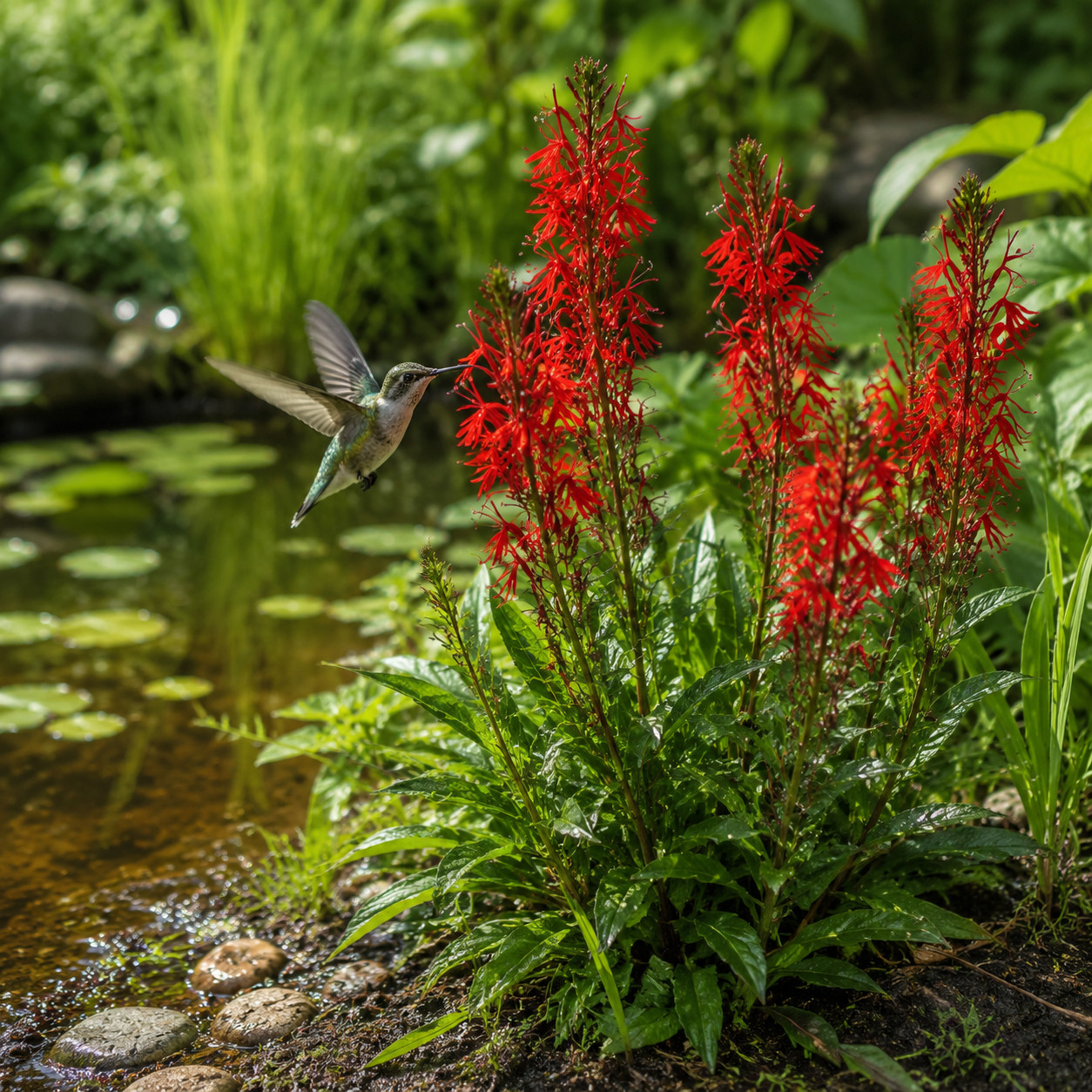
Vivid red spikes that stop you in your tracks. Cardinal flower is a moisture-loving native that blooms midsummer into fall — a key late-season bridge.
It’s built for the wet spots most plants hate. Rain gardens, pond edges, low corners that stay damp.
The Morton Arboretum notes it handles sun or part shade, which is unusually flexible.
Don’t let it dry out. That’s the one way to lose it fast.
26. Autumn Sage (Salvia greggii)
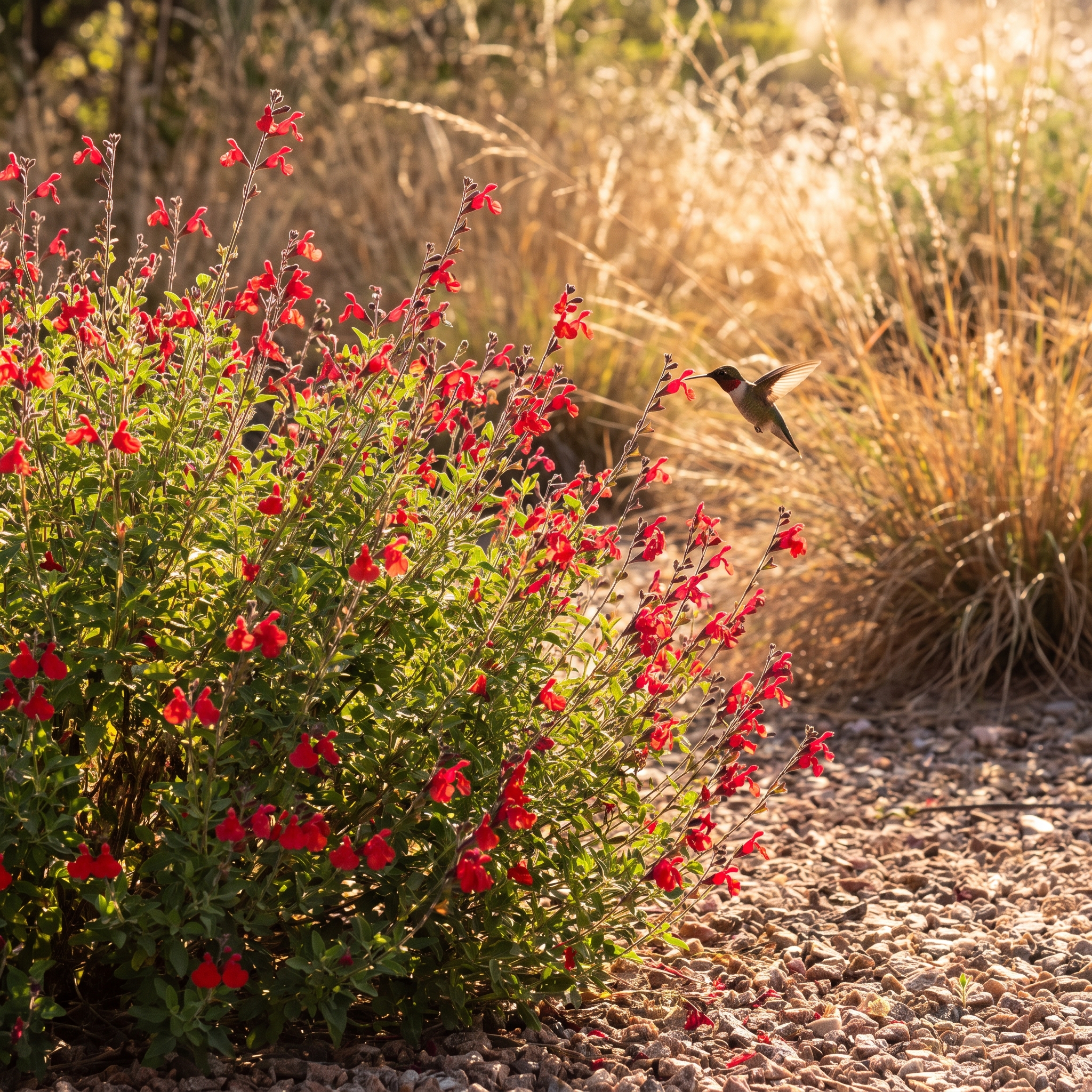
An unusually long window for a salvia — early spring straight through fall. Autumn sage fills the late-season gap when the spring and summer flowers have quit.
Classic red tubes, though it comes in pink, coral, and white too. Drought- and heat-tolerant, so it shrugs off a dry August.
It’s a small woody shrub in warm zones, treated as an annual where winters bite. Shear it lightly midseason to keep it dense and blooming.
Lean soil, full sun, minimal water. It practically prefers neglect.
27. Pineapple Sage
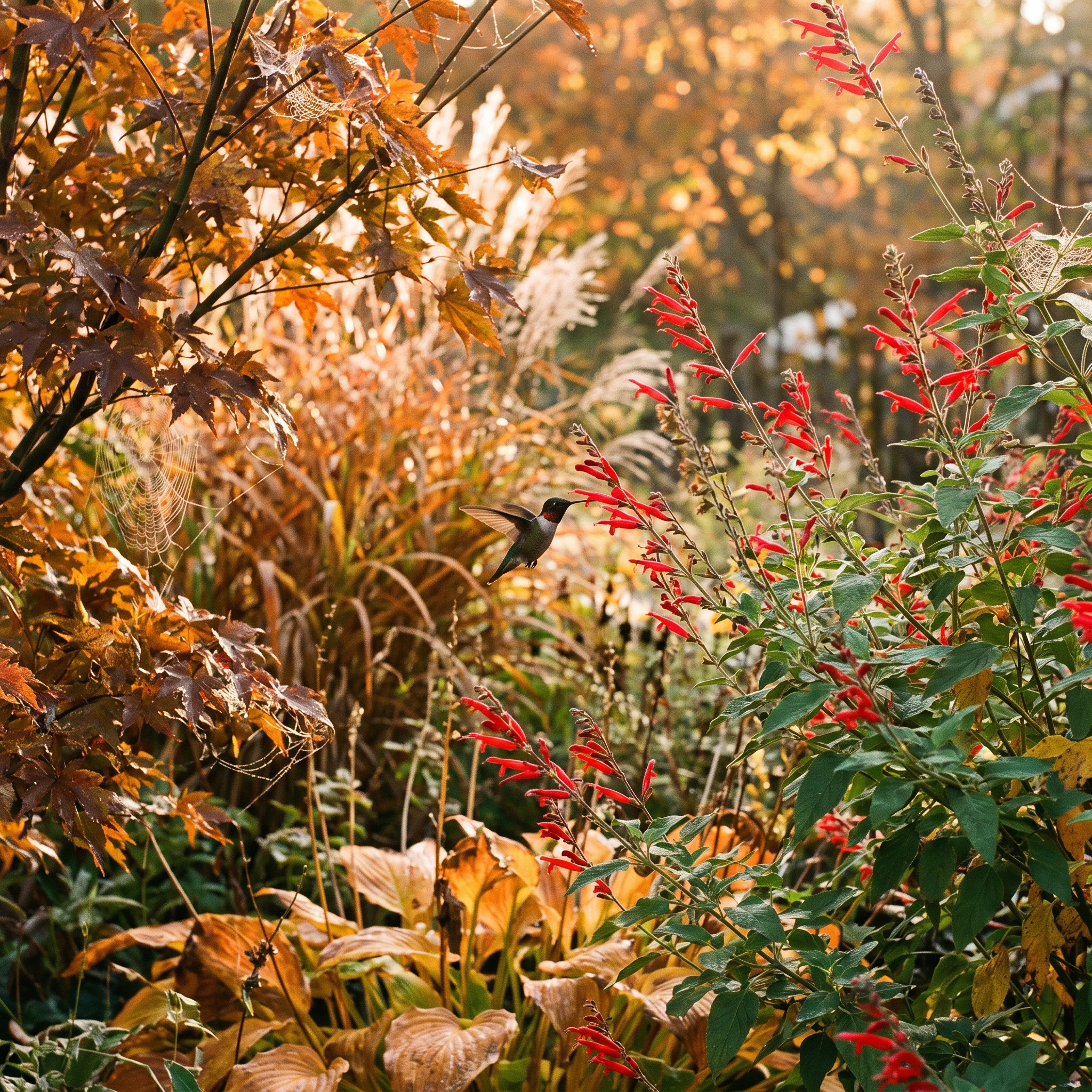
The closer. Scarlet tubular blooms explode late summer through fall, right when the migrating birds need calories most for the trip south.
Crush a leaf and it smells like fresh pineapple. The foliage is edible — good in teas, garnishes, and the occasional cocktail.
The National Garden Clubs highlights its fall timing, which is exactly what makes it valuable. Most gardens are winding down when pineapple sage hits full stride.
Give it full sun and it’ll fuel the last birds through your yard.
28. Daylily
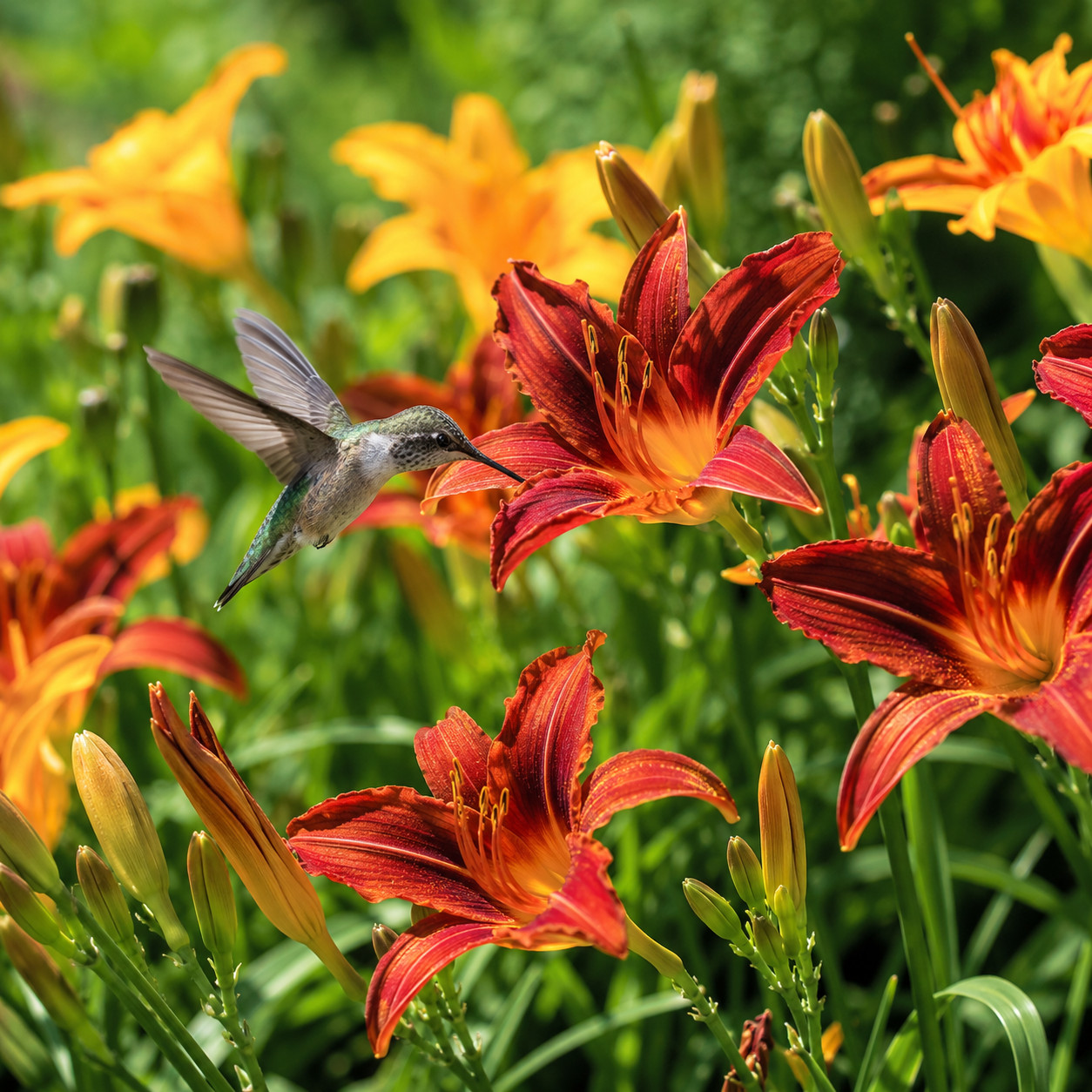
A classic summer nectar source that almost everyone already grows. The trumpet blooms open just wide enough for a hummingbird to dip in.
It’s not as tightly hummingbird-associated as the salvias and the vines. But it’s tough, cheap, and it fills space.
Each flower lasts a single day — hence the name — but a healthy clump throws dozens over weeks.
Reach for the red and orange varieties if you want the most bird traffic.
29. Fire Bush (Hamelia patens)
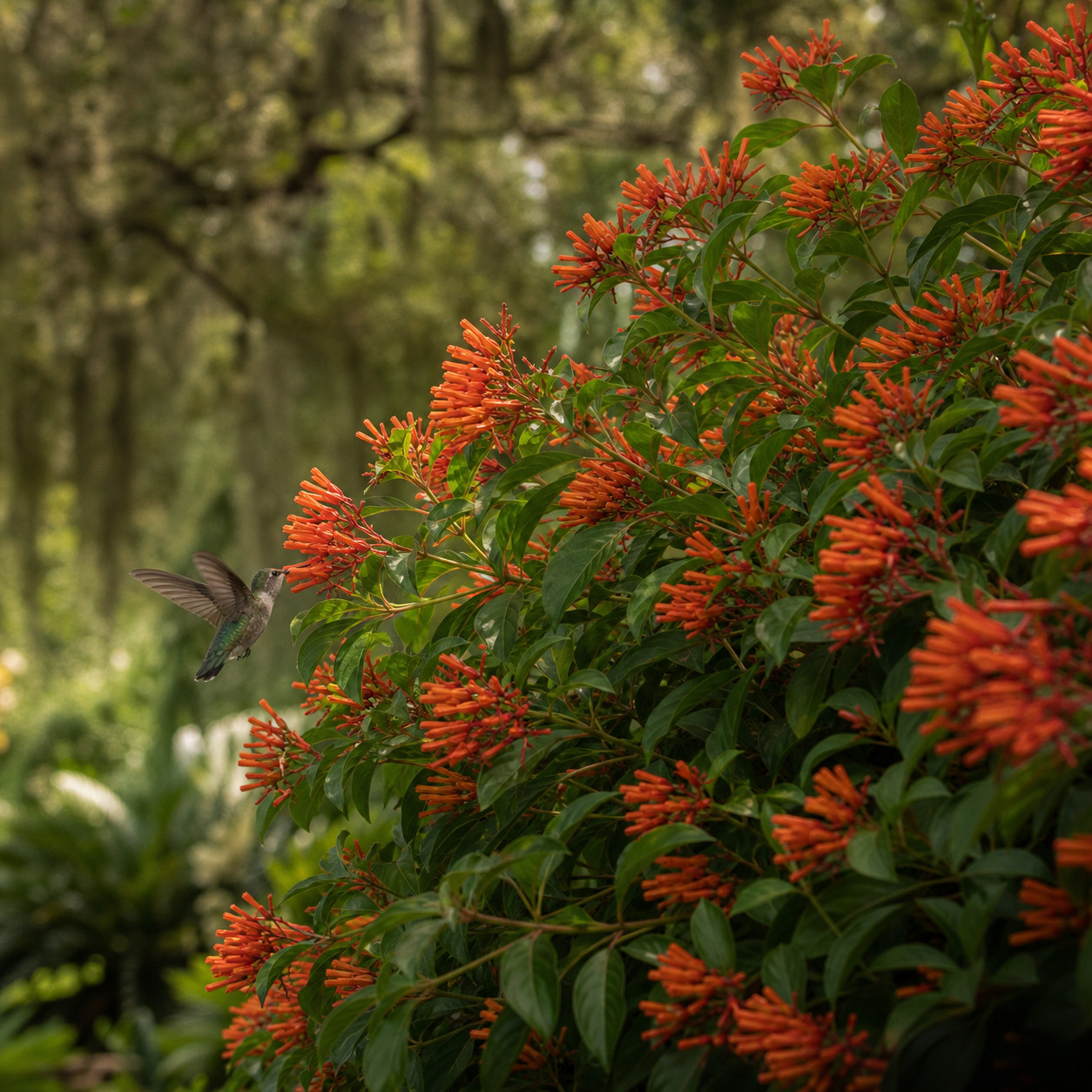
A superb hummingbird shrub for anyone gardening in the Deep South. Fire bush blooms summer to frost with clusters of narrow orange-red tubes.
The catch is cold. It’s really only a strong pick for zones 8 through 11 — a hard freeze knocks it back or kills it outright.
Where it’s hardy, it becomes a large shrub that hums with activity all season. Farther north, treat it as a container plant you overwinter indoors.
For Southern gardens, it’s one of the best. For the rest, admire and move on.
30. Lupine
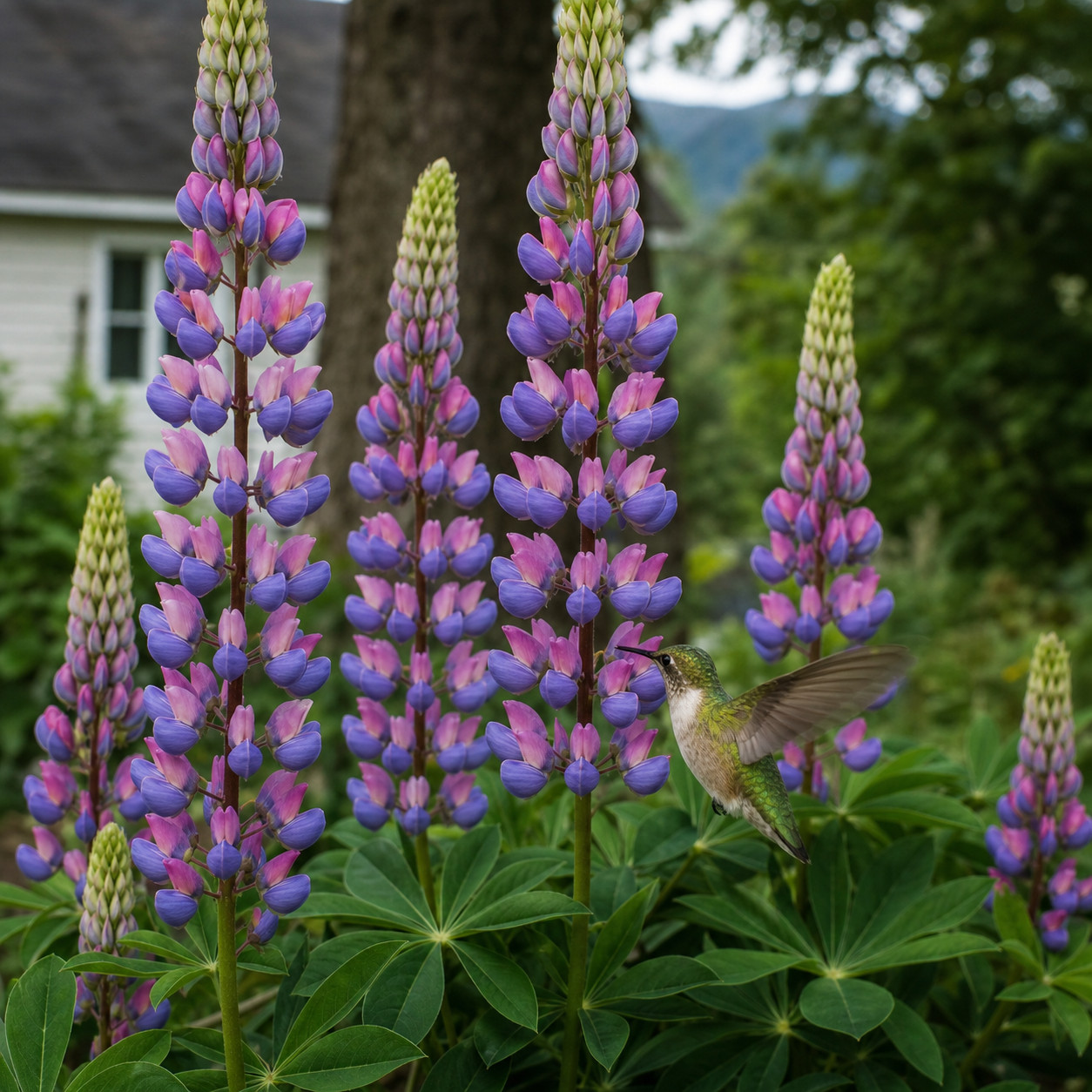
Tall spikes of pea-like flowers in blue, pink, and purple, feeding early-season birds in late spring. Hummingbirds work the lower blooms while bees take the rest.
It’s fussy. Lupine wants cool temperatures and sharp drainage, and it sulks in heat and heavy clay.
That makes it more regionally limited than columbine or red buckeye. In the right cool climate it’s stunning; in a hot Southern summer it melts.
Know your zone before you buy.
31. Foxglove
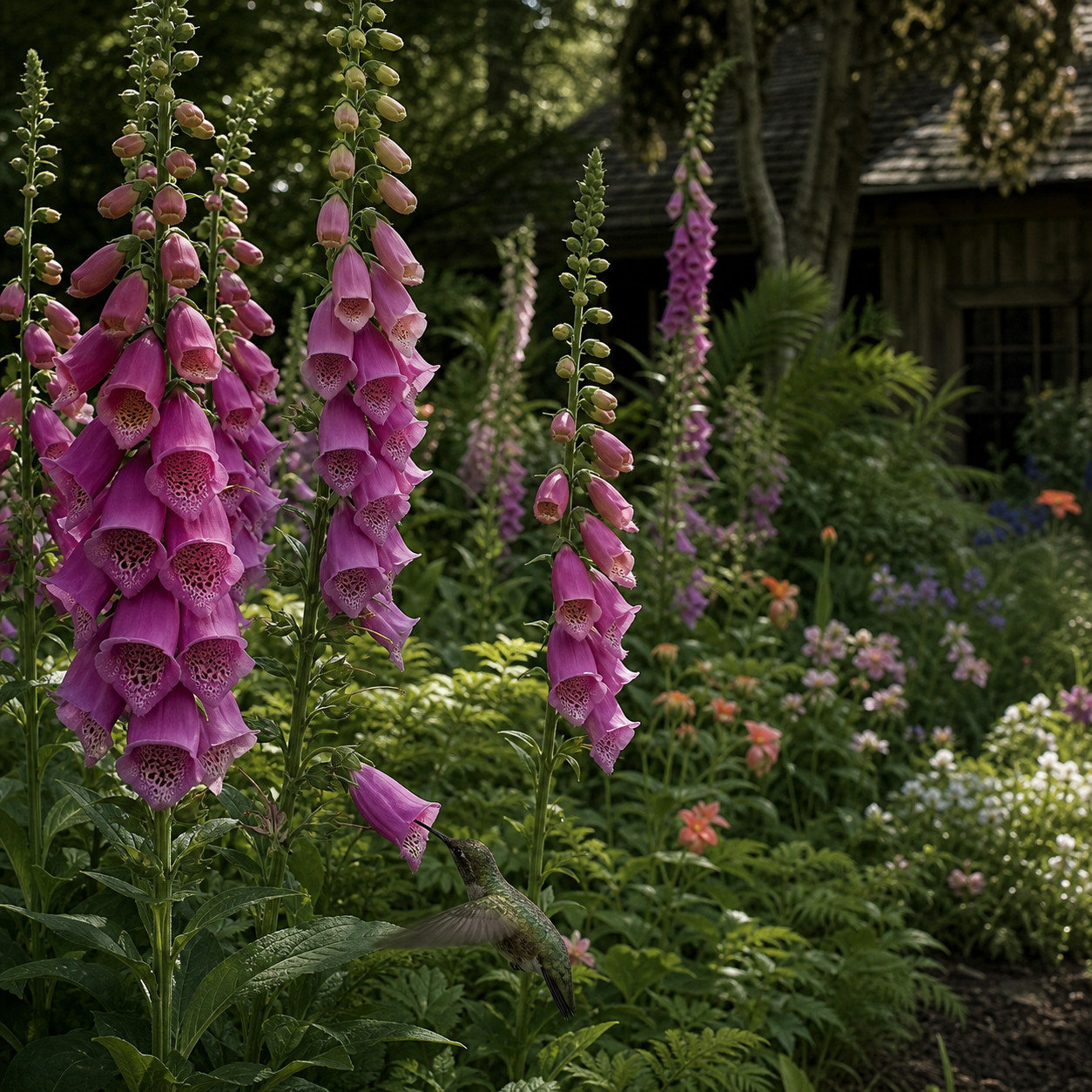
Tall, dramatic spires of speckled tubular flowers hummingbirds happily visit in late spring and early summer. Few plants add this much vertical drama to a bed.
But read this before you plant it. Foxglove is toxic to pets and people — every part of it, from leaf to seed, contains compounds that affect the heart.
If you’ve got dogs, cats, or small kids in the yard, this is a plant to think hard about. The safer move is to skip it and lean on cardinal flower or salvia for the same red-spike look without the risk — the same logic behind avoiding the common landscaping plants that are toxic to dogs.
Plant with caution — or swap it out entirely.
Below is a quick way to think about the two most common season-long picks when you’re deciding what to build your garden around.
| Coral Honeysuckle | Trumpet Vine | |
|---|---|---|
| Bloom window | Spring to fall | Summer |
| Nectar per bloom | Moderate | Highest of any |
| Growth habit | Well-behaved | Aggressive |
| Best support | Trellis or arbor | Steel or masonry |
| Effort to contain | Low | High |
Coral honeysuckle is the safer everyday choice. Save trumpet vine for a spot where sprawl doesn’t matter.
The Real Secret Is Overlap
No single plant keeps hummingbirds all season. A relay of them does.
Start with an early bloomer like red buckeye or currant, run a season-long backbone like coral honeysuckle or scarlet sage through the middle, and finish with pineapple sage for the fall migrants. Fill the gaps with whatever fits your light and your zone.
Lean toward reds and oranges, tubular shapes, and natives over hybrids bred for looks. Skip the pesticides — hungry birds eat small insects too, and a chemical-soaked yard leaves them with nothing. The UF/IFAS Gardening Solutions program makes the same case for a plant-based, feeder-free approach.
Do it right and you won’t need a feeder at all. The garden becomes the feeder.
And once they’ve mapped your yard into their route, they come back every single year.