

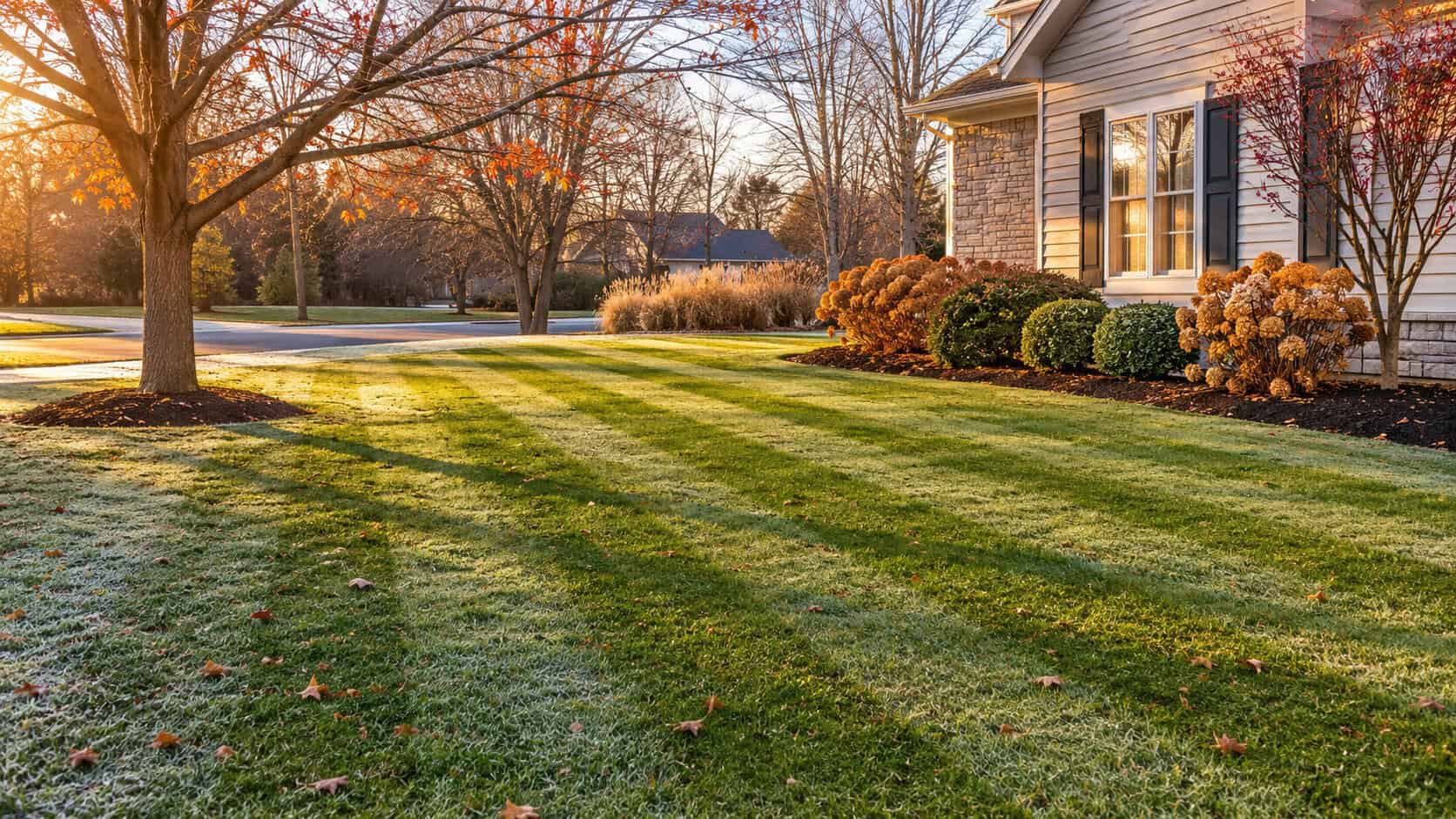
Drive the same street in April and you can tell exactly who did the work in November.
One yard greens up early, beds hold a crisp line, the arborvitae stand straight. Three doors down, the shrubs are splayed open, the patio has gone wavy, and there’s a dead salt-burned strip along the driveway.
Nobody spent more money. One of them just spent three weekends in late fall while the other was watching football.
Winter doesn’t create yard problems. It reveals the ones you left unaddressed in October.
Here are 38 things the homeowners with expensive-looking yards do before the first snow falls.
1. The Last Mow Is a Haircut, Not a Scalping
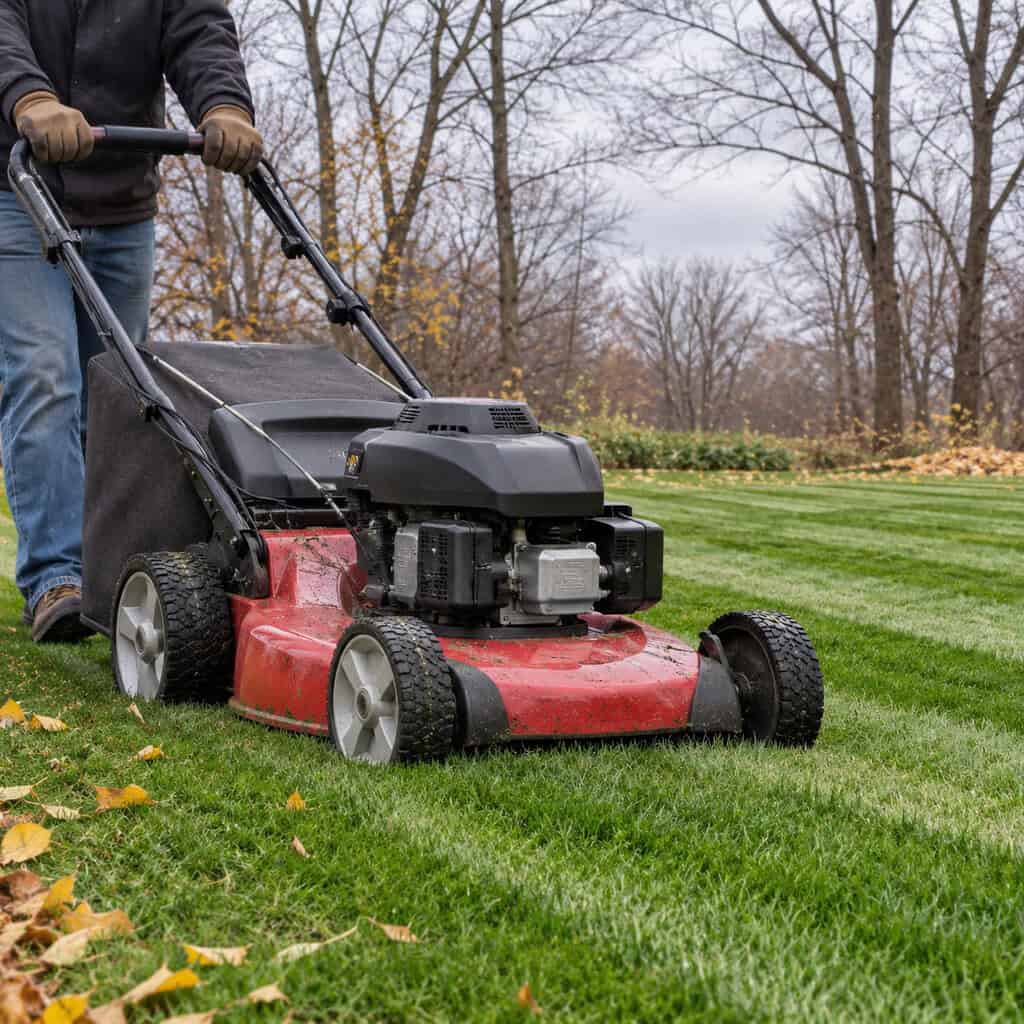
Expensive-looking lawns are made in the last three weeks of the season.
Pros keep mowing until the grass actually stops growing — usually once daytime highs hold below 50°F — and bring cool-season turf down gradually to about 2 to 2.5 inches. Short enough that it won’t mat and smother under snow. Tall enough that the roots stay deep.
The cheap-looking yards do one of two things. They quit mowing in September and go into winter shaggy, or they panic in November and scalp the whole lawn in one pass.
Both show in March. Matted grass breeds mold; scalped grass wakes up thin and weak.
2. Hoses Off, Spigots Drained, Shutoff Closed
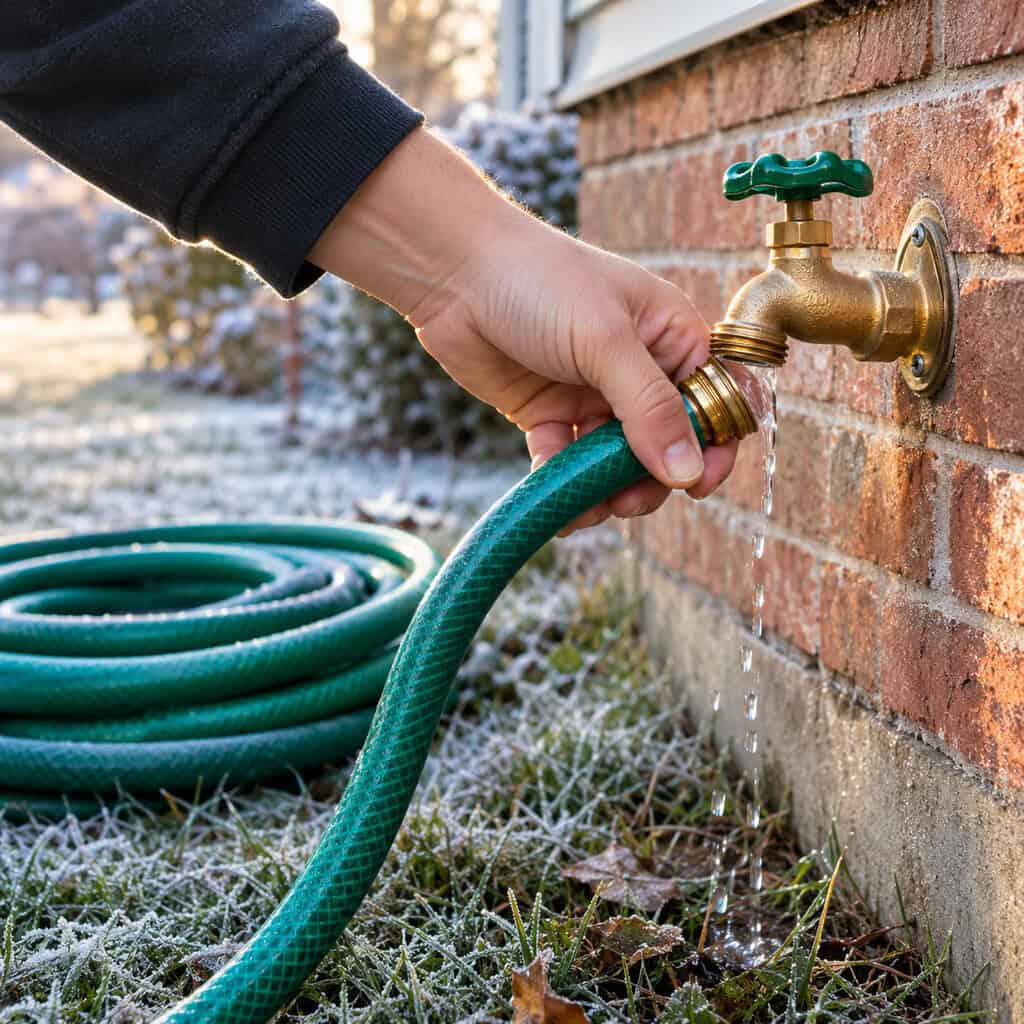
Five minutes. Possibly the highest-stakes five minutes of your fall.
A garden hose left threaded onto a frost-free sillcock traps water inside the valve stem — the part that runs through your wall. It freezes, it expands, and the pipe splits where you can’t see it. You find out in April when you turn the spigot on and water comes through the drywall.
Unthread every hose. Open the spigot and let it drain. If you have an interior shutoff for the exterior line, close it and bleed the line.
Coil the hoses somewhere above freezing. A hose frozen flat into the lawn is the single most visible tell that nobody’s paying attention.
3. Leaves Mulched Into the Turf Instead of Bagged
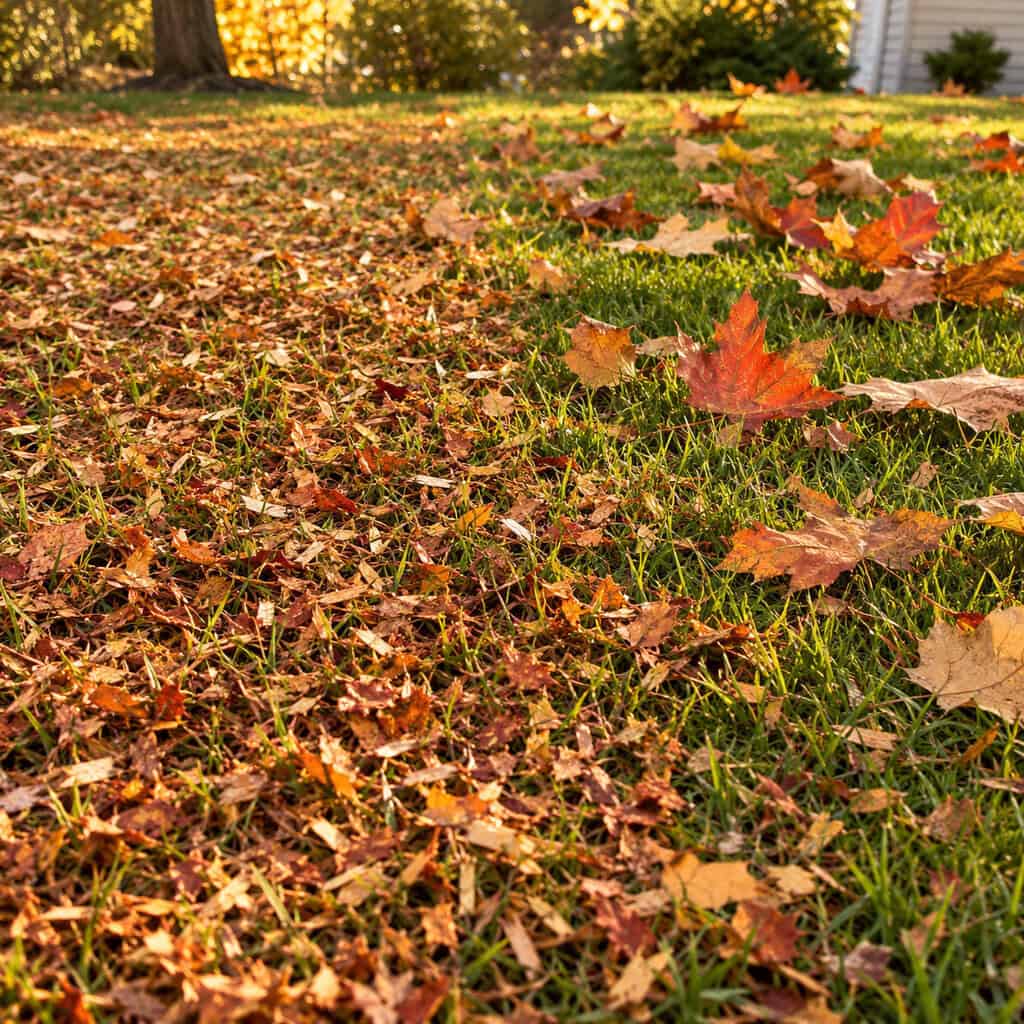
Sixty paper bags at the curb is the suburban signal for “I did this the hard way.”
Michigan State turf research found that mowing fallen leaves into the lawn feeds the soil and, over several seasons, cut down on dandelion and crabgrass. Extension guidance says you can mulch roughly six inches of leaf litter at a time if you make a couple of passes.
You need a mulching blade and a little patience. That’s the whole investment.
The leaves disappear into the canopy, the worms take them down, and you’ve fed the lawn for free. If the layer’s so thick you can’t see grass after two passes, rake the excess into beds — don’t leave a wet mat. There’s a real case for mulching over raking almost every year.
4. A Fresh Spade-Cut Edge on Every Bed

This is the one that reads “landscaper on retainer” from the street.
A clean trench edge — roughly three inches deep, cut with a half-moon edger or a sharp spade — separates turf from mulch with a hard shadow line. No plastic, no metal, no stone required.
Cut it in late fall while soil is still workable and it holds all winter. Beds emerge in March already looking maintained while everyone else’s edges have gone soft and blurry.
5. The Irrigation System Blown Out by a Compressor
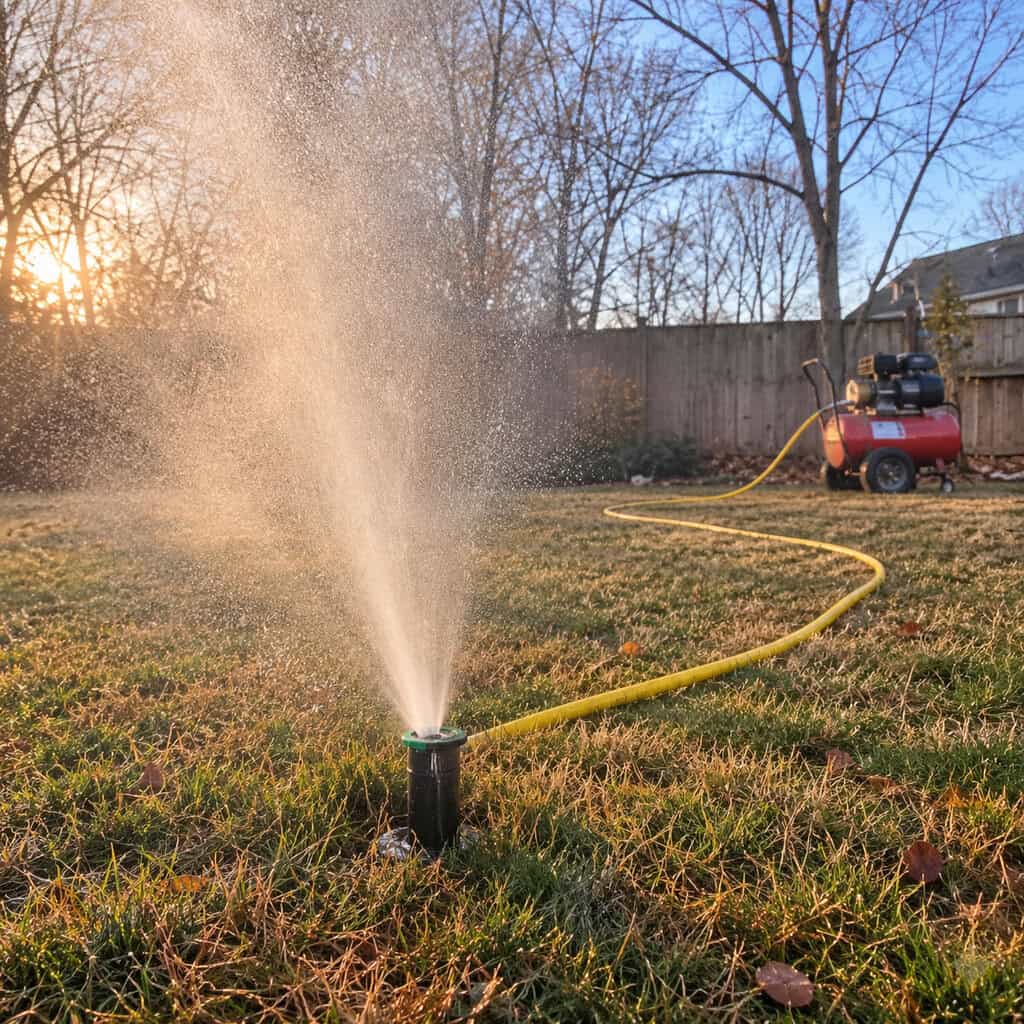
Water left in an irrigation system doesn’t drain itself, and it doesn’t forgive.
Poly lateral lines, brass heads, and especially the backflow preventer all hold water in low spots. When it freezes it expands roughly 9 percent, and something gives — usually the cheap plastic nipple on a head, sometimes the backflow assembly, which runs $150 to $400 to replace before labor.
There are two real options. A manual drain-down works only if the system was installed with drain valves at every low point and the pitch is right — common in milder zones, rare in the upper Midwest. A compressor blowout is the standard everywhere the ground freezes hard.
Blowouts matter in the details. The compressor needs enough volume — a contractor-grade unit moving 80 to 100 CFM, not the pancake compressor you use for brad nails — and the pressure has to stay low, generally under 80 psi for rigid PVC and under 50 psi for poly. Too much pressure and you melt gear drives or blow seals out of heads.
You run one zone at a time, start at the furthest, and stop the moment the mist turns to dry air. Running a zone dry for more than a minute cooks the gears.
Expect $75 to $150 for a residential blowout. Book it in September — every irrigation truck in town is triple-booked the week the forecast first shows a hard freeze.
6. The Late-Fall Winterizer Feeding
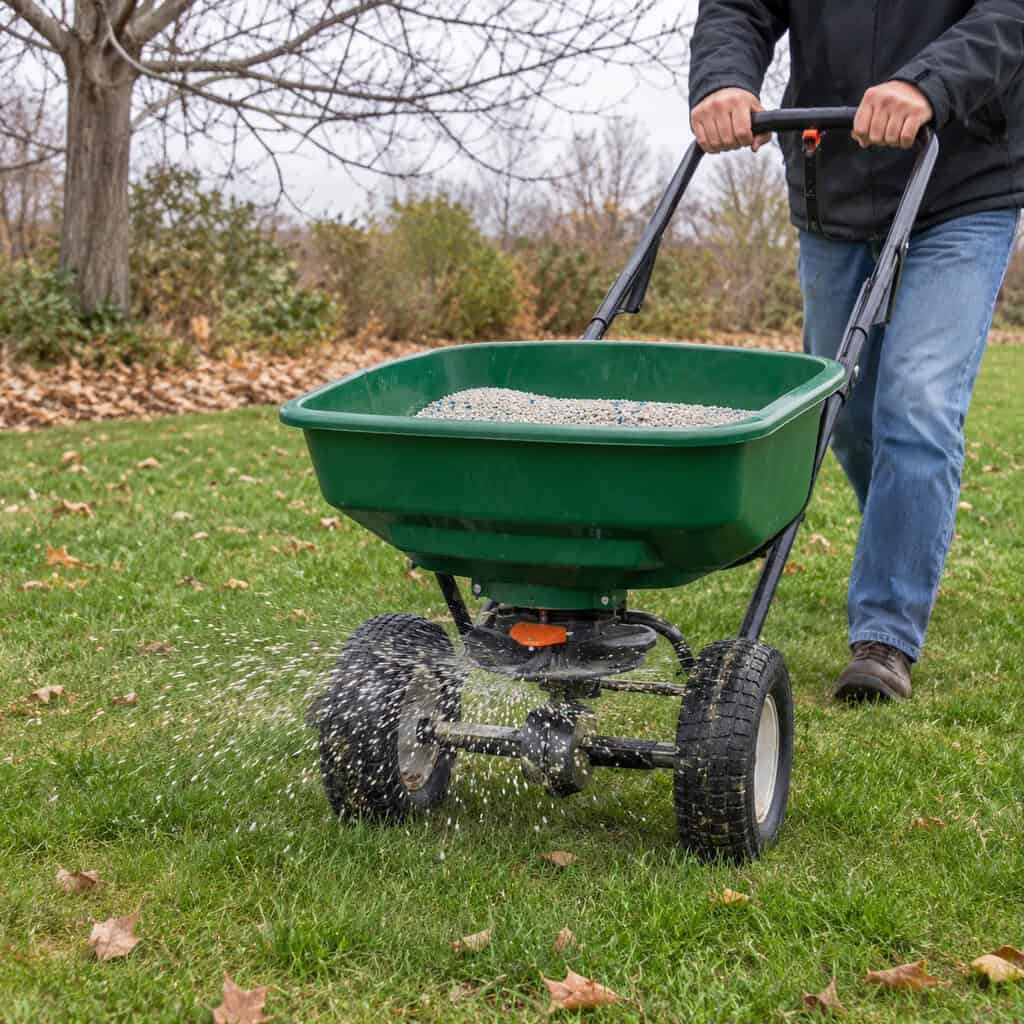
One application. Two weeks of head start next spring.
Cool-season lawns get fed after top growth slows but before the soil freezes — late October into early November across most of the Midwest and Northeast. The grass isn’t pushing blades anymore, so nitrogen goes straight into root storage and carbohydrate reserves.
That’s the whole reason some lawns are green while the block is still beige. The Farmers’ Almanac puts the same window on the calendar, and a proper winterizer product is formulated for exactly this pass.
Warm-season lawns are the opposite. Bermuda and zoysia get potassium for cold hardiness and no late nitrogen at all — feeding them now invites winterkill.
7. A Deep Soak for Every Evergreen Before the Ground Freezes
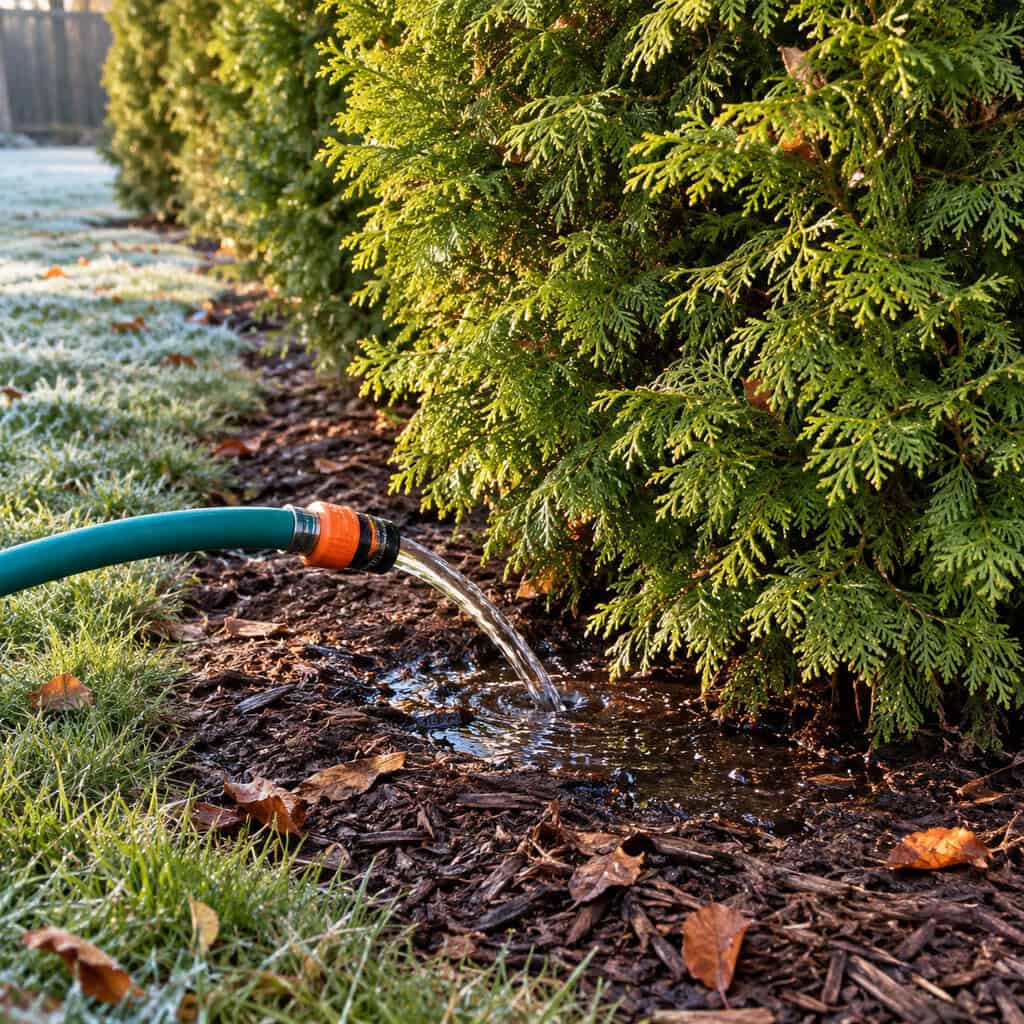
Evergreens don’t go dormant the way a maple does.
Needles and broad leaves keep transpiring all winter, but once soil is frozen the roots can’t replace what’s lost. That’s the mechanism behind the brown, crispy arborvitae and bronzed boxwood you see in March — it’s drought damage, not cold damage. The University of Minnesota Extension flags this as one of the most common winter injuries on home landscapes.
So you soak them. Slowly, deeply, after leaf drop and before the ground locks up — a hose trickling at the dripline for 30 minutes per shrub, longer for established trees.
Invisible work in November. Obvious payoff in April.
8. Reflective Stakes Set Along the Driveway and Bed Lines
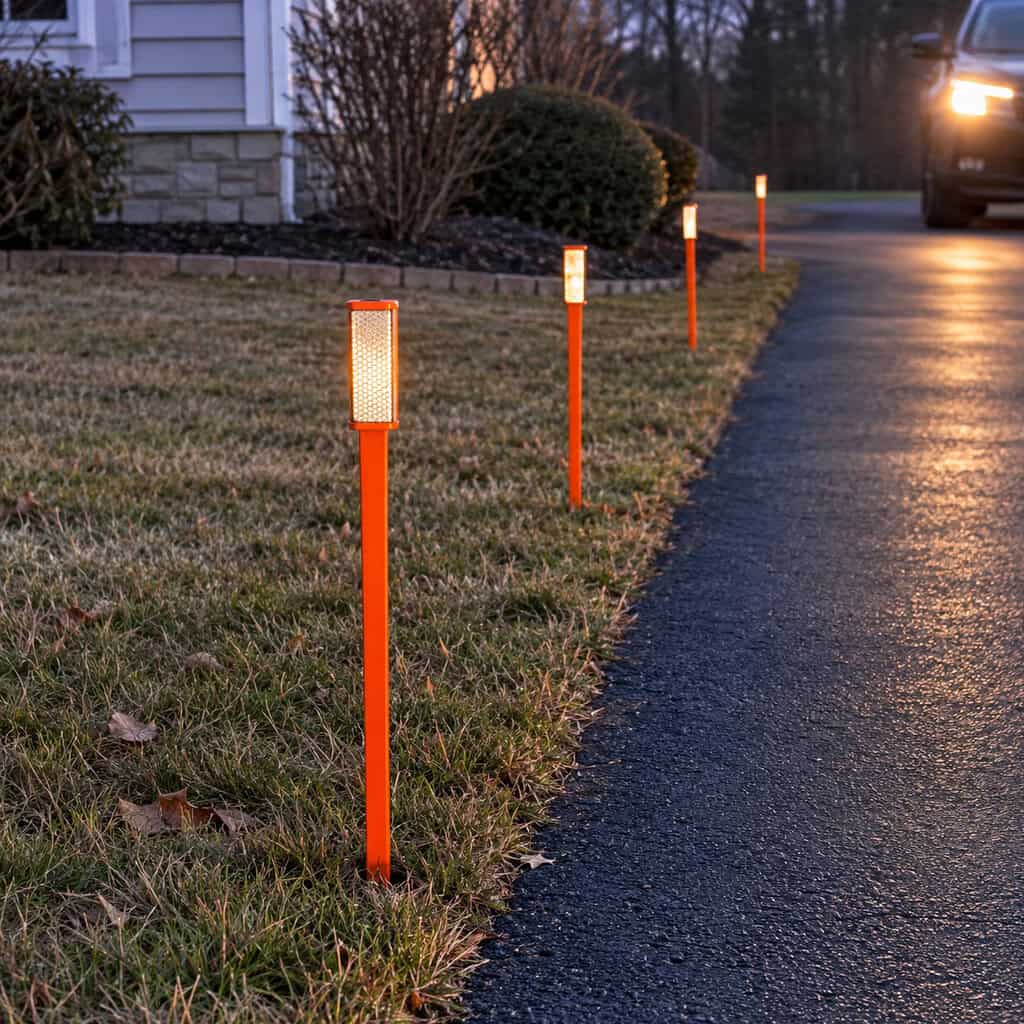
Under eight inches of snow, a plow driver is guessing.
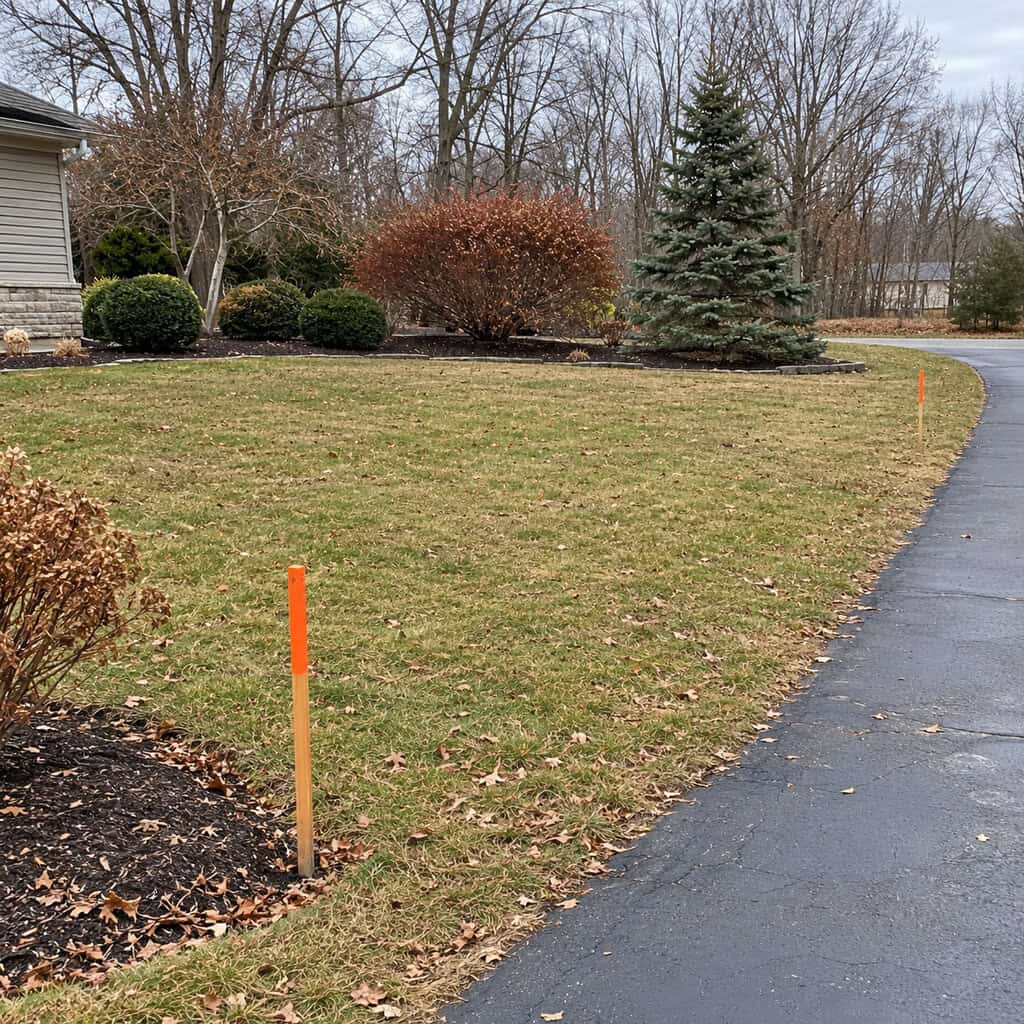
That’s how corner beds get scraped down to gravel and how the first three feet of lawn along the driveway ends up as mud and turf chunks. Fiberglass or reflective markers pushed in every ten feet along the hard edges solve it.
Push them in while the soil is still soft. Trying to stake frozen ground in December with a rubber mallet is its own kind of misery, and it’s part of keeping a plow off your lawn entirely.
9. Core Aeration While the Ground Is Still Soft
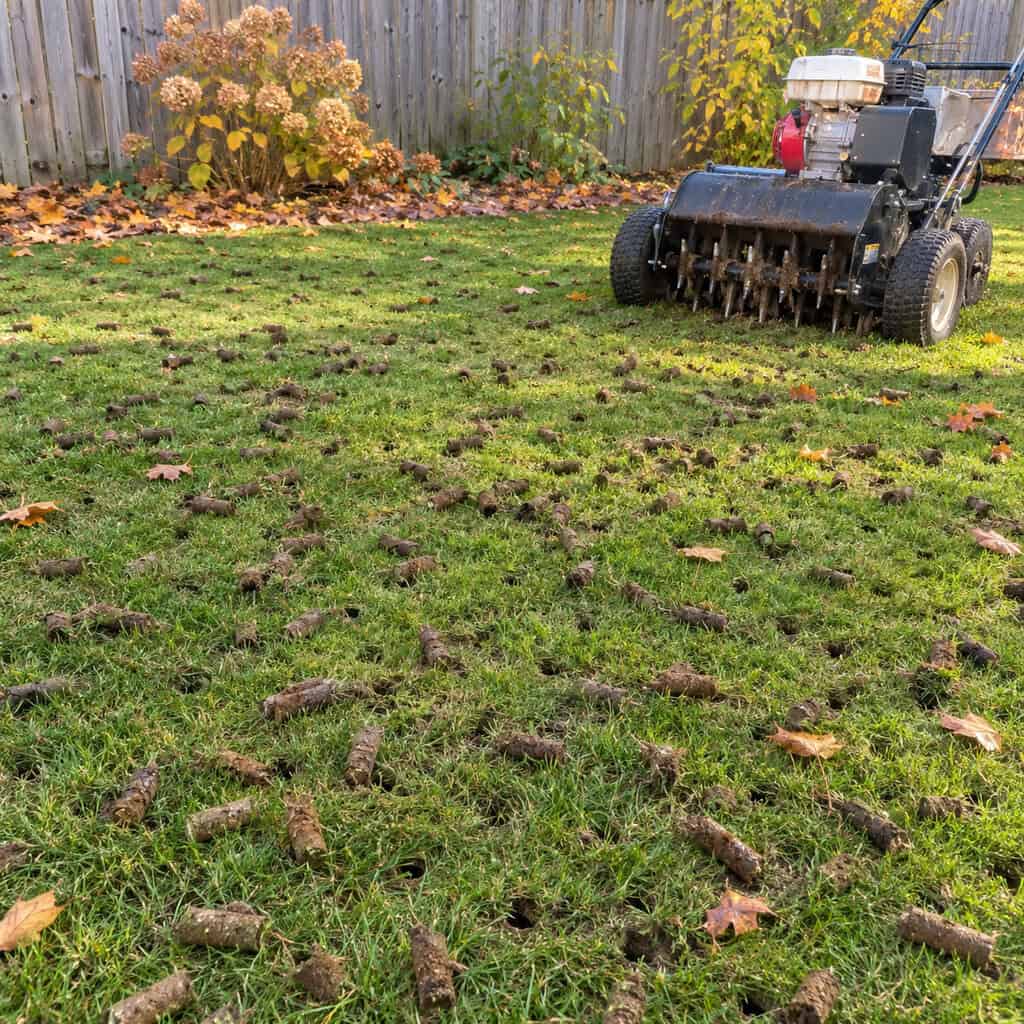
Pull plugs, not spikes.
A season of foot traffic, mowers, and rain compacts soil into something roots struggle to push through. Core aeration lifts out finger-sized plugs, opens channels for air and water, and lets your late-fall feeding actually reach the root zone instead of sitting on thatch.
Timing is the catch. Do it while cool-season turf is still actively growing so the holes knit closed — once soil goes cold and tight, the window shuts.
Leave the plugs on the surface. They break down in two weeks and top-dress the lawn for free.
10. Spring Bulbs in the Ground, Not in the Garage
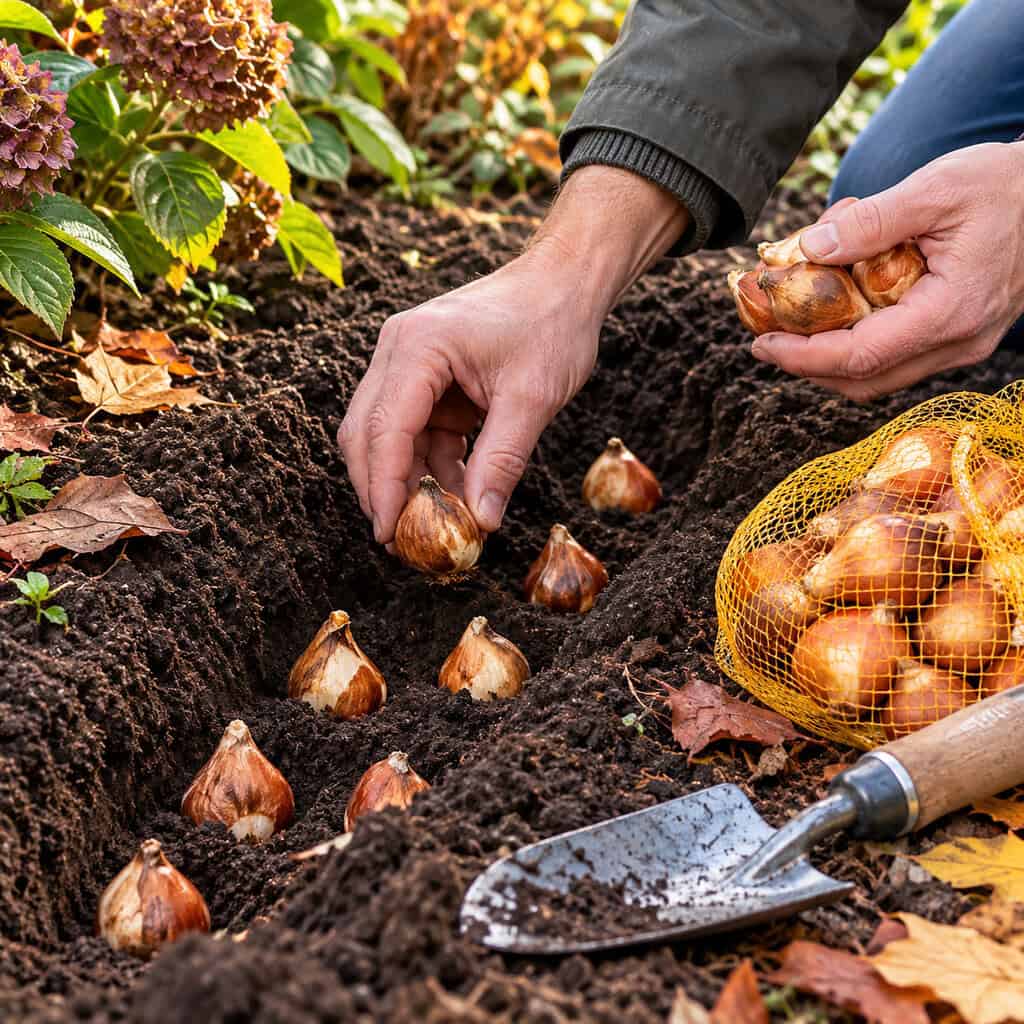
Tulips and daffodils need roughly 12 to 16 weeks of cold soil to bloom. They can’t get it from a paper sack on a shelf.
Get them planted about six weeks before the ground freezes, which in most northern zones means mid-October into early November. Depth is three times the bulb’s height, pointy end up.
The most common homeowner failure in the entire fall calendar is finding the bag in February.
Expensive-looking spring yards are bought in October at fifty cents a bulb.
11. Young Tree Trunks Wrapped Against Sunscald
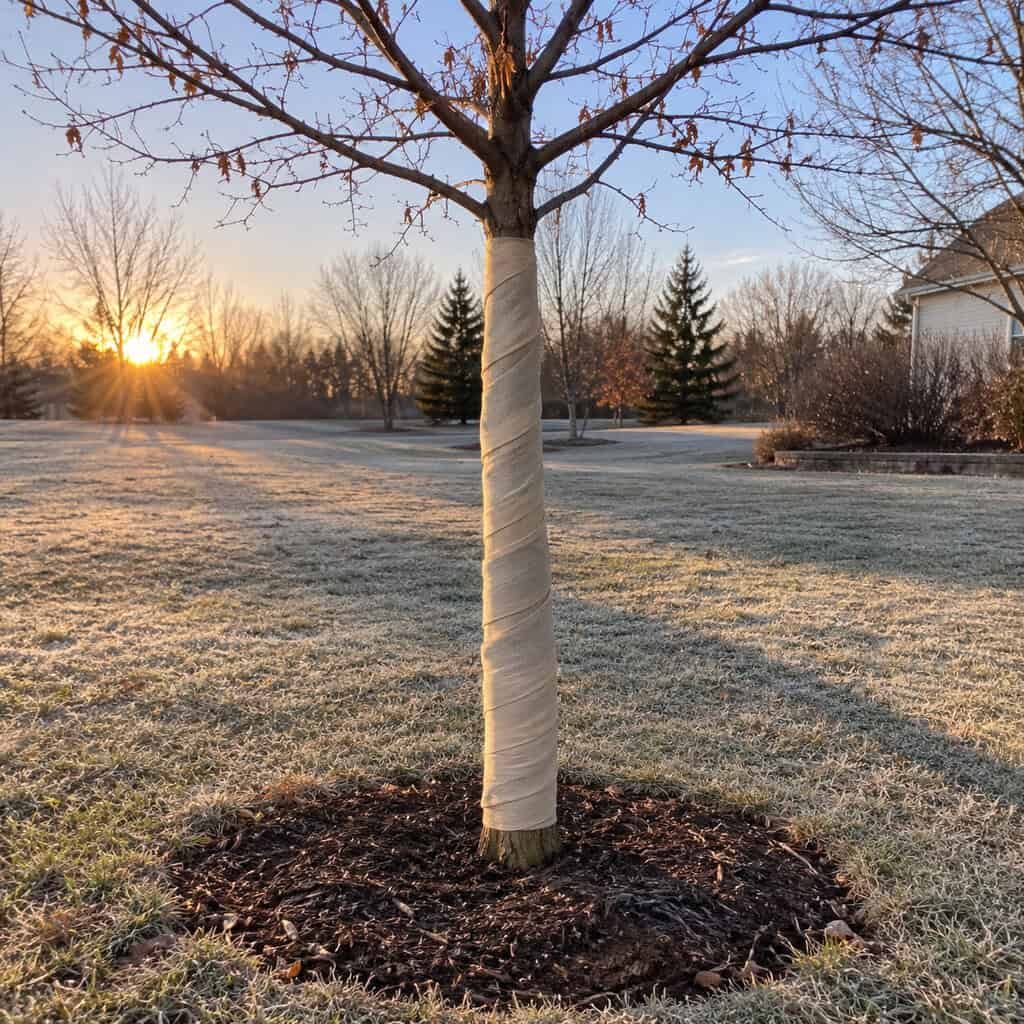
Thin-barked young trees — red maple, linden, honeylocust, fruit trees — cook on bright winter afternoons.
The south and southwest side of the trunk warms in direct sun reflecting off snow, the cambium wakes up, then the temperature drops 40 degrees after sundown and the tissue ruptures. You get a long vertical crack that never fully heals. Nebraska Extension walks through the same damage pattern.
Light-colored commercial tree wrap, applied bottom to top with an overlap, reflects that heat away.
And the second half of the rule matters more than the first: it comes off in early spring. Wrap left on through summer traps moisture and invites borers.
12. One Last Debris Pass to Starve Snow Mold
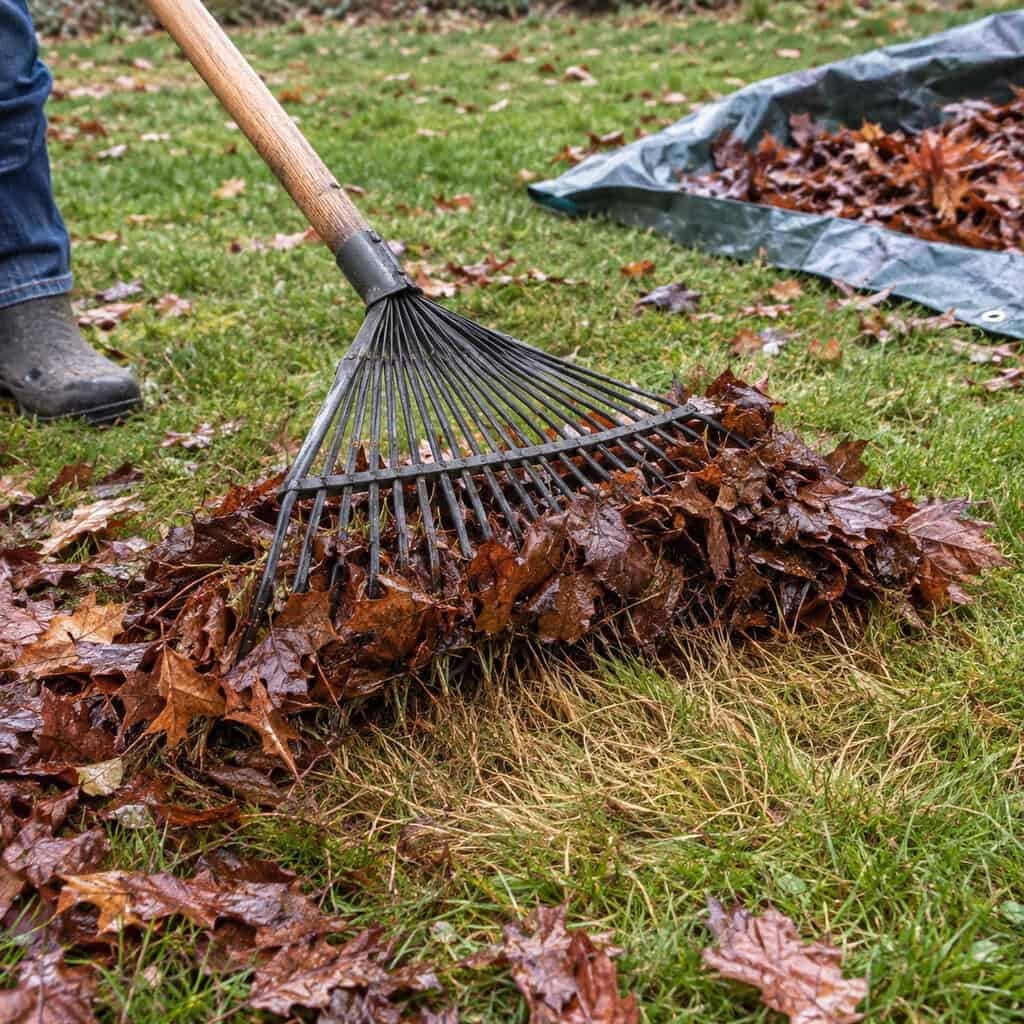
Snow mold needs three things: grass, moisture, and something holding it down.
Gray snow mold mats the turf and usually grows out. Pink snow mold — Microdochium nivale — goes after crowns and roots and can kill patches outright, and it doesn’t even need snow cover to get started, just cold and wet.
So pros walk the lawn once more after the final leaf fall. Clipping piles, forgotten tarps, the kids’ soccer goal, that corner where the leaves always drift.
Anything that sits wet on turf all winter leaves a dead circle behind.
13. Winter Porch Pots Built From Evergreen Boughs

The summer annuals come out and the containers get rebuilt, not stored.
Fir and spruce tips, red twig dogwood for color, winterberry for the red, white birch poles for height. Jam them into the frozen soil in the pot and they hold their shape until March.
If you cut your own greens it costs essentially nothing.
From the street in January, it’s the loudest signal a house can send that somebody lives here and cares.
14. Gutters Cleared and Downspouts Extended Past the Beds
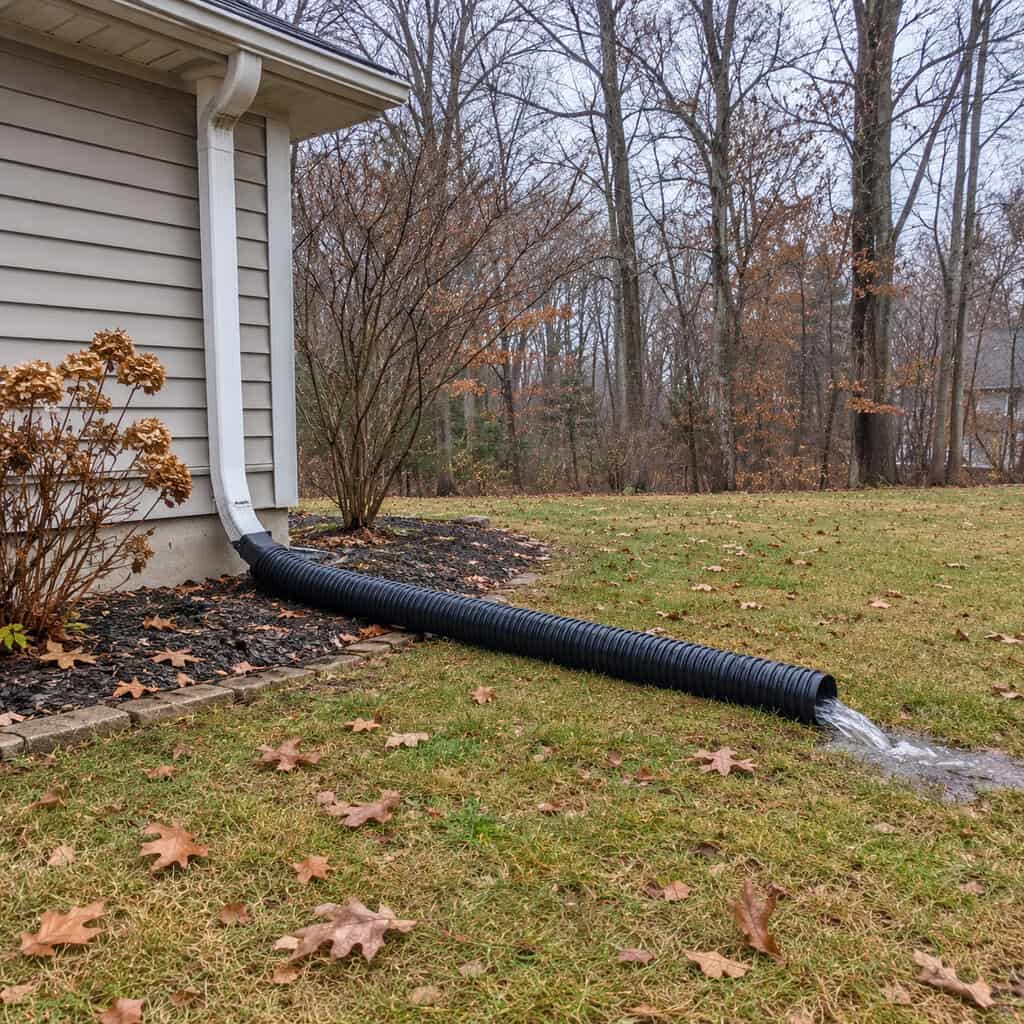
The most expensive winter damage to a house starts in a four-inch metal trough.
A clogged gutter can’t drain meltwater. The water sits, freezes at the eave, and builds an ice dam that backs melt up under the shingles and into the ceiling. Then the whole frozen mass is hanging off your fascia at roughly 8 pounds per gallon.
Clear them after the last leaves drop — not in mid-October when half the canopy is still up there waiting.
Then deal with the discharge. A downspout dumping at the foundation in November is dumping into a soil column that will be frozen by January, meaning the water has nowhere to go but against your wall. It washes out bed soil, it undermines plantings, and it finds basement cracks.
Extend every downspout at least four to six feet out onto turf, further if the grade is flat. The ground should fall away from the house roughly six inches over the first ten feet.
Quick walk-around before the freeze:
- Gutters clear of leaves and shingle grit
- Downspout elbows actually attached, not kicked loose by the mower
- Extensions running onto grass, not into a bed or a window well
- No soil mounded above the siding line anywhere
- Splash blocks pitched away, not sunk and tilting back
If you already deal with standing water after heavy rain, winter will be worse. Fix the grade now.
15. Columnar Evergreens Tied Before the Snow Load
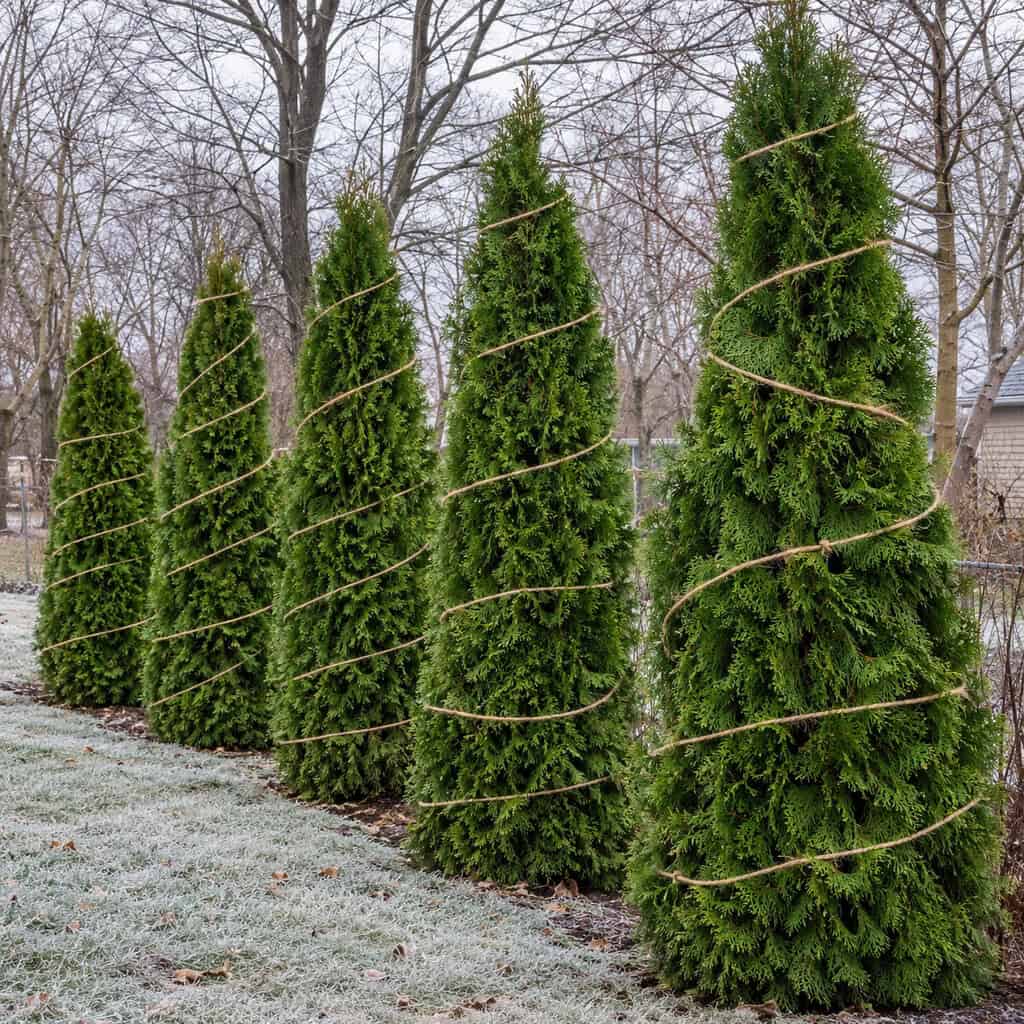
Wet snow is heavy, and multi-stemmed uprights have no defense against it.
Emerald Green arborvitae, upright junipers, and sheared boxwood cones splay open at the top under a single storm — and once the stems bend past a certain point they never close back up. You’re looking at that gap for the life of the plant.
Wrap soft jute twine in a loose spiral from the base up, snug enough to hold the leaders together, not tight enough to crease foliage.
Ten minutes. Saves a $300 shrub. Untie it in spring.
16. The Fall Broadleaf Weed Hit
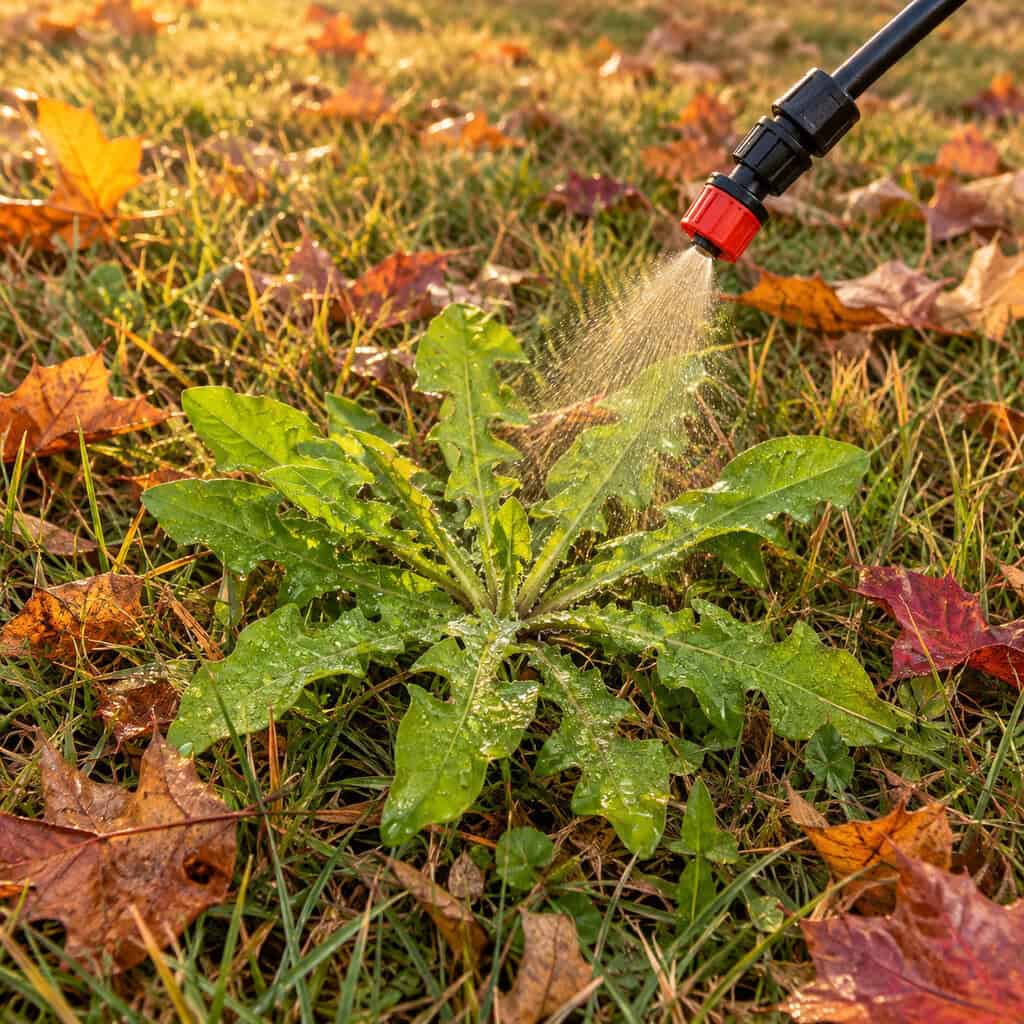
Autumn is when dandelion, clover, plantain, and creeping Charlie pull sugars down into their roots for winter storage.
Systemic herbicide rides along for free. Fall applications beat spring ones on almost every broadleaf, because in spring the plant is pushing energy up and out — the chemical doesn’t travel as far down.
Spray while the weeds are still green and daytime temps are above 50°F. Below that, the plant shuts down and nothing moves.
It’s why some lawns are simply weed-free by May without anyone appearing to do anything about it.
17. Ceramic and Terracotta Pots Emptied, Flipped, and Stored

Terracotta is porous. It drinks water, the water freezes, and the pot splits from the inside.
Empty the soil out — a pot packed with wet soil is a guaranteed loss. Then store dry under cover, or at minimum flip it upside down on a shim so water can’t collect.
Frost-proof glazed stoneware, fiberglass, and concrete can stay out and get planted for winter interest.
Everything else goes in the shed. A split urn in March isn’t repairable.
18. Pet-Safe De-Icer Bought in October, Not During the Storm

Hardware stores sell out of everything except rock salt the night before the first snow. That’s not an accident — rock salt is what’s left because it’s the one nobody should be buying.
Sodium chloride does three things badly. It burns a dead stripe along every turf edge it touches. It drives spalling and pitting in concrete through repeated freeze-thaw. And it irritates paw pads, cracks them, and causes GI upset when dogs lick their feet afterward.
The alternatives are worth knowing by name before you’re standing in an empty aisle.
| Rock Salt (NaCl) | Calcium Magnesium Acetate | |
|---|---|---|
| Works down to | About 20°F | About 20°F |
| Paw irritation | High | Low |
| Turf and bed edges | Burns reliably | Minimal damage |
| Concrete | Pits and spalls | Safe on cured concrete |
| Cost per bag | $8 to $12 | $25 to $40 |
Urea-based products sit in between — gentler on paws than rock salt, but they’re fertilizer, so runoff into beds and storm drains is a real downside. Calcium chloride melts colder than anything else but runs hot when wet and can irritate skin.
Whatever you buy, apply less than you think. Most people broadcast three times the needed rate.
And shovel the salted snow somewhere deliberate, not onto the lawn or into the foundation beds. Half the reason some yards look untouched in April is that no salt ever landed on them.
19. Perennials Cut Back Selectively — Not Clear-Cut
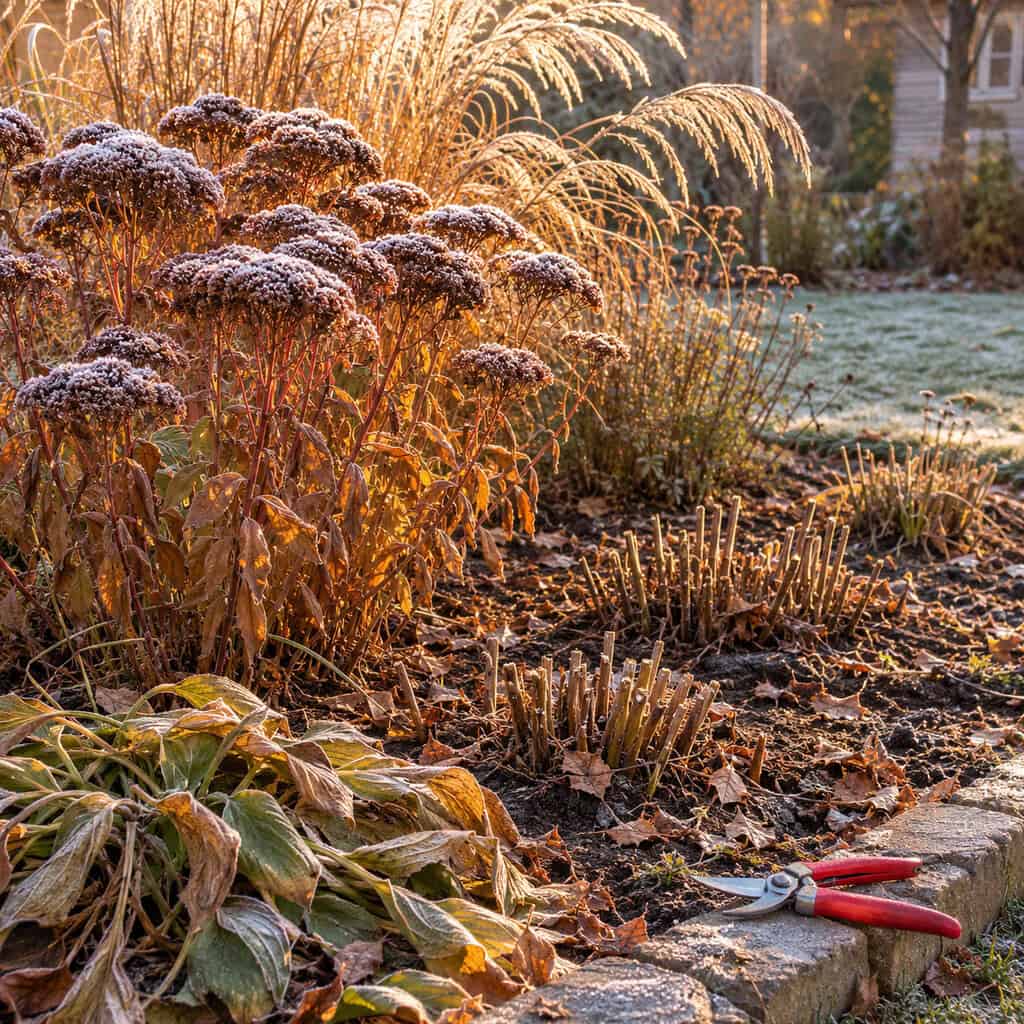
The clear-cut is the tell. Everything chopped to two inches, beds bare and brown by Thanksgiving.
Some things genuinely need to go. Peony, iris, bee balm, and hosta foliage harbors disease and should be cut to the ground after a killing frost and hauled off.
But coneflower, sedum, ornamental grasses, rudbeckia, and hydrangea heads stay up. They catch snow, they throw shadows, they feed goldfinches, and they give the bed vertical structure above a white surface.
The yard that looks expensive in January is the one with something still standing in it. The same logic applies to whether hostas come down or stay up.
20. Paver Joints Swept, Re-Sanded, and Sealed
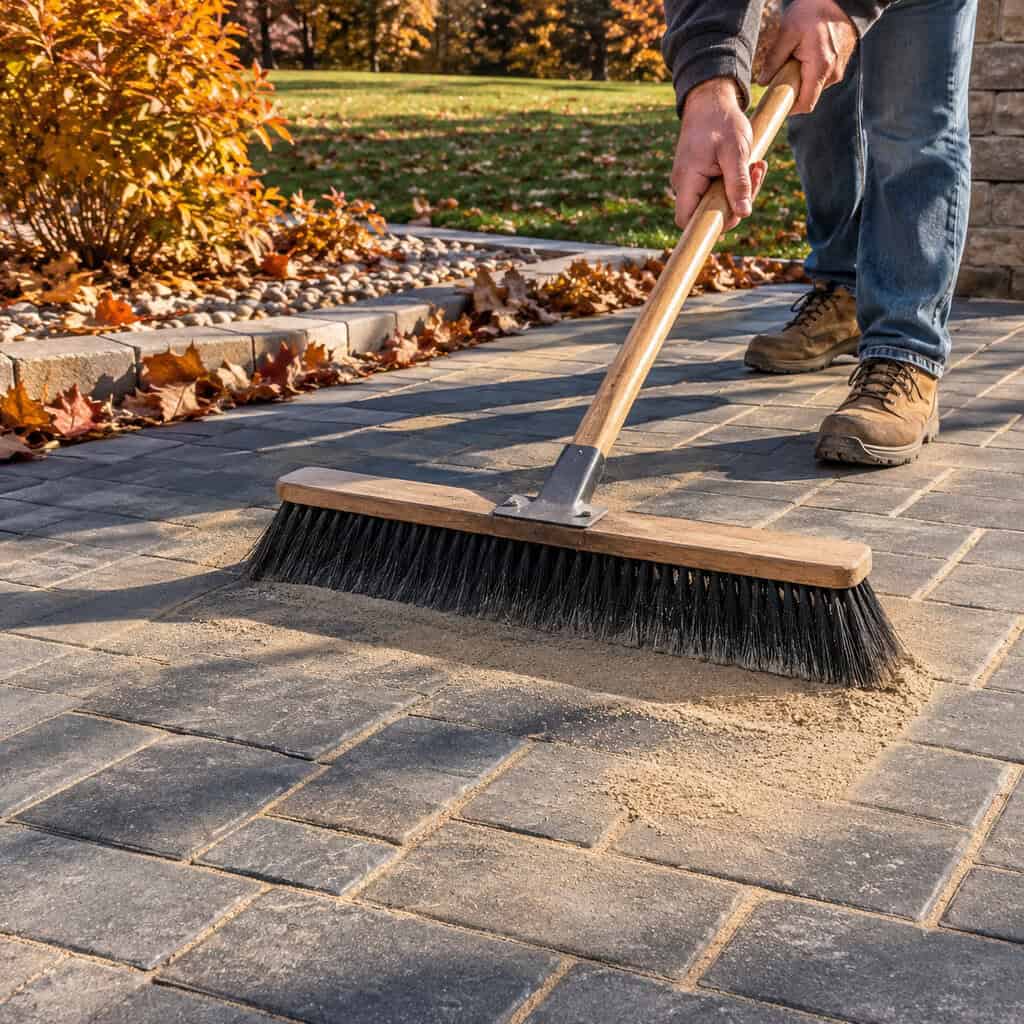
That wavy patio down the street is four winters of skipped maintenance, nothing more.
When joint sand washes out, water sits in the gaps, freezes, and jacks individual pavers out of plane. Each cycle makes the gap bigger, which holds more water, which heaves harder.
Sweep in polymeric sand on a dry day, mist it to set, then seal if the surface takes it. The whole job wants 48 hours of dry weather on either side.
Skip it three years running and you’re renting a plate compactor and relaying the field.
21. Hardware Cloth Guards at the Trunk Line for Voles and Rabbits
Snow is not just weather. For a vole, it’s a roof.
Meadow voles tunnel in the subnivean layer — that gap between the soil surface and the snowpack, where temperature stays near freezing and nothing can see them. They run highways through it all winter, and what they eat is bark. Specifically, the tender cambium at the base of young trees and shrubs.
If they girdle the trunk all the way around, the tree is dead. It just won’t know it until June, when it leafs out on stored energy and then collapses. Apple, crabapple, young maple, and burning bush are favorites.
Rabbits work the other direction — above the snow line, clipping stems at a sharp 45-degree angle, higher as the snow deepens. A rabbit standing on three feet of crust can reach parts of a shrub you never worried about.
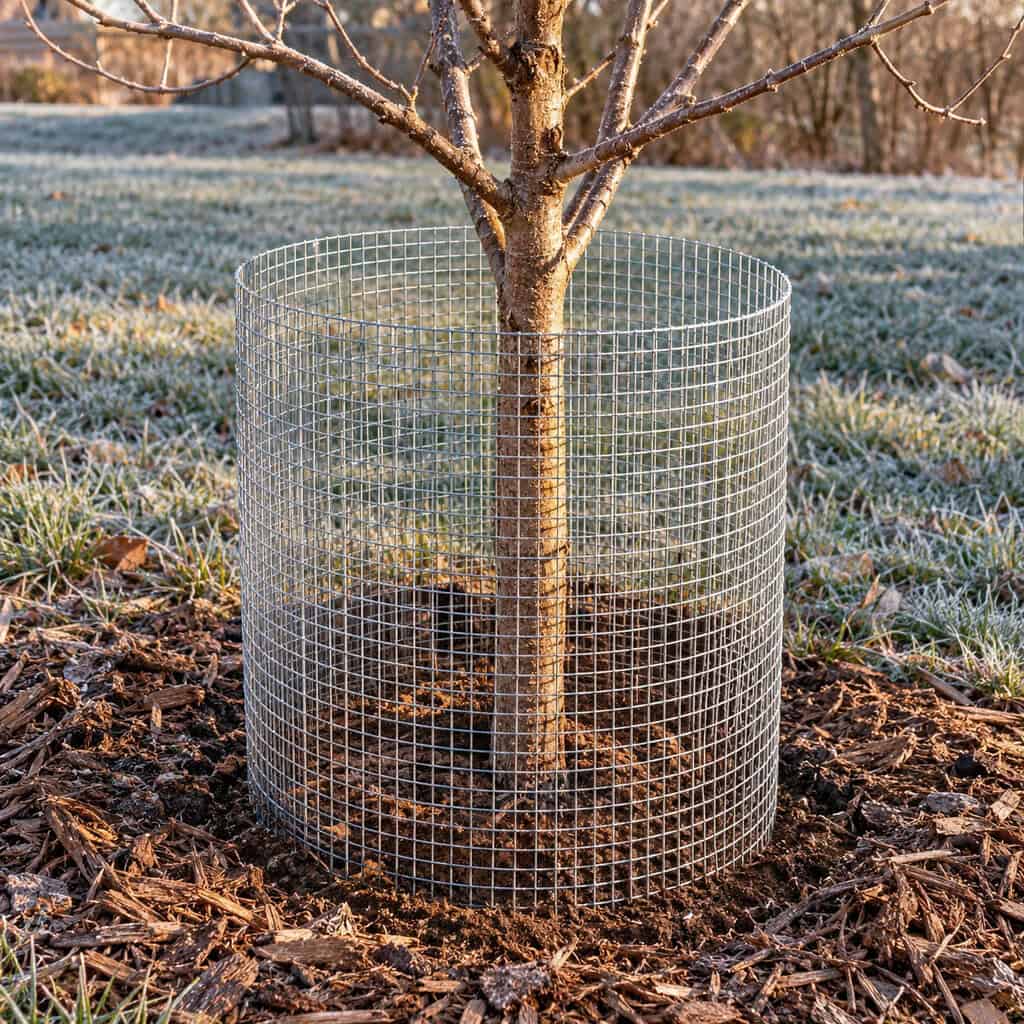
The fix is mechanical, not chemical. Quarter-inch hardware cloth, formed into a cylinder a couple inches off the trunk, pushed an inch or two into the soil so nothing tunnels under. Run it 18 to 24 inches above expected snow depth.
Then pull the mulch back. A volcano of mulch piled against a trunk is a heated, hidden nest with food attached — keep a bare three-inch gap all the way around.
22. Dormant Seeding the Bare Spots
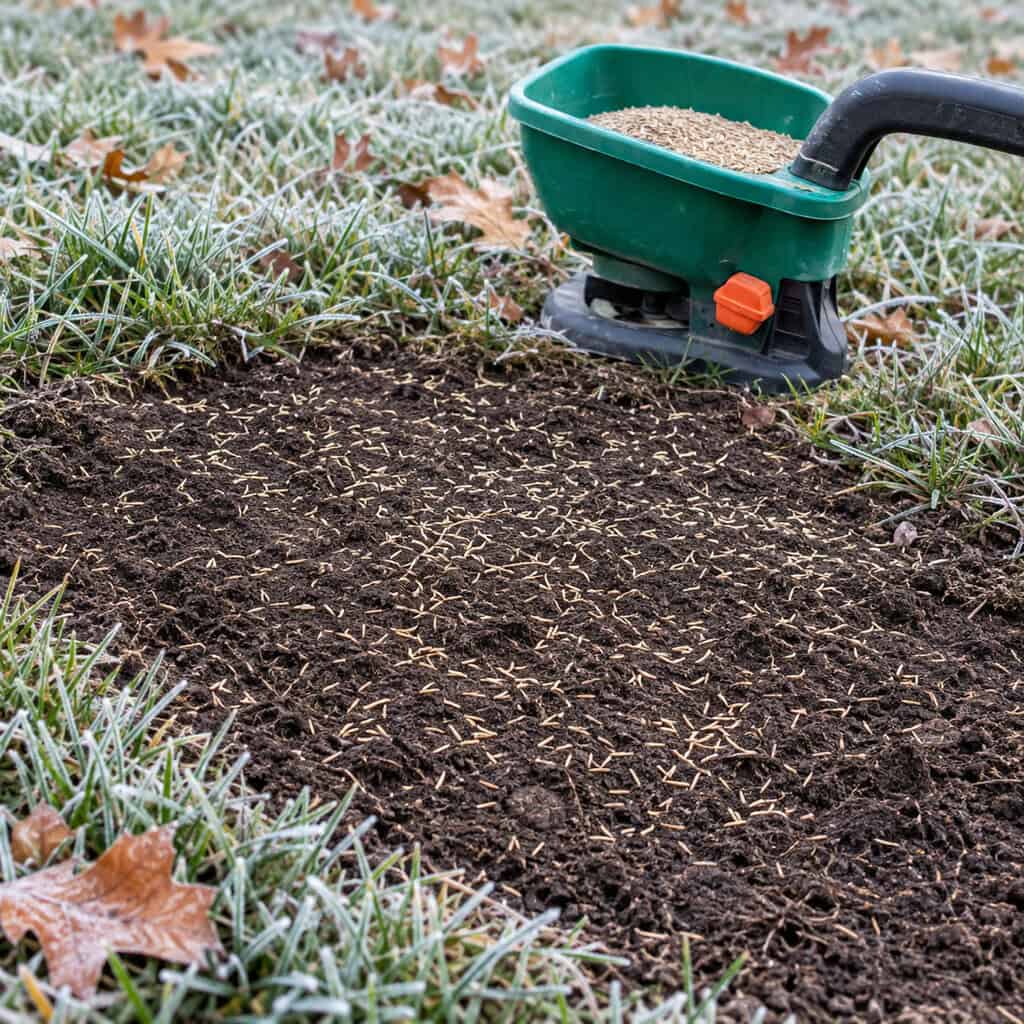
Seed thrown down once soil drops below about 50°F doesn’t germinate. That’s the point.
It sits through winter, works itself into the soil surface through freeze-thaw cycles, and is already in position when the ground hits germination temperature in early spring — weeks before you could get out there with a spreader.
Scuff the bare spots with a rake first so there’s seed-to-soil contact. Don’t fertilize, don’t water.
It’s the trick behind the lawns that are thick by late April while everyone else is staring at mud. Worth knowing what actually happens to November grass seed before you commit a $70 bag to it.
23. Burlap Screens on the Wind-Exposed Evergreens
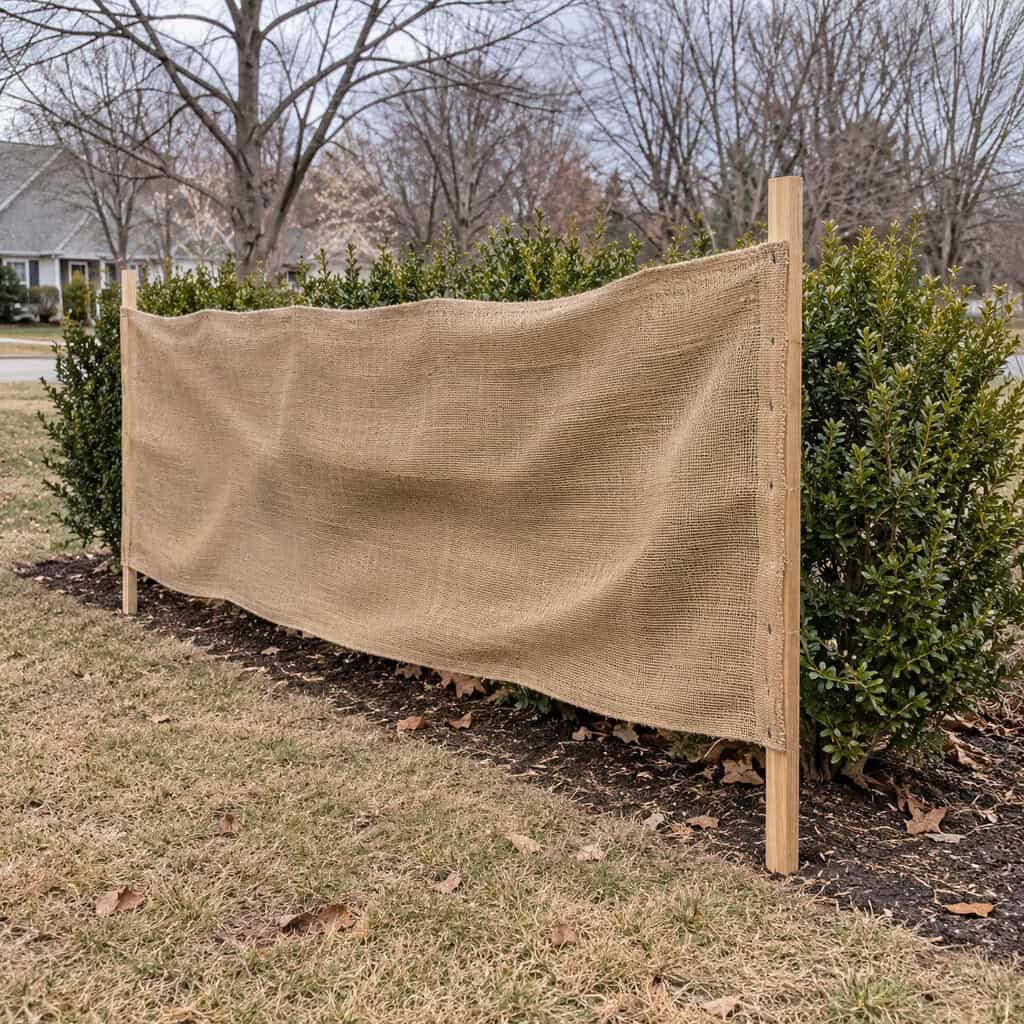
Not wrapped around the plant. Stapled to stakes, standing a foot away from it.
The job is blocking desiccating winter wind and road-salt spray on the windward side — usually north and west, plus anything facing a plowed street. Boxwood, yew, and young arborvitae on exposed corners take the worst of it.
Mummifying a shrub in burlap traps moisture, blocks light, and looks terrible for five months.
Screen the exposed side only. Leave the rest open.
24. Deadwood and Weak Limbs Removed Before the Snow Load
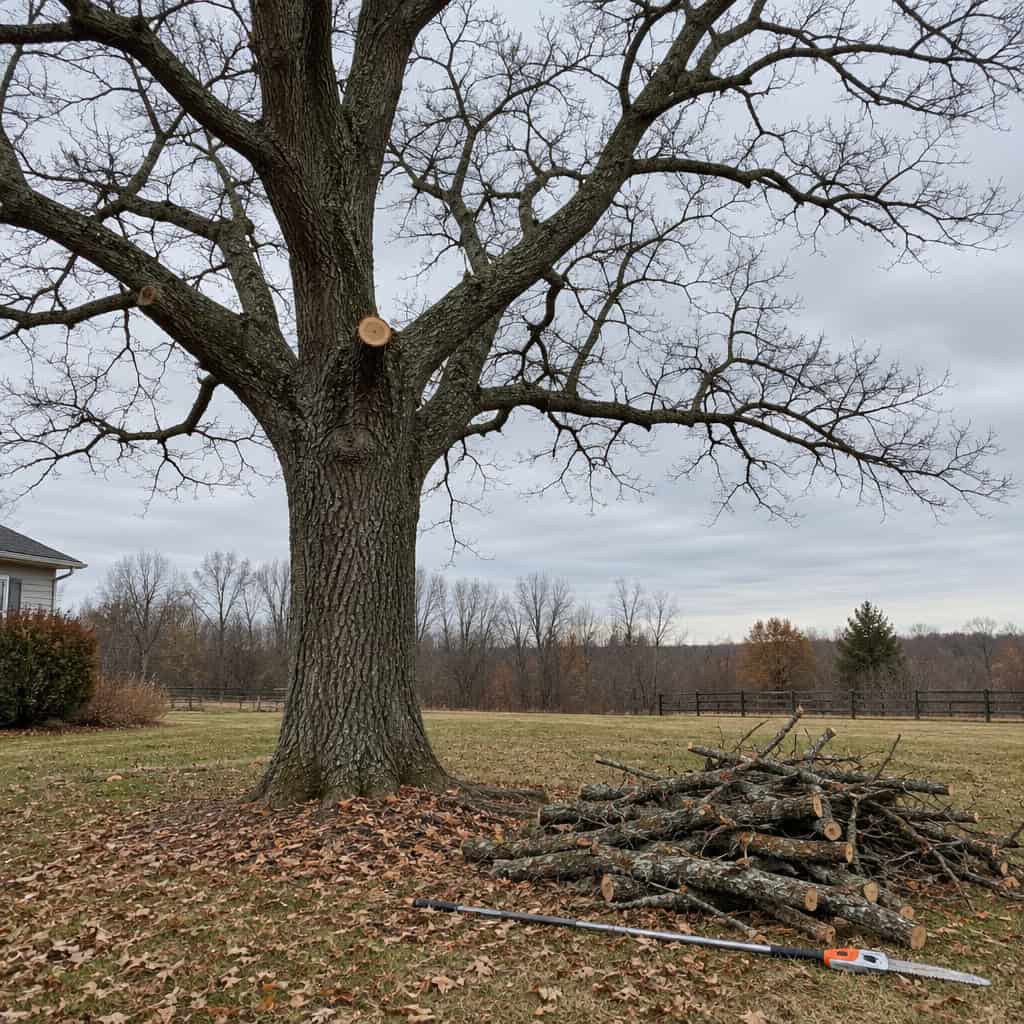
A wet snow can add hundreds of pounds to a single mature limb, and ice adds more — a half-inch glaze can increase branch weight by a factor of thirty.
Trees don’t fail randomly under that load. They fail at predictable places.
Dead branches go first, because dead wood is brittle and has no flex. Tight V-shaped crotches with included bark split straight down the trunk. Long horizontal limbs over a roof or driveway lever themselves off. Codominant leaders — two trunks of equal size competing — pull apart at the union.
Late fall is the best time to find all of it. The canopy is bare, so you can actually see structure, and dormant pruning cuts heal cleanly without inviting disease the way summer cuts can.
Walk the yard and look up. Anything dead, anything cracked, anything hanging over something expensive.
A scheduled tree crew in November is a quote. The same crew at 2 a.m. during an ice storm is an emergency rate, and your insurance deductible is already in play.
25. Rose and Hydrangea Crowns Mounded, Not Pruned
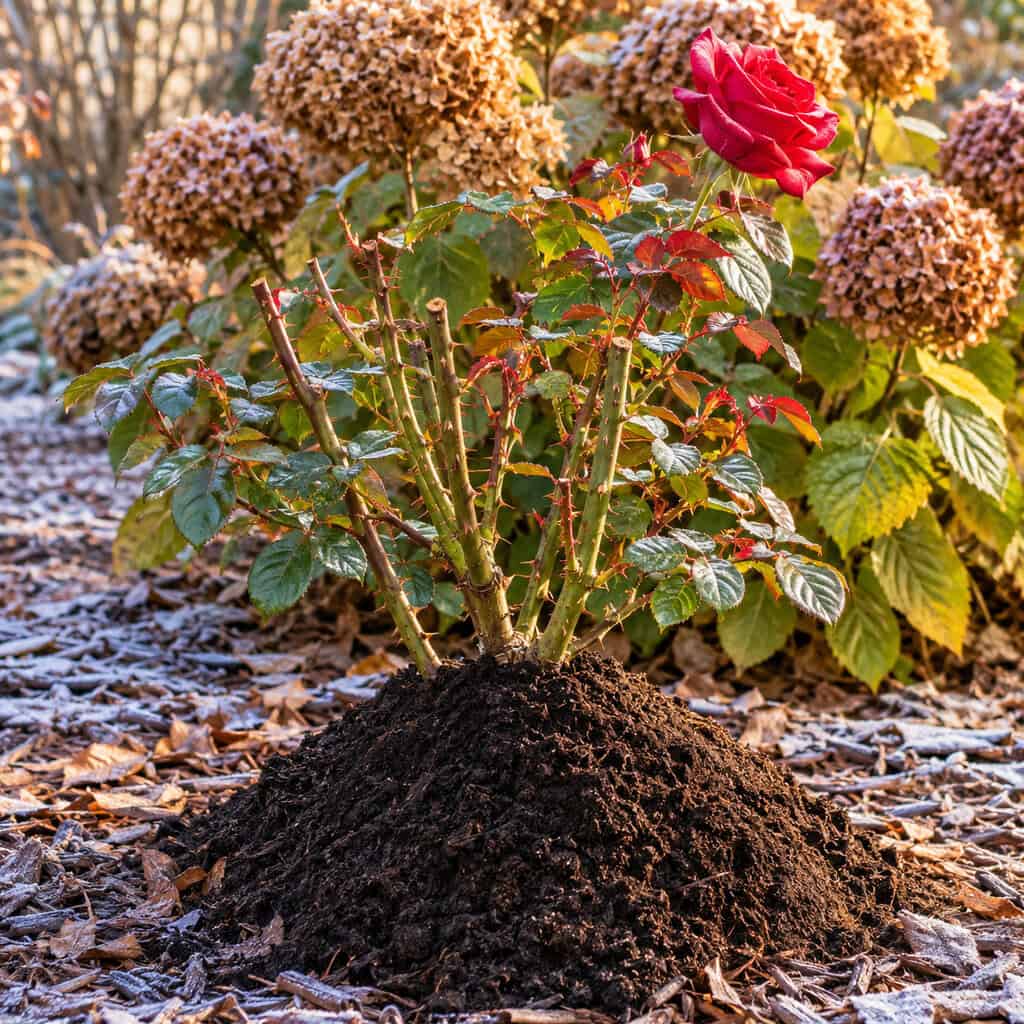
What kills hybrid tea roses isn’t cold. It’s the freeze-thaw swing that heaves and cracks tissue around the graft union.
So you bury it. Eight to twelve inches of soil or compost mounded over the union after the ground has chilled — brought in from elsewhere, not scraped from around the roots.
Bigleaf hydrangeas get a different treatment entirely: hands off. Next summer’s flower buds are already sitting on this year’s stems, which is exactly why so many of them “never bloom.”
Mulch the base, leave the canes, cut nothing.
26. Snow-Pile Zones Decided Before the First Storm
Where the snow ends up decides which plants survive.
Plow operators default to the nearest convenient corner, and that corner is usually a bed. Six-foot piles of salted, gritty snow sitting on shrubs until April kill them slowly and leave a dead patch of turf behind.
Pick the dump zone yourself. A tough, open stretch of lawn, away from shrubs, away from the septic field, downhill from nothing that matters.
Then tell the plow service before the first storm, not after.
27. Diseased Foliage Bagged, Not Composted
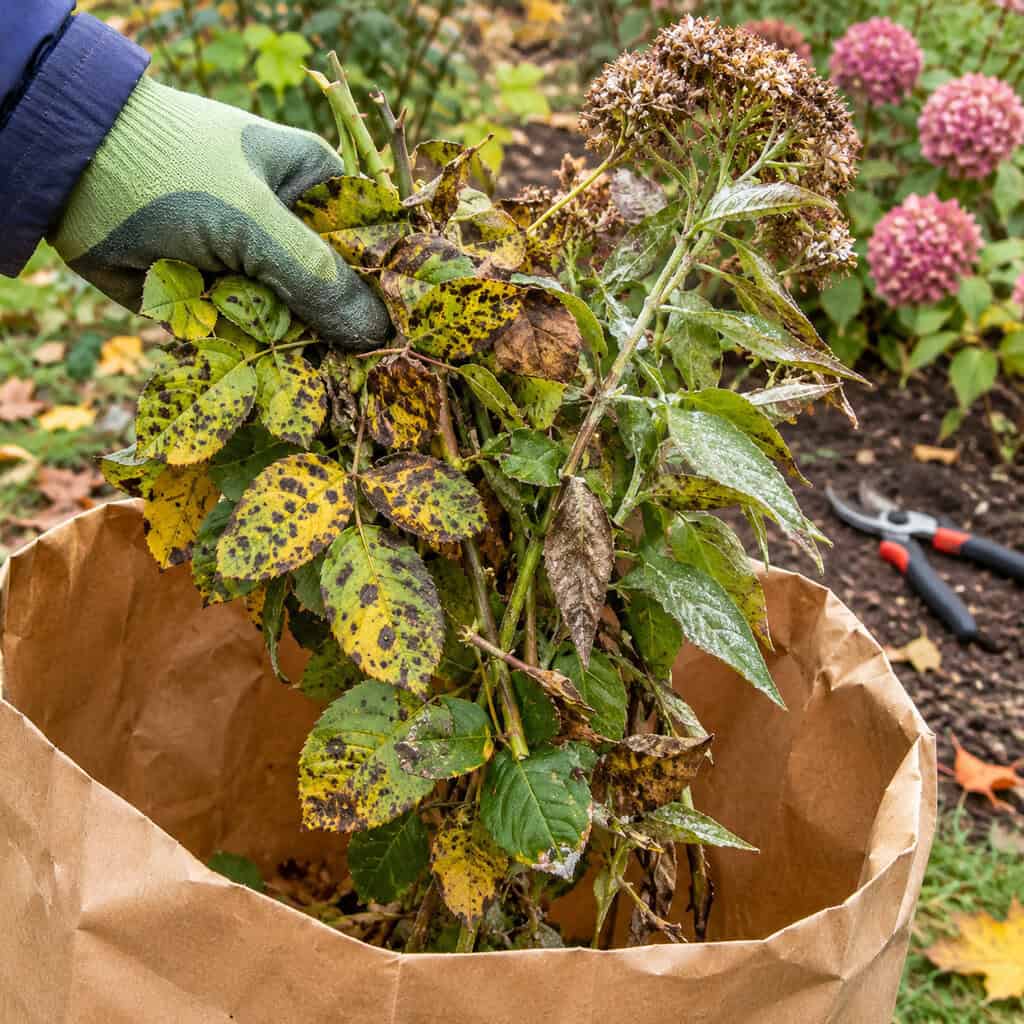
Black spot on roses. Powdery mildew on peony and phlox. Apple scab litter under the fruit tree.
Those spores overwinter right where the leaves fall and reinfect from the ground up in spring. It’s why the same plant has the same problem every single June.
Backyard compost piles almost never sustain the 140°F needed to kill pathogens — they run warm in the middle and cool everywhere else.
Diseased material leaves the property. Bag it, curb it, done.
28. A Soil Test Sent Off and Lime Spread
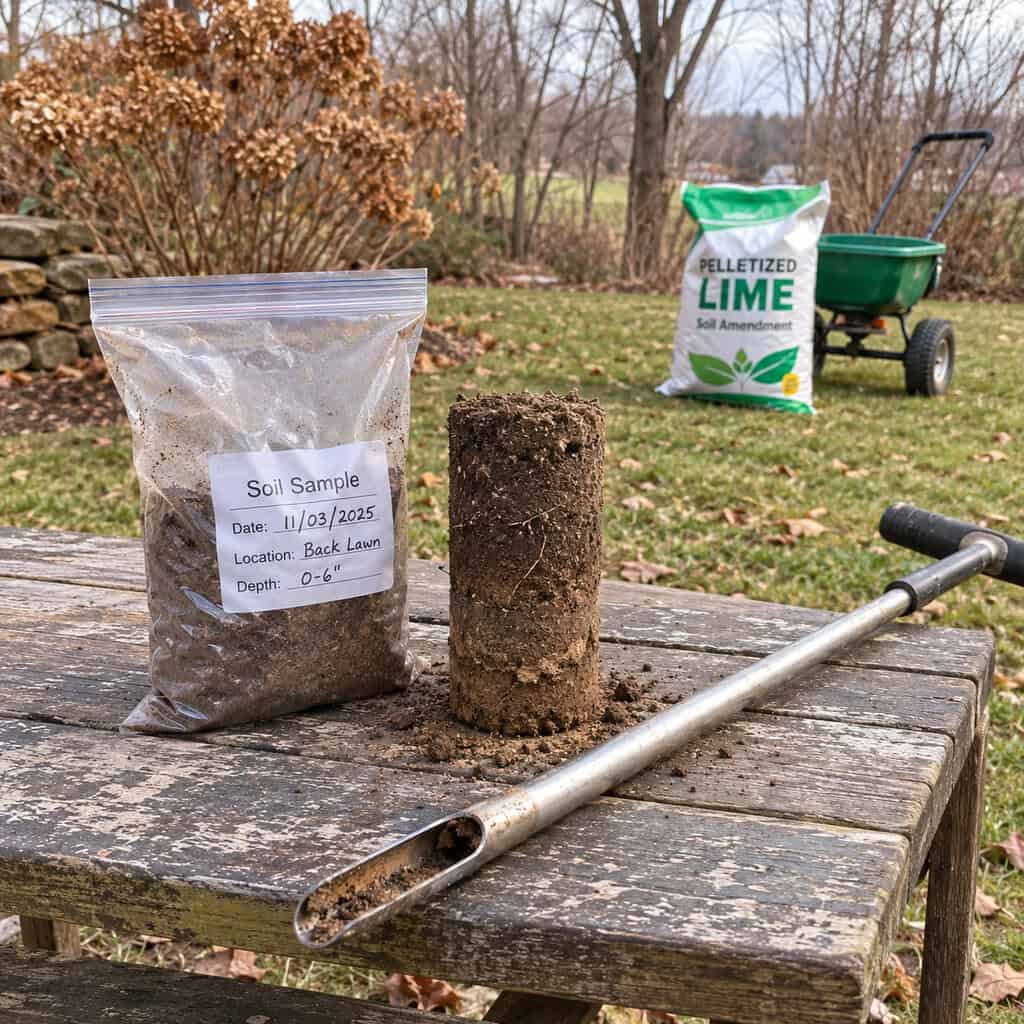
Fall is when the extension labs are quiet. Send a sample in October and results come back in a week or two; send it in April and you’ll wait a month behind everyone else.
Lime is the main reason to know. It takes months of moisture and freeze-thaw action to work down and shift pH, so a fall application is already working by the time spring fertilizer goes down.
Below about 6.0, grass can’t take up the nitrogen you’re paying for. It’s sitting right there in the soil, chemically unavailable.
Some lawns respond to fertilizer. Others just burn money on it. Usually that’s pH.
29. Mulch and Brush Pulled Back Off the Foundation
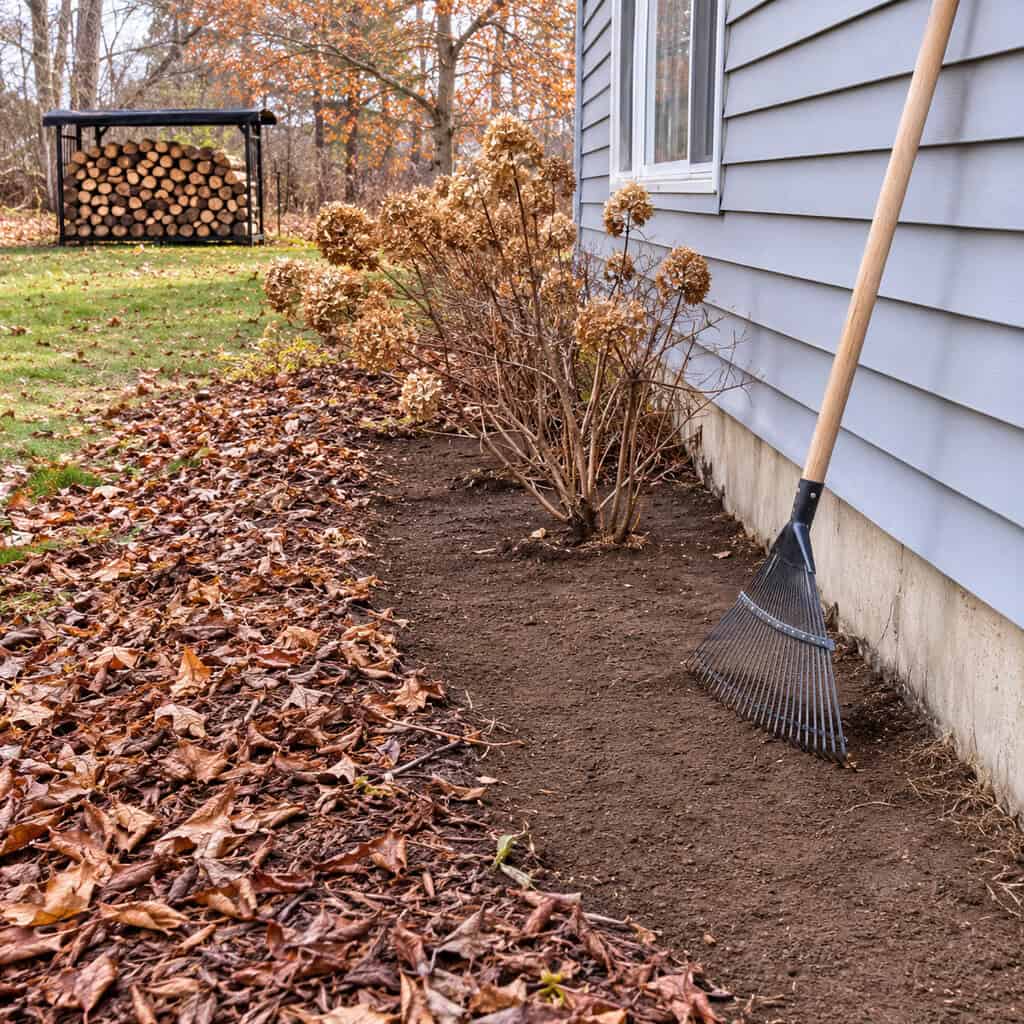
The first hard cold snap is when mice decide to move indoors, and most of them are already living three feet from your door.
Deep mulch banked against the siding, leaf piles in the corners, ivy climbing the wall, a brush pile from fall pruning — all of it is insulated cover with easy access to the building envelope. Voles and overwintering insects use the same real estate.
What pros maintain is a clear, dry band along the foundation. Six to twelve inches of bare, visible ground between the siding and anything organic. Mulch pulled back, no plantings tight against the wall, no grass growing up into the siding gap.
Firewood is the big one. Stacked against the house it’s a rodent condo with a heated south wall — move it at least 20 feet out and get it up on a rack off the ground.
Then walk the perimeter and look for the openings. A mouse goes through a quarter-inch gap.
- Gaps where utility lines, hose bibs, and AC lines enter the wall
- Crawl space vents with torn or missing screen
- Weather stripping missing at the bottom of the garage door
- Dryer vent flaps that don’t close fully
Copper mesh and sealant close those in an afternoon. That afternoon is in November, not February. Plenty of yard features invite rodents without anyone noticing.
30. Mulch Top-Dressed After the Ground Freezes, Not Before
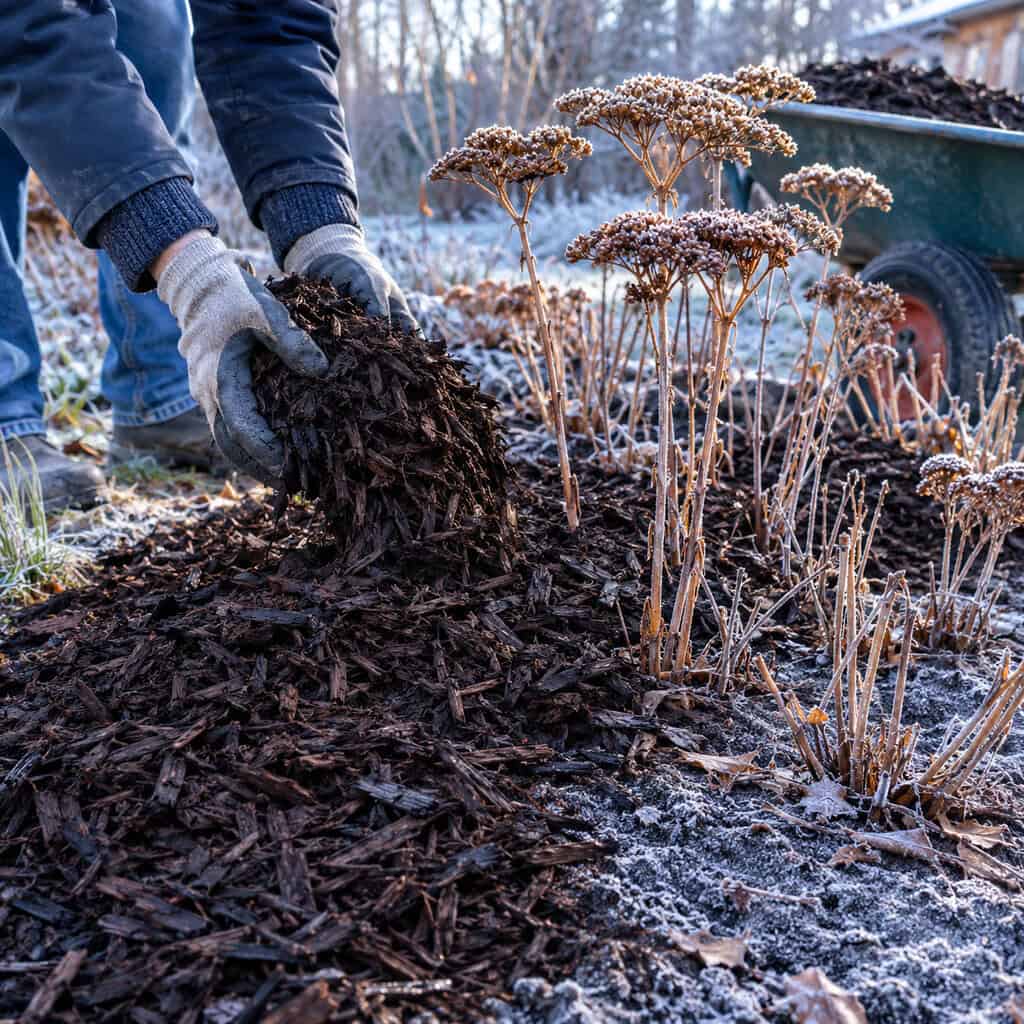
Most homeowners have this one exactly backwards.
Winter mulch isn’t there to keep soil warm. It’s there to keep soil frozen — to stop the thaw-refreeze cycles that physically push shallow-rooted perennials up out of the ground, roots exposed to air.
Put it down in October while soil is still warm and you’ve built a rodent nest with underfloor heating.
Wait for the top couple inches to freeze hard, then spread two to three inches. Timing is the entire trick.
31. A-Frame Shields Over the Foundation Shrubs
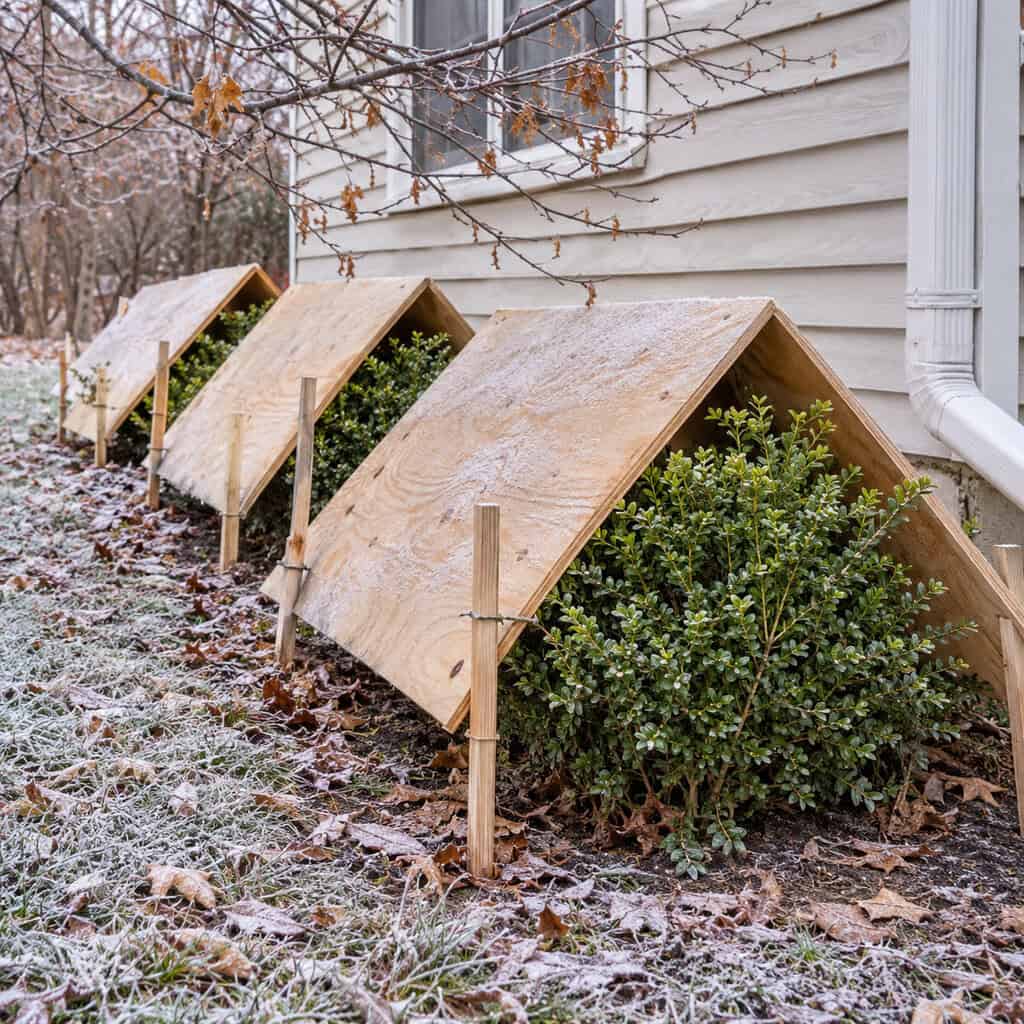
Anything planted under an eave is in a drop zone.
Roof-slide snow comes off in a sheet, all at once, with enough force to flatten a boxwood permanently. Plow spray handles the ones near the drive.
A simple plywood A-frame — two pieces hinged or screwed at the peak, set over the shrub and staked — takes the hit instead.
Looks fussy in November. Looks brilliant in March when those are the only intact shrubs on the block.
32. Fountains Drained, Pumps Pulled, Furniture Put Away Dry
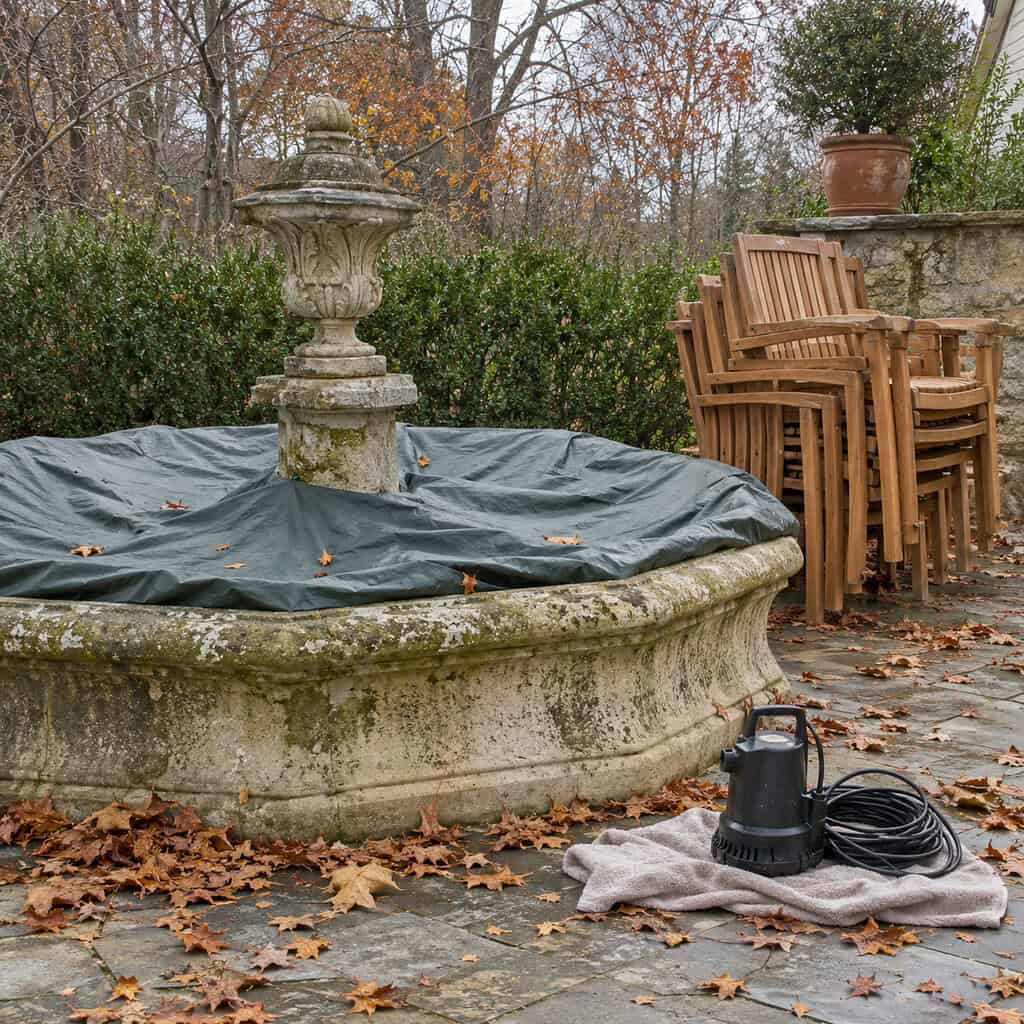
A concrete fountain basin holding two inches of water is a slow-motion crack.
Water freezes, expands, and works the stone apart along the seams. Tiered fountains fail at the joints first. A pump left submerged over winter is simply a pump you’ll replace in April.
Drain everything, pull the pump and store it indoors, and cover the basin so it can’t refill with rain.
Cushions and teak go away dry — stored wet, they mildew in the bag. That’s why some patio sets still look new in year six.
33. The Mower Winterized and the Snowblower Serviced Early

Two machines, opposite directions, one weekend.
The mower gets fuel stabilizer or a fully drained tank, an oil change while the engine’s still warm, a cleaned deck, and a sharpened blade so it’s ready in March instead of a project. Ethanol fuel left sitting gums a carburetor in about 60 days.
The snowblower gets started, run, and checked for belt wear and auger shear pins in October — not at 6 a.m. during the first storm, which is when everyone discovers theirs won’t turn over.
Small-engine shops run three weeks deep in backlog the morning after the first real snow. The riding mower winterizing routine takes under an hour.
34. The Shrubs They Deliberately Leave Alone
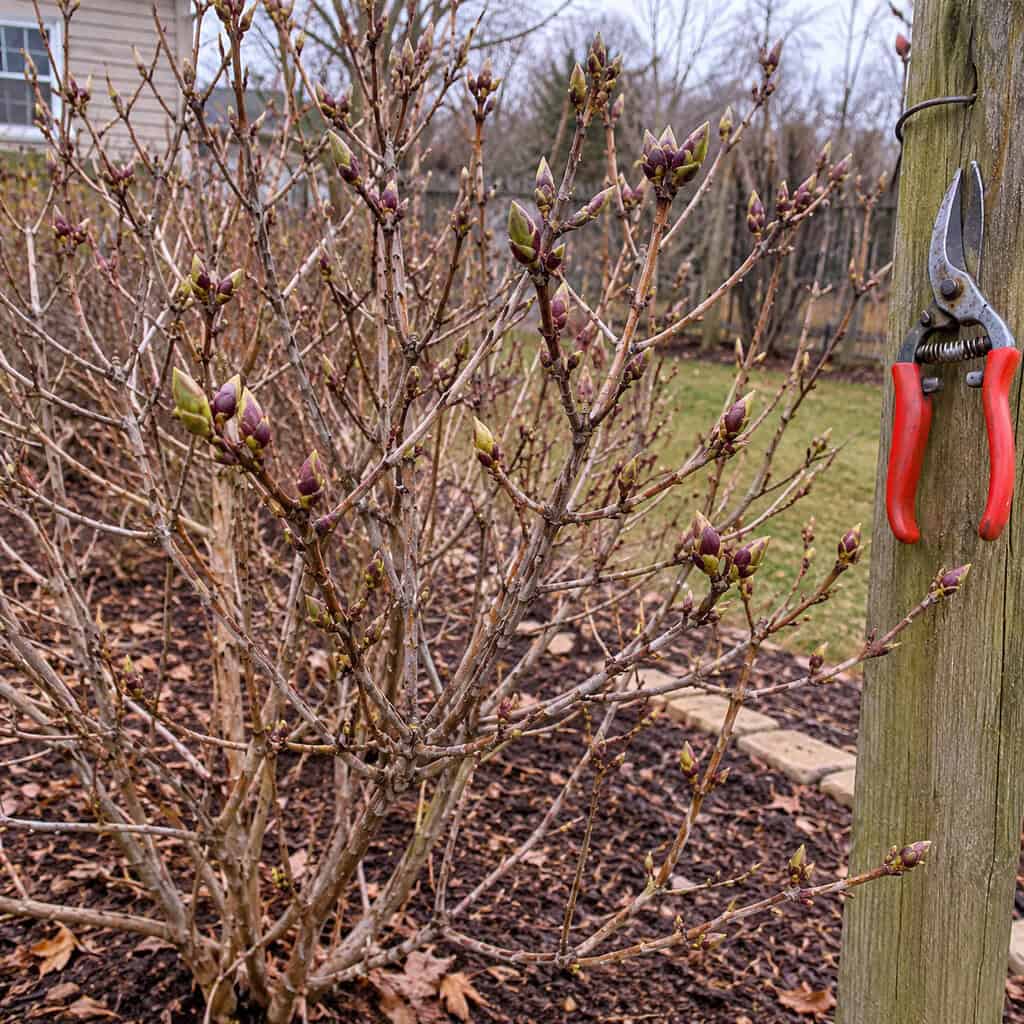
Restraint is a skill, and this is where it shows.
Lilac, forsythia, azalea, rhododendron, oakleaf hydrangea, and mophead hydrangea all set next spring’s flower buds during the previous summer. A tidy fall shearing cuts every one of them off.
That’s the real answer behind “my lilac never blooms.” It blooms fine. Somebody keeps removing the flowers in October.
Late pruning also signals the plant to push tender new growth that has no time to harden before frost, and that growth dies back.
Prune these right after they finish flowering in spring. Not now.
35. Landscape Lighting Raised, Aimed, and Reset for Early Dark

Low-voltage fixtures installed at summer height disappear under the first eight inches of snow.
So they get lifted — path lights raised on risers or extension stakes above the expected snow line, well lights checked for drainage, uplights re-aimed at the trees whose bare branches will carry snow and ice.
Then the timer moves. Sunset at 4:35 means the lights should already be on when people are driving home from work, not clicking on at 8 p.m. to an empty street.
A house glowing across a clean white yard at dinnertime in January is the single most expensive-looking thing a landscape can do all winter.
And it runs on about forty dollars of electricity for the season.
36. Deer Browse Protection Installed Before the First Hard Freeze
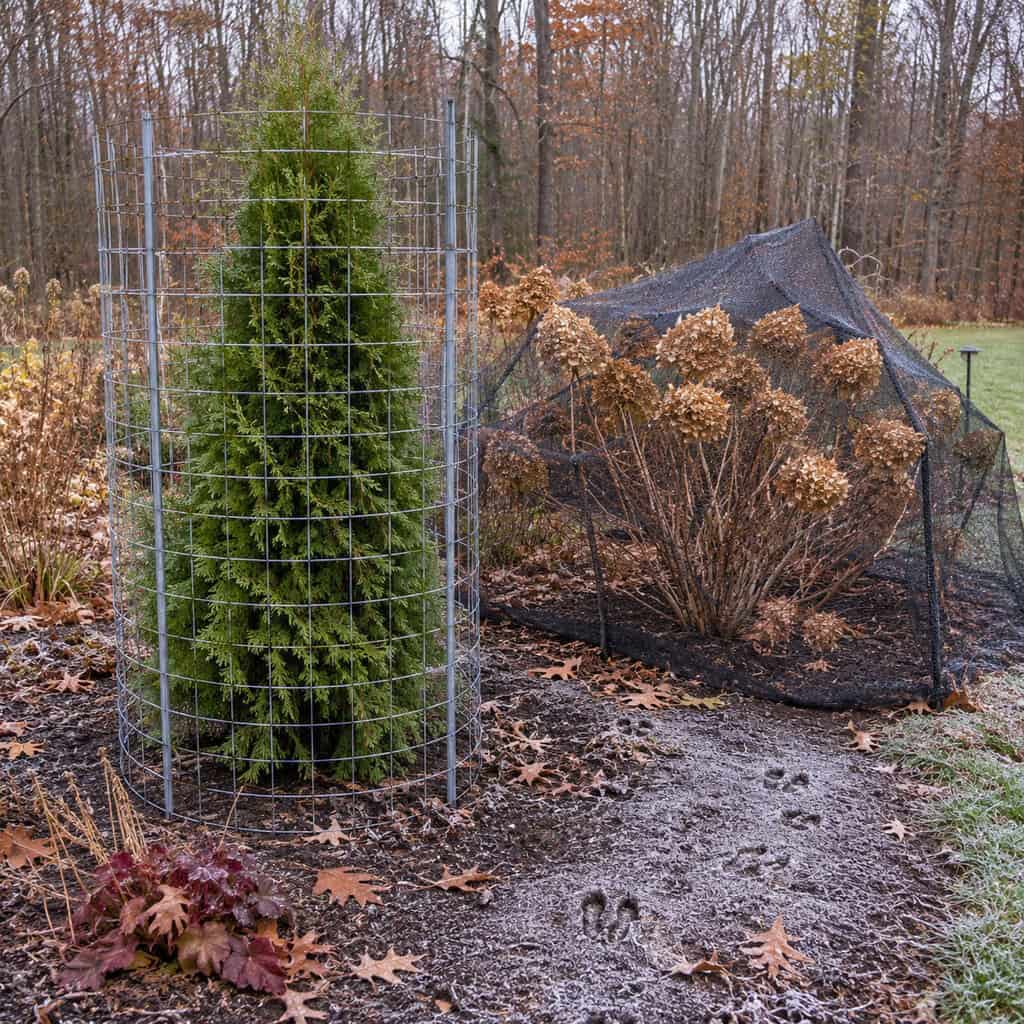
Once the soft food is gone, deer switch to woody browse. That’s your landscape.
Arborvitae, yew, euonymus, and hydrangea get stripped clean to the snow line, and the damage is permanent on anything that doesn’t regenerate from old wood. Arborvitae in particular won’t refill a bare spot.
Physical barriers beat sprays once it’s cold — netting, welded wire cages on the valuable specimens, or a burlap screen that doubles as wind protection.
Repellents need reapplication after rain, and nobody reapplies anything in February.
37. The Rain Barrel Drained, Disconnected, and Flipped
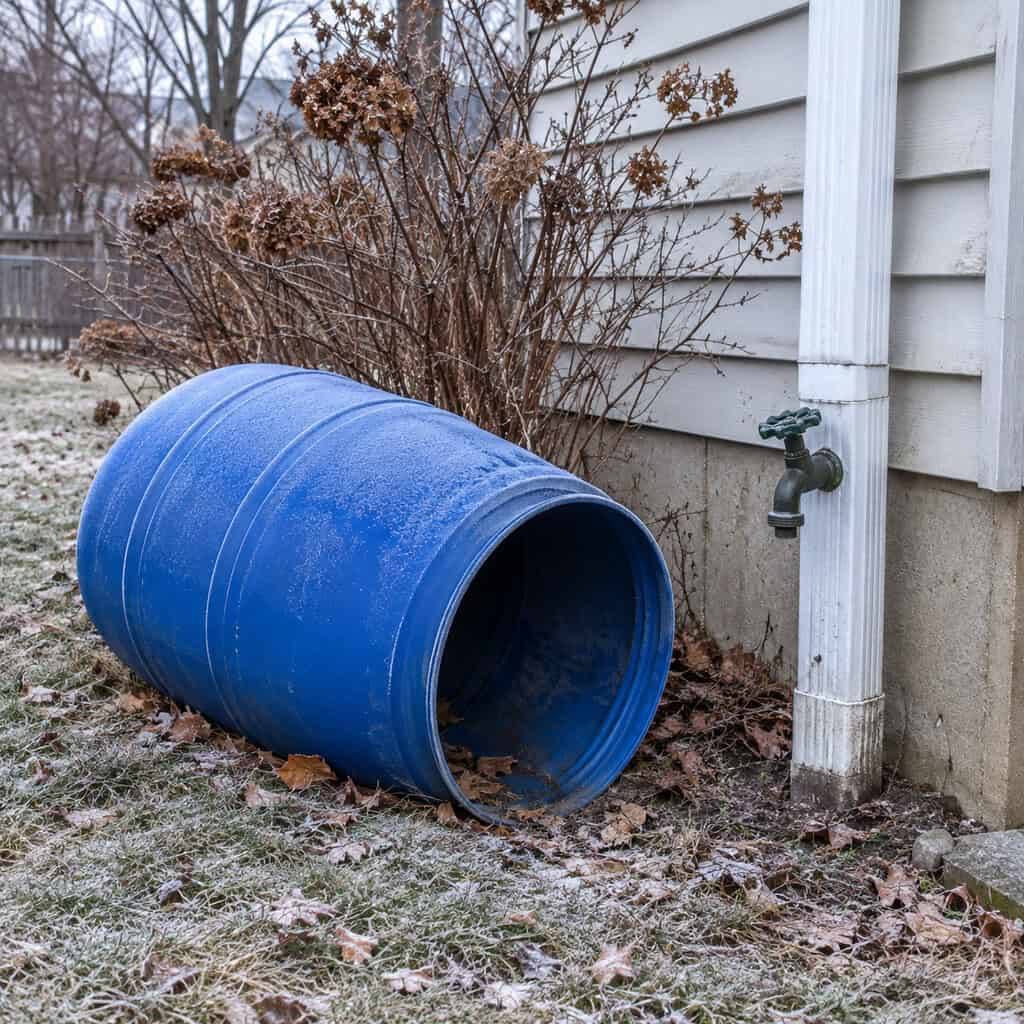
A full barrel of water weighing 450 pounds freezes into a 450-pound block, and plastic barrels split at the seam.
Drain it completely, disconnect the diverter so the downspout runs normally all winter, and either flip it upside down or store it under cover.
Leave the spigot open so any trapped water can escape.
Takes ten minutes and saves a hundred-dollar barrel.
38. A Heated Birdbath Swapped In for the Stone One

The stone basin comes out. A heated bath or a submersible de-icer goes in.
Open water in January is harder for birds to find than food — every natural source is locked up, and a reliable drink pulls in cardinals, juncos, bluebirds, and woodpeckers all winter long.
They run 50 to 150 watts and thermostat themselves, so they only draw power below freezing.
Of all 38 things on this list, it’s the one you’ll actually enjoy watching from the kitchen window.
None of this is expensive. Twine, burlap, hardware cloth, a bag of bulbs, an afternoon with a spade.
What separates the yards is sequence and timing — doing the fifteen-minute job in the week it matters instead of the month after.
Winter isn’t a pause. It’s a four-month stress test on every decision you made in October.
Pick five things off this list this weekend. Your April self will know exactly which five.