

You planted tomatoes next to your broccoli last year and wondered why both sulked all season. Or the basil that thrived once you tucked it beside the peppers by accident. That’s companion planting, whether you meant to do it or not.
This guide is for home gardeners who want fewer pests, better yields, and less bare dirt between rows. No degree required.
You’ll come away knowing which plants genuinely help each other, which ones quietly compete underground, and where the folklore falls apart. Some of the old pairings hold up under research. Plenty don’t.
The goal here is a garden that mostly runs itself. Plants that shade each other’s roots, repel each other’s bugs, and share space without fighting for it.
Start with the why, then move to the specific pairings, then the ones to keep on opposite ends of the bed.
What Companion Planting Actually Does
Companion planting means growing certain plants near each other for a benefit. That benefit isn’t always obvious, and it isn’t magic.
The real mechanisms are simple. Some plants repel or confuse insects with their scent. Some attract pollinators and predatory bugs. Some fix nitrogen in the soil. Some just provide shade or a trellis for a neighbor.
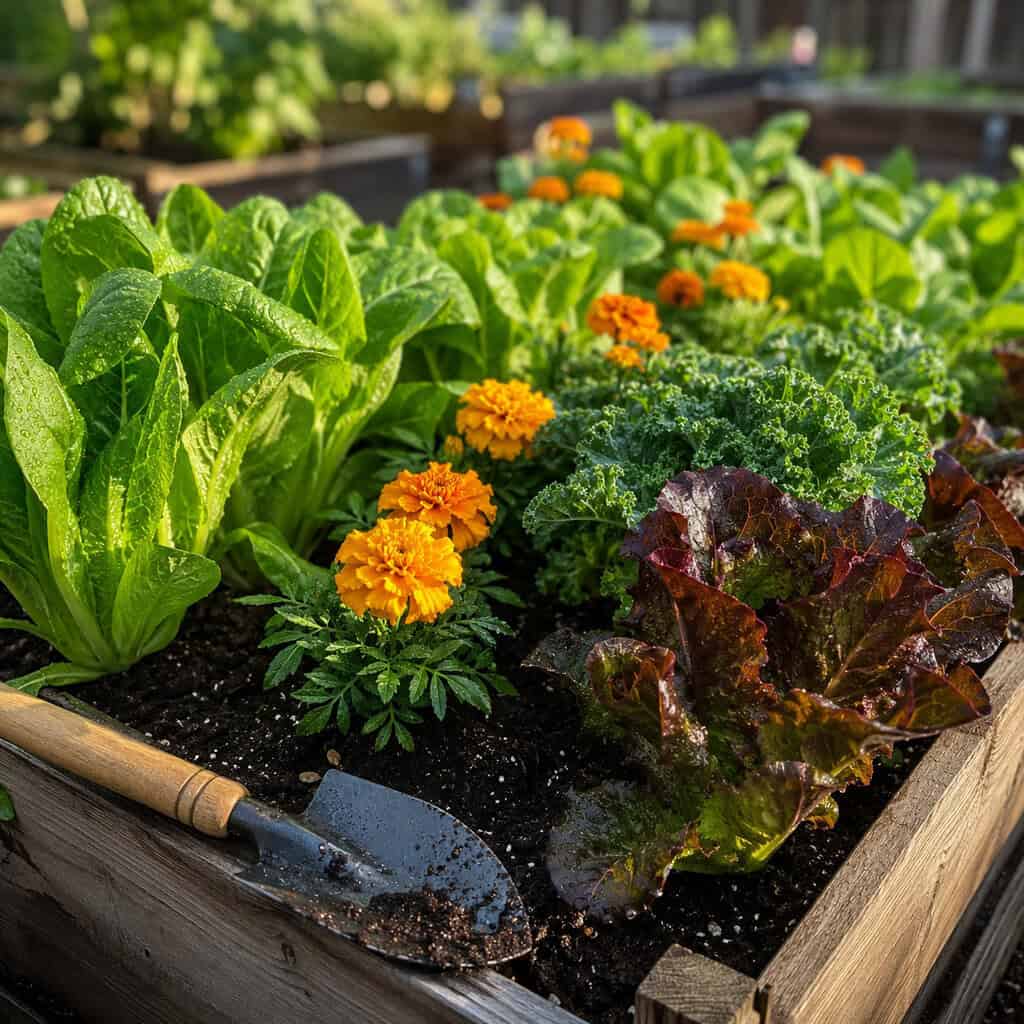
Marigolds are the classic example. Their roots release compounds that suppress root-knot nematodes in the soil, which is one of the few claims with solid research behind it.
Other pairings work through structure, not chemistry. Tall corn shades lettuce that would otherwise bolt in July heat. Sprawling squash covers bare ground and chokes out weeds.
Be honest about the folklore, though. A lot of companion charts online repeat pairings that no one has actually tested. The University of Minnesota Extension notes that much of the traditional advice rests on anecdote rather than controlled study.
Use the tested pairings with confidence. Treat the rest as low-risk experiments in your own beds.
The Three Sisters and Why It Works
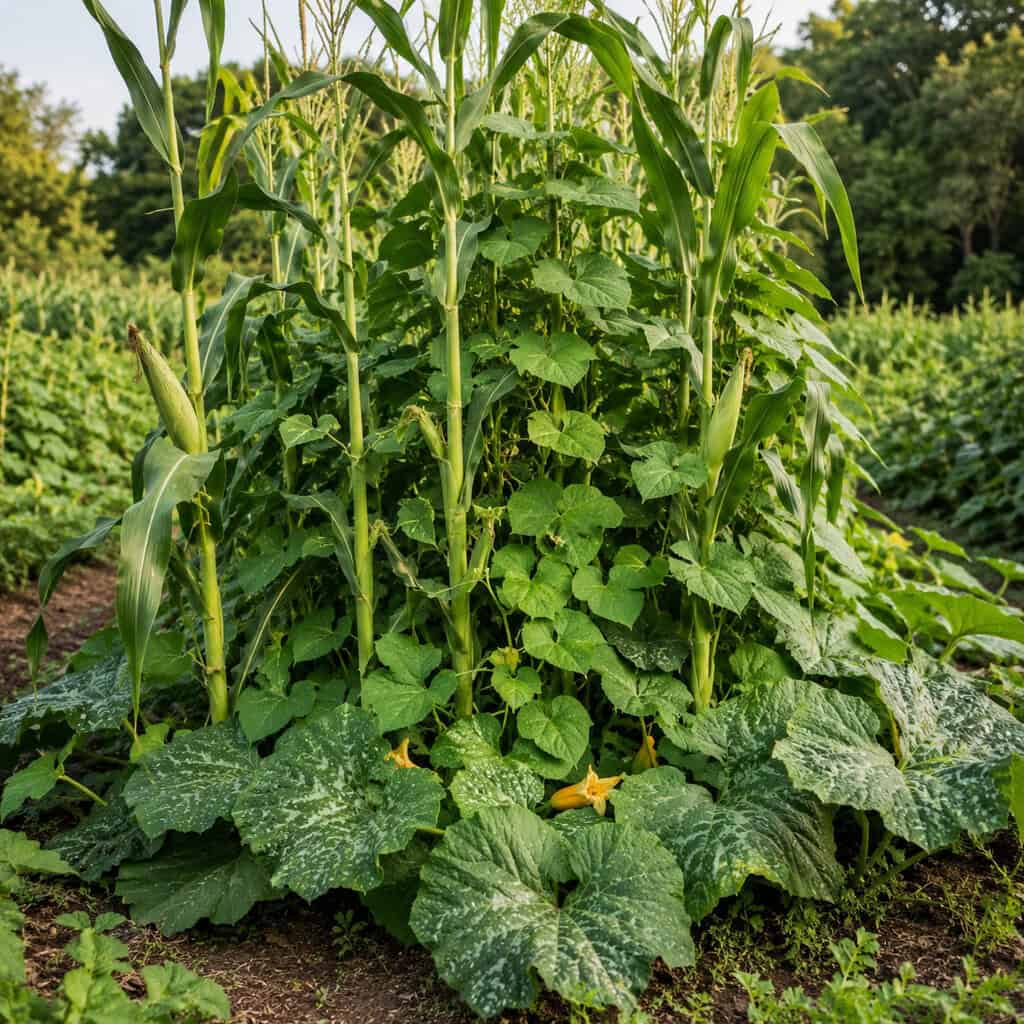
Corn, beans, and squash. Grown together for centuries across North America, and still one of the smartest planting systems you can copy.
Each plant covers a weakness in the others. The corn grows tall and gives the beans something to climb.
The beans pull nitrogen from the air and fix it into the soil, feeding the heavy-feeding corn. This is real, measurable soil chemistry.
The squash sprawls across the ground below. Its big leaves shade the soil, hold moisture, and block weeds from taking root.
How to actually plant it
Start the corn first. Wait until it’s about six inches tall before adding beans, or the beans will outrun it.
Plant squash at the edges so it can sprawl outward. Give the whole mound room — this isn’t a tidy row system.
It’s the one traditional combination with genuine mechanical logic behind it. Copy it exactly and it works.
The Pairings Worth Planting
Some combinations earn their spot in the bed. These are the ones with either research support or reliable structural benefits.
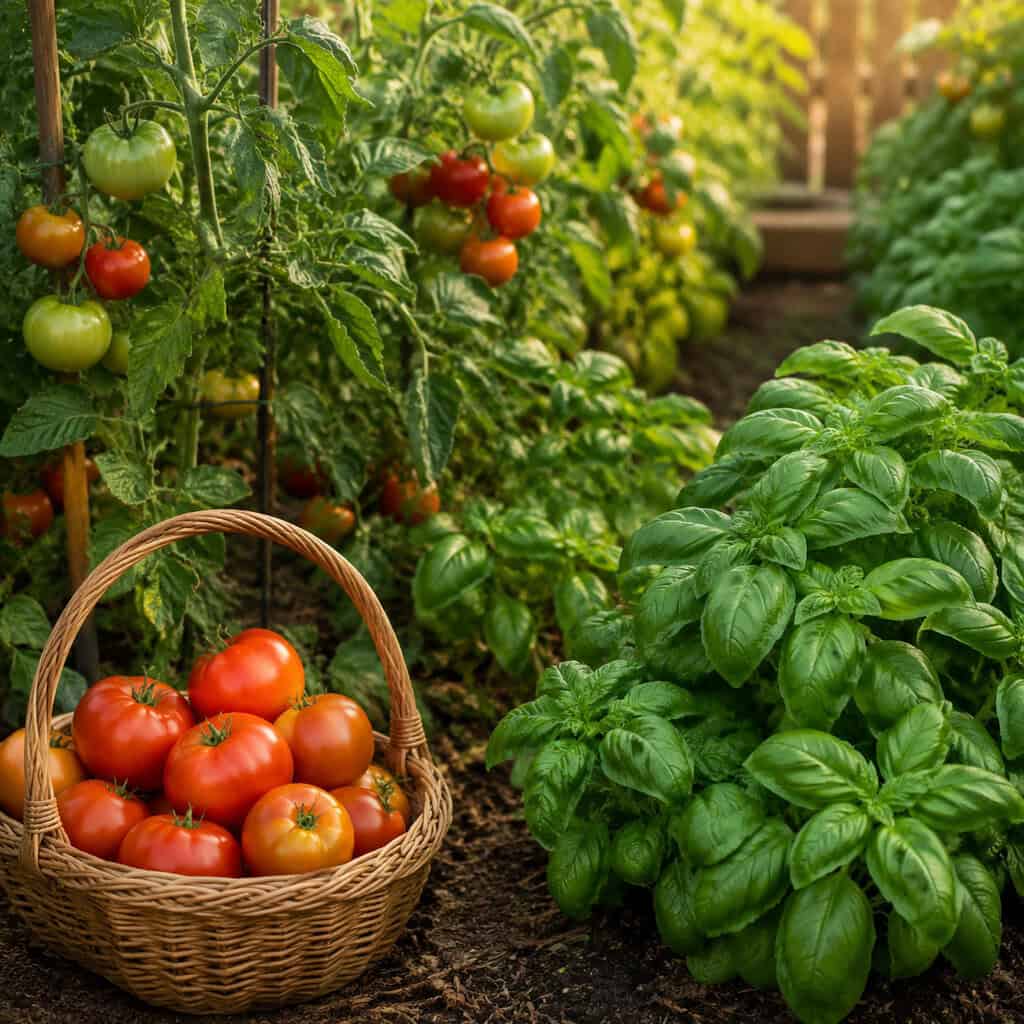
Tomatoes and basil
Basil’s strong scent may deter thrips and some flies. It also draws pollinators to the tomato flowers.
They like the same water and sun. That alone makes them easy neighbors.
Carrots and onions
Onion smell can mask the scent carrot flies use to find their target. Carrots return the favor against onion flies.
Two root crops that don’t compete for the same soil layer. Plant them in alternating rows.
Lettuce and tall crops
Tuck lettuce under corn, tomatoes, or trellised beans. The shade keeps it from bolting when temperatures climb.
You get two harvests from one footprint. Lettuce finishes before the tall crop needs the space.
Radishes and cucumbers
Radishes mature fast and mark the rows. Some gardeners plant them to lure cucumber beetles away from the vines.
They’re out of the ground in a month. No long-term competition.
Nasturtiums as a trap crop
Aphids swarm nasturtiums instead of your vegetables. Plant them at the edge and let them take the hit.
Bonus: the flowers and leaves are edible and peppery.
The Combinations to Keep Apart
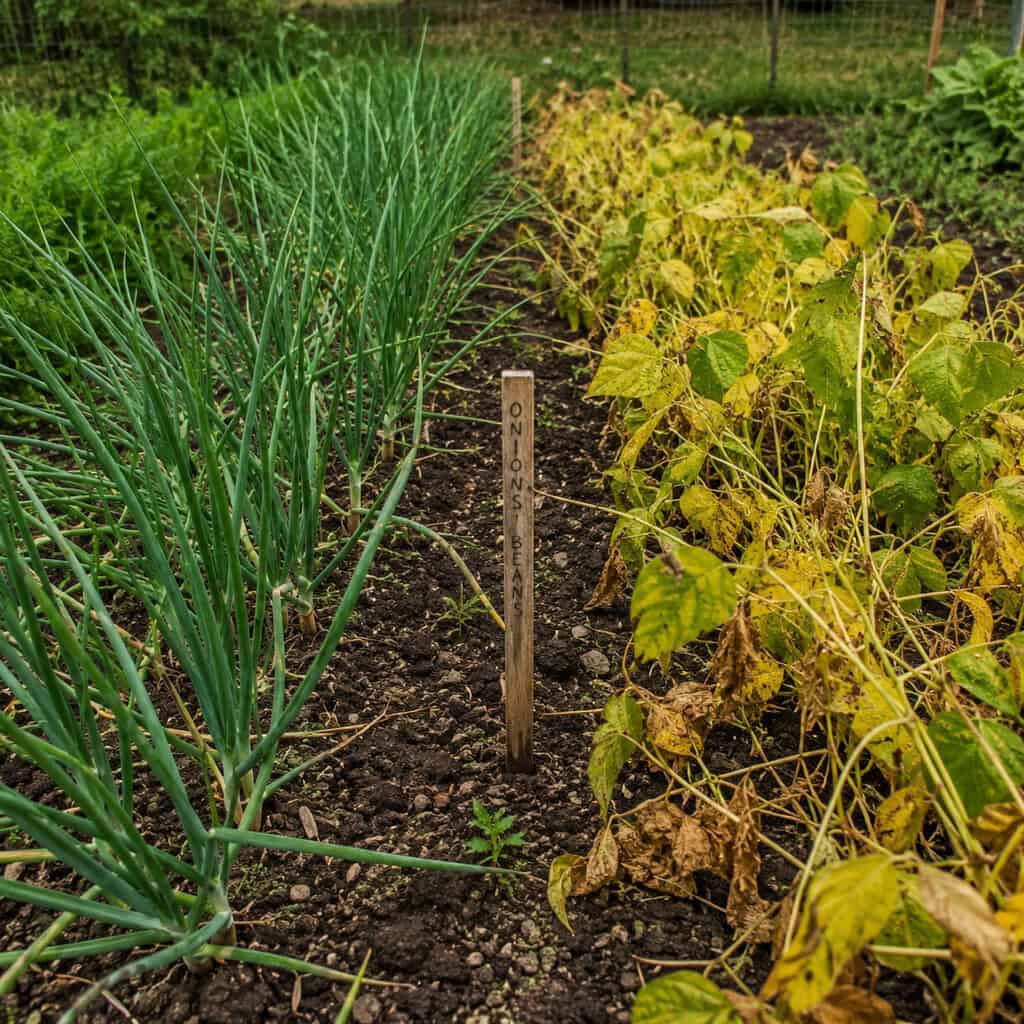
Some plants shouldn’t share a bed. The reasons range from chemical warfare to plain competition.
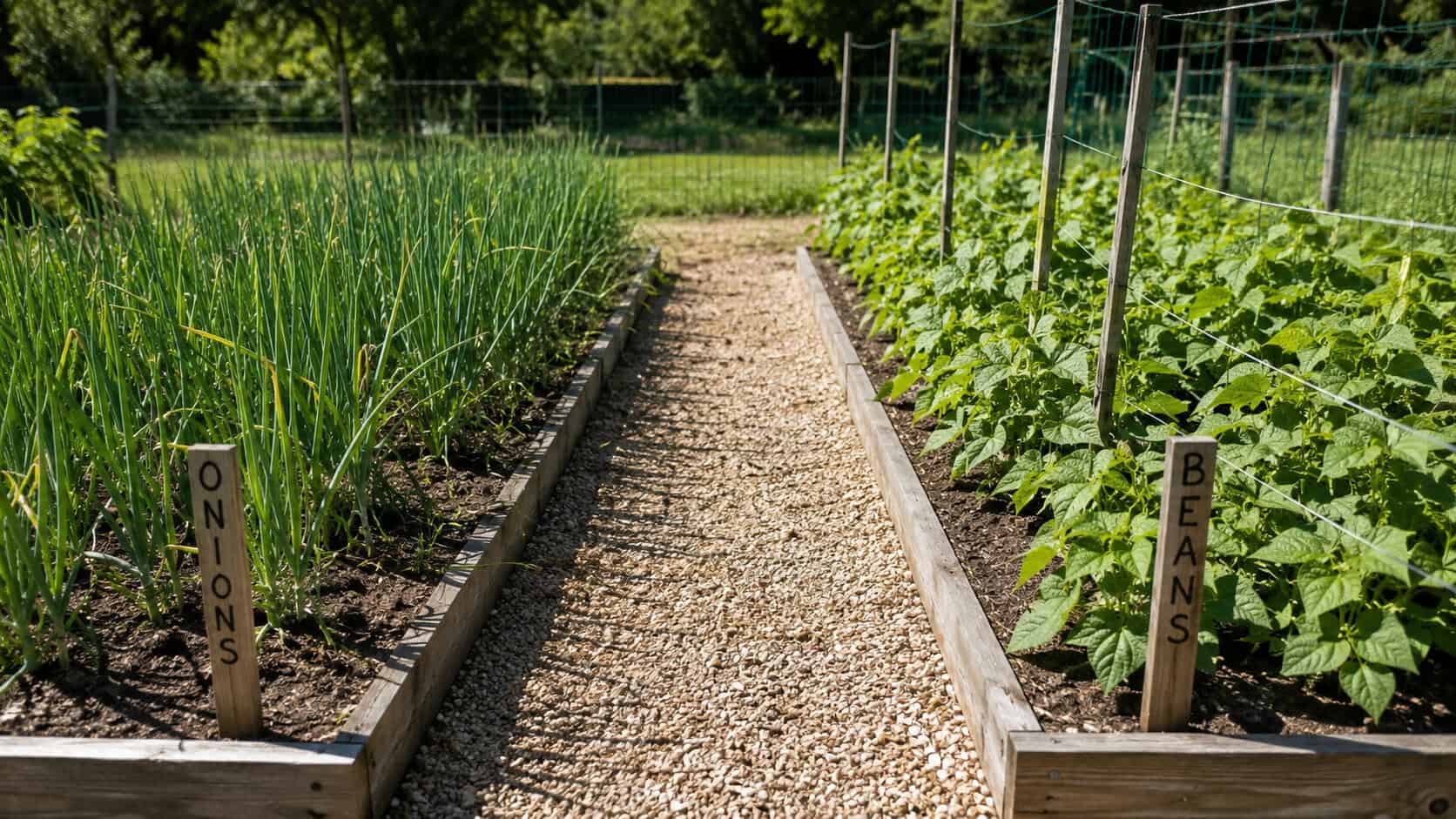
Beans and onions (or garlic)
Alliums release compounds that stunt bean and pea growth. This one shows up consistently across garden trials.
Keep them on opposite sides of the garden. Don’t rotate one into the other’s old spot too quickly either.
Tomatoes and brassicas
Broccoli, cabbage, and cauliflower are heavy feeders. Plant them next to tomatoes and both compete hard for the same nutrients.
Neither wins. Both end up smaller.
Potatoes and tomatoes
Same family, same diseases. Blight jumps between them fast, and both are hit by the same beetles.
Keep them far apart, and never plant one where the other grew last year.
Fennel and almost everything
Fennel releases chemicals that inhibit the growth of many nearby plants. It’s one of the few genuinely antisocial vegetables.
Give it its own container or a corner of the yard. Most gardeners just banish it entirely.
Anything under black walnut
Not a vegetable pairing, but worth knowing. Black walnut roots release juglone, which kills tomatoes, peppers, and many other plants outright.
The Virginia Cooperative Extension lists a long roster of species that can’t survive within the tree’s root zone. Plan your beds well clear of one.
Planning Your Beds Around It
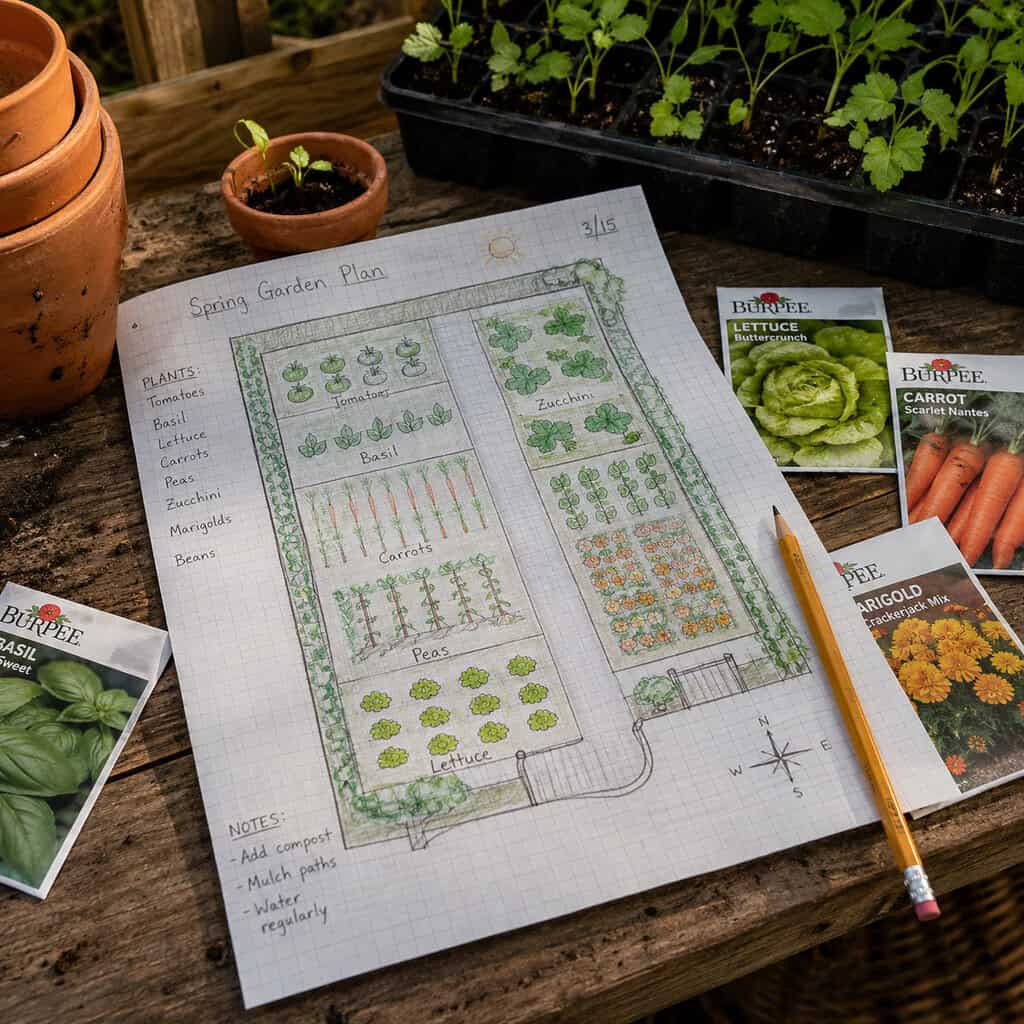
Companion planting only helps if the layout works. Start with sun and water needs, then layer the pairings on top.
Group plants that want the same conditions. Thirsty next to thirsty, dry-tolerant with dry-tolerant.
Think in three dimensions. Tall crops on the north side so they don’t shade the shorter ones, sprawlers filling the ground, climbers going up.
Interplant fast and slow growers. Radishes and lettuce fill space while the tomatoes and squash take their time.
Rotate families every year regardless of companions. Nightshades, brassicas, and legumes should each move to fresh soil annually to break pest and disease cycles.
Don’t overthink the folklore. The Washington State University Extension recommends treating unproven pairings as experiments and keeping notes on what performs in your own soil.
Quick Answers
Does companion planting really work?
Some of it does. Nitrogen fixing, trap crops, and shade are well documented. Many scent-based pest claims are anecdotal but harmless to try.
What’s the easiest pairing for a beginner?
Tomatoes and basil. Same care, easy to grow, and you’ll use both in the kitchen.
Can I plant flowers with vegetables?
Yes, and you should. Marigolds, nasturtiums, and zinnias pull in pollinators and predatory insects while looking good.
What should never go together?
Beans with onions, tomatoes with potatoes, and fennel with nearly anything. Those three cause real trouble.
The Bottom Line
Lean on the pairings with proof behind them. The Three Sisters, trap crops, nitrogen fixers, and smart shading do actual work in your beds.
Keep the fighters apart — beans and onions, tomatoes and potatoes, fennel and everyone. And rotate your families every season no matter what.
This weekend, sketch your beds on paper before you buy a single seedling. Map the sun, group the water needs, and slot in one tested pairing to start. Build from there.