

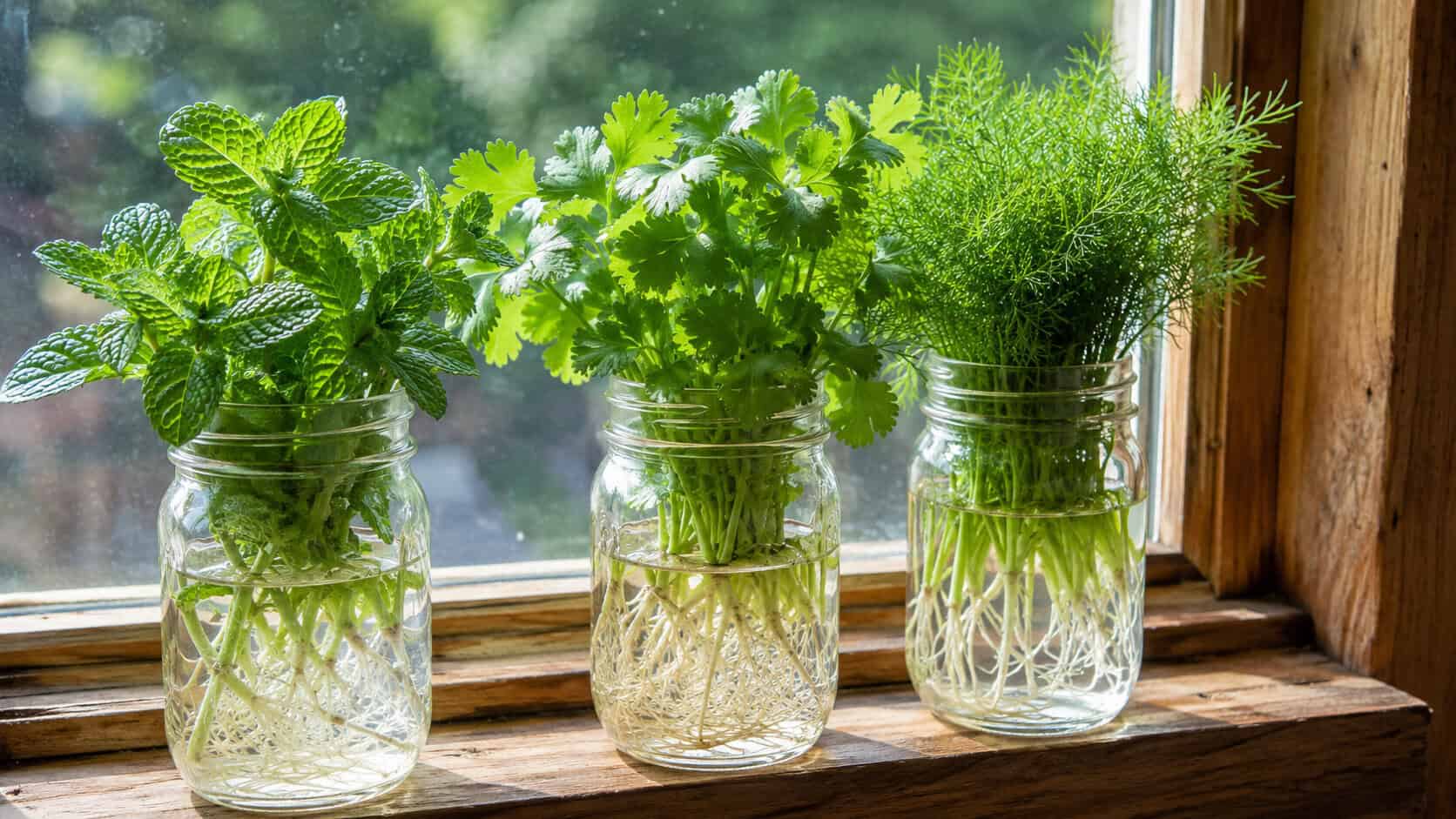
Look at your kitchen counter right now. There’s probably a green onion getting limp in the crisper drawer, a celery bottom you were about to toss, maybe a garlic clove that started sprouting on its own.
Don’t throw any of it out.
A surprising number of foods will grow again in nothing but a glass of tap water on your windowsill. No dirt. No pots. No green thumb required. Some regrow in a few days. Some root so fast it feels like cheating.
This isn’t going to replace your grocery store. Water alone gives smaller returns than soil, and a few of these crops max out after a cycle or two. But for a free windowsill herb garden and a steady trickle of fresh greens, it’s hard to beat.
Here are 24 foods you can grow in just a glass of water — starting with the one that never fails.
1. Green Onions (Scallions)
Start here. If you’ve never regrown anything, this is your gateway.
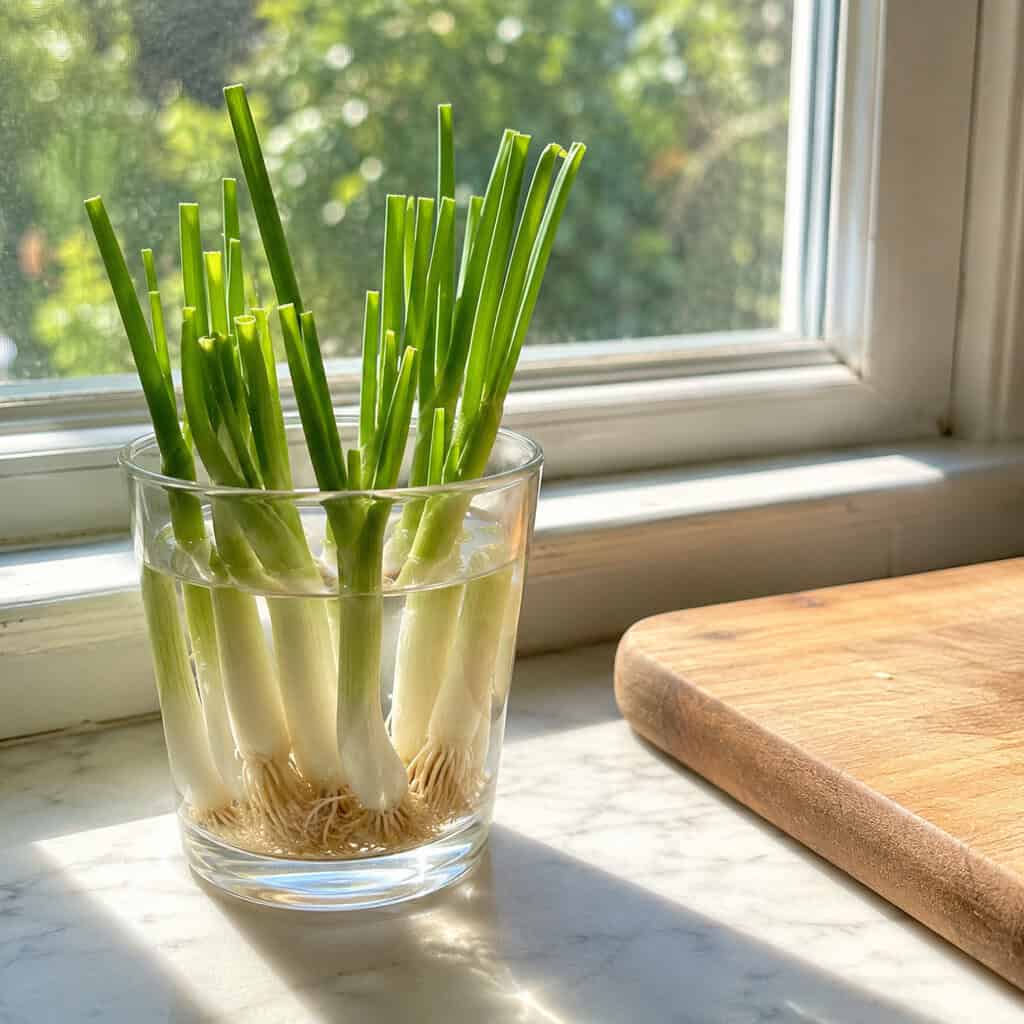
Save the white root ends after you chop the tops. Stand them upright in about an inch of water, roots down, on a bright windowsill.
New green shoots push up within days — sometimes you’ll see growth by morning. Snip what you need and the stalks keep coming back for cycle after cycle.
Green onions regrow in water better than almost any other vegetable, which is exactly why they’re the crowd favorite. Change the water every couple of days so it stays clear. According to Gardening Know How, a single bunch can regrow several times before it finally quits.
2. Leeks
The scallion’s bigger cousin works the same way.
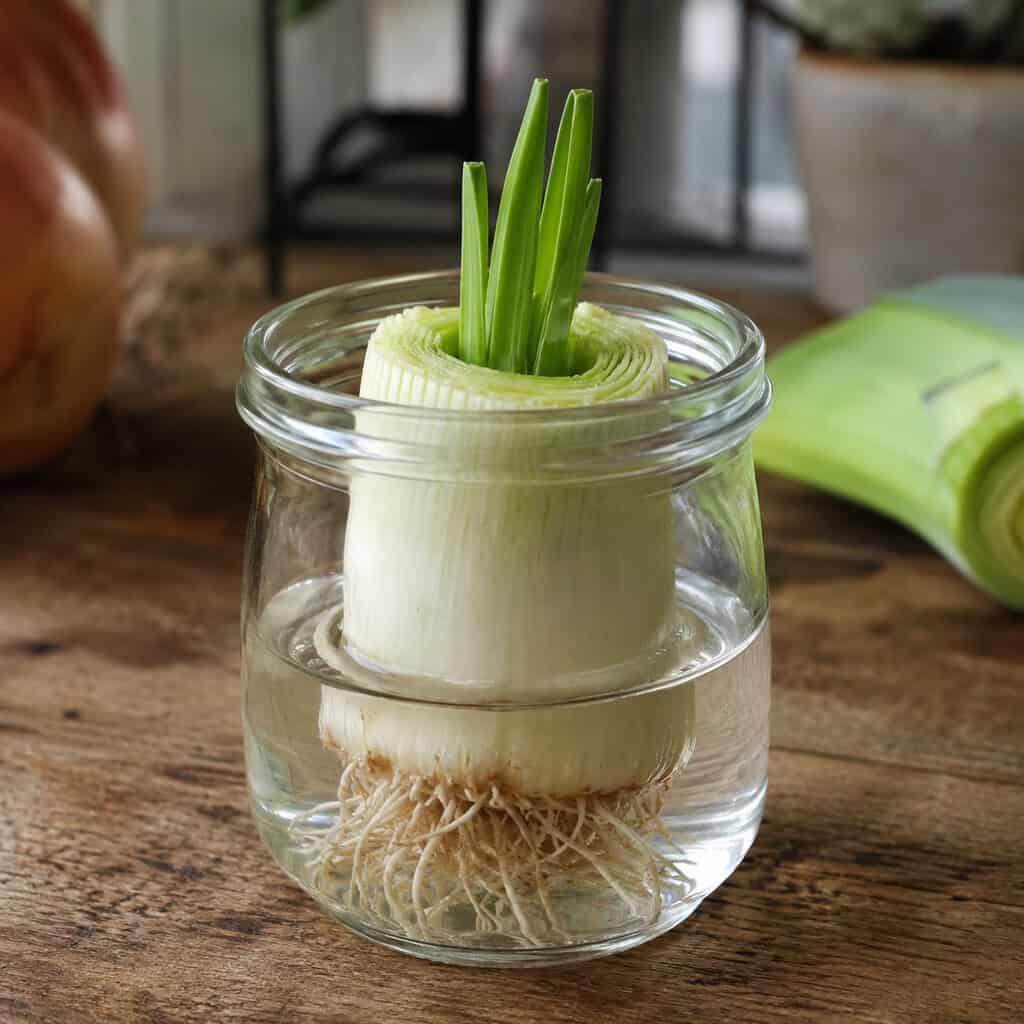
Keep the bottom 2 to 3 inches of the stalk — the part with the roots still attached. Set it in a glass with an inch of water.
The tender center starts regrowing from the middle out. It’s just as forgiving as green onions, so if scallions worked for you, this will too.
Give the roots room and refresh the water when it clouds.
3. Celery
This one’s a showpiece.
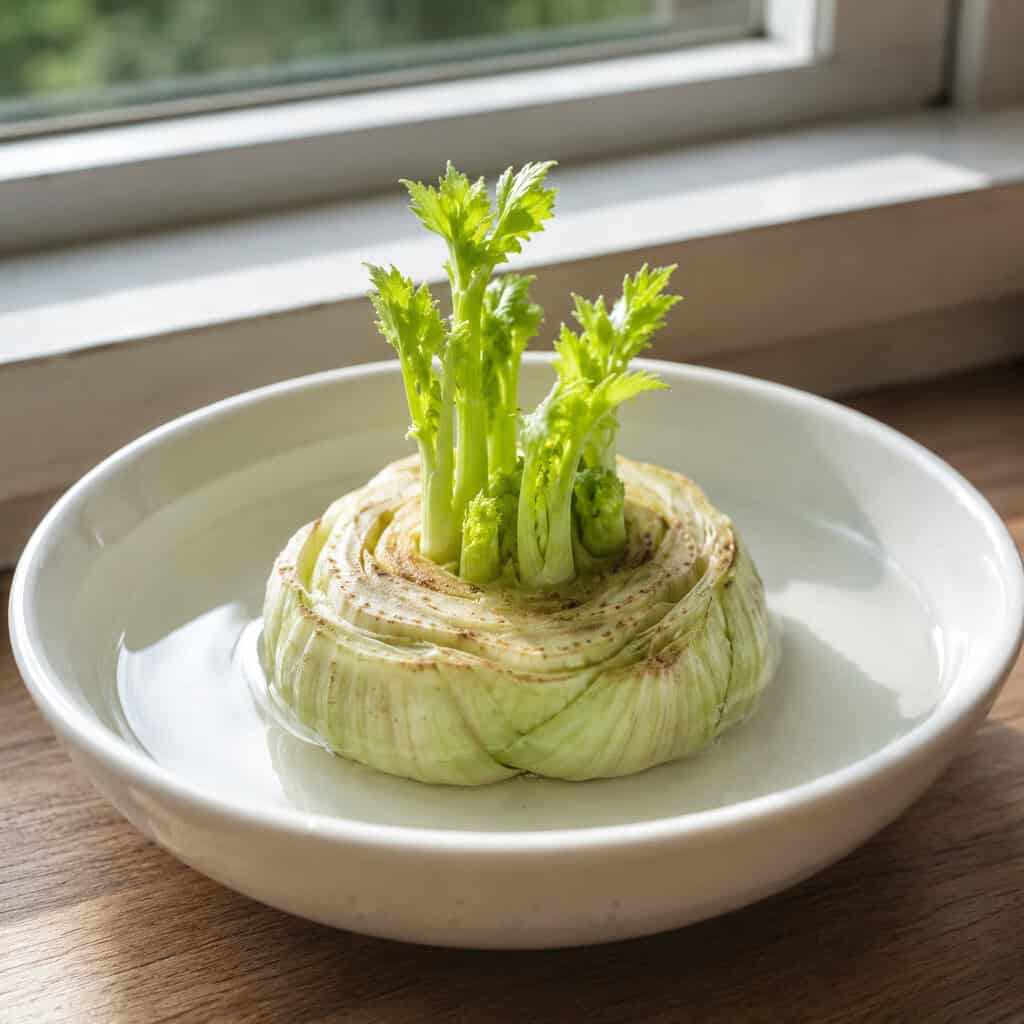
Don’t toss the base. Set the intact bottom core cut-side up in a shallow dish with a little water and wait.
Within about five days, a miniature celery forest sprouts right out of the center. The new stalks won’t grow into full supermarket ribs, but they’re punchier and greener — perfect chopped into soups and stir-fries.
Keep the water shallow. Too deep and the base rots before it sprouts.
4. Romaine Lettuce
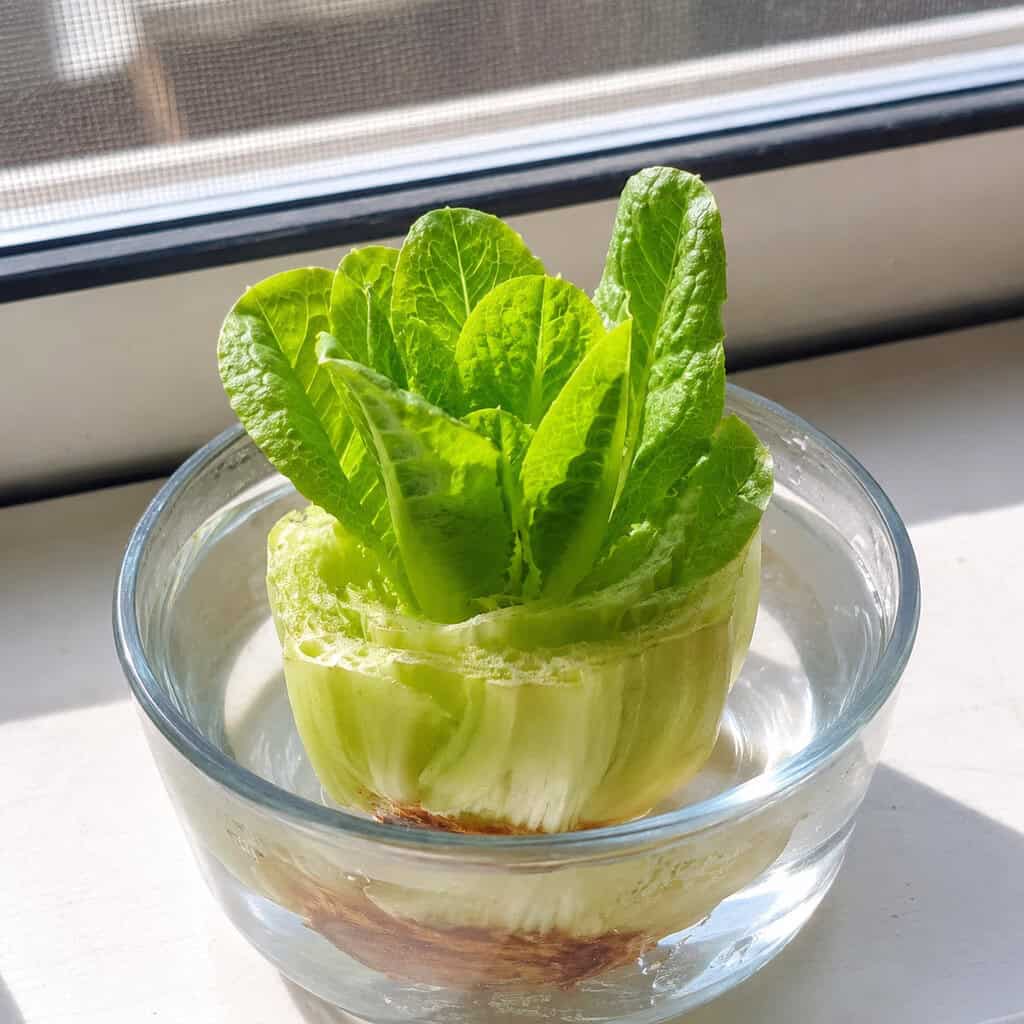
Be honest with yourself about the yield here.
You won’t grow a whole new head. Only the inner leaves regrow, so you’re getting maybe half a head — enough for a sandwich every few days.
Set the cut base in a shallow dish, cut-side up, with the bottom sitting in water. Never submerge the whole core or it turns to mush fast.
New leaves appear from the center within a week. This is the entry that teaches you why water alone gives smaller returns than soil — there’s only so much stored energy in a stump.
5. Bok Choy
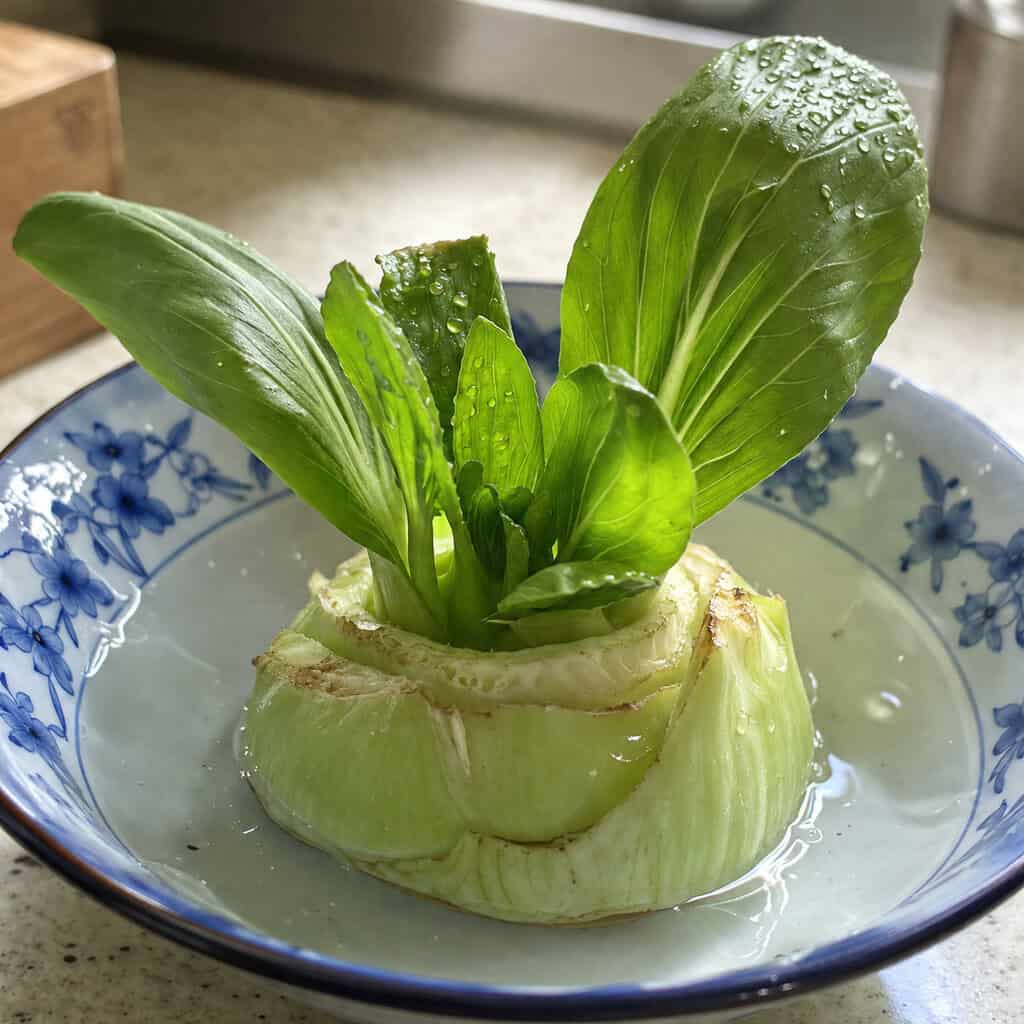
A near-instant win, and it photographs beautifully.
Cut the leaves off at the base and set the stump in a shallow bowl of water. Fresh growth shows up in a few days.
Bok choy runs pricey per bunch at the store, so the savings actually add up when you’re pulling free leaves off a windowsill stump.
Move it to a pot of soil if you want a full second head.
6. Cabbage
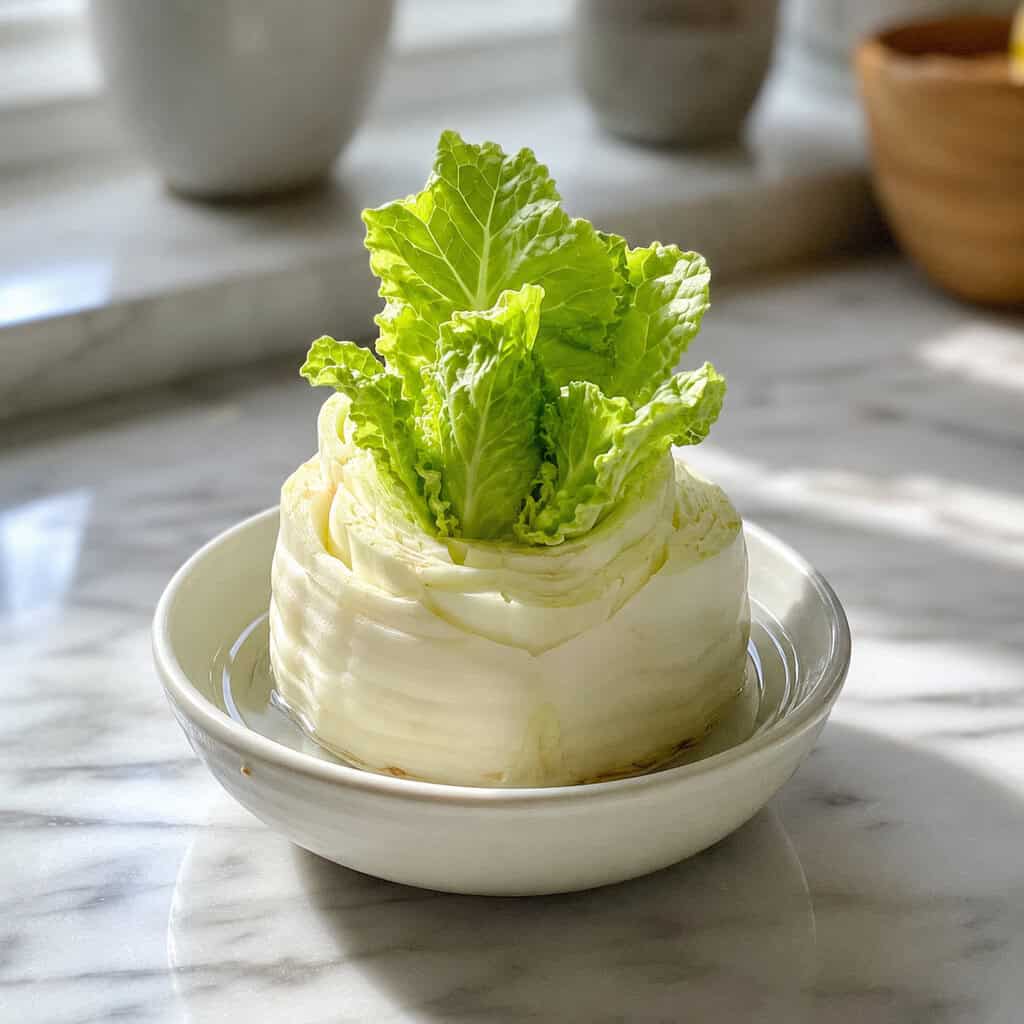
Same trick, same family.
Cut the bottom off the head, sit it in a little water, and it pushes out new leaves. They taste better harvested small and tender than they would full-grown.
Round out the leafy-brassica trio with this one and you’ll see the base-regrowth move works right across the cabbage clan.
7. Fennel
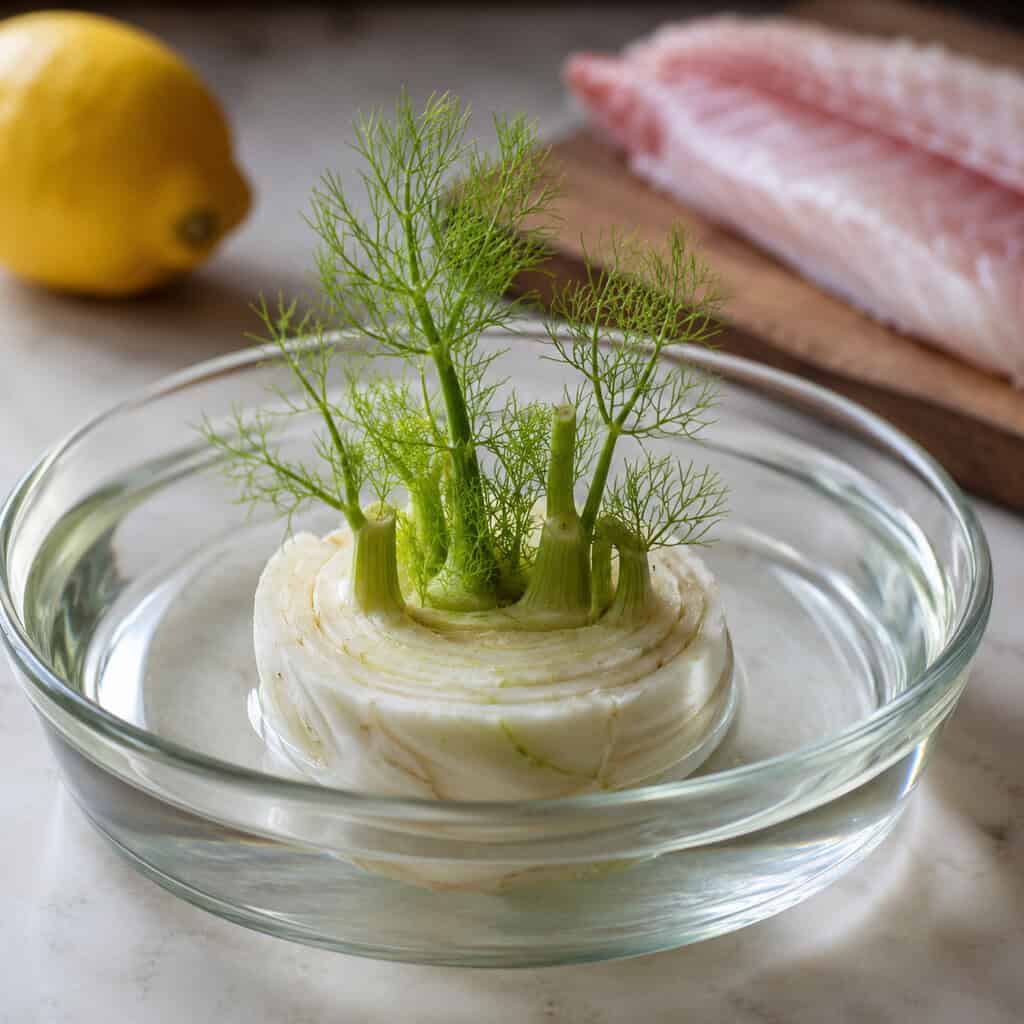
Slightly gourmet, and criminally underused.
Instead of composting the bulb base, leave a short stub and rest it cut-side up in a shallow dish. Fresh feathery fronds regrow up top.
Those fronds are the payoff — snip them over roasted fish or into a salad. If you’re in the licorice-loving camp, you’ll want this on your sill. If you’re not, well, you already know.
8. Carrot Tops
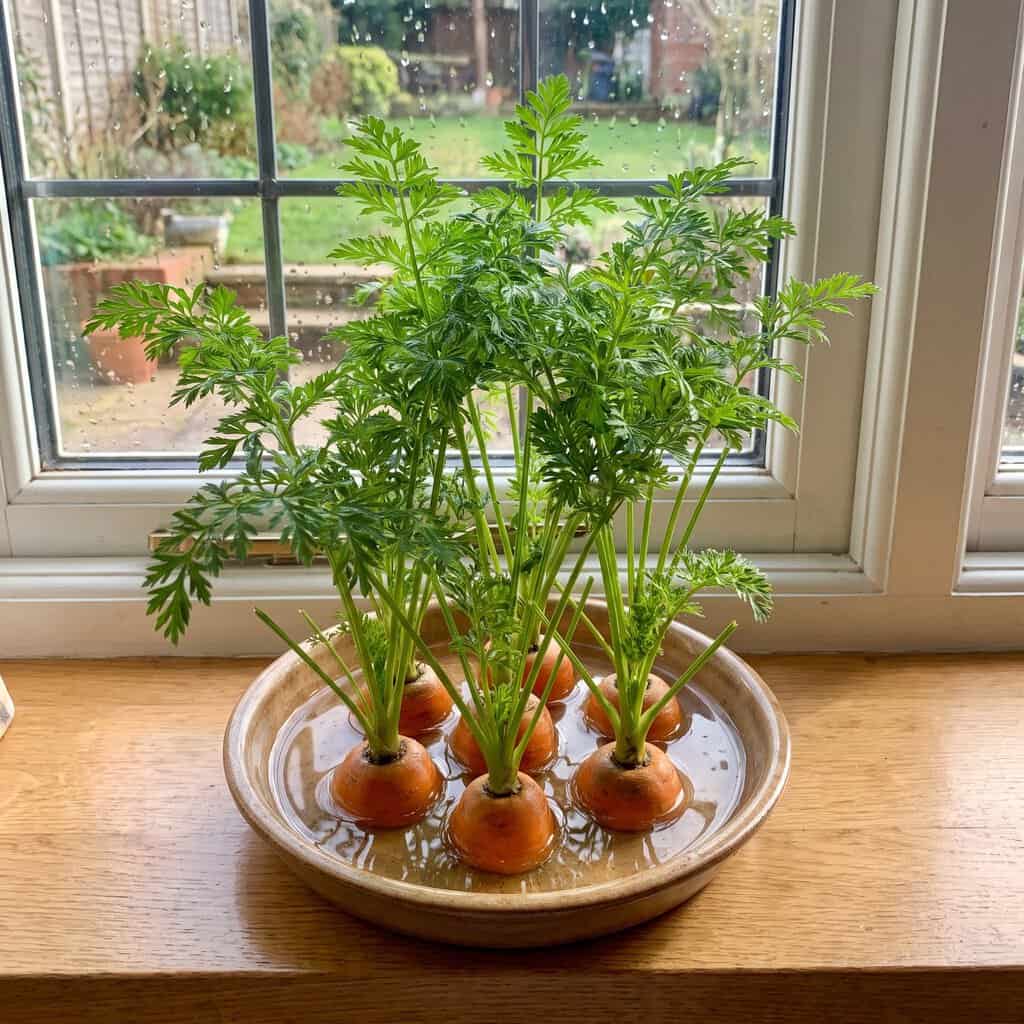
Time for a myth-buster, because this one trips people up constantly.
A carrot will not grow a new carrot in water. The root you eat is done. But the leafy top? That keeps going.
Set the cut top in a shallow dish and it pushes out feathery green fronds. Those greens are excellent — blitz them into pesto, fold them into chimichurri, or sauté them with garlic.
Think greens, not roots. That’s the honest framing.
9. Garlic Greens (From a Clove)
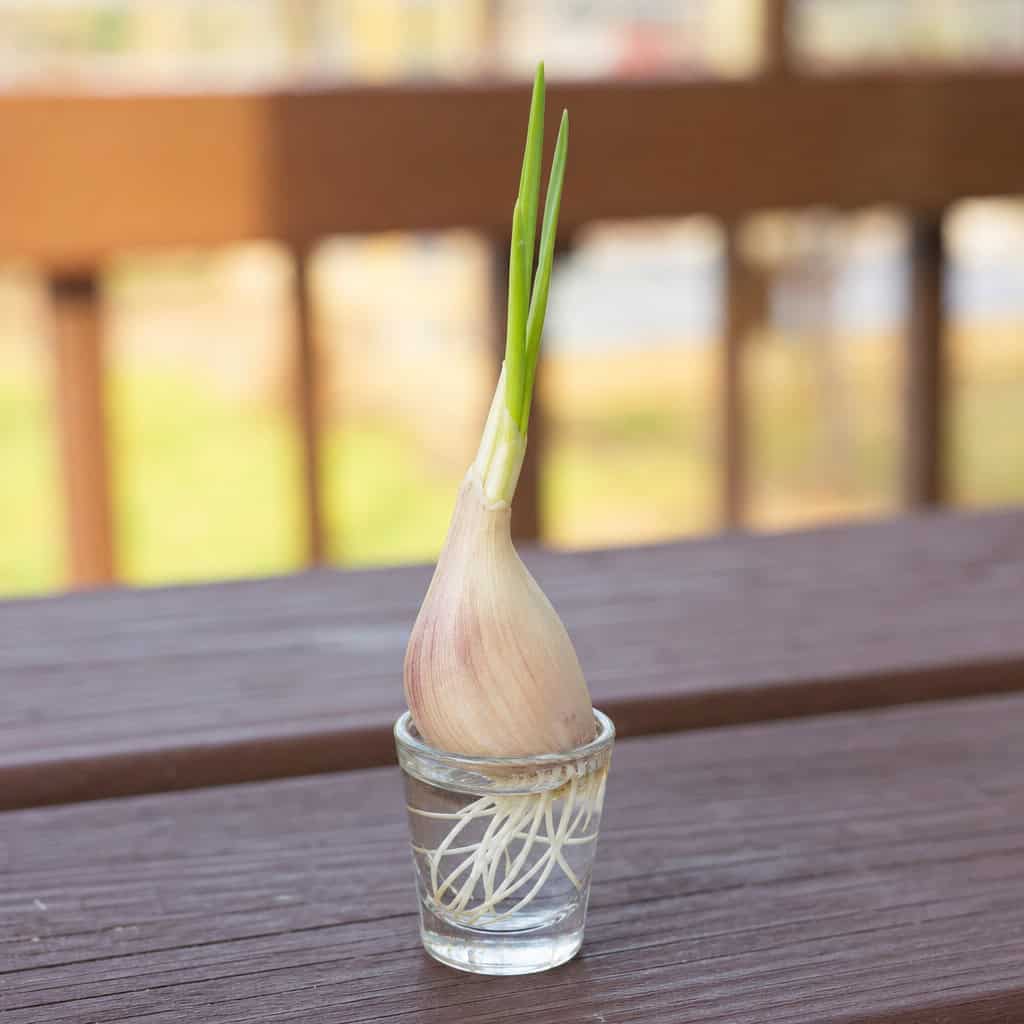
Got a rogue clove sprouting in the pantry? Don’t toss it.
You won’t grow a full bulb without soil. But prop a single clove pointy-side up over a little water and it sends up mild, garlicky green shoots.
They taste like a gentler garlic chive — great snipped over eggs or potatoes. It’s the perfect use for that one clove that always seems to sprout before you get to it, according to PopSci.
10. Lemongrass
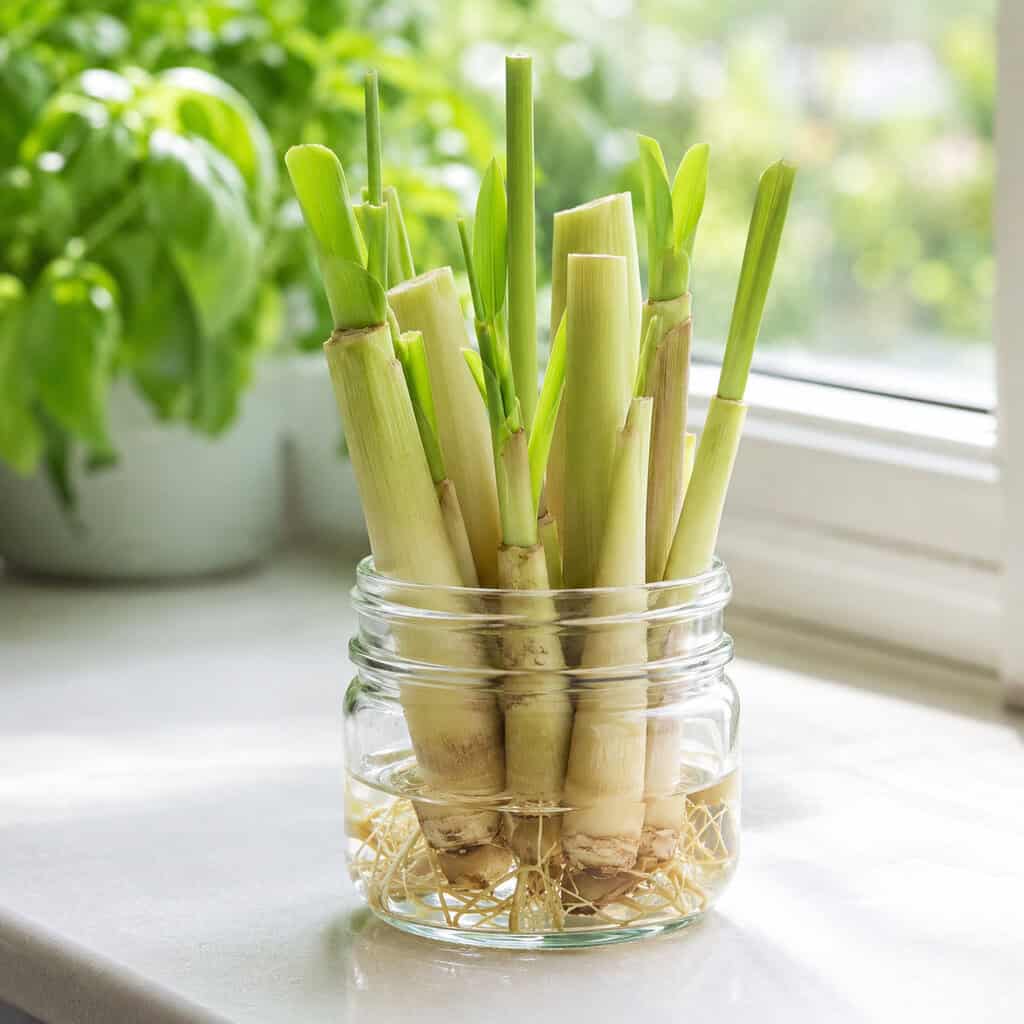
Treat it exactly like a leek.
Trim a stalk to 2 or 3 inches, stand it in about half an inch of water, and it regrows from the center. The roots come first, then fresh green growth.
It’s a citrusy standout that stretches this list well past the usual Western staples — perfect for curries, teas, and stir-fries.
11. Ginger
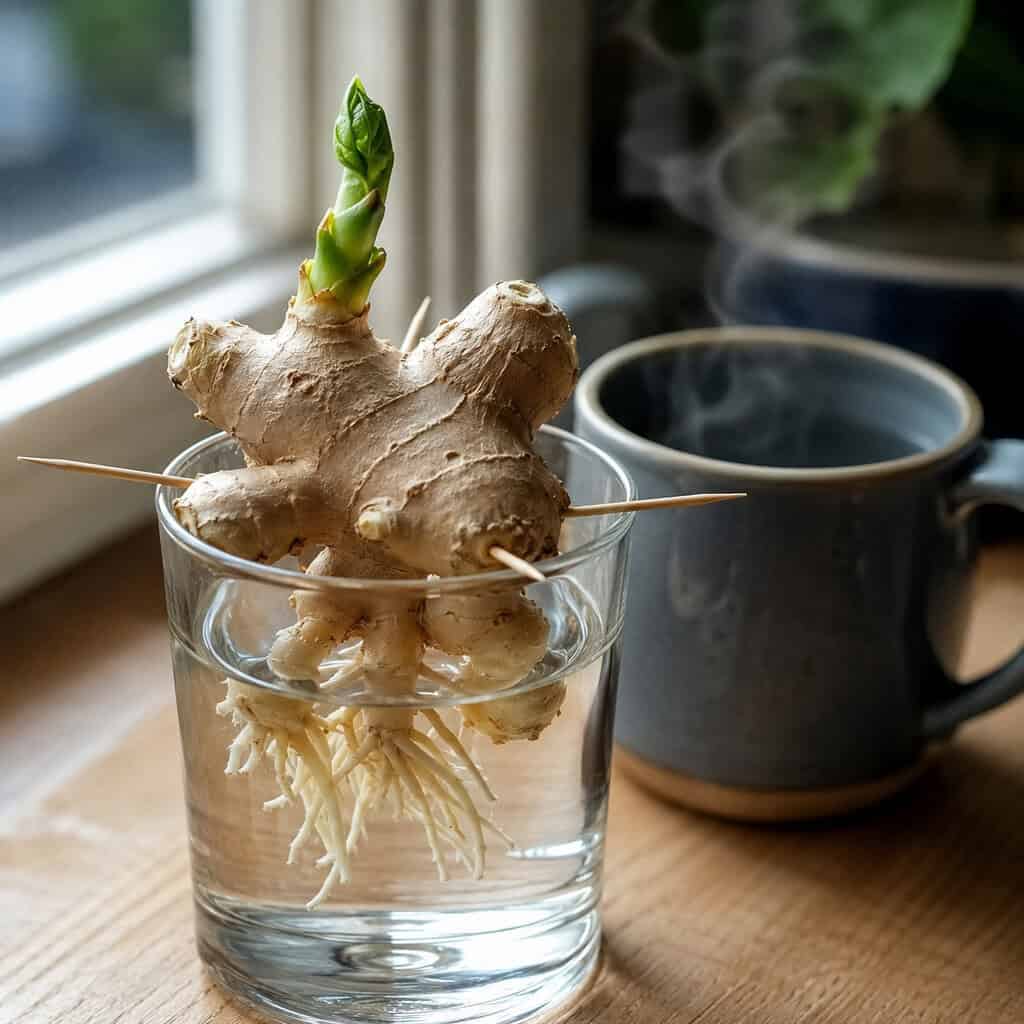
Here’s a fun one to surprise people with.
Ginger isn’t a root — it’s a rhizome. Take a small piece, partially suspend it in warm water, and it’ll sprout its own roots plus edible green shoots.
Keep the water warm, above 68°F, or it just sulks. A cold windowsill in January won’t do it any favors.
The catch: to bulk up a whole new knob of ginger, it eventually wants soil. For fresh shoots and a fun science-experiment vibe, water does the job.
12. Sweet Potato Greens (Slips)
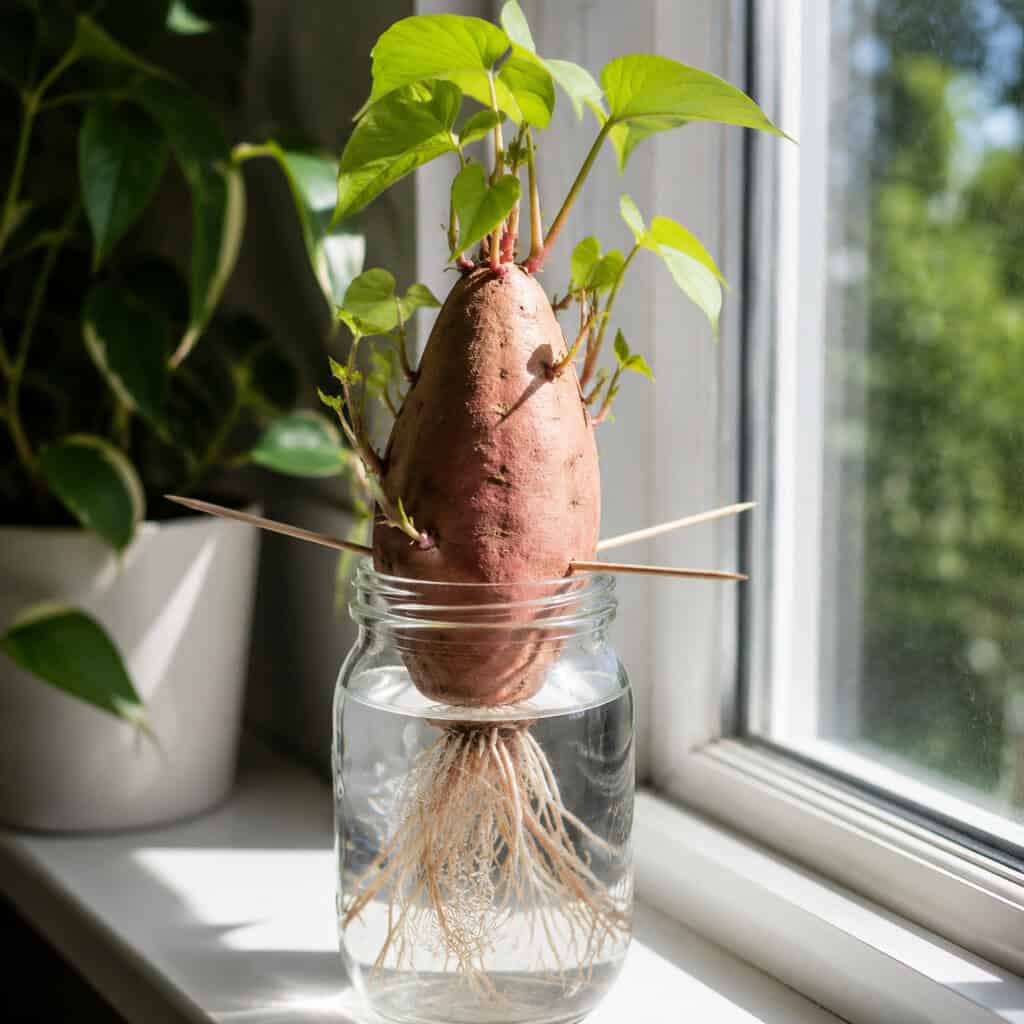
The classic toothpick-in-a-jar science project — except this one doubles as dinner.
Suspend a sweet potato over a glass of water with toothpicks holding the top half dry. It sprouts leafy vines called slips.
Those greens are edible and genuinely delicious sautéed, tasting somewhere between spinach and chard. Kids love watching the vines unfurl, which makes it one of the better projects to do with kids.
Actual sweet potatoes still need soil to form. The greens are your water-only reward.
13. Watercress
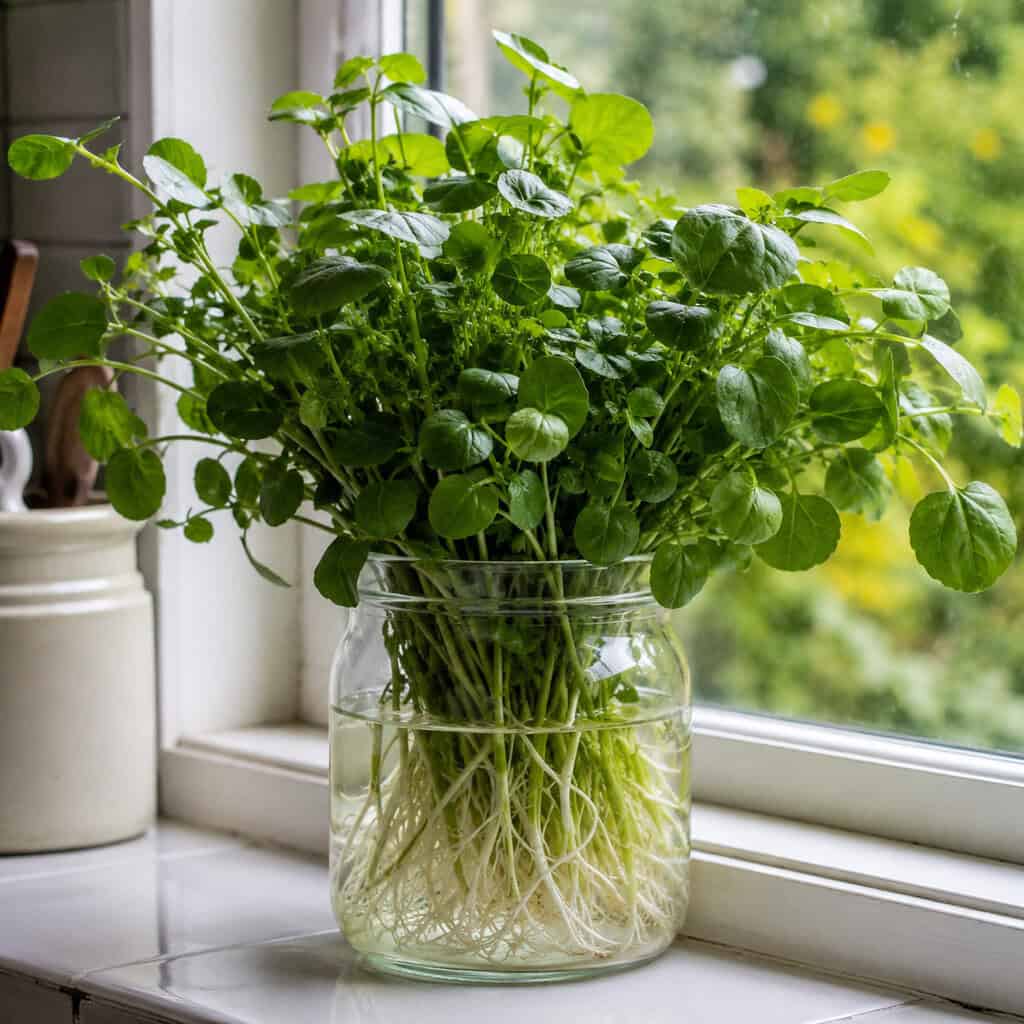
This is the true star of the whole list.
Most scraps here merely limp along in water — surviving, not thriving. Watercress is different. It’s a semi-aquatic perennial that actually loves living in water. It’s not making do; it’s home.
Grab a bunch from the grocery store, drop the stems in a jar of water, and they root in just a few days. From there it’s cut-and-come-again — you keep harvesting, it keeps growing. The The Old Farmer’s Almanac notes it’s one of the few crops that genuinely prefers wet feet.
The flavor is peppery and bright, and it’s loaded with vitamins B, C, and K. Change the water often, since standing water can turn stagnant fast with a fast-growing plant drinking from it.
One serious warning, though. Watercress is toxic to cats, dogs, and horses. If a curious pet has a habit of nibbling houseplants, this is not the jar to leave on a low sill.
- Keep it well out of reach of dogs and cats
- Don’t compost trimmings where livestock can graze
- Watch for drooping or drooling if a pet gets into it
If you share your home with animals, it’s worth knowing which foods secretly grow into houseplants and which ones you should think twice about. Watercress earns its spot as the best water crop here — just grow it smart.
14. Basil
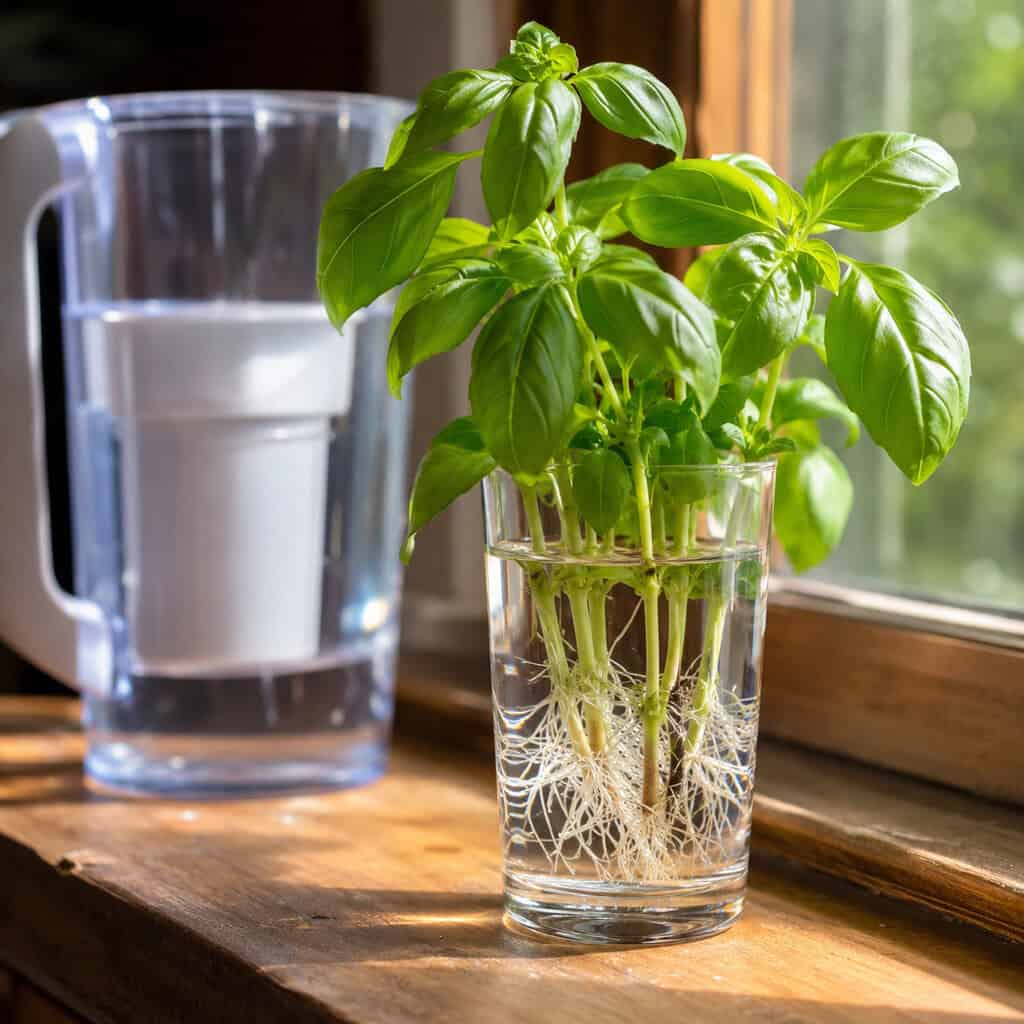
The best-known herb-in-a-glass, and for good reason.
Snip a 4-inch cutting just below a leaf node. Strip the lower leaves so nothing sits underwater and rots, then set the stem in a glass on a warm sill.
Roots form anywhere from one to four weeks. One tip that makes a real difference: basil hates chlorine. Use filtered water, or let tap water sit out overnight so the chlorine gases off first.
Once it’s rooted well, you’ve got endless pesto for the cost of a single store-bought stem.
15. Mint
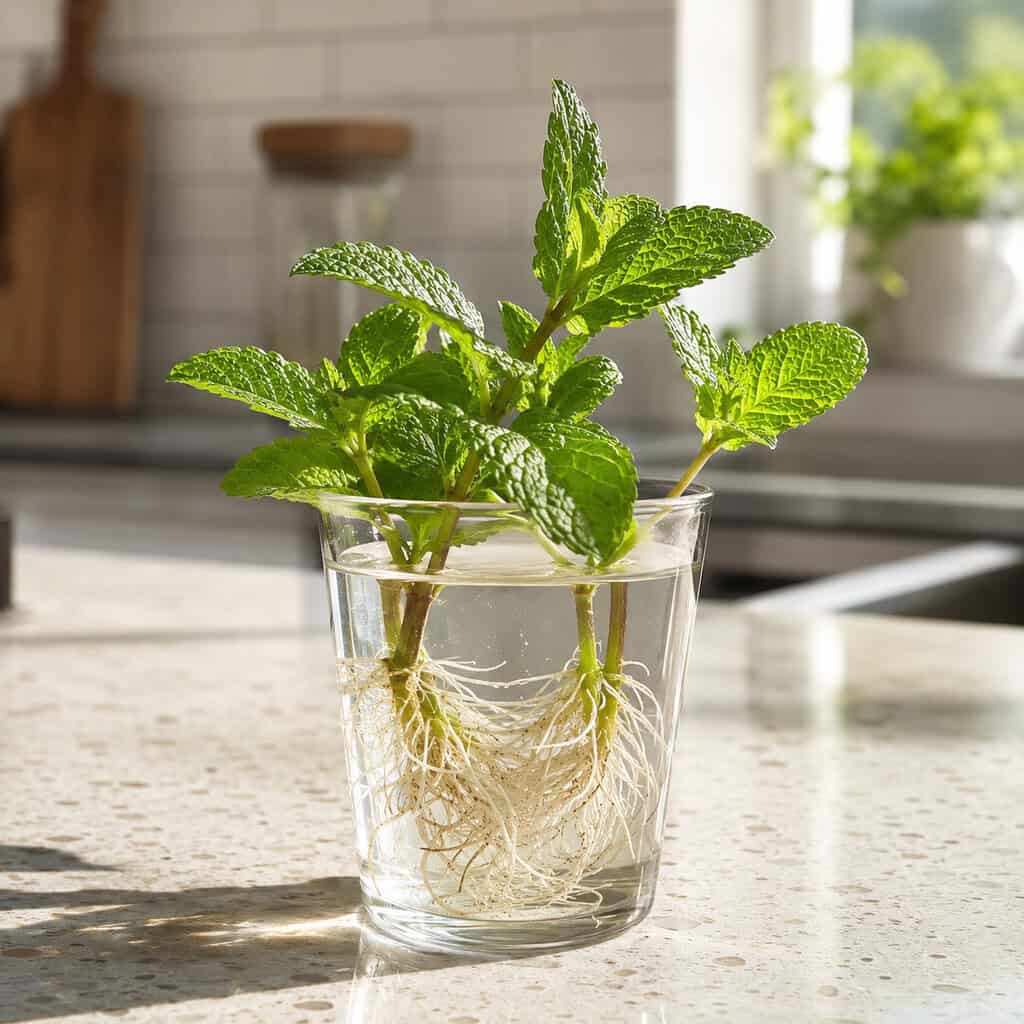
The overachiever of the herb world.
Mint roots almost violently fast. Drop a sprig in water and you’ll often see white roots in 48 to 72 hours. It doesn’t even demand a clean, precise cut — it just goes.
Fair warning: mint drinks heavily, so top off the water often. And even in a glass it’ll eventually get root-bound and crowded.
That aggression is exactly why you keep it in a glass and never let it loose in a garden bed.
16. Cilantro
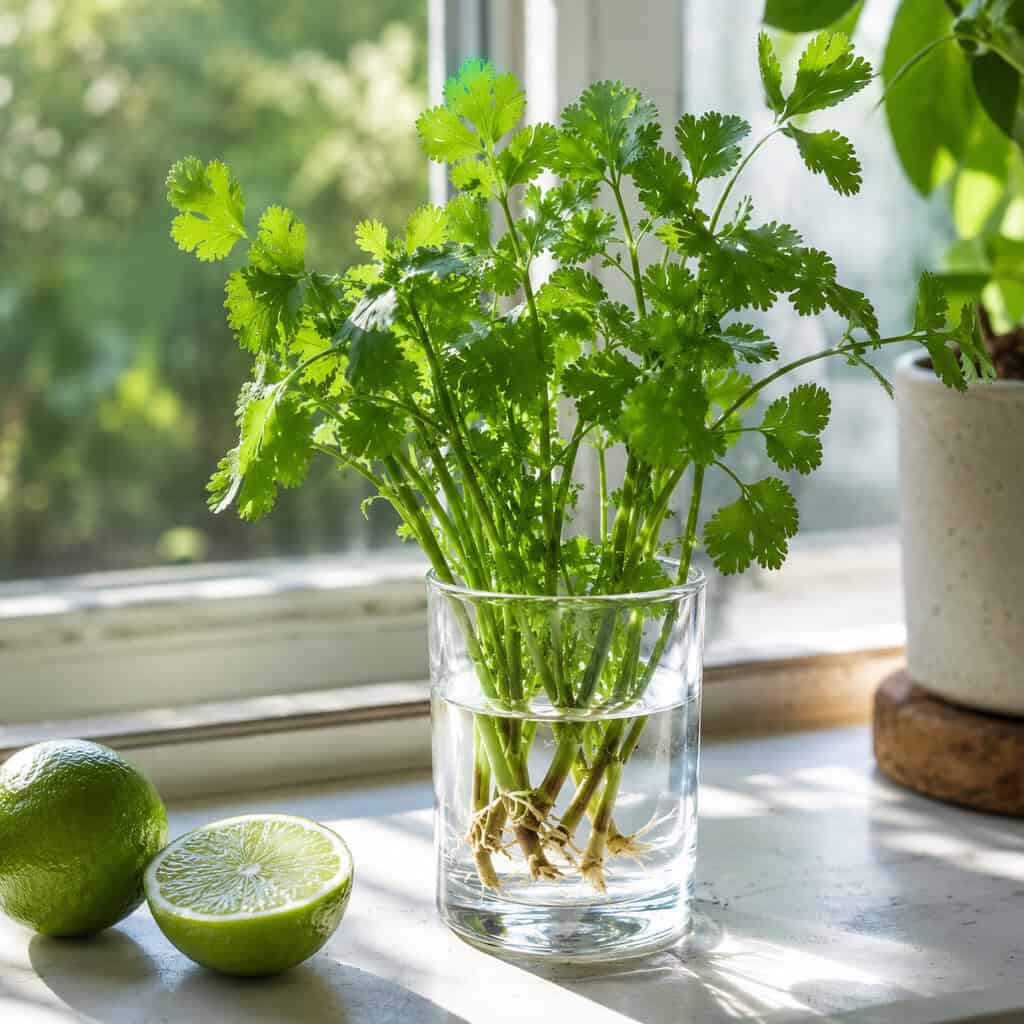
Soft stems make cilantro one of the easiest herbs to root.
Take a cutting, strip the lower leaves, and set it in water. Roots come within a couple of weeks on a sunny sill.
The thing about cilantro is that it’s short-lived by nature — it bolts and fades. Keep taking fresh cuttings on a rotation and you’ll never run dry for salsa or tacos.
17. Oregano
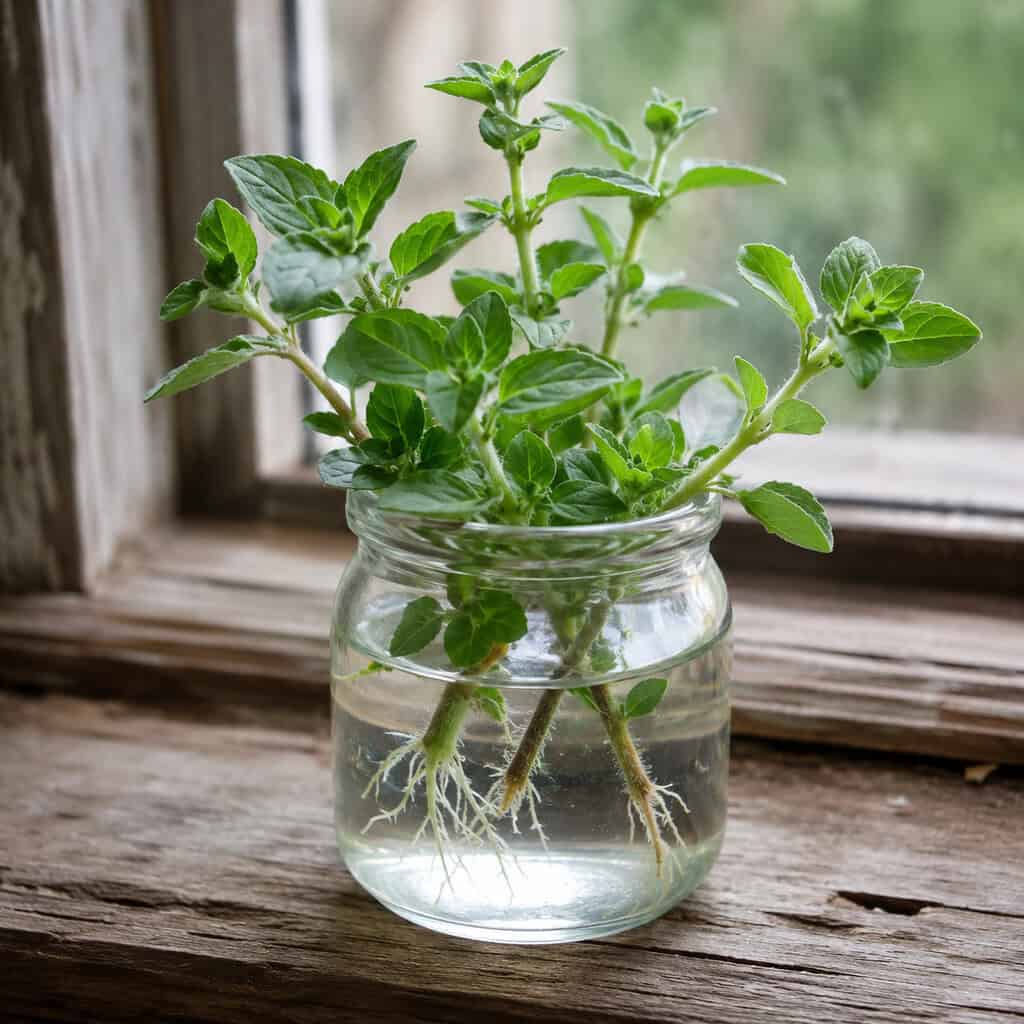
Roots fast and grows with real gusto in water.
One rule matters here: take cuttings from soft new green growth, not the woody brown stems. Woody stems simply won’t root, no matter how long you wait.
A pantry-staple perennial that rewards the windowsill grower with a steady supply for sauces and pizza.
18. Thyme
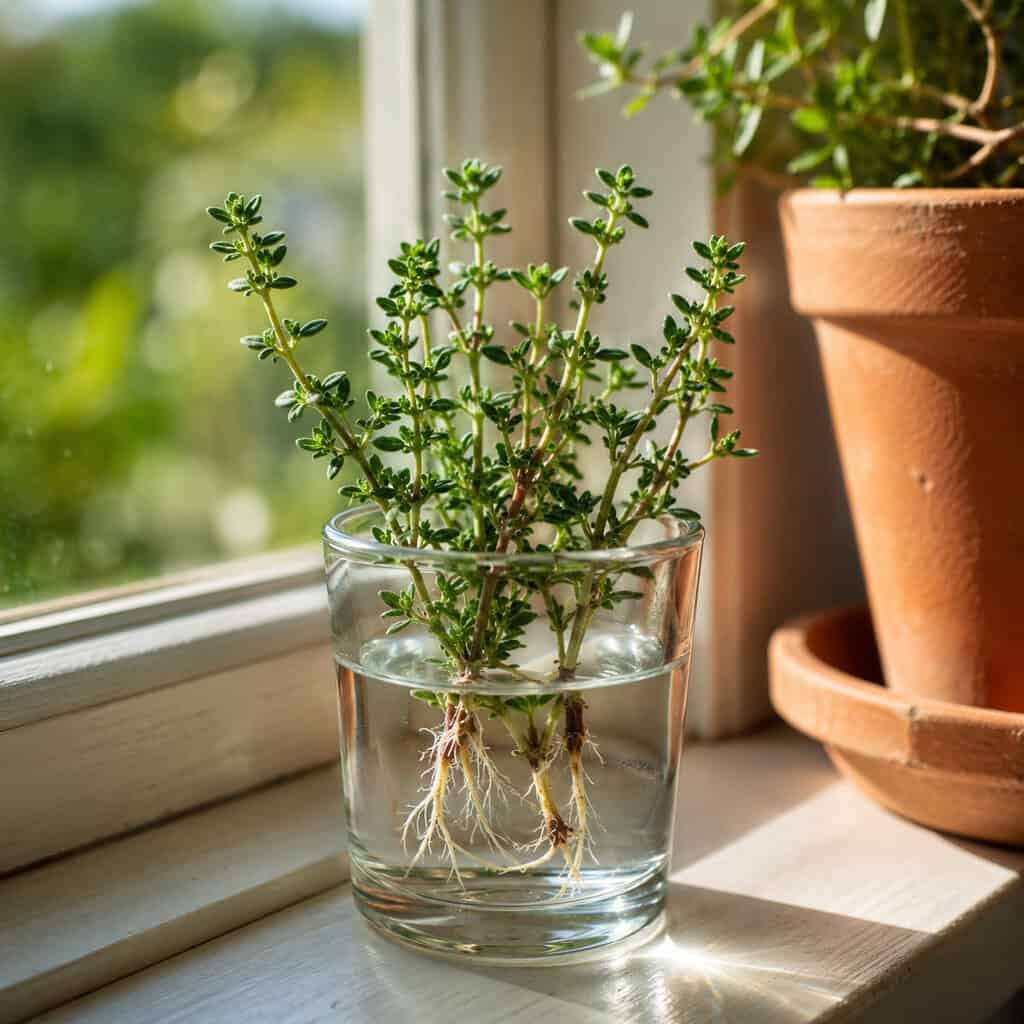
Beginner-easy, right alongside mint.
Snip a healthy sprig, strip the bottom, and stand it in water. Roots follow in a few weeks.
It’s compact, fragrant, and forgiving — a solid pick if you’re just building confidence with the whole cuttings-in-a-glass routine.
19. Sage
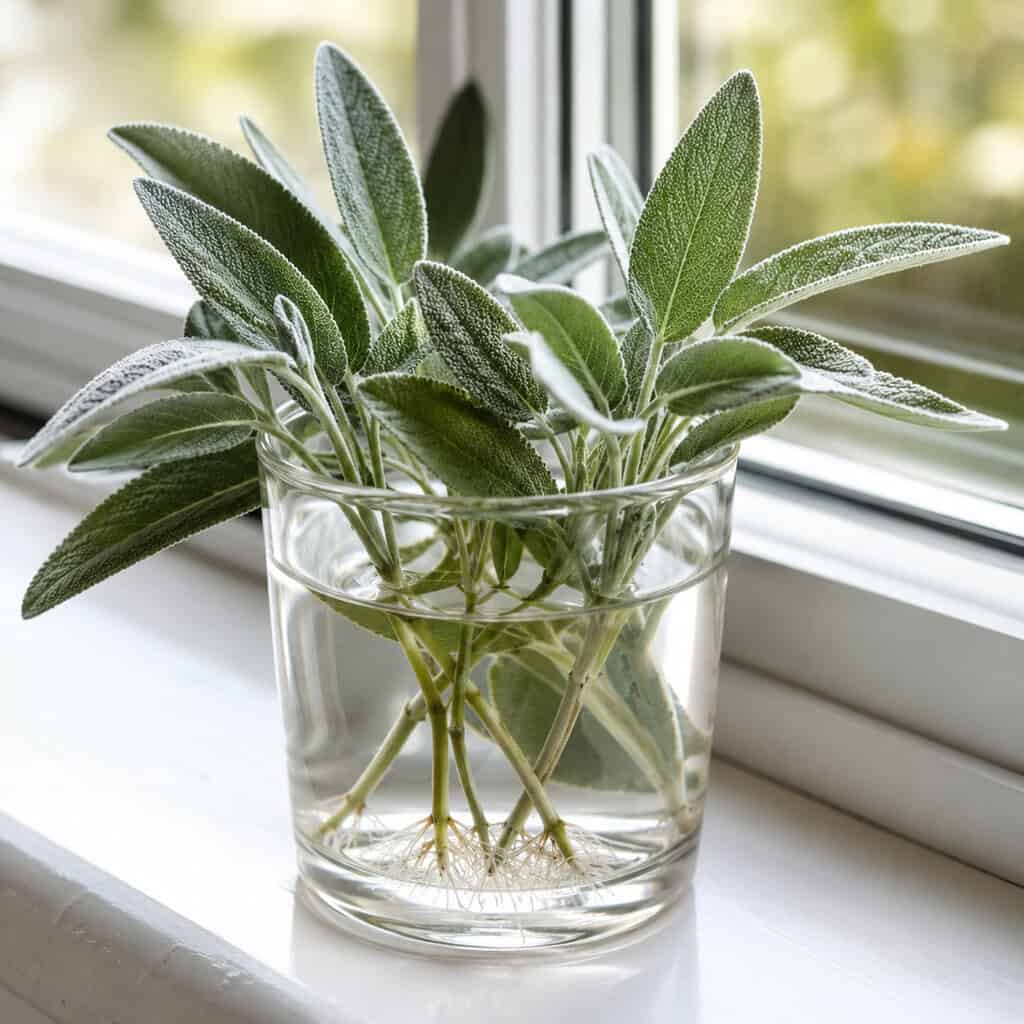
Patience pays with this silvery-leaved perennial.
Take soft spring cuttings and expect them to root slowly but reliably — a month or two, not a few days.
Keep it in bright light with good air movement. Sage is prone to mildew, and stuffy, damp air is its enemy.
You only need a plant or two anyway. A little sage goes a long way in the kitchen.
20. Rosemary
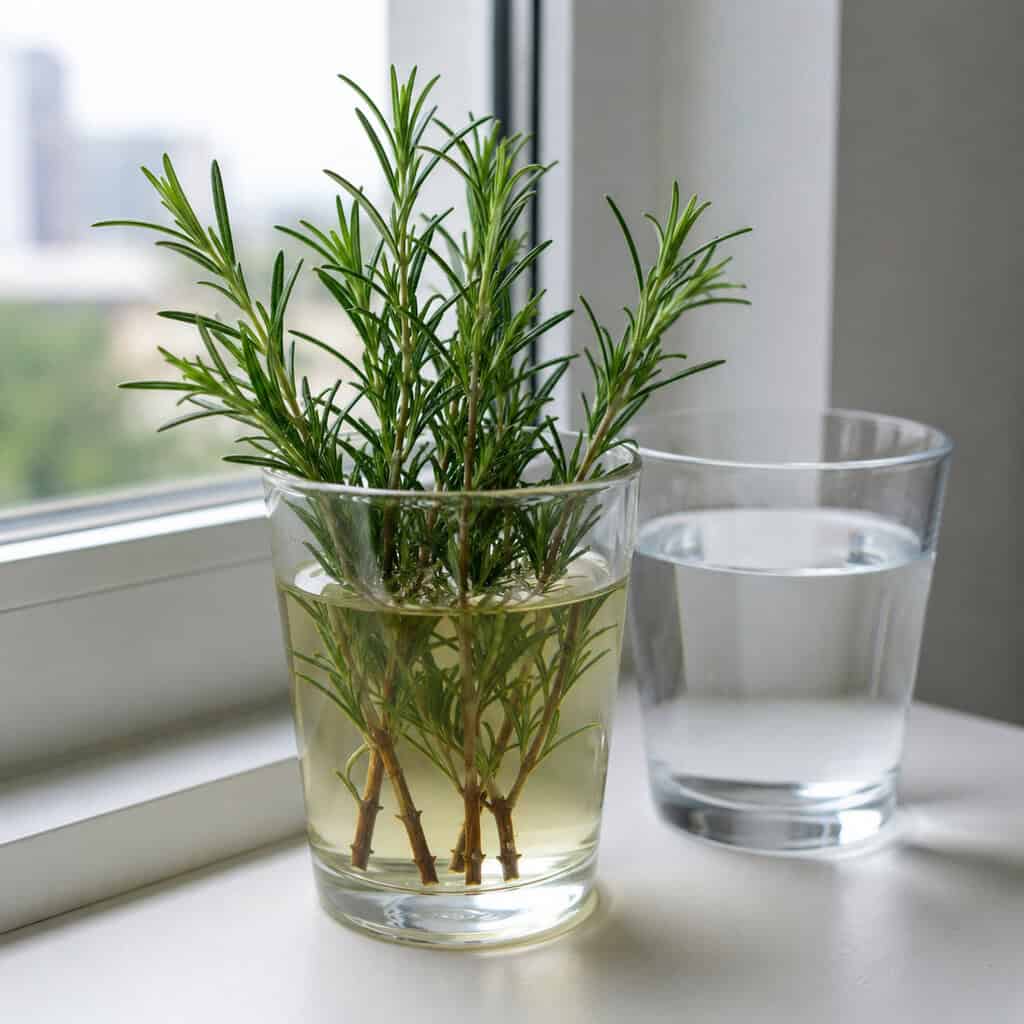
The test of your patience.
Rosemary is woody and slow to root — this isn’t a weekend win. It also releases tannins that yellow the water and can actually stunt the cutting if you ignore it.
Swap the water the moment it looks like weak tea. Fresh, clear water keeps things moving.
Once it finally roots, though, rosemary can happily live in a glass for months before it starts asking for a pot, per Gardening Know How.
21. Lemon Balm
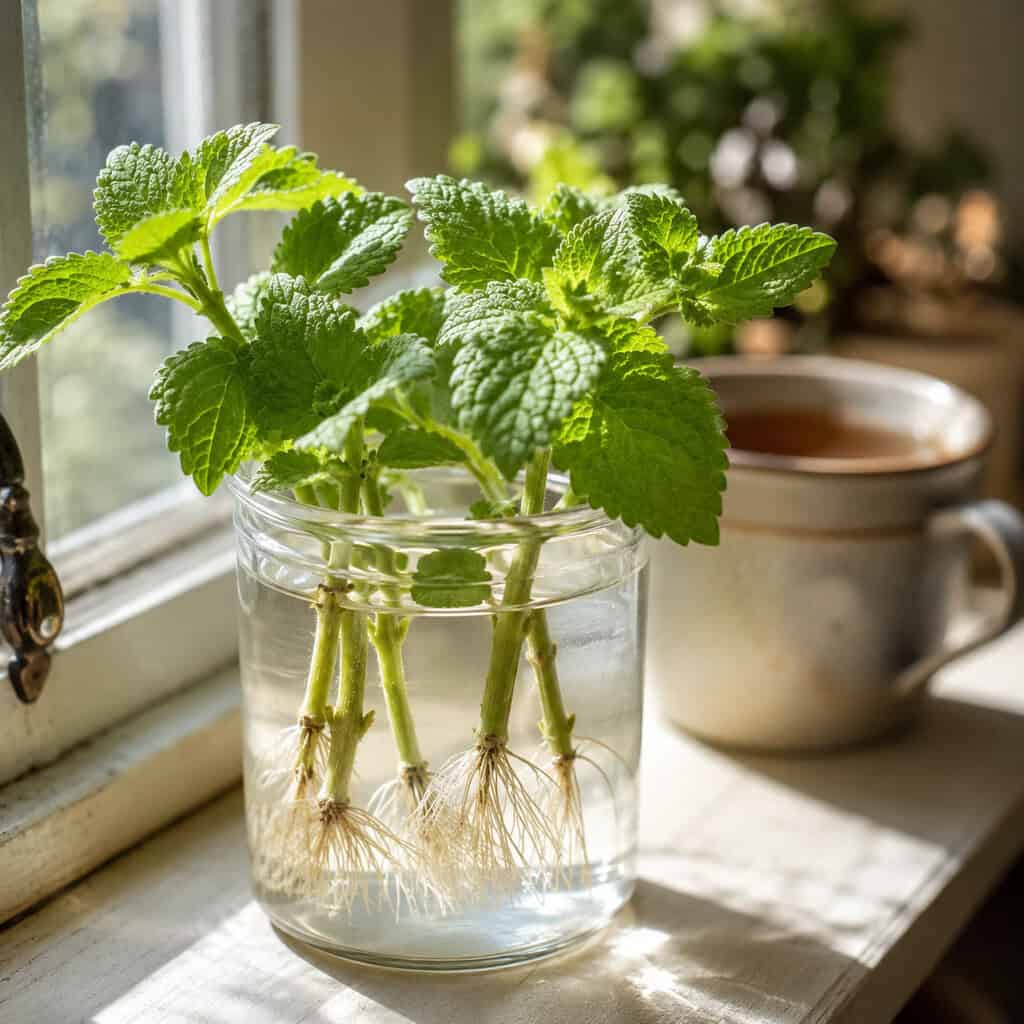
A lemony member of the mint family, and it behaves like one.
Cuttings root easily and fast in water. If you’ve noticed the pattern by now — anything in the mint family tends to root without a fight — lemon balm proves it again.
It’s lovely muddled into teas and cocktails, adding a soft citrus note the harder herbs can’t match.
22. Stevia
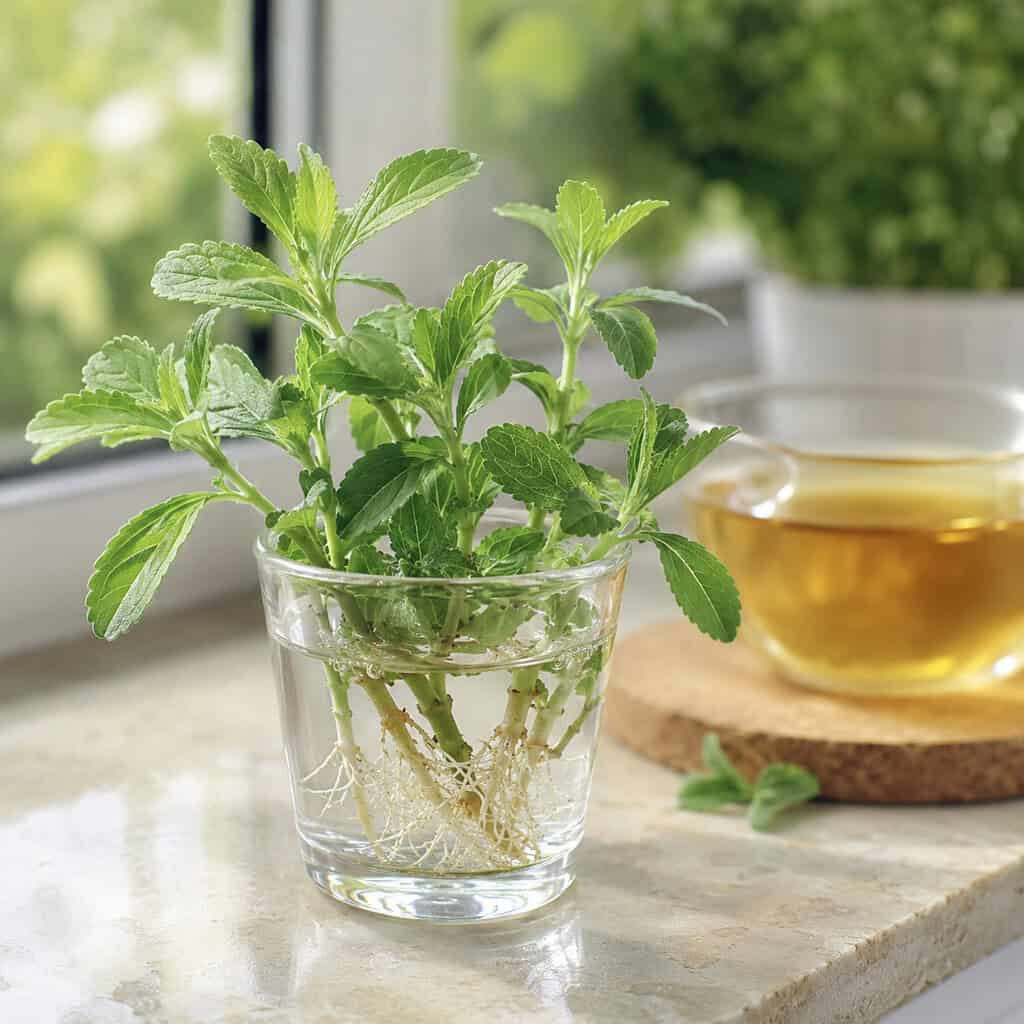
The novelty pick, and a memorable one.
Stevia leaves are naturally sweet — a calorie-free sweetener growing right on your sill. The cuttings root within days, faster than you’d expect from something this useful.
Steep a leaf or two in hot tea and skip the sugar entirely. It’s a less-obvious entry that surprises people every time.
23. Dill
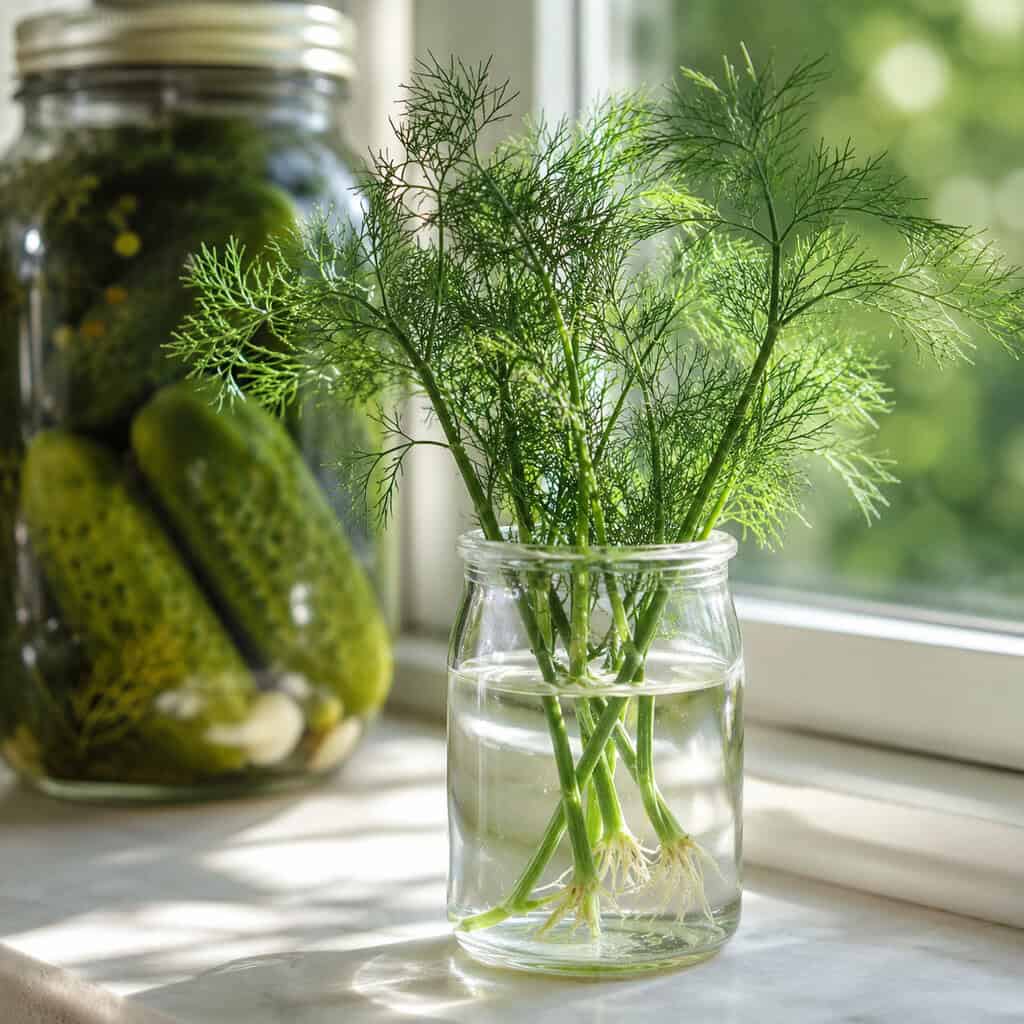
Feathery, fragrant, and made for pickles.
Dill cuttings root on a sunny sill like the other soft herbs. Strip the lower fronds, set the stem in water, and wait it out.
If you want something more distinctive than another basil jar, this is a fine swap — a fresh supply for potato salad and quick refrigerator pickles.
24. Potato
End on an honest one.
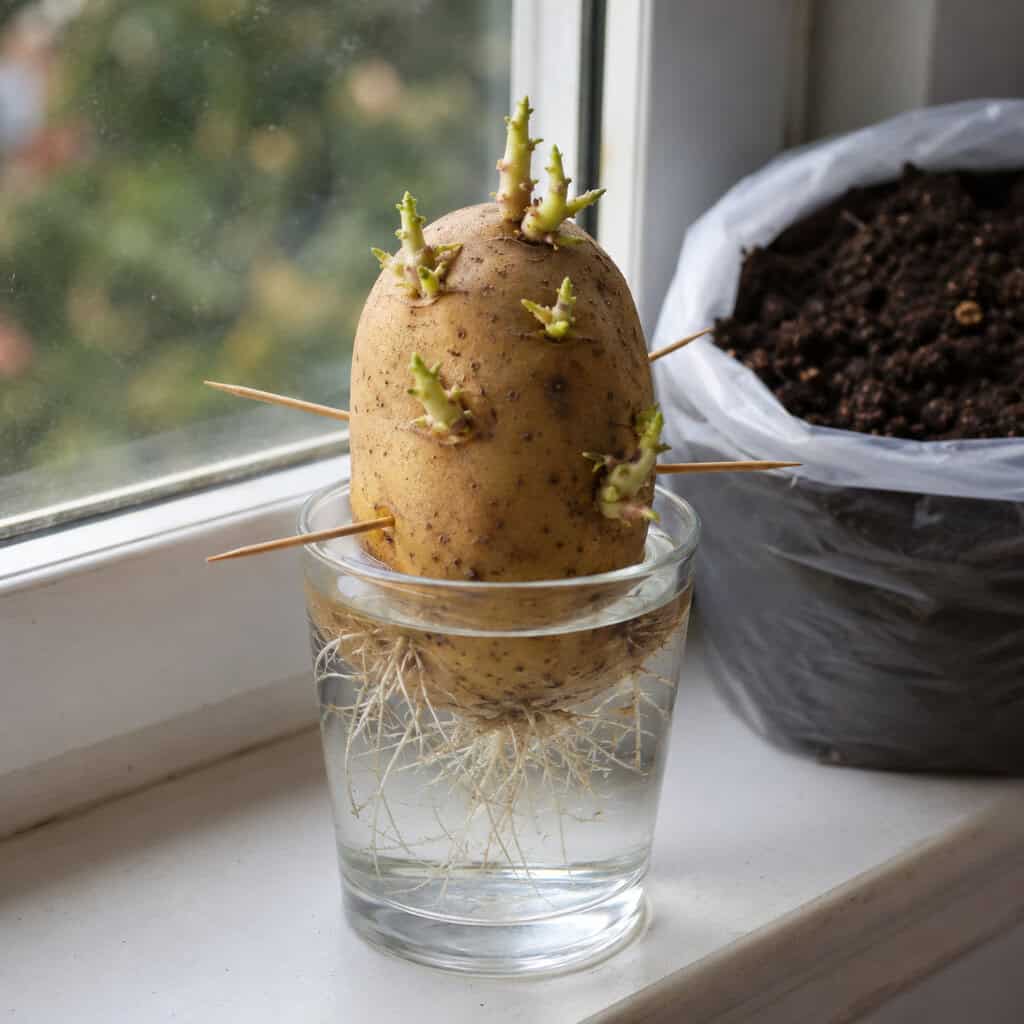
Prop a potato with a few eyes over a glass of water and it’ll sprout roots and leafy shoots, much like the sweet potato trick. It’s a fun thing to watch.
But water won’t get you potatoes. To bulk up real tubers, the plant genuinely needs soil and room to grow underground.
Use water to get it started and sprouting, then move it out to a bed or a bucket when you’re ready for the real harvest. If that’s your plan, it helps to know how to start plants indoors and move them outside without shocking them.
None of this replaces a real garden. Water crops give you smaller yields, and some of these quit after a cycle or two. That’s just how it works when there’s no soil feeding the plant.
But that’s not the point. The point is free food from scraps you were about to throw away, growing on a windowsill in the dead of winter, with zero mess and zero dirt under your nails.
Start with green onions tonight. By this weekend you’ll be eyeing every celery bottom and garlic clove in the house differently — and that’s exactly how it starts.