

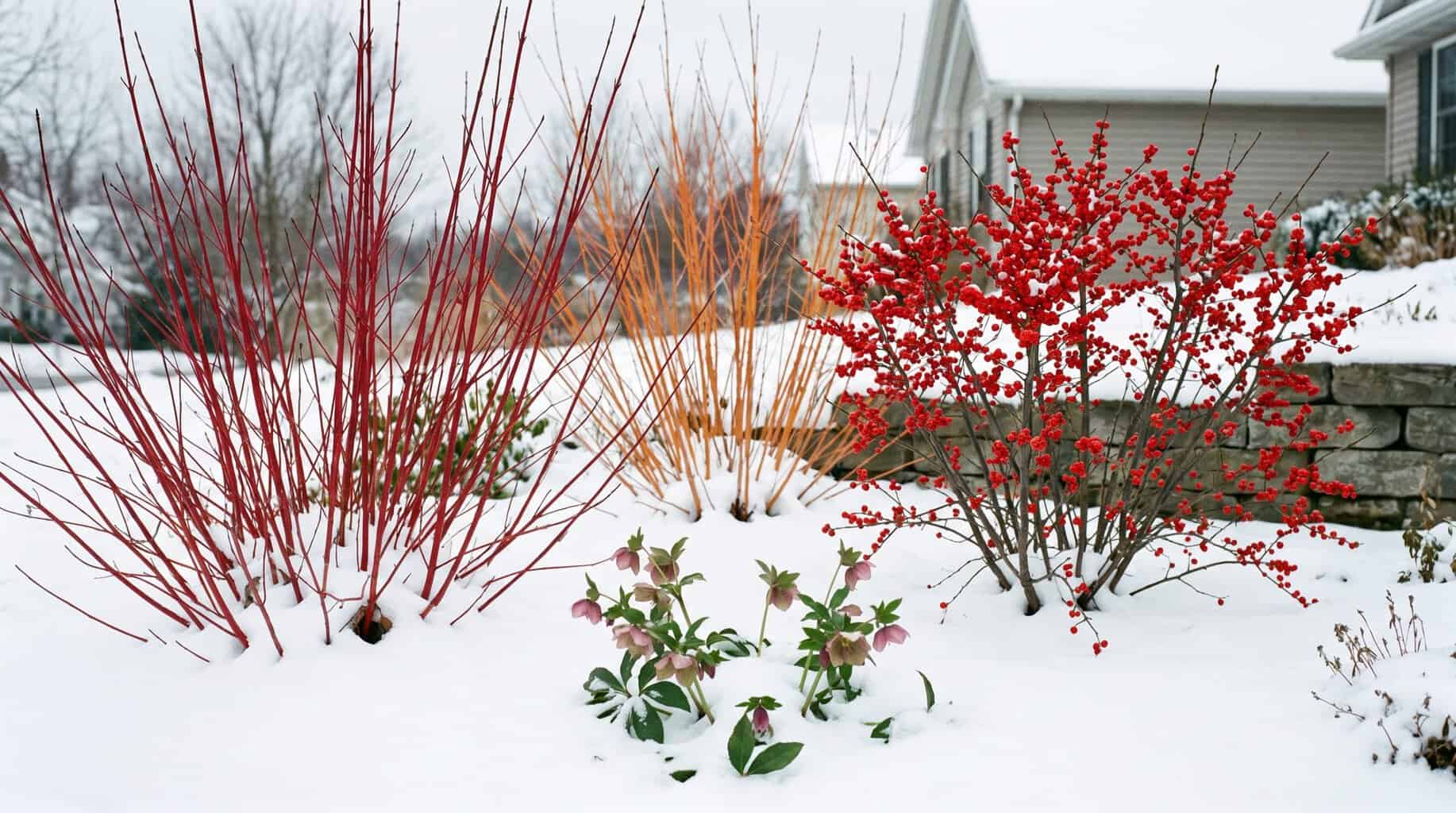
Walk past a garden in January and most of them tell the same story. Bare mulch. A few slumped perennials someone forgot to cut back. Gray on gray on gray.
But every so often you pass a yard that’s doing something different. Magenta blooms under a leafless tree. Red twigs glowing against the snow. A shrub covered in yellow flowers when the thermometer says that shouldn’t be possible.
None of that happens by accident.
Winter color is planted in fall — sometimes late summer. The gardeners with the good January yards aren’t lucky. They just did the work months earlier, while everyone else was pulling up tomatoes and calling it a season.
The window to join them is open right now. Here are 26 plants that reward you exactly when the rest of the neighborhood gives up.
1. Pansies and Violas
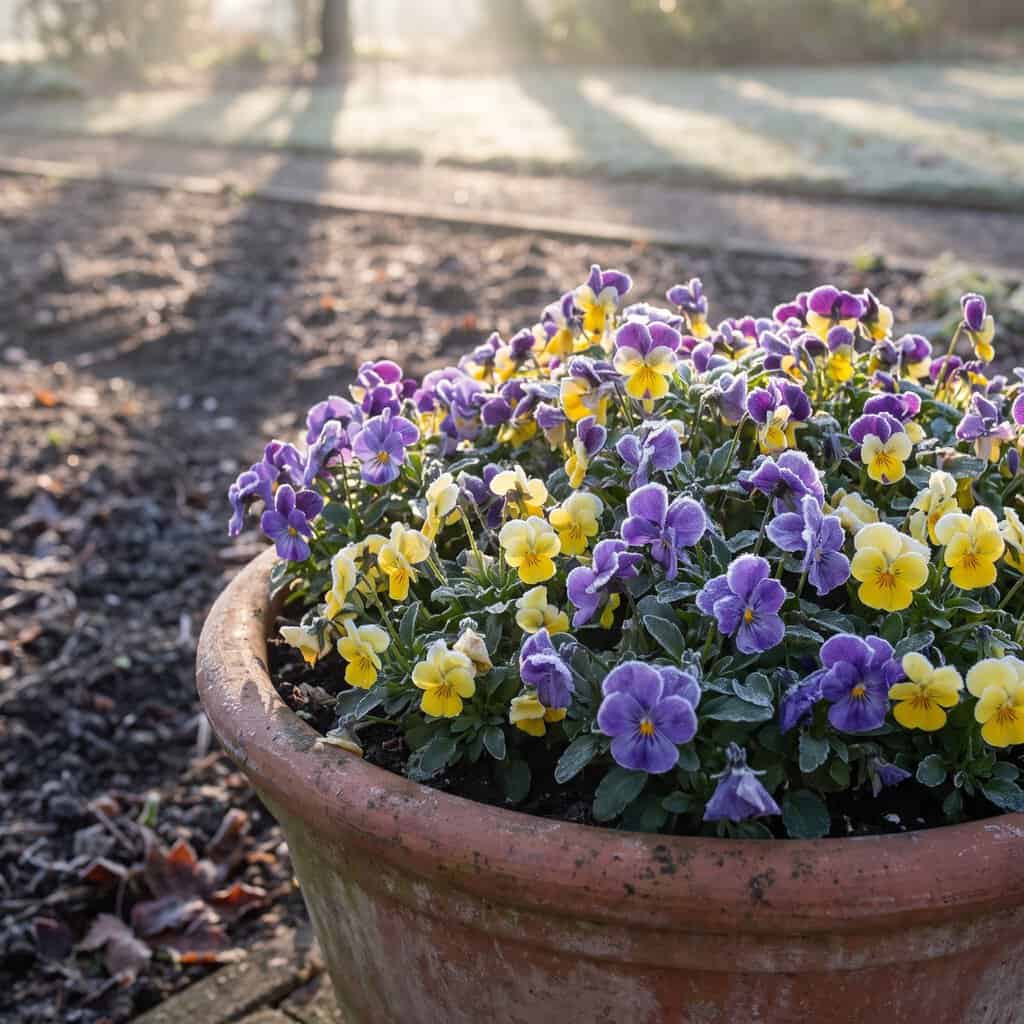
Start here. Nothing gives you faster color for less effort.
Drop a flat of pansies into a bed in early fall and they’ll bloom through frost, sulk a little in the deep cold, then come roaring back for spring. Violas are the tougher of the two — smaller flowers, but more of them, and they laugh at weather that flattens their bigger cousins.
Look for cold-hardened series. According to Gardenary, types like ‘Icicle’ and ‘Ice Pansy’ shrug off hard frost and keep flowering in nearly every color you can name.
Plant them now while the roots can still settle. A pansy that’s established before the cold hits is a completely different plant than one you jam in during a January thaw.
2. Ornamental Cabbage and Kale
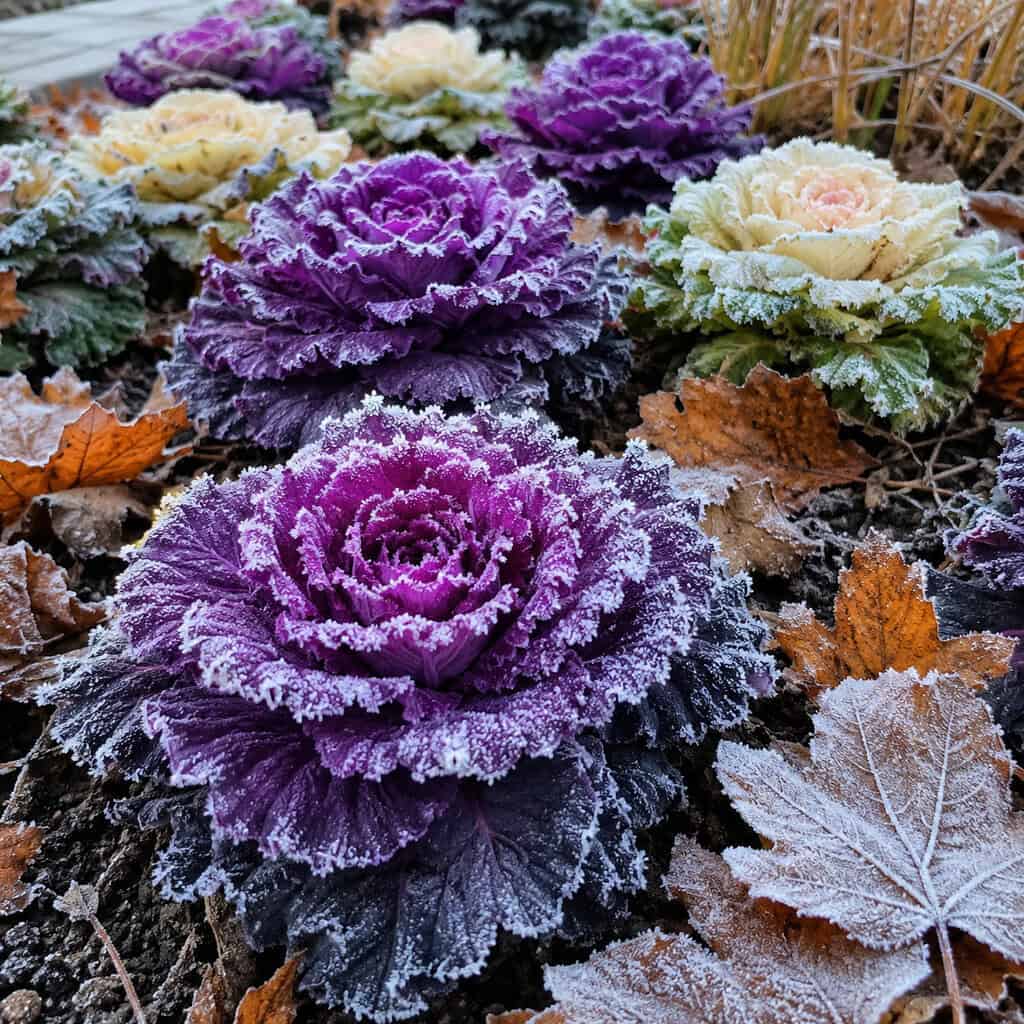
This one’s a trick. Those purple, pink, and cream rosettes aren’t flowers at all — they’re leaves.
And here’s the part that makes them a genuine winter pick: the color gets better as it gets colder. Warm weather keeps them dull green. Frost is what turns them electric.
Set them in beds or pack them into containers where a summer annual just gave up. They hold their shape long after everything around them has collapsed.
Peak color arrives right as the rest of the garden checks out. That’s the whole point.
3. Primroses
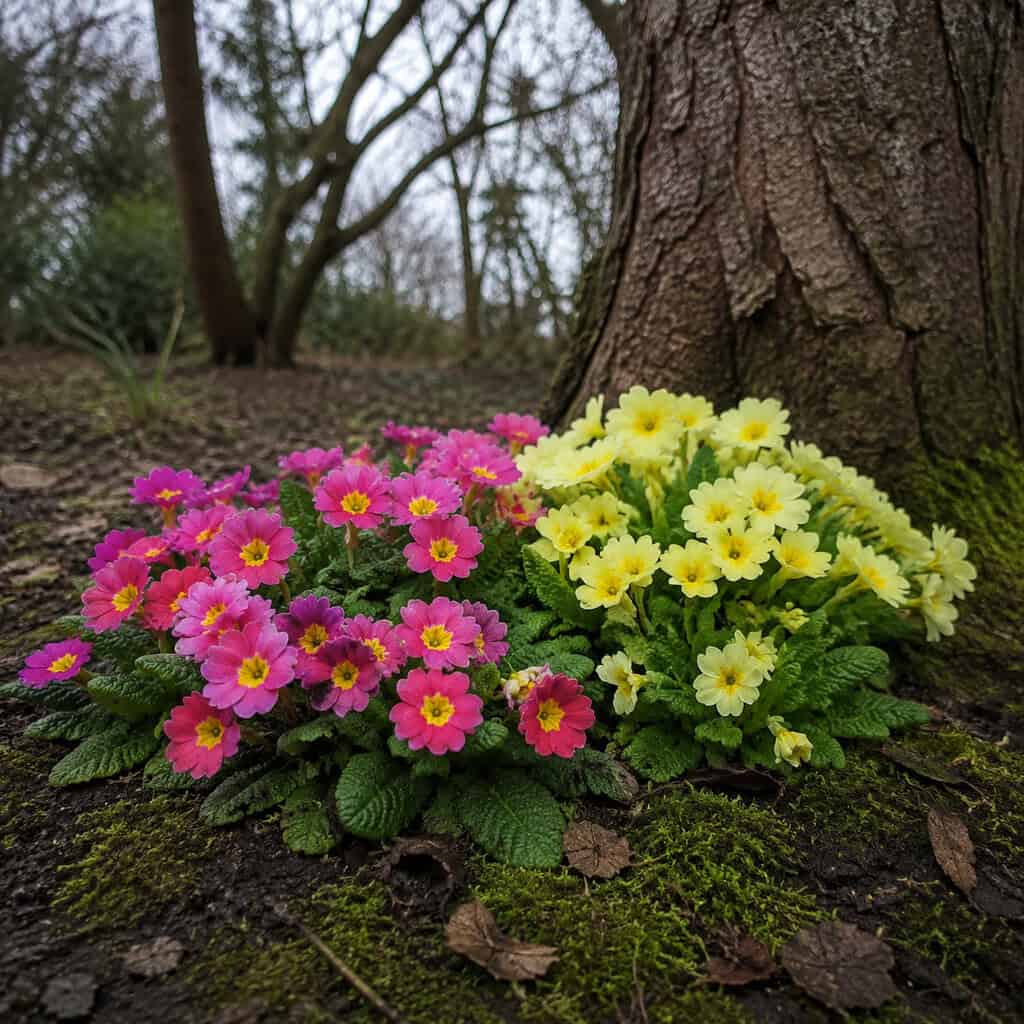
Cheerful little clusters in almost every bright shade there is — buttercup yellow, hot pink, deep purple, clean white.
In mild climates they’ll start blooming in late winter, weeks before the crocus. Garden Design points to them as one of the easiest ways to get color into the shady, damp corners where most winter bloomers refuse to grow.
That’s the real gift. Primroses want the partial shade and moist soil that stumps almost everything else.
Tuck them under a deciduous tree or along a north-facing path. They’ll fill a spot you’d written off.
4. Hardy Cyclamen (Cyclamen coum)
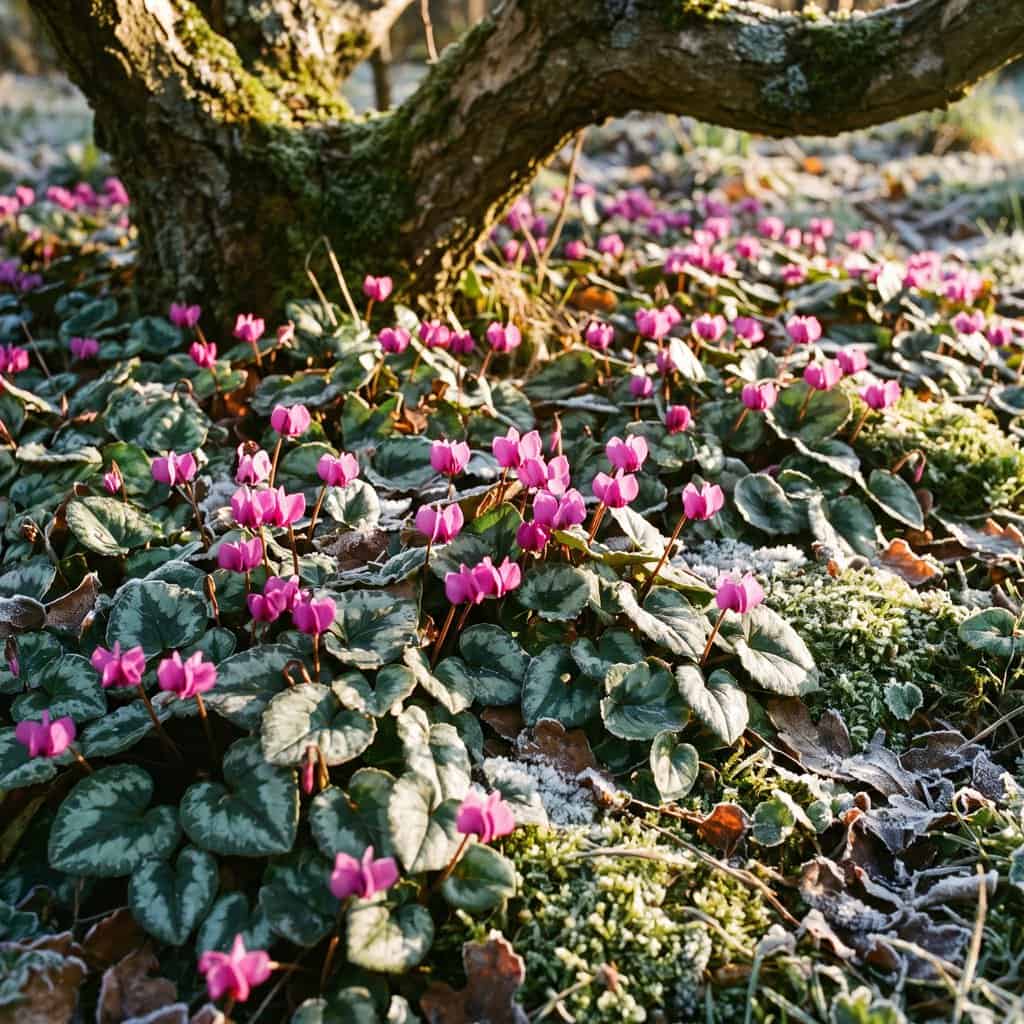
Tiny swept-back blooms in magenta and pink, floating just above the ground in the dead of winter. This isn’t the florist cyclamen that dies the second the house gets cold — this is the tough outdoor cousin that flowers from January into March.
Plant the tubers in late summer or early fall under trees and shrubs. The silver-marbled leaves are nearly as good as the flowers, forming an evergreen carpet that looks sharp even between blooms.
Now the part pet owners need to hear. Every part of hardy cyclamen is toxic if eaten, and the tubers are the worst of all — Penn State Extension notes the whole plant contains irritant compounds that concentrate in those underground tubers.
For a dog that digs, that’s the danger. The flowers sitting on the surface are one thing. A curious terrier excavating a fresh planting is another.
Eating it can cause drooling, vomiting, and diarrhea, and in larger amounts it hits the heart rhythm. Cats are less likely to chew it, but don’t count on that.
Site it where your animals don’t dig. A raised bed, a spot behind fencing, under a shrub they ignore. Plant it smart and it’s one of the loveliest things in a January garden — plant it in your dog’s favorite digging corner and you’re asking for a vet bill.
5. Hellebores (Christmas & Lenten Rose)
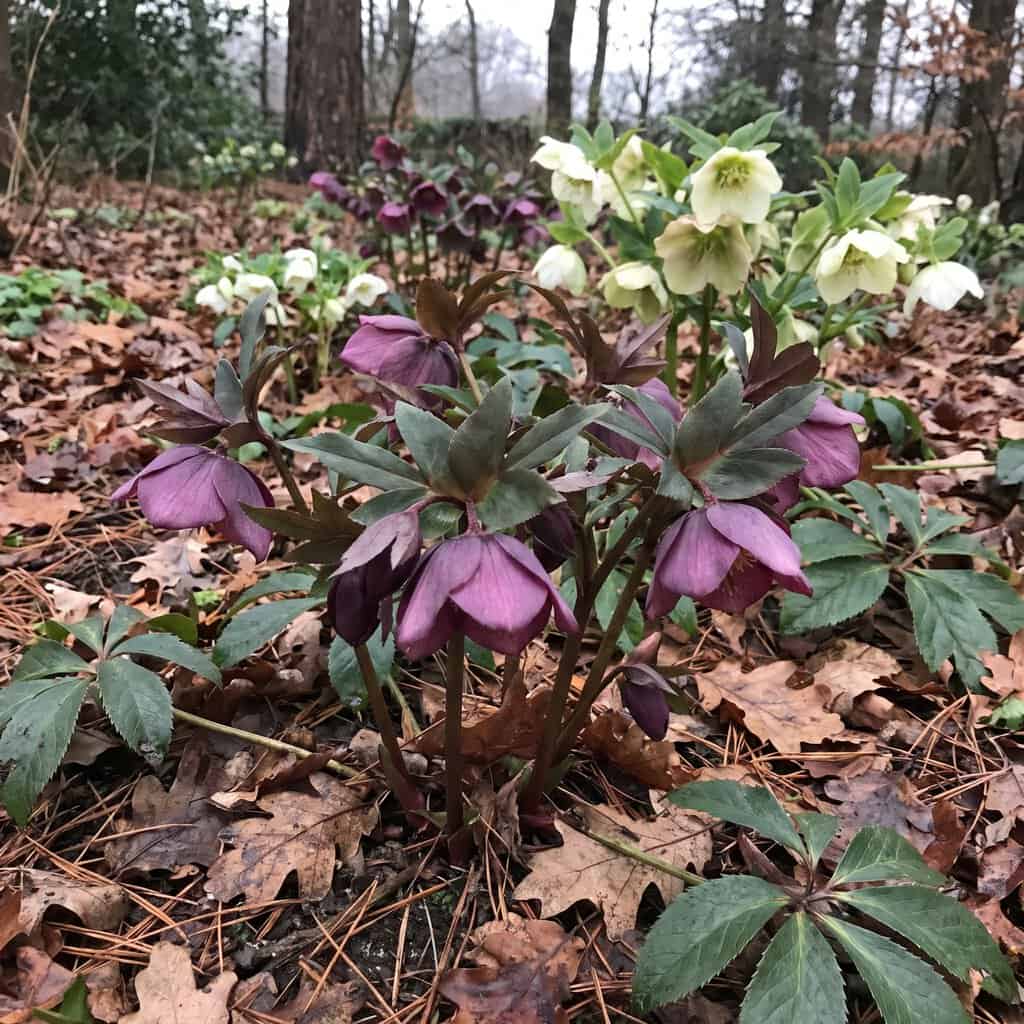
If you plant one thing on this list, plant this. Hellebores are the backbone of the serious winter garden.
The nodding, rose-shaped flowers open anywhere from December through April and hold for well over a month each. They come in dozens of colors now — slate, plum, near-black, spotted, doubled — and the evergreen leaves give the bed structure the rest of the year.
Best of all, they thrive in dry shade. That impossible spot under a big tree where nothing wants to live? Hellebores move right in.
But this is a pet-safety plant, and the caution is real. Hellebores contain compounds that are toxic to dogs and cats — chewing the leaves or flowers can cause drooling, vomiting, diarrhea, and in serious cases an irregular heartbeat.
The bitter taste usually stops an animal from eating much, which is your saving grace. Still, don’t rely on taste alone with a puppy that mouths everything.
Wear gloves when you cut old foliage in late winter — the sap irritates skin, too. Plant hellebores at the back of a border or in a bed your pets don’t lounge in, and you get all the beauty with none of the worry.
6. Snowdrops (Galanthus)
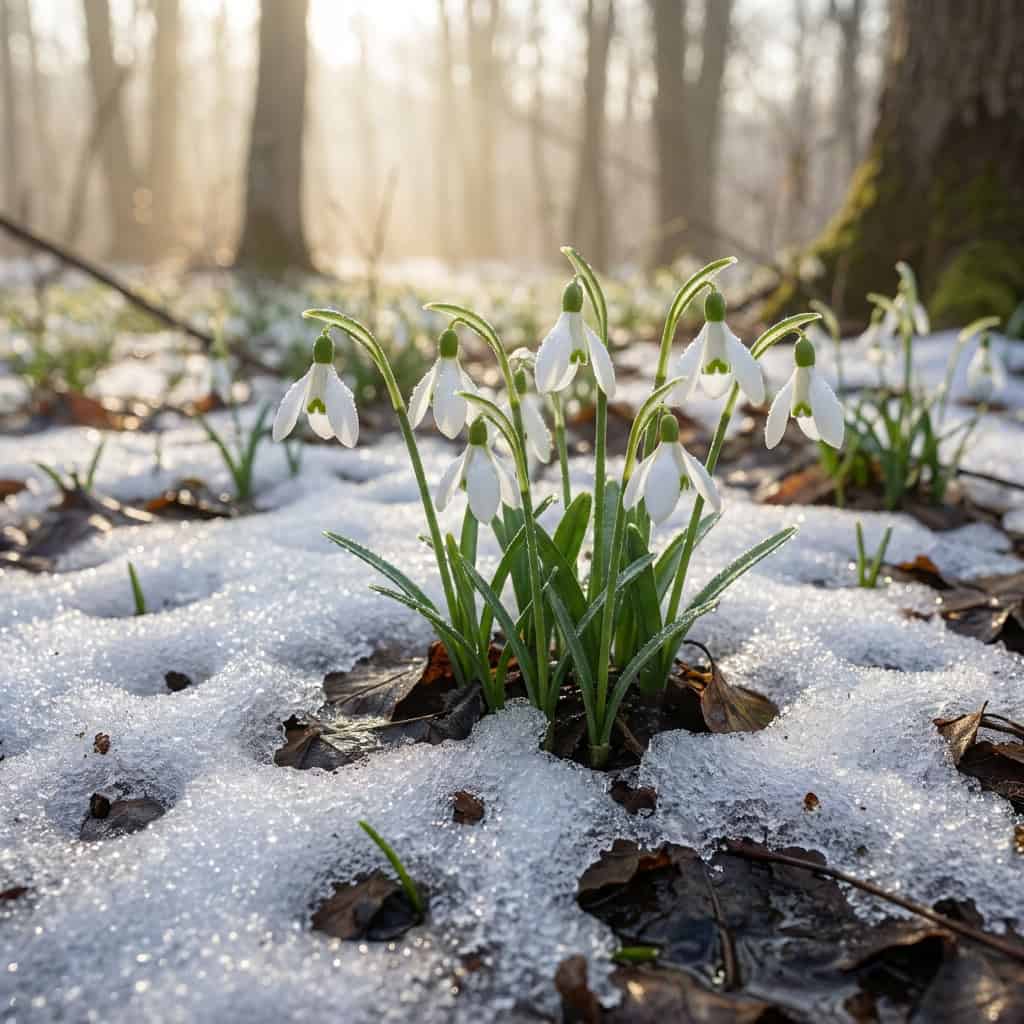
The classic. Little white bells that push up straight through frozen ground and, in a mild spell, straight through snow.
They’re nearly no-maintenance. Plant the bulbs in fall — or move them “in the green” in late winter, which is how serious gardeners bulk them up fastest — and then leave them alone.
Left alone is exactly what they want. Over the years a small clump naturalizes into a sheet of white that spreads a little wider every season.
The Pennsylvania Horticultural Society calls them the signal that spring is coming, and that’s exactly how they feel underfoot in February. Small flowers, enormous emotional payoff.
7. Winter Aconite (Eranthis hyemalis)
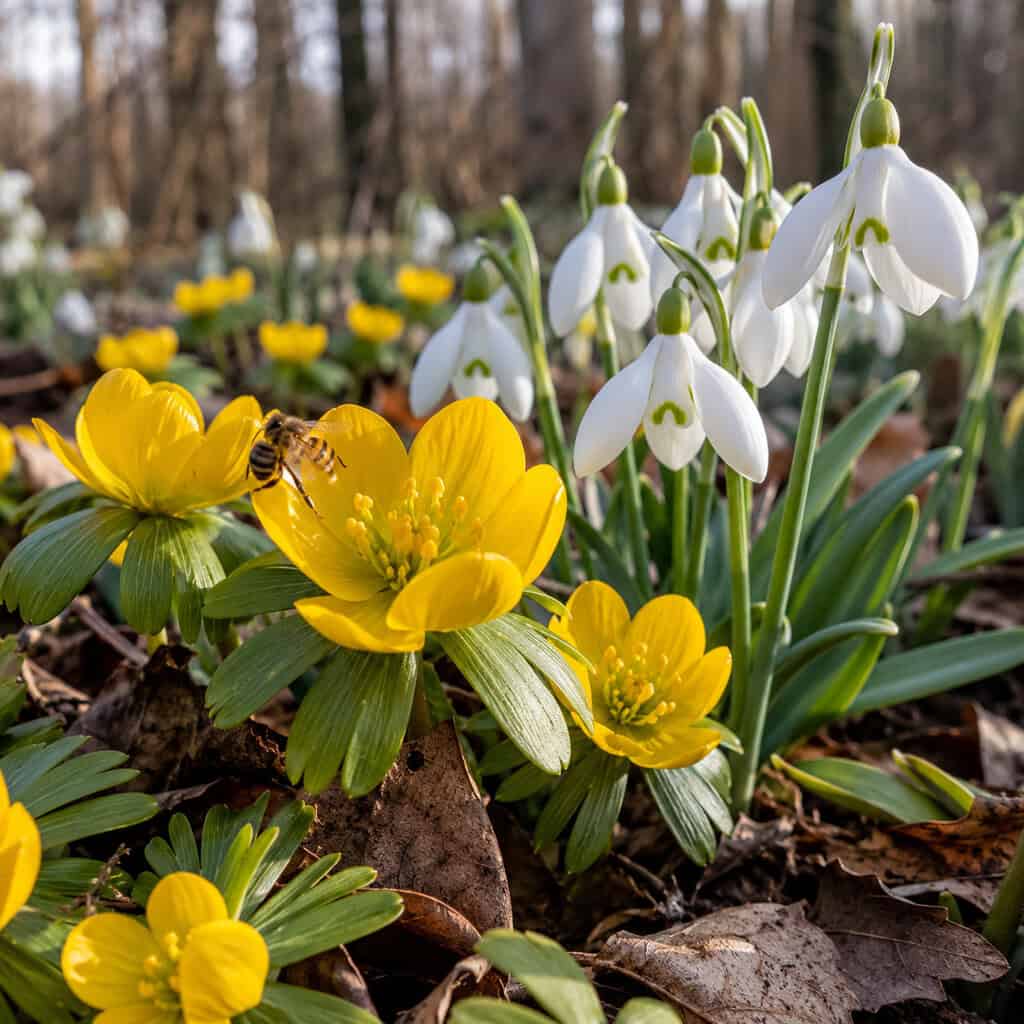
Buttercup-yellow cups on a green ruff, appearing right alongside the snowdrops and often before the crocus even thinks about it.
Plant the tubers in fall. They multiply freely, and within a few seasons a scattering becomes a dense golden carpet.
Pair them with snowdrops on purpose. White and gold together, spreading into each other over the years — it’s one of the great low-effort combinations in winter gardening.
There’s a practical bonus, too. These are among the very first food sources for early pollinators, so a warm February afternoon can bring out the first bees of the year.
8. Snow Crocus (Crocus tommasinianus)
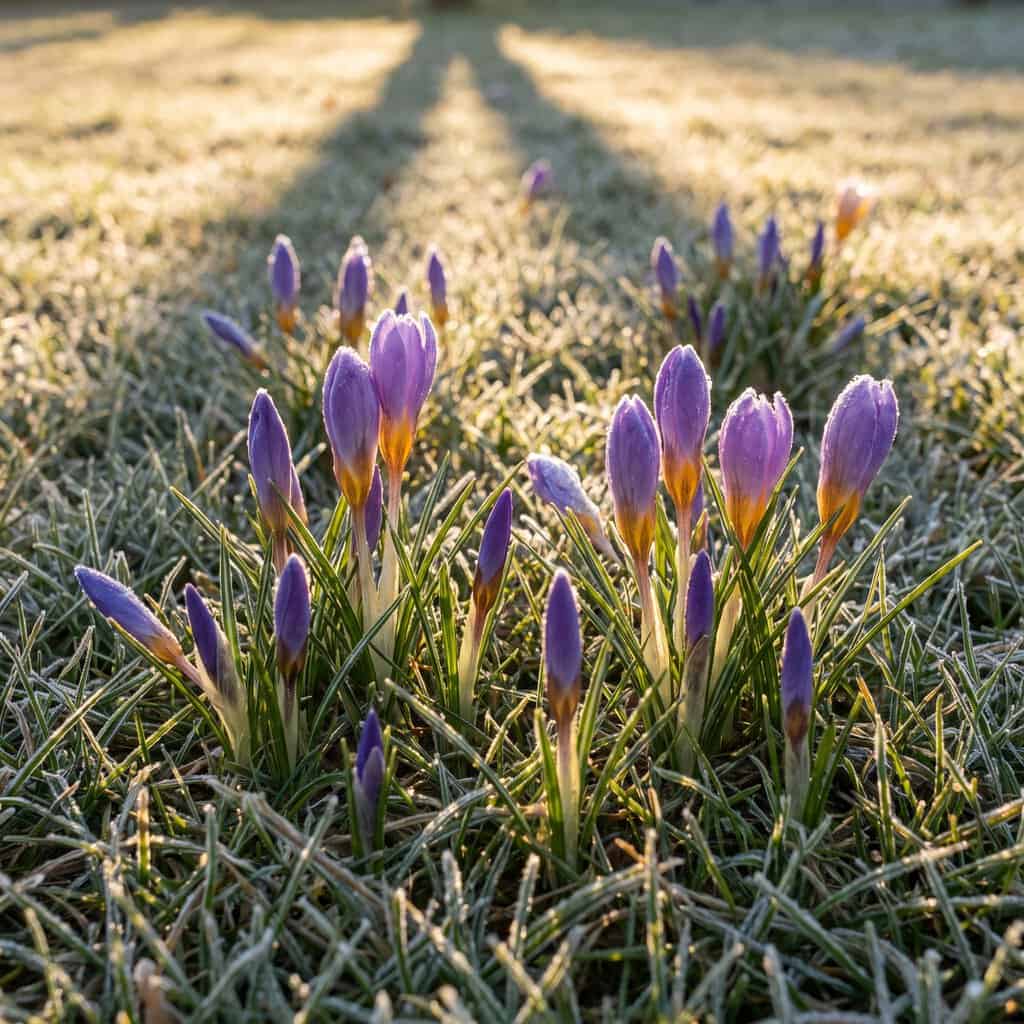
The earliest crocus to open, weeks ahead of the fat Dutch hybrids most people know. Slender purple, gold, and white goblets that appear when the garden is at its quietest.
Plant the corms in fall, and plant a lot of them. They’re cheap by the bag, and they naturalize beautifully in lawns and borders.
They belong in the same company as hellebores and snowdrops. Scatter all three under a tree and you’ve built a February scene that most people only see in photographs.
Squirrels leave ‘tommies’ alone more often than other crocus, which is its own small mercy.
9. Dwarf Iris (Iris reticulata)
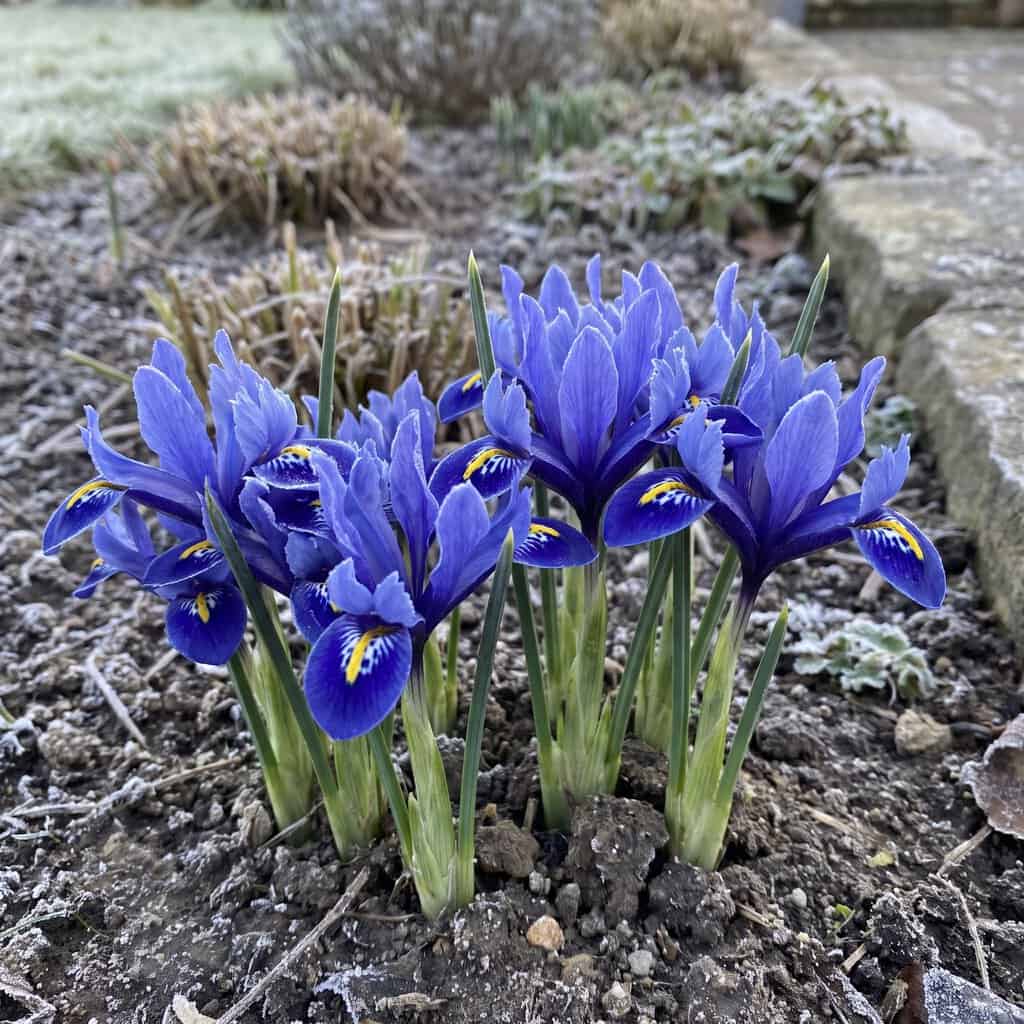
True blue in February. That alone makes it rare.
These bloom just three to four inches tall — small enough to disappear if you plant them out in the open, striking if you tuck them where you’ll actually see them up close. Beds along a path, the front of a border, a winter container by the door.
‘Harmony’ is the one to look for, a deep, reliable blue that Homes & Gardens flags as a standout. There are violets and golds too, but the blue is the showstopper.
Plant the bulbs in fall, a little deeper than you’d guess. They come back stronger for it.
10. Siberian Squill (Scilla siberica)
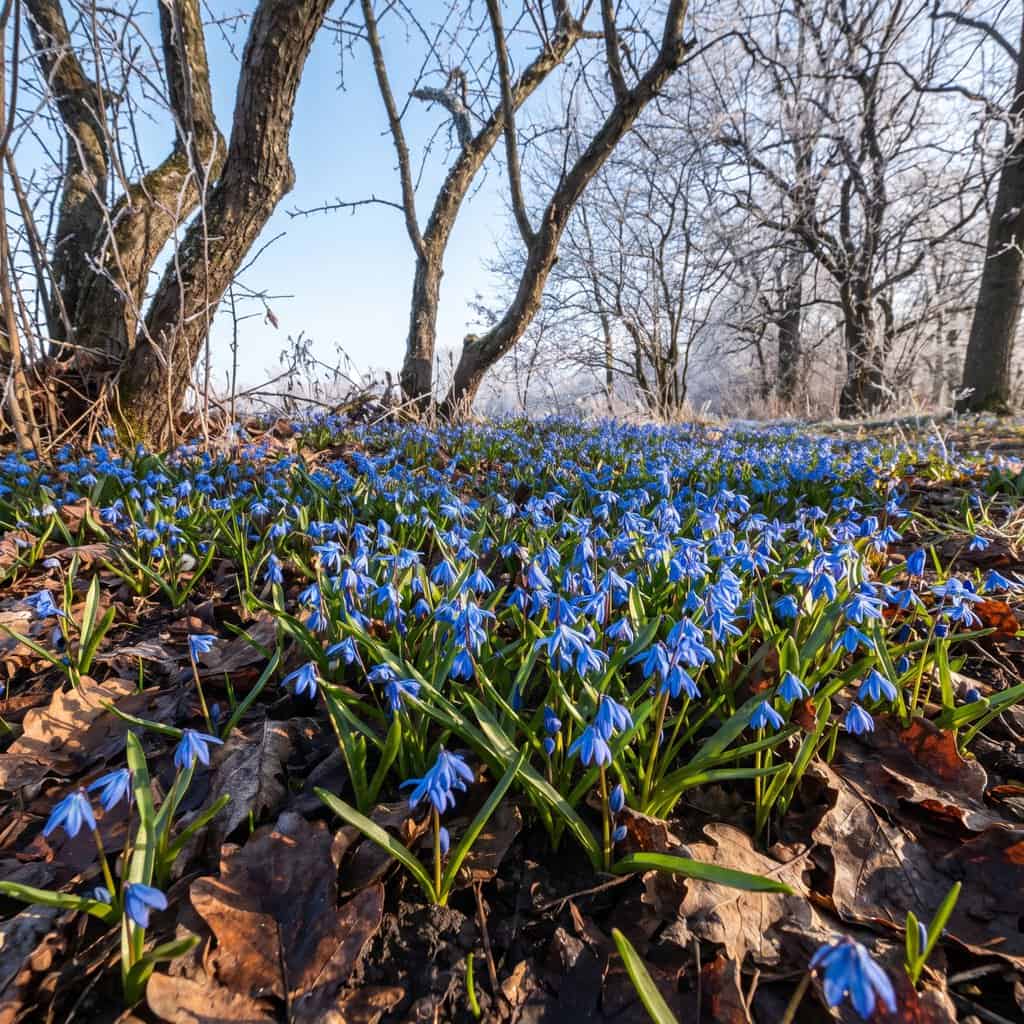
Electric blue. There’s no softer way to put it.
Few late-winter flowers hit a color this saturated, and squill spreads it around in a low haze that catches the eye from across the yard. The white ‘Alba’ form does the opposite job — cool and bright against bare brown ground.
Plant the bulbs in fall and step back. They naturalize readily, seeding into a spreading drift over a few years.
Under deciduous trees, in a lawn you don’t mind leaving unmowed until they fade — that’s where squill earns its keep.
11. Algerian Iris (Iris unguicularis)
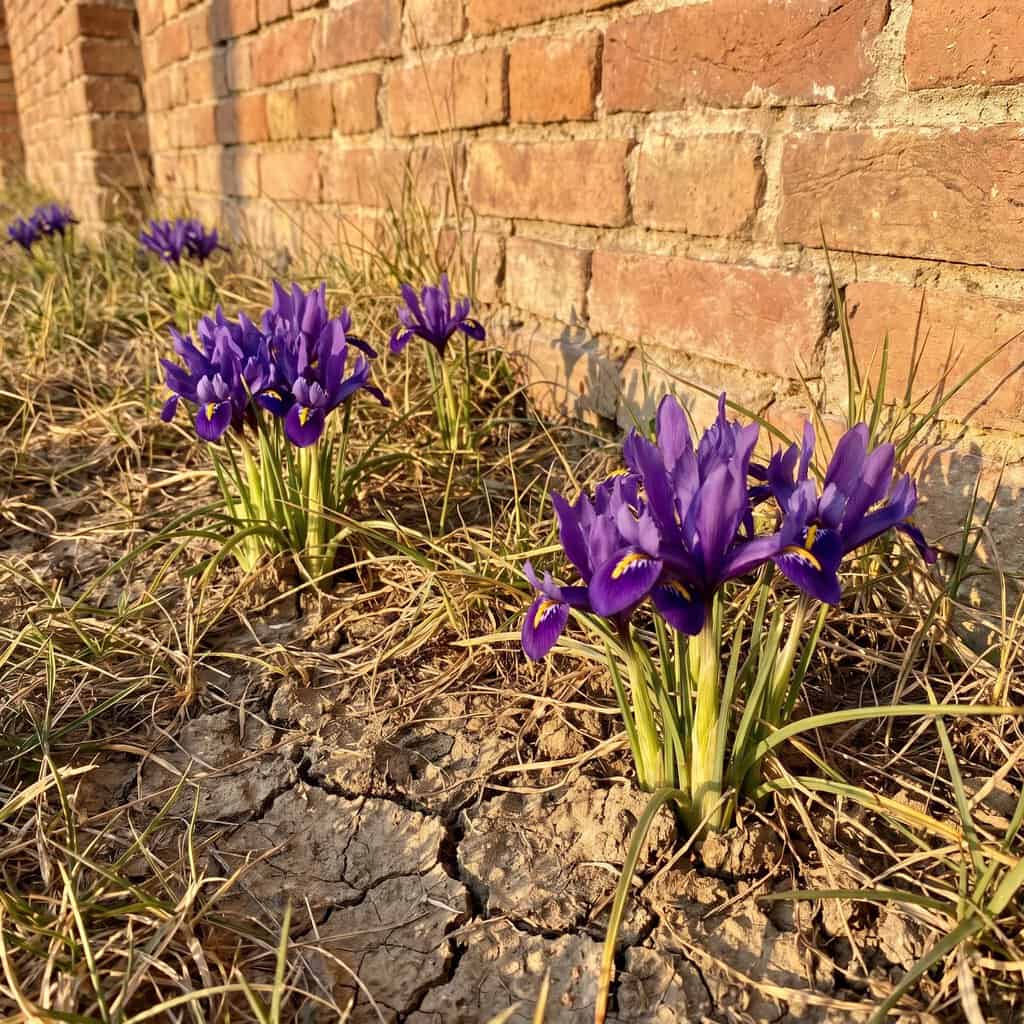
A sun-lover that wants the worst spot you’ve got.
Hot, poor, sun-baked soil at the base of a south-facing wall — that’s exactly the misery this iris asks for, and it pays you back with big violet flowers marked in yellow right through December, January, and February.
Frost will nip a bloom now and then. More arrive within days.
As Gardens Illustrated notes, the trick is to give it lean soil and leave it undisturbed. Rich beds and constant fussing kill it faster than any cold snap.
12. Camellia (sasanqua & japonica)
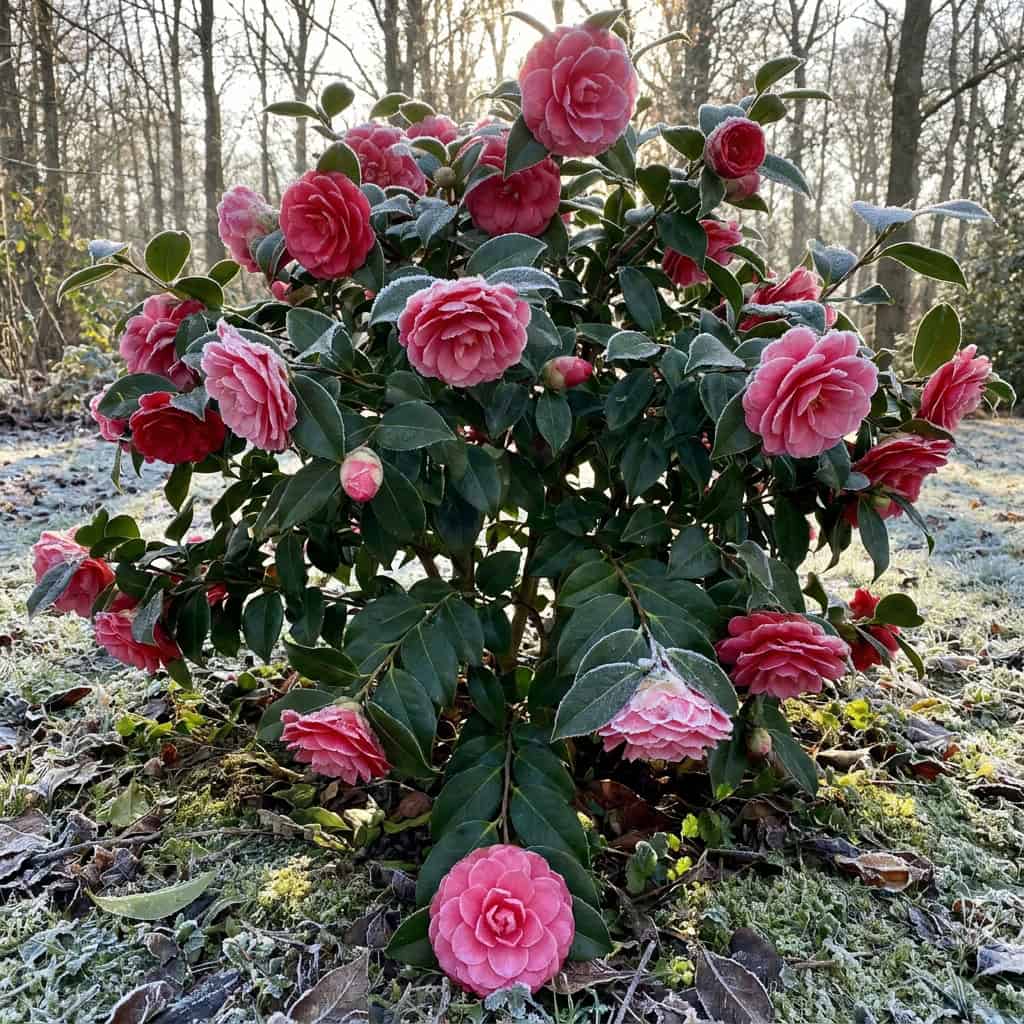
They call it the Rose of Winter for good reason. Plush red, pink, white, and cream blooms on a glossy evergreen shrub — flowering when almost nothing else dares.
Plant both types and you extend the show for months. Sasanqua camellias open in late fall and early winter; japonicas pick up the baton in late winter and carry it into spring.
The old rule that camellias need a warm climate is outdated. Newer hybrids are hardy to Zone 6, which puts them in reach of gardeners who never thought they could grow one.
Give them acidic soil, dappled shade, and shelter from harsh morning sun on frozen mornings. Then wait — the payoff is worth it.
13. Winter Heath (Erica carnea)
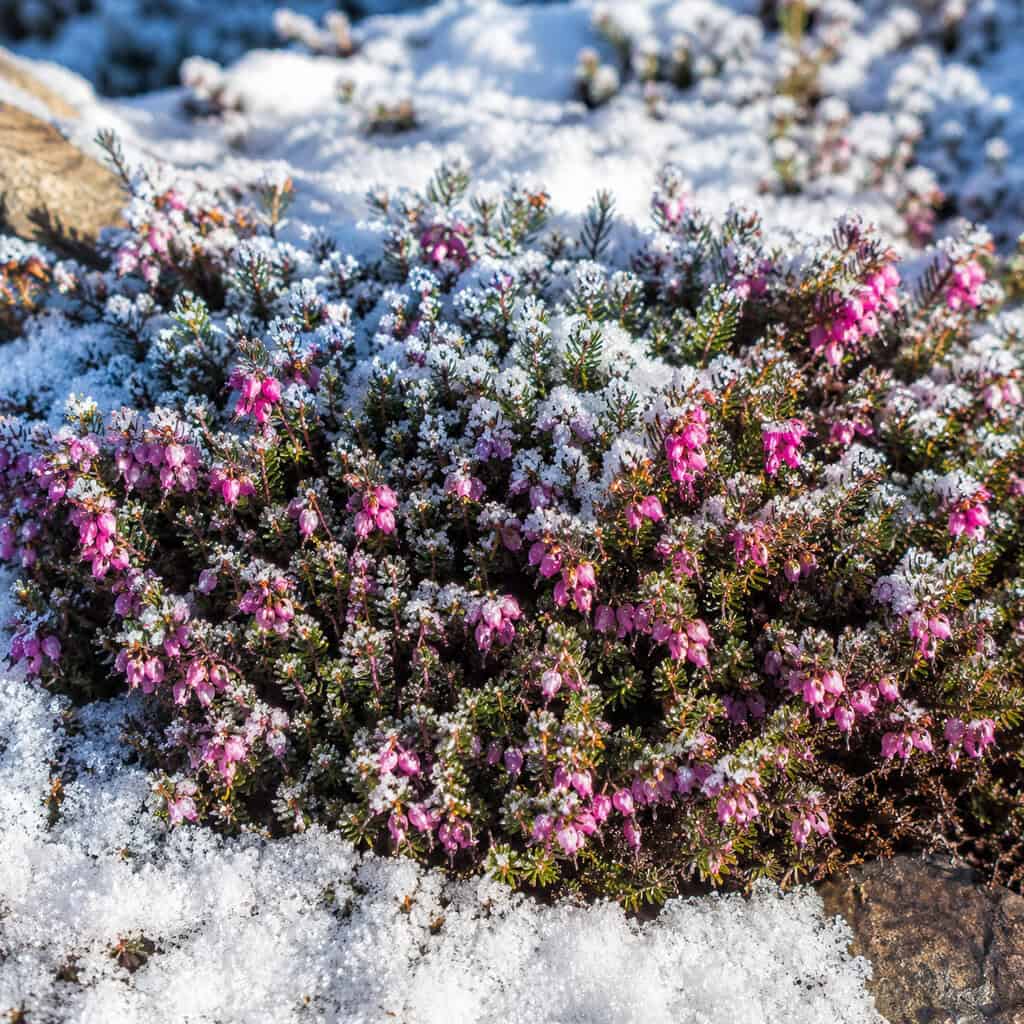
A low evergreen mat that flowers straight through the coldest months, sometimes right under a dusting of snow.
The blooms come in pinks, purples, and whites, and the foliage carries its own color year-round. So even between flushes it’s pulling its weight as groundcover.
It’s picky about one thing. Winter heath needs acidic, sharply drained soil — heavy clay will rot it out.
Get the drainage right and you’ve got a carpet of color in the season everything else abandons the ground.
14. Mahonia
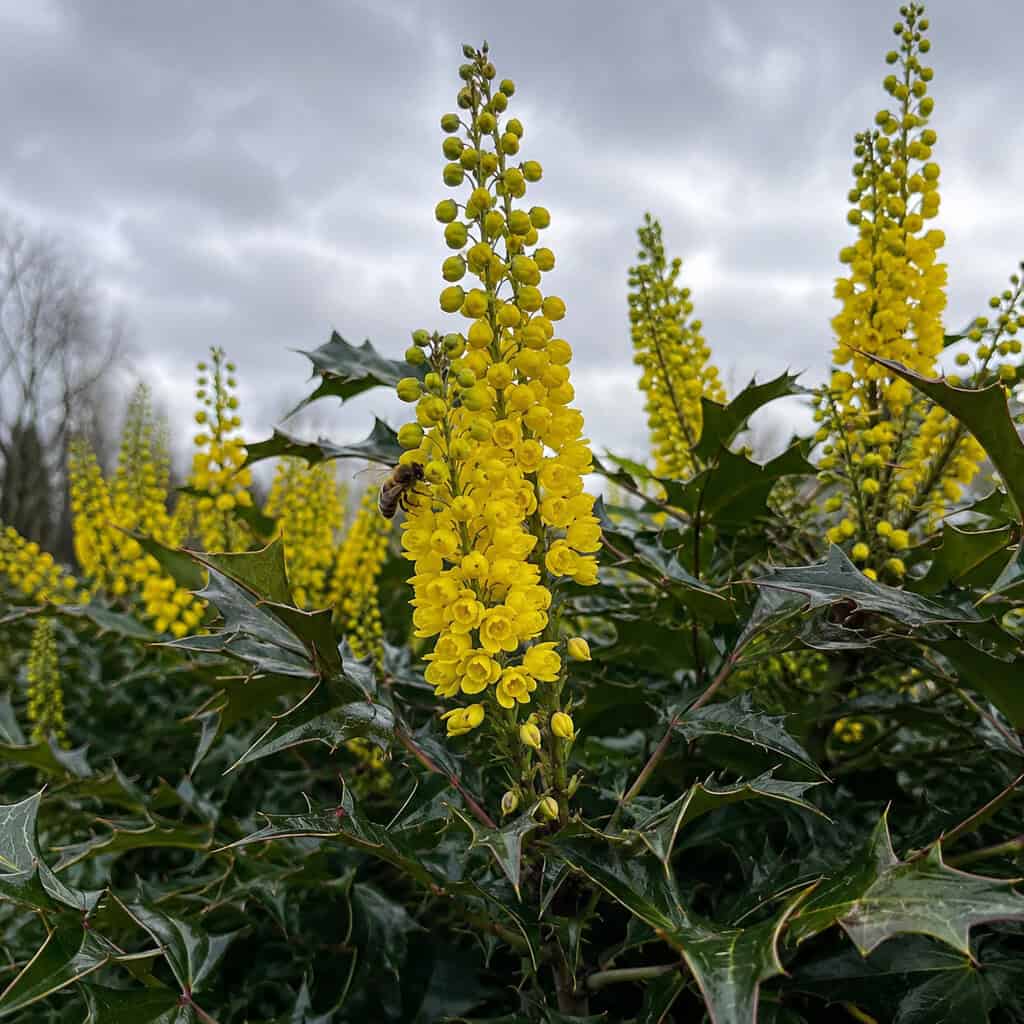
Bold, architectural, and impossible to ignore. Spiny, glossy evergreen leaves fanned out like a jungle plant, topped with upright clusters of bright yellow flowers in the depths of winter.
‘Winter Sun’ is the reliable one. It blooms hard when little else does, and on a mild winter afternoon it’ll pull in the bees.
Use it where you want a strong shape as much as color — a corner, a shady bed, a spot that needs some backbone. It reads as a statement even from a distance.
Some flowers give way to blue-black berries later, extending the interest past the bloom.
15. Witch Hazel (Hamamelis)
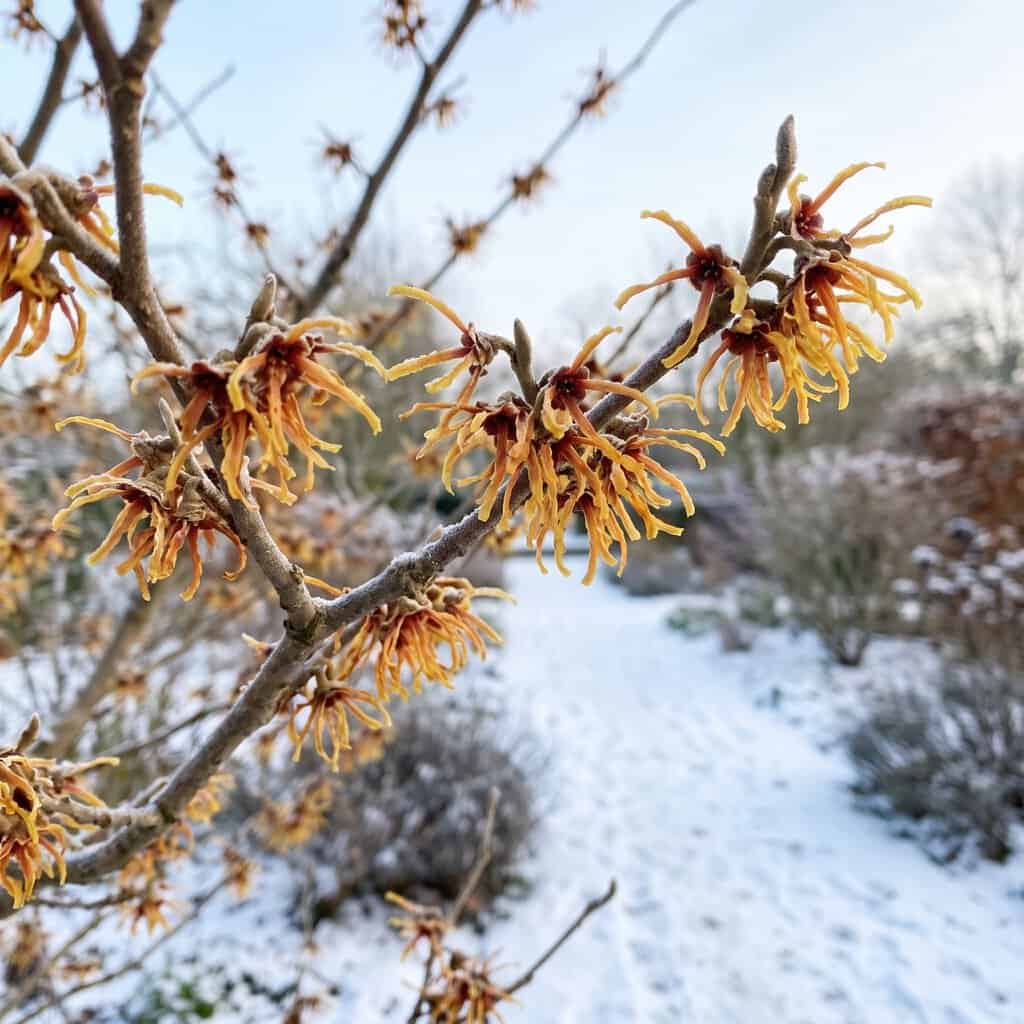
Bare branches, then suddenly ribbons. Spidery yellow, orange, and copper tassels unfurl on leafless stems in the dead of winter, and they’re fragrant on top of it.
The cultivars are the whole game here. ‘Arnold Promise’ glows yellow, ‘Jelena’ runs orange-copper, and ‘Diane’ burns closer to red — Gardenary lists all three as the go-to picks.
Plant it near a path or a door. The scent is the reason — it carries on cold air, and you want to walk into it, not admire it from a window.
16. Winter Daphne (Daphne bholua)
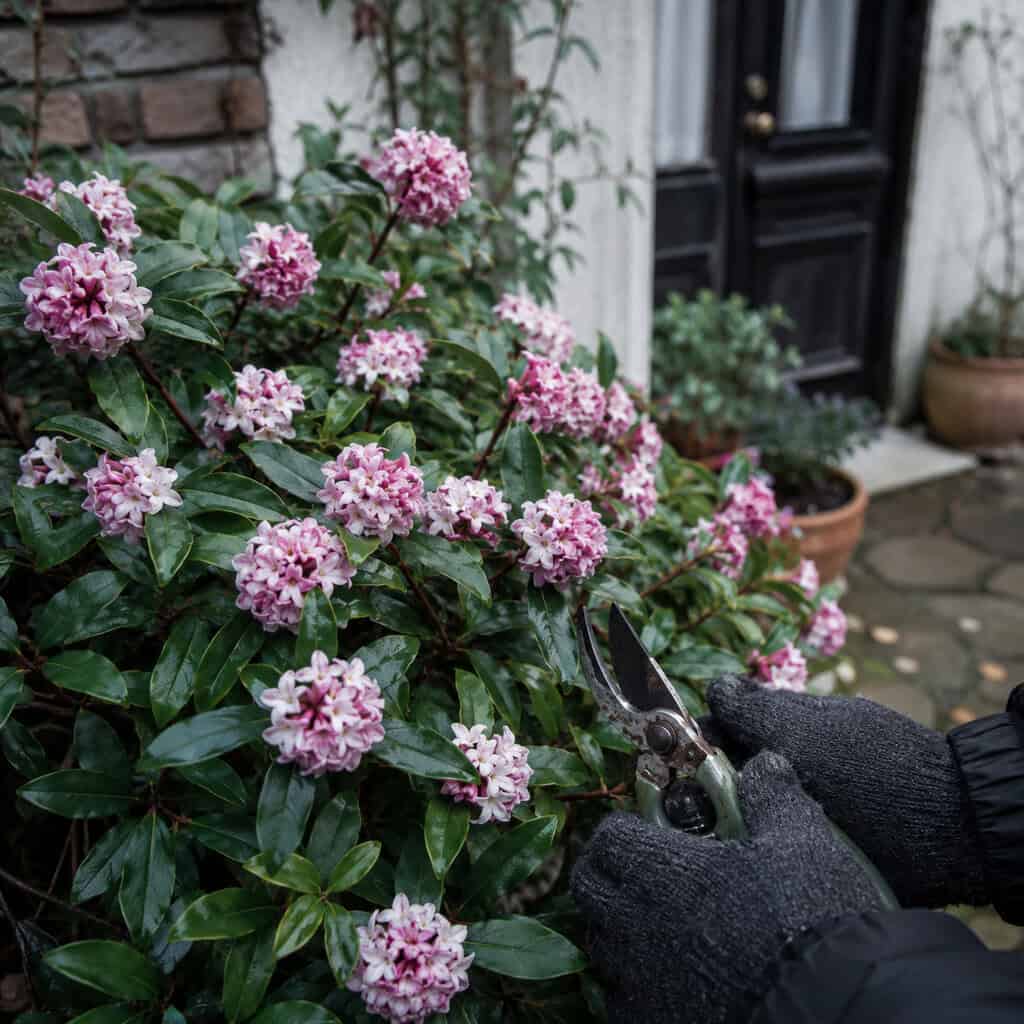
The fragrance is the legend. A few clusters of pink-and-white flowers can perfume an entire corner of the garden, and they open as early as November and keep going into March.
‘Jacqueline Postill’ is the classic form. Plant it in fall or spring, in well-drained soil, and try not to move it — daphne resents being disturbed.
Now for the two cautions, because daphne earns both. It’s toxic to pets — every part, berries included — and eating it can cause severe mouth irritation, vomiting, and diarrhea in dogs and cats.
The RHS also flags the sap as a skin and eye irritant for people. So wear gloves whenever you prune or handle it, and wash up afterward.
Site it carefully. You want that scent near a door or a walkway where you’ll enjoy it — but not where a dog can strip the low branches or a child can reach the berries.
A raised bed near an entry, or a spot backed by a fence, threads the needle. Close enough to smell, out of reach of the mouths that shouldn’t taste it.
17. Winter Jasmine (Jasminum nudiflorum)
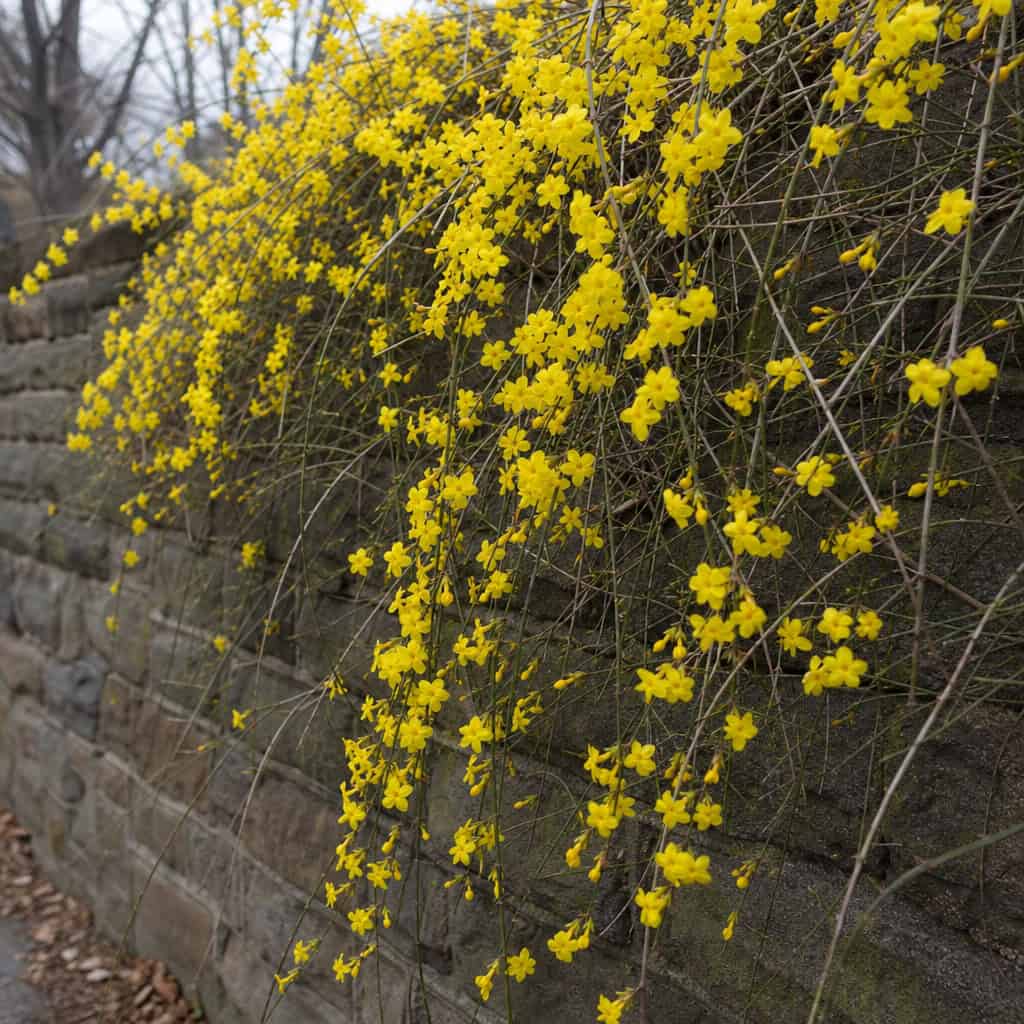
Forsythia, but earlier and longer. Bright yellow flowers open on bare green stems weeks before forsythia wakes up.
It sprawls if you let it and climbs if you give it something to lean on. Either way it fills space fast — a bank, a wall, a chain-link fence that needs hiding.
Don’t expect fragrance; this jasmine trades scent for cold-hardiness and early bloom. That’s a fair trade in February.
Cut it back after flowering to keep it from turning into a tangle.
18. Paperbush (Edgeworthia chrysantha)
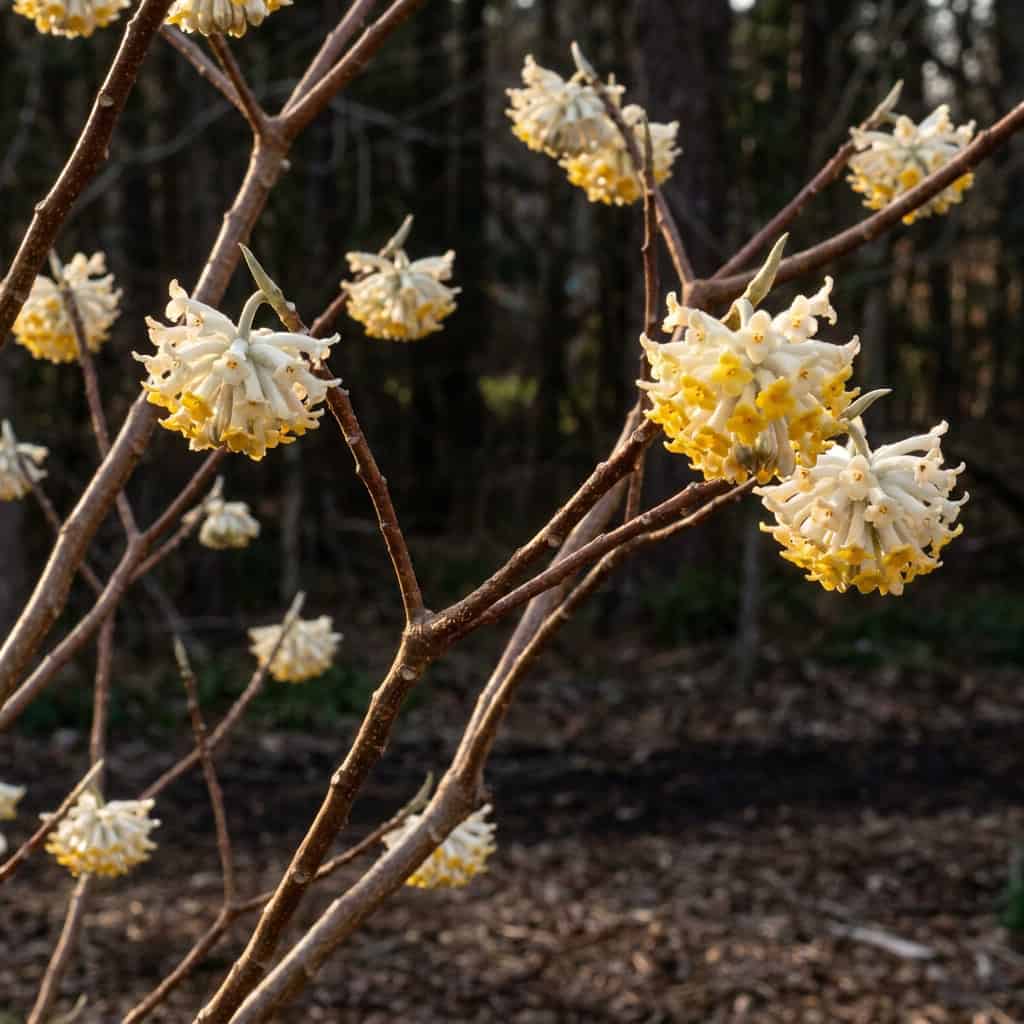
Most people have never seen one, and that’s exactly why it stops them in their tracks.
In late winter, bare stems hang with rounded clusters of silky, silvery buds that open to fragrant yellow-and-white flowers — the whole thing looks lit from within. Gardenia notes the bloom holds for four to six weeks, an unusually long run for a winter shrub.
Even out of bloom it’s sculptural. The forked, cinnamon-brown branches make a striking silhouette after leaf drop.
Plant it in spring or fall, in rich, moist soil with some shade. Then enjoy being the only house on the block with one.
19. Carolina Jessamine (Gelsemium sempervirens)
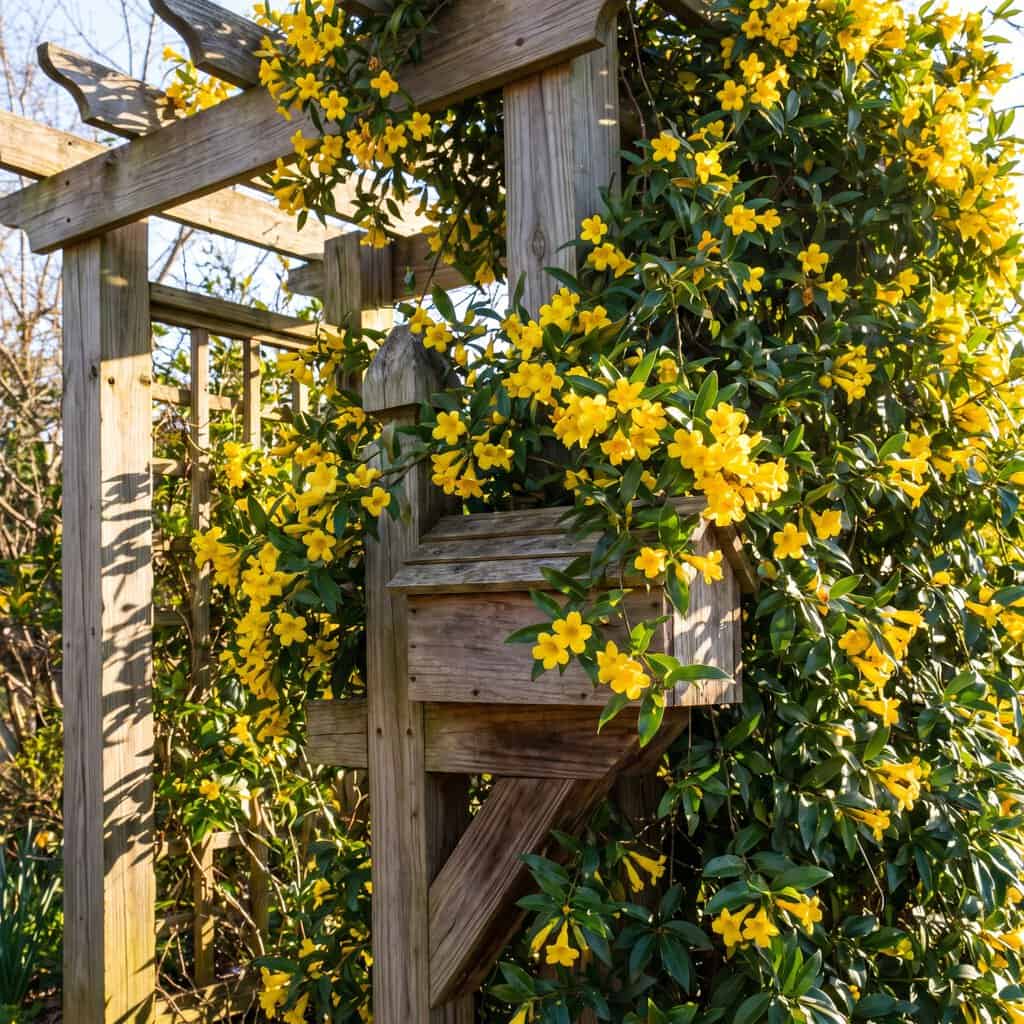
A native evergreen vine that drapes itself in vivid yellow trumpets in late winter and early spring, right as the overwintering insects start to stir.
It’s built for vertical color. Train it up a fence, over an arbor, or around a mailbox post and it’ll pour blooms down the whole structure.
In Zones 7 through 9 it stays green all year, so even the off-season foliage earns its spot. Fast, tough, and dependable.
A note worth carrying: the plant is toxic if eaten, so keep it off the ground where pets browse and enjoy it up high where it belongs.
20. Winterberry Holly (Ilex verticillata)
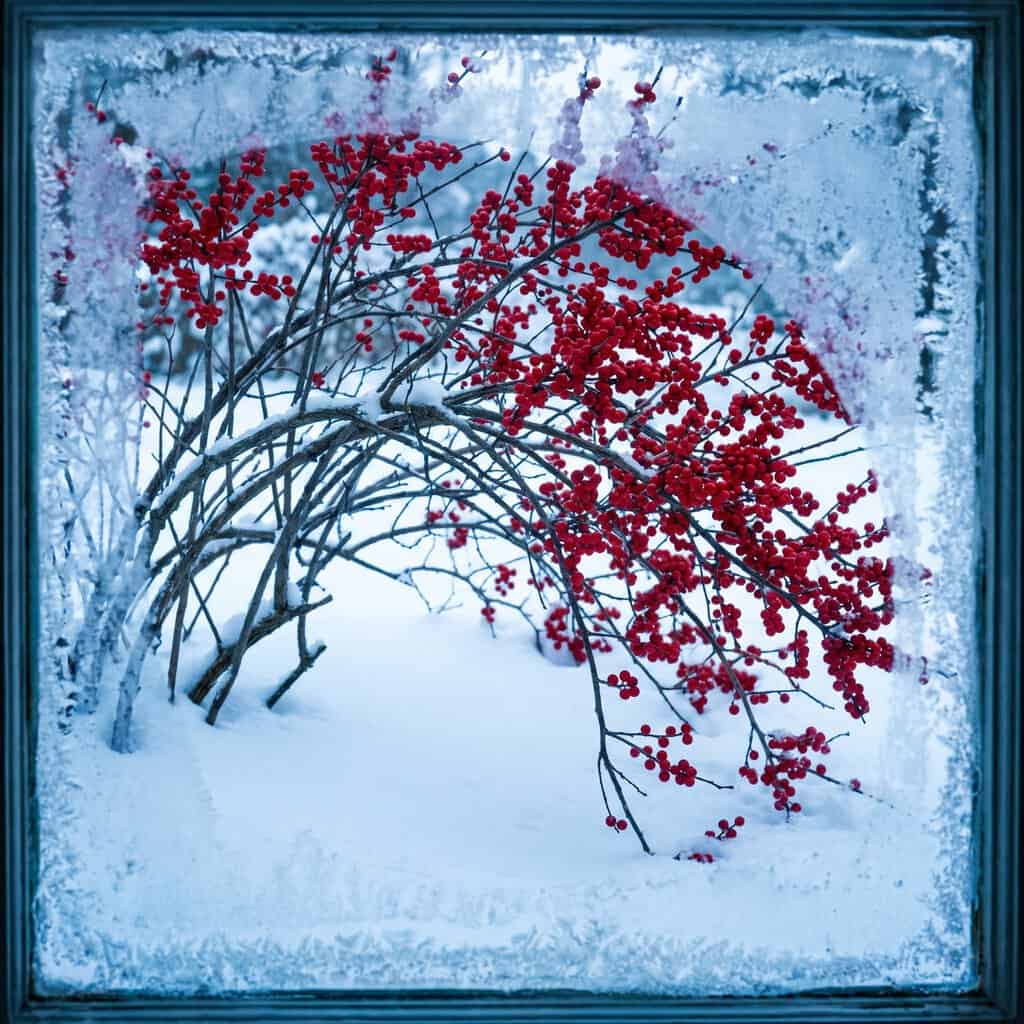
A holly that drops its leaves — and looks better for it. Once the foliage falls, the bare branches light up with dense red berries that blaze against snow.
There’s a catch, and it trips up a lot of first-timers. Winterberry needs a male plant nearby to pollinate the female berry-makers, and it looks best planted in groups of three or more.
One lonely shrub gives you a disappointing scatter of berries. A cluster with a pollinator in the mix gives you the fireworks.
Plant it where you’ll see it from indoors — near a window, along a walkway — because that red is a gift on the grayest day of the year.
21. Nandina (Heavenly Bamboo)
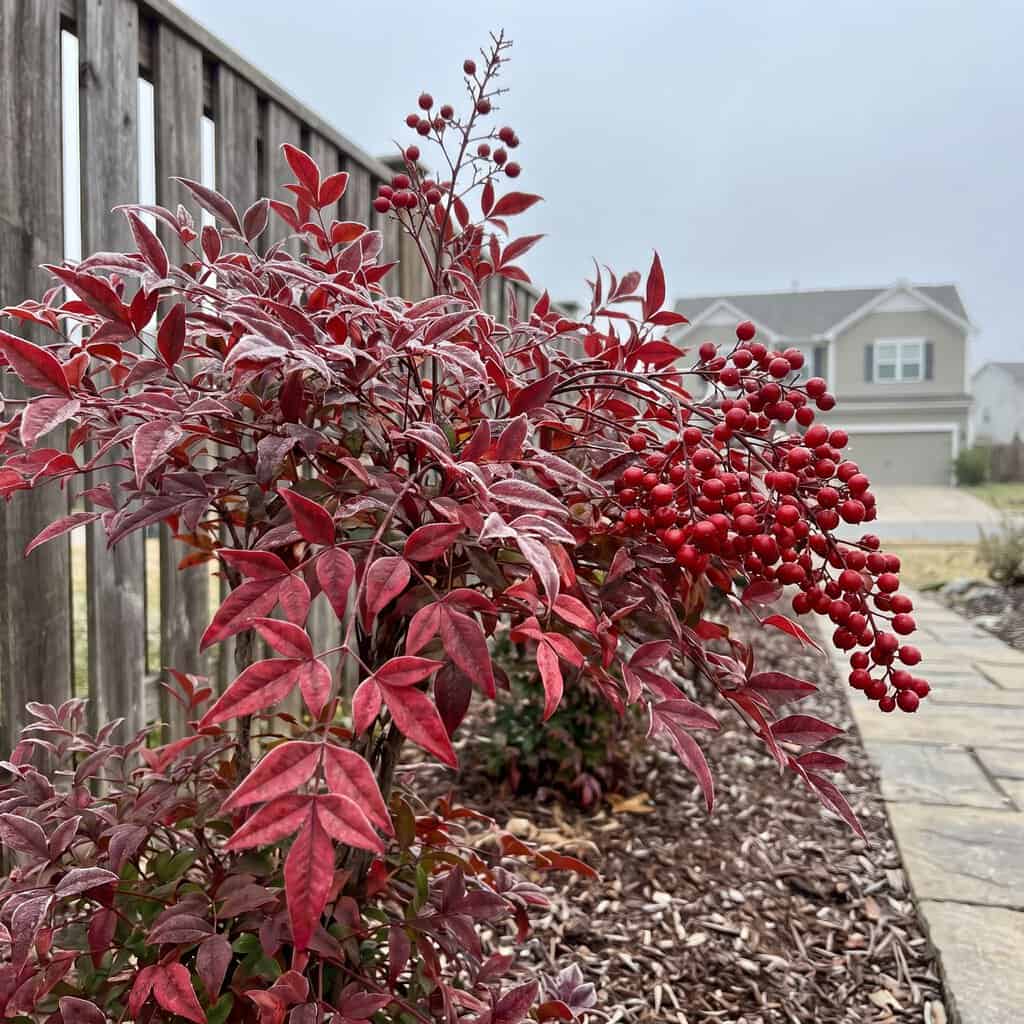
Lacy foliage that turns ruby, wine, and scarlet in the cold, plus bright red berries that hang on all winter. On looks alone, it’s a knockout.
But nandina comes with two flags, and both matter.
First, the berries are toxic. They contain cyanogenic compounds, and NC State Extension notes they’re dangerous to dogs, cats, and — grimly — to birds like cedar waxwings that gorge on them in late winter and can die from it. This isn’t a mild-tummy plant.
Second, the straight species is invasive across the Southeast, seeding itself into woodlands where it crowds out natives.
So make it easy on yourself: skip the seed-bearing species and plant a sterile cultivar. ‘Firepower’ and ‘Gulf Stream’ give you the fiery winter foliage without the toxic berries and without the invasive spread.
Same color. None of the collateral damage. That’s the only way to plant this one responsibly.
22. Redtwig / Redosier Dogwood (Cornus sericea)
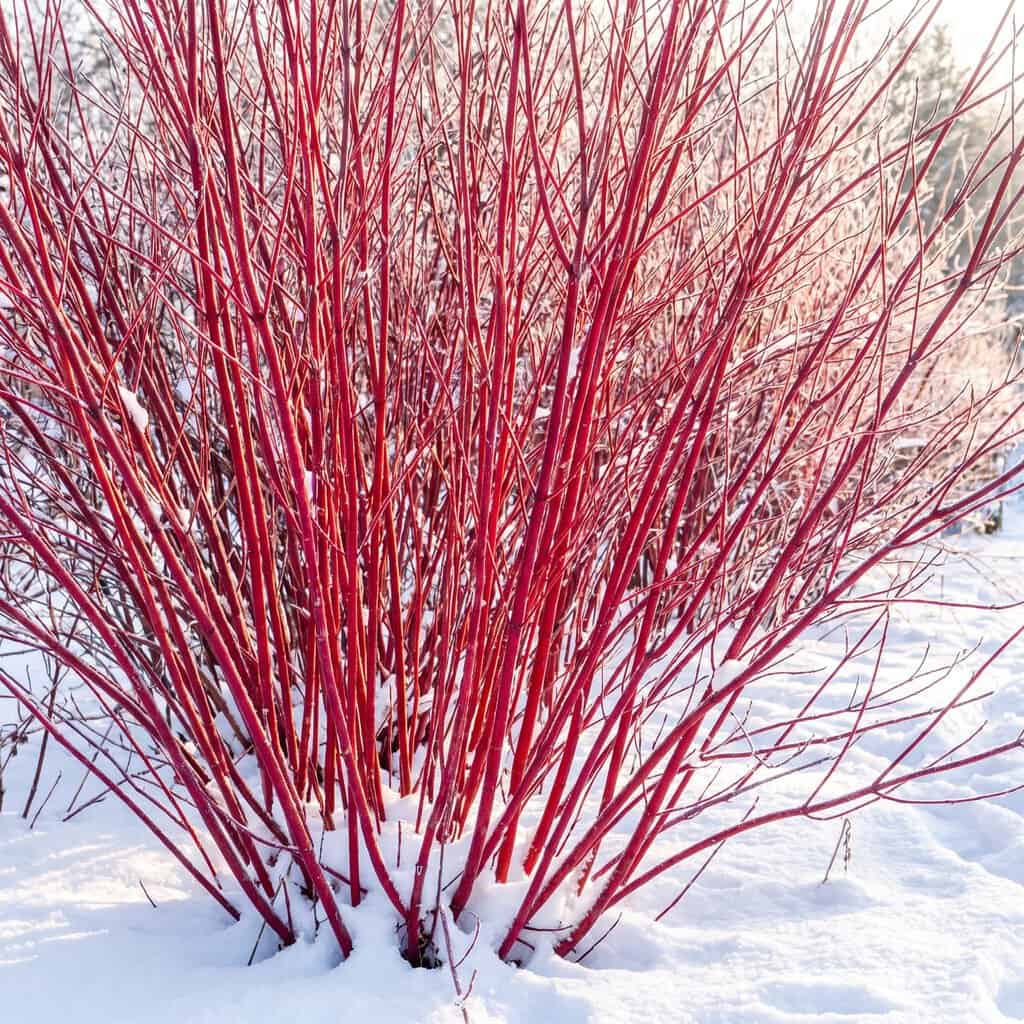
The poster child of winter stem color. Once the leaves drop, the twigs turn a hot cherry-red that practically vibrates against snow.
‘Cardinal’ and ‘Arctic Fire’ are the cultivars to reach for, bred for the most intense color. Plant now, and next winter you’ll understand why people plant whole thickets of it.
Here’s the maintenance secret. Cut it hard to the ground in early spring — coppicing — because the newest growth carries the brightest color. Let it get old and woody and the red fades to a dull brown.
As Iowa State Extension points out, that annual chop is the difference between a good display and a great one.
23. Coral Bark Willow (Salix alba ‘Britzensis’)
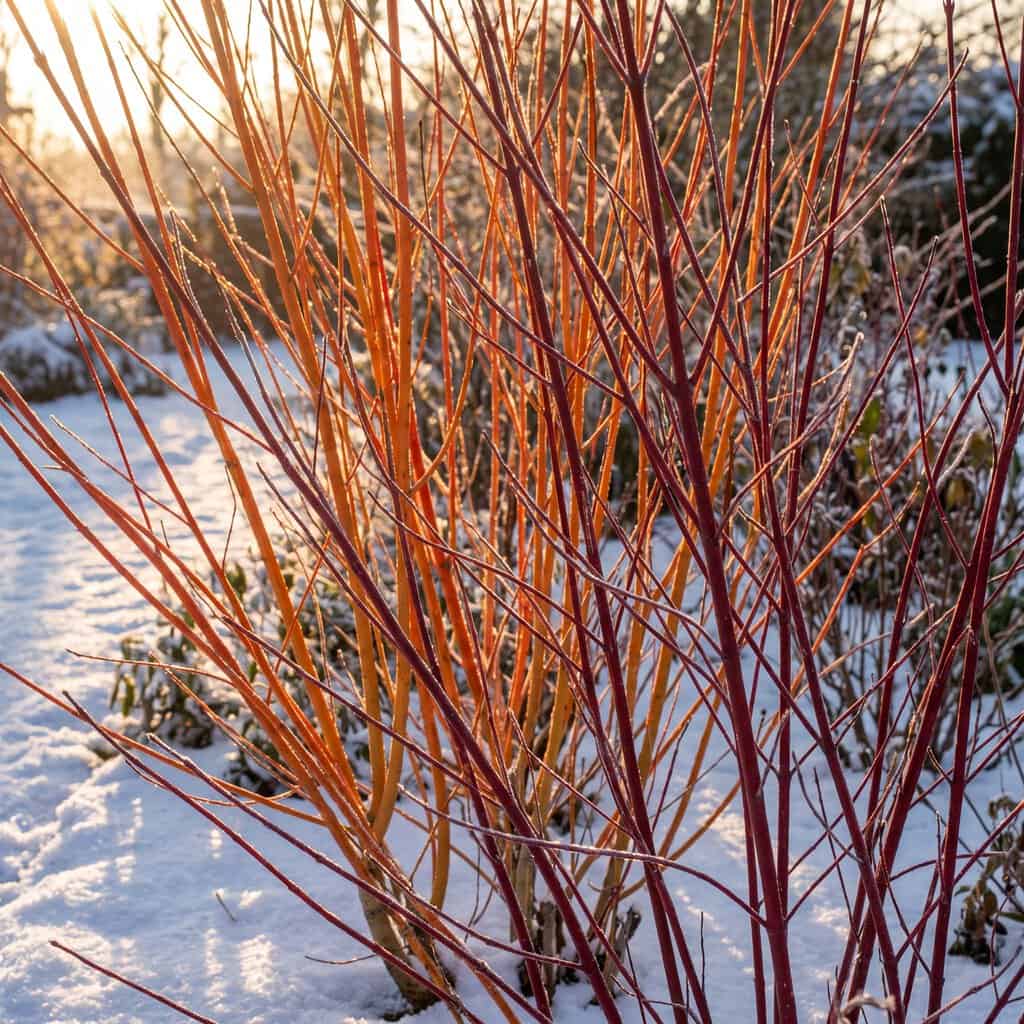
Dogwood’s fiery partner. Where redtwig runs cherry-red, coral bark willow burns orange-red and gold — plant them together and you get a whole gradient of hot color glowing through the winter.
‘Flame’ willow pushes the glow even further if you want the brightest possible show.
It grows fast and demands the same treatment as the dogwood: hard pruning every year to force fresh, brightly colored stems. Neglect it and the color dulls.
Fine Gardening makes the case for combining willows and dogwoods into one blazing winter tapestry. Do that and your yard becomes the one people slow down for in January.
24. Coral Bells (Heuchera)
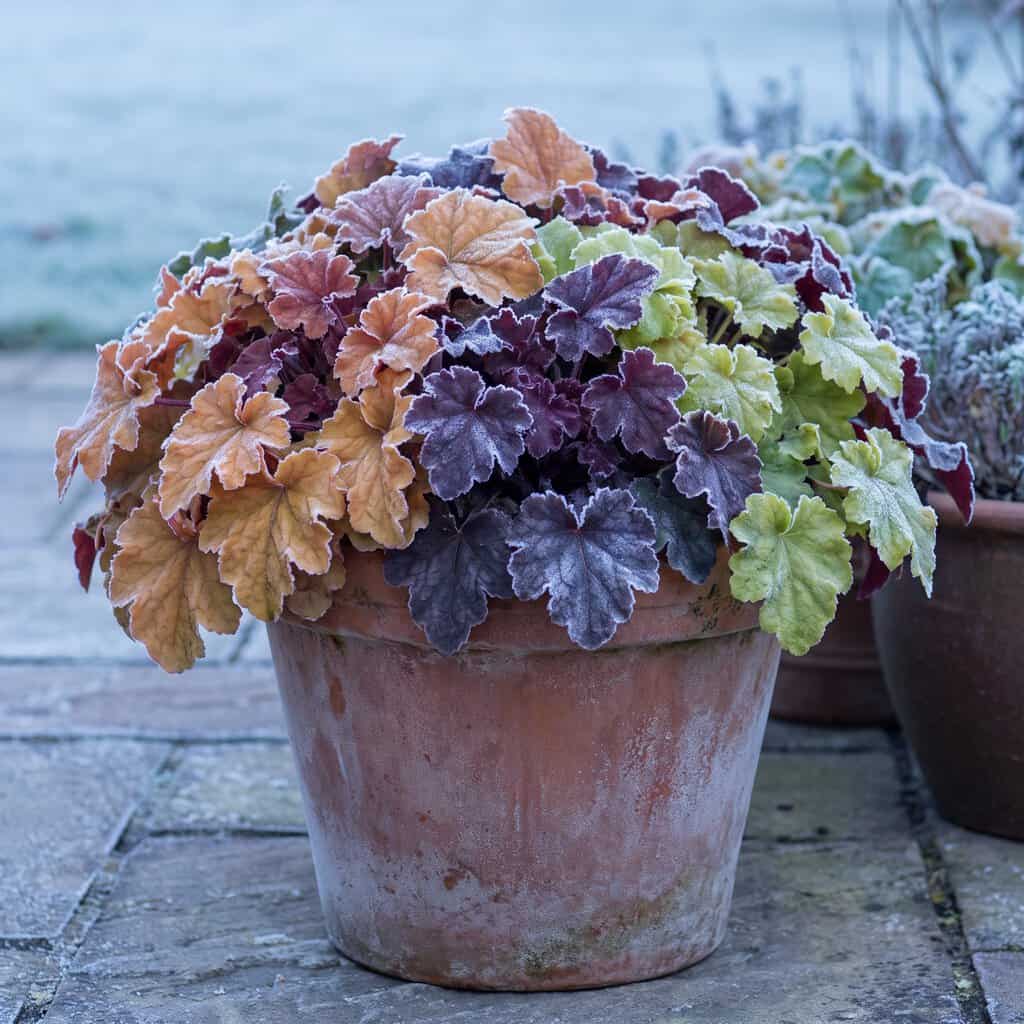
Foliage does the work here, and it does it in colors that sound made up — caramel, plum, burgundy, lime, silver.
Better still, that color holds after frost arrives. Coral bells run evergreen to semi-evergreen, so the mound of ruffled leaves keeps looking sharp when the flowering plants around it have folded.
Plant them in late summer or fall as a low anchor in beds and containers. They’re dependable, they’re compact, and they play well with everything.
Think of them as the steady color between the fireworks. Not flashy — just always there.
25. Ornamental Grasses (Switchgrass & friends)
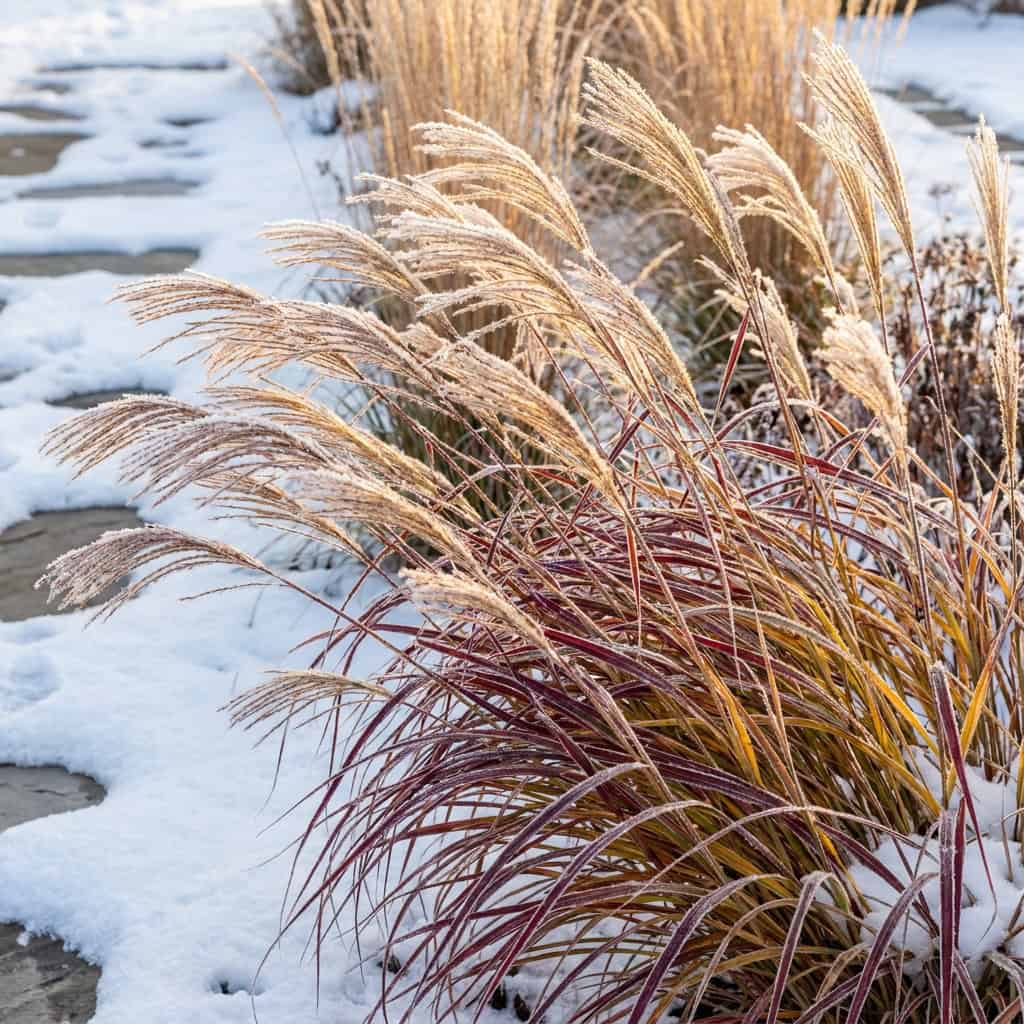
Don’t cut them down in fall. That’s the whole strategy.
Grasses like ‘Cheyenne Sky’ switchgrass carry wine-red and golden tones into the cold, and their seedheads stand all winter — catching frost, holding snow, swaying in wind that flattens everything else.
That movement is the part photos never capture. A bed of grasses in a January breeze is the only thing alive in the yard.
Plant them in late summer or fall, and resist the urge to tidy up. Leave the blades and seedheads standing until early spring, then cut them back before new growth pushes.
26. Inkberry Holly (Ilex glabra)
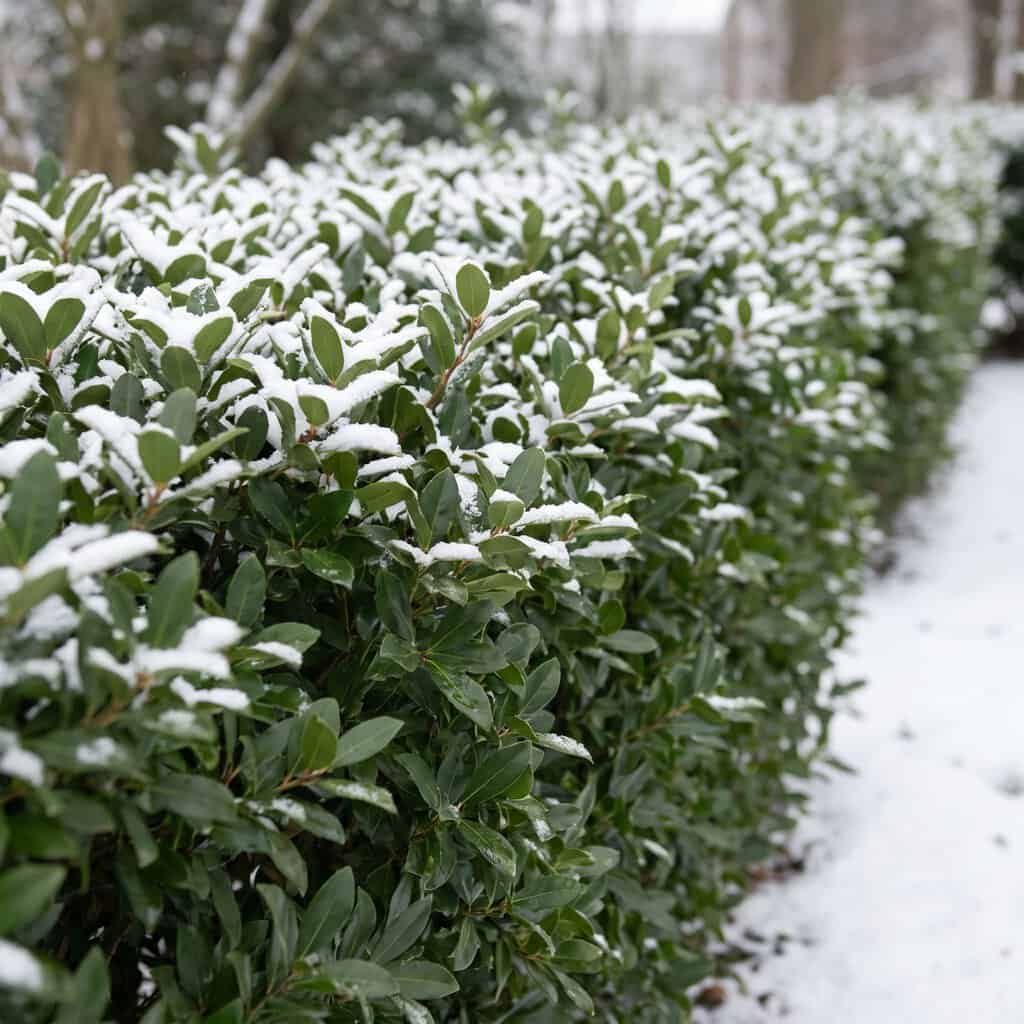
This one’s the frame around the painting. A native broadleaf evergreen — a genuine boxwood alternative — that stays quietly green all winter long.
It’s not a color plant, and that’s the point. Every fiery twig, every red berry, every magenta cyclamen bloom pops harder with a wall of calm green behind it.
Plant a low hedge or a backdrop grouping and let it do the unglamorous work. Structure is what separates a garden with color from a pile of colorful plants.
Sometimes the most useful thing you can plant is the thing nobody notices.
The Payoff
Winter color isn’t a mystery. It’s a to-do list you finish in fall.
You don’t need all 26. Pick a few pansies and a hellebore for instant reward, add a stem shrub and a scatter of bulbs for the long game, and you’ve already beaten the gray yards down the street.
Just mind the toxic ones — cyclamen, hellebore, daphne, nandina — if pets or kids share the yard. Site them smart and the beauty costs you nothing but a little planning.
The best time to plant a winter garden was two months ago. The second-best time is this weekend.