

You planted the hostas in May. By June they were stubs.
Deer work at dawn and dusk, quiet as fog, and they treat a fresh flower bed like a salad bar someone left out just for them. One night is all it takes. Tulips gone. Rose canes chewed to nubs. That expensive nursery haul turned into brown stems.
Here’s the good news. Deer are picky. They route around plants that smell strong, feel fuzzy, taste bitter, or carry toxins — and a surprising number of those plants happen to be gorgeous.
No plant is 100% deer-proof. A starving deer in a hard winter will eat almost anything. But “deer-resistant” means they’ll walk past it nine times out of ten and go bother your neighbor instead.
Here are 35 beautiful plants deer tend to leave alone — grouped loosely from fragrant herbs to tough shrubs, so you can build a whole yard they ignore.
1. Lavender
Start with the plant you already half-trust.
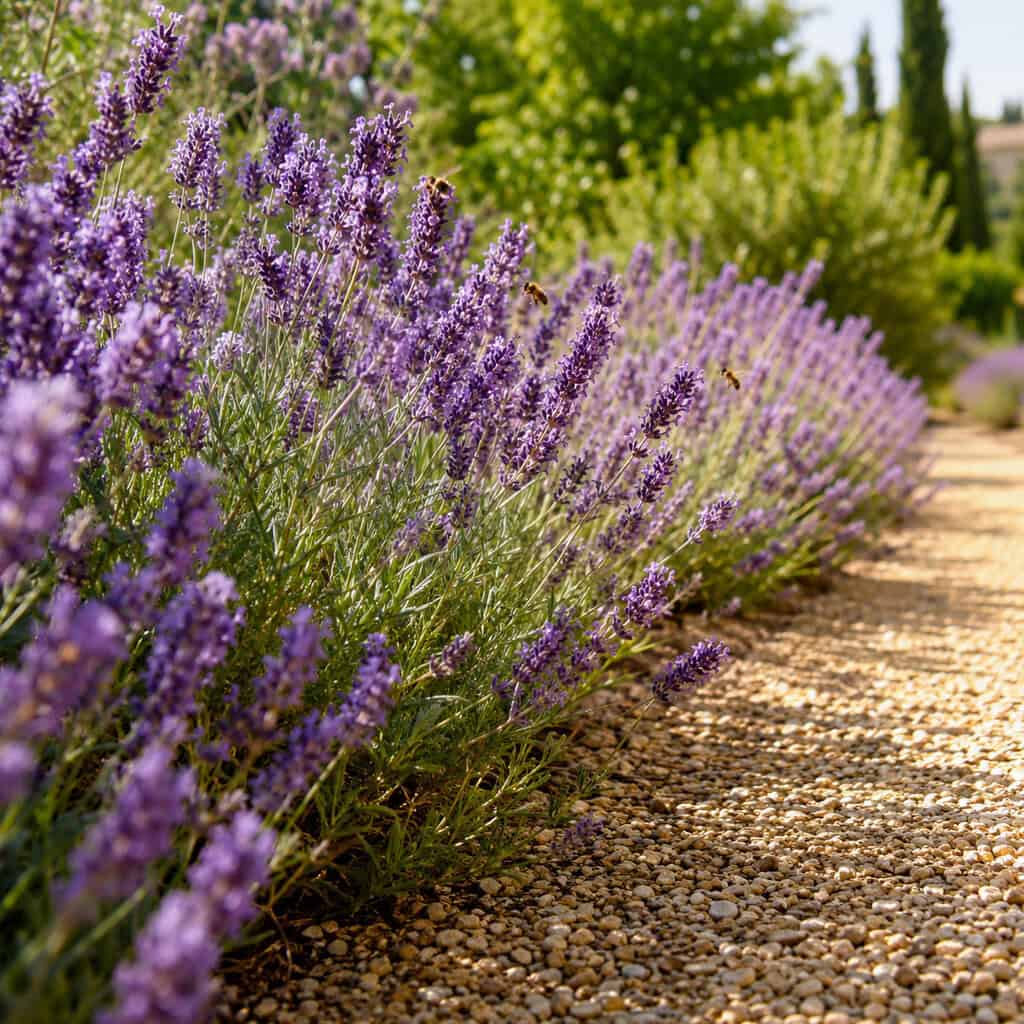
Lavender’s heavy essential-oil scent is exactly the kind of perfume a deer’s nose routes around. To you it smells like a spa. To them it smells like a wall.
It wants full sun and sharp drainage — Zones 5 through 9. Soggy feet kill it faster than any deer.
One honest caveat. Resistance slips when the plant is drought-stressed or the soil pH creeps too high, and stressed lavender loses some of its punch. The Old Farmer’s Almanac ranks it among the most reliably ignored perennials for a reason. Keep it happy and it stays a fortress. If you’re planting in autumn, timing matters — see planting lavender in the fall.
2. Russian Sage
Arguably tougher than the famous number one.
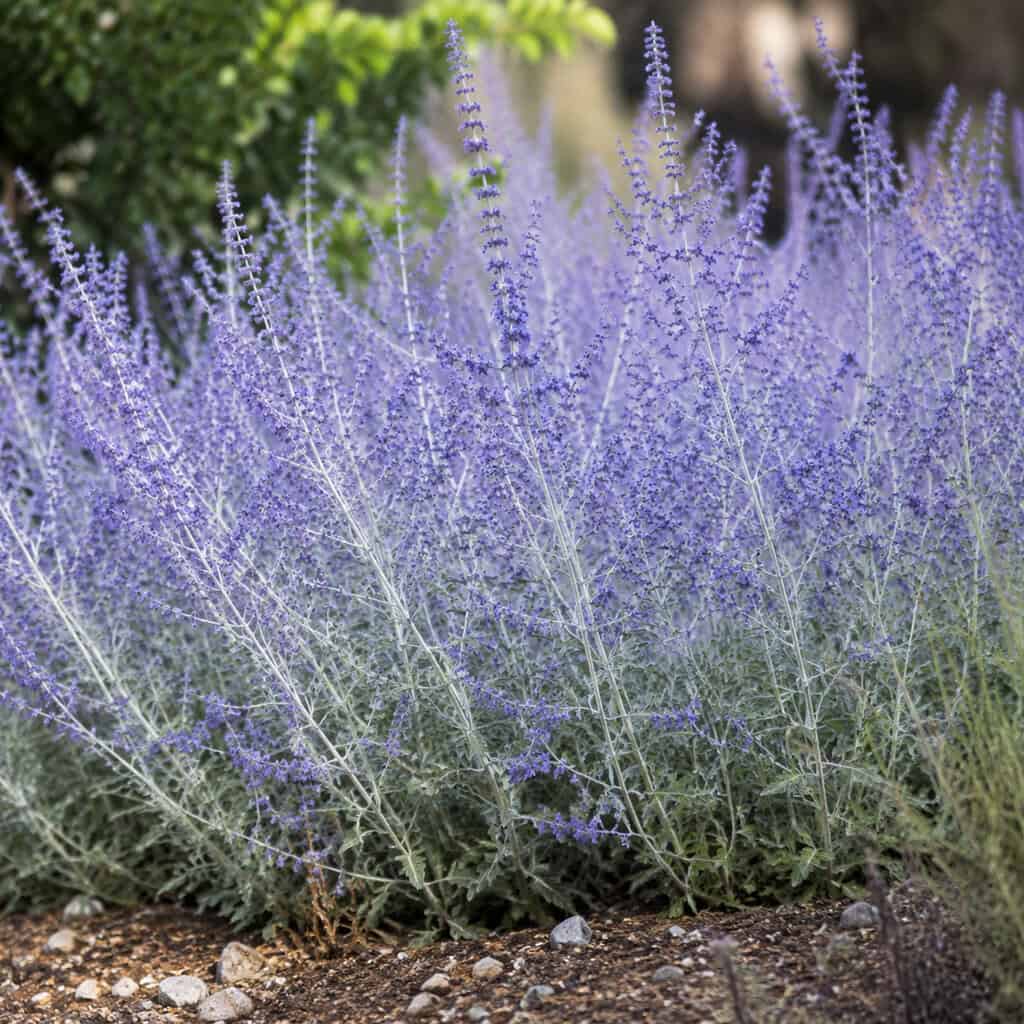
Russian sage brings a triple deterrent: volatile aromatic oils, high tannins, and fuzzy silver foliage deer don’t want against their tongues. Three strikes before they even take a bite.
It shrugs off drought and heat that would flatten softer perennials. Zones 4 through 9, full sun, poor soil — it doesn’t care.
The haze of lavender-blue flowers runs from midsummer into fall. Cut it back hard in early spring and it comes back thicker.
3. Catmint (Nepeta)
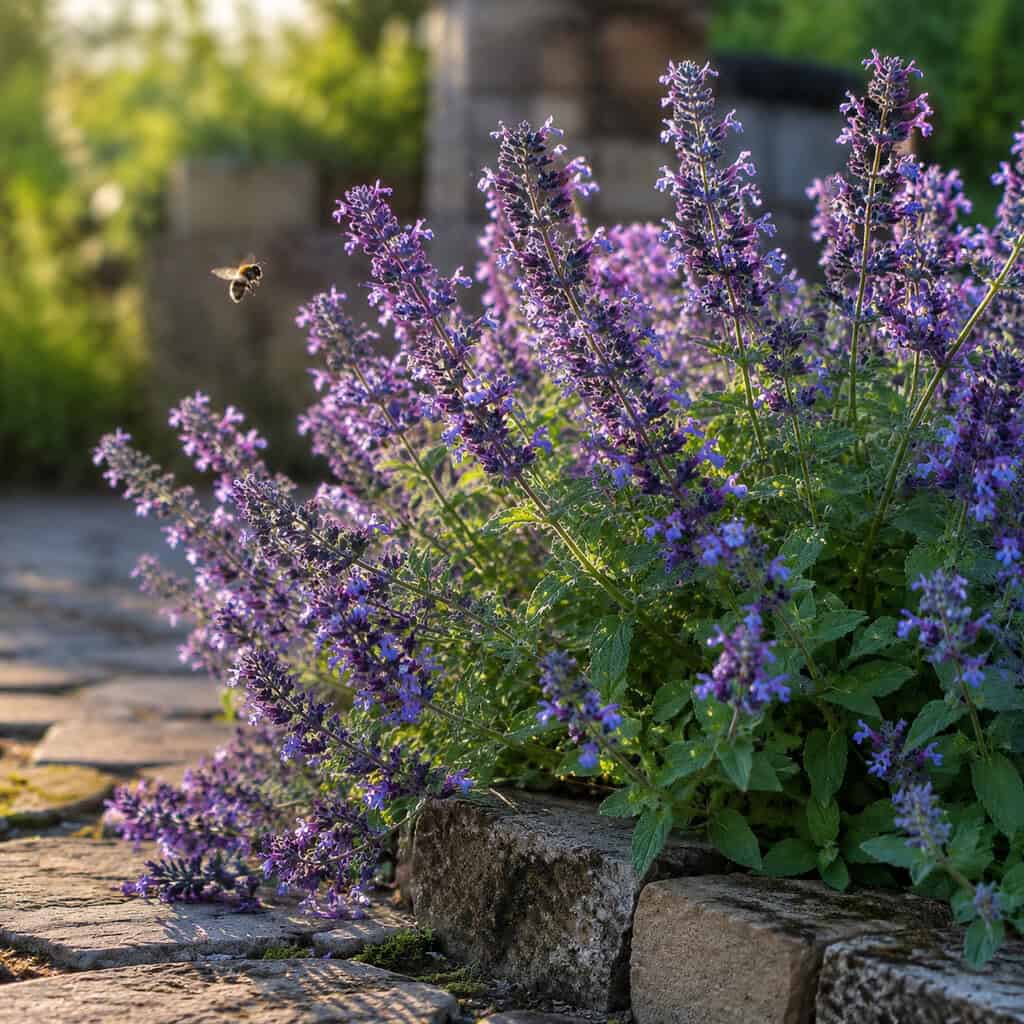
Deer hate the minty smell. Pollinators mob it. That’s the whole pitch, and it’s a good one.
Catmint blooms for months — a low, sprawling cloud of soft blue-purple that spills over path edges and softens hard corners.
It thrives in Zones 3 through 8 and asks for almost nothing. Shear it back after the first flush and you’ll get a second.
A workhorse border plant that earns its keep on looks and defense both.
4. Salvia / Ornamental Sage
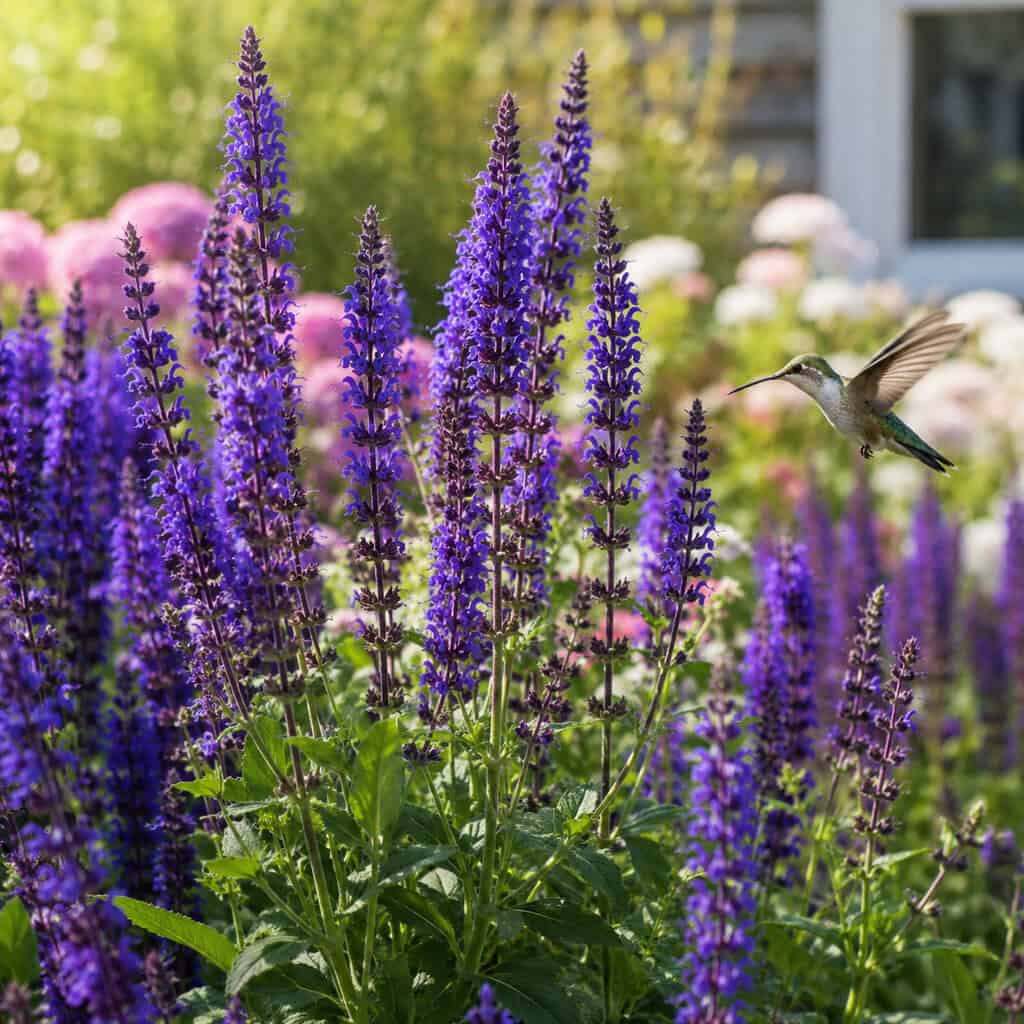
Stiff flower spikes in indigo, purple, and hot pink rise over foliage deer find rank.
The genus is enormous. There’s a salvia for nearly any sunny bed, from knee-high border types to towering back-of-the-border spires.
Aromatic leaves do the deterring. Bees and hummingbirds do the visiting.
Most types bloom hard through summer, especially if you deadhead. Mississippi State University Extension lists salvia among its top deer-resistant picks — it shows up on nearly every regional list for a reason.
5. Bee Balm (Monarda)
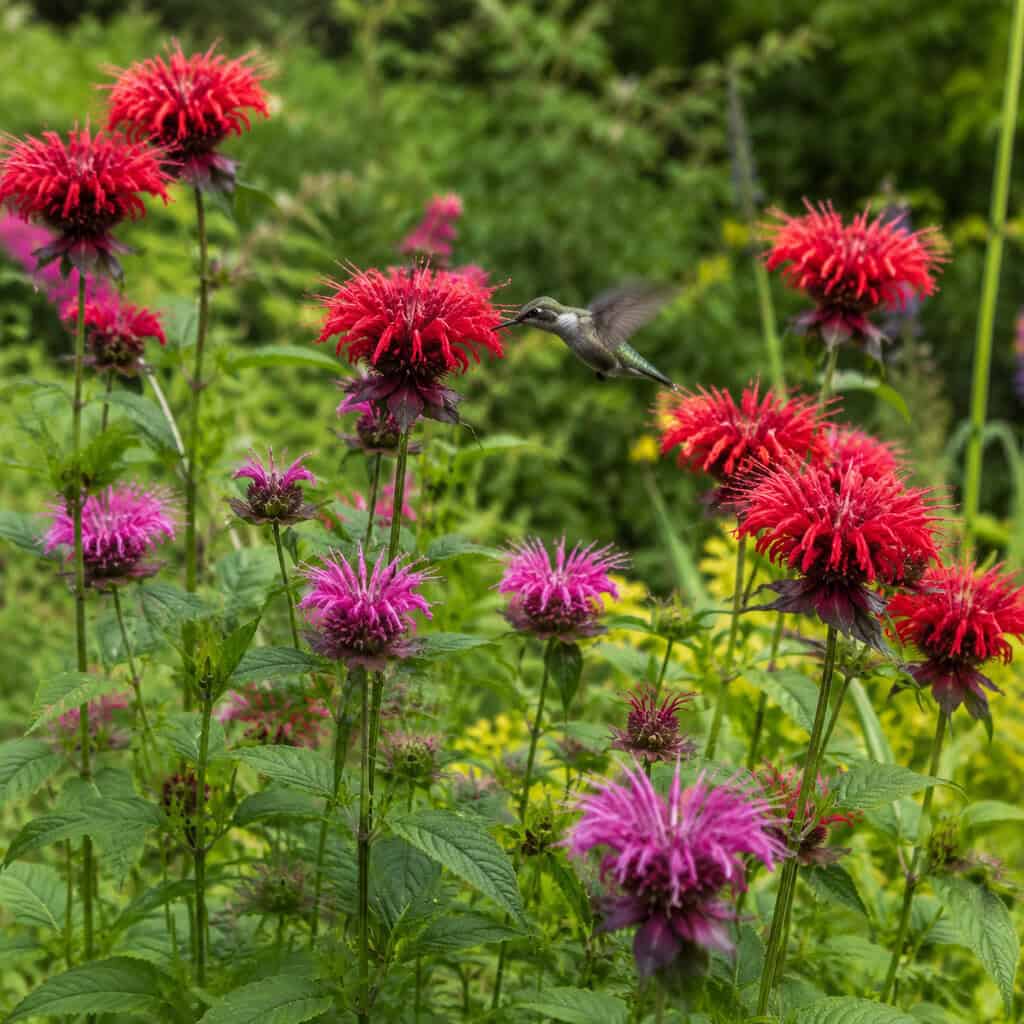
Crush a leaf and you’ll smell oregano and thyme. That’s the thymol and carvacrol talking — and it’s exactly what deer route around.
Fuzzy leaves and square stems seal the deal. This is a mint-family native, Zones 4 through 9.
The shaggy red, pink, and purple flowers are a magnet for hummingbirds and pollinators alike. If you’re chasing that, pair it with other plants that bring hummingbirds all season.
Deer defense that feels like a bonus, not a compromise.
6. Anise Hyssop (Agastache)
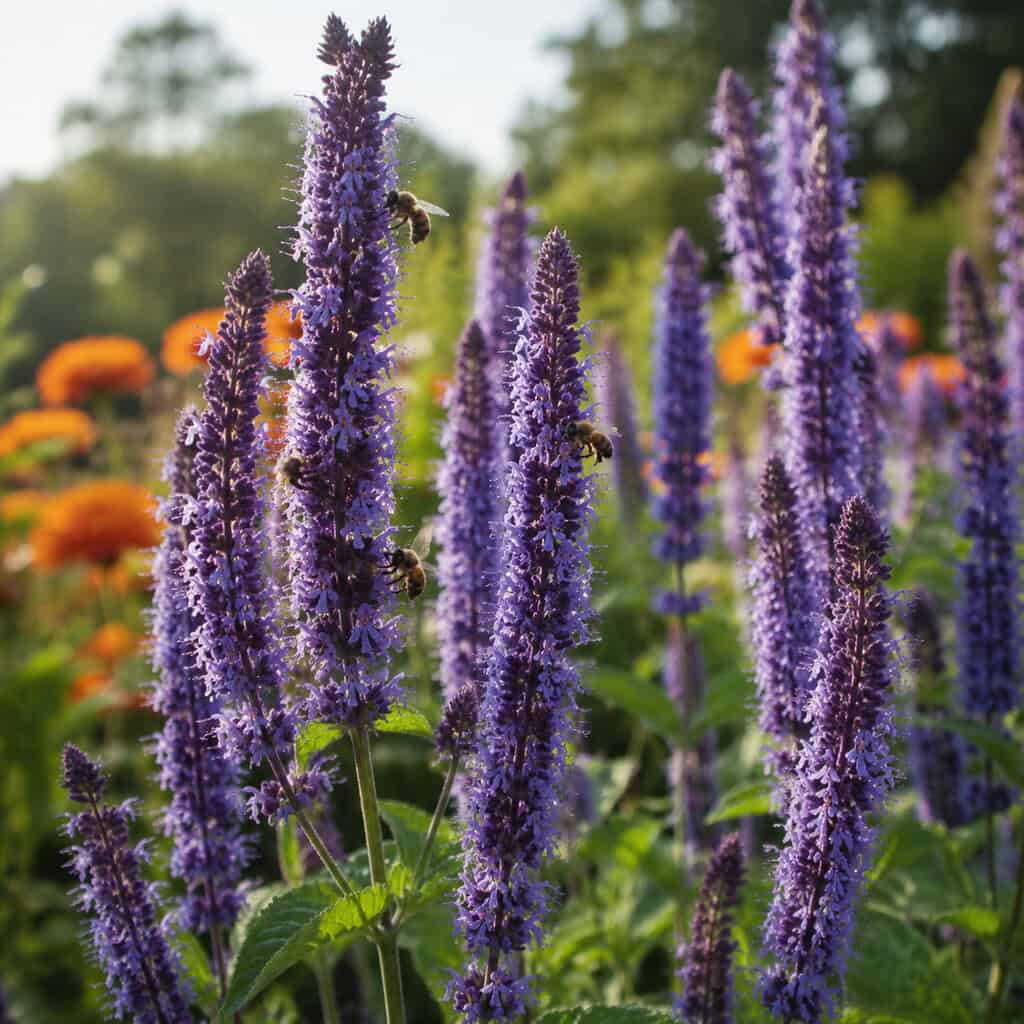
Minty-spicy foliage keeps deer and rabbits both moving along.
Tall flower spikes in soft purple pull in bees for months on end. Zones 4 through 10, full sun.
Rub the leaves and you get a licorice-anise scent that’s pleasant to people and off-putting to browsers.
It rounds out the aromatic cluster of plants deer treat like a buffet they’ve decided to skip.
7. Yarrow (Achillea)
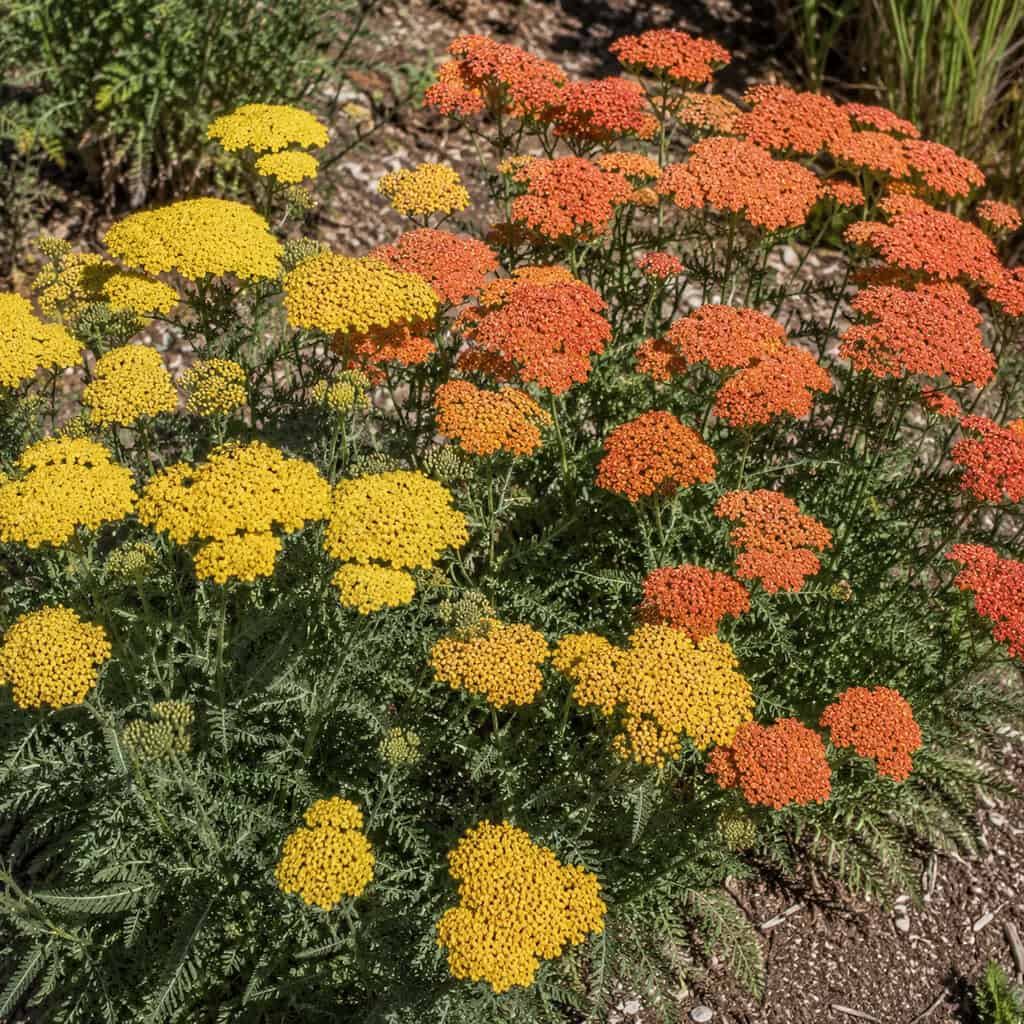
The has-it-all perennial.
Yarrow is drought-tough, pest-resistant, and deer-resistant, with flat clusters of flowers in jewel tones — gold, red, coral, white. Fern-like foliage fills in below.
It survives baked, poor, neglected soil that would kill most flowers. Zones 3 through 9.
Cut the spent blooms and it keeps going. One of the few plants that genuinely thrives on being ignored — and pairs well with other plants that survive full sun and zero attention.
8. Rosemary
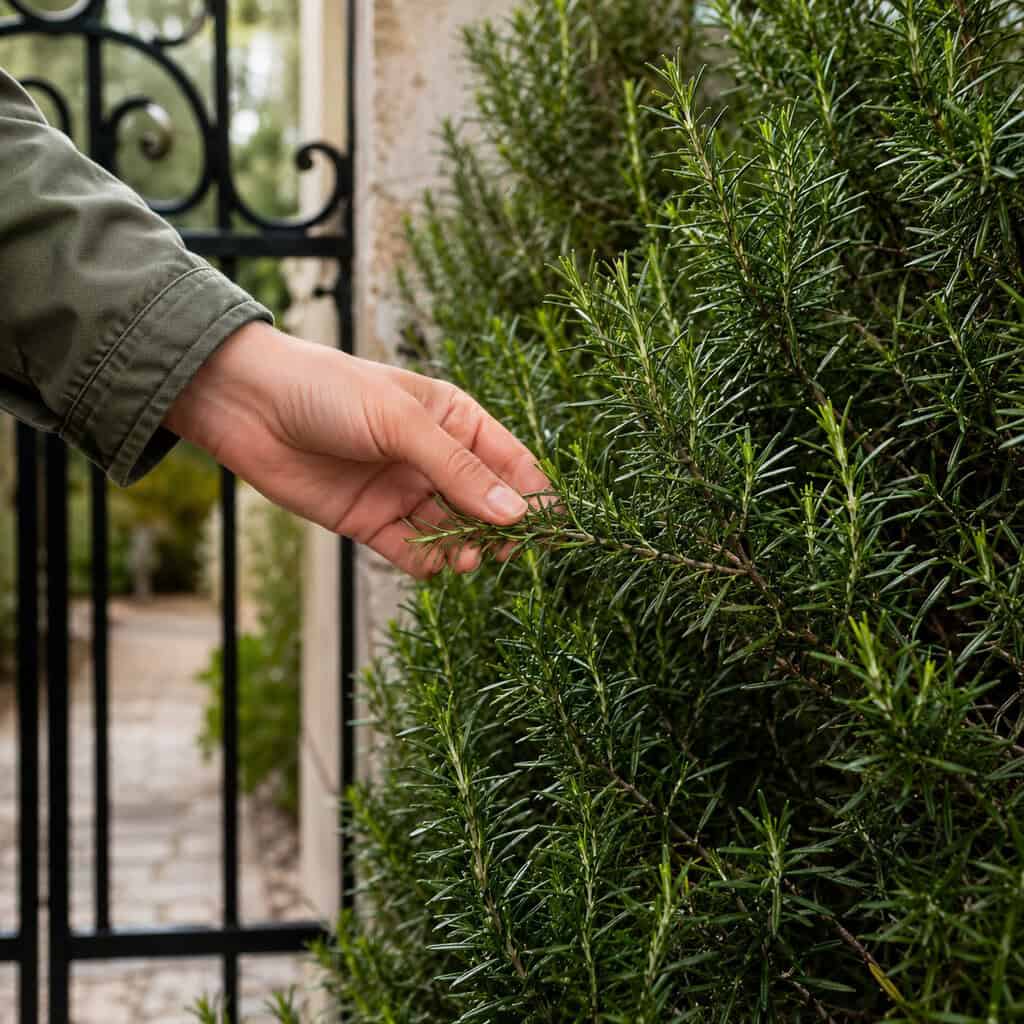
Two jobs, one shrub.
Rosemary is a kitchen herb and a deer shield in the same woody evergreen. Gardeners plant it along perimeters and gates for exactly that reason — the piney oils that flavor your roast chicken read as poison to a deer.
It wants heat and sun, Zones 7 through 11. In colder zones, grow it in a pot and haul it in.
Line a walkway with it. Smells great to you, forms a scent barrier to them.
9. Creeping Thyme
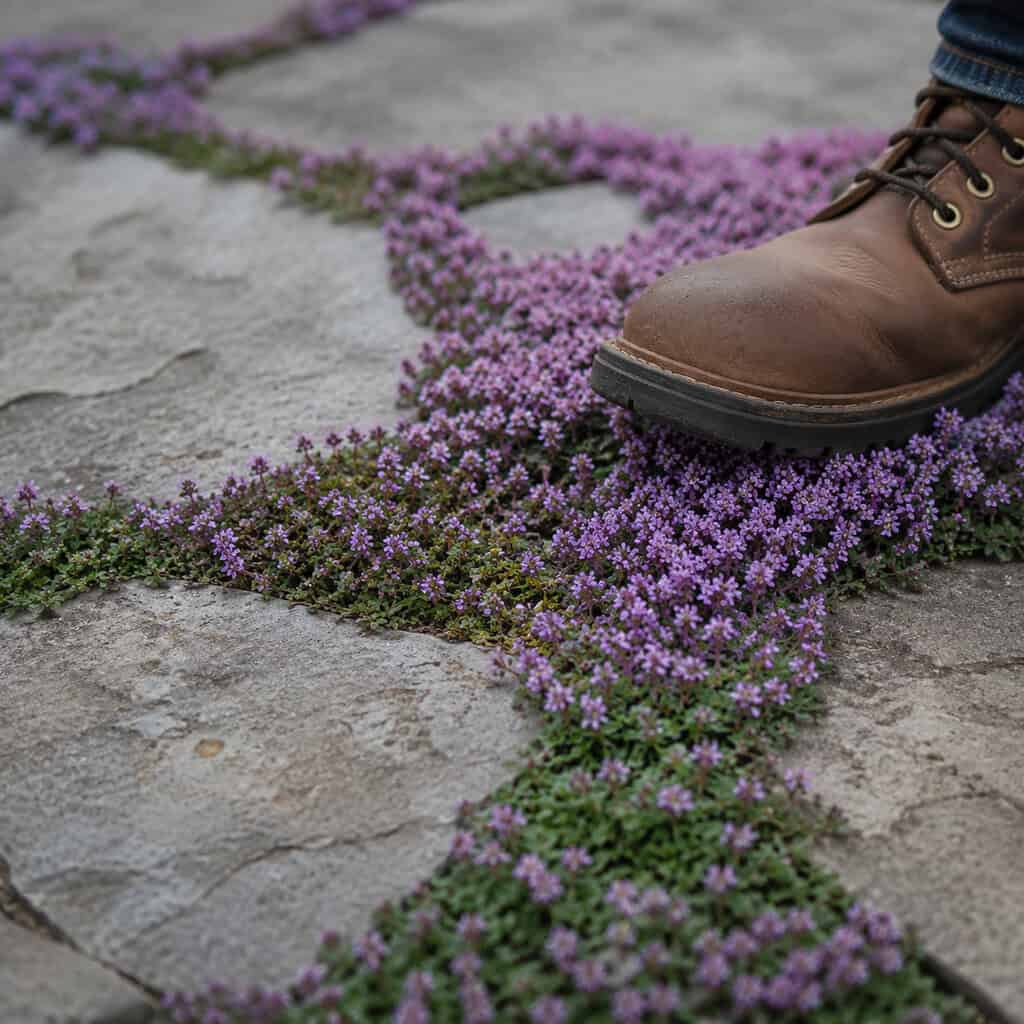
A deer-proof groundcover is rare. Most groundcovers get grazed to the dirt.
Creeping thyme doesn’t. The same aromatic oils that repel deer make it useful — and it takes light foot traffic, so it’s the answer to “what do I plant between the pavers.”
It forms a low, dense mat that flowers pink or purple in early summer. Zones 4 through 9.
Step on it and it releases scent. Deer catch that scent and keep walking.
10. Lamb’s Ear (Stachys byzantina)
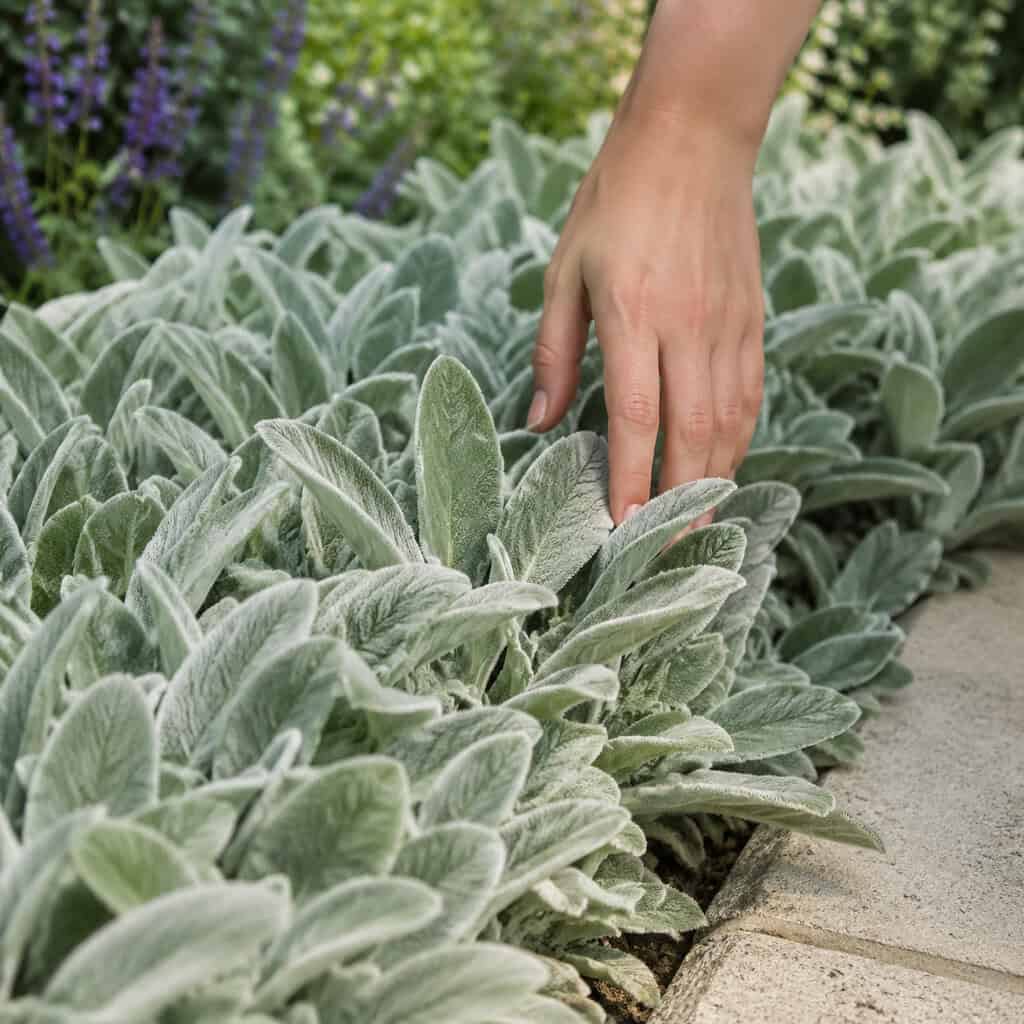
This is where scent hands off to texture.
Lamb’s ear grows velvety, woolly silver leaves that no deer wants in its mouth. The fuzz is the whole defense — it feels wrong to a browser and they move on.
It spreads into a soft silver carpet, Zones 4 through 9, and takes drought without complaint.
Kids can’t stop petting it. Deer can’t stand it.
11. Lady’s Mantle (Alchemilla)
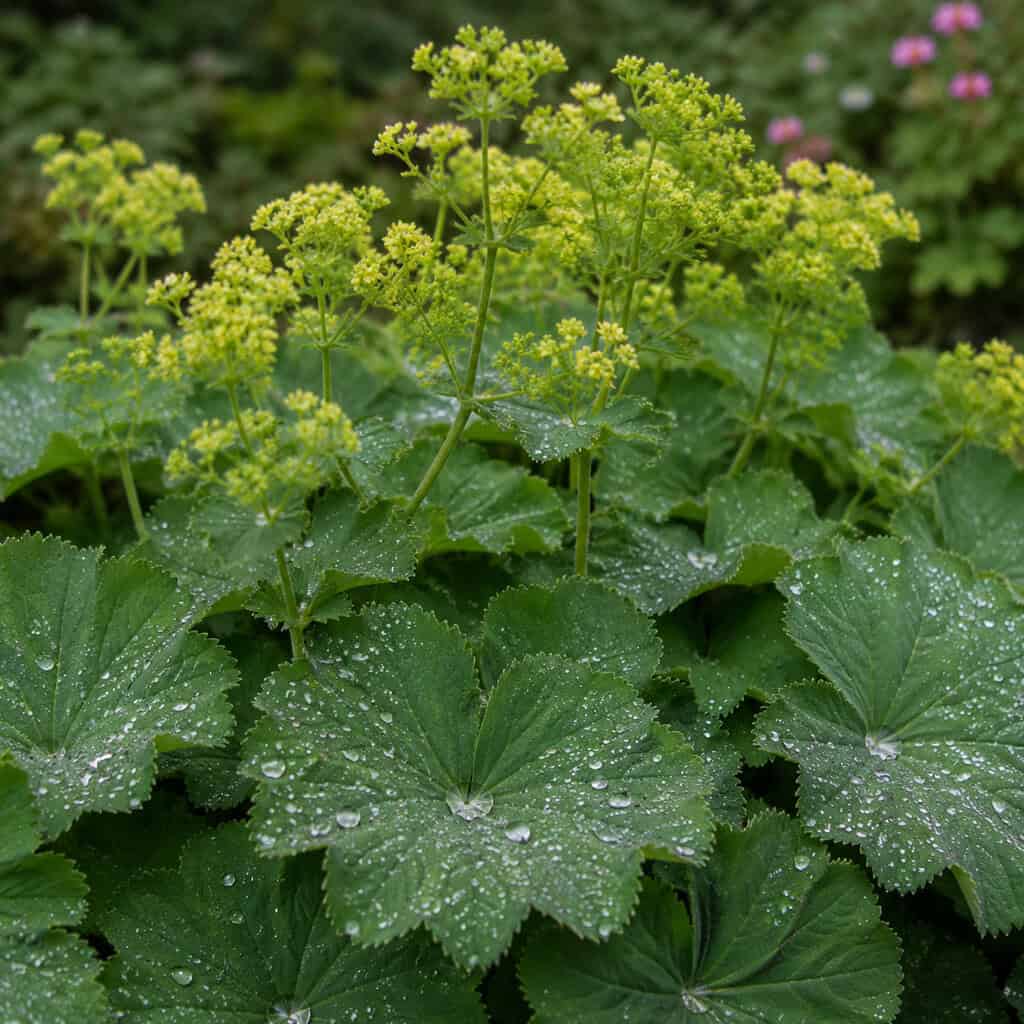
A softer, cottage-garden pick.
Scallop-edged leaves catch dew in silver beads after rain, and foamy chartreuse flowers froth up above them. The fuzzy foliage is what puts deer off.
It handles sun to part shade, Zones 3 through 8, and self-sows gently where it’s happy.
Not the obvious choice — which is the point. It signals a bed built by someone who did the reading.
12. Bergenia (Pigsqueak)
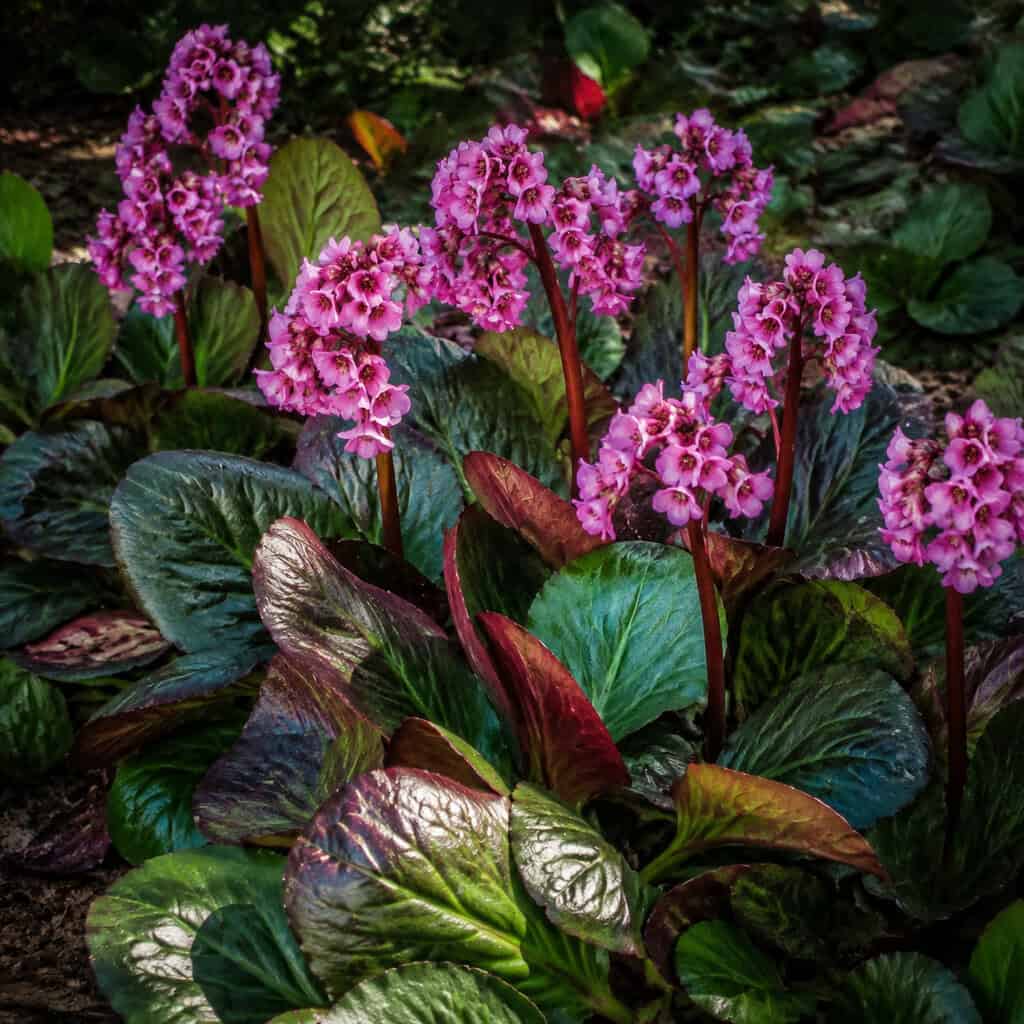
Rub a leaf between your fingers and it squeaks. Hence the nickname.
Those leaves are leathery and glossy, and deer leave them alone. Over time bergenia knits into a low evergreen groundcover that holds through winter in Zones 3 through 8.
Pink flower stalks rise in spring above the broad foliage.
It’s a strong option where deer pressure meets low light — a spot most flowers refuse to grow. For those tricky corners, look at more shade plants that thrive where grass won’t.
13. Coneflower (Echinacea)
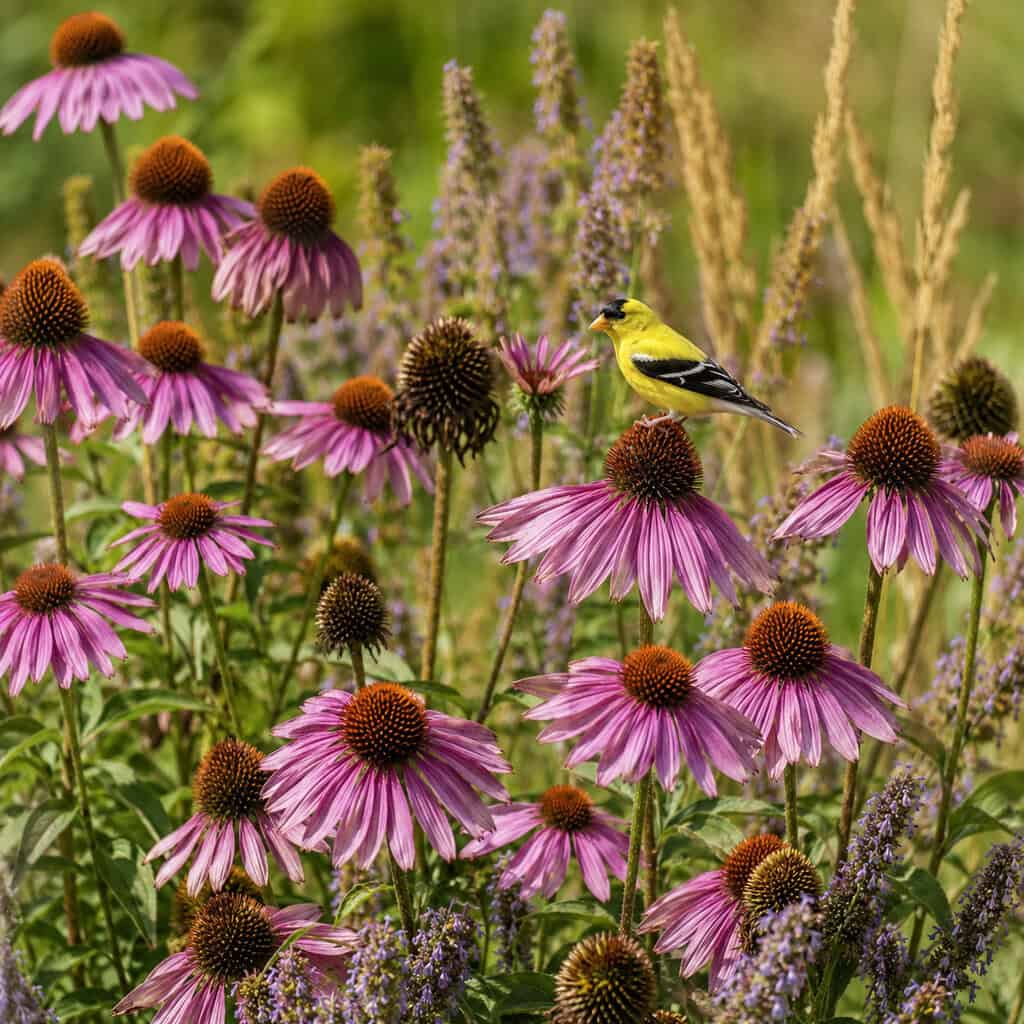
Coarse, bristly foliage and a bitter taste keep deer honest.
Coneflower anchors a sunny border from summer straight into fall, then feeds finches through winter when you leave the seed heads standing. Zones 3 through 9.
The classic is dusty rose-purple, but there are oranges, whites, and golds now too.
Reliable, native, and it pulls double duty for pollinators and birds.
14. Black-Eyed Susan (Rudbeckia)
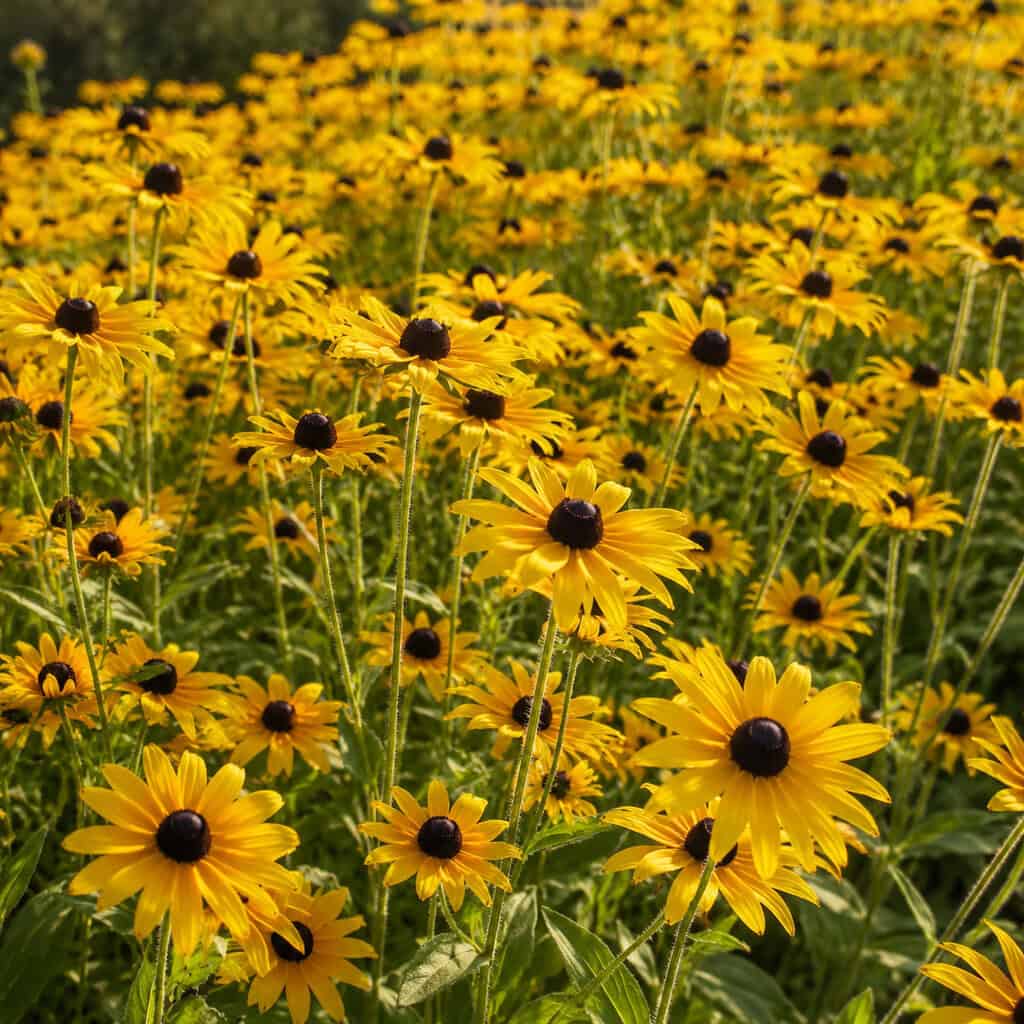
Rough, hairy leaves and stems make it unappealing — that sandpaper texture is the defense.
Black-eyed Susan is the easy win. Cheerful golden daisies with dark centers, everywhere in late summer, asking for nothing. Zones 3 through 9.
It naturalizes into drifts and reseeds itself.
The kind of plant readers will actually get in the ground this weekend.
15. Coreopsis (Tickseed)
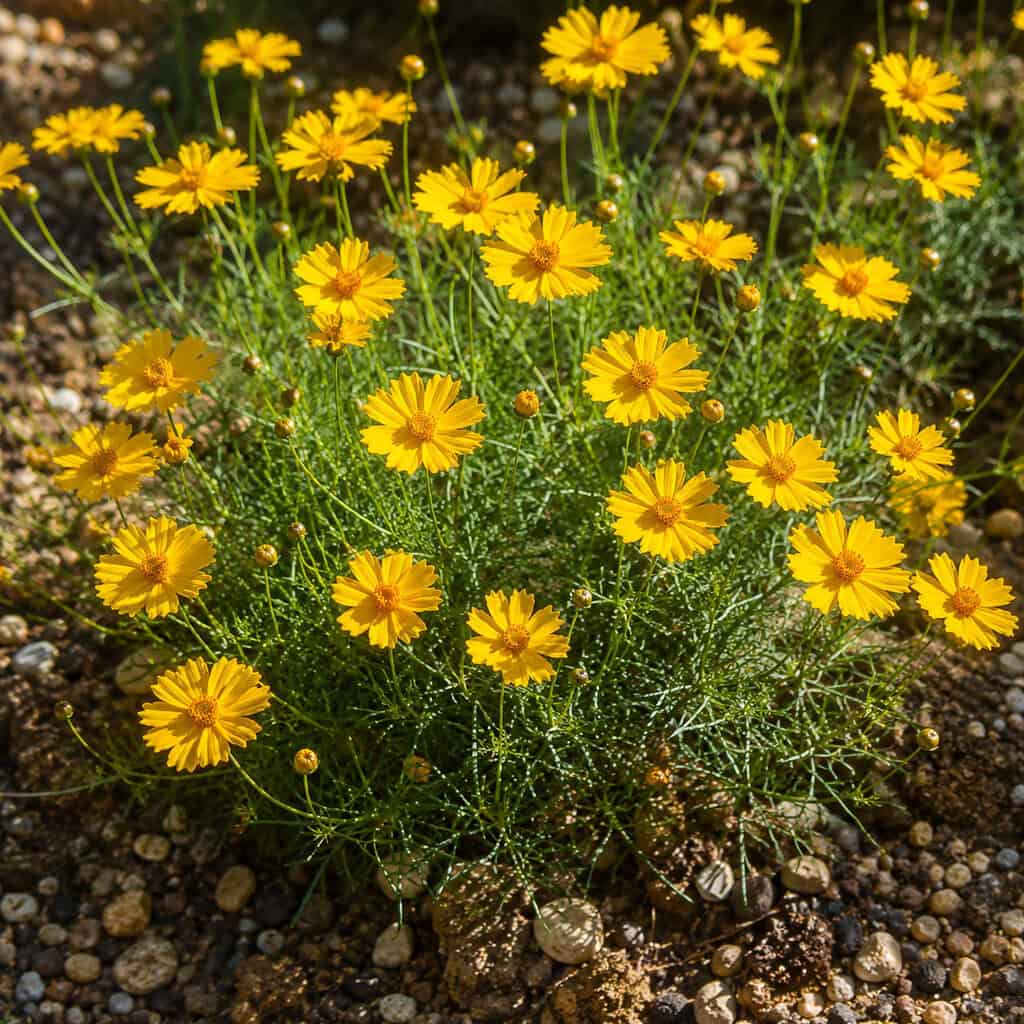
Bright, forgiving, and a natural companion to coneflower and rudbeckia.
Tough leaves deter deer while the plant blooms its head off in poor soil most flowers sulk in. Zones 3 through 9.
Yellow is the default, but you’ll find red, pink, and bicolor varieties.
Deadhead it and the show runs from early summer to frost.
16. Peony (Paeonia)
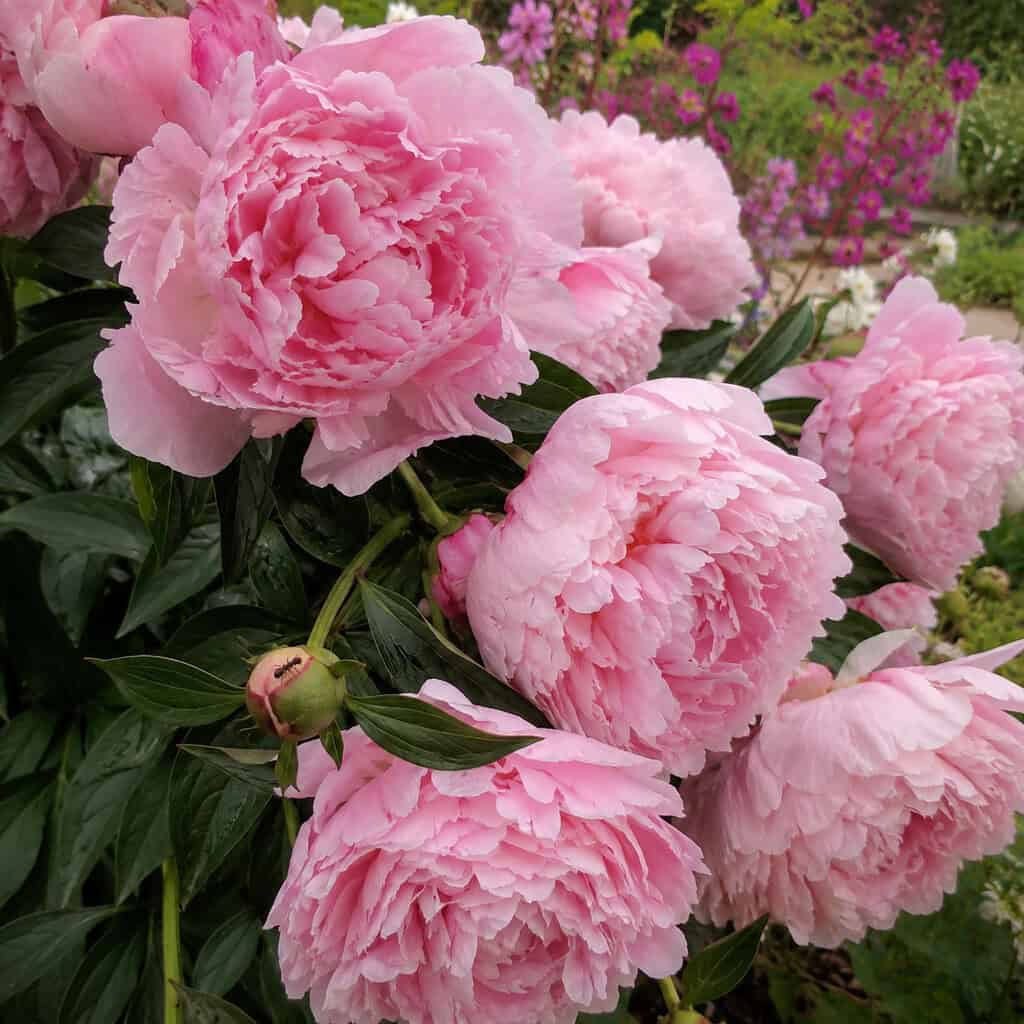
Big blooms, no browsing. That surprises people.
You’d assume those dinner-plate flowers would be deer bait. But the leathery foliage puts them off, and they leave the whole plant alone. Zones 2 through 8.
Peonies outlive the people who plant them — a healthy clump can bloom for 50 years or more.
Plant them once. Enjoy them the rest of your life.
17. Bleeding Heart (Dicentra)
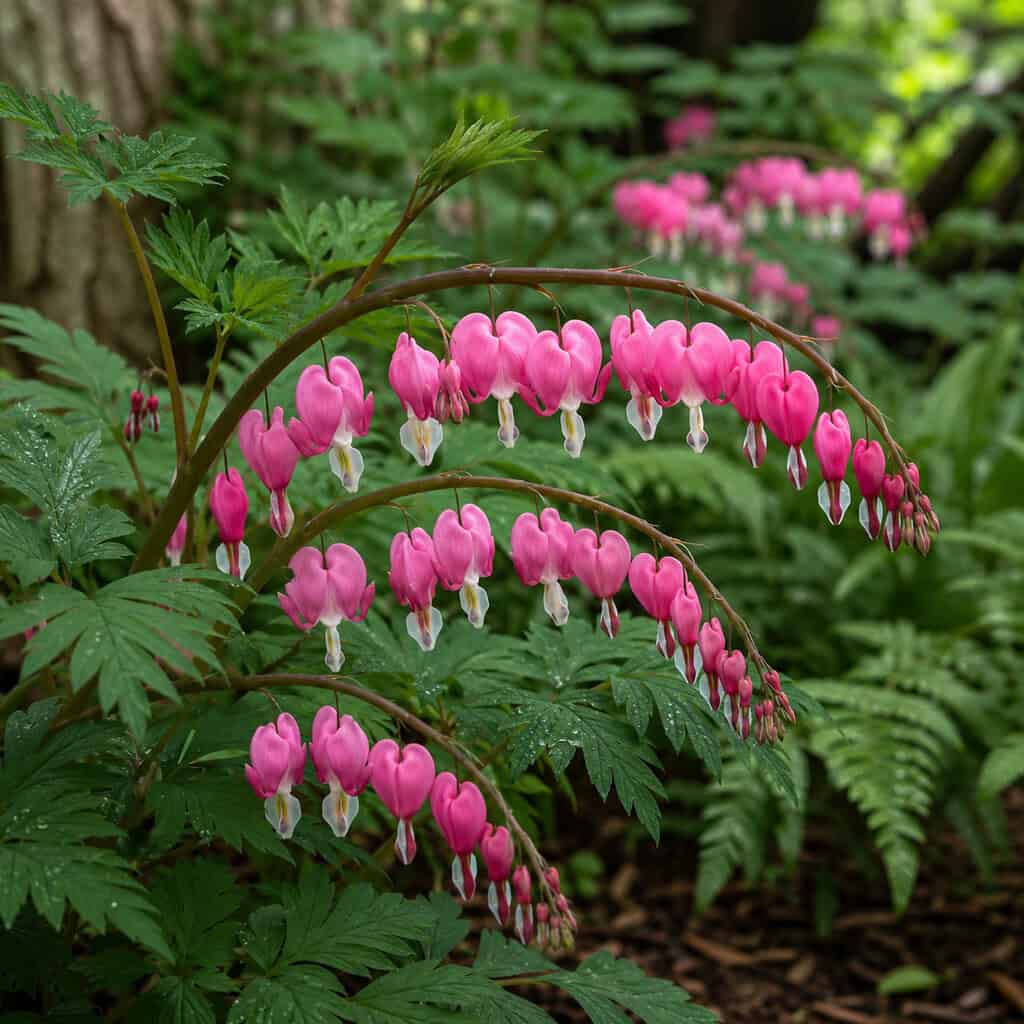
Poisonous to deer, so it’s left alone. Poisonous to people and pets too, which is worth knowing if you have curious dogs — cross-check the full list of yard plants toxic to dogs before you plant.
It’s one of the few showy woodland natives deer skip entirely. Arching stems dangle rows of heart-shaped pink or white lockets in spring.
It wants shade and moisture, Zones 3 through 9, and goes dormant by midsummer heat.
Romantic looks, tough constitution.
18. Columbine (Aquilegia)
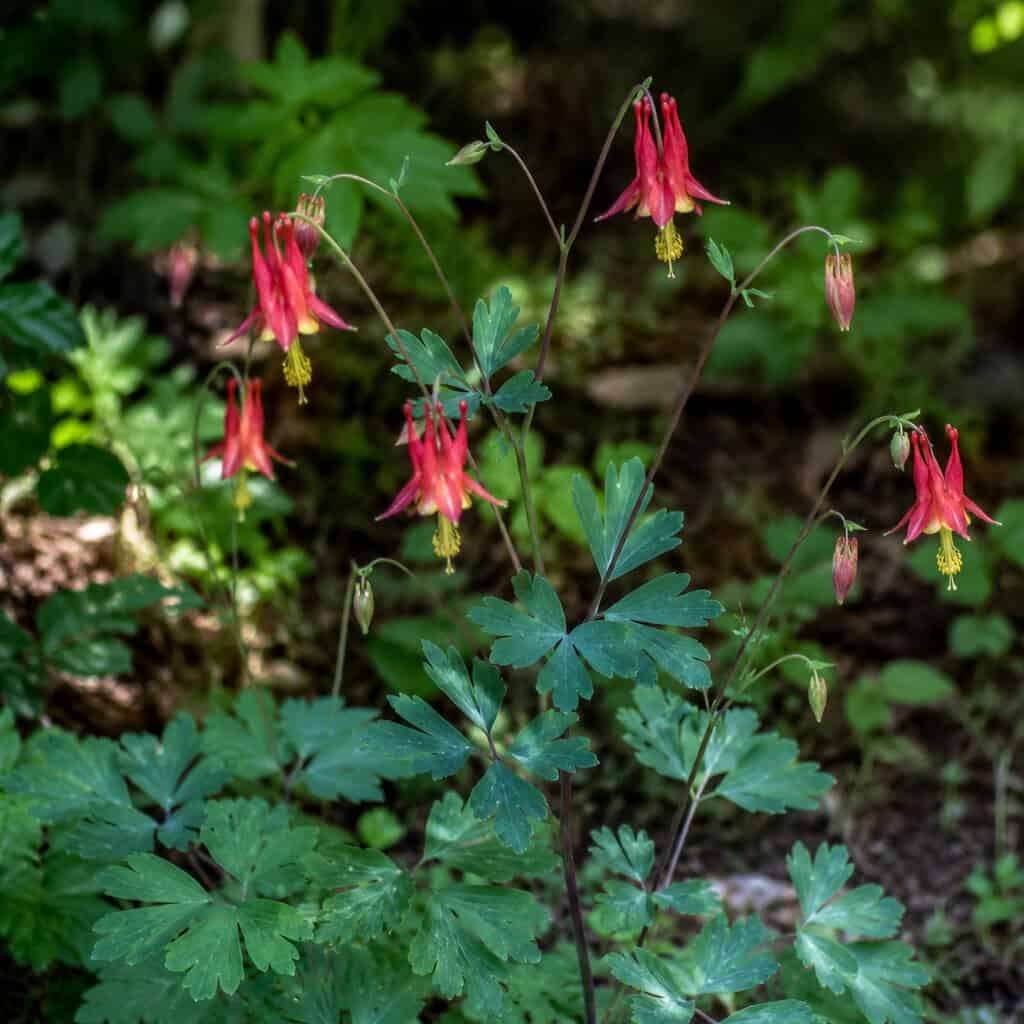
Airy, nodding flowers on wiry stems rarely tempt a deer.
The divided, ferny foliage isn’t worth their time either. Columbine takes sun to part shade, Zones 3 through 9.
Native red columbine doubles as a hummingbird lure in spring.
Delicate looks that hide a genuinely tough plant. It self-sows and drifts around the garden on its own.
19. Hellebore (Lenten Rose)
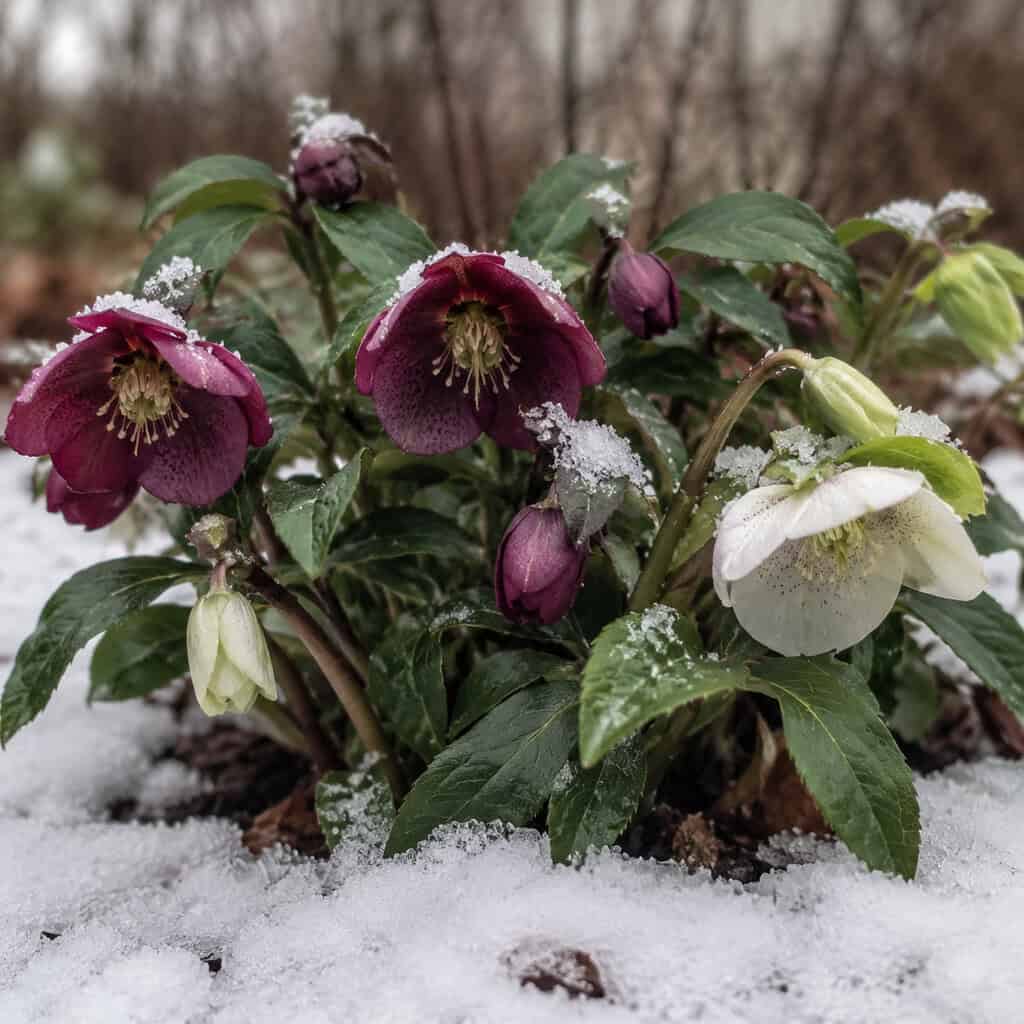
It blooms when nothing else dares — late winter, sometimes through snow.
Leathery, toothed, toxic foliage keeps deer off year-round, since it’s evergreen. Zones 4 through 9, shade.
The nodding flowers come in plum, green, white, and speckled forms, and they last for weeks.
A premium shade-garden plant that earns its price. Cut away tattered old leaves in late winter so the blooms show.
20. Foxglove (Digitalis)
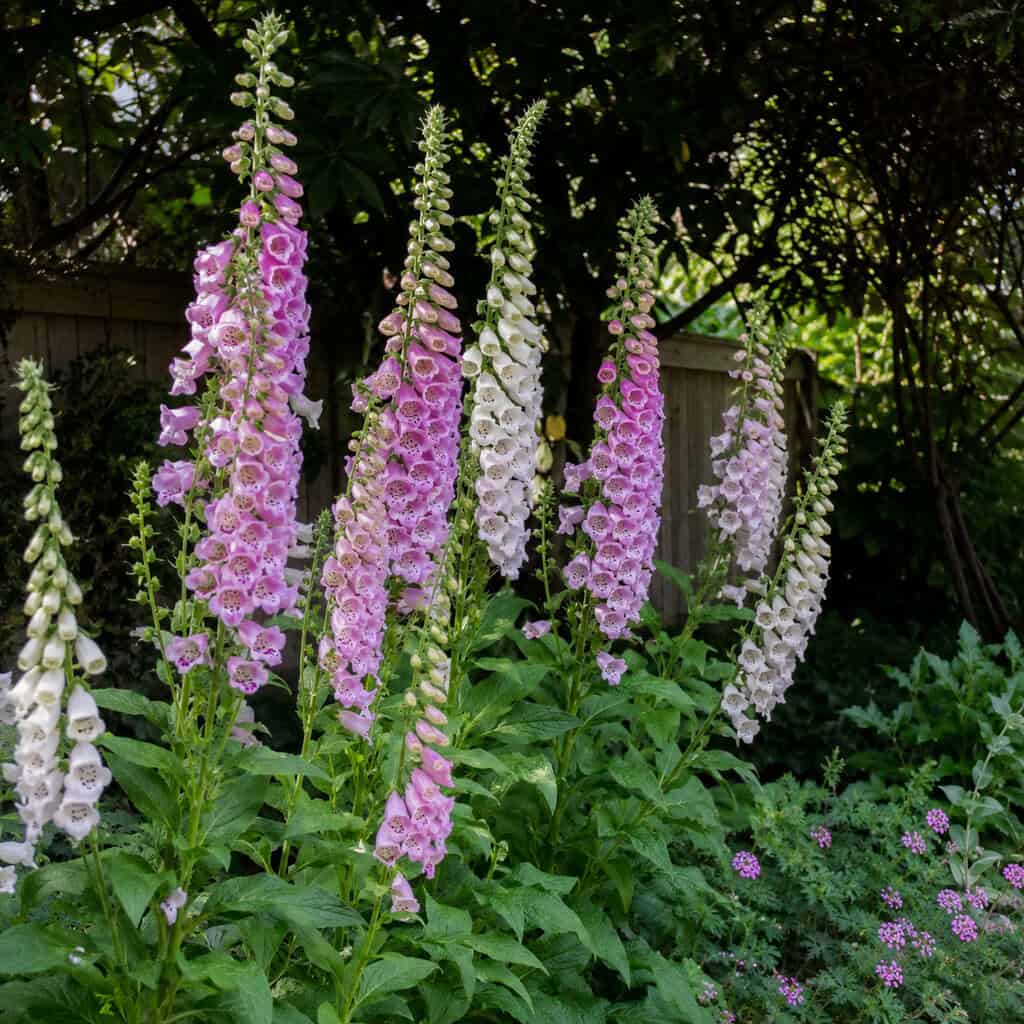
Tall dramatic spires deer won’t touch — because the entire plant is poisonous.
That toxicity is the defense, and it’s real. Digitalis is the source of a heart medication, and every part is dangerous to eat. Keep it away from kids and pets, and reconsider it if either roams the beds.
Foxglove wants part shade and moist soil, Zones 4 through 9, and it’s usually a biennial — flowering big in year two.
Those speckled bell towers hit five feet. Nothing else fills a shady vertical gap quite like it.
21. Monkshood (Aconitum)
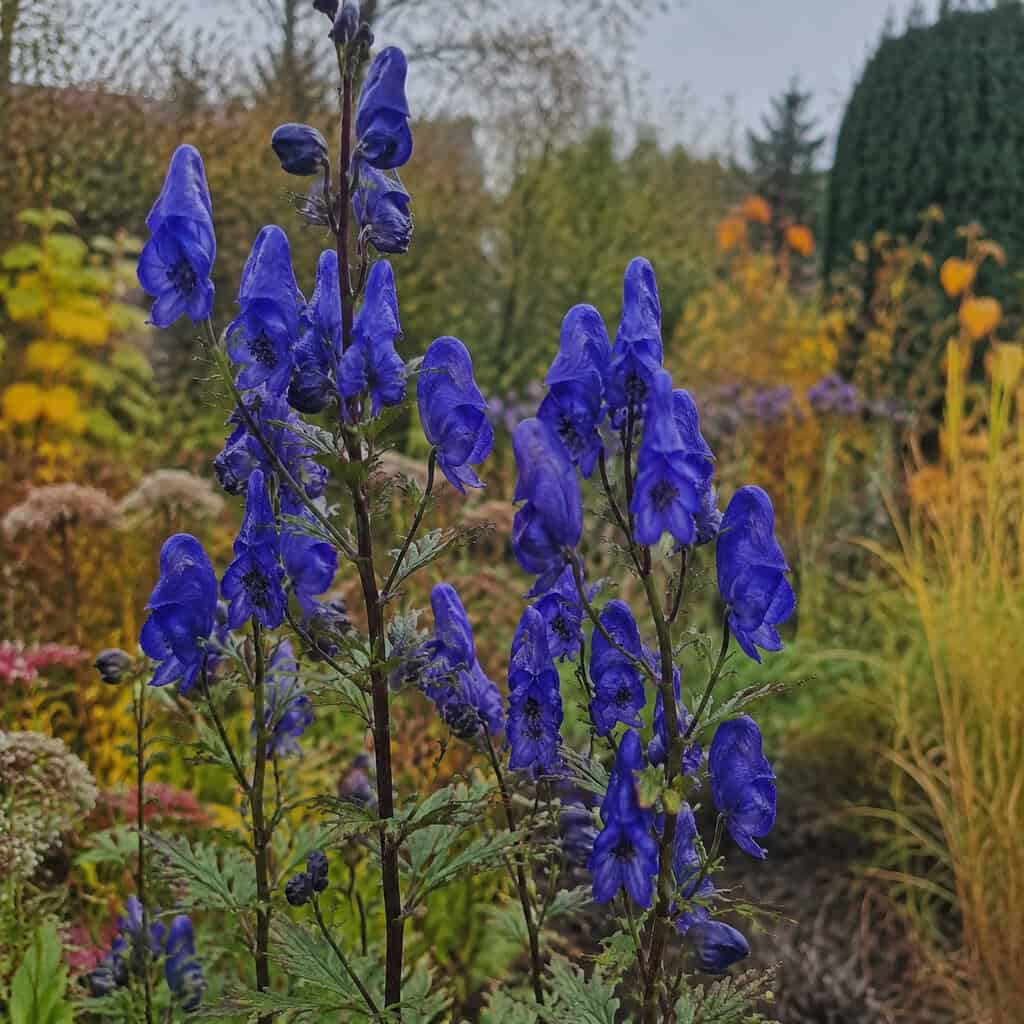
Beauty from a notorious plant.
Monkshood throws up hooded, deep-blue flowers in late summer and fall, when most of the garden is fading. Deer steer well clear — it’s famously, seriously poisonous.
Handle it with gloves and keep it away from children and pets. This is one to respect. Zones 3 through 8, part shade.
That said, few flowers deliver true blue this late in the season. It’s the surprise star of the autumn border.
22. Euphorbia (Spurge)
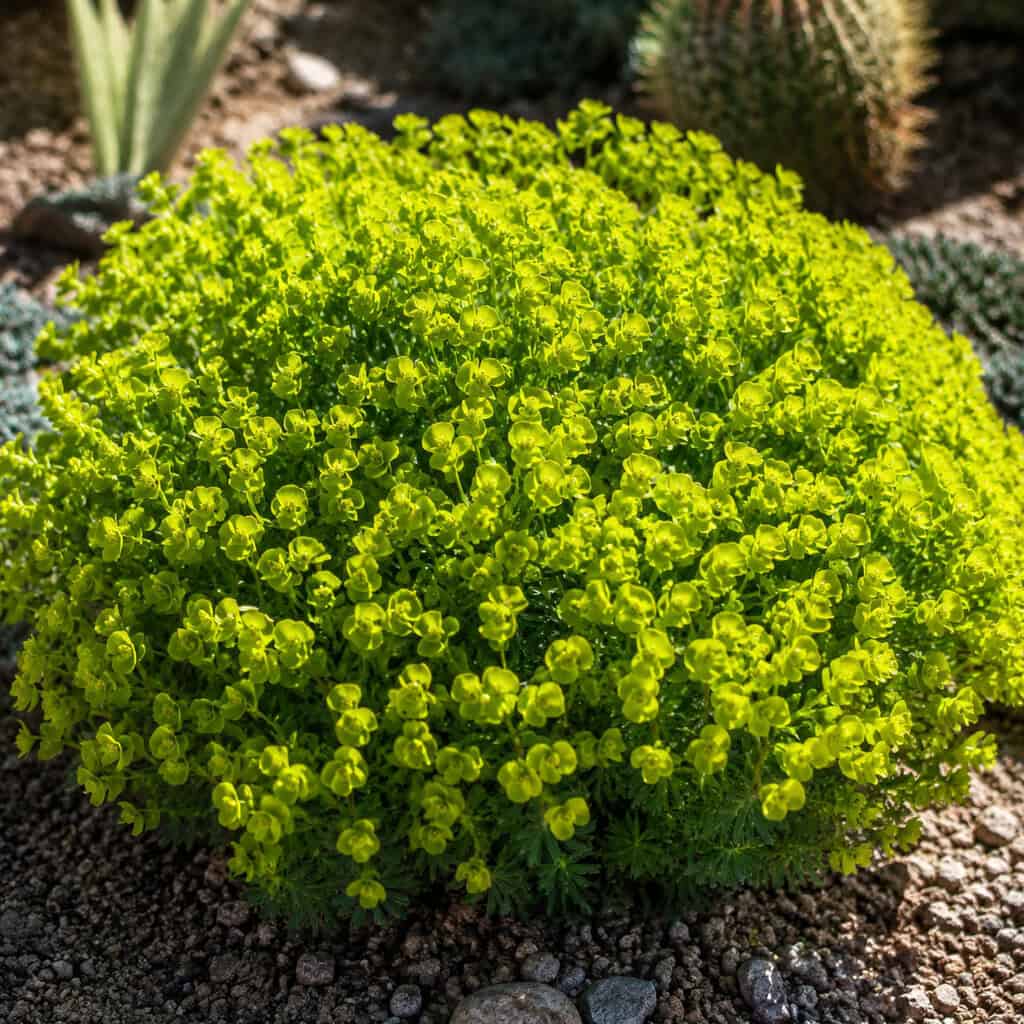
Toxic milky sap and a rough texture keep deer moving.
Euphorbia’s chartreuse bracts hold color for months — longer than most flowers manage. It’s drought-tolerant and takes full sun happily.
One concrete care note. Wear gloves when you prune, because that white sap irritates skin and eyes.
Zones vary by species, so match the plant to your region. The color payoff is worth the gloves.
23. Astilbe
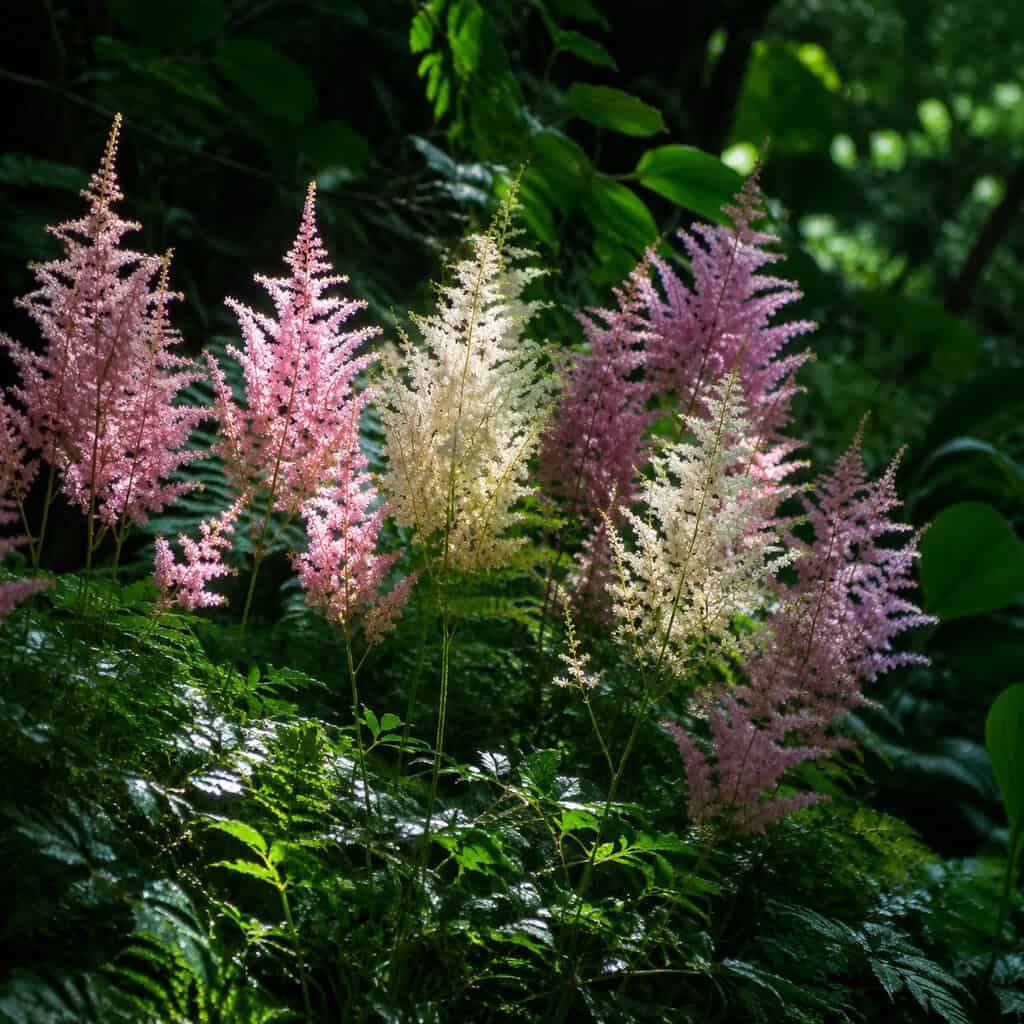
Color in the shade, which most deer-resistant lists ignore.
Astilbe sends up feathery plumes in pink, red, white, and lavender over fern-like foliage. The smell, the texture, and a bitter taste all repel deer.
It wants moist soil and shade, Zones 4 through 8 — near a downspout or a shady low spot is ideal.
Plant it in a drift. The plumes glow when a shaft of afternoon light hits them.
24. Bearded Iris
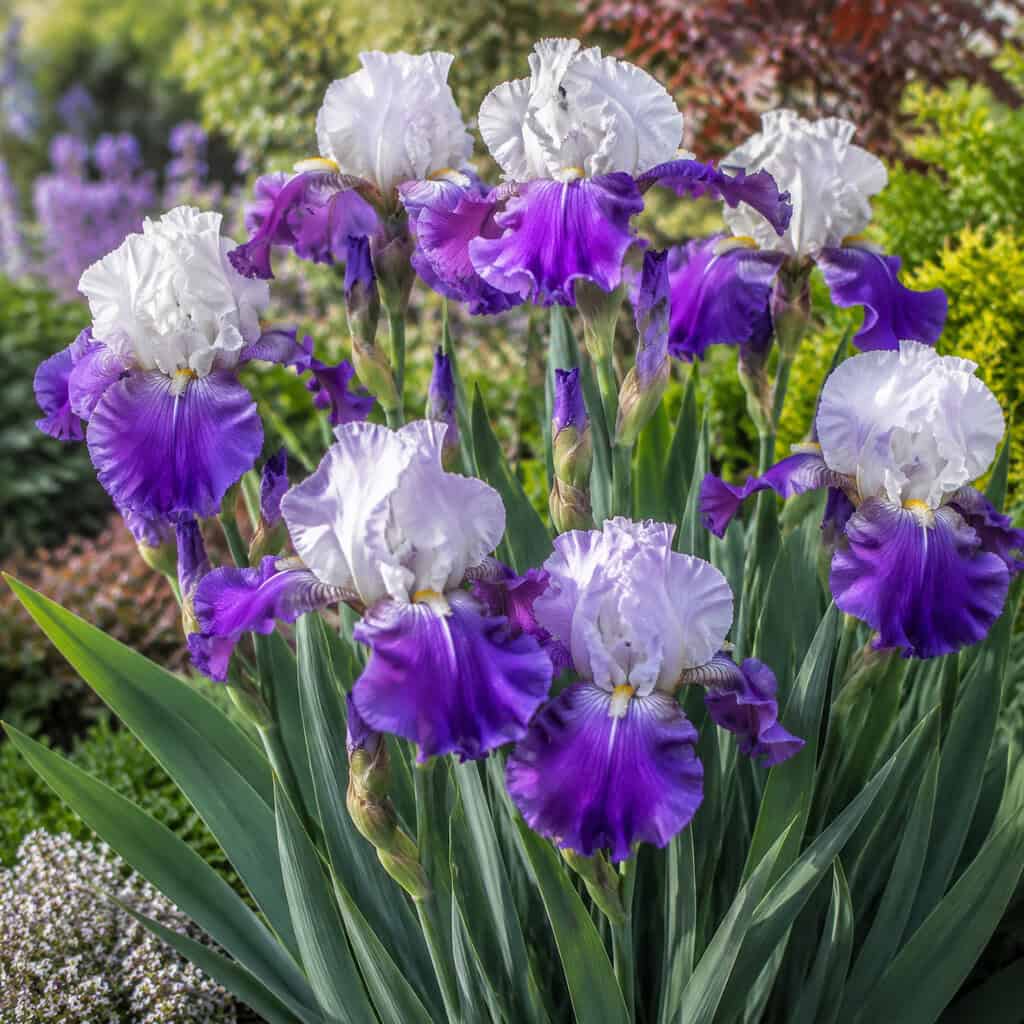
Sculptural spring blooms deer routinely walk past.
Bearded iris shows up across extension list after extension list as a dependable skip. The ruffled, fragrant flowers come in nearly every color you can name. Zones 3 through 9, full sun.
Plant the rhizomes shallow, with their backs baking in the sun.
The fan-shaped foliage adds architecture even when the plant isn’t blooming.
25. Daffodils (Narcissus)
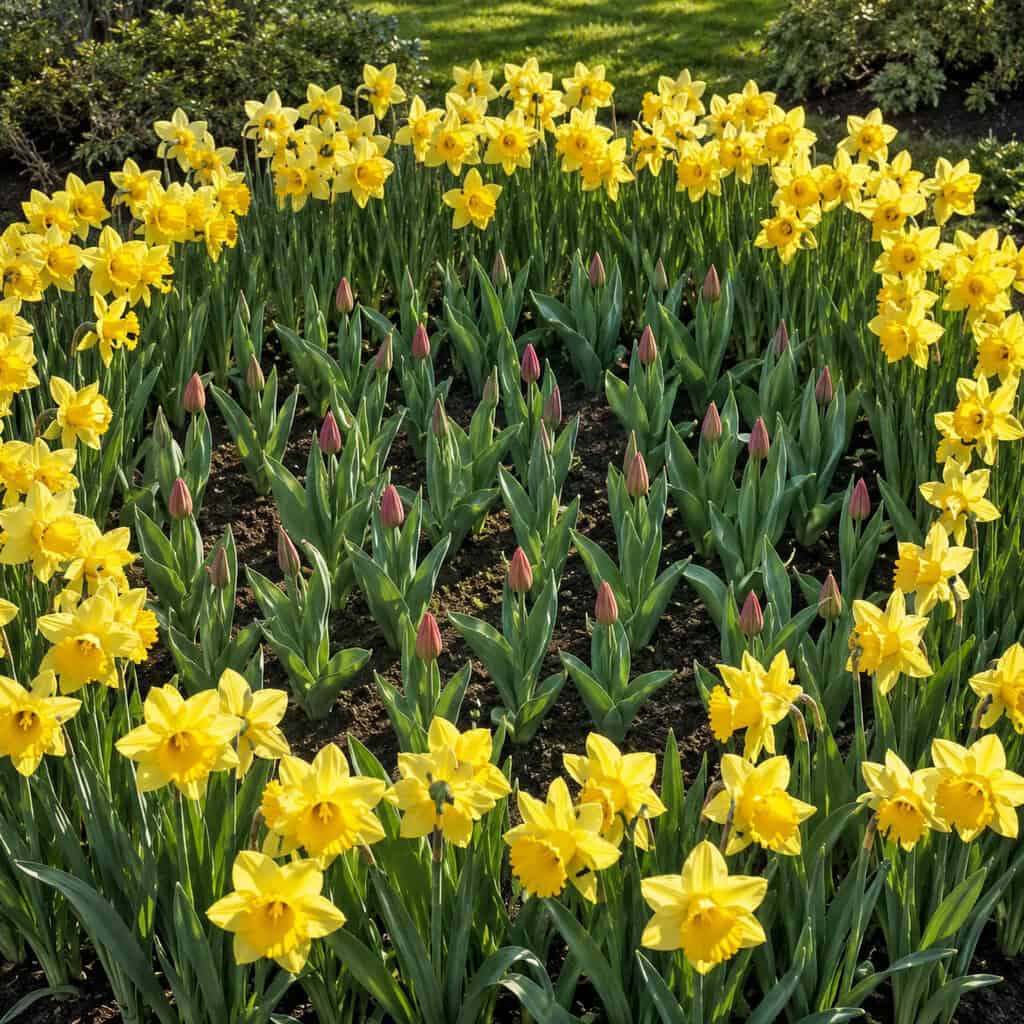
The science here is specific.
Daffodils carry an alkaloid called lycorine that’s toxic to deer, rabbits, and people — which is exactly why nothing eats them. Plant them in a ring around your tulips and they act as a living barrier for the flowers deer love.
Bulbs go in during fall, and they naturalize into bigger clumps every year. Zones 3 through 9.
Free defense that comes back stronger each spring.
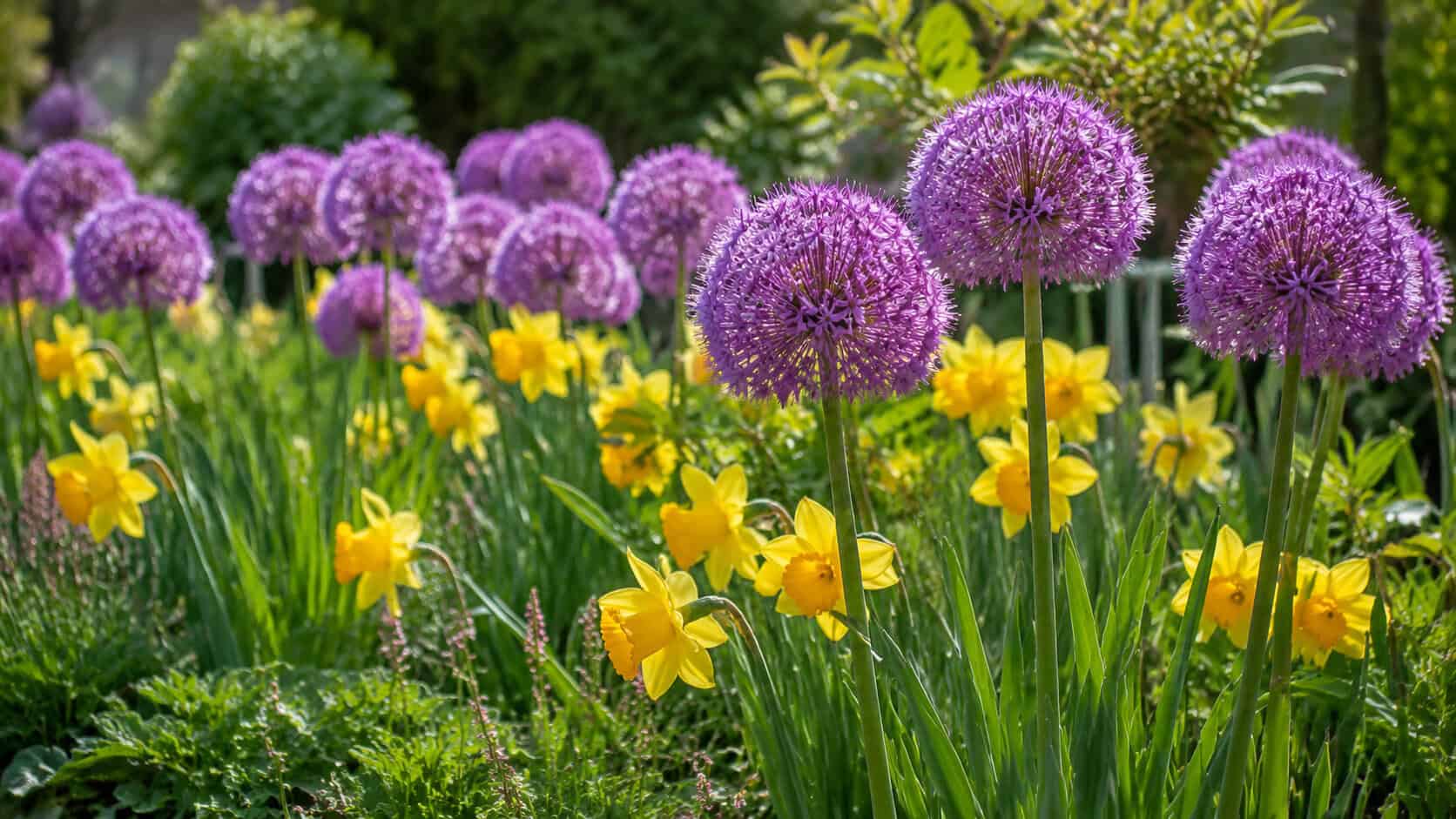
26. Allium (Ornamental Onion)
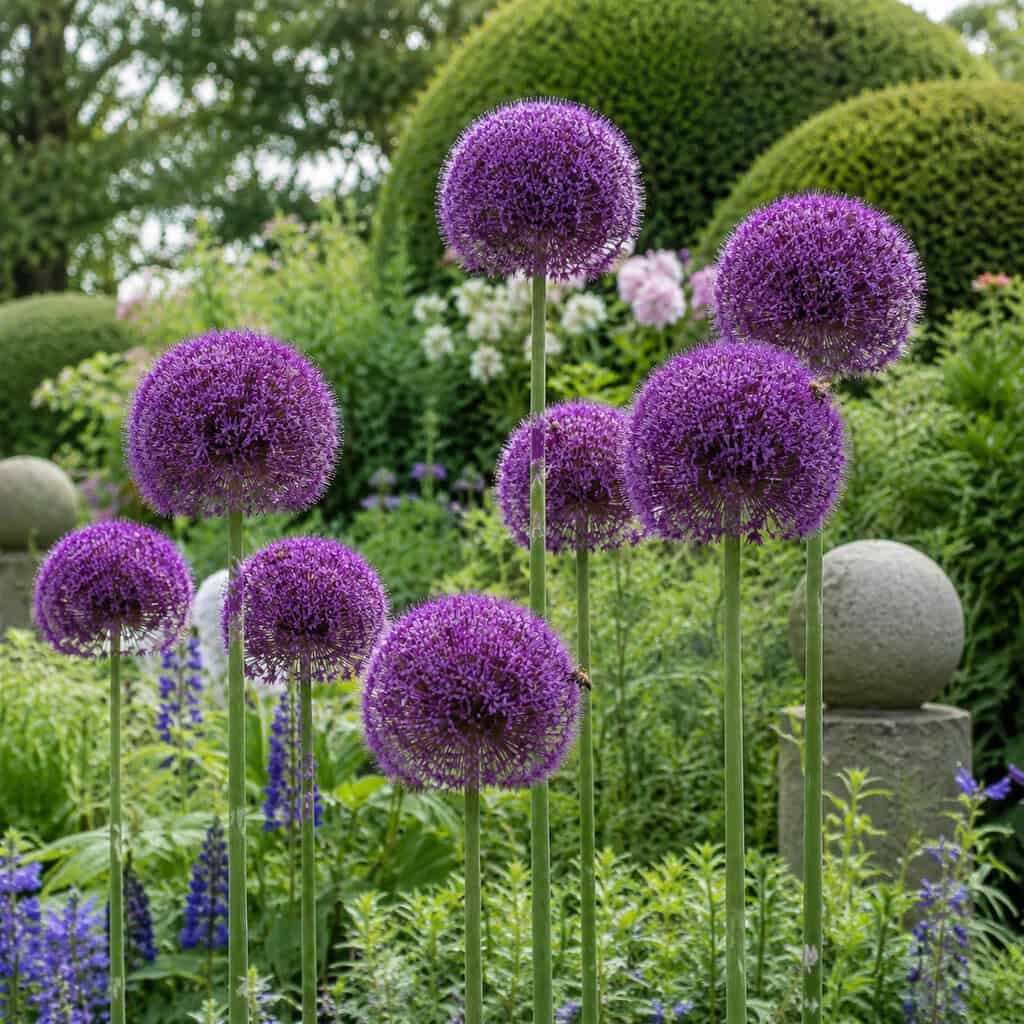
Deer detest the onion-garlic scent. You get to enjoy the whimsy.
Allium tops its stems with pom-pom globes of tiny purple flowers — architectural, almost cartoonish in the best way. Zones 3 through 9, full sun.
It turns a deterrent into a design feature: the very smell that repels deer sits on top of one of the most striking shapes in the border.
Bees swarm the globes. Deer give them a wide berth.
27. Fritillaria
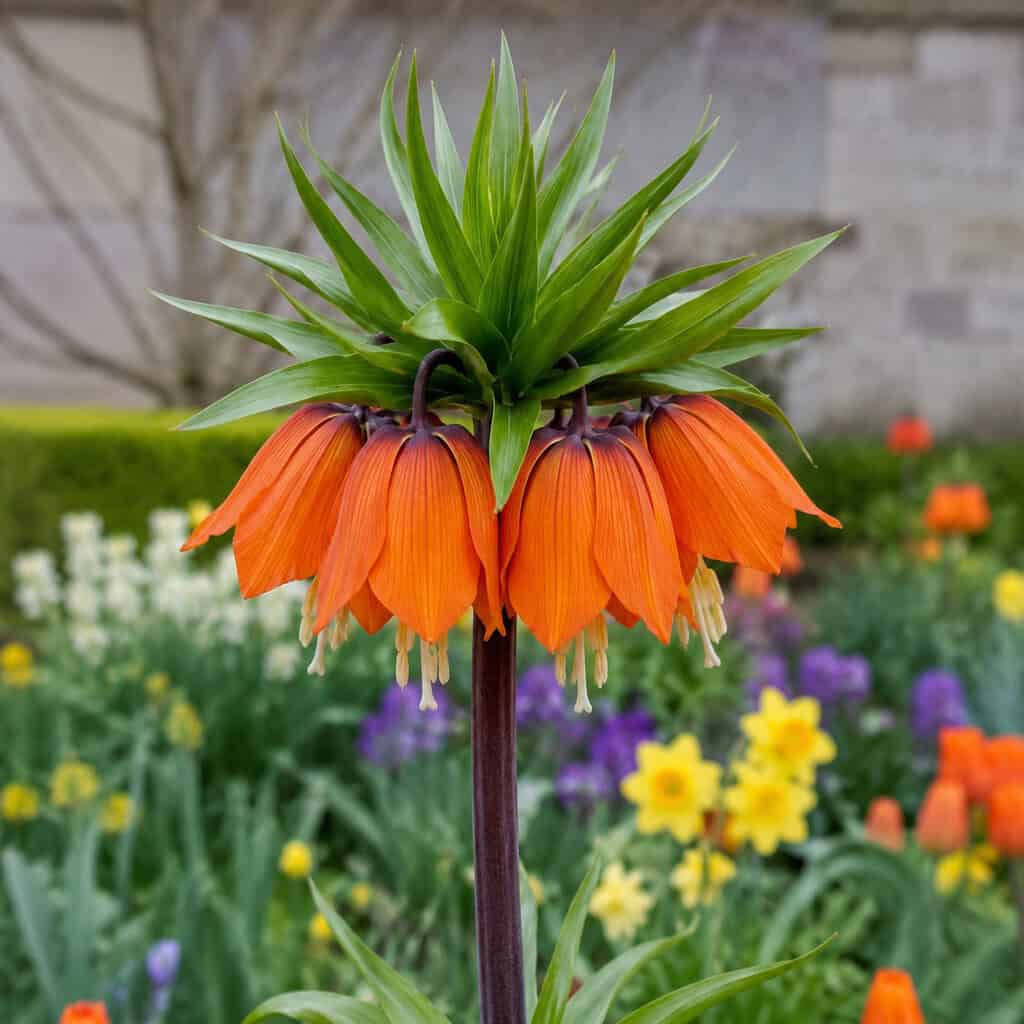
Musky-scented bulbs deer and rodents both avoid.
The showstopper is Crown Imperial — a stout stalk crowned with a ring of drooping orange or yellow bells and a green topknot. It’s a genuine conversation piece. Zones 3 through 8.
The scent that repels browsers is a little skunky up close. Plant it a few feet off the path and you won’t notice.
A reward for the reader who scrolled all the way to the bulbs.
28. Boxwood
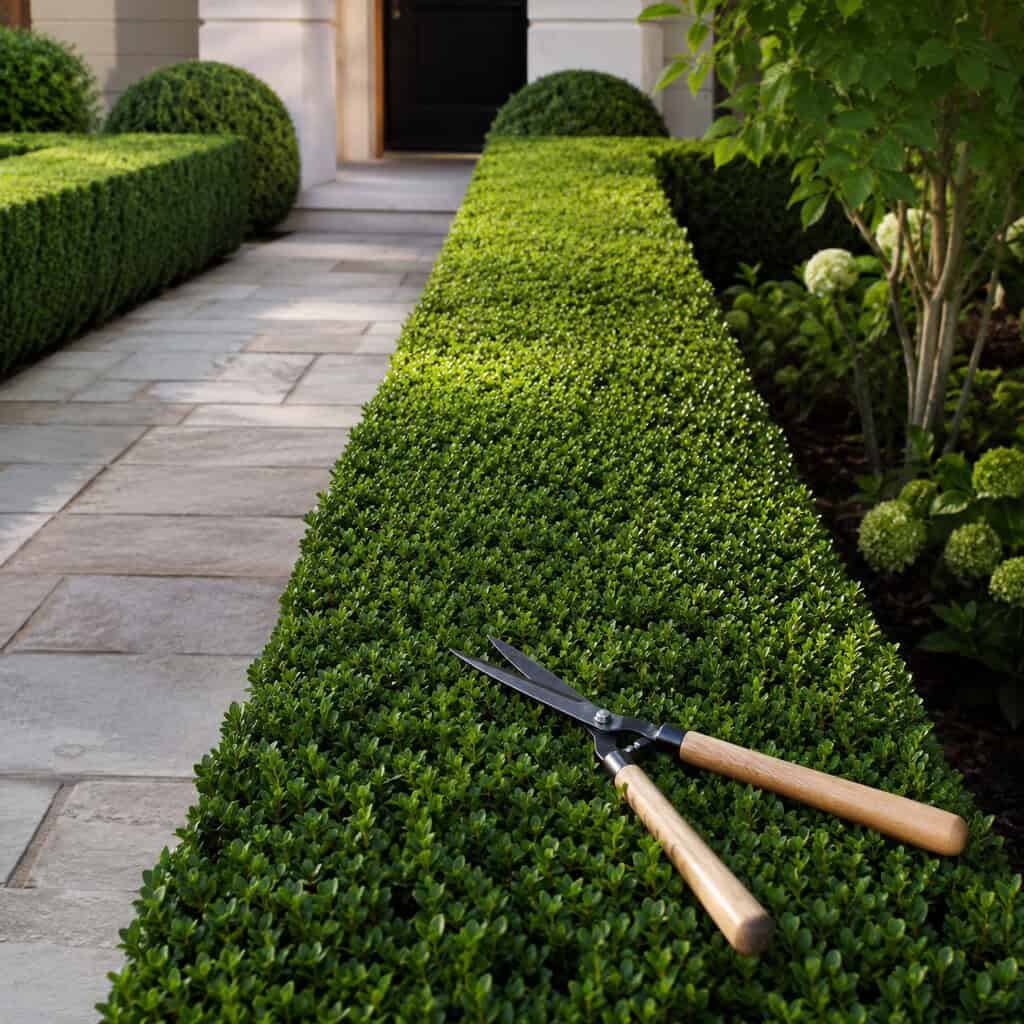
The structural backbone of a deer-proof yard.
Boxwood’s bitter alkaloids and pungent scent earn it a top “rarely damaged” rating from Rutgers Cooperative Extension, the gold-standard deer-resistance ranking. It’s the go-to shrub for hedges, low borders, and clipped topiary — the green architecture that holds a landscape together through winter. Zones 5 through 9.
Deer will nibble almost anything in a desperate winter, but boxwood sits near the bottom of their menu year-round. That reliability is why you see it framing so many front walks and formal beds.
Now the honest trade-off. Boxwood faces two modern threats that have nothing to do with deer.
The first is boxwood blight, a fungal disease that browns the leaves, blackens the stems, and defoliates plants fast in warm, wet weather. The second is box tree moth, an invasive pest whose caterpillars can strip a shrub down to bare twigs. Both have spread across parts of the country, and both can turn a low-maintenance hedge into a spray-and-monitor project.
Buy blight-resistant cultivars, space plants for airflow, avoid overhead watering, and disinfect your shears between shrubs. If box tree moth is in your area, you’ll need to scout for caterpillars and treat when they appear.
None of that changes the deer verdict. It just means boxwood asks for more attention than it used to — and it’s worth knowing before you plant a whole hedge of it.
29. Barberry (Berberis)
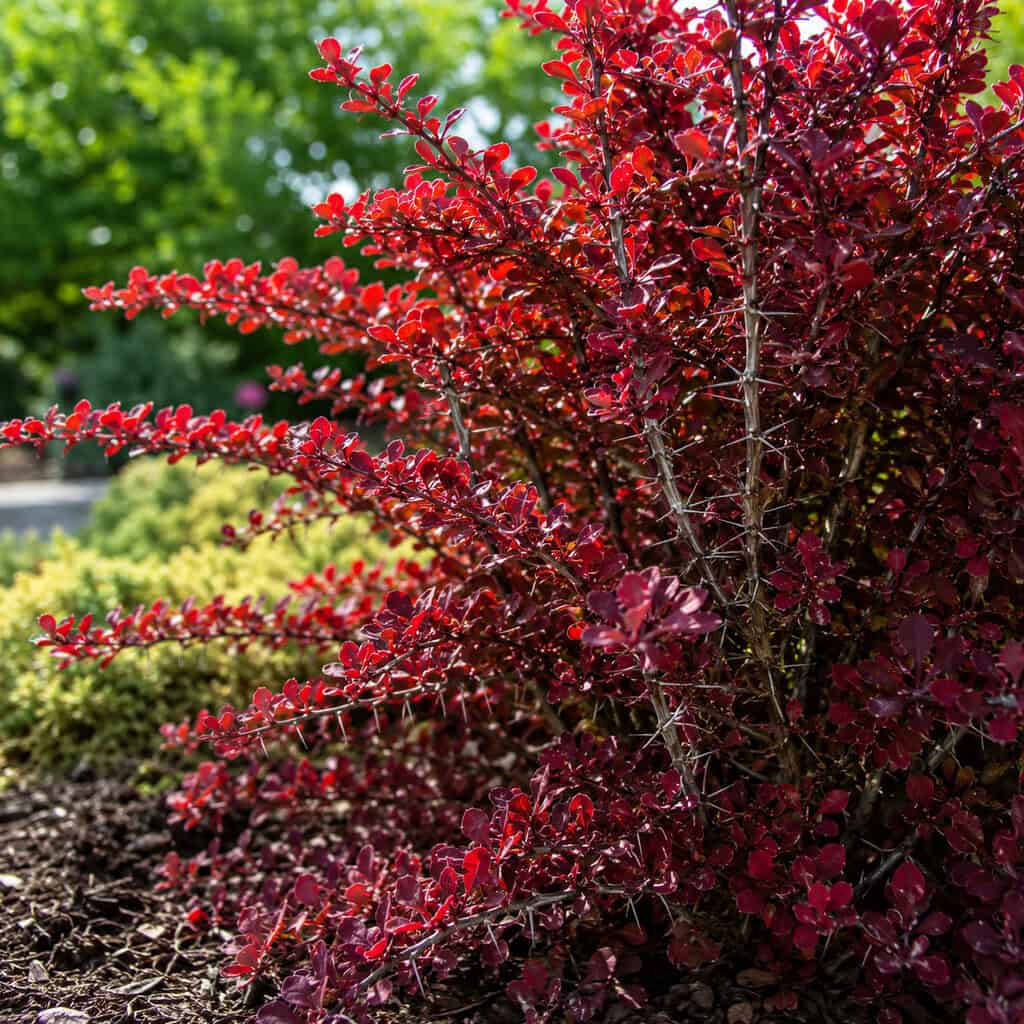
Pure physical defense. Deer don’t chew through thorns.
Barberry bristles with sharp spines along prickly stems, and that’s the entire deterrent — no scent trick, no toxin, just pain. The payoff is colorful foliage in glowing red, burgundy, and gold that holds all season. Zones 4 through 8.
It’s tough, drought-tolerant, and shrugs off neglect, which is part of the problem.
Here’s the caveat you’ll want to check before buying. Japanese barberry is invasive across large parts of the Northeast and Midwest, and several states — Maine, New York, Pennsylvania, and others — restrict or ban its sale outright. It escapes gardens, crowds out native plants, and research has even linked its dense thickets to higher tick populations.
If you love the look, ask your nursery for a sterile or seedless cultivar, or check whether your state allows sales at all. In restricted regions, reach for a native thorny shrub instead. The deer resistance isn’t worth spreading an invasive across your local woods.
30. Inkberry Holly (Ilex glabra)
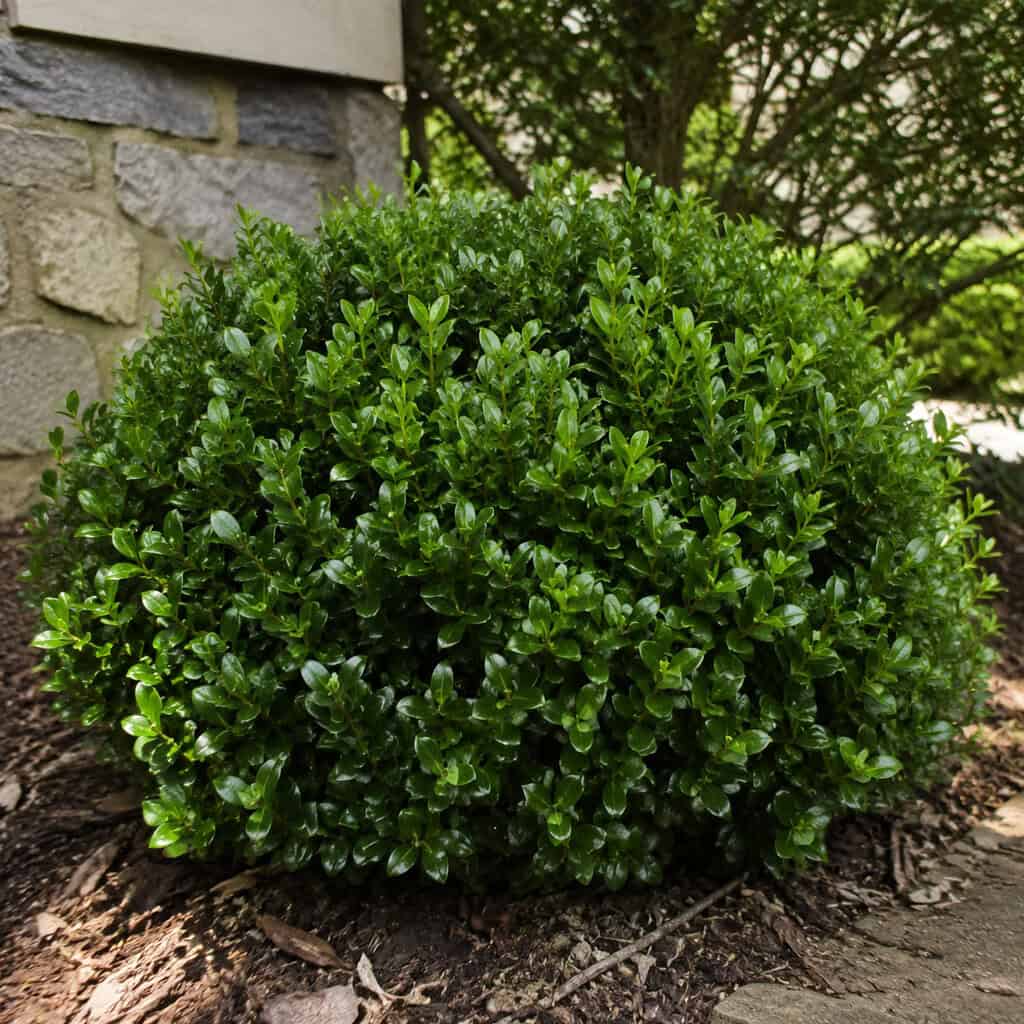
If boxwood blight has you nervous, this is the swap.
Inkberry holly looks like boxwood — the same tidy, rounded, glossy evergreen shape — but it’s a tougher, more disease-resistant native. Deer avoid the leathery leaves. Zones 5 through 9, and it tolerates shade and damp soil boxwood hates.
It’s become the popular blight-free boxwood alternative for exactly that reason.
Native, shade-tolerant, low-maintenance, and deer skip it. Hard to beat that combination for a foundation planting.
31. Juniper
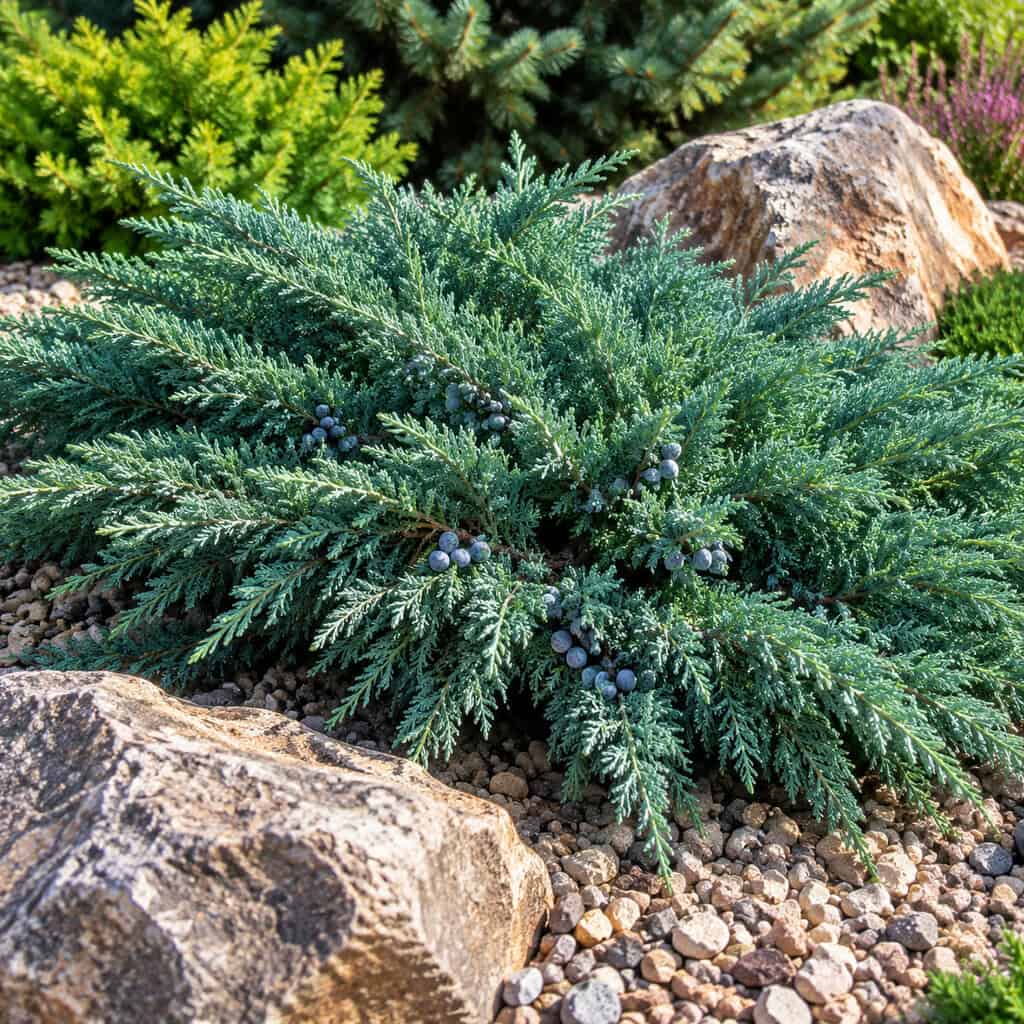
One of the most consistently avoided evergreens there is.
Fragrant aromatic oils, a rough scratchy texture, and a bitter taste stack up against browsing. Deer walk right past juniper even when they’re hungry. Zones 3 through 9, full sun.
It comes in every form — low creeping mats, mounding shrubs, upright columns for screening.
Reliable structure that asks almost nothing of you. Give it sun and drainage and forget about it.
32. Forsythia
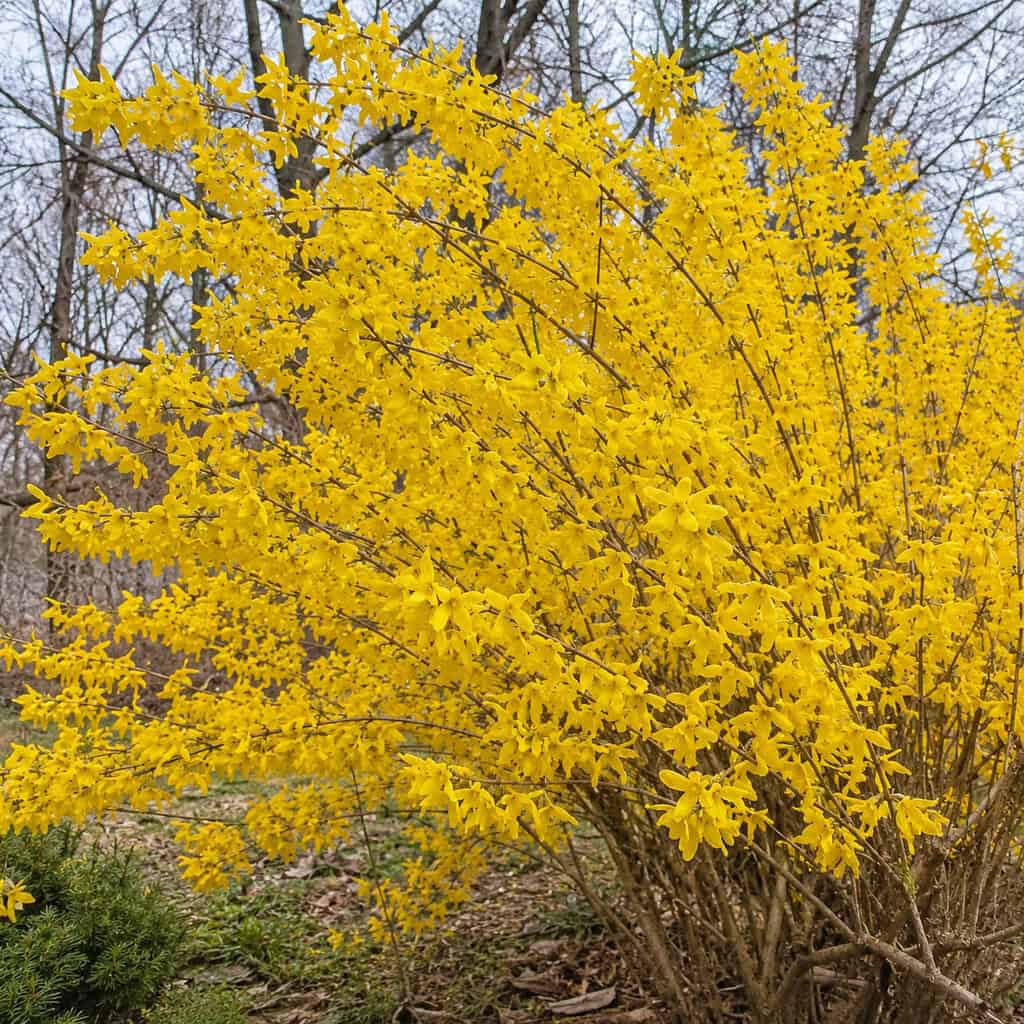
That first explosion of yellow before the trees leaf out — that’s forsythia.
It’s consistently deer-resistant across regions, and deer skip it even during the tender rush of active spring growth, when they’re hungriest.
The shrub is fast, forgiving, and easy, Zones 5 through 8. Prune right after it flowers, since it blooms on old wood.
A cheerful, dependable pick that announces spring louder than anything else in the yard.
33. Beautyberry (Callicarpa)
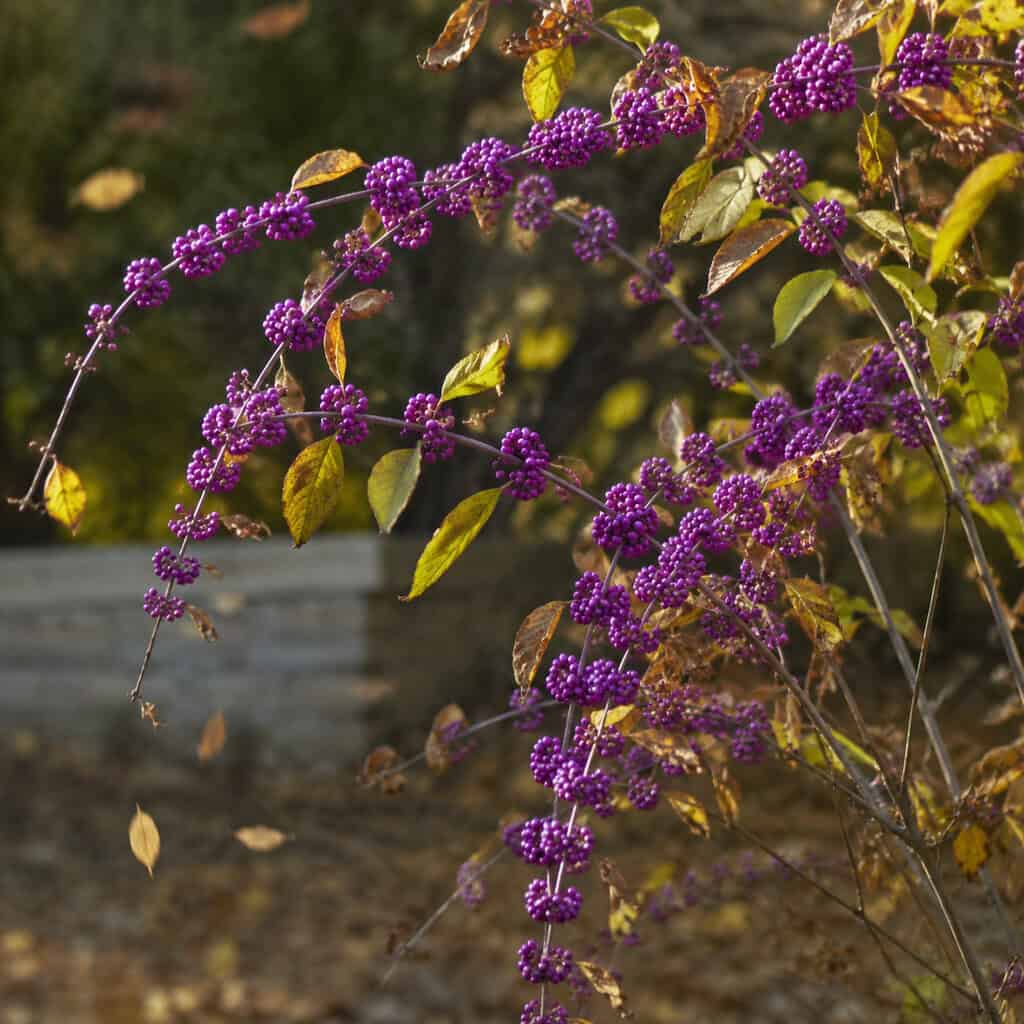
Save the color for fall.
Beautyberry lines its arching stems with clusters of electric violet-purple berries in autumn — a color so unusual people stop and ask what it is. Deer generally pass it over. Zones 5 through 8.
The berries hang on after the leaves drop, and birds eventually clean them up.
Plant it where you’ll see it in September and October. Nothing else in the yard looks like it.
34. Ornamental Grasses (Feather Reed & Sea Oats)
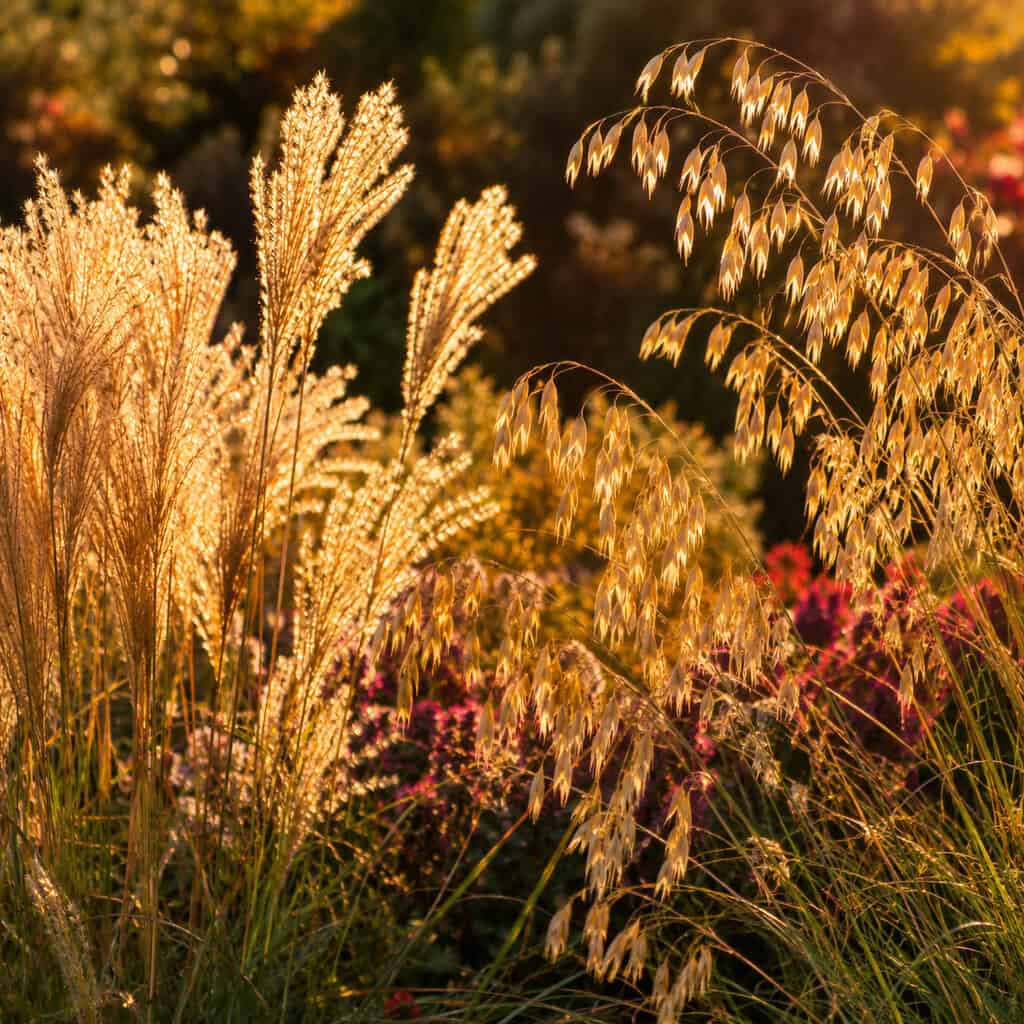
A whole reliable category, not just one plant.
Deer get almost no reward from dry, scratchy blades, so they usually skip grasses entirely. That opens up a big design toolkit. ‘Karl Foerster’ feather reed grass stands stiff and upright, while Northern Sea Oats dangle flat, oat-like seed heads that shimmer in a breeze. Zones 3 through 9.
They bring movement, sound, and winter interest when everything else has gone brown. Leave them standing until spring, then cut them back before new growth. If you’re digging up or dividing clumps, here’s how to dig up ornamental grass cleanly.
Texture and motion, no browsing damage.
35. Ferns
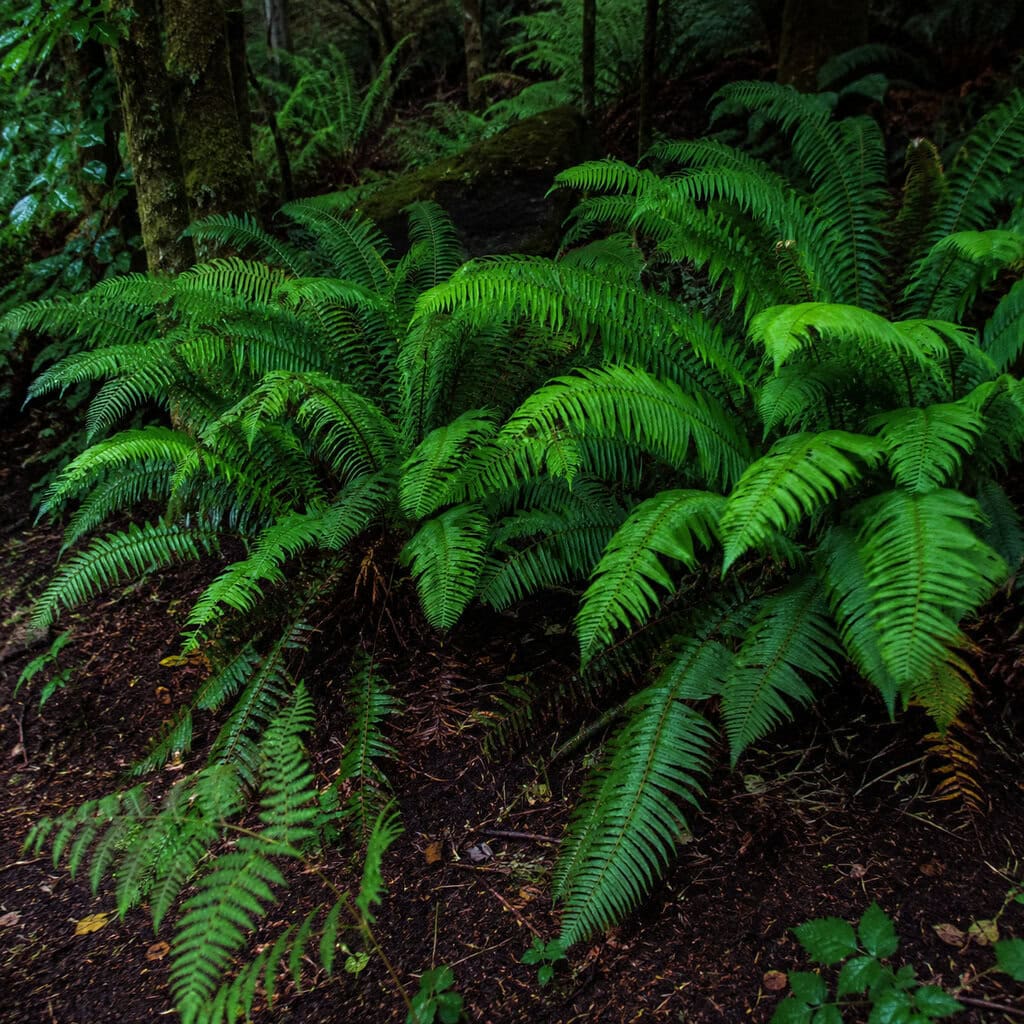
The set-it-and-forget-it answer for deep shade.
Ferns are almost always safe from browsing, regardless of species, thanks to tough texture and foliage compounds deer dislike. If you’ve got a dark, damp corner and heavy deer pressure, this is the closing move. Zones vary by type.
They ask for shade and moisture and little else, filling ground where grass and flowers both give up.
Plant a bank of them under trees and walk away. The deer already have.
The trick isn’t one magic plant. It’s stacking the defenses — scent, texture, toxin, and thorn — so a deer never finds a reason to slow down as it crosses your yard.
Cluster the fragrant herbs where deer enter. Ring your tulips with daffodils. Use boxwood or inkberry as the bones and let the aromatic perennials fill in around them.
Remember the fine print: no plant is deer-proof in a brutal winter, and resistance drops when plants are stressed. Water them, feed them, keep them healthy, and they’ll keep working. A few gardeners also lean on natural deer repellents for the first season while everything establishes.
Plant a yard deer don’t recognize as food, and one morning you’ll look out and everything will still be there. That’s the whole point.