

The mower won’t start again. It’s the third pull, the sweat is already down your back, and the gas can is empty.
Somewhere in the middle of all that, a question sneaks in. Why do you even have this lawn?
Turfgrass is thirsty, needy, and hungry for a weekend cut all summer long. It burns where the dog pees. It goes brown in July. And it does nothing for the bees.
There’s another way. Dozens of plants will carpet your yard, choke out weeds, and never once ask for a mow. Some bloom. Some smell like herbs when you walk on them. Some shrug off drought, deer, and dog urine without blinking.
Here are 32 ground covers that can take the place of grass — matched to sun, shade, slopes, and paws.
1. White Clover (and Microclover)
Start here. Clover is the swap most people reach for first, and for good reason.
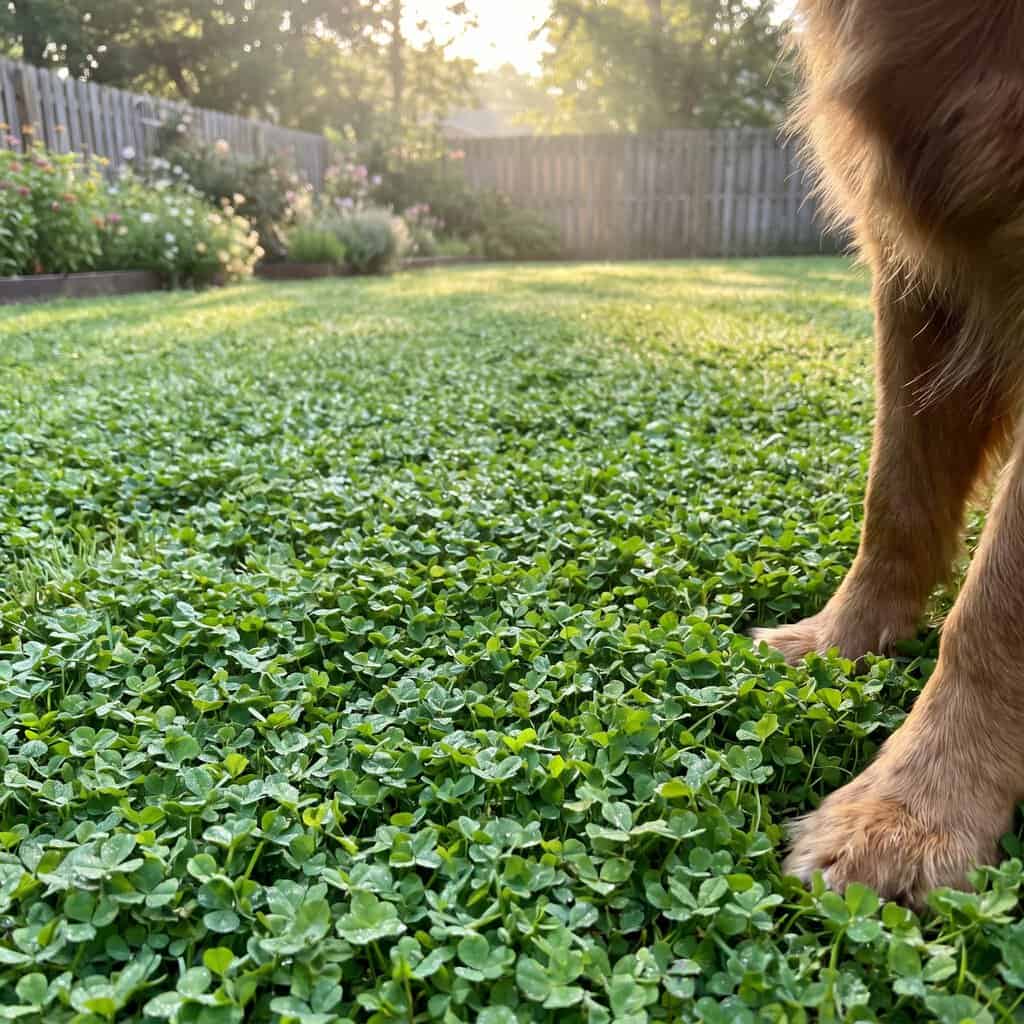
It pulls its own nitrogen out of the air, so it feeds itself and the plants around it. It stays green on a fraction of the water grass demands. And it takes daily foot traffic from kids and dogs without thinning out.
White clover thrives in full sun to part shade across Zones 3 through 9. The one catch with the standard type: it flowers, and those blooms pull in bees. Great for pollinators. Less great for bare feet.
That’s where microclover earns its reputation. It’s a smaller-leaved strain that barely flowers, knits into a tidier carpet, and stays lower to the ground.
For dog owners, microclover is close to a cheat code. Dog urine that scorches turf into brown craters barely fazes it — the clover buffers the nitrogen instead of burning. No dead spots. No reseeding the same patch every August.
It’s also non-toxic if your dog decides to graze. Mix a little into an existing lawn or seed it solo. The The Old Farmer’s Almanac treats clover as the default all-purpose grass alternative, and in a dog yard, it’s hard to beat.
2. Creeping Thyme
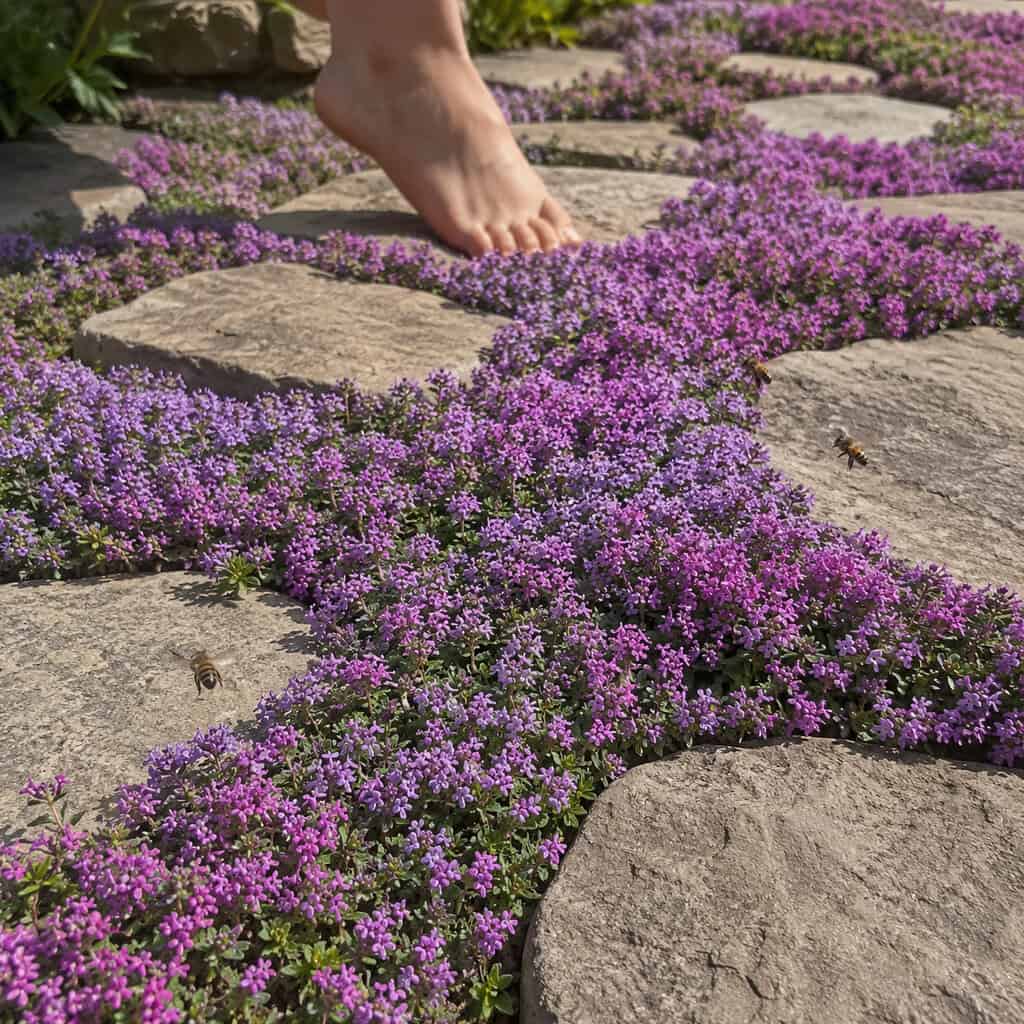
Step on it and the yard smells like a kitchen.
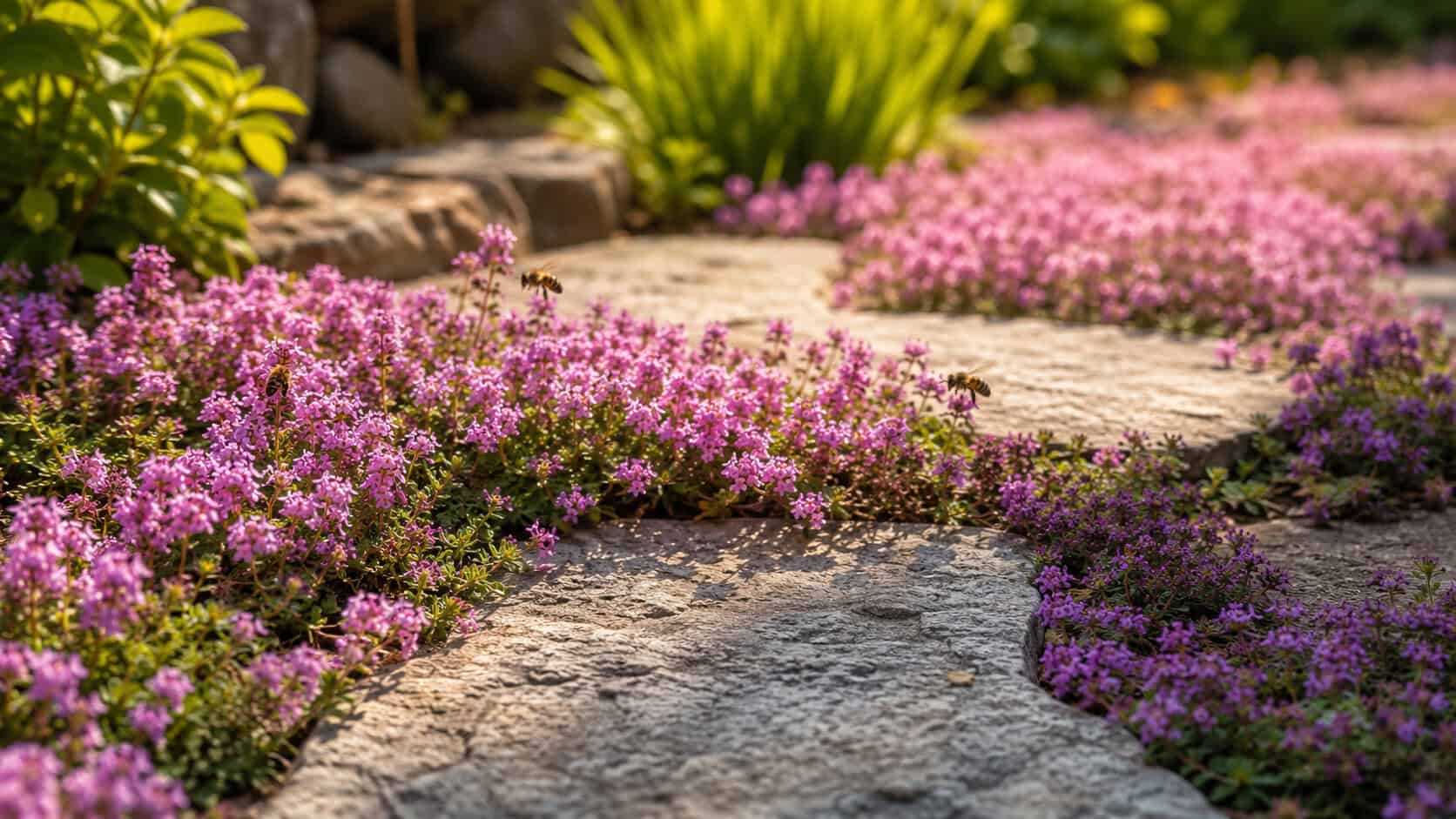
Creeping thyme forms a dense mat only 2 to 4 inches tall, releasing a warm herby scent when crushed underfoot. It blooms pink and purple in summer, and the pollinators love it.
It wants full sun and soil that drains fast. Once it’s rooted, it barely needs watering. It’s confirmed non-toxic to dogs and cats, per Blooming Expert.
Use it around pavers and along paths where the occasional footstep releases that scent. It handles light traffic, not a football game.
3. Roman Chamomile
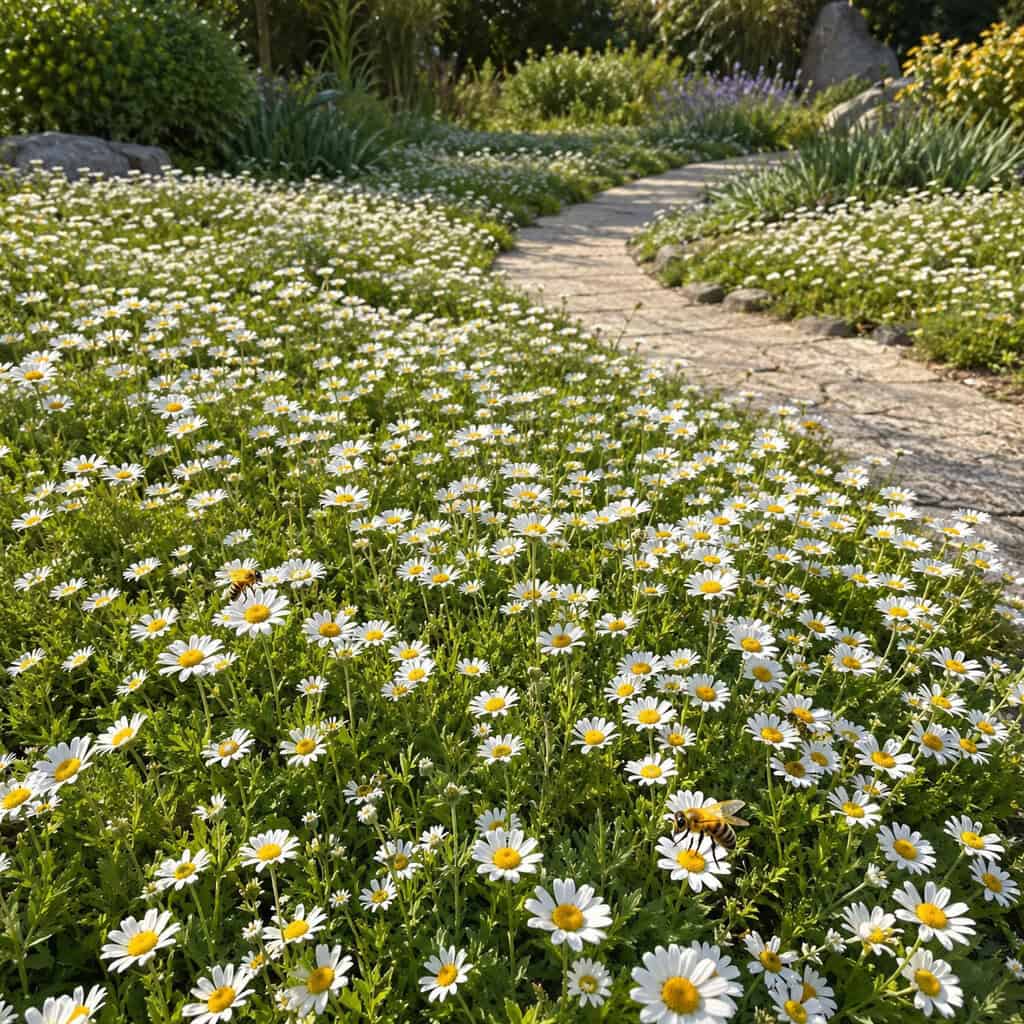
A chamomile lawn is an old-world idea that still works. Daisy-like flowers, a sweet apple scent, and zero mowing.
It draws honeybees and, oddly enough, tends to keep mosquitoes at a distance. Roman chamomile grows across most of the U.S. in sun to part shade.
Want the mat without the flowers? Plant the ‘Treneague’ cultivar, which stays low and evergreen and doesn’t bloom.
One warning. Chamomile is a poor competitor against weeds, so the soil prep before planting decides whether you get a lawn or a weed patch. Clear the ground first. Really clear it.
4. Corsican Mint
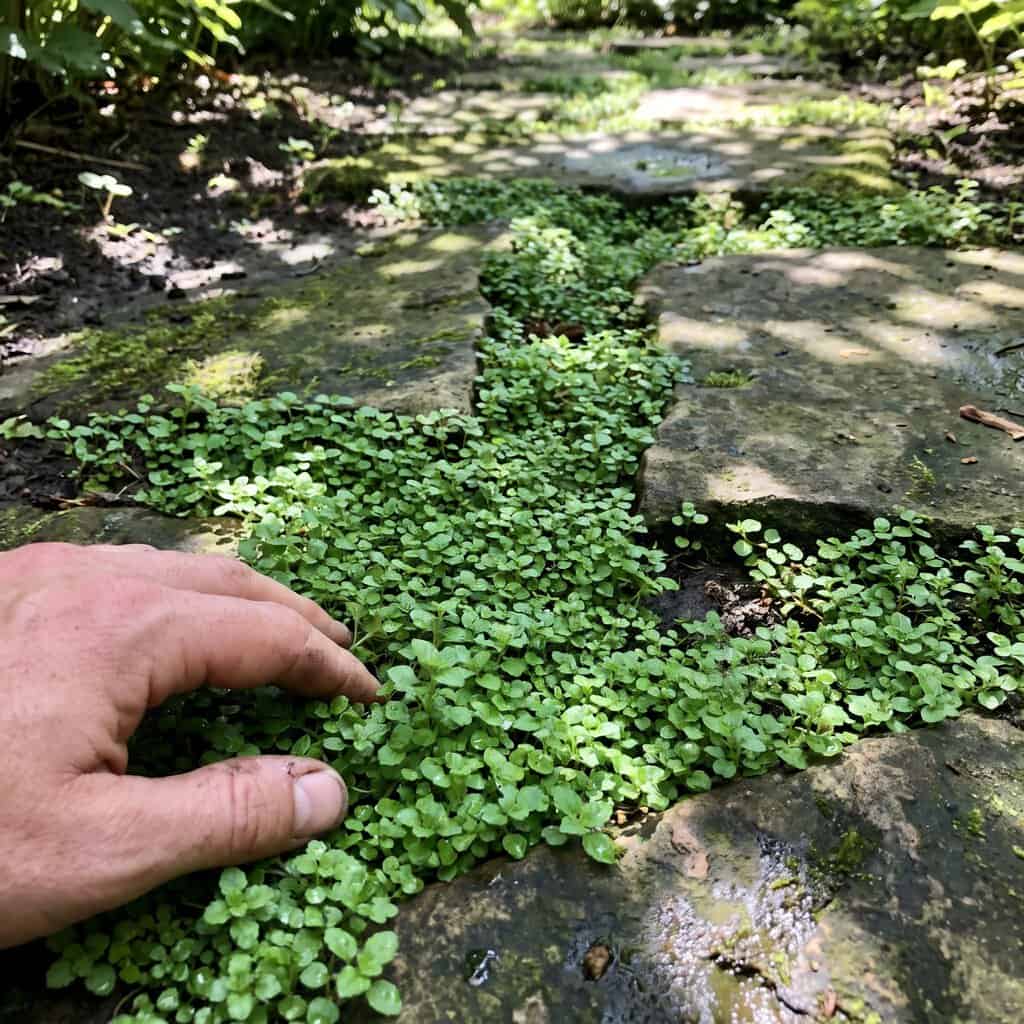
Tiny leaves. Enormous smell.
Corsican mint is a minuscule creeper that carpets the damp, shady pockets where grass sulks and dies. Zones 6 through 9, part shade, moist soil.
Brush against it and the mint scent floods up. It handles an occasional footprint but won’t survive a busy walkway.
Tuck it between stepping stones in a shaded corner. The crushed-mint payoff every time you pass is the whole point.
5. Creeping Phlox (Moss Phlox)
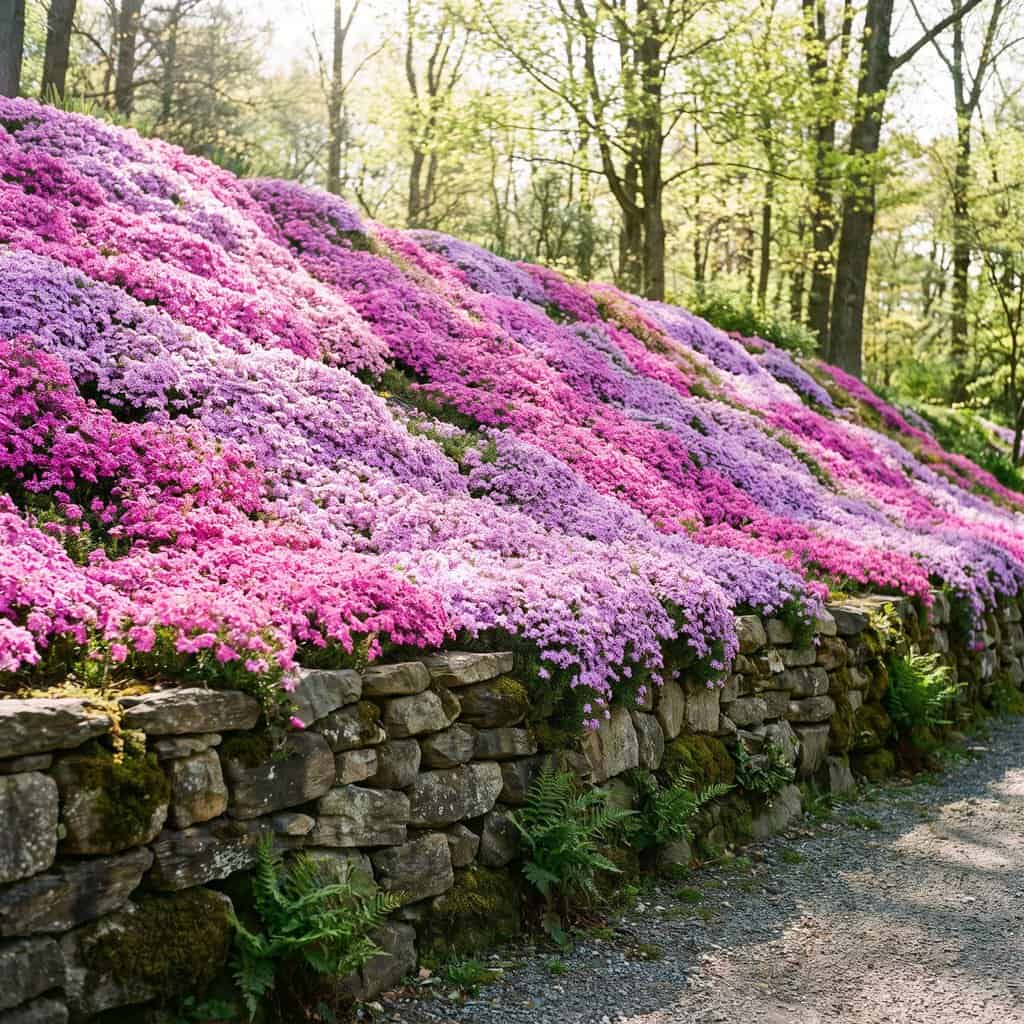
For about three weeks in spring, a slope of creeping phlox looks like someone spilled paint down the hill.
Phlox subulata forms a semi-evergreen cushion that erupts in a solid sheet of pink, purple, or white. It wants full sun and dry, rocky, or sandy soil — the kind of ground that defeats most plants.
Its roots grip slopes and banks, holding soil against erosion. It’s disease-resistant, pest-resistant, and moderately drought-tolerant once established, notes Lawn Love.
A high-impact bloomer for a sunny problem area. Hardy from Zones 3 through 9.
6. Snow-in-Summer
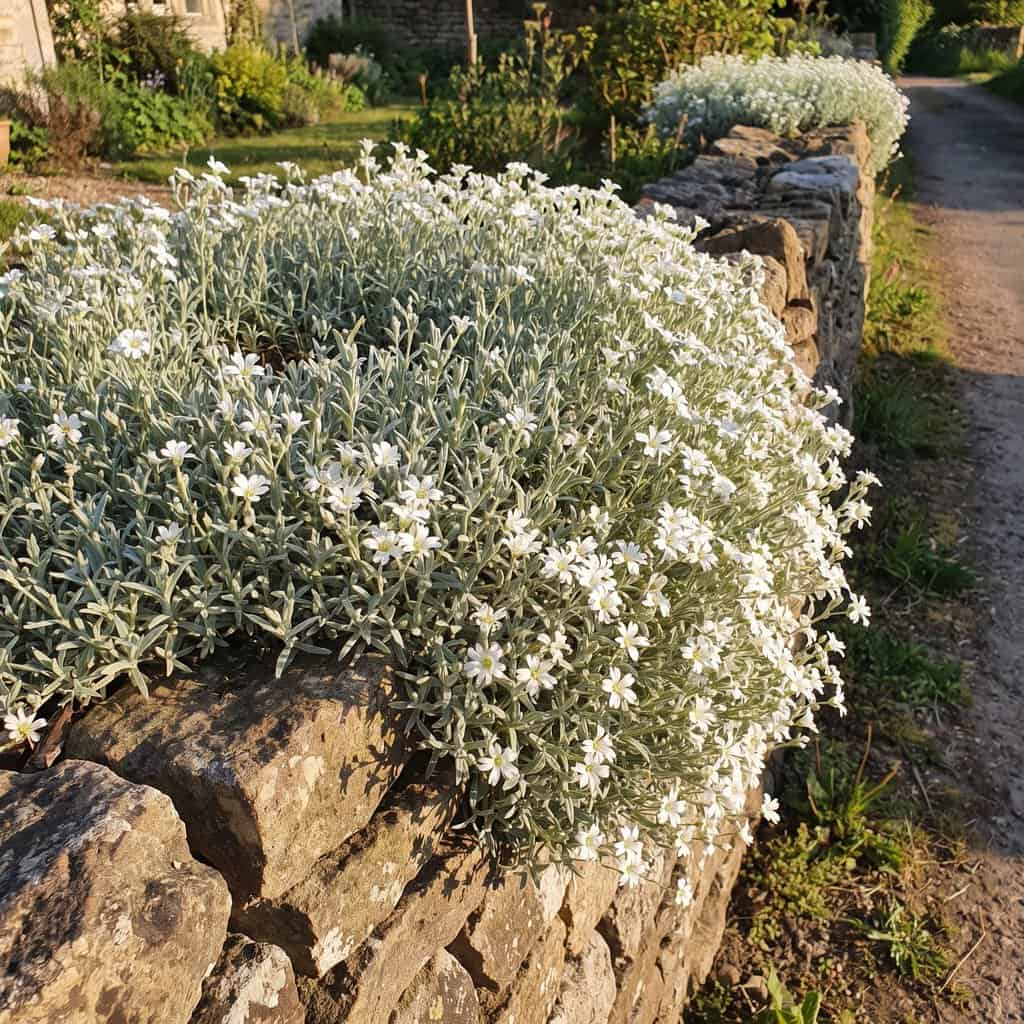
The name is the picture. A silvery gray mat topped with a blizzard of white flowers in early summer.
It’s built for tough sites — drought-prone, deer-browsed, poor soil. Full sun, Zones 3 through 7. Non-toxic to pets, too.
One thing to check before you plant. Snow-in-summer is considered invasive in some states, so look at your local list first. Where it’s welcome, it’s a showstopper on dry ground.
7. Ice Plant (Delosperma)
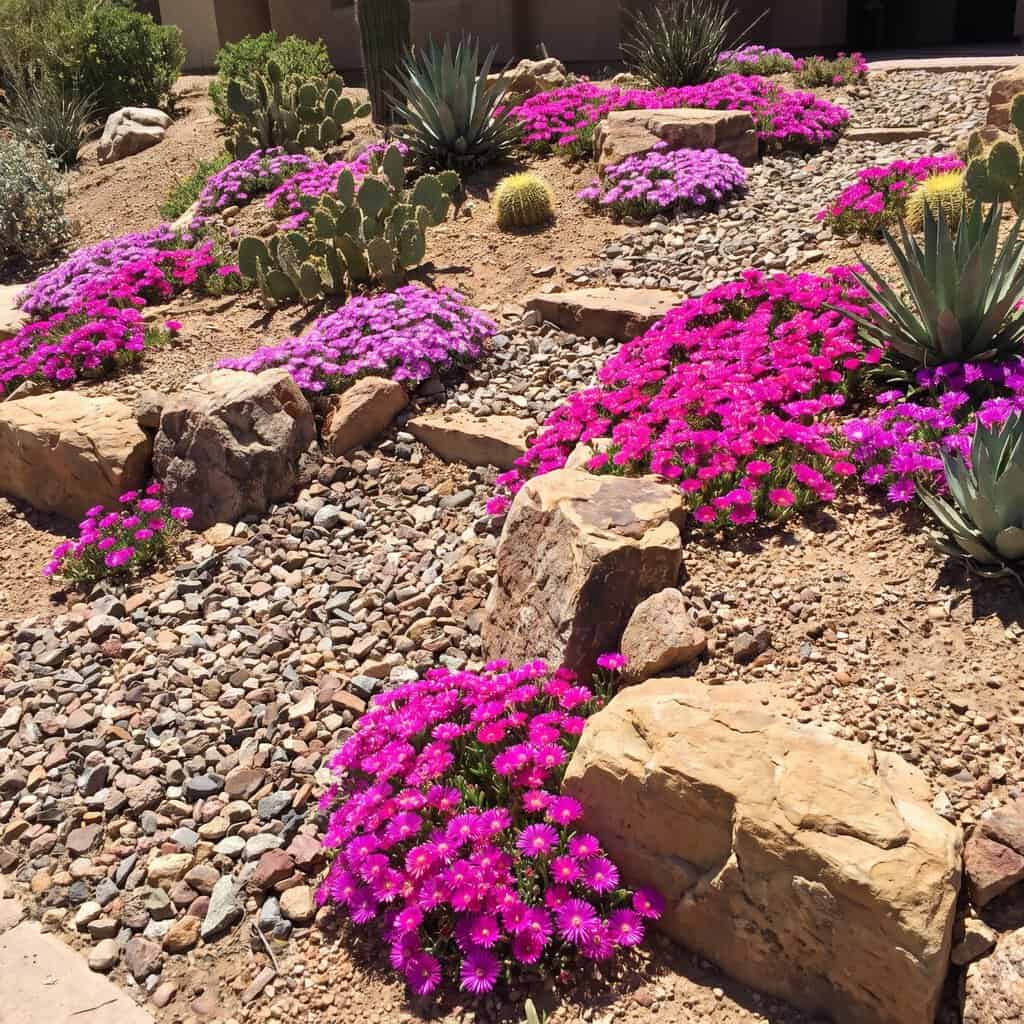
Neon. That’s the only word for a hillside of blooming ice plant.
This low succulent blankets poor, rocky, sandy ground in electric pink, purple, and yellow flowers. It stores water in its fleshy leaves and asks for almost none from you.
Full sun, Zones 5 through 10. It’s a staple of Southwestern and xeriscape yards where turfgrass simply can’t hang on, as LawnStarter points out.
Give it drainage and heat and it’ll thrive on neglect.
8. Sedum (Stonecrop)
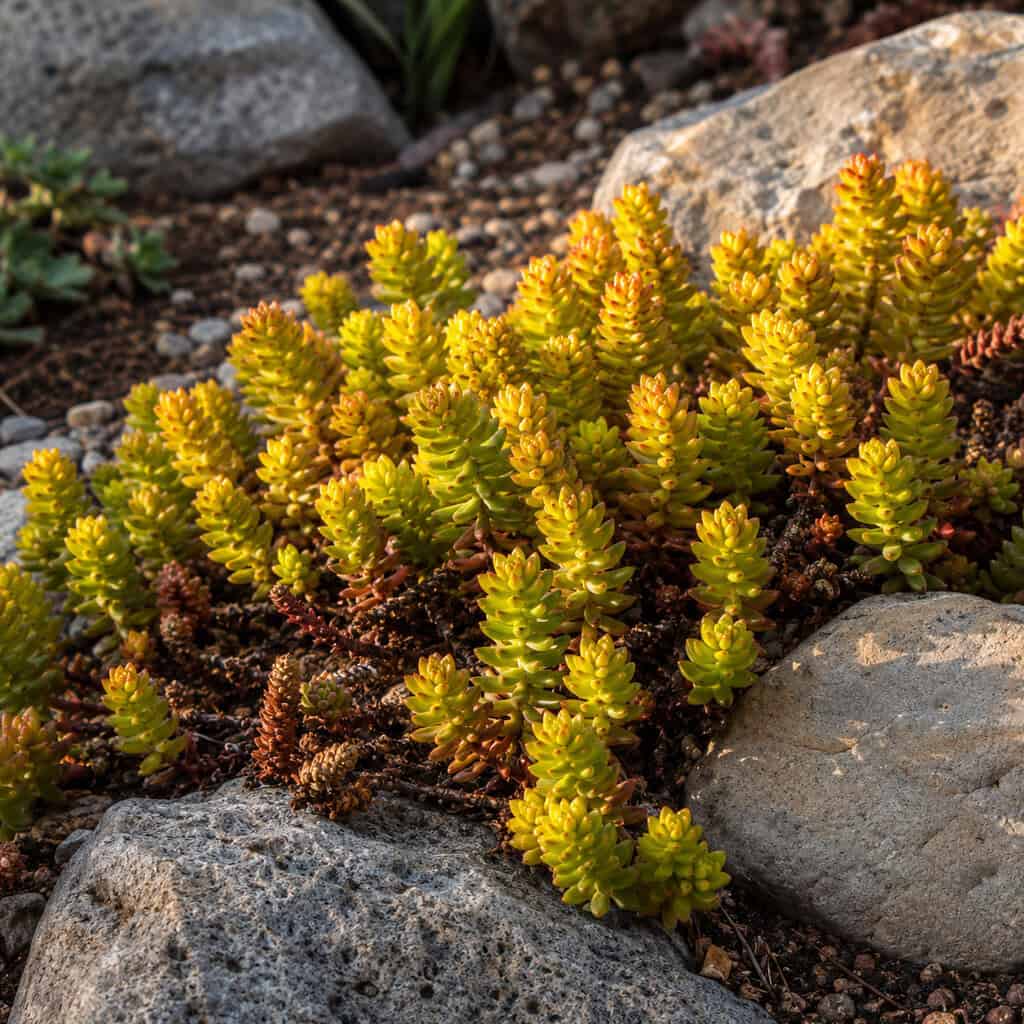
Tough as nails. Sedum stores water in its leaves and grows where nothing else will bother trying.
Hot, dry, rocky ground with no irrigation? That’s home. Full sun, Zones 3 through 9.
Varieties like ‘Angelina’ bring year-round color, shifting from chartreuse in summer to bronze-orange in the cold months. It’s a rock-garden natural.
Plant it and forget it. Sedum prefers to be ignored.
9. Dymondia (Silver Carpet)
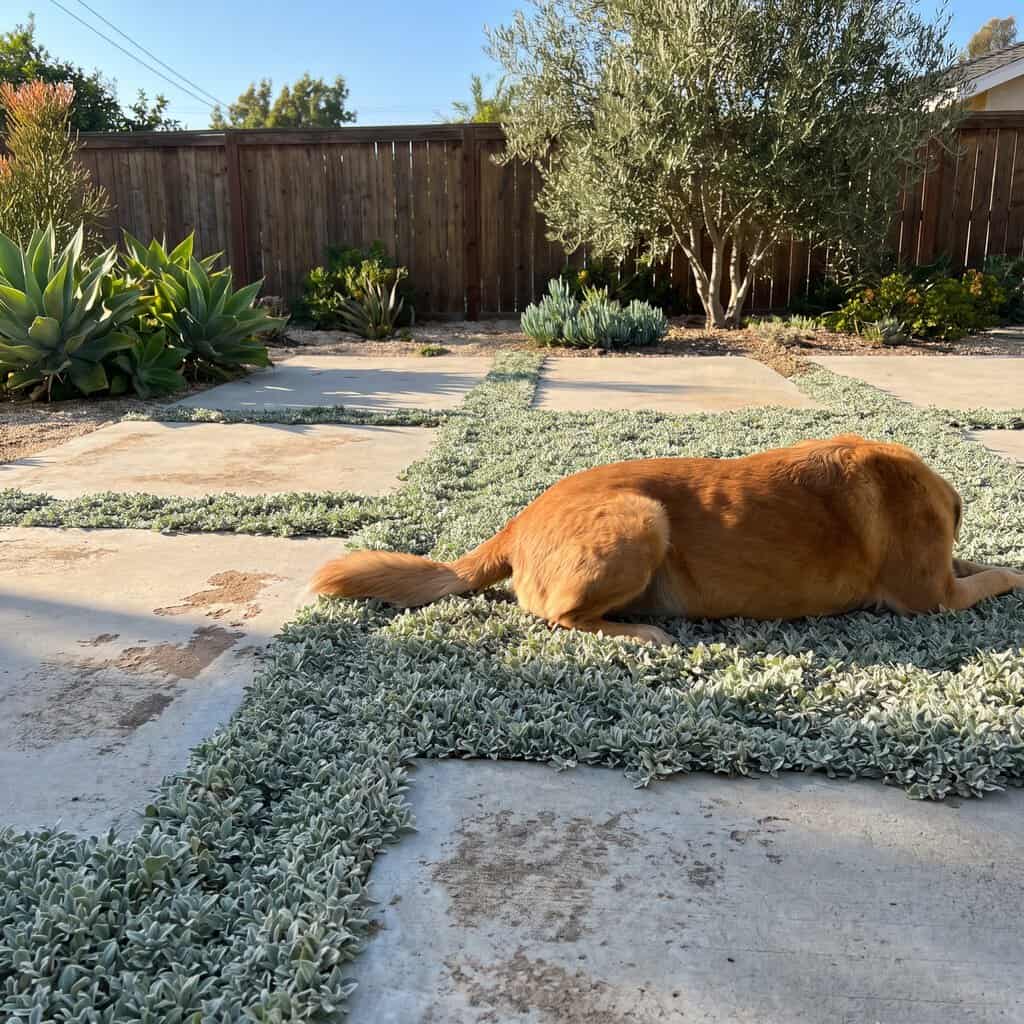
One of the lowest walkable covers there is — 2 to 4 inches, soft and a little squishy under bare feet.
Dymondia is extremely drought-tolerant and non-toxic, and it produces no urine burn spots, which has made it a Southern California dog-yard favorite. INSTALL-IT-DIRECT flags it as a top dog-friendly pick.
It wants full sun and good drainage in Zones 9 through 11. It dies below about 25°F and sulks in shade, so this one’s for warm, dry, coastal climates only.
Where it fits, it’s close to perfect underfoot.
10. Lamb’s Ear (Silver Carpet)
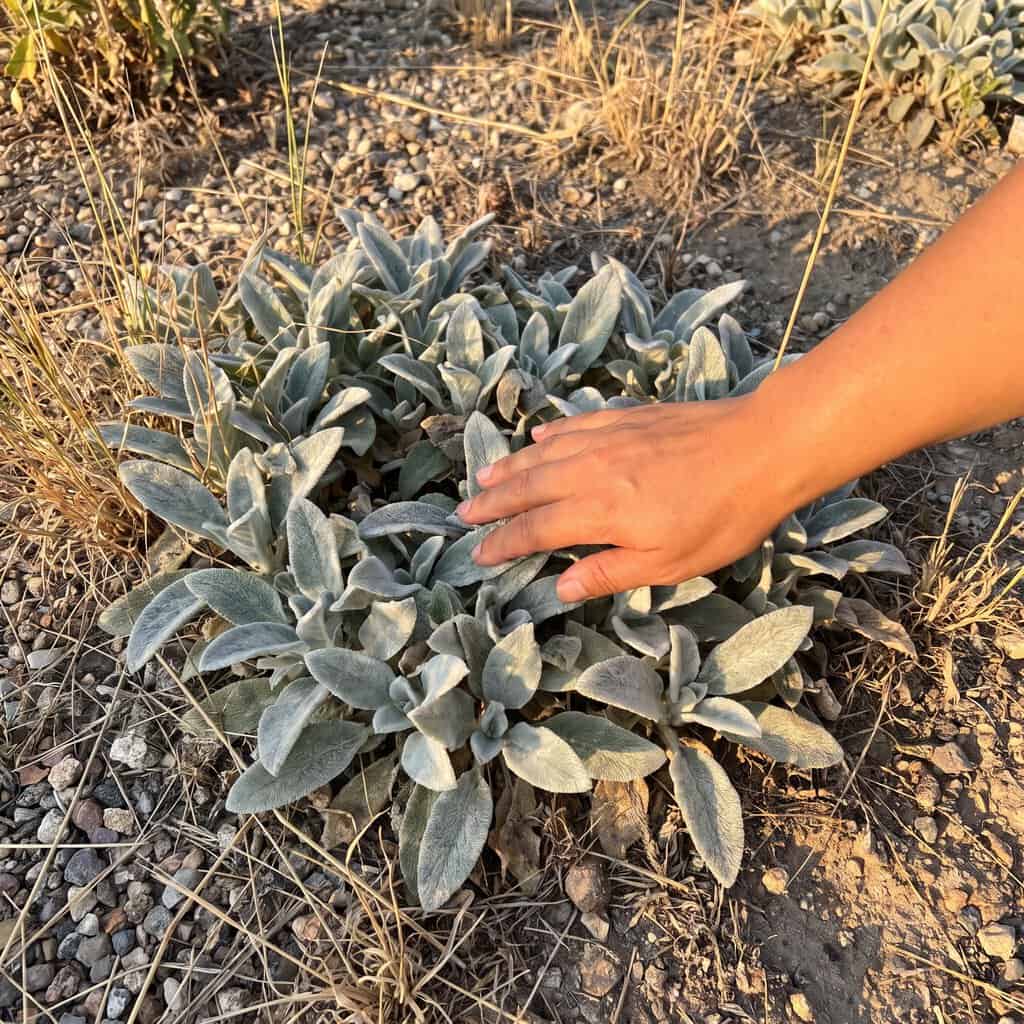
Kids can’t stop touching it. Neither can most adults.
Stachys byzantina forms a fuzzy silver mat that feels like felt. Deer and rabbits leave it alone — the fuzz makes it unpalatable.
It thrives in bad soil, drinks little water, and takes moderate foot traffic. Sun or dry shade, hot arid climates especially.
Use it as a soft, silvery backdrop that makes the rest of the landscape pop.
11. Kurapia
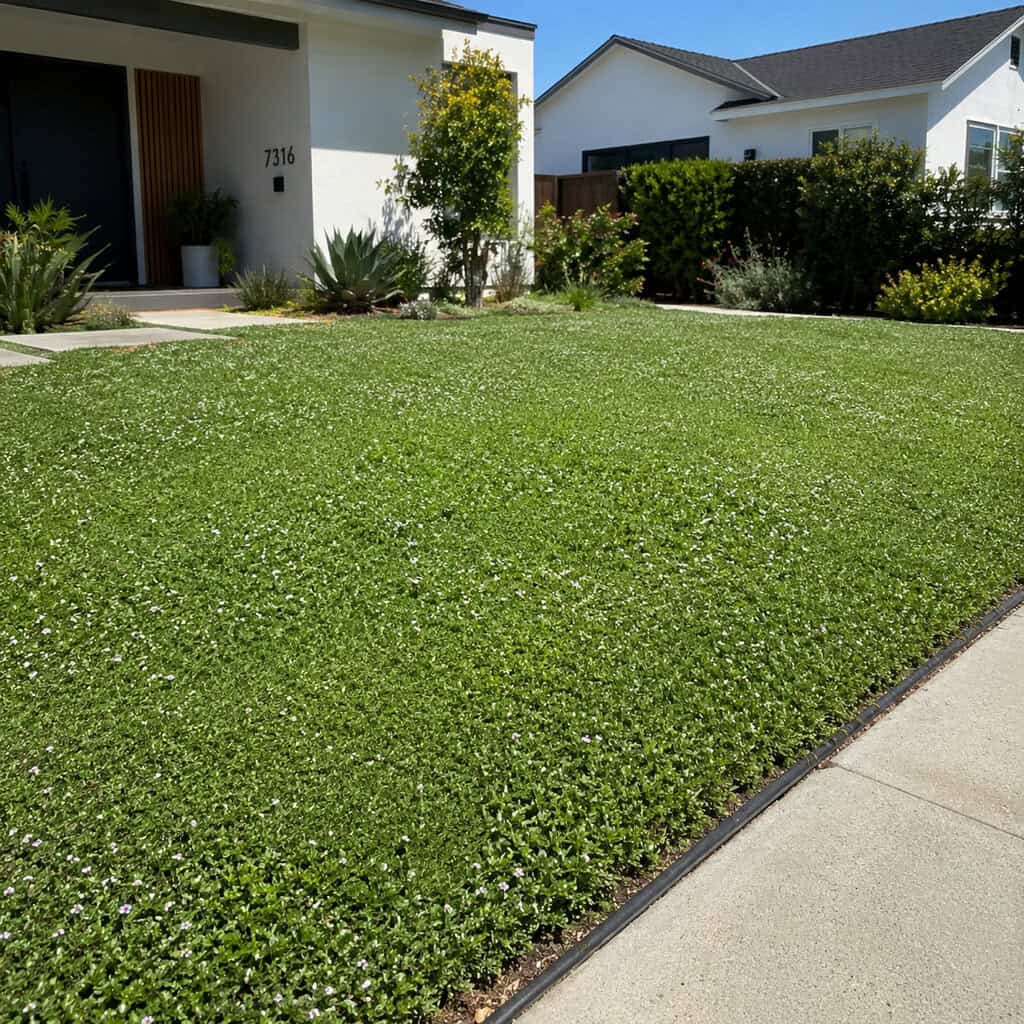
The newest name on this list, and one built in a lab for exactly this job.
Kurapia is an engineered lawn alternative that reportedly uses up to 60% less water than turf. It stays just 1 to 3 inches tall, so mowing is optional, and it flowers from May through November.
It wants full sun to part shade in warm climates. Vision Garden Design highlights it as a go-to for California yards.
If you want a clean, tidy, real-lawn look without the water bill, this is the one homeowners keep asking about.
12. Dichondra

Kidney-shaped leaves that knit into a soft, dense green carpet.
Dichondra stays evergreen in mild climates and handles light foot traffic — a genuine turf substitute rather than a flowering filler. Full sun, well-drained soil, warm zones.
From a distance, it reads as lawn. Up close, it’s a lush little jigsaw of round leaves.
Warm-region yards get a real grass look without the mower.
13. Blue Star Creeper
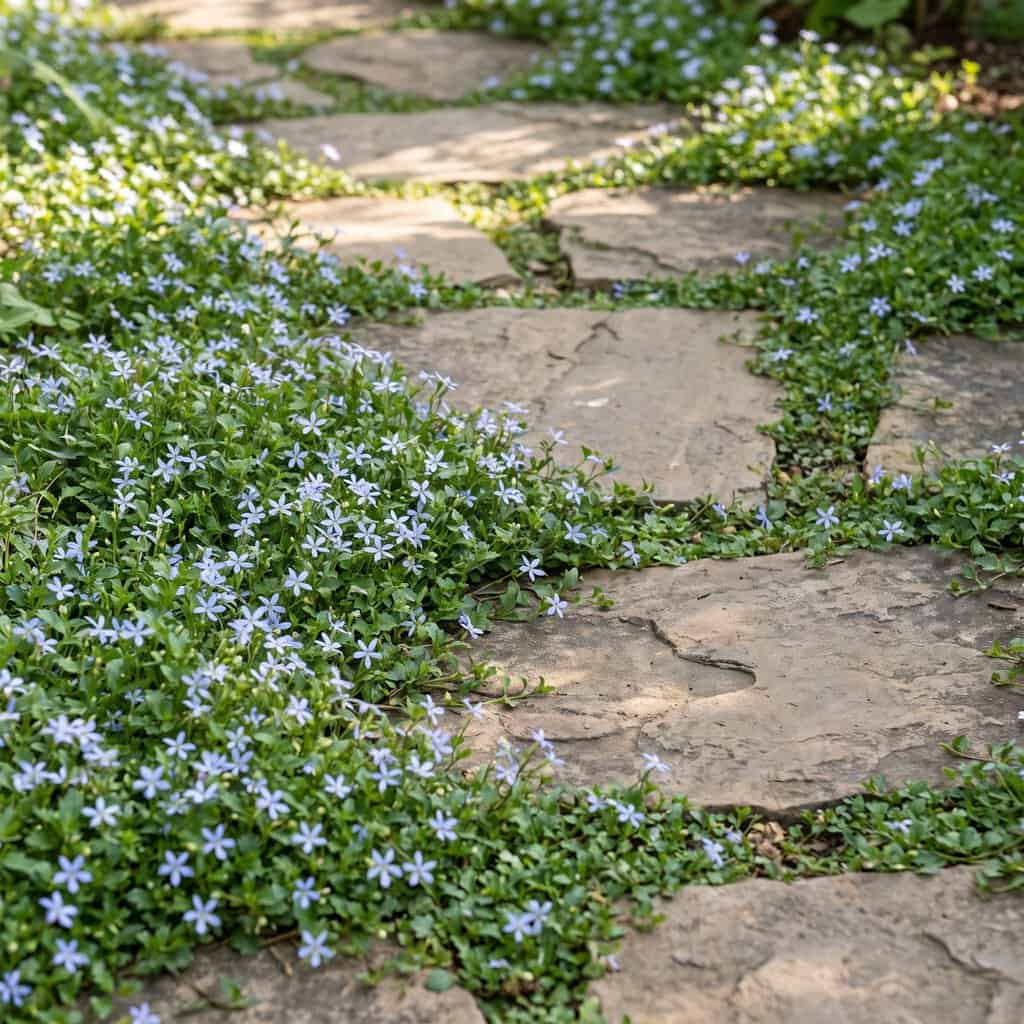
Polite. That’s the word for this one.
Blue star creeper is a delicate spreader dotted with tiny blue star flowers from spring through summer. It fills in slower than aggressive plants like clover, but it never bullies its neighbors.
It plays beautifully between pavers and in light-use lawns, Zones 5 through 10, sun to part shade. Needs maybe two or three light trims a season, if that.
A gentle choice for a spot you actually want to control.
14. Mazus (Mazus reptans)
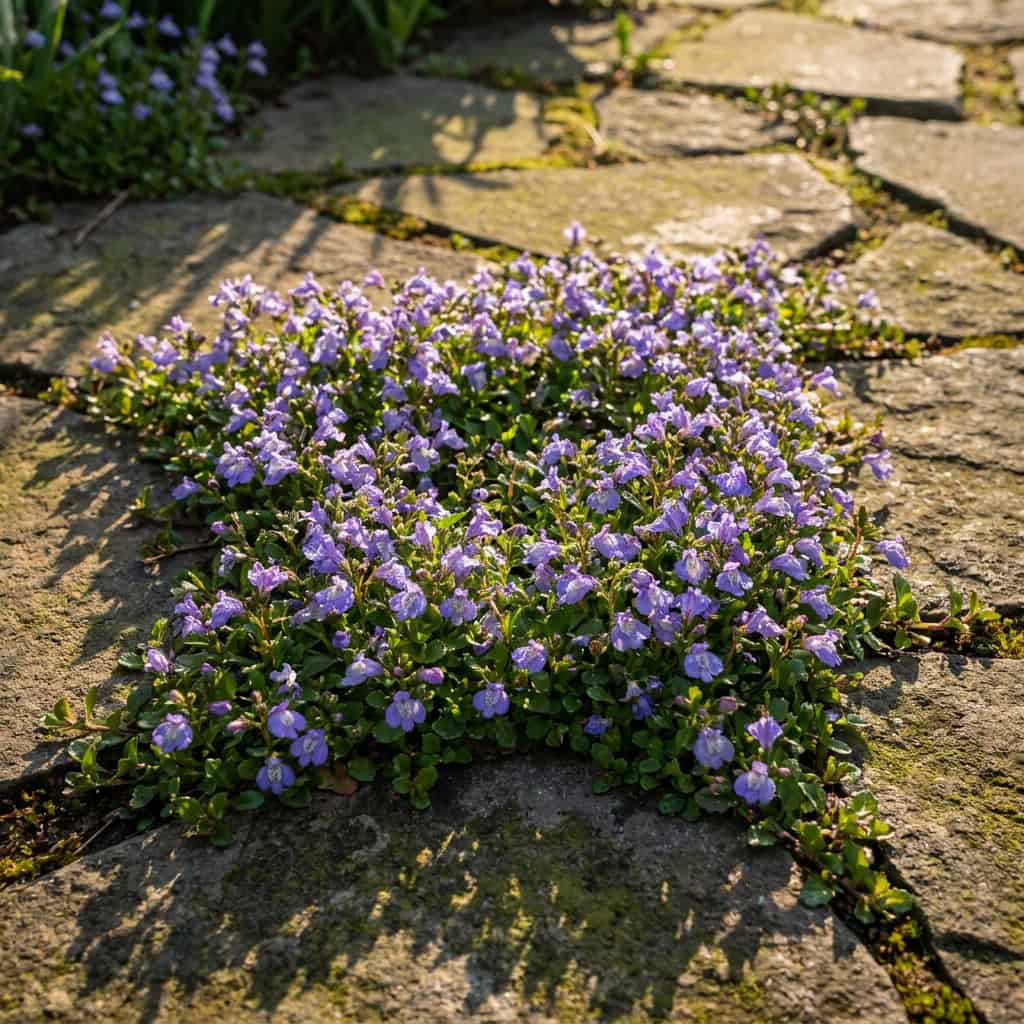
Under two inches tall and quick to fill.
Mazus colonizes fast between pavers, throws out purple-blue flowers in late spring, and takes light foot traffic without complaint. Sun to shade, moist soil, Zones 5 through 8.
Horticulture pros lean on it to fill gaps anywhere in the yard. It’s the plug-and-cover specialist.
Set it between stepping stones and stand back.
15. Creeping Jenny (Moneywort)
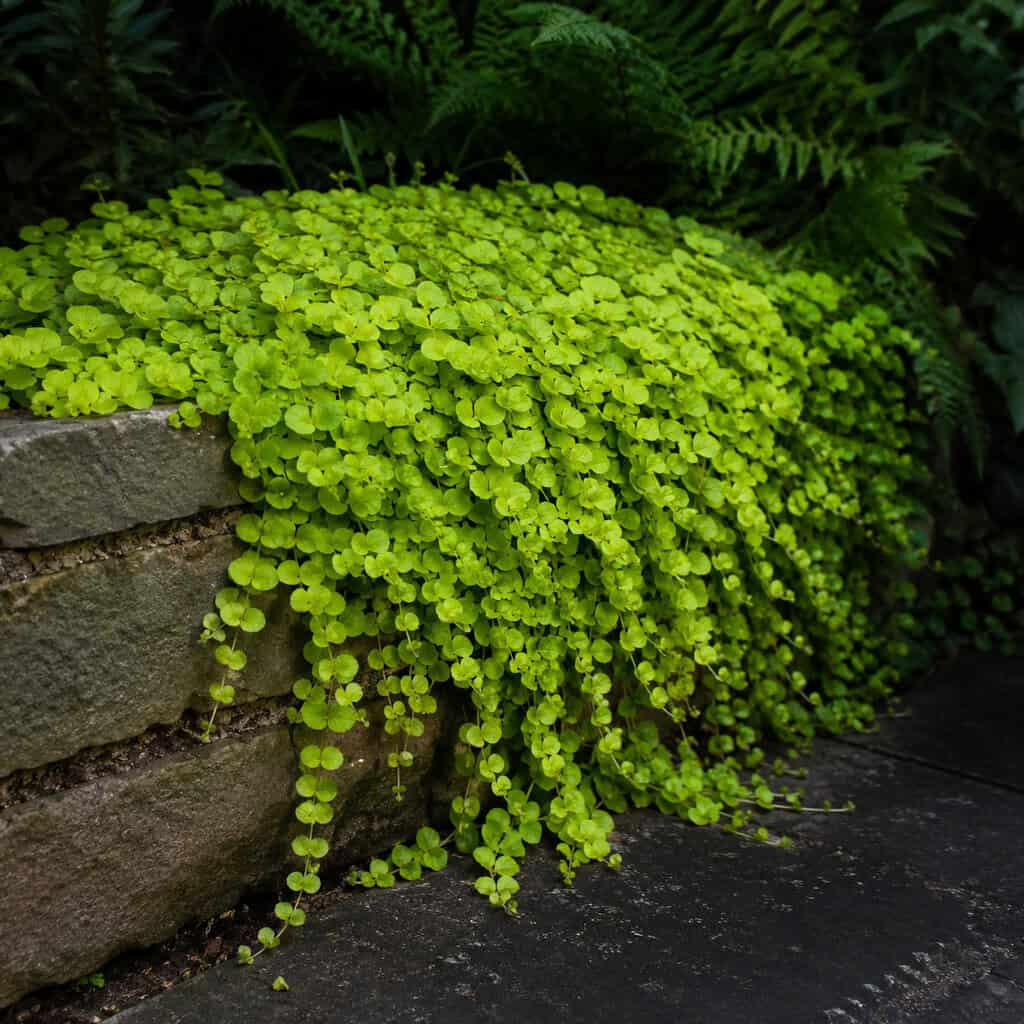
Fast, bright, and a bit of a bully.
Creeping Jenny spreads with round coin-shaped leaves, and the golden ‘Aurea’ form lights up dark corners like a spotlight. Tough enough for occasional traffic, happy in sun or shade, moist soil, Zones 3 through 9.
Here’s the caution. It’s aggressive, and it’s listed as invasive in some states, so it needs a boundary. Edging contains it.
Fine Gardening treats it as a plant to use where you can fence it in — a thug that behaves only when boxed. Give it a defined bed and it earns its keep.
16. Ajuga (Bugleweed)
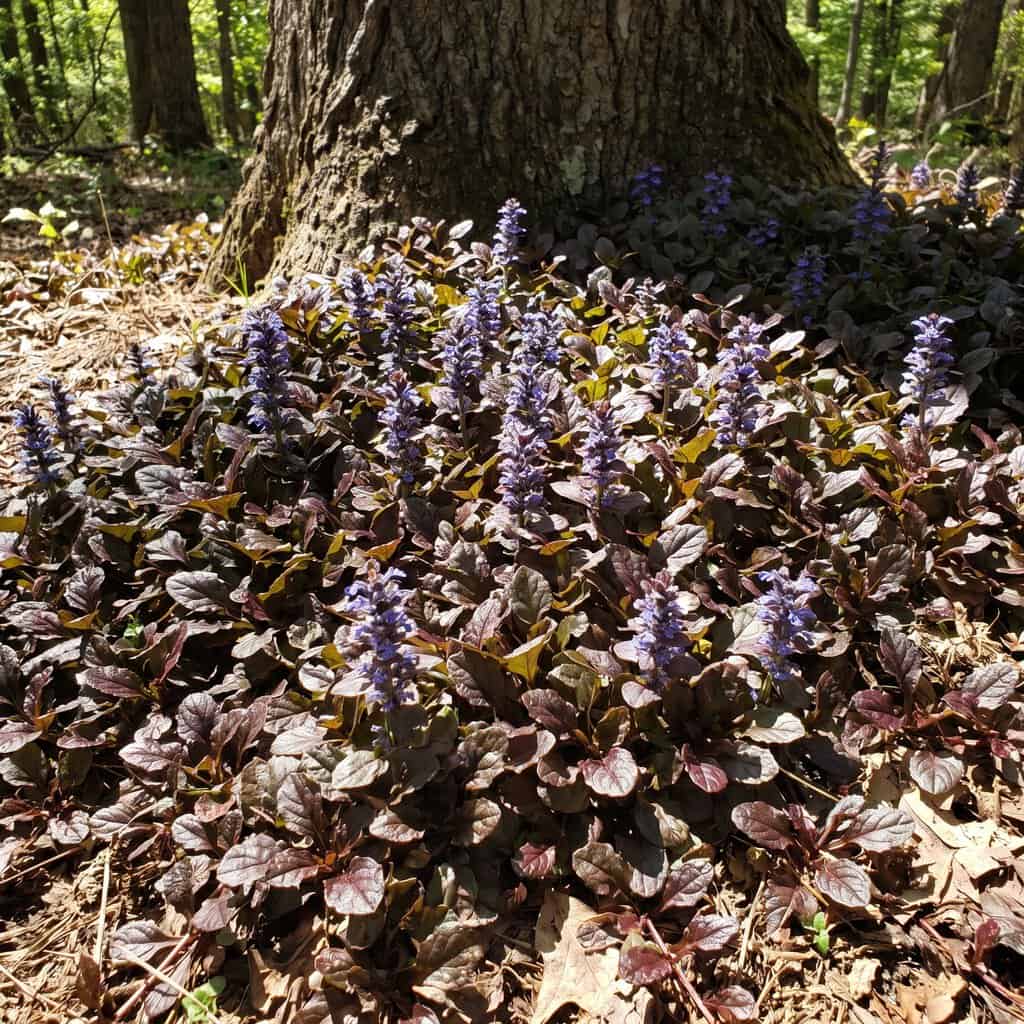
Ajuga does something few plants manage — it thrives in dry shade under trees where almost nothing grows.
It forms a dense weed-choking carpet with blue spring flower spikes and colorful bronze or burgundy foliage. Sun to shade, Zones 3 through 9.
But this one needs a real warning for pet owners. Ajuga is listed as mildly toxic to dogs by ASPCA and university extension sources, so if you’ve got a dog who chews the yard, this isn’t your first pick.
Mildly toxic to dogs. Ingestion can cause mild stomach upset, and while it’s not among the deadly plants, it’s not something you want a puppy grazing on daily.
It’s also invasive in some regions, spreading well past where you planted it. If your yard is dog-free and you can contain it, ajuga solves the dry-shade problem better than most. If not, look at a native sedge instead.
17. Vinca Minor (Periwinkle)
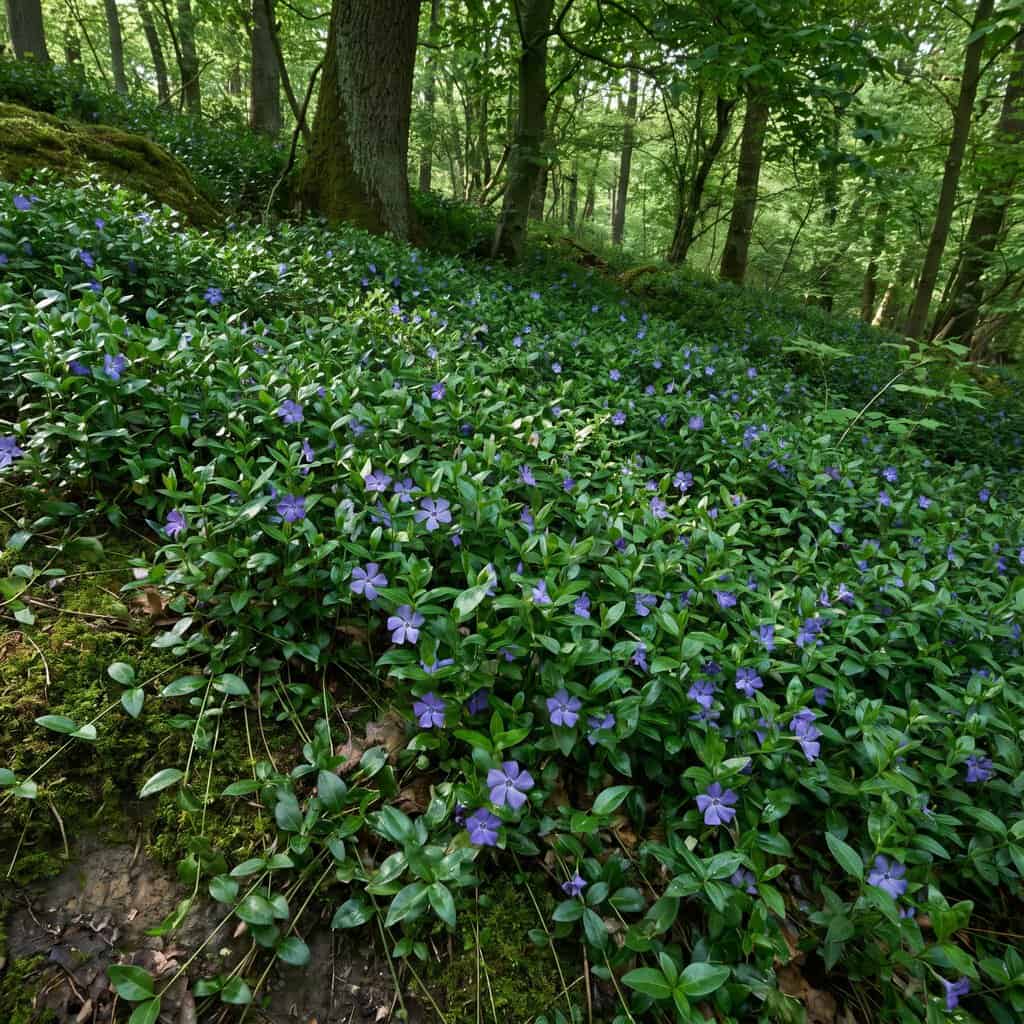
An evergreen carpet of glossy leaves and blue-purple flowers in spring. It’s gorgeous on a shady bank, and it holds erosion-prone slopes in place. Sun to shade, Zones 4 through 9.
Now the big flag. Vinca minor is listed as invasive by a long list of university extensions across the country.
It escapes gardens, creeps into woodlands, and smothers native ground flora once it’s loose. University of Maryland Extension is among the many that flag it.
Check your state’s invasive species list before you plant a single sprig. Where it’s still legal and you can commit to a fully contained site — a bed ringed by pavement or hard edging — it performs. In an open yard next to natural areas, skip it and choose vinca-free.
The prettier the invasive, the harder it is to give up. This is one to think twice about.
18. Liriope (Lilyturf)
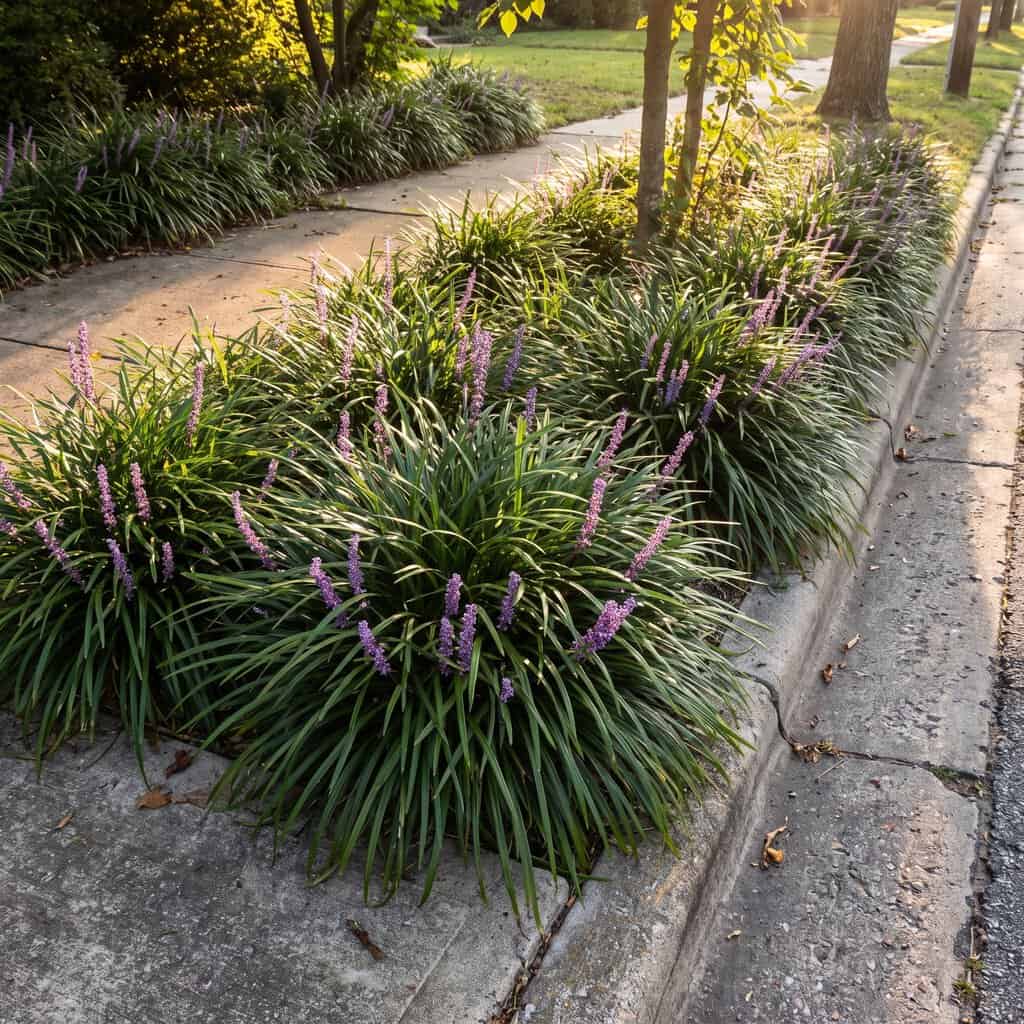
The most grass-like plant on this list, minus the mowing.
Liriope spreads into a lush, drought-proof, evergreen mat and throws up purple flower spikes in late summer. Sun or shade, Zones 6 through 10.
It’s a little lumpy to walk across and it does spread, so it’s best where walking isn’t the point. GardenRant rates it a top performer for banks and hellstrips.
That strip between the sidewalk and the street, where mowing is a hot, awkward chore? Liriope fixes it for good.
19. Mondo Grass (and Dwarf Mondo)
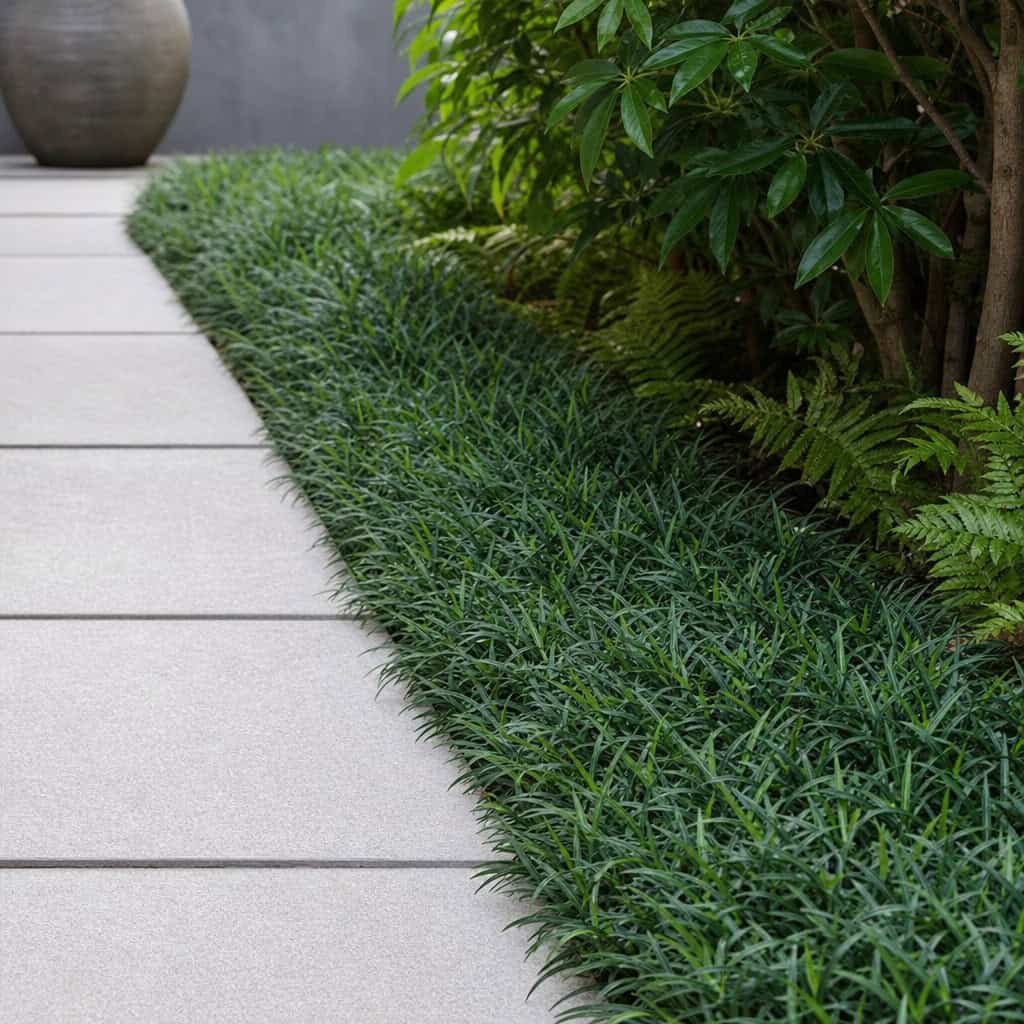
It looks like grass. It isn’t — it’s in the lily family.
Mondo grass gives a polished, uniform, deep-green look and is completely non-toxic to dogs, which Gardening in Steps notes for pet yards.
Dwarf mondo stays just 2 to 4 inches, a tidy no-mow carpet for low-to-moderate traffic. Sun to shade, warm zones.
Use it for edging, paths, or a clean minimalist lawn that never needs a cut.
20. Sedge (Carex / Pennsylvania Sedge)
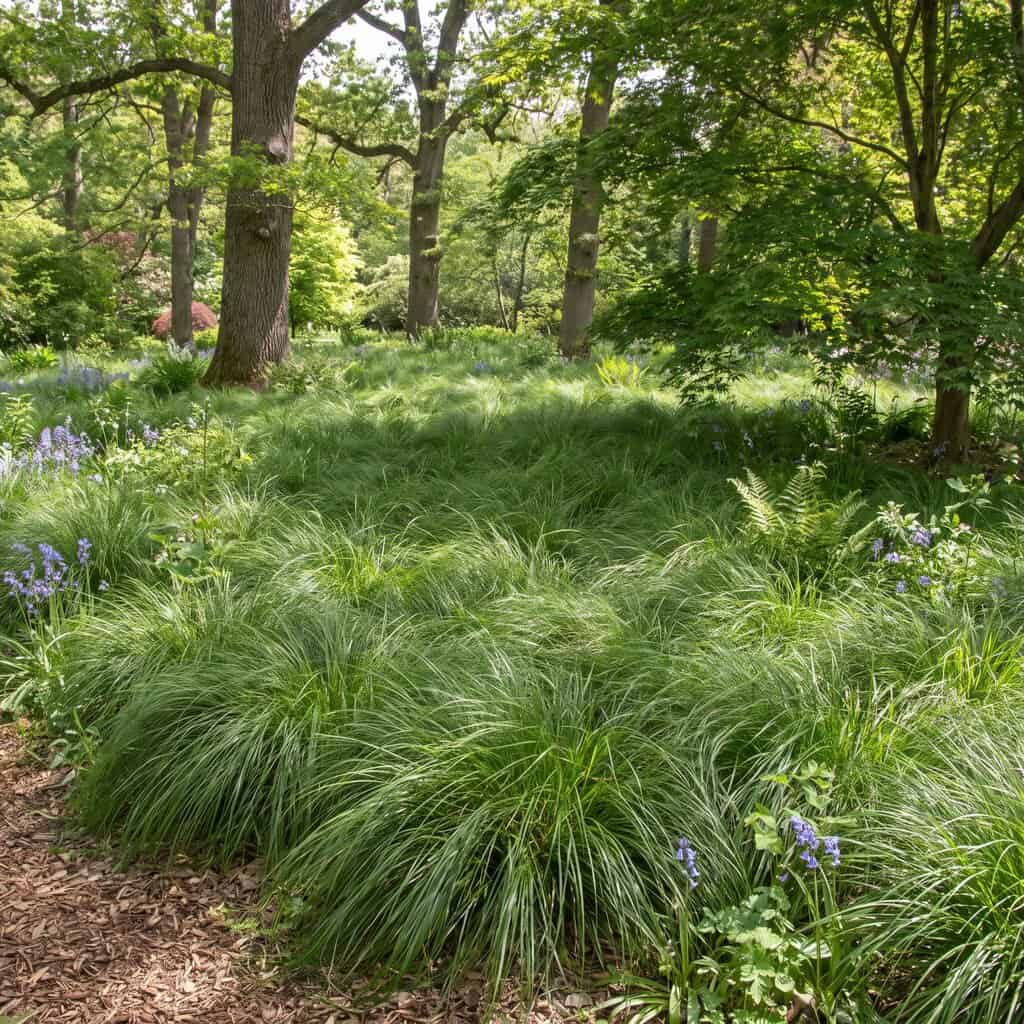
Want the turf look with a native backbone? Sedge is the answer.
These grass-like natives give the lawn feel without the mowing. Pennsylvania sedge handles shady sites; ‘Ice Dance’ stays evergreen with a crisp variegated edge and is almost trouble-free.
Shade to part sun. It’s the go-to for a native meadow-lawn feel, and University of Maryland Extension lists sedges among its recommended lawn alternatives.
Native, low, and calm. A quiet workhorse.
21. Fine Fescue (No-Mow)
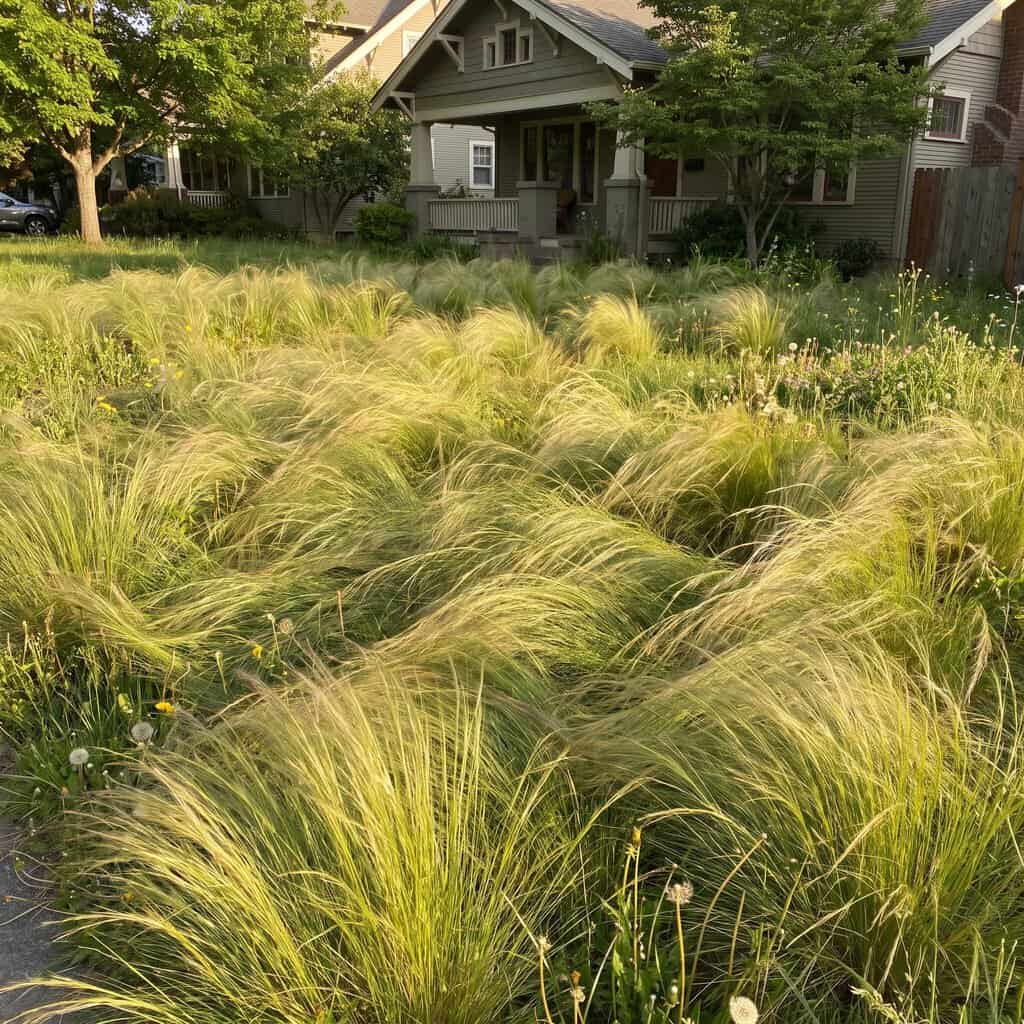
If you can’t quite let go of a real lawn, this is your compromise.
No-mow fine fescue forms a dense sod that handles moderate traffic, tolerates drought, and needs cutting no more than once or twice a year. Sun to part shade, Zones 3 through 10.
The old knock on fescue was clumping. Modern blends fixed that, per the The Old Farmer’s Almanac.
Let it grow long and it flows in the wind like a meadow. Keep it short once a year and it reads as lawn. Your call.
22. Buffalo Grass
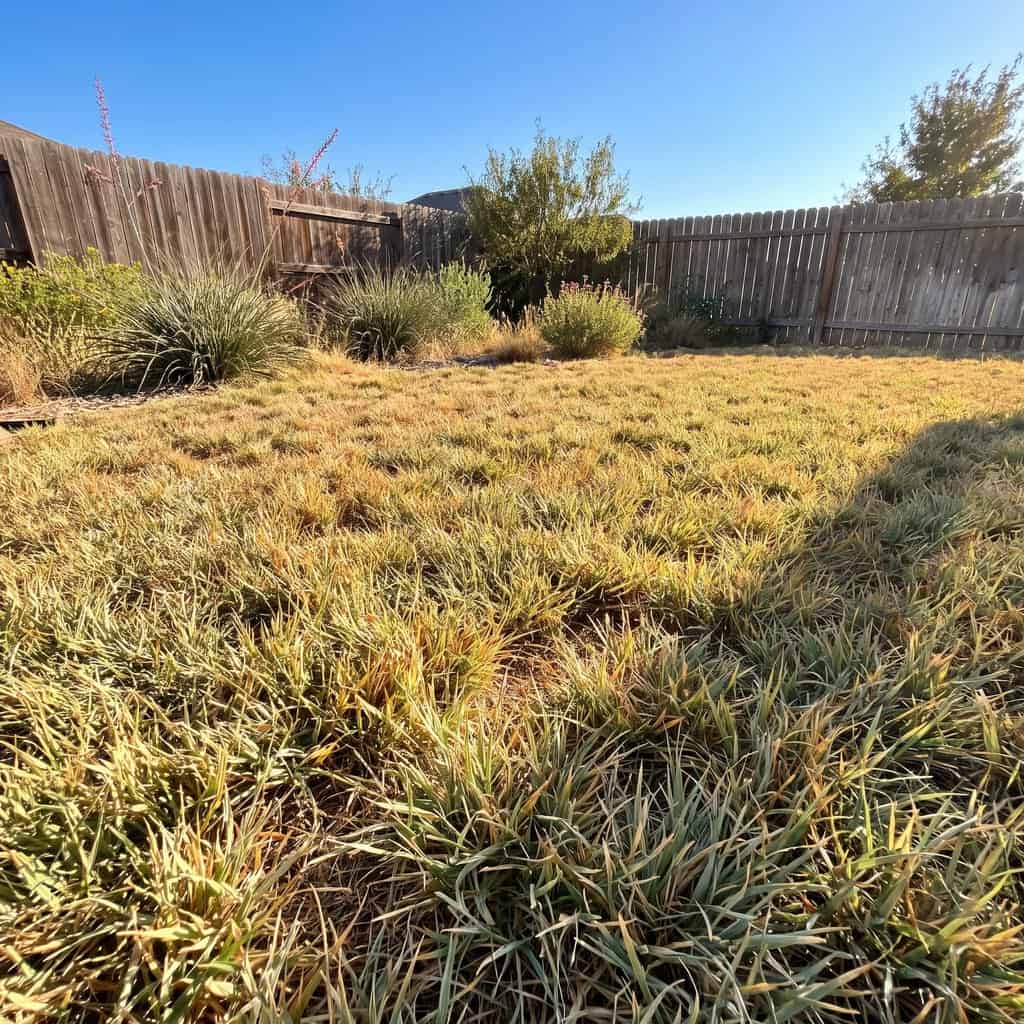
A native prairie grass built for dry country.
Buffalo grass grows to about 3 inches, drinks little water, and asks for almost no maintenance. Full sun, warm and dry climates.
It’s a genuine turf feel — soft enough for dogs and kids — that survives on rainfall where regular lawns collapse. One trade-off: it goes dormant and browns out over winter.
For a low-water native lawn, few things beat it.
23. Moss (Irish Moss / Sheet Moss)
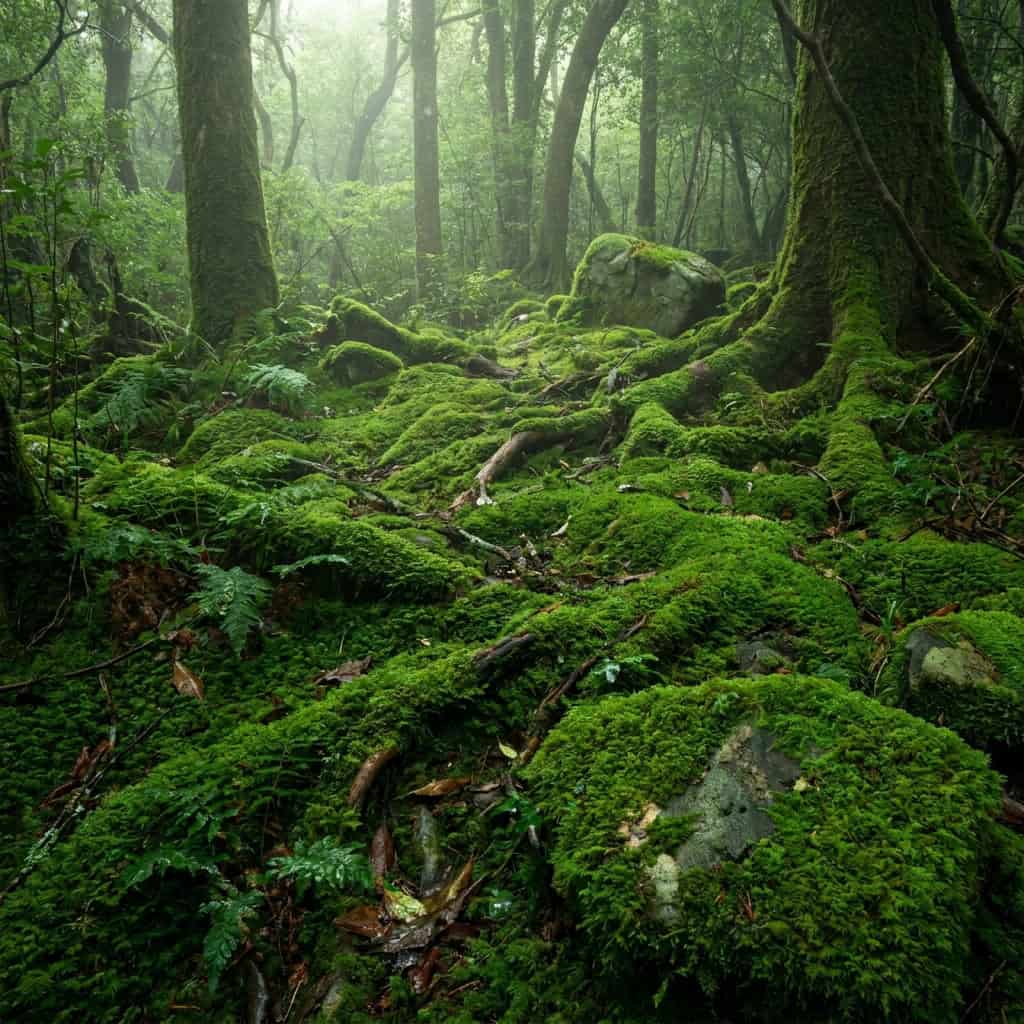
If moss is already winning in your yard, stop fighting it. That green fuzz is telling you turf will never thrive there.
Moss needs no mowing, no fertilizer, and no sun. It’s soft underfoot, stays green in deep damp shade, and Irish moss (Sagina) is non-toxic to pets.
Cool, damp, acidic shade, Zones 3 through 10. It’s the definitive answer for the spot where grass keeps dying, and University of Maryland Extension counts it among true lawn alternatives.
Lean into what your yard wants to grow.
24. Sweet Woodruff
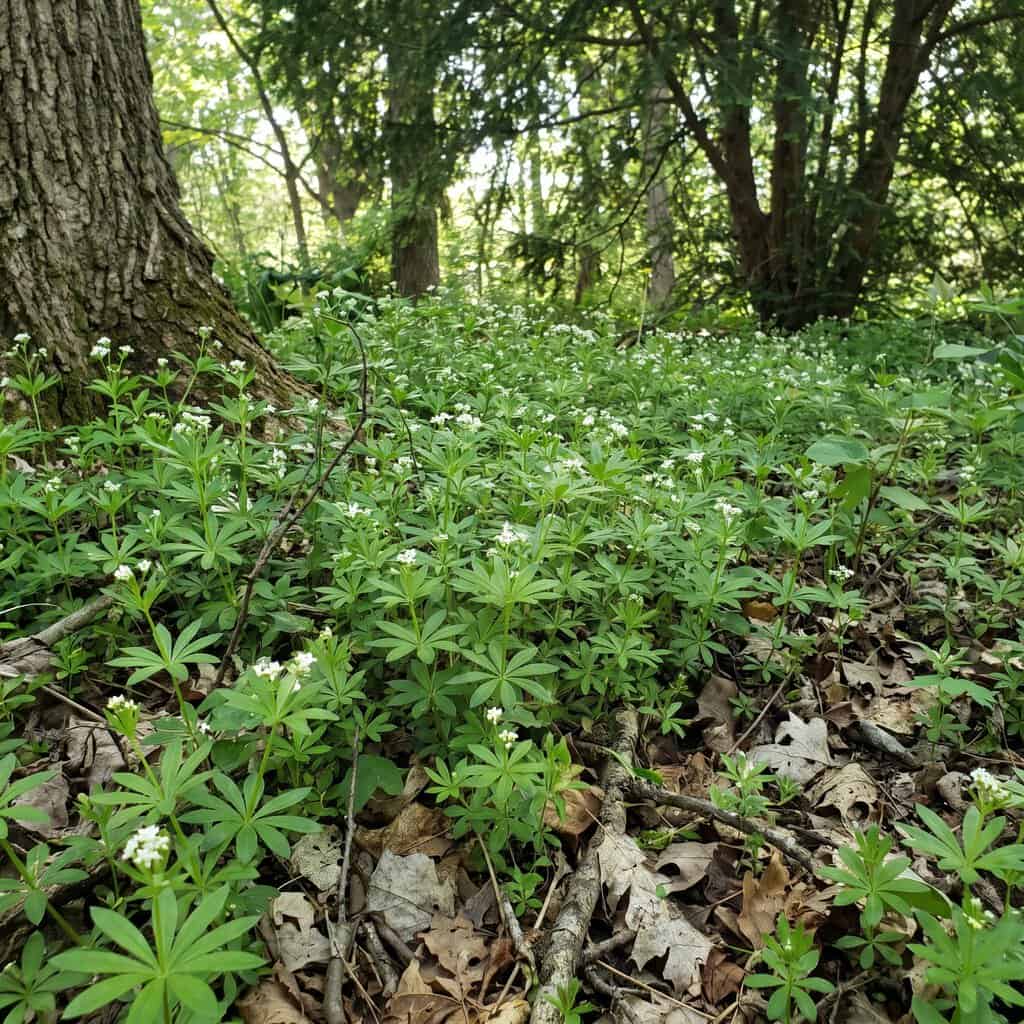
Dry shade under trees defeats most ground covers. Not this one.
Sweet woodruff spreads a polite 4 to 6 inches tall, carpeting the ground with white spring flowers and vanilla-scented foliage. It chokes out weeds and pushes through drought with no supplemental water.
Zones 4 through 8, full shade, dry to moist soil. A woodland-corner favorite.
The vanilla scent when it dries is a small bonus you didn’t ask for.
25. Pachysandra (Japanese Spurge)
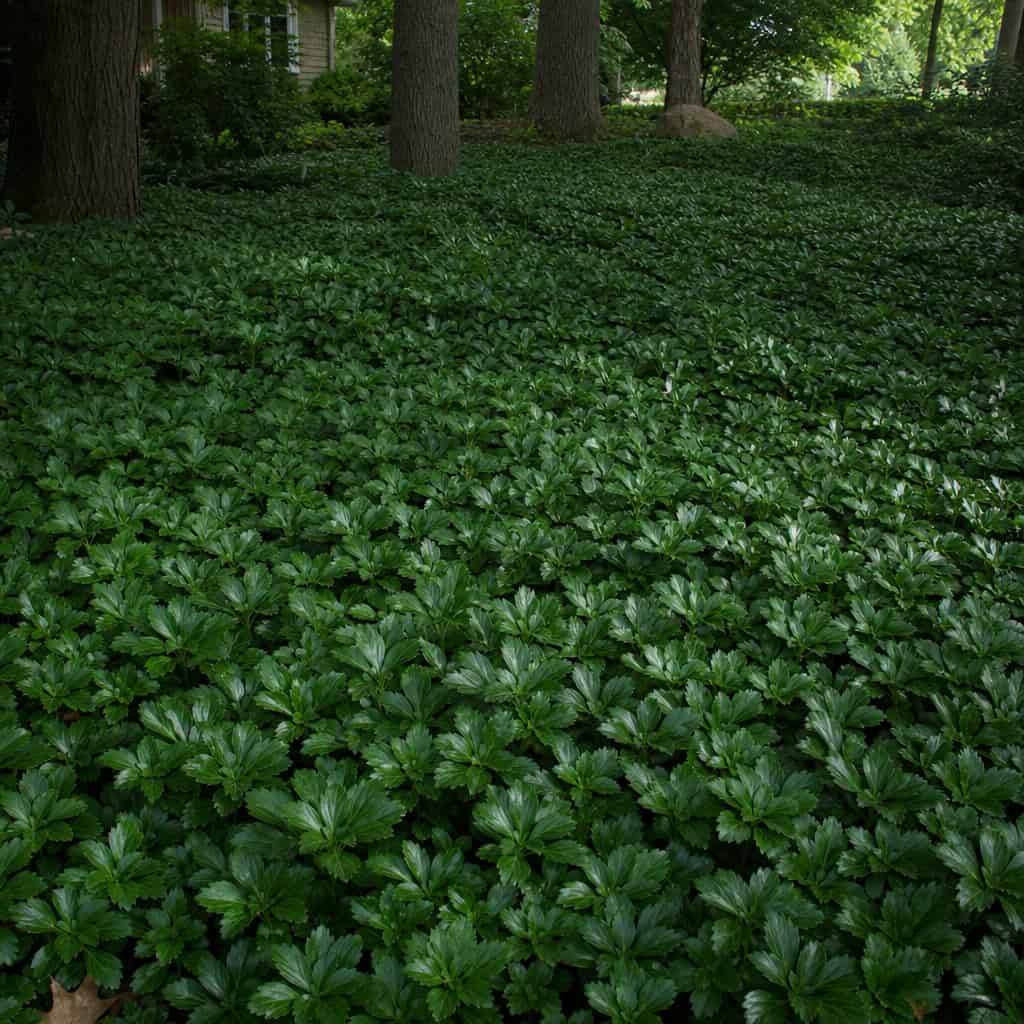
The classic shade blanket. You’ve seen it under a hundred suburban trees.
Pachysandra is an evergreen carpet that smothers weeds in full to part shade, Zones 4 through 8. It’s dependable, glossy, and dense.
But there’s a reason to hesitate. It’s listed as invasive in some states, where it escapes plantings and crowds out native woodland plants.
University of Maryland Extension flags it, and if you’re planting with the local ecosystem in mind, there are better options. Reach for native shade choices instead — Pennsylvania sedge, sweet woodruff, or barren strawberry all fill the same role without the escape risk.
Where it’s not a problem and containment is easy, it still does the job it always has. Just know what you’re planting.
26. Barren Strawberry
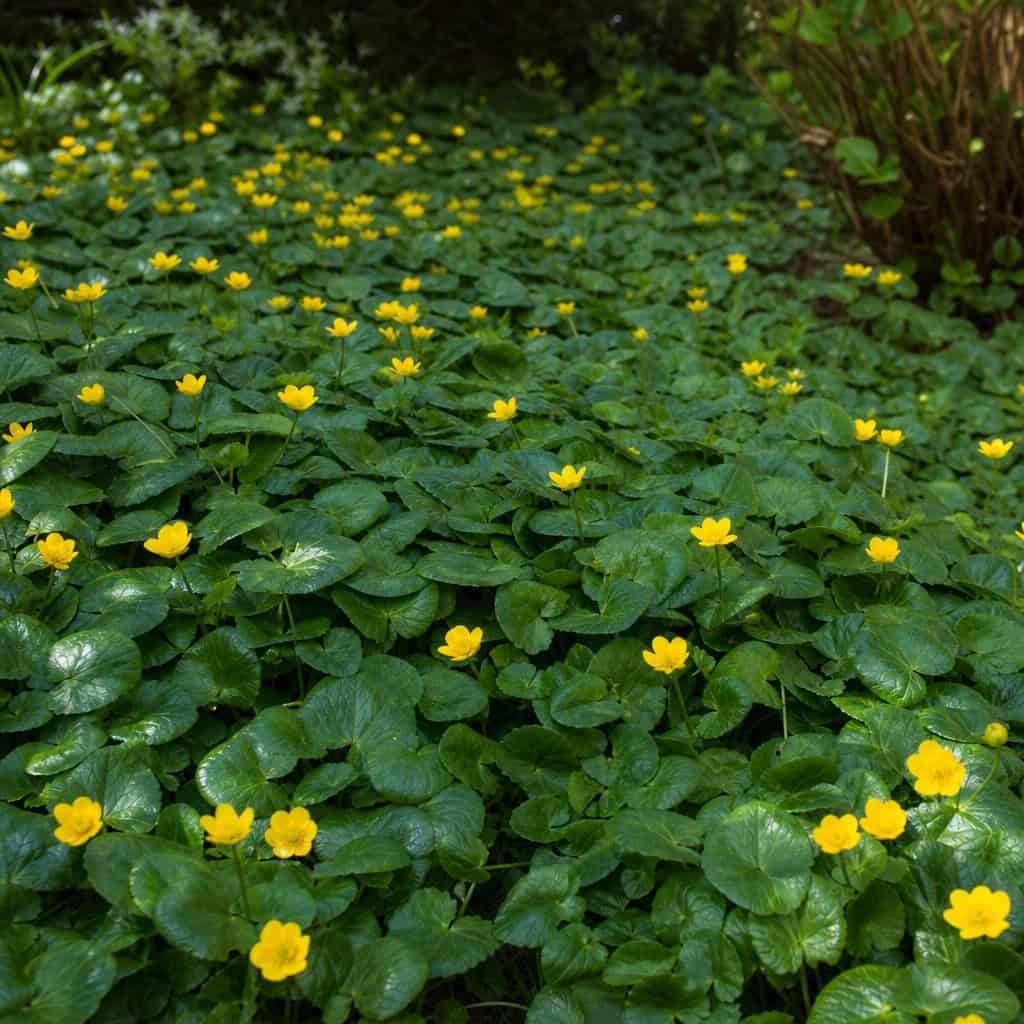
All the good looks of a strawberry plant, none of the fruit — and none of the mess.
Barren strawberry spreads by rhizomes into a 6-inch mat of glossy evergreen leaves, topped with bright yellow flowers in spring. Shade to sun if the soil stays moist, Zones 3 through 8.
The The Old Farmer’s Almanac lists it as a solid slope cover. It’s ideal for a shady bank you’d rather never mow again.
Glossy, tidy, and low. It looks like it belongs.
27. Labrador Violet
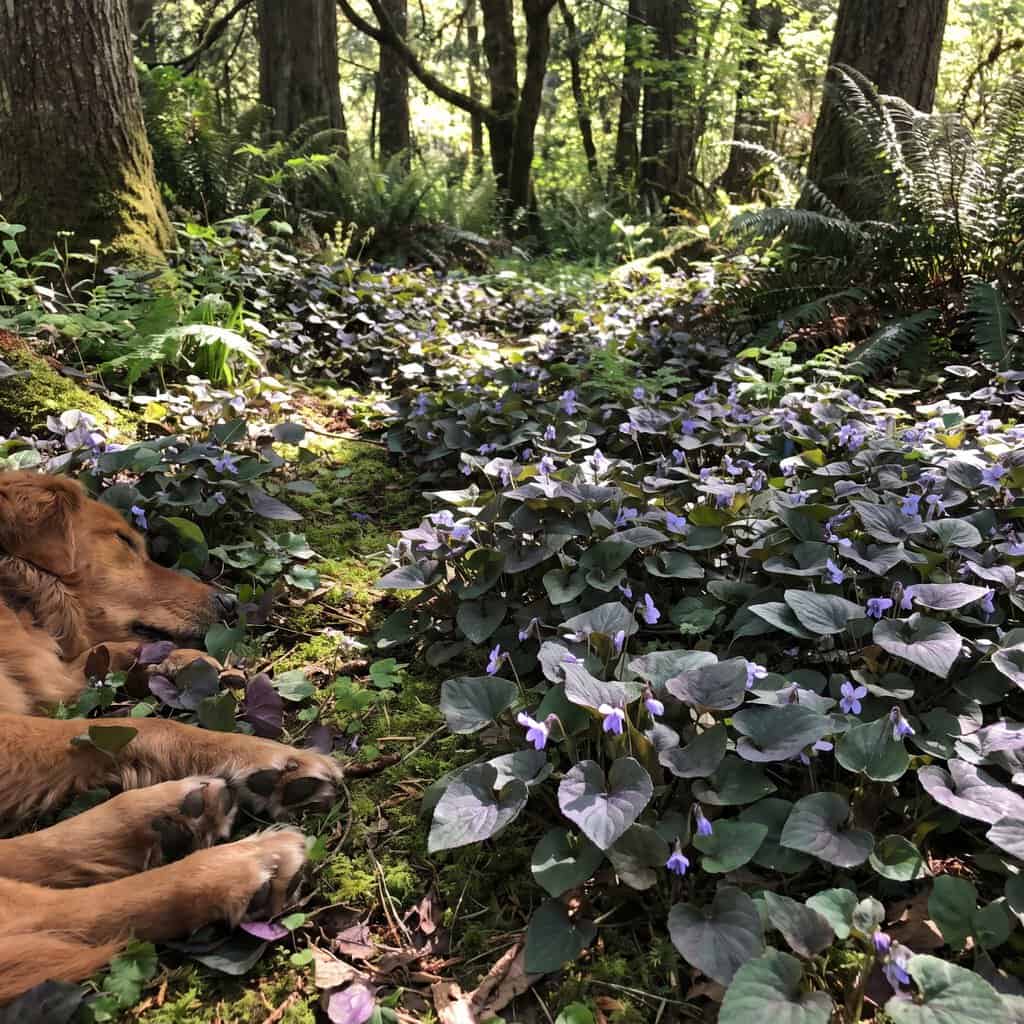
A rare thing: a shade ground cover that’s genuinely dog-safe.
Labrador violet has deep purple-green foliage and violet flowers spring into summer. It’s confirmed edible and non-toxic, and it even tolerates the occasional dog urine and some foot traffic, per Homes & Gardens.
Sun to shade, Zones 3 through 8. Not many low covers check the shade box and the pet-safe box at once.
This one does both. Plant it where the dog naps.
28. Creeping Wire Vine
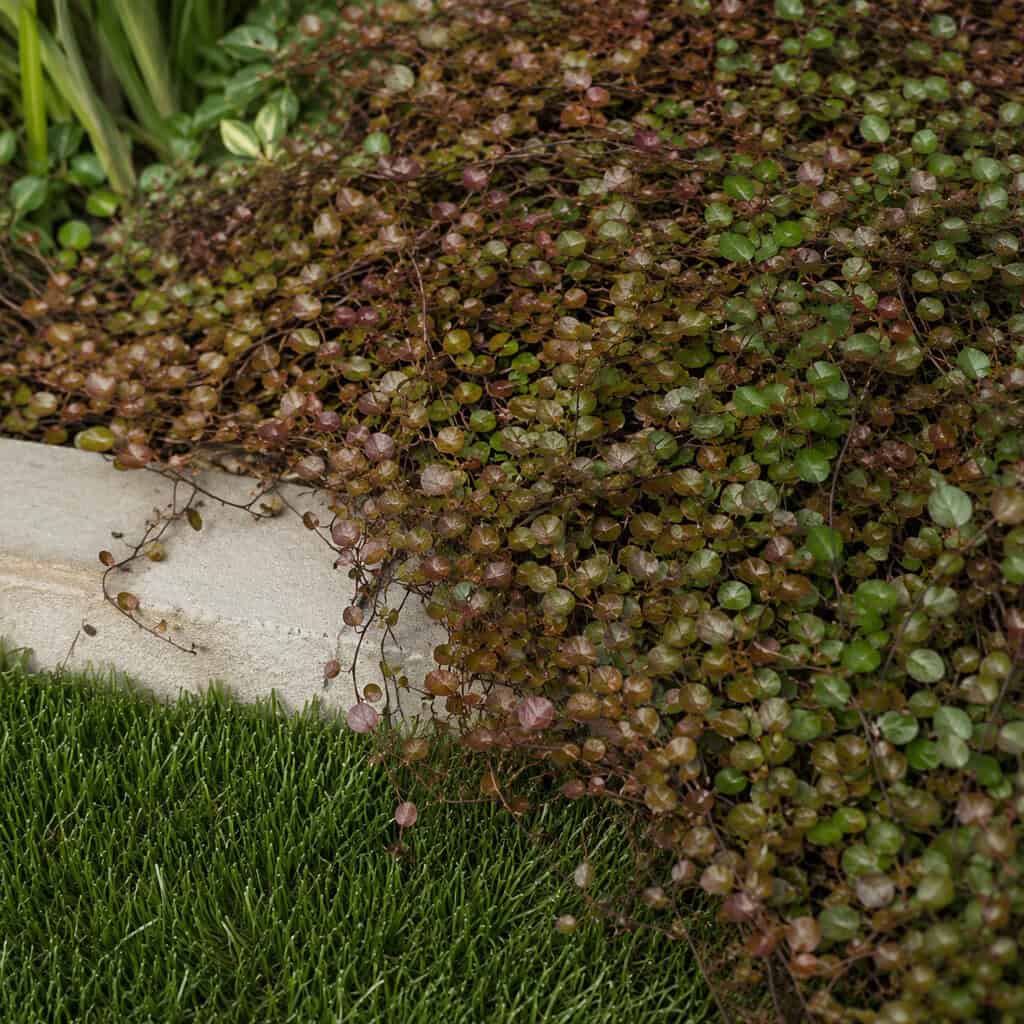
Wiry dark stems packed with tiny glossy leaves, woven into a dense 2 to 4 inch mat.
Creeping wire vine is non-toxic to dogs and holds up to traffic, and it turns a rich bronze through winter. Sun to part shade, mild zones. Gardening in Steps lists it for high-traffic pet yards.
It spreads by runners, so plan on edging to keep it in bounds. Contain it and it’s a durable, good-looking pet cover.
29. Kinnikinnick (Bearberry)
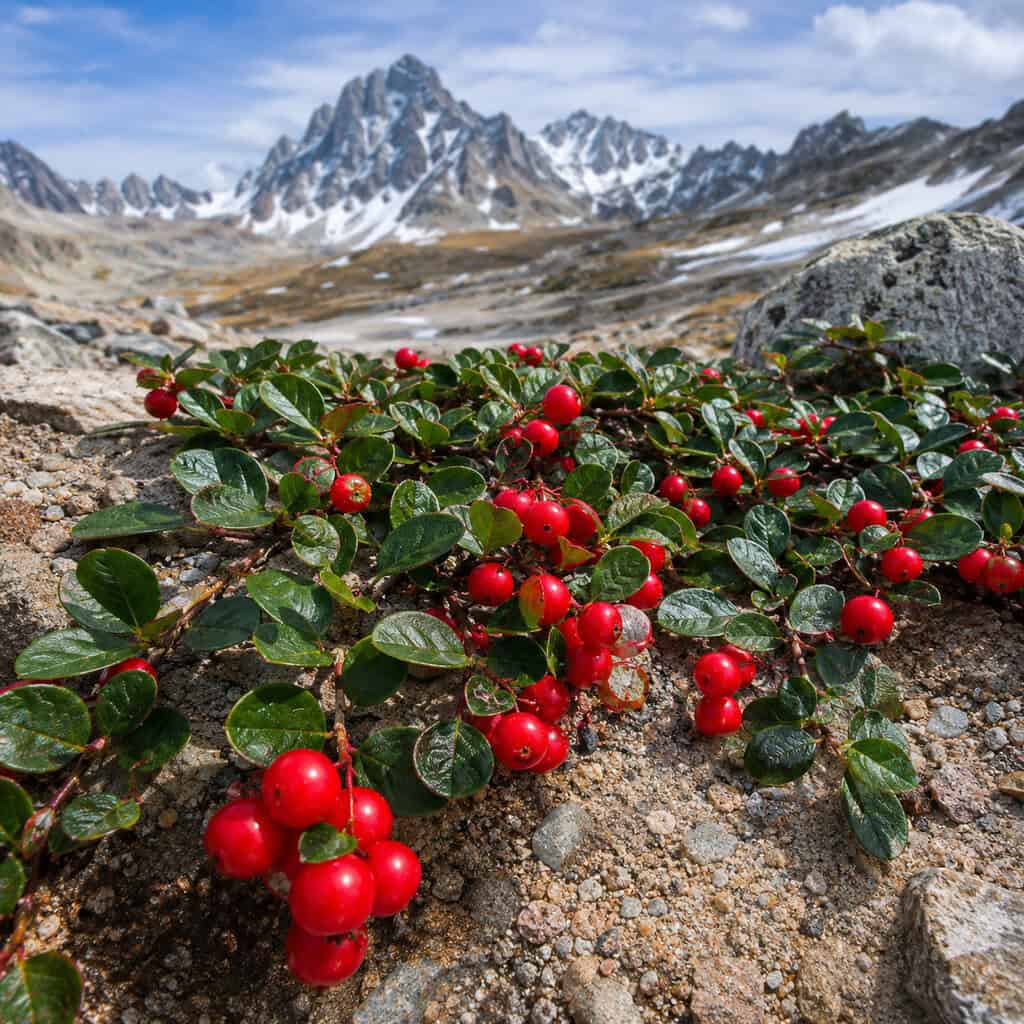
A mouthful of a name for a hero of cold, dry country.
Kinnikinnick (Arctostaphylos uva-ursi) is an evergreen native that trails into a glossy mat studded with red berries. It thrives in cold, dry, poor, sandy or rocky soils where most covers give up. Full sun, Zones 2 through 6.
LawnStarter counts it among the toughest drought-tolerant covers. For mountain and northern yards, it’s a regional lifesaver.
Where the Rockies meet bad soil, this is the plant.
30. Creeping Juniper
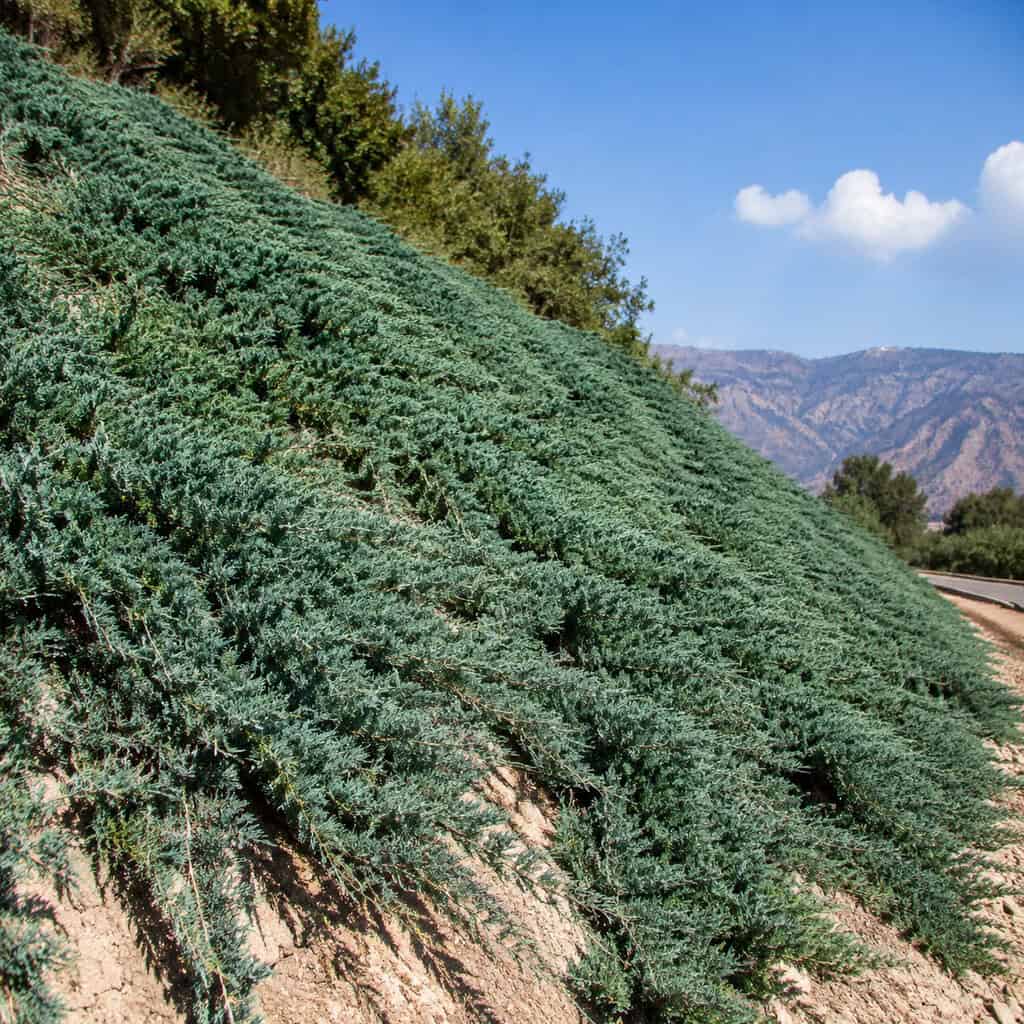
For a big slope where mowing is dangerous, go woody.
Creeping juniper sprawls into a tough, year-round blue-green carpet on hot, dry banks. Full sun, Zones 3 through 9.
It holds soil, needs almost nothing, and never asks for a cut. Lawn Love points to it for erosion control on large slopes.
When other covers won’t hold and the mower shouldn’t be on that hill anyway, juniper answers.
31. Woolly Thyme
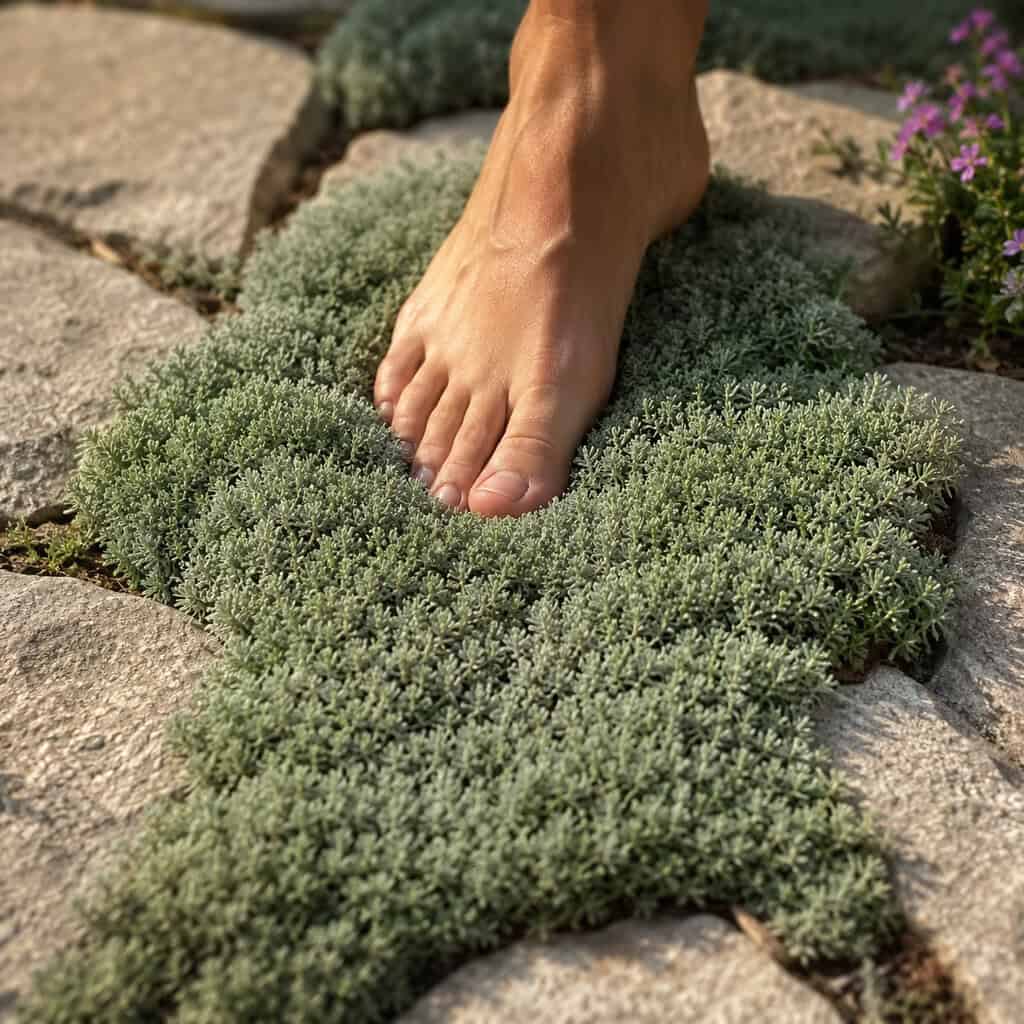
Softer and fuzzier than its creeping cousin, and built for bare feet.
Woolly thyme (Thymus pseudolanuginosus) withstands considerable foot traffic and forms a plush gray-green mat. Full sun, Zones 4 through 9.
If you want a spot to walk barefoot, this is the thyme to plant. It’s tougher underfoot than creeping thyme and just as pleasant.
Plant it where feet actually go.
32. Bearberry Cotoneaster
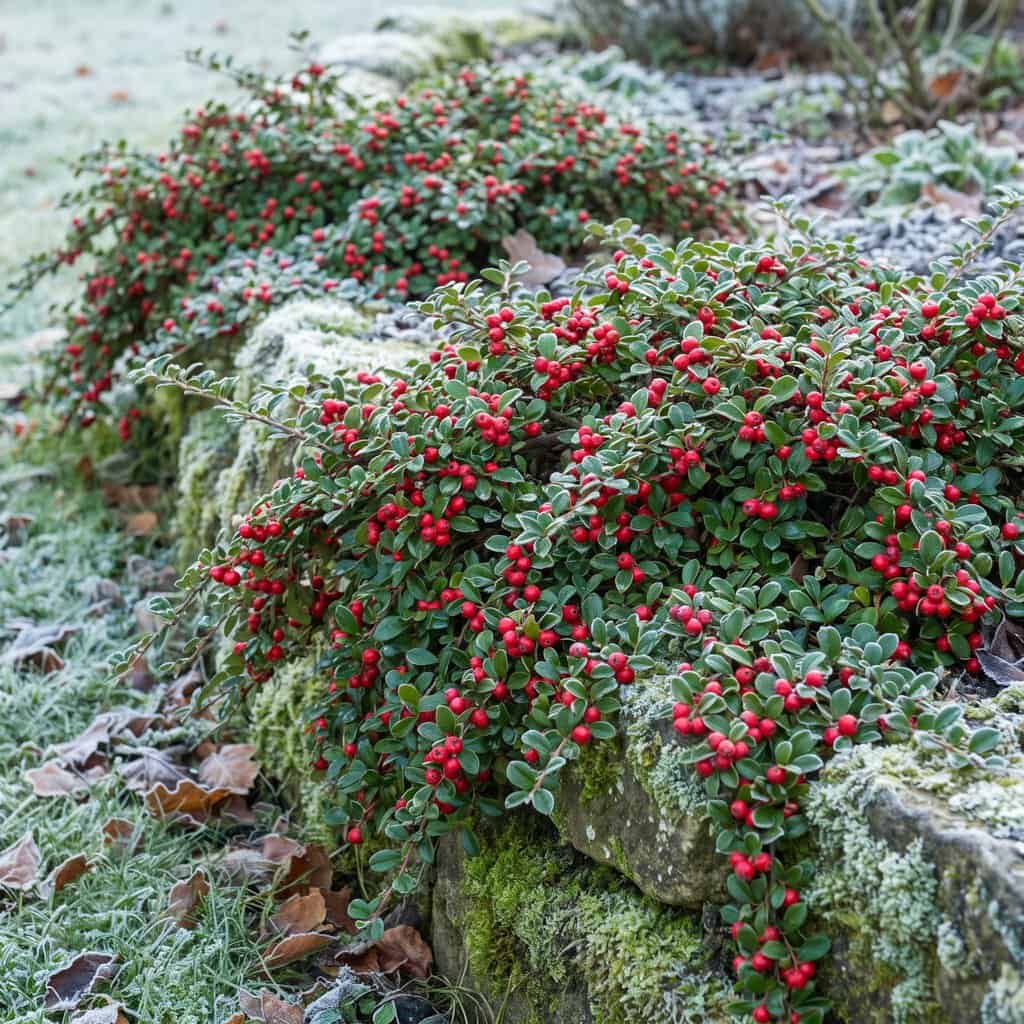
A woody alternate for anyone who finds creeping juniper too predictable.
Bearberry cotoneaster is an evergreen with crimson winter berries and moderate foot-traffic tolerance. Deer, rabbits, and roadside pollution don’t bother it. Sun to part shade, Zones 5 through 9.
Those red berries against evergreen leaves carry the yard through the gray months. A good-looking, durable choice for a bank or bed.
Tough, and prettier than it has any right to be.
The Last Mow
You don’t have to rip out the whole lawn on a Saturday. Start with the hardest patch — the slope you dread, the shady dead zone, the strip by the street.
Match the plant to the spot. Sun, shade, traffic, and whether a dog lives there. Check your state’s invasive list before you plant clover’s louder cousins.
Give it one season to fill in. Then give away the mower.